National Geographic writes:
“An Android app designed to give voice to tribes at the heart of India’s Maoist insurgency was launched September 20 as part of a campaign by activists to end the conflict through the combination of oral tradition and new technology …
“The CGNet Swara app is the brainchild of [UW CSE undergraduate] Krittika D’Silva, a student at the University of Washington, in Seattle.”
Read more here. Learn about CGNet Swara here. Read Krittika’s original research paper on the app here. Read more →
 “Everybody knows Pixar employs some of the most talented storytellers in the business. But the company employs some wonderfully sharp mathematicians, too. In fact, without those mathematicians working fastidiously behind the scenes, many of your favorite Pixar stories would not have gotten told – at least not in the adorable way we’ve come to love.
“One such math wiz in Pixar’s employ is Tony DeRose, Senior Scientist and Lead of the Research Group at Pixar Animation Studios. With a Ph.D. in Computer Science from U.C. Berkeley, DeRose spent a decade teaching at the University of Washington before joining Pixar …”
Read more, and watch a video, here. Read more →
 GeekWire writes:
Rival IQ wants to help organizations make better sense of information, while also keeping close tabs on the competition. And today the Seattle startup – which helps organizations better analyze digital content and track keywords in an effort to surface competitive intelligence – is announcing $1 million in funding …
“Rival IQ has assembled an impressive founding team that includes former V2Green executives John Clark, [UW CSE Ph.D. alum] Seth Bridges and Seth Pollack, as well as former Gist CEO T.A. McCann. Started in January 2013, the startup has raised $2 million to date.”
Read more here. Read more →
 UW CSE Masters alum Kate Matsudaira is one of several successful computer scientists from under-represented groups interviewed in the Business Week article “What It’s Like to be Black or Female in Silicon Valley.”
Of course, Kate has never actually worked in Silicon Valley – she’s been at Microsoft, Amazon, Delve Networks, Moz, UW CSE startup Decide, and her own startup popforms, all in Seattle. But the press thinks of “Silicon Valley” as a state of mind rather than a physical location …
“Kate Matsudaira understands …
“‘As soon as you put yourself in the camp of the people that talk about ‘the issues,’ you’re no longer the person that works hard,’ she says, ‘you’re the person that spoke out.'”
Read more here.
Read more →
 NPR reports on a successful partnership between UW CSE and Seattle-based global health non-profit PATH:
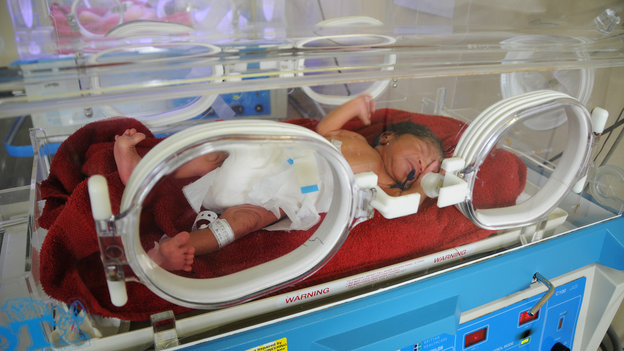
“Each year, 800,000 children under the age of 5 die because they didn’t have access to breast milk — close to 1 out of every 8 infant deaths, most of which occur in developing regions …
“Now there’s a simple device called FoneAstra that, when combined with a smartphone, can pasteurize milk so a bank can be set up almost anywhere …
“PATH … partnered with technologist Rohit Chaudhri of the University of Washington to develop FoneAstra.”
Check it out here. Read more →
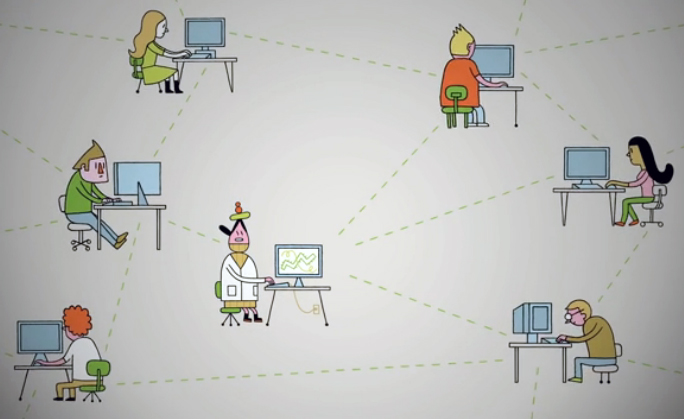 “It’s the greatest” – and it’s only 3 minutes.
Watch it here.
Play Foldit here.
Learn about other game-changing activities of the UW CSE Center for Game Science here. Read more →
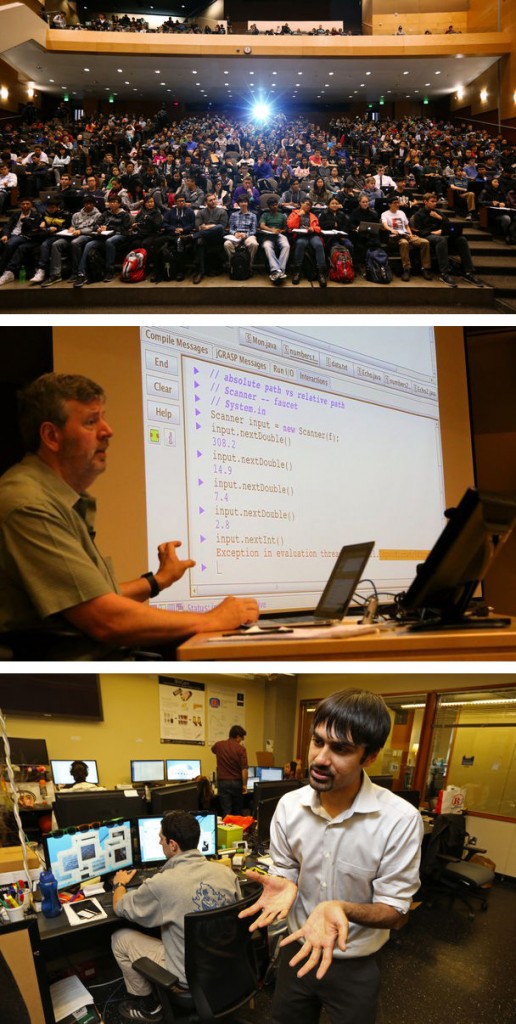 Katherine Long writes in the Seattle Times:
“At a moment in history when the computer is at center stage, and in a city where technology companies are driving a boom in the local economy, it’s no surprise that programming and technology majors are some of the most sought-after degrees on campus.
“But as a result, just 11 years after the UW’s Paul G. Allen Center for Computer Science & Engineering opened, the building is maxed out, and there’s not much space to move any more projects elsewhere. Now, the UW is looking to build a new computer science building on the Seattle campus. To do so, it expects to raise as much as $60 million privately, and will seek another $40 million from the Legislature …
“The need for new space is driven not only by the number of students who want to study computer science but also by rapid changes in what it means to study the discipline. Increasingly, computer science students and faculty are building physical objects, not just software …
“‘One could argue,’ [CSE professor Shwetak Patel] added, ‘that the computer is at the core of everything now'”
Read more here. Read more →
 The Electronic Frontier Foundation has filed an amicus brief with the Supreme Court arguing, on behalf of 77 computer scientist signatories, that the justices should review an inexplicable lower court decision finding that application programming interfaces (APIs) are copyrightable. That decision, in a case in which Oracle sought to copyright the Java API, up-ended decades of settled legal precedent and industry practice.
Among the 77 computer scientists on behalf of whom EFF filed the brief are UW CSE professor Ed Lazowska, UW CSE Ph.D. alums Jeff Dean and Ed Felten, and UW CSE Bachelors alum Tim Paterson.
Read more here. Read more →
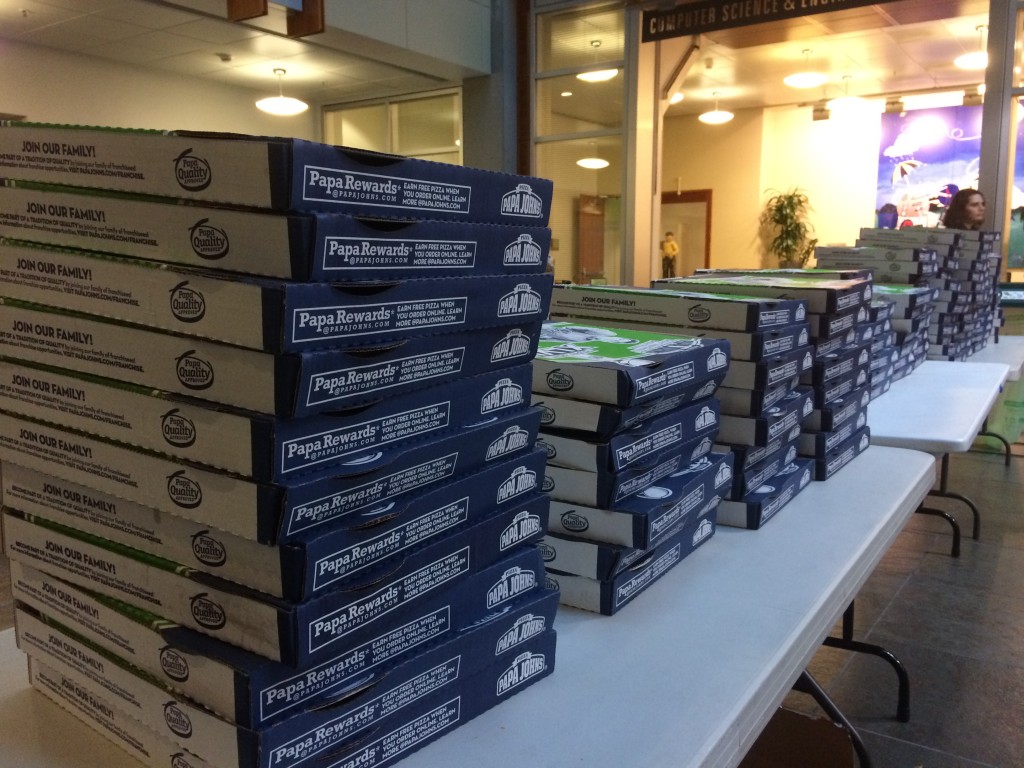 Buurrrpppp!!!!! Read more →
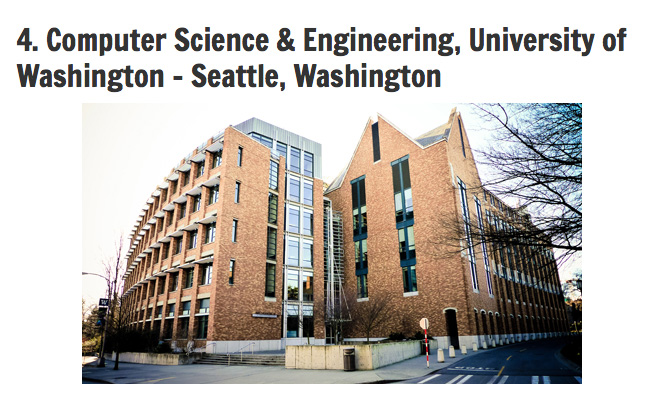 What’s the methodology? We couldn’t care less! We’re Number Four!
Read more here. Or don’t. Read more →