UW CSE Ph.D. alum Noah Snavely wins 2014 SIGGRAPH Significant New Researcher Award

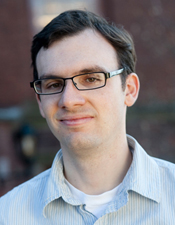
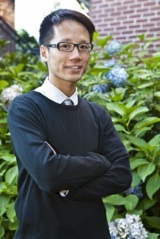
snavelyCongratulations once again to UW CSE Ph.D. alum Noah Snavely, who on Monday will receive the 2014 SIGGRAPH Significant New Researcher Award, the top award for young researchers in the computer graphics field.

Noah is a faculty member in the Computer Science Department at Cornell University, working in the Cornell Graphics and Vision Group. (He is currently on leave at Google, which acquired a startup that he founded.) His research interests are in computer vision and computer graphics, in particular in recovering 3D structure from large community photo collections for use in graphics and visualization. His Ph.D. work at UW, co-supervised by Steve Seitz and Rick Szeliski, formed the computer vision technology behind Microsoft’s ground-breaking Photosynth offering.

Noah has previously been recognized with an NSF PECASE Award, an NSF CAREER Award, a Microsoft New Faculty Fellowship, an Alfred P. Sloan Research Fellowship, and an MIT Technology Review TR35 Award. Whew!

The SIGGRAPH Significant New Researcher Award is familiar ground for UW CSE faculty and alums: Ph.D. alum Karen Liu received it in 2012, and faculty member Zoran Popovic received it in 2004. Ditto the SIGGRAPH Computer Graphics Achievement Award (for senior researchers): affiliate professor Rick Szeliski received it in 2011, Ph.D. alum Hughes Hoppe received it in 2004, faculty member David Salesin received it in 2000, faculty member Tony DeRose received it in 1999, affiliate professor Michael Cohen received it in 1998, and Ph.D. alum Loren Carpenter received it in 1985.

Congratulations to Noah, and to all the members – faculty and students, past present and future – of UW CSE’s extraordinary computer graphics, vision, animation, and game science group. Read more →

No-power Wi-Fi connectivity could fuel Internet of Things reality

Infrastructure-300x162UW News reports on UW’s WiFi Backscatter technology:

“Imagine a world in which your wristwatch or other wearable device communicates directly with your online profiles, storing information about your daily activities where you can best access it – all without requiring batteries. Or, battery-free sensors embedded around your home could track minute-by-minute temperature changes and send that information to your thermostat to help conserve energy …

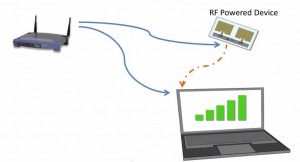
“Now, University of Washington engineers have designed a new communication system that uses radio frequency signals as a power source and reuses existing Wi-Fi infrastructure to provide Internet connectivity to these devices. Called Wi-Fi Backscatter, this technology is the first that can connect battery-free devices to Wi-Fi infrastructure.”

Read the UW News release here. Read a related article in MIT Technology Review here. Visit the project website here.

Pickups: daijiworld.com, Hands on Today, ZDNetBetaNews, many others. Read more →

Alvin Cheung joins the UW CSE faculty

PhDFellow_2013_56_Alvin-CheungAlvin Cheung, a researcher in databases whose work integrates techniques from programming languages and systems, will be joining UW CSE as a faculty member this coming year.

Alvin’s research focuses on co-optimizing data-intensive applications by examining the database and the runtime system and environment together, which can enable order-of-magnitude speedups in applications. For example, his paper demonstrating how to convert application functions written as imperative code into SQL queries, so that they can be optimized by the data management system, received a best paper award from the Conference on Innovative Data Systems Research (CIDR), while his paper describing the programming language methods used to achieve that result was a PLDI best paper nominee.

Alvin is the recipient of an Intel Ph.D. Fellowship and an NSF Graduate Fellowship. He holds B.S. and M.S. degrees in Electrical Engineering from Stanford University, and will receive his Ph.D. in Computer Science from MIT this fall.

Welcome Alvin!

Read about other new faculty who will be joining us: Noah Smith here; Emina Torlak and Xi Wang here; Yejin Choi and Franzi Roesner here. Read more →

UW’s “WiFi Backscatter” featured in MIT Technology Review

WiFi_BackscatterMIT Technology Review has a super article on research by professors Shyam Gollakota, Josh Smith, and David Wetherall and graduate students Bryce Kellogg and Aaron Parks:

“Engineers have worked for decades on ways to generate power by harvesting radio signals from the air, a ubiquitous resource thanks to radio, TV, and cellular network transmitters. But although enough energy can be collected that way to run low-powered circuits, the power required to actively transmit data is significantly higher. Harvesting ambient radio waves can collect on the order of tens of microwatts of power. But sending data over Wi-Fi requires at least tens of thousands of times more power—hundreds of milliwatts at best and typically around one watt of power, says Gollakota.

“The Washington researchers got around that challenge by finding a way to have the devices communicate without having to actively transmit. Their devices send messages by scattering signals from other sources—they recycle existing radio waves instead of expending energy to generate their own.”

Read the MIT Technology Review article here.  Learn more about the WiFi Backscatter project here.

UW News press release here. Read more →

Yuriy Brun, Thu Nguyen win 2014 Microsoft Research “Awards for the Software Engineering Innovation Foundation”

YuriyBrunTonyHey2014MicrosoftSEIFAward

Yuriy Brun receives his MSR SEIF Award from Microsoft’s Tony Hey

The Microsoft Research Awards for the Software Engineering Innovation Foundation (SEIF) support academic research in software engineering technologies, tools, practices, and teaching methods.

In 2014, MSR received more than 100 proposals for research grants in foundational software engineering, application of software engineering to Internet of Things, and infrastructure for cloud-scale software. After a thorough review process within Microsoft Research, 12 projects were selected for support.  Among the 12:

UW CSE postdoc alum Yuriy Brun, now a faculty member at UMass Amherst, was supported for the project “Augmenting Testing with Performance-Aware Behavioral Models.”

UW CSE Ph.D. alum Thu Nguyen, now a faculty member at Rutgers University, was supported for the project “CoolProvision: Provisioning of Cooling Systems for Datacenters.”

Congratulations Yuriy and Thu!

nguyen

Thu Nguyen

Read more here. Read more →

Oracle kicks off cloud computing technology center in Seattle

29bits-seattle-tmagArticleFrom the New York Times:

“Score another one for Seattle.

“On Tuesday, Oracle kicked off its new cloud computing technology center in Seattle …

“Amazon, of course, is based in Seattle, and has the headquarters of Amazon Web Services there. Across Lake Washington, Microsoft’s cloud business, Azure, is a centerpiece of chief executive Satya Nadella’s plans to spur Microsoft’s growth. Google has also located its cloud business in Seattle, and Century Link increased its cloud presence there when it purchased Tier 3 last year.”

Read more here. Read more →

“New learning technologies enable school choice”

zoranpopovic-300x211Zoran Popovic becomes the first UW CSE faculty member to be endorsed by the Heritage Foundation:

“A computer scientist may have come up with a solution for customizing math instruction for different students in the same classroom, something education has been seeking for years.

“University of Washington Professor Zoran Popovic has developed computer games that adapt to the skills of individual players to help them more efficiently learn math.”

Read more here. Learn about Zoran here. UW Center for Game Science here. Non-profit startup EnLearn here. Read more →

Xconomy: “GraphLab Off to Fast Start with System for Building Predictive Apps”

GraphLab-teamXconomy reports on UW CSE startup GraphLab:

“In the course of a mere 14 months, Seattle startup GraphLab Inc. has gone from a computer science professor and a few colleagues creating open source software to analyze graph datasets to a 25-person company with a new, full-fledged system for building predictive applications that draw on a range of data types. Their customers include Exxon and Pandora.

GraphLab, which grew from the machine learning work of co-founder and CEO Carlos Guestrin …, raised $6.75 million from Madrona Venture Group and New Enterprise Associates last May. Business and technology luminaries from around Seattle, including Jeff Bezos, joined together to recruit Guestrin to the University of Washington in 2012 …

Read more here. Read more →

CSE’s Yejin Choi in Popular Mechanics

popularmechanics“Sports scores, quarterly earnings, and the vicissitudes of a financial portfolio are easy enough to arrange into tables of numbers, says Yejin Choi, an expert in natural language processing at the University of Washington. Opinions, however, are bit more challenging to quantify. In addition, software programs have a hard time imitating the rhetoric of a serious op-ed writer.

“‘One is the content challenge; the other is the style challenge,’ she says.

“On the content side, many AI researchers are now looking into how a computer might recognize when an argument supports or opposes a particular position. Likewise, computer scientists have been working on qualitative reasoning or understanding the relationship between two variables (for example, ‘If I throw the ball harder, it will travel further’).”

Read more here.

  Read more →

Update: Responding to the Explosion of Student Interest in Computer Science

NCWITsmA presentation on the explosion of student interest in computer science, prepared by UW’s Ed Lazowska and Stanford’s Eric Roberts for the 2014 NCWIT Summit on Women and Information Technology, was updated by Ed Lazowska and UMass Amherst’s Jim Kurose for the 2014 Computing Research Association Conference at Snowbird.

Additional data is presented, as well as suggestions from audiences and discussions at NCWIT, the NSF CISE Advisory Committee, and the CRA Conference at Snowbird:

  • Observations
  • Best Practices: how to respond?
  • What’s different this time around, and how can we document it?
  • A proactive agenda: what can we and our disciplinary organizations (CRA, CCC, ACM, NSF, CSTB, …) do?

See the presentation here.

At the University of Washington, the explosion of student interest manifests itself in many ways – most disturbingly to us, in our inability to accommodate many truly outstanding students who seek to major in Computer Science and Computer Engineering – students who would thrive in our majors and contribute greatly to the vibrancy of our region and nation. Learn more about this here. Read more →

« Newer PostsOlder Posts »