 We remember our friend and colleague Ben Taskar on what would have been his 37th birthday, March 3 2014.
His wife Anat asks, “I was hoping we could, as a community, each take a moment this week to perform a simple, random act of kindness to commemorate Ben’s life and giving spirit.” Read more →
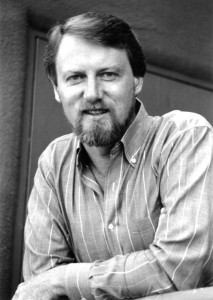
[Copyright Tom O’Neal, Carmel Valley CA]
David Laws of the Computer History Museum has written a lovely history of UW CSE Ph.D. alum Gary Kildall’s seminal role in the PC revolution:
“Late one afternoon in the fall of 1974, in the sleepy California seaside town of Pacific Grove, programmer Gary Kildall and electronic engineer John Torode [also a UW CSE Ph.D. alum] ‘retired for the evening to take on the simpler task of emptying a jug of not-so-good red wine … and speculating on the future of our new software tool.’ By successfully booting a computer from a floppy disk drive, they had just given birth to an operating system that, together with the microprocessor and the disk drive, would provide one of the three fundamental building blocks of the personal computer revolution. While they knew it was important, neither realized the extraordinary impact it would have on their lives and times.”
An IEEE Milestone plaque recognizing Gary’s contributions will be unveiled on Friday April 25 at 801 Lighthouse Avenue in Pacific Grove, the home of Digital Research, Inc. (DRI).
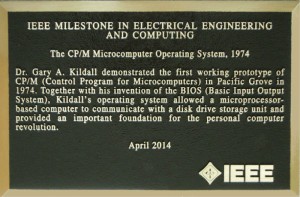 (In addition to Gary and John, who created CP/M, Tim Paterson, who created QDOS (which became 86-DOS, and then PC DOS, and then MS-DOS), was a UW CSE alum. “We were there.”)
Read David Laws’ wonderful account here.
Read a history of CP/M in Gary’s own words here.
Previous post with additional information here. Read more →
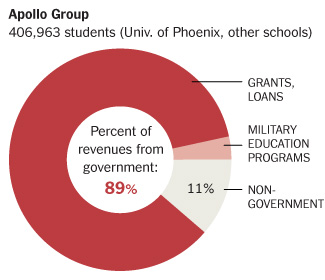 “The demise of opportunity through higher education is, fundamentally, a political failure …
“The worst problems … occur at for-profit schools like those run by the Apollo Group (which owns the University of Phoenix), the Education Management Corporation or Corinthian Colleges. These schools cater to low-income students and veterans, but too often they turn hopes for a better life into the despair of financial ruin.
“Nearly all of their students take out loans to attend, and the amounts are staggering. Among holders of bachelor’s degrees, 94 percent borrow … The for-profit graduates have trouble finding jobs that pay enough to afford their debts, and 23 percent of borrowers default within three years …
“Most of us were raised to believe that going to college was the surest path to a better life, but for many today that belief can be perilous. Unless we can claw back polarization and plutocracy enough to restore opportunity in higher education, the United States will become a society in which rank is fixed and our ideal of upward mobility but a memory.”
Read more here. Read more →
 Amazon.com (2), Starbucks (5), Costco (12), Nordstrom (17), and Microsoft (24).
Go team! Read more here. Read more →
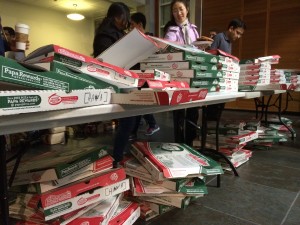
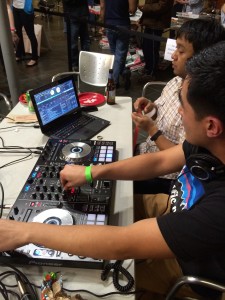
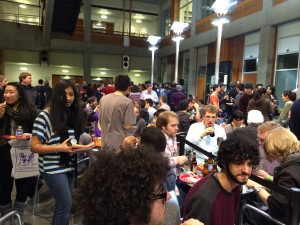
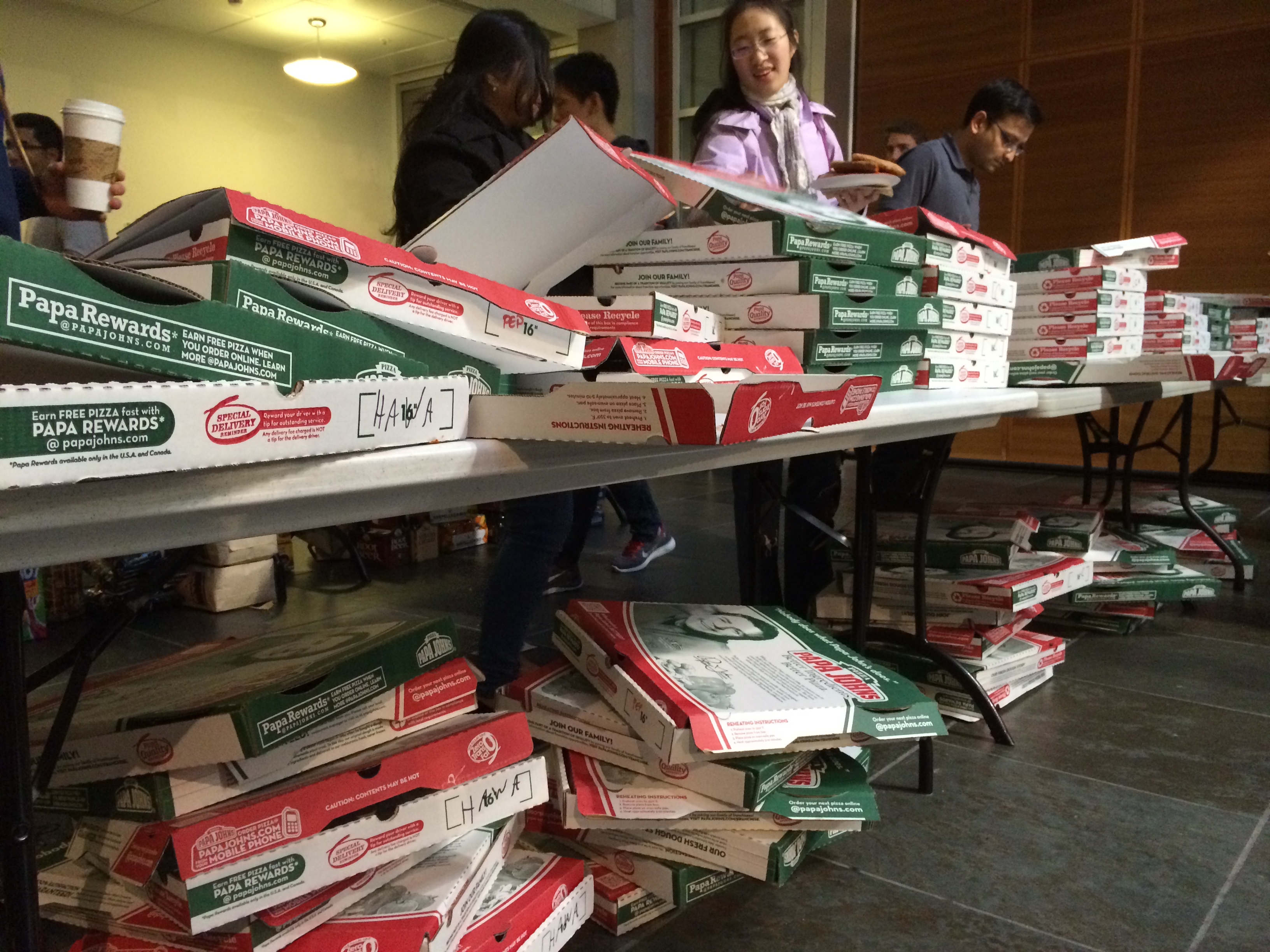
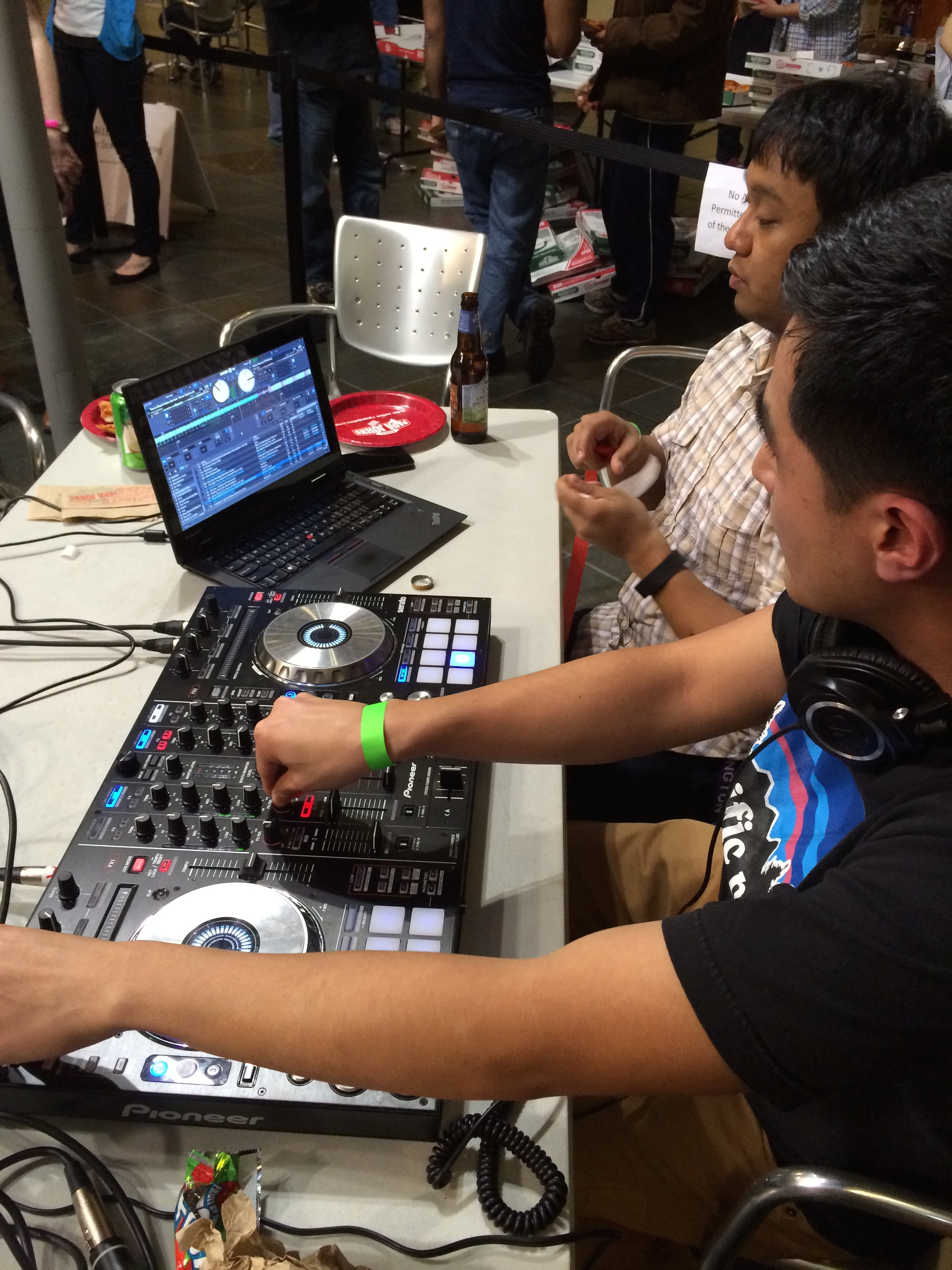
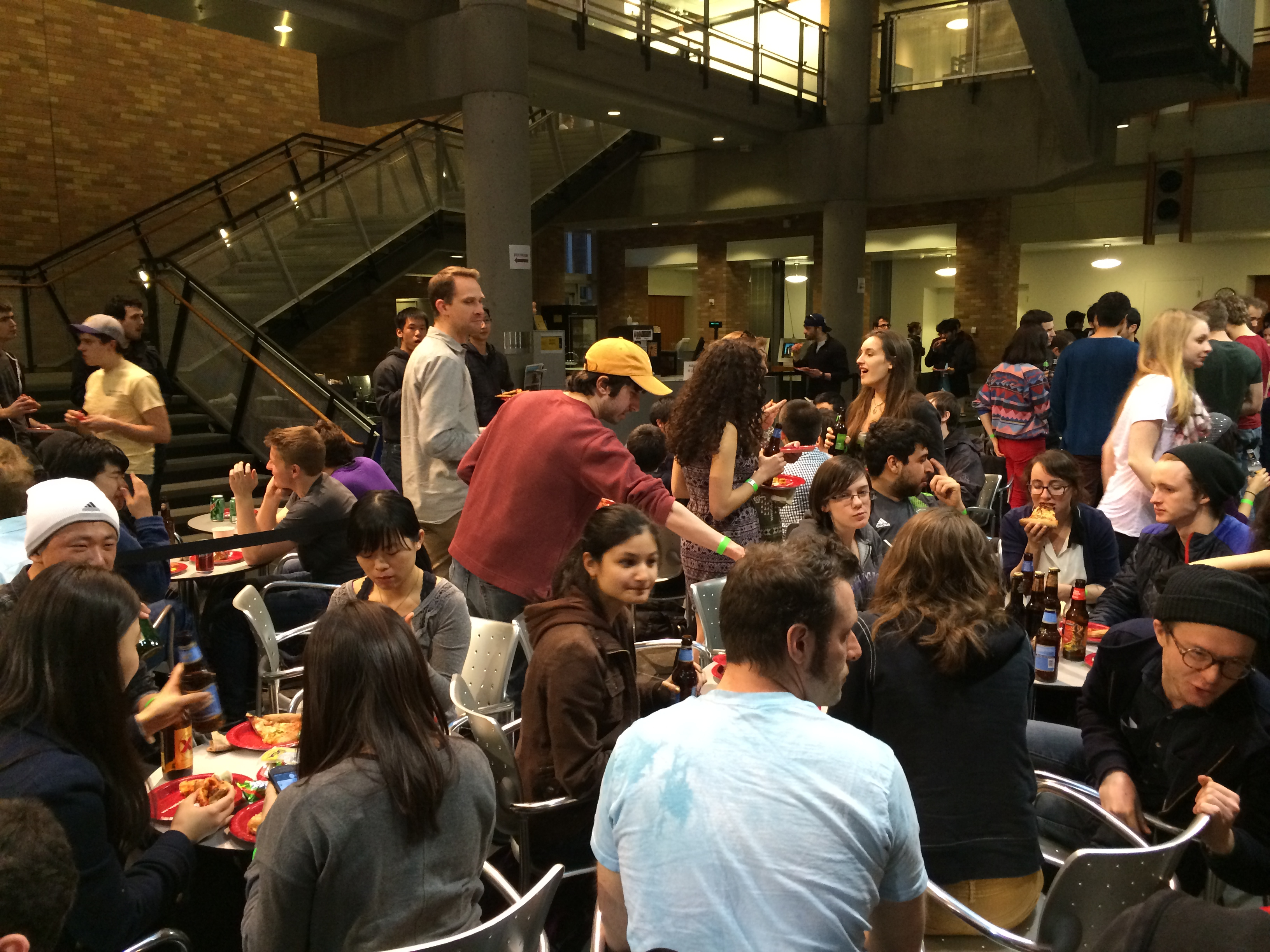
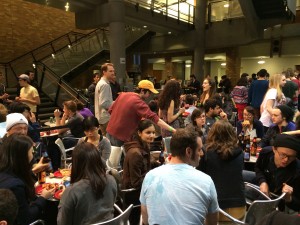 Friday marked the annual UW CSE WinterFest, presented by the UW CSE ACM student chapter and sponsored by Facebook (thank you!)
Food … games … music …
Students, faculty, and staff had a terrific time! Read more →
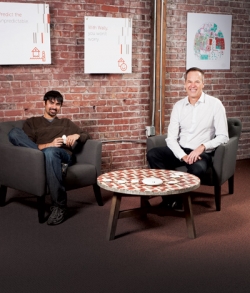 UW CSE startup SNUPI Technologies (co-founded by faculty Shwetak Patel and Matt Reynolds, graduate student Gabe Cohn, and alum Jeremy Jaech) is featured in this month’s Seattle Business magazine:
“The so-called internet of things, in which objects transfer data without requiring human interaction, is so hot that Google recently invested $3.2 billion in Nest Labs, which sells a ‘smart’ household thermostat that learns the owner’s behavior to reduce energy use.
“This infatuation isn’t lost on SNUPI Technologies, which is debuting its Wally ‘home-sensing’ network online (wallyhome.com) and at home shows across the country.
“Wally’s low-power wireless system detects potential environmental hazards by monitoring moisture, temperature and humidity changes inside a home. ‘Wally provides peace of mind to homeowners,’ says CEO [and UW CSE alum] Jeremy Jaech. ‘If we can set a model for what is normal in your home, we can tell you when it’s not normal.'”
Read more here. Learn about SNUPI Technologies’ first product, Wally, here. Read more →
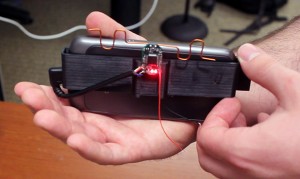 AllSee is the first gesture-recognition system that can operate on a range of computing devices including those with no batteries. AllSee consumes three to four orders of magnitude lower power than state-of-the-art systems and can enable always-on gesture recognition for smartphones and tablets. It extracts gesture information from existing wireless signals (e.g., TV transmissions), but does not incur the power and computational overheads of prior wireless approaches.
UW CSE’s Shyam Gollakota, Bryce Kellogg, and Vamsi Talla are the innovators.
UW News article here. AllSee project webpage here. Read more →
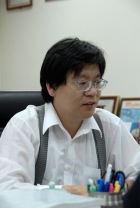 A partial ROC Cabinet reshuffle was announced February 26 by Premier Jiang Yi-huah.
The premier named Chang San-cheng the inaugural Minister of Science and Technology, and named 1990 UW CSE Ph.D. alum Jason Yi-Bing Lin as Deputy Minister with a portfolio that includes the National Science Council, Taiwan’s NSF. Jiang emphasized the importance of continuing the NSC’s tradition of cultivating a strong fundamental research capability, assisting academia to direct its resourceful creativity toward innovative entrepreneurship, and enhancing the global competitiveness of local high-tech industries.
Lin has had enormous career impact. Following his UW CSE Ph.D. (where he worked with Ed Lazowska), he spent five years at Bell Communications Research before joining the faculty of National Chiao Tung University in his native Taiwan. His research interests include personal communications, mobile computing, intelligent network signaling, computer telephony integration, and parallel simulation. The author of five books, hundreds of papers, and dozens of patents, he is a Fellow of ACM, IEEE, and AAAS. He currently serves as Dean of the College of Computer Science at NCTU, and as NCTU Vice President, as well as holding a lifetime Chair Professorship.
Congratulations Jason! Read more here. Jason’s personal web page here. Read more →
 UW CSE professors Tom Anderson, Shyam Gollakota, Ira Kemelmacher, and Dan Weld have been named as recipients in the latest round of Google Faculty Research Awards.
Google received 691 proposals from 46 countries on 6 continents, and made 115 awards.
Other UW recipients were Jeff Bilmes (EE; CSE adjunct professor), Chris Rudell (EE), and Jake Wobbrock (iSchool; CSE adjunct professor).
UW CSE Ph.D. alums fared extraordinarily well in the competition: Hadi Esmaeilzadeh (Georgia Tech faculty), Zack Ives (Penn faculty), Ethan Katz-Bassett (USC faculty), Miryung Kim (UT Austin faculty), and Chris Re (Stanford faculty) were recipients.
Go team! Learn more here! Read more →
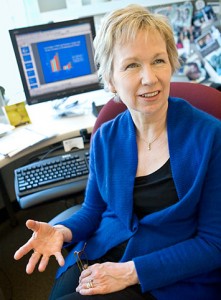 “Wondering what steps you can take to reduce your cancer risk? Dr. Anne McTiernan, a cancer prevention researcher in the Public Health Sciences Division at Fred Hutchinson Cancer Research Center, offers the following tips …”
Read them here. Read more →