CSE’s Rajesh Rao to lead UW’s NSF Engineering Research Center for Sensorimotor Neural Engineering

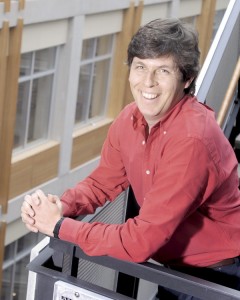
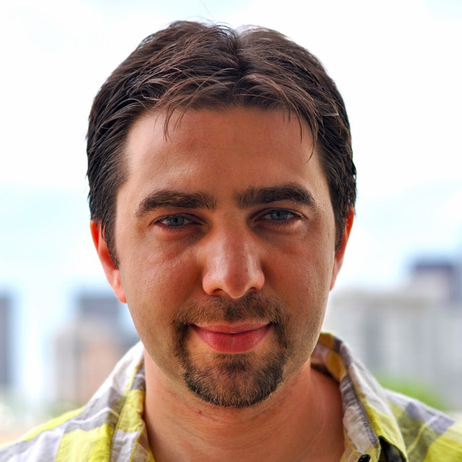
rajeshrao_1113UW CSE professor Rajesh Rao has been named Director of the National Science Foundation’s Engineering Research Center for Sensorimotor Neural Engineering (CSNE), based at the University of Washington with MIT and San Diego State as partners.

CSNE is one of 17 engineering research centers nationwide that aim to translate discovery to innovation through university, industry and government partnerships, and prepare the next generation of creative, interdisciplinary engineers to meet pressing challenges in health, energy, environment and national security.  CSNE was launched in 2011 with a five-year, $18.5 million grant. Raj has been heavily involved in CSNE since its earliest conceptual stages.  Tom Daniel, professor of Biology and CSE, has served as interim director since the founding director, Yoky Matsuoka, left UW.

Read the UW News press release here.  Learn more about CSNE here.  Learn about Rao and his research on brain-computer interfaces here. Read more →

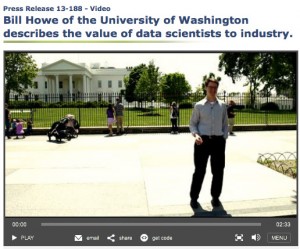
NSF “Big Data” press release features video interview with UW CSE’s Bill Howe

UntitledAn NSF press release in conjunction with yesterday’s White House “Big Data Partnerships” event includes a video interview with UW CSE’s Bill Howe … from last May … shot in front of the White House …

“Bill Howe of the University of Washington describes his work on big data and opportunities for collaboration among academia and industry. He discusses how classically trained data scientists can become valuable contributors to businesses.”

Watch the video here.  Read the full NSF press release here.  Learn more about UW’s efforts in data-driven discovery here. Read more →

Wall Street Journal gives a nod to Ambient Backscatter

EY-AA583_STORAG_G_20131107193335The article is on “better batteries,” but it notes:  “Researchers at University of Washington recently published a paper on how they used “ambient backscatter” from cellphone towers and other sources of energy to power a device with no battery at all.”

Read more here.  Learn about ambient backscatter here. Read more →

Seattle Times on UW/Berkeley/NYU/Moore/Sloan data science initiative

handout-mugshot-200x300“The University of Washington is one of three schools across the country sharing a major grant to spread ‘big data’ analysis skills beyond computer science and apply them to other fields …

“‘Our goal is to figure out how to rapidly evolve universities to support and utilize data-intensive discovery,’ Ed Lazowska, eScience Institute founder and Computer Science & Engineering professor, said via email. ‘We have been doing this on a small scale, but now we’ll be able to work the problem at a large scale, and as a collaboration among three teams that include some of the strongest faculty at some of the nation’s strongest universities’ …

“‘We see enormous potential in the cross-pollination that happens by having participants co-locate in the data science studio,’ Bill Howe, a UW affiliate assistant professor of Computer Science & Engineering, said in the UW release. ‘These projects will help expose common problems and enable collaboration as we continue to scale up our investment in data science expertise’ …

“The UW also received an additional $2.8 million ‘integrative graduate education and research traineeship’ grant from the National Science Foundation that will fund graduate students learning to analyze massive data collections in their research fields.”

Read more here.  Paywall gotcha?  Try here.  Learn more about UW’s efforts here. Read more →

GeekWire on UW/Berkeley/NYU/Moore/Sloan data science initiative

data-shirt“‘All across our campus, the process of discovery will increasingly rely on researchers’ ability to extract knowledge from vast amounts of data,’ said UW project lead Ed Lazowska, a professor of computer science and engineering and director of the eScience Institute. ‘To remain at the forefront, the UW must be a leader in advancing the methodologies of data science and putting them to work in the broadest imaginable range of fields.'”

Read more here.  Learn more about UW’s efforts here. Read more →

Huffington Post on UW/Berkeley/NYU/Moore/Sloan data science initiative

ddd_imagetemplate_796x400_courtesy-of-well-formed.eigenfactor.orgVicki Chandler, Chief Program Officer for Science at the Gordon and Betty Moore Foundation, write:

“Our hypothesis is that the greatest advances in tools and practices will result from meaningful interactions and sustained collaborations among data-intensive science researchers who build on one another’s work, leverage the best practices and tools in existence, and demonstrate solutions that can be used more broadly by others. It is also critical to establish long-term, sustainable career paths in academia for those scientists who take a multi-disciplinary approach to analyzing massive, noisy, and complex scientific data. Openly sharing practices, tools, lessons and discoveries will help to ensure that the network of experiments has impact greater than the sum of its parts.”

Read more here and here.  Learn more about UW’s efforts here. Read more →

Xconomy on UW/Berkeley/NYU/Moore/Sloan data science initiative

Sarah-Loebman-220x146Includes an excellent profile of recent UW Astronomy Ph.D. Sarah Loebman as an exemplar of the sort of scientist we seek to create:

“She specializes in comparing the evolution of galaxies simulated on supercomputers with actual observations of the Milky Way from the Sloan Digital Sky Survey (SDSS) to learn about processes by which our own galaxy might have formed. For example, she is currently comparing the distribution of iron and oxygen in stars at the outer edges, or stellar halo, of simulated galaxies with the observed iron content of stars in the Milky Way …

“Loebman worked with data management experts from the UW computer science department. She became skilled in data science as she finished her Ph.D. in astronomy at the UW. It’s that multi-disciplinary expertise, she says, that helped her land a post-doctoral position at the University of Michigan.

“Loebman exemplifies the new scientist that the Moore/Sloan grant aims to help universities train in a more deliberate way. She spent the summer working with senior leaders in a range of scientific fields at the participating universities to help structure the program. They discussed common data-management approaches across disciplines, which tools can and can’t be shared among biologists and astronomers, for example.”

Read more here.  Learn more about UW’s efforts here. Read more →

New York Times on UW/Berkeley/NYU/Moore/Sloan data science initiative

12bits-data-tmagArticleThe headline of the article nails it: “Program Seeks to Nurture ‘Data Science Culture’ at Universities.” Continuing …

“The modern flood of data comes in a many forms — sensor data, genomic data, web click streams and credit card transactions, to name a few. The disparate data sources are often called ‘silos,’ suggesting the challenge of mingling different data sets to generate insights.

“But if the data is in a silo, so are the people, often isolated in their fields of expertise. In universities, that problem is a key obstacle to progress in data science, according to academic research scientists.

“And that problem, among others, is the focus of a new five-year project, involving three universities and supported by $37.8 million in funding from the Moore Foundation and the Sloan Foundation.”

Read more here.  Learn about UW’s efforts here. Read more →

UW, Berkeley, NYU collaborate on $37.8M data science initiative

UW core team (clockwise from lower left): Tom Daniel (Biology + Computer Science & Engineering), Andy Connolly (Astronomy), Bill Howe (Computer Science & Engineering), Ed Lazowska (Computer Science & Engineering), Randy LeVeque (Applied Mathematics), Tyler McCormick (Statistics + Sociology), Cecilia Aragon (Human Centered Design & Engineering), Ginger Armbrust (Oceanography), Sarah Loebman (Astronomy). Missing: Magda Balazinska (Computer Science & Engineering), Josh Blumenstock (iSchool), Mark Ellis (Geography), Carlos Guestrin (Computer Science & Engineering), Thomas Richardson (Statistics), Werner Stuetzle (Statistics), John Vidale (Earth & Space Sciences).

The University of Washington, the University of California at Berkeley, and New York University are partners in a new five-year, $37.8 million award from the Gordon and Betty Moore Foundation and the Alfred P. Sloan Foundation whose goal is to dramatically accelerate the growth of data-intensive discovery in a broad range of fields.

UW’s team, which includes more than a dozen faculty from across the campus, is led by Ed Lazowska, Bill & Melinda Gates Chair in Computer Science & Engineering and Director of the UW eScience Institute. Berkeley’s team is led by Nobel laureate astrophysicist Saul Perlmutter, and NYU’s by neuroscientist and computer scientist Yann LeCun.

“All across our campus, the process of discovery will increasingly rely on researchers’ ability to extract knowledge from vast amounts of data,” Lazowska said. “In order to remain at the forefront, UW must be a leader in advancing the methodologies of data science, and in putting these methodologies to work in the broadest imaginable range of fields. This partnership with Berkeley and NYU – which builds on investments by UW in the eScience Institute and in the Center for Statistics and the Social Sciences – puts us in a leadership position.”

The new initiative was announced today (Nov. 12) as the featured talk at a White House Office of Science and Technology Policy event highlighting public-private partnerships that support “big data” analytics and research.

Under the partnership, cross-university teams will organize their efforts around six primary areas: strengthening an ecosystem of tools and software environments; establishing academic careers for data scientists; championing education and training in data science at all levels; promoting and facilitating reproducibility and open science; creating physical and intellectual hubs for data science activities; and measuring programs through directed ethnography and evaluation.

At UW, the grant will fund salaries for new research positions, including five data scientists who specialize in software and will work with researchers across campus, four postdoctoral data science fellows pursuing interdisciplinary research agendas, and four partially funded research scientists stationed in other departments and centers. A dedicated “data science studio” on campus will have meeting areas and drop-in workspaces to encourage collaboration across the UW’s colleges and schools.

This Washington Research Foundation video describes the transformational impact
of data science at UW.

To take advantage of these new resources, faculty members can submit short-term project proposals that require data science expertise: “analyzing a large dataset, accessing cloud resources, parallelizing an algorithm, or scaling up a statistical method,” said Bill Howe, co-lead of the new effort and a UW affiliate assistant professor of Computer Science & Engineering. Participants in the program would send a graduate student or research staff member to physically relocate for a period to work directly with the data scientists. The idea behind this embedded approach is to learn techniques, collaborate, then bring that knowledge back to individual labs and departments. “We see enormous potential in the cross-pollination that happens by having participants co-locate in the data-science studio,” Howe said. “These projects will help expose common problems and enable collaboration as we continue to scale up our investment in data science expertise.”

NSF_LogoThe UW also has received a $2.8 million Integrative Graduate Education and Research Traineeship (IGERT) grant from the National Science Foundation titled “Big Data U.” Together, the two grants will fund several dozen graduate students from a variety of departments to learn how to tackle big data in their research fields. The need to analyze vast amounts of data now touches nearly every department and discipline, and both grants will boost the university’s ability to prepare students.

The UW has been a leader in connecting big data experts with researchers in a variety of departments. This grant directly builds upon the UW’s eScience Institute, created in 2008 to focus on data-intensive discovery across campus, and the Center for Statistics and the Social Sciences, now more than a decade old.

Presentation by Ed Lazowska (UW), Saul Perlmutter (Berkeley), Yann LeCun (NYU), Josh Greenberg (Sloan), and Chris Mentzel (Moore) at the White House “Big Data Partnerships” event on November 12.

Faculty members see this new initiative as advancing the capacity for data-intensive scientific research and boost Seattle’s leadership in data science, while attracting more top data science talent back to universities at a time when big data is more pervasive than ever before. “These data scientists are coveted in industry as well as academia.  One of the missions we have in this effort is to provide competitive career paths that allow these experts the freedom to remain in academia and apply their skills to the most important problems in science,” Howe said.

In addition to Lazowska and Howe, co-PIs on UW’s Moore/Sloan award include Cecilia Aragon (Human-Centered Design & Engineering), Ginger Armbrust (Oceanography), Magda Balazinska (Computer Science & Engineering), Josh Blumenstock (iSchool), Andy Connolly (Astronomy), Tom Daniel (Biology + Computer Science & Engineering), Mark Ellis (Geography), Carlos Guestrin (Computer Science & Engineering), Randy LeVeque (Applied Mathematics), Tyler McCormick (Statistics + Sociology), Thomas Richardson (Statistics), Werner Stuetzle (Statistics), and John Vidale (Earth & Space Sciences). Many additional faculty have contributed significantly.

Guestrin is the PI on the IGERT; co-PIs include Armbrust, Balazinska, David Beck (Chemical Engineering), Connolly, Emily Fox (Statistics), Dan Grossman (Computer Science & Engineering), Jeff Heer (Computer Science & Engineering), Howe, Željko Ivezić (Astronomy), Lazowska, Marina Meila (Statistics), Bill Noble (Genome Sciences), Ben Taskar (Computer Science & Engineering), and LuAnne Thompson (Oceanography).

logos

Resources:

Press (a selection):

Read more →

UW at White House “Big Data” event, Tuesday at 11 a.m. Pacific Time

Microsoft Word - Agenda Web version 1Watch the UW presentation at the White House “Big Data” event on Tuesday at 11 a.m. PT, 2 p.m. ET, at http://live.science360.gov/.

Ed Lazowska (UW CSE) will join Saul Perlmutter (Berkeley Nobel laureate astrophysicist), Yann LeCun (NYU), Josh Greenberg (Alfred P. Sloan Foundation) and Chris Mentzel (Gordon and Betty Moore Foundation).

Agenda here. Read more →

« Newer PostsOlder Posts »