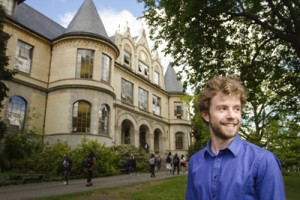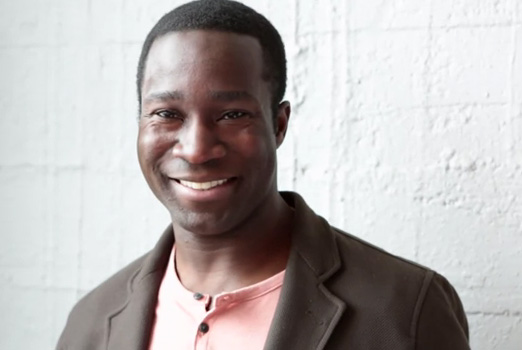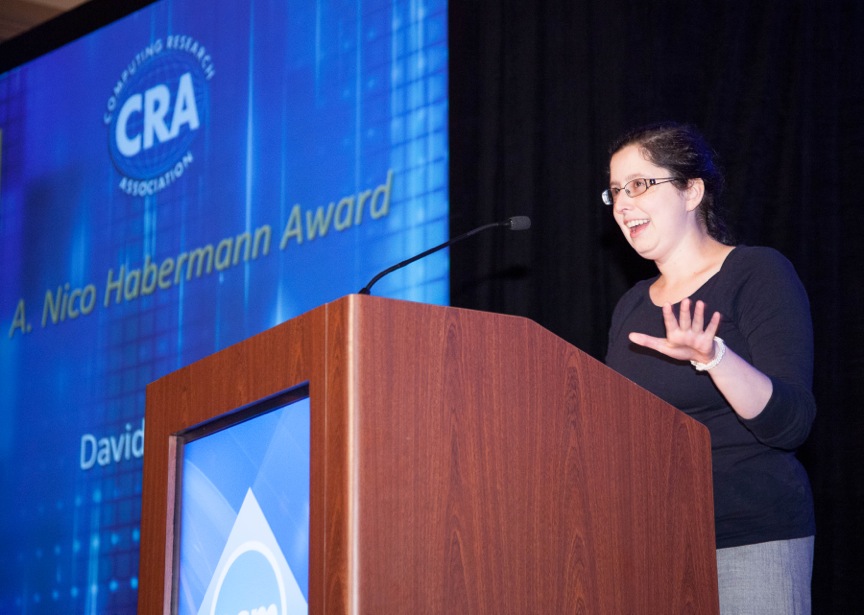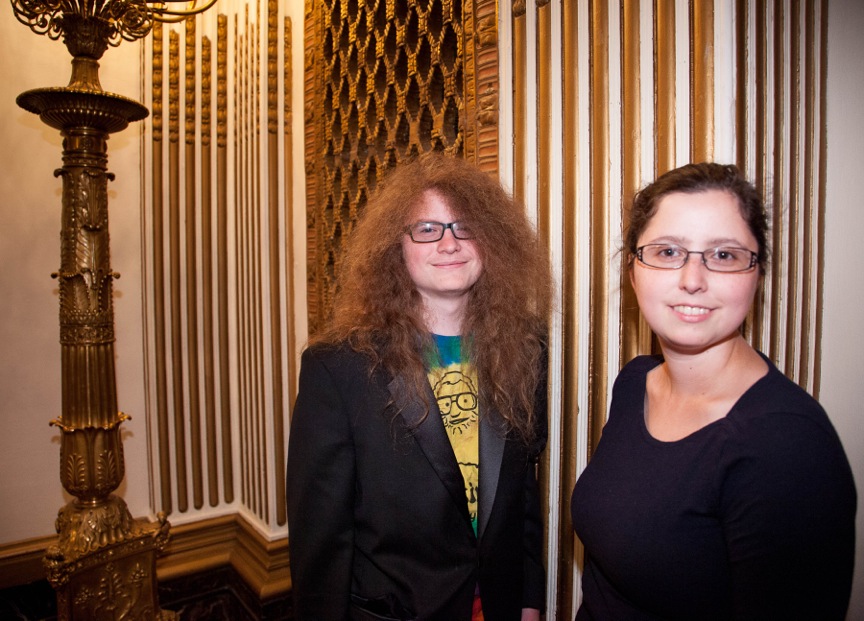
David Notkin’s daughter Emma and son Akiva accept the CRA Habermann Award

ACM_Awards_2013-8976

Akiva, Emma, and CRA’s Andy Bernat

ACM_Awards_2013-8984

Emma offers remarks on behalf of the family

ACM_Awards_2013-8159

Akiva and Emma

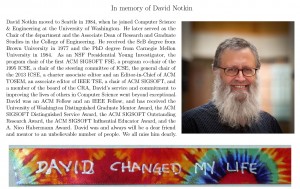
At the ACM Awards Banquet last month, David Notkin’s daughter Emma and son Akiva accepted the Computing Research Association’s A. Nico Habermann Award on David’s behalf.  We just received these photographs from Andy Bernat at CRA.  Thanks once again to ACM and CRA for recognizing David’s tireless efforts to broaden participation in our field.

ACM and CRA’s video tribute to David is here; Habermann Award citation here. Read more →

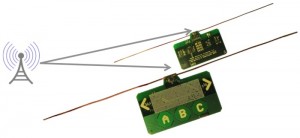
Ambient Backscatter Communication: Wireless Communication Out Of Thin Air

abcAs computing devices become smaller and more numerous, powering them becomes more difficult; wires are often not feasible, and batteries add weight, bulk, cost, and require recharging/replacement that is impractical at large scales. Devices that use ambient backscatter communication solve this problem by leveraging existing TV and cellular transmissions, rather than generating their own radio waves. This novel technique enables ubiquitous communication where devices can communicate among themselves at unprecedented scales and in locations that were previously inaccessible.

The work – by UW CSE’s Vincent Liu, Aaron Parks, Vamsi Talla, Shyam Gollakota, David Wetherall, and Josh Smith – was featured by ExtremeTech.

Read the ExtremeTech article here.  Read the SIGCOMM paper here.  See the project web page here.

Go team! Read more →

Seattle Times: State’s students flocking to computer science programs

Michaela

Michaela Monstream, Holy Names Academy

Payton

Payton Quinn, Seattle Prep

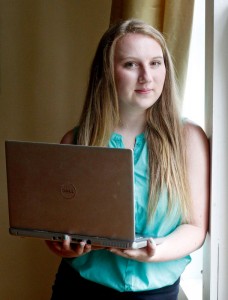
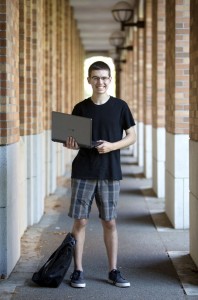
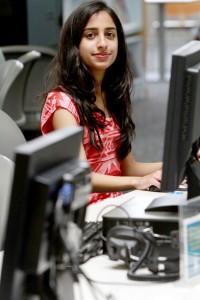
The Seattle Times profiles three entering UW CSE freshmen:

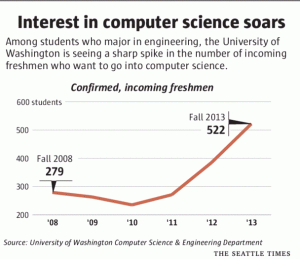
“The number of incoming freshmen who listed computer science as their desired major has more than doubled in just three years at the University of Washington, which has one of the nation’s top computer science schools …

“At the UW, where hundreds of students are turned away from the computer science program every year for a lack of space, the money ‘still won’t meet the demand,’ Lazowska said by email. ‘But every journey begins with a few steps, and these are important steps’ …

“Lazowska said he thinks students are realizing that ‘Computer science has ‘change the world’ potential like no other field’ …

Nirupama

Nirupama Suneel, Skyline High School

Chart“Students are also seeing that both computer science and ‘computational thinking,’ a problem-solving method that uses computer science techniques, is valuable in many fields, Lazowska said. Many of UW’s computer-science grads go on to study such fields as biology, law, medicine and bioengineering, he said.

“And of course, the degree can lead to a good job.”

Read the article here.

Learn more about the field, and about UW CSE, here. Read more →

UW CSE research featured in Pacific Science Center’s “Minds and Machines” exhibit

4“Spurred by new understanding of how the brain works, local science labs are learning how to use brain signals to compensate for injury or lost function. In Minds and Machines, you’ll meet several of these scientists and learn what’s at the cutting edge of neuroscience research. Visit The Studio within Wellbody Academy to use your brain waves to compete against another player in Mindball, check out neuroscience-related jobs on the Career Machine and see a real human brain.”

The exhibit features the work of UW CSE undergrads Matt Bryan, Alex Dadgar, and Joseph Wu, supervised by UW CSE faculty member Rajesh Rao.

Learn more here and here. Read more →

IEEE Software remembers UW CSE’s David Notkin

notkin_smFrom the July/August 2013 issue of IEEE Software:  “We recently lost one of the leaders of the software research community when David Notkin passed away. Many of us have always been familiar with his work. But in many, many conversations since his death, it has become more and more clear how others in the research community cherished not just his technical contributions but his contributions in other dimensions: his mentorship, friendship, and character.”

Read more here.

Learn more about David here. Read more →

Evi Nemeth lost at sea

nina.00Evi Nemeth – a University of Colorado computer science faculty member well known for her contributions to Unix system administration and system security, and the undergraduate advisor of UW CSE faculty member Yoshi Kohno – has been lost at sea and is presumed dead.  Nemeth was sailing aboard the famous schooner Niña, winner of the 1928 3900-mile race from New York to Santander Spain, of the 600-mile Fastnet Race that same year, of the 1929 race from London to Gibson Island Chesapeake Bay, of the New York Yacht Club Astor Cup in 1939 and 1940, of the 233 mile Stanford-Vineyard Race on Long Island Sound (repeatedly), and, at age 34, of the 1962 Newport to Bermuda race.

Articles here and here (with an interesting video in the latter). Read more →

UW CSE’s Richard Ladner in Columns

essayistThe UW alumni magazine, Columns, uses UW CSE professor Richard Ladner to illustrate an article on “second careers”:

“Or consider Richard Ladner, Boeing Professor in Computer Science & Engineering and a 2008 winner of the Purpose Prize for extraordinary social innovators over 60 years of age. After 35 years as a professor, Ladner wanted to move from theory to impact. The hearing son of deaf parents, Ladner combined his expertise in computers and technology with an innate understanding of the needs and wants of people with disabilities to develop accessible technologies for disabled people.”

Read the article, “Second Acts,” here. Read more →

UW Daily on WiSee

Screen Shot 2013-07-02 at 9.13.50 PM.fullBetter late than never, the UW Daily becomes the 99th publication to run an article on UW CSE’s WiSee technology:

“A quick wave of a hand can shut off the lights and a flick of a finger can turn on the heater. Thanks to a team of UW Computer Science & Engineering (CSE) students and faculty, this type of gesture-recognition technology is now possible.

“This newly developed home gesture system, known as WiSee, can perform simple household tasks, such as turning the lights off in a room or changing a music player’s volume, by using Wi-Fi technology to detect the user’s specific body gestures …

“To do this, the group studied the science of Doppler shifts — relative changes in the frequency of waves caused by the location of the observer.”

Read more here.  Learn more about WiSee here. Read more →

UW CSE summer day camps for middle school and high school students

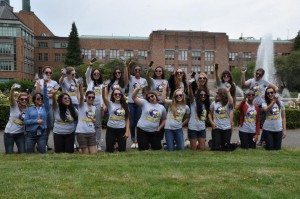
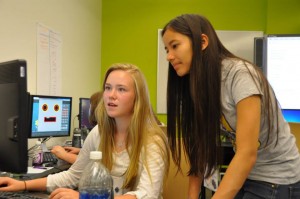
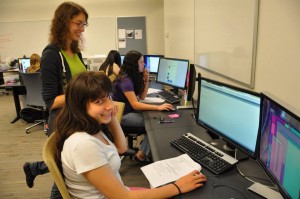
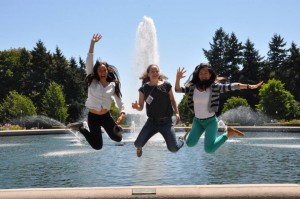
girlsCreative programming projects, car hacking, discrete math card tricks, and lots of snacks – it must be time for UW CSE’s summer day camps for middle school and high school students!

This past week marked the first of eight UW CSE day camps.  Twenty one energetic, curious, driven high school girls joined us for a week of exposure to computer science.

There will be a second week-long day camp for high school girls later in the summer, as well as two week-long day camps for middle school girls.

In addition, there will be three co-ed day camps focused on building apps for Android phones – 3-day and 5-day camps for middle school students, and a 3-day camp for high school students.  Finally, there will be a 4-day co-ed day camp for high school students focused on physical computing.

Learn more about our summer day camp program here.

Learn more about DawgBytes, UW CSE’s outreach program, here.  And follow the action as it happens on the DawgBytes Facebook page here.

See photos from this past week’s camp here. Read more →

UW CSE Summer Academy for Advancing Deaf and Hard of Hearing in Computing

summer-academy_3-300x220UW News writes:

“The UW program, called the Summer Academy for Advancing Deaf and Hard of Hearing in Computing, is the only one of its kind in the nation that offers a full quarter of academic credit to incoming college students or those who just finished their first year.

“It also gives deaf students a chance to explore an academic field they may not have already considered, said Richard Ladner, a UW professor of Computer Science & Engineering who started the academy six years ago.

“‘It has many facets and a richness that many programs don’t have,’ Ladner said. ‘It really opens up their worldview to what they can do’ …

“Google software engineer Anna Cavender helped with practically every aspect of the summer program its first several years while she was a UW doctoral student in Computer Science & Engineering. She has seen students forge lasting friendships and land highly competitive jobs through networking.

“‘The transition to college can be a little extra daunting for deaf and hard of hearing students,’ Cavender said. ‘This program helps students navigate the hurdles and introduces them to other students with similar backgrounds and interests.'”

Read more here. Read more →

« Newer PostsOlder Posts »