 Clerky, a Y Combinator-backed startup co-founded by UW CSE alum Darby Wong and Stanford alum Chris Field, is a web application that makes it easy for startups to get legal transactions done.
“When we cover a startup’s launch, we often focus on the market opportunity, funding and investors and how the company’s product is solving a particular problem. We rarely mention the initial set of challenges every entrepreneur must face when they actually turn an idea into a startup — incorporation, stock issuance documents and more. Most of the time, startups have to incur legal costs to do this. However, Clerky, a Y Combinator-backed startup launching today, is hoping to offer entrepreneurs a quality, cost-effective, automated way to handle incorporation documents and more.”
Read the full TechCrunch article here. Read more →
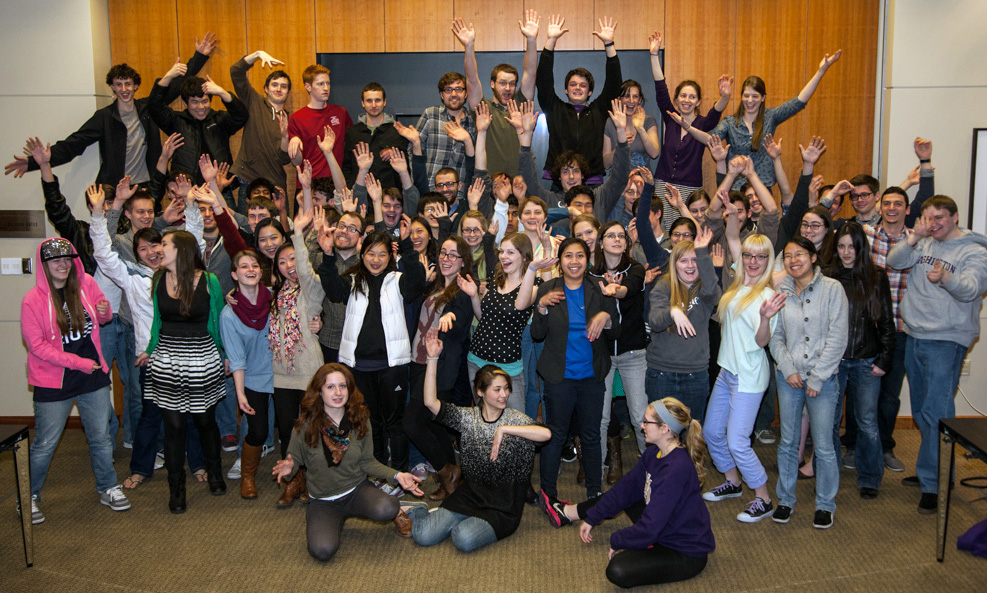
 Batman’s Kitchen, an interdisciplinary team involving students from CSE, the iSchool, EE, and pre-engineering, won the Hawaiian “Big Splash” Cyber Defense Competition held 8-10 March 2013. The competition is designed to bring practitioners in industry and government together with students in a competition environment. Teams were given a scenario of critical infrastructure in a business setting to defend against attacks by hackers (the red team) while also completing injects (e.g., setup a database, block certain websites, database audits, etc.) throughout the three-day competition.
On Day 2 of the competition, the head of the red team initiated a full-on attack against the UW team – beyond the scope of the regular competition. The team successfully protected their network for several hours while under attack. By 5pm on the final day of the competition, it was announced that the UW team had won by hundreds of points over the military teams entered in the competition.
The trophy for the competition will be awarded in Seattle next week.
UW participants:
- Melody Kadenko (team advisor and competition judge), CSE
- Bryan Eastes, CSE
- Atanas Kirilov, CSE
- Karl Koscher, CSE
- David Mah, CSE
- Michael McKeirnan, pre-engineering
- Aasav Prakash, CSE
- Jordan Puryear, iSchool
- Ed Samson, CSE
- Omar Sandoval, CSE
- Ian Smith, CSE
- Andrew Sorensen, UW Tacoma
- Carlo Valentin, iSchool
- Tim Vega, CSE
- Rafael Vertido, CSE
- Cullen Walsh, CSE alum
- Thomas Winegarden, iSchool
- Tariq Yusuf, CSE
- Lars Zornes, CSE
Go team! Read more →
 UW CSE’s Oren Etzioni and collaborators describe their work on Open Information Extraction in this excellent short video.
How can a computer accumulate a massive body of knowledge? What will Web search engines look like in ten years? To address these questions, UW CSE’s Open IE project has been developing a Web-scale information extraction system that reads arbitrary text from any domain on the Web, extracts meaningful information and stores in a unified knowledge base for efficient querying.
Watch the video here. Learn more about Open IE here. Read more →
 At UW’s Brain Awareness Week festivities, Kennedy Catholic High School students Thane Maudslein and Nick Correa use muscle activity to play Wrestle Brainia – an electronically powered device getting its signals through a computer hooked to the wrestlers’ arms. Wrestle Brainia was developed by Jeremiah Wander and Dev Sarma – graduate students in CSE’s Neural Systems Lab, and undergraduate student Vivek Paramasivam, with support from UW’s Center for Sensorimotor Neural Engineering. Read more →
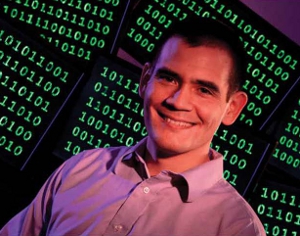 CSE professor Yoshi Kohno is profiled in the March issue of Columns, UW’s alumni magazine.
“Kohno’s experiments are the stuff of science fiction movies: using a kid’s Erector Set to spy on its owner, tracking a runner using his mileage monitor or even hackers taking over a car while it’s driving and forcing it to brake to a stop. The only difference between Hollywood make-believe and reality is that this white hat hacker doesn’t need special effects to make them reality.”
Read the full article here. Learn more about UW CSE’s Security and Privacy Research Lab here. Read the complete March issue of Columns here. Read more →
 The opening keynote of the 2013 SIGCSE (Computer Science Education) conference on March 7 in Denver featured 7 5-minute “flash talks” on “Changing the Face of Computing.” The first – “Why Broadening Participation Matters” – was presented by UW CSE’s Ed Lazowska. See Ed’s slides here. Read more about UW CSE’s motivations and activities here. Learn about DawgBytes, UW CSE’s K-12 outreach program, here. Read more →
 NPR’s Joe Palca today highlighted how computer gamers are helping to push the frontier of brain research. One of those interviewed was UW CSE’s Zoran Popović. Popović talked about Foldit, a game designed to tackle the problem of protein folding.
“People can get pretty addicted to computer games. By some estimates, residents of planet Earth spend 3 billion hours per week playing them. Now some scientists are hoping to make use of all that human capital and harness it for a good cause.
“Foldit has been a big success. Popovic says there are a half-million people registered to play the game, and that has made other scientists and inventors take seriously the idea of using games to solve scientific questions.”
Read full article here. Learn more about Foldit here. Learn about the Center for Game Science here. Read more →
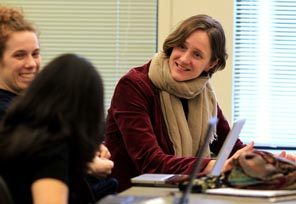 A lovely Seattle Times article on Kate Starbird, a faculty member in Human Centered Design & Engineering and an adjunct professor in CSE.
“Kate Starbird does what she can to brighten her dreary fourth-floor office at Sieg Hall. A picture of her newborn nephew is above her desk. A cluster of succulent plants sits below a window looking out onto the University of Washington campus.
“Starbird, 37, is a first-year assistant professor in UW’s Department of Human Centered Design and Engineering and director of the Emerging Capacities of Mass Participation laboratory. In English, that means she teaches how social media is used in crisis situations and how to design better applications for digital volunteers.”
Read more here. Read more →
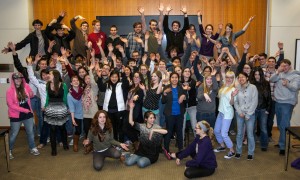 Why do CSE 142/143 ROCK (more than 2,000 students per year in 142; more than 1,300 per year in 143; off-the-scale student evaluations)?????
Great faculty, yes! But also, 60 PHENOMENAL undergraduate teaching assistants!
Go team! Read more →
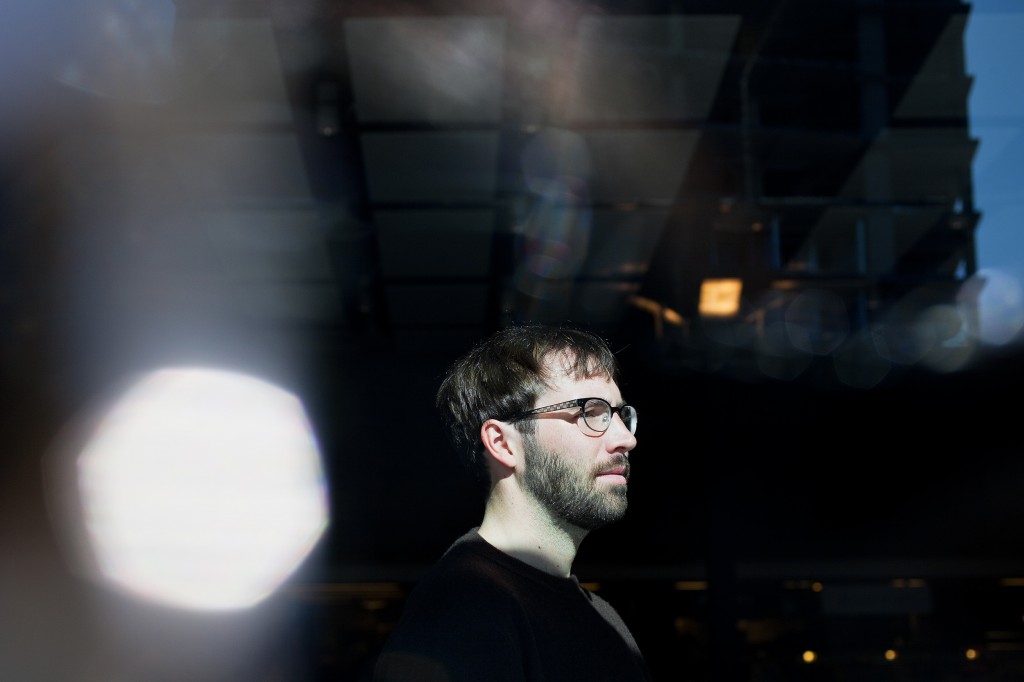 Star UW CSE bachelors alum Ben Hindman headed off to graduate school at Berkeley, then bailed for Twitter when the company adopted his Mesos system for efficiently parceling work across massive numbers of servers. Wired describes the work in “Return of the Borg: How Twitter Rebuilt Google’s Secret Weapon.” Read it here. Read more →