 Each spring, the University of Washington College of Engineering celebrates outstanding achievements by students, staff, and faculty at the “Community of Innovators” award event. CSE was well represented among the honorees on June 1. Congratulations to:
- Eric Arendt, recipient of the 2010 Dean’s Medal, awarded annually to two outstanding members of the graduating class.
- Anna Cavender, recipient of the 2010 Graduate School Medal, awarded by the UW Graduate School to one outstanding Ph.D. recipient each year.
- Carol Matsumoto, recipient of the 2010 Classified Staff Innovator Award.
- Jon Froehlich, recipient of the 2010 Student Research Innovator Award.
The Dean feels that it would be inappropriate to give all of the Community of Innovators awards to CSE students, staff, and faculty; we would like to congratulate our other outstanding nominees who were caught up in this unfortunate technicality:
- Tracy Erbeck, nominated for Professional Staff Innovator.
- Victoria Kirst, nominated for Student Teaching and Learning Innovator.
- Barbara Mones, nominated for Faculty Teaching and Learning Innovator.
- Marty Stepp, nominated for Faculty Teaching and Learning Innovator.
Congratulations to all of our awardees and nominees. Check out the celebratory booklet here. Read more →
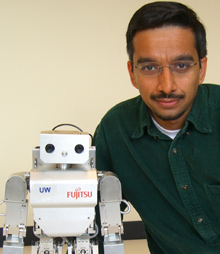 CBC News interviews UW CSE’s Raj Rao: “Reasoning that fine muscle control is a difficult problem, University of Washington researchers are taking a different tack. The Neural Systems Group is experimenting with a small humanoid robot controlled by sensors worn outside the head. Because the robot has intelligence of its own, ‘when you tell it to pick up an object you don’t have to tell it how to move its hand,’ says Rajesh Rao, associate professor of computer science and engineering. So imprecise signals from many neurons — detectable without an invasive implant — are enough.”
Read the full article here. Read more →
 Each year for more than a decade, UW CSE has offered a “Capstone Design Course” on videogame programming. Teams of students conceive, design, implement, and distribute videogames.
This year, part of the assessment involves how well the games do “in the wild” on the game distribution sites. There’s still a week to go before the end of the quarter, but the first two games now have full-featured review articles about them on game distribution sites, and one has a distribution contract offer after being out for only 2 days.
Play all 6 games here.
A review of the game Chromatic is here. It reads, in part, “You know what? There are just times when you need to go mellow. You know what I mean. Soft colors, round edges, smooth beats. That’s what I’m talking about, something to just lean back and let all the tension just wash away from you. And this is exactly what Arkeus’ platformer Chromatic would be if, you know, it wasn’t also completely finger burning, brain breaking, throw your laptop against the wall insane. Aside from that part of it, it’s totally relaxing.”
The game Hello Worlds! is on the front page of game site Kongregate here. Read more →
 The Chronicle of Higher Education features a wonderful profile of Johns Hopkins astronomer Alex Szalay, in the context of a discussion of data-driven science. The article includes multiple quotes from UW CSE’s Ed Lazowska. Read the article here. Read more →
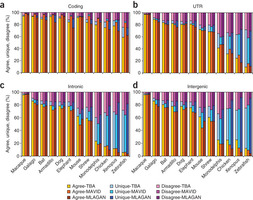 University of Washington News reports on a paper in Nature by UW CSE Ph.D. student Xiaoyu Chen and UW CSE professor Martin Tompa.
“We discovered that there’s a disturbingly low level of agreement between genome alignments produced by different tools,” said Tompa. “What this should suggest to biologists is that they should be very cautious about trusting these alignments in their entirety.”
Read the press release here. Read the research paper here. Read more →
 Have you ever slept, read, talked, or tweeted past your bus stop?
If so, then Bus Stop Alarm is the app for you! Bus Stop Alarm lets users set a location-based alarm on their phone that will go off when they get close to a preselected bus stop. Bus Stop Alarm is the first application to incorporate publicly available bus information and GPS in an innovative bus stop alarm system.
Bus Stop Alarm has just been named one of six finalists from across the nation in the Google “Juicy Ideas Collegiate Competition.” Teams from MIT, Stanford, and UC Irvine are among the other finalists.
Bus Stop Alarm began as a project for CSE 403, taught by professor Marty Stepp. Watch the Bus Stop Alarm video here.
Congratulations to team members and UW CSE undergraduates David Truong, Huy Dang, Michael Eng, Orkhan Muradov, and Pyong Byon. Read more →
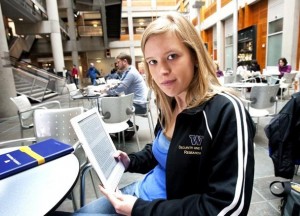
Franzi Roesner
The story includes interviews with UW CSE’s Franzi Roesner and Ed Lazowska.
(Speaking only for myself, the article completely ignored the tenor of a 1-hour conversation and an email exchange — it’s a crappy hatchet-job article where the reporter had an agenda and ignored counterbalancing input. Read it here if you must.)
(Franzi says “Speaking for myself, I agree.”) Read more →
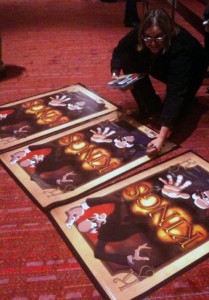 Barbara Mones (along with all of the participants in her 2008 Animation Capstone) signs posters of the UW CSE animated short “Kings” in the lobby of the SIFF Theater following its world premiere at the Seattle International Film Festival on May 21st.
UW students from the most recent three years of the UW CSE Animation Capstone joined hundreds of other SIFF attendees at the premiere. The showing (which included a dozen other animated shorts) was a sellout; a second SIFF showing has been scheduled for June 6.
Congratulations to the entire team — and to the long line of UW students in the Animation Capstone who have produced amazing work each year! Read more →
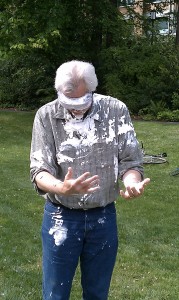
John Zahorjan
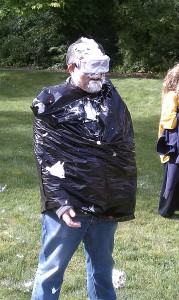
Gaetano Borriello
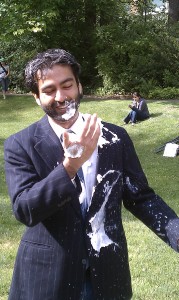
Anup Rao
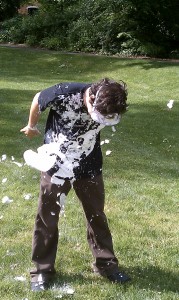
Luis Ceze
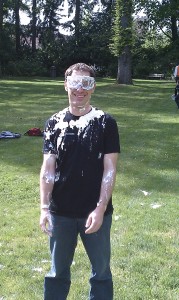
Dan Grossman
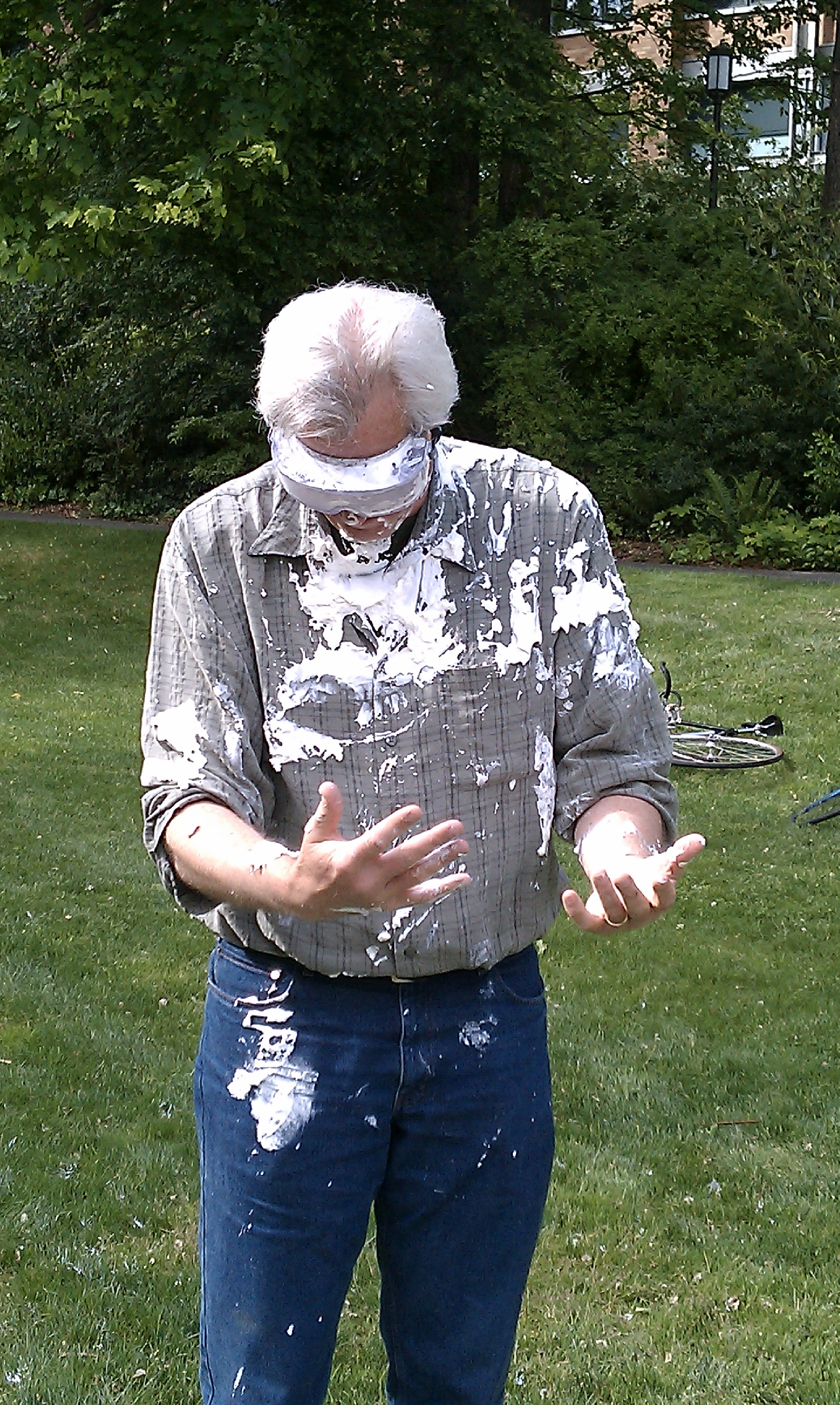
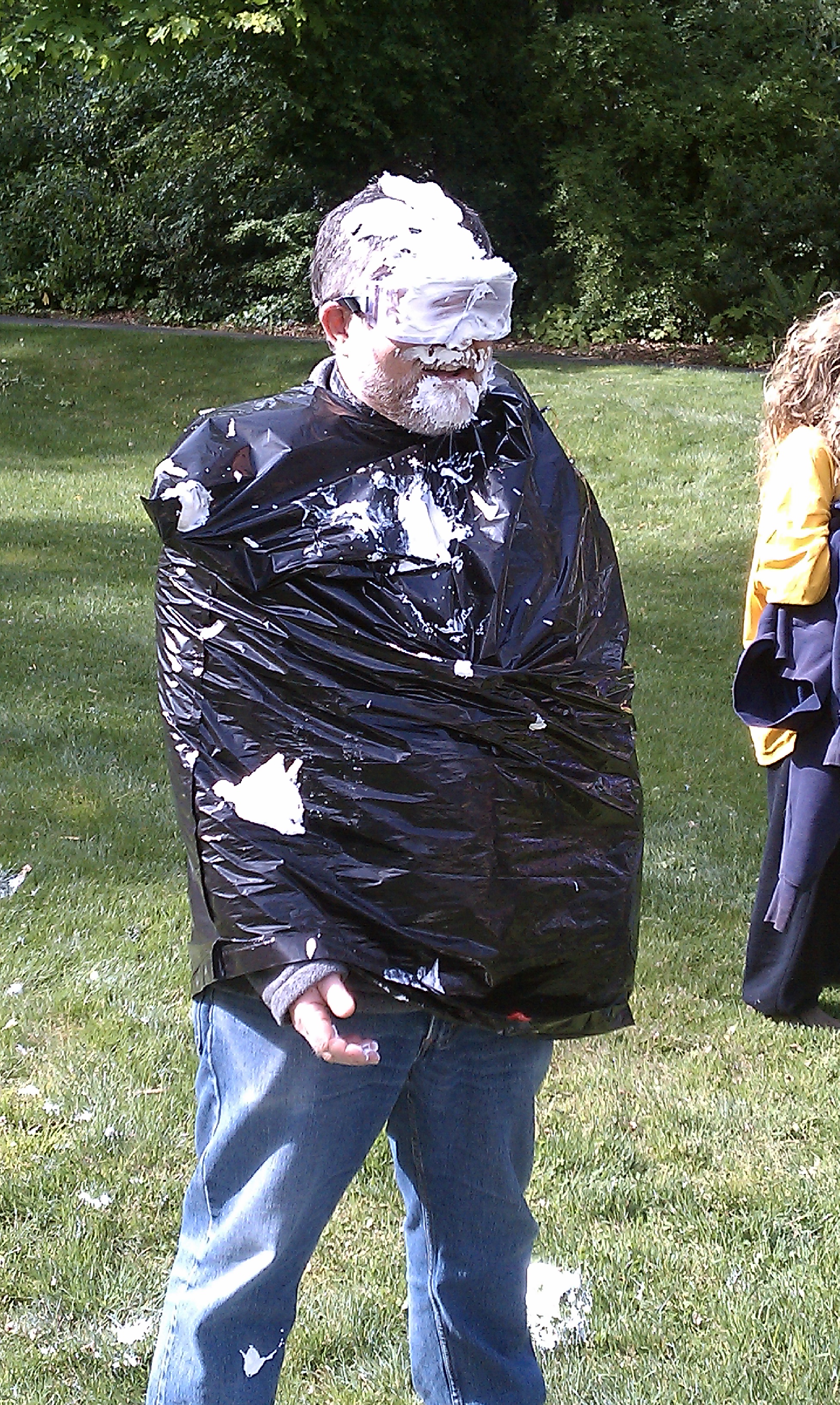
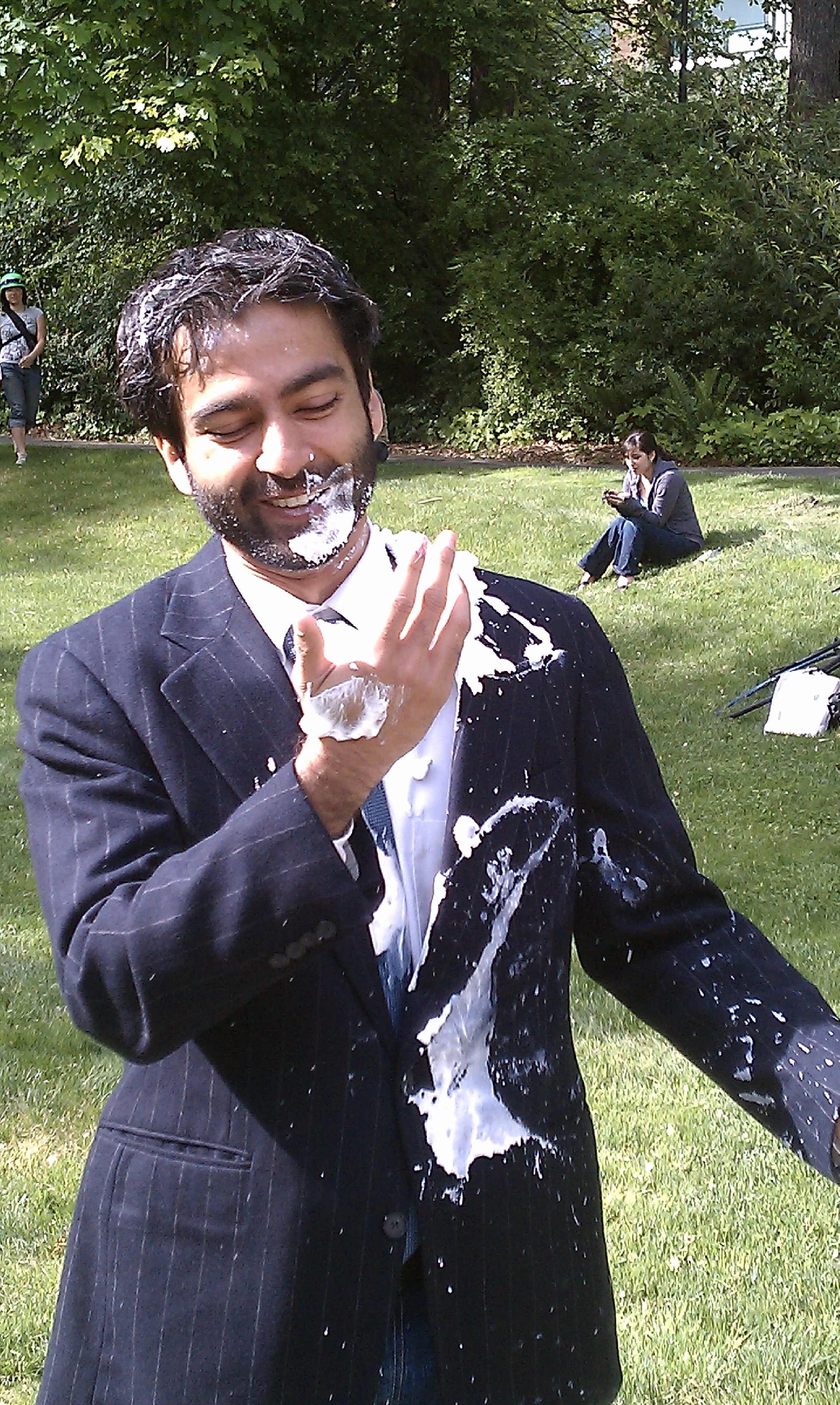
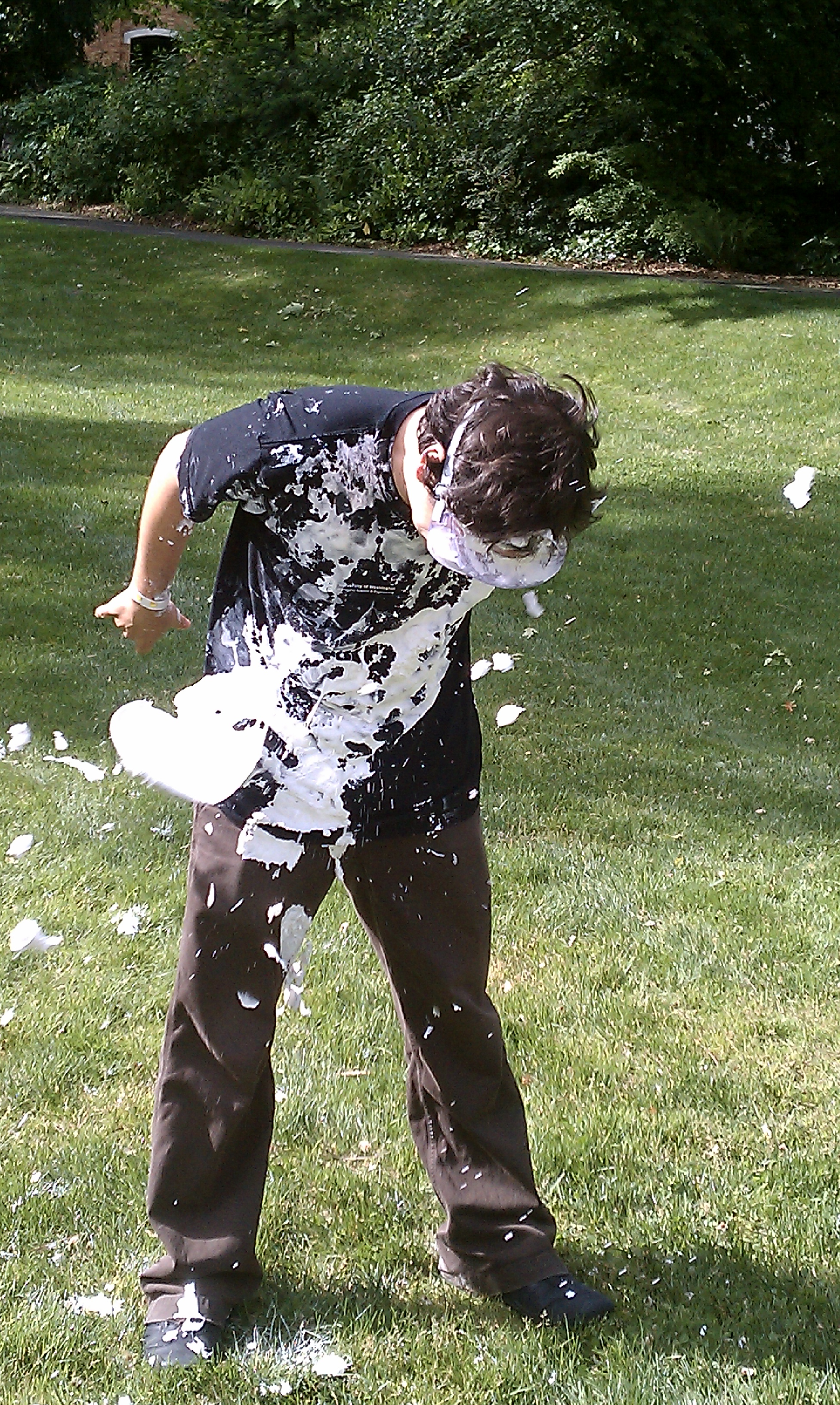
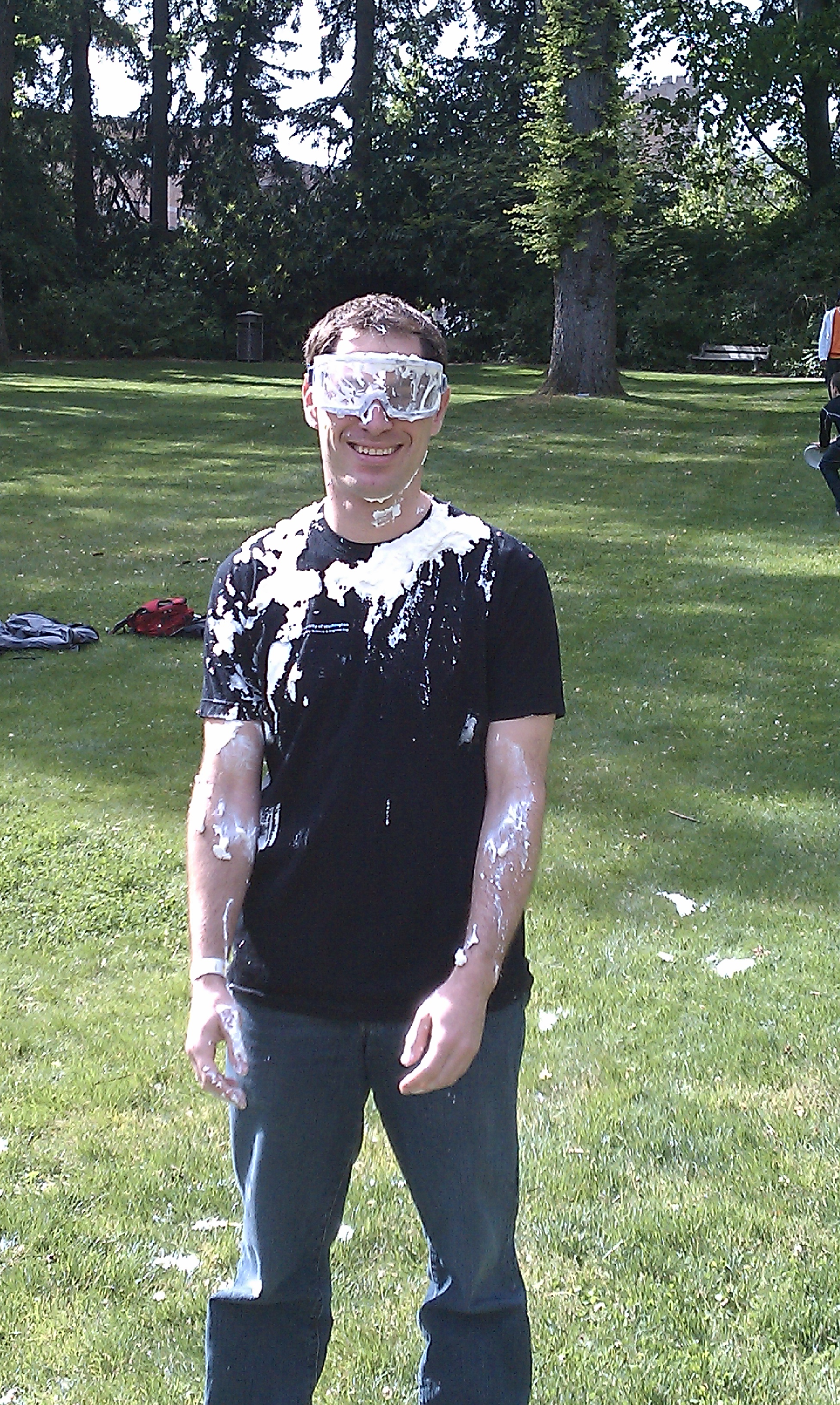
This year, the UW CSE ACM student chapter replaced the traditional faculty dunk tank with a faculty pie toss. Lots of good licks were had by all.
Victims included professors Dan “Was That Really Your Best Shot?” Grossman; Luis “I Think I May Have Messed My Pants” Ceze; Anup “Maybe I Should Have Given An Easier Final Exam In CSE 421” Rao; Gaetano “Take Him Out With The Trash, He’s Already Bagged” Borriello; and John “This Was My Only Clean Shirt” Zahorjan.
Photos by Ed “On The Smart Side of the Lens” Lazowska.
Other photographs of the event, by a real photographer (Bruce Hemingway) with a real camera, here. Read more →