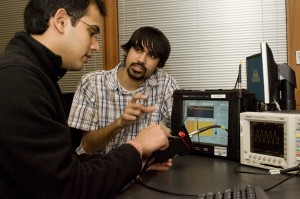
 University Week reports on the work of UW CSE’s Shwetak Patel.
“Most of the technology that will be installed as part of the UW smart grid demonstration project is commercially available. But UW engineers developing the next generation of smart-grid technologies will use data from the pilot project to advance their research.
“UW CSE’s Shwetak Patel is developing easily installed devices that measure consumption in real time down to the level of a single outlet. The device uses electrical noise to measure how much power is being used by everything from your coffee maker to your TiVo. A growing number of gadgets can measure electricity consumption. What is unique about Patel’s system is it consists of a single, low-cost device that can be stuck on the outside of a residential fuse box and record electrical activity throughout the home — no electrician required. ”
Read the complete UWeek article here. Read more about the research here. Read more →
 Kiplinger ranks the top values in public education. The University of Washington is #7. Read all about it here. Read more →
(click to enlarge)
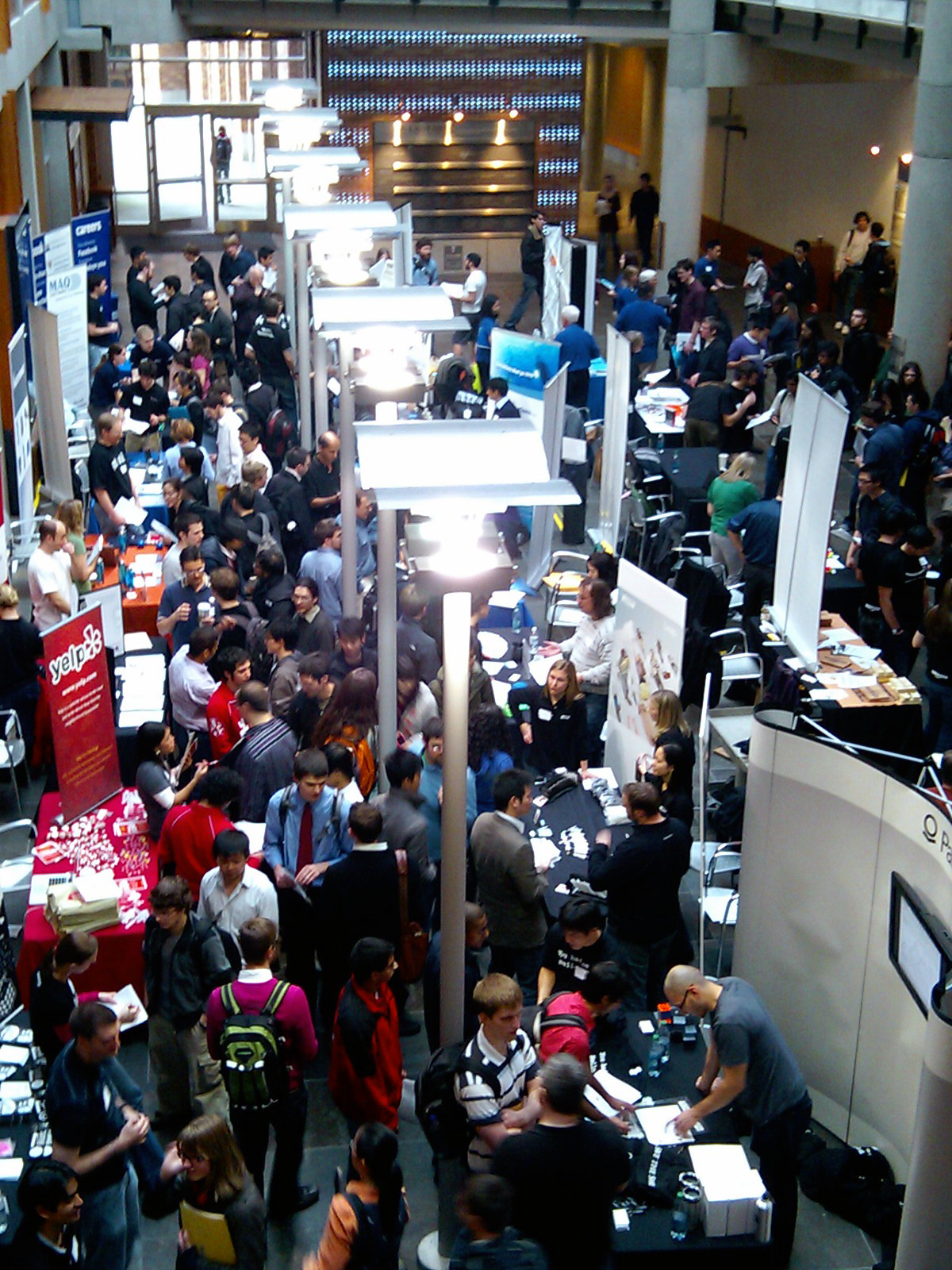
UW CSE’s winter recruiting fair is a madhouse! More photographs here. See previous post here. Read more →

Brett Allen
UW CSE Ph.D. alumni Brett Allen and Per Christensen each have been selected to receive Scientific and Technical Academy Awards (“Oscars”) from the Academy of Motion Picture Arts and Sciences.
Brett (Ph.D. 2005, advised by Brian Curless and Zoran Popovic) was part of a four-man team at San Francisco’s Industrial Light & Magic that won for the development of the Imocap, a way for capturing actors’ movements to create realistic computer-animated characters. Imocap uses sensor-studded suits and custom software to allow performance capture on movie sets, rather than in motion-capture studios. The system generated Davy Jones and other human-crustacean hybrids in the movie “Pirates of the Caribbean: Dead Man’s Chest.”
Per (Ph.D. 1995, advised by David Salesin Tony DeRose), of Pixar’s Seattle office, is one of two people honored for developing a faster and more realistic way to create shading for complex scenes. The technique is incorporated in Pixar’s RenderMan software, used in dozens of movies ranging from Terminator II to WALL-E. (UW CSE alumnus Loren Carpenter received an Oscar in 1992 for the original development of RenderMan.)
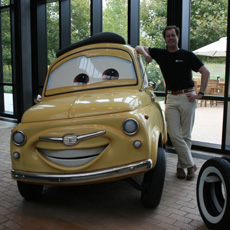
Per Christensen
Current UW CSE graphics, imaging, and animation research is described here. TechFlash post here. Read more →

William Johnson
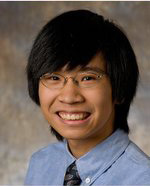
Mark Bun
Each year the University of Washington recognizes the top student (of roughly 7,000) in the previous year’s Freshman, Sophomore, and Junior classes as class Medalists.
This year, in a double-header, CSE’s Mark Bun has been named the University of Washington Sophomore Medalist, and CSE’s William Johnson has been named the University of Washington Junior Medalist.
In the past decade, 12 CSE students have been recognized as University of Washington Medalists — an extraordinary record.
Read the University Week article here. Read more →
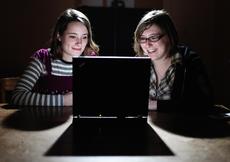 The UW Daily reports on the impact of stereotypes of the field. “Junior Emma Lynch and senior Justine Sherry … feel that people should not be turned away from the major by inaccurate stereotypes.” Read the article here. Read about the true nature of the field here. Read more →
 Barbie has had over 120 careers! What do you think her next job should be? Vote for your favorite, then check back to find out what Barbie will be next.
- Environmentalist
- Surgeon
- Architect
- News Anchor
- Computer Engineer
Get out the vote! http://www.barbie.com/vote/ Read more →
 OneBusAway, designed by UW CSE graduate student Brian Ferris with the goal of making public transit more usable, has been named one of three finalists in the “Government, Non-profit or Educational Sector” category of the 2010 Washington Technology Industry Association Industry Achievement Awards. The winner will be announced at the WTIA IAA awards event on March 4. Read more →
 Unfortunately, his mug is all you can get without a premium subscription. The article is “New Search Challenges and Opportunities.” Read more →
 Using a computer mouse can be extremely challenging if not downright impossible for those with severe mobility impairment. a keyboard’s functionality can easily be augmented or replaced by switch interfaces, speech recognition software, and mouse-driven on-screen keyboards. In contrast, a mouse is difficult to fully and naturally emulate. This can be a killer when it comes to gaming.
Enter the Vocal Joystick: a revolutionary piece of software being developed at the University of Washington, led by UW CSE’s adjunct professor (and EE professor) Jeff Bilmes, and including research with UW CSE’s professor James Landay and grad student Susumu Harada.
“Where traditional voice recognition software hinges upon recognizing discrete words and commands, Vocal Joystick directly translates vowel sounds into cursor movement. Unlike normal speech, vowel sounds (e.g., ‘aaah,’ ‘aaay,’ ‘oooh’) can be sustained as long as the user has air to expel, meaning the user is able to make the cursor move exactly as long as desired.”
Read the full AbleGamers post here. Learn more about the project here. Read more →