“Vocal Joystick Software Revolutionizes Vocal Mouse Control”

Using a computer mouse can be extremely challenging if not downright impossible for those with severe mobility impairment. a keyboard’s functionality can easily be augmented or replaced by switch interfaces, speech recognition software, and mouse-driven on-screen keyboards.  In contrast, a mouse is difficult to fully and naturally emulate. This can be a killer when it comes to gaming.

Enter the Vocal Joystick:  a revolutionary piece of software being developed at the University of Washington, led by UW CSE’s adjunct professor (and EE professor) Jeff Bilmes, and including research with UW CSE’s professor James Landay and grad student Susumu Harada.

“Where traditional voice recognition software hinges upon recognizing discrete words and commands, Vocal Joystick directly translates vowel sounds into cursor movement. Unlike normal speech, vowel sounds (e.g., ‘aaah,’ ‘aaay,’ ‘oooh’) can be sustained as long as the user has air to expel, meaning the user is able to make the cursor move exactly as long as desired.”

Read the full AbleGamers post here.  Learn more about the project here. Read more →

NPR: “Technology Sector Remains Upbeat About Job Growth”

NPR’s Wendy Kaufman interviews UW CSE’s Ed Lazowska, among others, on Morning Edition:

“‘What this nation should be investing in is jobs that create other jobs and that’s what technology jobs do,’ says Ed Lazowska, who holds the Bill & Melinda Gates chair in Computer Science & Engineering  at the University of Washington.”

Listen to the broadcast here. Read more →

Where the jobs are …

Every second year, the US Bureau of Labor Statistics provides a ten-year forecast of job growth in all fields of employment.  The most recent forecast, released in November 2009 and covering the period 2008-2018, may be found here (pdf).  Among the highlights:

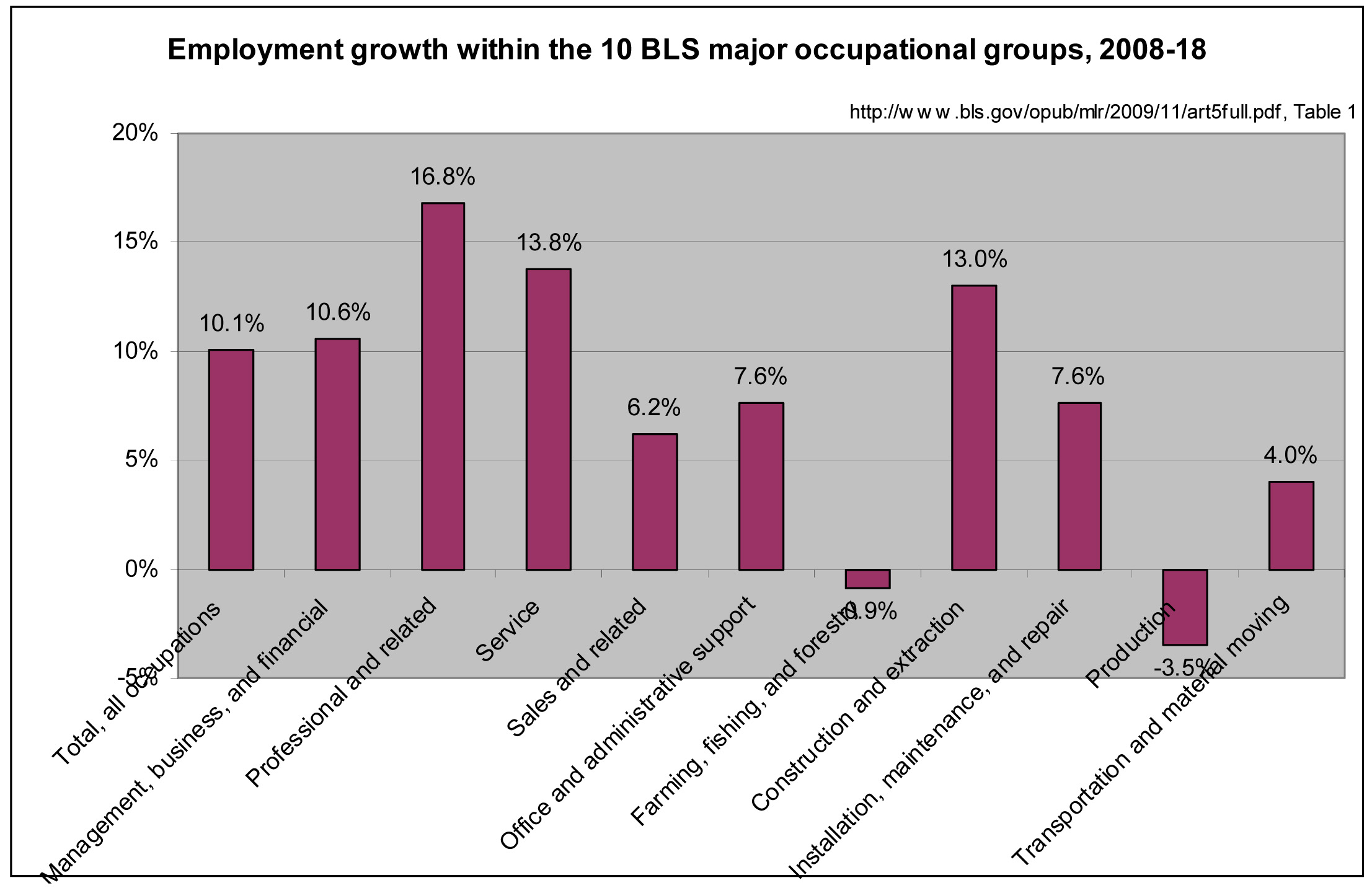
  • Among the 10 major BLS occupational groups, the “Professional and related” category (which includes computer science occupations) is projected to grow by the largest percentage between now and 2018 — by 16.8%.  (The average growth projected across all occupations is 10.1%.)
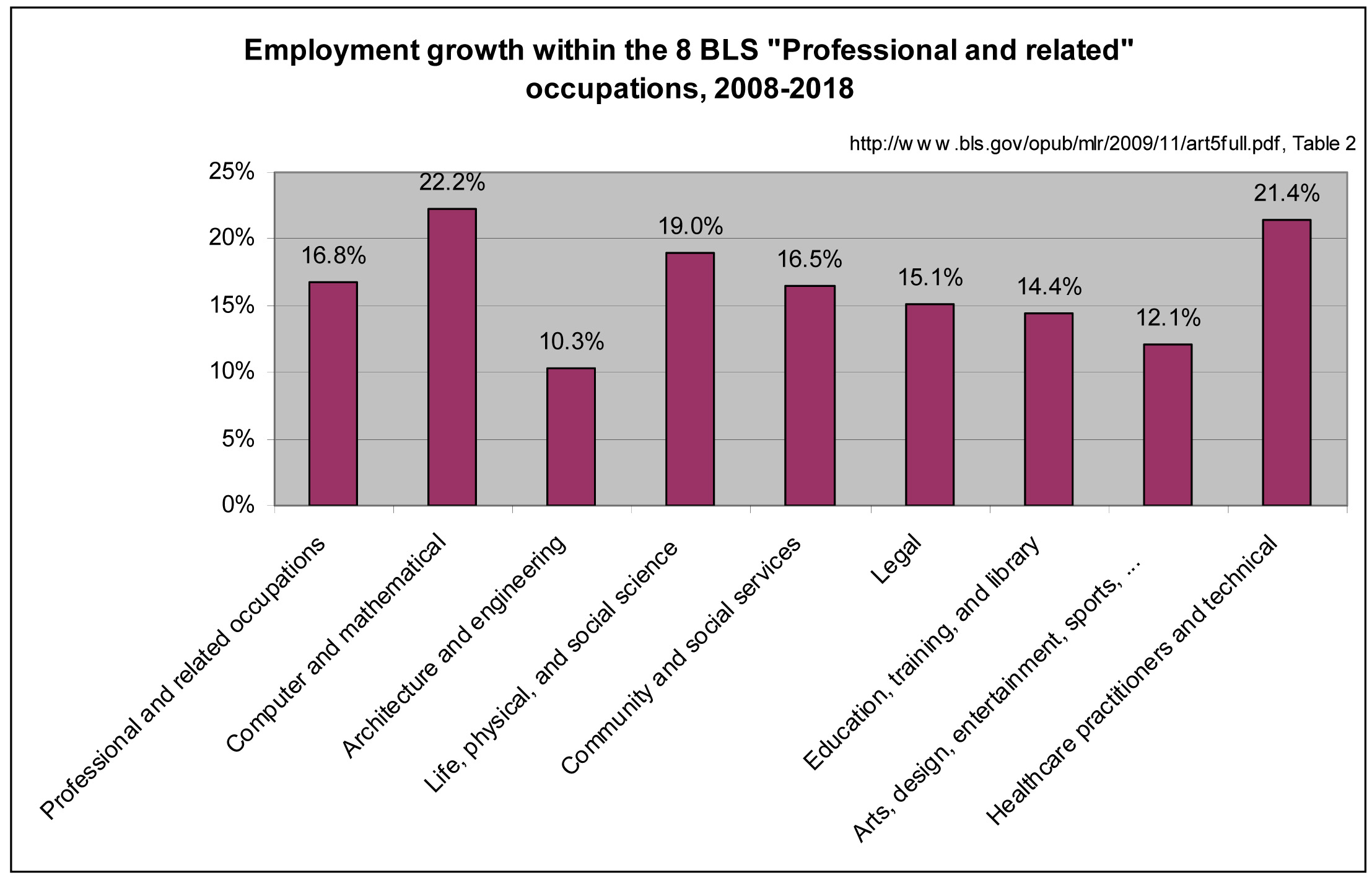
  • Focusing in on the “Professional and related” occupations, of the 8 occupational clusters that are included, “Computer and mathematical” occupations are projected to grow by the largest percentage between now and 2018 — by 22.2%.  In other words, “Computer and mathematical” occupations are the fastest growing occupational cluster within the fastest growing major occupational group.
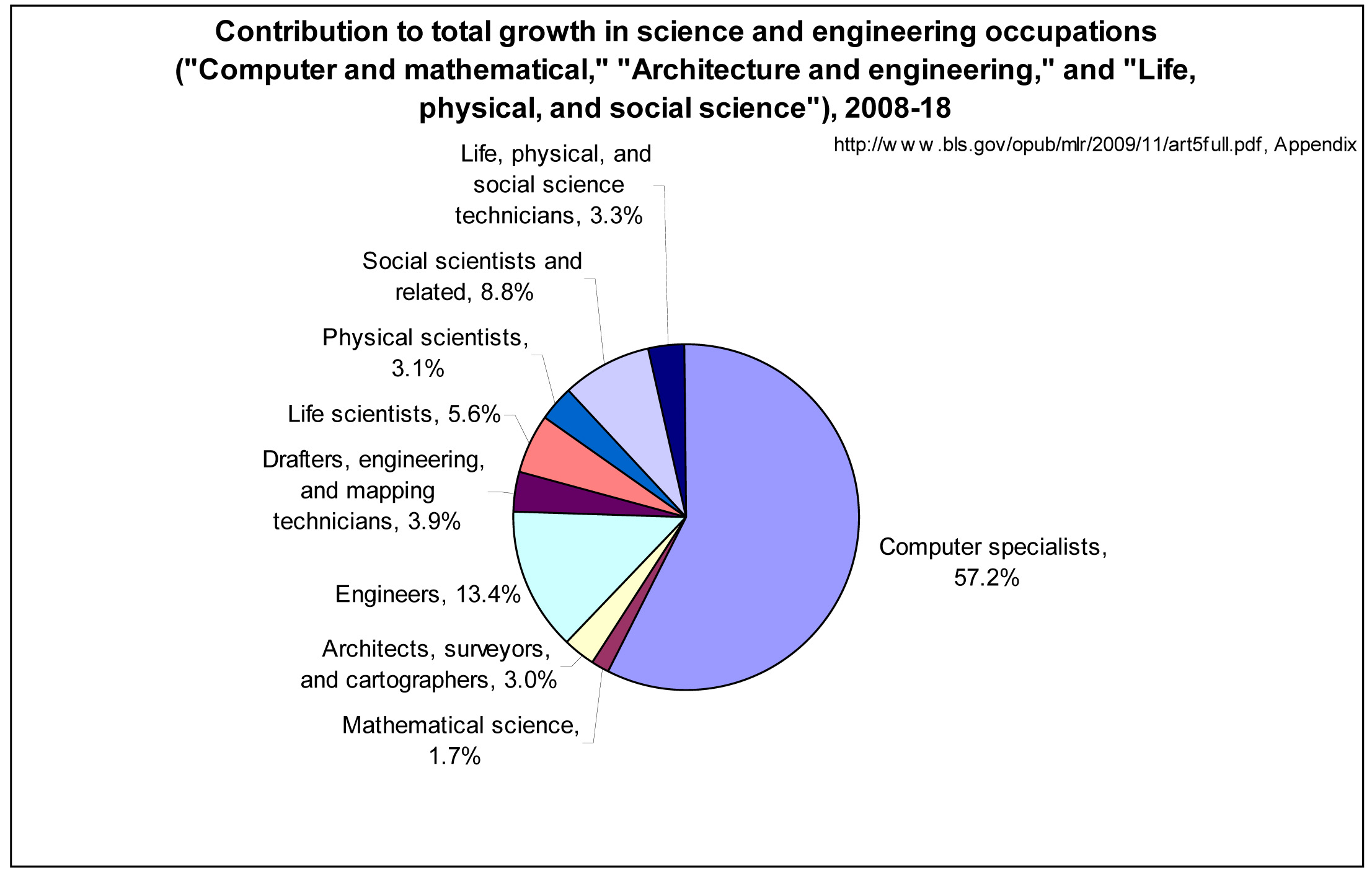
  • Looking at all science and engineering occupations — “Computer and mathematical,” “Architecture and engineering,” and “Life, physical, and social science” — computer science occupations are projected to be responsible for nearly 60% of all job growth between now and 2018.  The next largest contributor — all fields of Engineering combined — is projected to contribute 13.4% of total growth.  All of the life sciences combined:  5.6%.  All of the physical sciences combined:  3.1%.  In other words, among all occupations in all fields of science and engineering, computer science occupations are projected to account for nearly 60% of all job growth between now and 2018.
Read more →

“The future of brain-controlled devices”

CNN interviews UW CSE’s Raj Rao:

“In the shimmering fantasy realm of the hit movie ‘Avatar,’ a paraplegic Marine leaves his wheelchair behind and finds his feet in a new virtual world thanks to ‘the link,’ a sophisticated chamber that connects his brain to a surrogate alien, via computer.

“This type of interface is a classic tool in gee-whiz science fiction. But the hard science behind it is even more wow-inducing …

“At the root of all this technology is the 3-pound generator we all carry in our head. It produces electricity at the microvolt level. But the signals are strong enough to move robots, wheelchairs and prosthetic limbs – with the help of an external processor.

“Harnessing that power ‘opens up a whole new paradigm for us as human beings,’ says neuroscientist Rajesh Rao of the University of Washington …”

Read the full article here. Read more →

“Mobile Mecca”

Seattle Business writes on Seattle’s emergence as a center for mobile applications.

“Says Ed Lazowska, the Bill & Melinda Gates Chair in Computer Science & Engineering at the University of Washington, ‘It’s all about software, and we’re the software capital of the world … We’re leaders in systems. We’re leaders in productivity applications. We’re leaders in media. We’re leaders in games. We’re leaders in online retailing and in online services. We’re leaders in cloud computing – essential in the mobile world.'”

Read the full article here. Read more →

“Exponentials R Us”

An end-of-year, end-of-decade Xconomy article by UW CSE’s Ed Lazowska.

‘Exponentials R Us’ – Seven Computer Science Game-Changers from the 2000’s, and Seven More to Come

“Forty years ago, in 1969, Neil Armstrong left footprints on the surface of the moon. It was an extraordinary accomplishment.

“Also in 1969, with much less fanfare and at much less expense, Len Kleinrock’s programmer Charley Kline sent the first message over ARPANET. (The message was “lo” – the first two letters of “login.” Then the system crashed.)

“With forty years of hindsight, which of these events has had the greater impact? Unless you’re really big into Tang and Velcro, the answer is clear. From four computers in 1969, the Internet has grown to more than half a billion computers and more than a billion regular users, and is impacting every aspect of our lives.

“‘Exponentials R Us.’ That’s the magic of computer science. It’s what differentiates us from all other fields. (To the extent that other fields are experiencing exponentials, it’s because of computer science – for example, the sensor technology and computational power that are driving biotech.) ‘Exponentials R Us’ is the past, the present, and the future of computer science. If you think you can have greater impact doing something else, you’ve got your head wedged.”

Read the entire article — “Seven Computer Science Game-Changers from the 2000’s, and Seven More to Come” – here. Read more →

“How budget cuts short-changed the UW”

An adaptation by Crosscut of Ed Lazowska’s analysis of how the University of Washington fared in the 2009-11 biennial state budget.

“There can be room for honest debate about whether the decisions that were made by the legislature and the governor were smart in terms of the future of the state, but there shouldn’t be any confusion regarding the facts. As we enter another difficult budget session, it’s important to think about where those decisions put the university and what steps will best position our region and the kids who grow up here for the future …

“These are difficult economic times — for families, for businesses, and for governments. Those states and regions that emerge the strongest will be those that make smart choices that position them to compete successfully. Smart choices begin with a clear understanding of the decisions of the past, their impact on the present, and the opportunities of the future.”

Read the Crosscut article hereEven better, read the original, with additional charts and tables, here. Read more →

“New Programs Aim to Lure Young Into Digital Jobs”

A wonderful New York Times article on careers in computing profiles UW CSE alumna Kira Lehtomaki, and quotes UW CSE friends Jan Cuny and Alfred Spector.

“’We need to gain an understanding in the population that education in computer science is both extraordinarily important and extraordinarily interesting,’ said Alfred Spector, vice president for research and special initiatives at Google. ‘The fear is that if you pursue computer science, you will be stuck in a basement, writing code. That is absolutely not the reality.’

“Kira Lehtomaki can attest to this. She came to computing by way of art and movies. Art projects, not computers, were her childhood passions. She loved watching videos of Disney movies like ‘Sleeping Beauty’ and ‘Dumbo,’ and wanted to grow up to be one of those artists who stirred life into characters using pencils and paper. She even took a summer job at Disneyland as a ‘cookie artist,’ painting designs and Mickey Mouse faces on baked goods, because she was allowed to spend a few days with Disney’s animators.

“Yet as a 19-year-old college student in 2001, Ms. Lehtomaki saw the Pixar film ‘Monsters, Inc.’ and was impressed by how good computer animation had become. At the University of Washington, she pursued computer graphics, graduating with a degree in computer science.

“Today Ms. Lehtomaki, 27, is an animator at Walt Disney Animation Studios, working on ‘Rapunzel,’ which is scheduled to be released next year. She does her drawing on a computer, using specialized graphics and modeling software. Her computer science education, she said, is an asset every day in her work, less for technical skills than for what she learned about analytic thinking.

“‘Computer science taught me how to think about things, how to break down and solve complex problems,’ Ms. Lehtomaki said.”

Read the complete article here. Read more →

“Google Takes Search Real-Time”

UW CSE’s Dan Weld is quoted in this Technology Review article.

“Gradually, over the past decade, Google has compressed the gap between fresh indexing of the Web from months to mere minutes. On Monday the search giant upped the ante … saying that … it will offer search results … that are just seconds old.

“At the same press event, the company unveiled new search features for mobile devices. These include a prototype visual search technology, which allows snapshots of real objects, like signs and buildings, to be used as search ‘terms.’  It also tweaked its geographic search – your GPS-derived position now causes Google to offer different search results based on location.”

Read the full article here. Read more →

“Lighten your footprint by sharing”

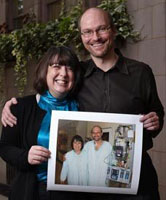
This lovely article in Pacific Magazine describes the relationship between UW CSE alum Damon Danieli and Sara Denis, a stranger who donated her kidney to him.

“Sara Denis, a 35-year-old medical-office scheduler, shared something even more rare than a neurologist — her ‘extra’ kidney.

“She knows it sounds crazy. Her husband thought so, too. So did most of her friends. ‘They were like, ‘Oooh, no! What are you thinking???!!’ ‘ …

“At matchingdonors.com, where people who need kidneys pay for listings, she found a local patient. And a picture.

“It was a husband, like hers. With children, like her child. And a mom, ‘like me,’ Denis recalled.

“It was Damon Danieli, a software developer, husband and father. Over months, the two e-mailed and eventually met. On Aug. 19, 2008, Denis gave Danieli her right kidney.”

Read the full article here. Read more →

« Newer PostsOlder Posts »