Read the article here.
 UW’s Adeona project garnered lots of press and blog coverage after a presentation at Gnomedex.
See additional coverage here. Read more →

Read the article here.
UW’s Adeona project garnered lots of press and blog coverage after a presentation at Gnomedex.
See additional coverage here. Read more →
Read the article here.
“More than the content, deliverables and events, Stephen says he most enjoys working with the members of our community, from volunteers to contributors to contractors. With this award, we collectively and formally reciprocate by expressing how much we enjoy working with Stephen, and to give him the recognition he never expects but so clearly deserves.” Read more →
Read the article here.
“The project, known as the Vocal Joystick, is designed to allow someone to control a computer cursor using nothing more than their voice … Malkin demonstrated the software in real-time, showing how it is used in conjunction with a simple game where a player controls a fish swimming around trying to catch other fish. He proceeded to sound out vowel after vowel, and sure enough, on-screen, his fish moved around dexterously, chomping up snack after snack. The Gnomedex crowd went wild.”
Vocal Joystick is a collaboration between UW Electrical Engineering and Computer Science & Engineering. Read more →
Read the article here.
“When I saw Photosynth for the first time about two years ago, it joined a small handful of new products that really captured my attention. The software arranges sets of photos in 3-D context and allows viewers to navigate fluidly from image to image, moving their gaze from a building’s facade to a detail shot of a specific fresco, for example.
“Photosynth is a distinctly Seattle invention. It emerged from a collaboration of University of Washington graduate student Noah Snavely and computer science professor Steven Seitz, with Microsoft researcher Richard Szeliski, as well as a Ballard startup Microsoft acquired. Now at least part of that team is at it again.
“In a paper presented at this week’s SIGGRAPH (a meeting of the world’s top computer graphics researchers), the UW/Microsoft team described the next iteration of their work …” Read more →
Read the article here.
The National Medal of Technology honors America’s leading innovators. Cutler is best known for his contributions to operating systems: RSX-11/M, VAX/VMS, VAXeln, and Windows NT. CSE’s Ed Lazowska, in his letter of support for Bill Gates’s nomination of Cutler, wrote: “Cutler … has an incredible facility for creating designs that will work, for leading teams that implement these designs according to spec – correct, on-time, within budget, and meeting performance goals – and for building the most critical and challenging aspects himself … Project after project, for more than 30 years, Cutler has succeeded at accomplishing the impossible (or at least the highly unlikely) through insight, talent, skill, leadership, and force of will. The result, as the nomination states, is ‘fundamental contributions to computer architecture, to compilers, to operating systems, and to software engineering’ that ‘enabled a trillion dollars of industry revenue.'” Read more →
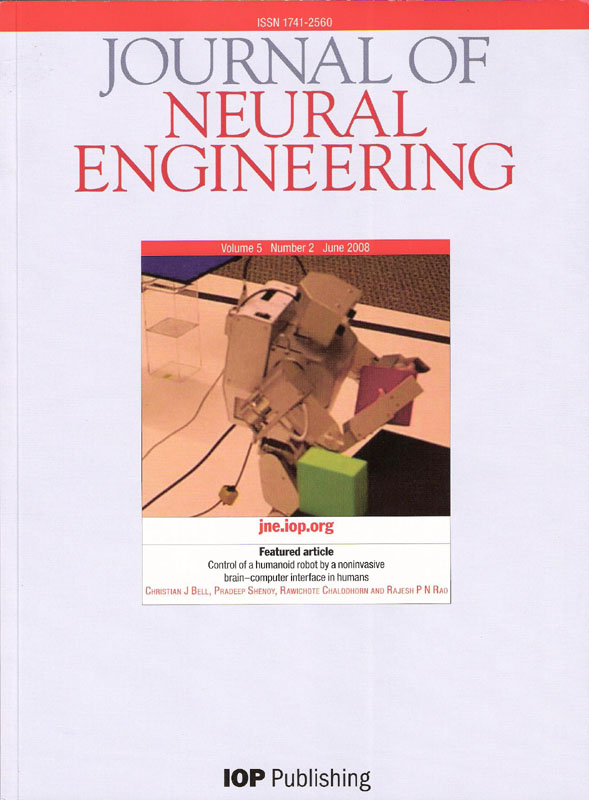
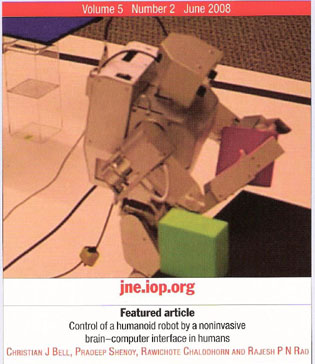 Christian Bell, Pradeep Shenoy, Rawichote Chalodhom, and Raj Rao’s paper “Control of a humanoid robot by a non-invasive brain-computer interface in humans” was the featured article in the most recent issue of the Journal of Neural Engineering.
Read the article here.
“In its report ‘Cybercities 2008,’ the AeA said that Seattle led the nation in net new technology jobs in 2006, adding 7,800 people to the local tech workforce. Indeed, the Washington offices of Microsoft, Amazon.com, Adobe Systems, Google and Intel say a lot about the opportunities for graduates of the University of Washington.” Read more →
Read the article here.
“Ever since Bram Cohen invented BitTorrent, Web traffic has never been the same … Peer-to-peer networking, or P2P, has become the method of choice for sharing music and videos … Experts estimate that peer-to-peer systems generate 50 to 80 percent of all Internet traffic … Tensions remain, however, between users of bandwidth-hungry peer-to-peer users and struggling Internet service providers …
“To ease this tension, researchers at the University of Washington and Yale University propose a neighborly approach to file swapping, sharing preferentially with nearby computers. This would allow peer-to-peer traffic to continue growing without clogging up the Internet’s major arteries, and could provide a basis for the future of peer-to-peer systems. A paper on the new system, known as P4P, will be presented this week at the Association for Computing Machinery’s Special Interest Group on Data Communications meeting in Seattle.” Read more →
“Ethan John professes to not enjoy writing code. Testing, on the other hand, he enjoys immensely. That makes him my kind of Computer Science graduate: the kind who codes only because it gives him an excuse to test. Ethan currently works for Isilon Systems, who I am sure is happy to have the advantage of his love for testing.
“Here is what Ethan has to say:
“DDJ: What was your first introduction to testing?
“EJ: I was in school, and got a job as a research assistant on a project called UrbanSim. It was an Agile house, minus pair programming, so they were doing test driven and iterative development in Java. I had only heard about TDD a few months prior, and my initial experiences with it had been positive. Unit tested code tended to work more consistently out of the gate than otherwise, and I was sold after just a few weeks on the project …”
Article here. Read more →
Read the article here.
“There’s no denying that some of the coolest research and projects going on happens right on your campuses by you and your professors … One of my favorite projects going on here at Microsoft’s Live Labs is PhotoSynth … It turns out this project originated at the University of Washington by a graduate student there, Noah, the ‘PhotoSynth Mastermind.’ He joined us in MSR’s fancy new building 99 to talk about how it all works, how he did it, and what’s in store for the future – REALLY cool stuff. You’ll also see Noah’s mentors, the ‘Patent Wizard,’ Rick Szeliski, and the ‘Cool Professor,’ Steve Seitz … Trust me when I say these are some of the best demos I’ve seen …” Read more →