Many thanks to David Dawson (CSE ’06; StashRewards), Will Pittman (CSE ’08; DocuSign), Claire Suver (CSE ’09; Amazon); Becky Tucker (our Microsoft recruiter), and Tony Vigil (CSE ’06, Disney Interactive) for a fantastic “employer panel.”
Next event: resume review workshop, October 6 in the Atrium!… Read more →

Watch “Sound Startups,” KIRO TV 7, Saturday at 7:30
“Sound Startups,” a new 30-minute special airing this Saturday, October 4th at 7:30pm, on KIRO 7 Eyewitness News, showcases Seattle and Puget Sound as a leading region for innovation. Our startup community is hot – and growing fast. This Saturday, KIRO will talk to some of the most innovative minds in Seattle and learn about new businesses thriving in the Puget Sound region.
“Sound Startups” airs Saturday, October 4 at 7:30pm (PST) and Saturday, October 11 at 8:30pm (PST) on… Read more →
UW CSE’s Jeff Heer is one of 14 Moore Foundation “Data-Driven Discovery Investigators”
The Gordon and Betty Moore Foundation joined last year with the Alfred P. Sloan Foundation in a process that ultimately selected the University of Washington, UC Berkeley, and New York University as partners in a 5-year, $38.7 million collaborative effort to advance data-intensive discovery.
The Moore Foundation has just announced the results of a subsequent competition to identify leading individual researchers as “Data-Driven Discovery Investigators,” funded at $1.5 million each. From an original field of more than 1,000 pre-proposals, roughly… Read more →
“Robot, where the hell are my car keys?”
“New RFID technology helps robots find household objects” is the actual headline of this University of Washington and Georgia Institute of Technology press release describing the work of UW CSE and EE faculty member Matt Reynolds.
If a PR2 takes as long to find car keys as it does to fold laundry, we have three words for you: “Take the bus.”
Actually, we have three additional words for you: “Read more here.”
Addendum: The research paper describing this work… Read more →
WSJ: “3 Reasons Why Seattle Is the Next Big Startup Hub”
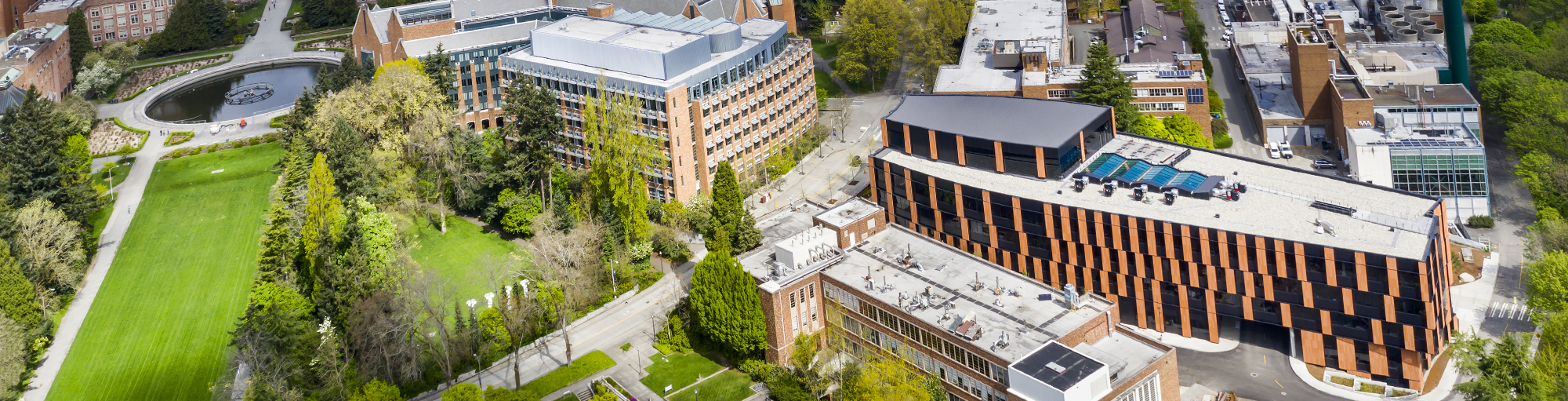
Including … “The University of Washington has invested deeply in its computer science program and recently spent $1.5 million to remodel their Startup Hall.”
Read more here.… Read more →
Sieg Hall continues its winning ways!
Beautiful Sieg Hall – home of UW Computer Science & Engineering from 1975-2003 – has been the subject of postcards, the backdrop for Vietnam war protests, the victim of crumbling concrete, the site of an invasion by vines, and, most recently, home to a hornet’s nest. What’s next? Stay tuned!… Read more →
CSE startup GraphLab in Seattle Times
CSE startup GraphLab inaugurated its new office space in Fremont last week. The Seattle Times writes:
“Big-data analytics startup GraphLab may need to use its number-crunching software to manage its seating chart.
“After outgrowing a series of incubation spaces at the University of Washington, the company is now filling up a standalone space down the canal in Fremont …
“GraphLab makes software that companies can use to build predictive applications – the kind that analyze huge data collections to figure… Read more →
SideSwipe: Reflected smartphone transmissions enable gesture control
UW News writes:
“With almost all of the U.S. population armed with cellphones – and close to 80 percent carrying a smartphone – mobile phones have become second-nature for most people.
“What’s coming next, say University of Washington researchers, is the ability to interact with our devices not just with touchscreens, but through gestures in the space around the phone. Some smartphones are starting to incorporate 3-D gesture sensing based on cameras, for example, but cameras consume significant battery power… Read more →
UW CSE’s Roxana Geambasu is one of Popular Science’s 2014 “Brilliant Ten”
UW CSE Ph.D. alum Roxana Geambasu, now on the Computer Science faculty at Columbia University, has been honored by Popular Science as one of its “Brilliant Ten” for 2014:
“As a computer scientist, Roxana Geambasu of Columbia University says she picks new projects based on what ‘really, really annoys me.’ She hates ceding control of her personal data online, which is why she’s building software that allows people to see where the information they upload to the cloud goes.”… Read more →
CSE’s Jeff Hightower, Gaetano Borriello win 2014 Ubicomp 10-Year Impact Award
The 2004 research paper “Particle Filters for Location Estimation in Ubiquitous Computing: A Case Study” by UW CSE’s Jeff Hightower and Gaetano Borriello has been recognized with the “10-Year Impact Award” from Ubicomp 2014, the 2014 ACM International Joint Conference on Pervasive and Ubiquitous Computing.
These “test of time” awards are particularly meaningful: they identify the work presented 10 years previously that, with the benefit of that hindsight, has had the greatest impact.
In selecting the paper,… Read more →