CSE’s Dan Grossman named to UW College of Engineering J. Ray Bowen Professorship for Innovation in Engineering Education

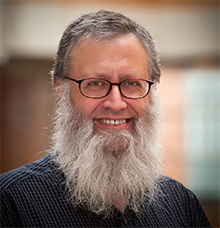
grossman2013J. Ray Bowen served as the University of Washington’s Dean of Engineering from 1981-1996.  Upon his retirement, the J. Ray Bowen Professorship for Innovation in Education was established “to recognize distinguished faculty in the College of Engineering who display dedication to educational innovation and curriculum development.”

Effective July 1, CSE’s Dan Grossman will assume the Bowen Professorship.  Dan earned this distinction for a wide range of contributions:  leading CSE through a major modernization of our undergraduate curriculum, leading our efforts to utilize the Coursera MOOC platform, superb classroom teaching, superb student mentoring, and a world-class research program.

Congratulations Dan! Read more →
Xconomy: “New UW, PNNL Institute Attracts Supercomputing Expert Thom Dunning”

Thom Dunning“The Northwest Institute for Advanced Computing (NIAC) has landed supercomputing luminary Thom Dunning Jr., who will help lead the effort to tie together two of the region’s top centers of computing research …

NIAC, situated in Sieg Hall on the UW campus in Seattle, is designed as a center for collaboration among researchers from both institutions—previously separated by a three-plus-hour drive—focusing on new technologies to advance computing, data-enabled discovery, and computational science …

“‘Most fields of discovery are transitioning from data-poor to data-rich,’ says [UW CSE professor] Lazowska, who leads the eScience Institute, which is the center of this work at UW. ‘The world is full of tiny but powerful sensors—in telescopes, in gene sequencers, in roads and bridges and buildings, in our environment, in the form of Twitter feeds and Web requests. The challenge today is converting all of this data into knowledge, and converting this knowledge into action.'”

Read more here. Read more →

Jerry Large celebrates his friend David Notkin in the Seattle Times

david_notkin220Seattle Times columnist Jerry Large writes:

Computing mensch had special way with people

David Notkin, accomplished software engineer, helped diversify his field and showed others how to live a complete life.

David Notkin was a big deal in the world of computer science, but you wouldn’t know that being around him. He was a modest-living mensch with a gift for making other people feel special, like they were a big deal. And to him, they were.

Read this lovely tribute on the Seattle Times website here (pdf) (jpg).

  Read more →

UW CSE’s Susan Eggers elected to American Academy of Arts & Sciences

Susan-Eggers-ISCAUW CSE professor Susan Eggers has been elected a Fellow of the American Academy of Arts & Sciences, as a member of the Class of 2013.

The Academy was founded during the American Revolution by John Adams, James Bowdoin, John Hancock, and other leaders who contributed prominently to the establishment of the new nation, its government, and its Constitution. Its purpose was to provide a forum for a select group of scholars, members of the learned professions, and government and business leaders to work together on behalf of the democratic interests of the republic.

Election to the Academy is of comparable prestige to NAS, NAE, and IoM, but the membership is more broad, including the humanities and arts, public affairs, and business as well as the mathematical, physical, biological, and social sciences.  Fifty six University of Washington faculty members are Fellows of the Academy, including CSE’s Ed Lazowska.

Others elected this year in the Computer Sciences section:  Anant Agarwal (MIT), David Dill (Stanford), Jitendra Malik (Berkeley), Peter Norvig (Google), Jen Rexford (Princeton), and Richard Tapia (Rice).

Also elected this year from the University of Washington:  Randy Moon (Pharmacology).

The full list of newly-elected Fellows of the Academy is available here. Read more →

David Notkin, 1955-2013

dn.for_.fellowshipOur dear friend and colleague David Notkin passed away at home at 3:30 a.m. on April 22 2013 following a long battle with cancer.  Our hearts go out to David’s wife Cathy, his children Emma and Akiva, his sister Debbie, and all who knew him and loved him.

Information may be found on David’s CaringBridge page here.

In February, hundreds of David’s friends honored him at Notkinfest – a tribute to his extraordinary personal and professional contributions – where we announced the establishment of the David Notkin Endowed Graduate Fellowship in Computer Science & Engineering to permanently recognize his dedication to graduate education.

David’s long list of professional accolades includes, most recently, the 2013 A. Nico Habermann Award from the Computing Research Association, and the 2013 ACM SIGSOFT Outstanding Research Award from the Association for Computing Machinery’s special interest group on software engineering.  He received the University of Washington Distinguished Graduate Mentor Award in 2000.

A few of the many posts honoring David:

“Tie One On for David” – members of the UW CSE community join David’s family in decorating the trees on the plaza outside the Allen Center.  Photographs here. Read more →

UW CSE Ph.D. alum Jeff Bigham in NY Times

21-DIGI-popupThe New York Times focuses the article “An Instant Path to an Online Army” on the work of UW CSE Ph.D. alum Jeff Bigham, now on the faculty at the University of Rochester but about to join the faculty at Carnegie Mellon.

“Computer science researchers have been trying to build systems that summon online workers on demand and produce immediate results. Much initial work has focused on completing tasks for people with disabilities, because that is where the need is great. For example, a blind person may need to identify the contents of a can from a kitchen cupboard right now, not later. A deaf college student may want to follow the give-and-take of a seminar discussion as it unfolds in the classroom, and not wait to read a transcript the next day.

“VizWiz, a free iPhone app developed by Jeffrey P. Bigham of the University of Rochester and colleagues in its Human Computer Interaction program, gives real-time help to blind users.

“VizWiz users take a photograph as best as they can — it may take several tries before the desired object is properly framed — and then record one question about it (‘What is on the label of the can?’) …”

Read more here.  Check out VizWiz here. Read more →

UW CSE launches two new Coursera MOOCs

coursera logoWith Coursera MOOCs on Programming Languages and Computer Networks under our belts, we’ve just launched two new MOOCS:

The Hardware/Software Interface, taught by CSE professors Gaetano Borriello and Luis Ceze, examines key computational abstraction levels below modern high-level languages:  number representation, assembly language, introduction to C, memory management, the operating-system process model, high-level machine architecture including the memory hierarchy, and how high-level languages are implemented.

Computational Neuroscience, taught by CSE professor Raj Rao and Physiology & Biophysics professor Adrienne Fairhall, introduces students to basic computational techniques for analyzing, modeling, and understanding the behavior of cells and circuits in the brain.

An additional course, Introduction to Data Science, taught by CSE professor Bill Howe, will begin in May. Read more →

UW CSE’s Dieter Fox in Seattle Weekly, UW Daily

df“In ‘The Jetsons,’ a cartoon about a space-age nuclear family, the robot Rosie seamlessly understands and performs the commands of the Jetson family, easily completes household chores like vacuuming and dusting, while effortlessly caring for the Jetson children.

“Although this sort of technology remains out of our reach, UW researchers are bringing us one step closer.”

Read more in The Daily here.  Read more in Seattle Weekly here. Read more →

Xconomy: “University Grants Could Aid Data Science Push in New York, Seattle”

eScience Institute logo“The New York Times turned its attention last weekend toward education of data scientists, highlighting a budding ‘rivalry’ between New York City and Seattle.

“The paper’s Education Life section focused on the relative merits of the two cities as big data hubs, and efforts to build curricula in this field at universities around the country. But what the coverage didn’t mention is that universities in New York and Seattle are also competing for a major grant aimed at broadening academic support for data-driven scientific discovery …

“In a few weeks, the Gordon and Betty Moore Foundation and the Alfred P. Sloan Foundation will announce partner universities for a five-year effort to ‘dramatically accelerate data-driven research.’ The foundations plan to award grants totaling between $25 million and $40 million beginning later this year …

“Late last year, the foundations invited 15 elite universities—including the University of Washington, Columbia University, New York University, and Cornell University—to apply to the program …

“At the UW, this effort is centered on the eScience Institute. The goal ‘is to make UW a leader in inventing new approaches to data-driven discovery, and also in making these new approaches usable by researchers in a broad range of fields,’ says UW computer science professor Ed Lazowska, who leads the eScience Institute.”

Read more in Xconomy here. Read more →

CSE’s Raymond Zhang wins 2013 UW Engineering Dean’s Medal for Academic Excellence

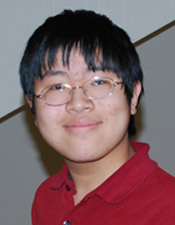
RaymondZhangHearty congratulations to Computer Engineering senior Raymond Zhang, who has been named as one of two recipients of the 2013 University of Washington Engineering Dean’s Medal for Academic Excellence – the top award to graduating seniors in UW’s College of Engineering.

Raymond came to UW in 2008 at age 12 through the Robinson Center for Young Scholars’ early entrance program, and enrolled as a Computer Engineering major at the ripe old age of 13. Since his sophomore year, Raymond has participated in the computational biology group led by Ram Samudrala, associate professor in the department of microbiology. Under Professor Samudrala’s guidance, Raymond is developing a program to predict the structure of how a protein and nucleic acid strand interact. Raymond says he “wanted to come to the UW because of its excellent departments of CSE and Biology.”

When he’s not cutting code, Raymond is playing the piano:  he has performed at Carnegie Hall and at
Lincoln Center in New York, and several times at Benaroya Hall in Seattle.

Last spring, Raymond was named a Goldwater Scholar – the top national award to undergraduates in engineering and the sciences.

Raymond is the fourteenth CSE student to win the Dean’s Medal in Engineering or Arts & Sciences.

Again, congratulations to Raymond, and to all of CSE’s superb students! Read more →

« Newer PostsOlder Posts »