Wired writes: “A computer scientist at the University of Washington, Popović first became known for his popular online game, Foldit, which challenges players to create intricate protein patterns by bending and rearranging amino acids – the constituent units of proteins – into new shapes …
“Now Popović wants to put the power of games to an even better use. Earlier this year he adapted DragonBox, a Norwegian game app that introduces algebraic concepts with animal-faced cards, then builds up to numbers and computational signs … As harder concepts are introduced, students who need more time on a level get additional problems; those who understand it move on. In an experiment with DragonBox Adaptive in Washington state, an average of 93 percent of K–12 students successfully mastered concepts after only 90 minutes of gameplay, and they didn’t want to stop.
“Popović is using this method as the basis for an entire sixth-grade math curriculum in trial now in Seattle and next year in Brooklyn and Brazil. He’s banking on digital tablets to help teachers adjust their lessons to individual performance. Science, language arts, even coding are all on the table for the future. Finally, an argument for more screen time for kids.”
Read more in Wiredhere. Learn about UW CSE’s Center for Game Science here. Read more →
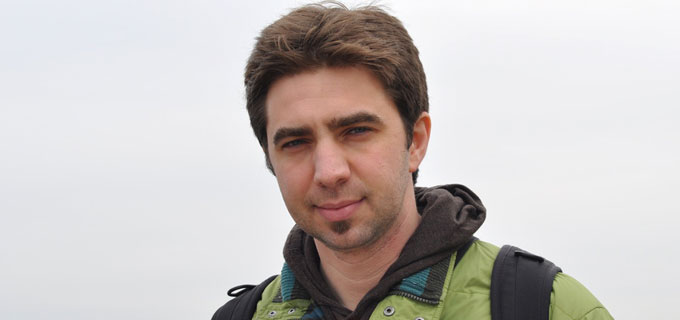
“Daphne Koller, the Rajeev Motwani Professor in Computer Science at Stanford School of Engineering, remembered Taskar as ‘a remarkable human being. He was an exceptional researcher, who even as a graduate student and continuing to his work as a faculty member, made seminal contributions to machine learning, computer vision and natural language processing,’ Koller said. ‘Such academic talent is rare but even more so when combined with a gentleness of soul and a sweetness of nature, both of which characterized Ben.'”
KUOW on UW CSE’s summer daycamps for middle school and high school students:
“It’s summertime in Seattle, and deep inside a basement classroom of the Paul G. Allen Center for Computer Science & Engineering at the University of Washington, Justin Bieber is being deconstructed.
“It’s not what you might think, though. Teacher Hélène Martin is taking apart Bieber’s digital picture, bit by bit, using a computer programming language called Processing.
“The week-long class, part of a program started by the university’s computer science department, teaches teen girls to code. Many of the young women attending this coding camp were encouraged by their parents, teachers or mentors, but most studies show that girls are rarely pushed to pursue programming and tech studies, which means they’re less likely to pursue careers in those fields.”
More here. Learn more about DawgBytes, UW CSE’s K-12 outreach program (including these summer camps), here.
Visit our Computing Open House for middle and high school students and their families, Saturday December 7 1:00-5:00. Learn more here.Read more →
“Trevor Brandt-Sarif had no interest in computer science when he arrived at Harvard. Philosophy was his thing. Coding? That was for students at MIT.
“Then he heard about David Malan. Part performer, part professor, Malan has done what many would have thought implausible just a few years ago at Harvard. He has taken a computer science course and turned it into the university’s number-two most popular class, about 60 students away from knocking out Introduction to Economics from its top spot …”
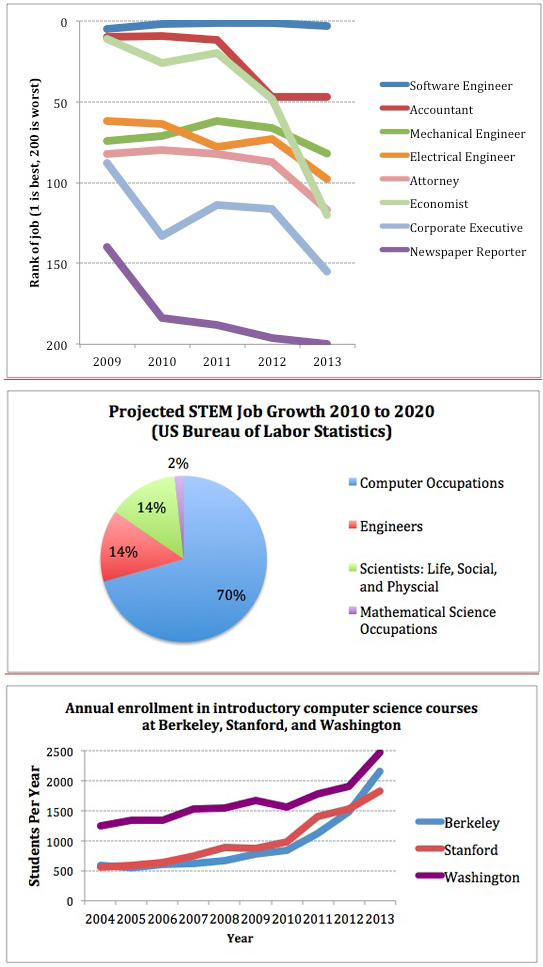
“‘The STEM Crisis: Reality or Myth?’ (The Chronicle, November 11) says most researchers consider the STEM crisis a myth, unless their funding comes from technology companies. As information technology is certainly in STEM, we looked to see whether our field should be tarred along with the same brush applied to the sciences, engineering, and mathematics …
“Fortunately, this debate is not being settled by pundits writing op-eds. Students are voting with their feet …
“Student demand and employer demand are cyclical in most fields, and computer science is no exception. But the long-term outlook is clear and compelling: In addition to attractive career opportunities in information technology, students from all fields want to learn computer science to learn to how to change the world.”
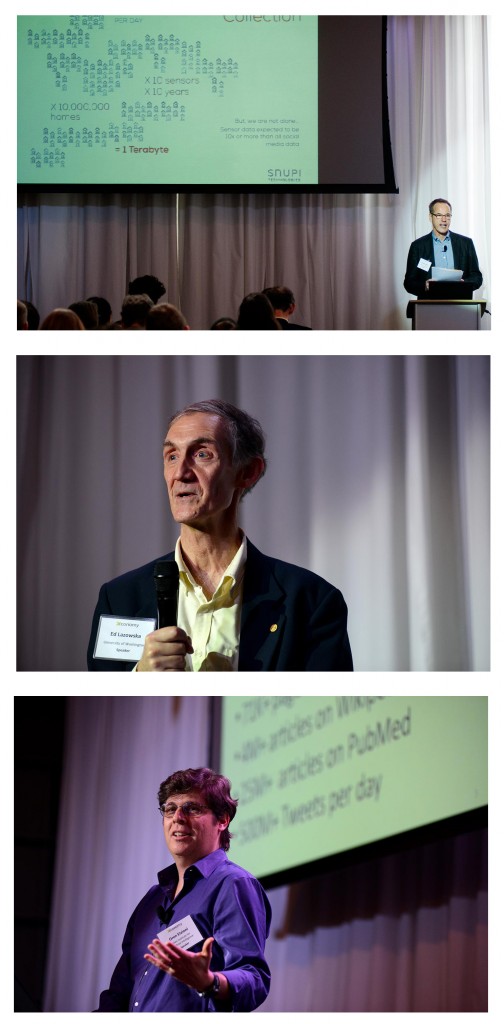
Presentation by Ed Lazowska (UW), Saul Perlmutter (Berkeley), Yann LeCun (NYU), Josh Greenberg (Sloan), and Chris Mentzel (Moore) at the White House “Big Data Partnerships” event on November 12.
A 5-year, $37.8 million award in data science to the University of Washington, UC Berkeley, and New York University from the Gordon and Betty Moore Foundation and the Alfred P. Sloan Foundation was announced last week at a White House event.
Video is now available of the announcement – presentations by Ed Lazowska (UW), Saul Perlmutter (Berkeley), Yann LeCun (NYU), Josh Greenberg (Sloan Foundation), and Chris Mentzel (Moore Foundation).
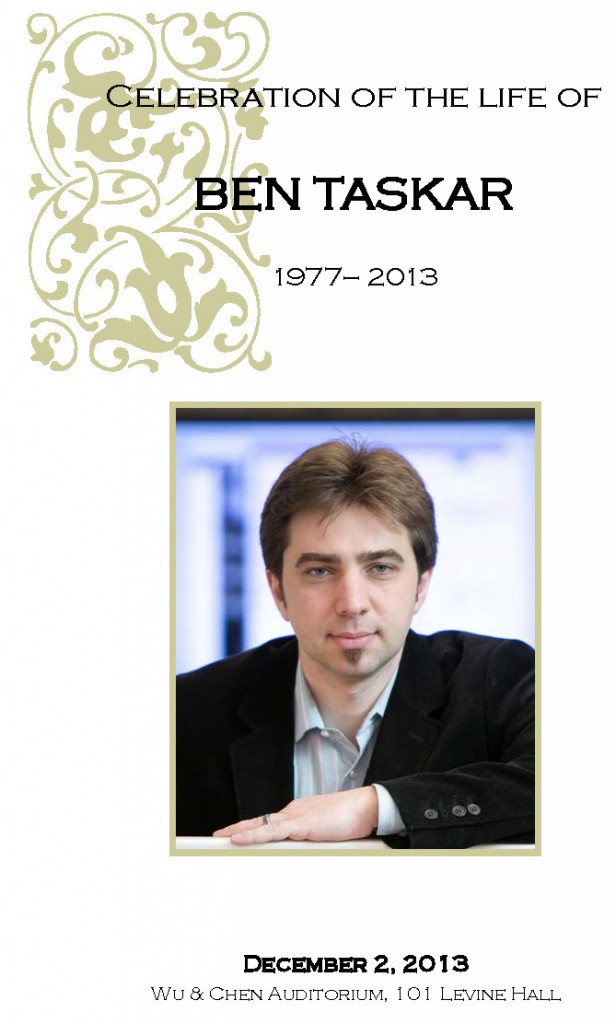
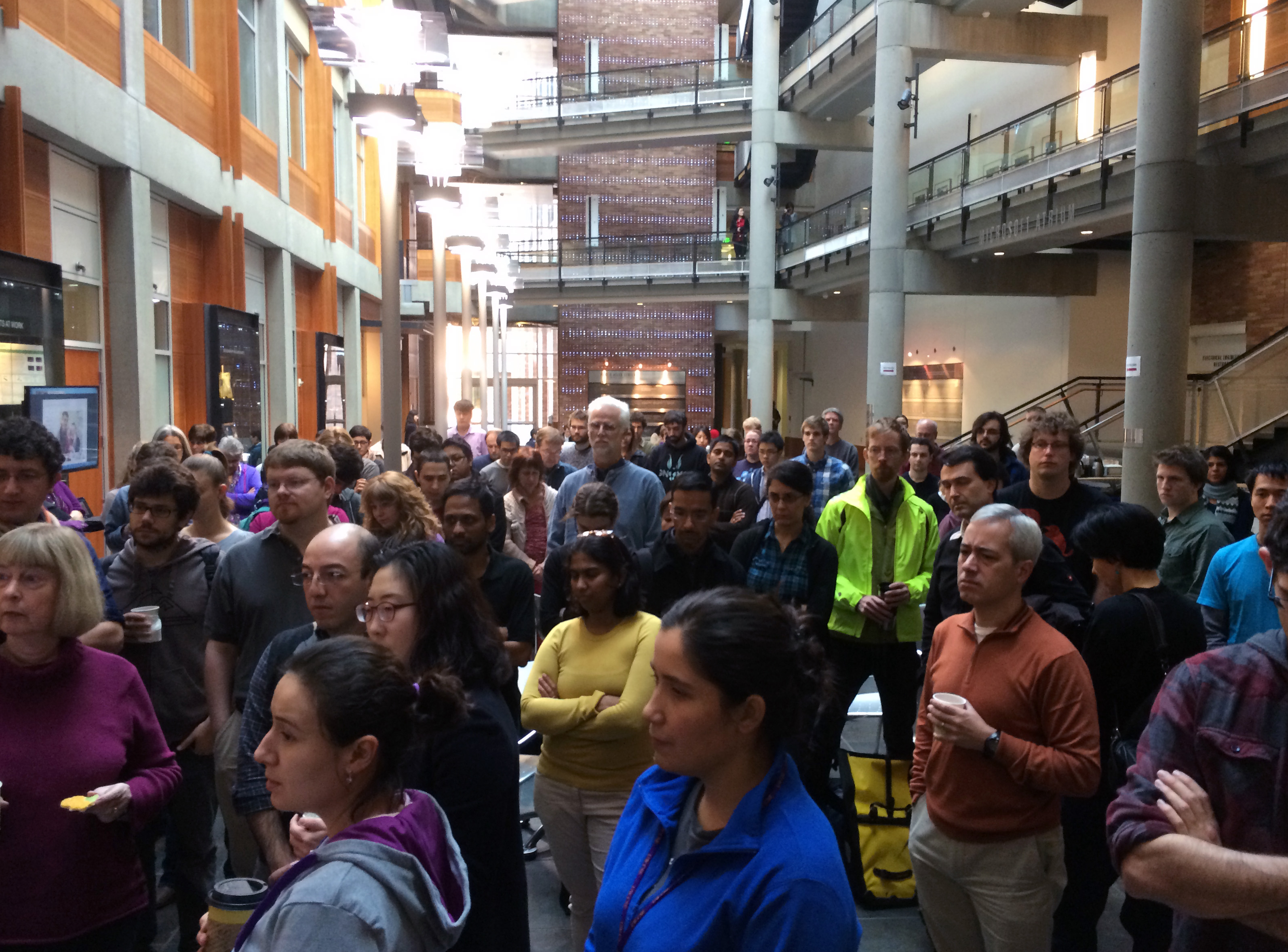
Faculty, students, staff, and friends observed a period of silent reflection coinciding with services in San Francisco. Ben passed away on the early morning of November 18 of sudden and severe heart failure, leaving behind his wife Anat Caspi, their two year old daughter Aviv Taskar, his mother, father, and sister, and an array of other family members, friends, and colleagues – all of whom will miss him tremendously.
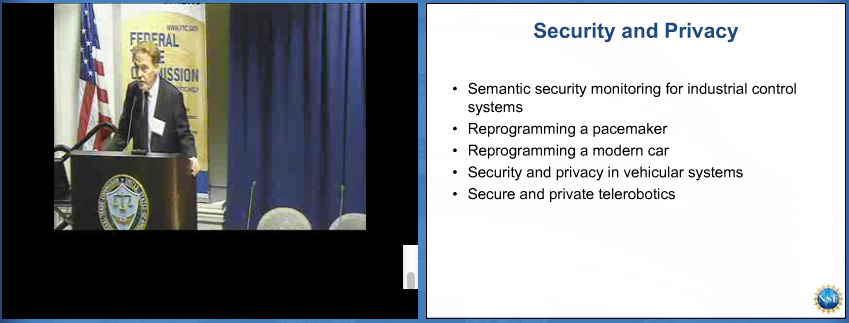
The subject of today’s U.S. Federal Trade Commission Internet of Things workshop was security and privacy. The workshop included four panels – on the smart home, connected health and fitness, connected cars, and privacy and security. These are topics that UW CSE’s Security & Privacy Research Lab has been working on for years now.
In his opening remarks, Keith Marzullo from the National Science Foundation included a slide on exemplar security and privacy projects for cyber-physical systems. The slide listed five example projects, three of which come from UW. Marzullo discussed UW’s work on analyzing the security and privacy properties of wireless implantable medical devices, and in particular he cited our Oakland 2008 paper (in collaboration with UMass and BIDMC). He then went on to cite our experimental security analysis of the modern automobile (in collaboration with UCSD), which appeared at Oakland 2010 and USENIX Security 2011. And, finally, he discussed the lab’s collaborative work with Howard Jay Chizeck (UW EE) on secure telerobotics. Read more →

 “Zoran Popović is getting students excited about education by turning math into a game” says Bill Gates on Facebook and Twitter this morning.