Projecting the Internet to the sea floor to transform oceanography

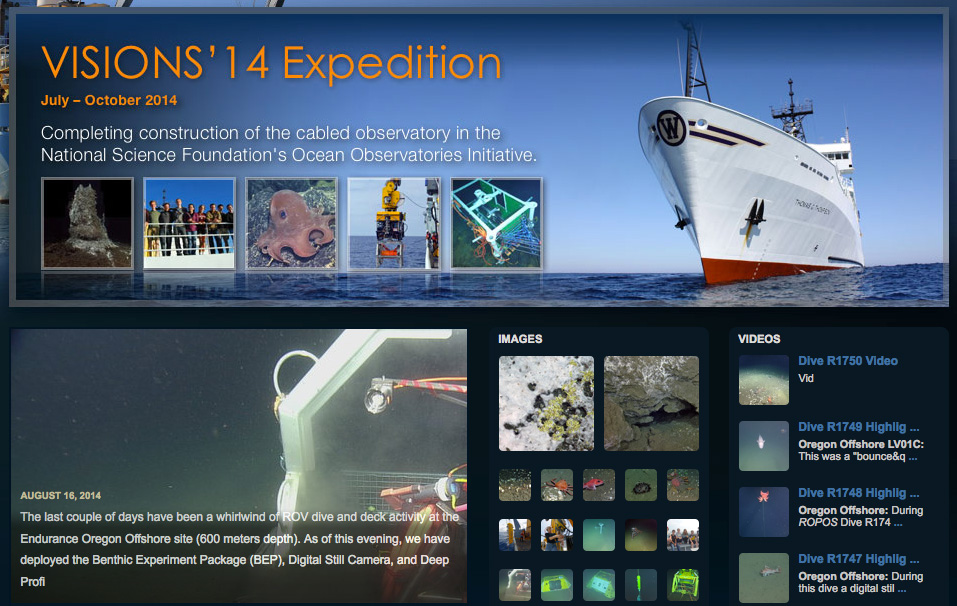
ioThe NSF Ocean Observatories Initiative will transform certain aspects of oceanography from expedition-based to observatory-based.

The centerpiece of OOI is the regional cabled observatory – 1000 km of fiber optic cable deployed on the Juan de Fuca plate off the coast of Washington and Oregon, strung with  thousands of chemical, physical, biological, and image sensors.

Check out live and archived video from the VISIONS’ 14 Expedition – completing construction of the cabled observatory from UW’s R.V. Thompson – here. Read more →

StopInfo for UW CSE’s OneBusAway app makes buses more usable for blind riders

Bus-TILEUW News writes:

“It’s a daily routine for many transit riders in the Seattle area: Pull out your smartphone, check the OneBusAway app, then decide whether you need to sprint to the bus stop or can afford that last sip of coffee. The application, developed at the University of Washington, uses real-time data to track when your bus is actually going to arrive.

“But for many blind and low-vision riders, knowing when the bus will arrive isn’t always enough. Crucial information like where the stop is in relation to the intersection and whether there is a shelter or bench sometimes can make the difference between an independent commute and a frustrating experience.

“UW computer scientists have created a program called StopInfo that integrates with OneBusAway and provides specific information on location, safety features and stop closures for each bus stop in King County. In particular, it seeks to collect and share information that blind people have identified as important when they ride the bus. It relies on bus riders using the OneBusAway application to update and provide information about each stop.”

Read more here. Read more →

UW CSE’s 6 2014 faculty hires

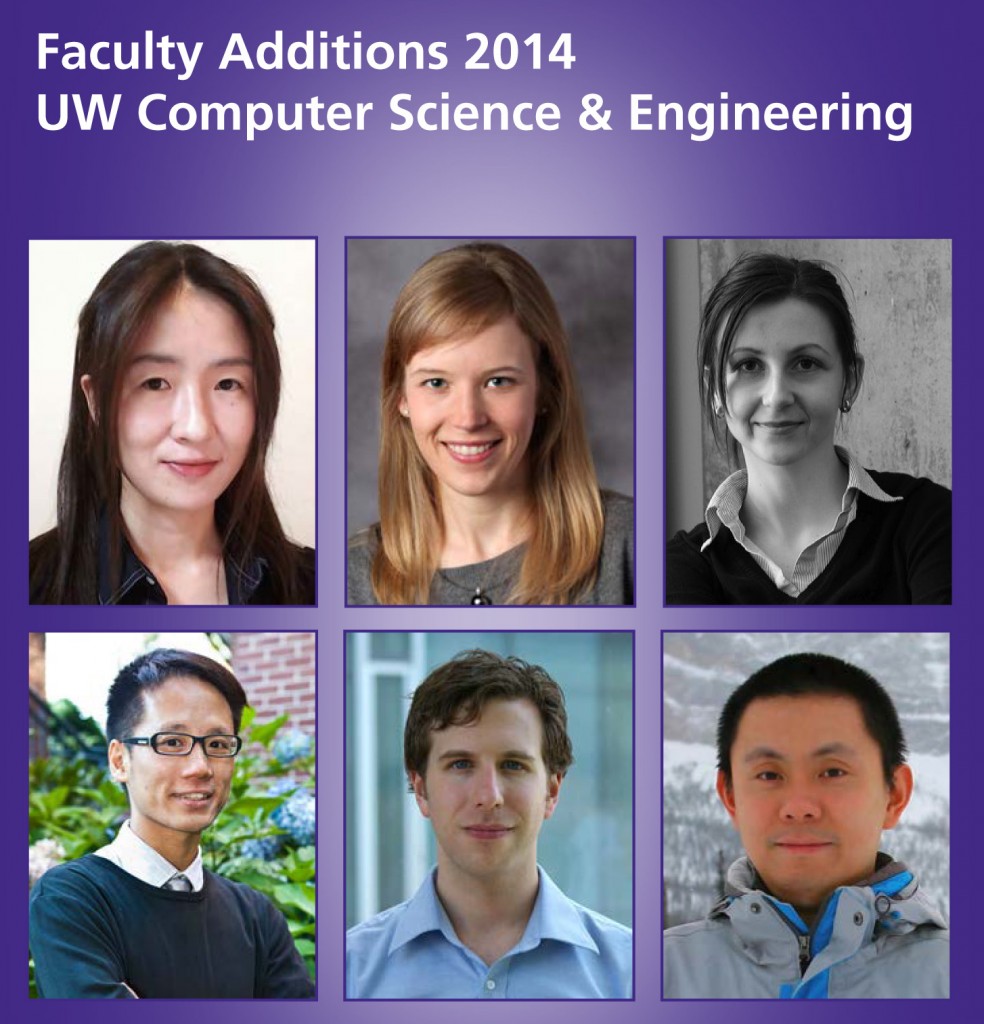
newhires.coverA brochure celebrating UW CSE’s 2014 faculty hires:

  • Alvin Cheung, Data Management, Programming Languages and Systems
  • Yejin Choi, Natural Language Processing
  • Franzi Roesner, Security and Privacy
  • Noah Smith, Natural Language Processing
  • Emina Torlak, Programming Languages and Software Engineering
  • Xi Wang, Systems, Programming Languages and Security

The world according to Hank:

Six new hires — on top of ten new hires in the preceding two years — reinforce UW Computer Science & Engineering’s position among the very best programs in the nation, and establish leadership positions in several key areas of the field.

Complementing our recent game-changing hires in Machine Learning, “Big Data,” Computer Vision, and other areas, this year’s hires build upon existing strength to create a world-class Natural Language Processing Group at UW, and to provide outstanding new talent across already strong core areas of Systems, Security, Data Management, Programming Languages, and Software Engineering. These hires create enormous collaboration opportunities among the new hires themselves, with existing faculty, in the greater university, and with our many close colleagues at organizations such as Amazon, Google, Microsoft, the Allen Institute for Artificial Intelligence, and the Institute for Systems Biology that make Seattle an amazing place for computing research.

Located in one of the world’s most vibrant high-tech regions, UW CSE is committed not only to leadership in core computer science, but also to leadership in research and education with direct impact on national and global challenges — challenges such as education, energy, biology, healthcare, transportation, scientific discovery, and the use of technology in developing regions. UW CSE has achieved great success and impact through activities that make technology better, and through activities motivated by how innovations are put to work.

Our recent growth, coupled with Seattle’s growth as a dynamic center of creativity and innovation, make it a particularly exciting time for Computer Science & Engineering at University of Washington. We fully expect that it will only get better!

Check it out here. Read more →

UW CSE hearts Holy Names Academy

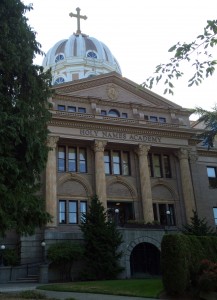
Holy NamesSeattle’s Holy Names Academy – the oldest continuously operating K-12 school in Washington – has sent a steady stream of outstanding students to UW CSE: Allie Rutherford and Krysta Yousoufian graduated from UW CSE in 2011; Jenny Abrahamson and Cristine Acuario in 2012; Ally Gale in 2013; Jennifer Apacible in 2014; Micaela Montstream, Karolina Pyszkiewicz, Abby Gray, and Madeline Wessels are currently in the program.

CSE’s Ed Lazowska spoke to the Holy Names teachers this morning on “Why Computer Science? Why UW CSE?” Slides here. Read more →

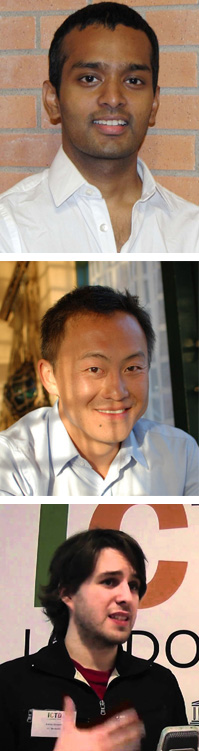
Shyam Gollakota, Kuang Chen, Kurtis Heimerl win 2014 TR35 Awards!!!!!

winnersAnnually, MIT Technology Review recognizes 35 technology innovators under the age of 35 with TR35 Awards. Hundreds of nominees are reduced to fewer than 100 finalists by the MIT Technology Review editors. A panel of judges rates the finalists on the originality and impact of their work. Finally, the editors take the judges’ scores into account to select the final group of TR35 Award winners.

The TR35 Award competition has always been very good to UW CSE faculty and alums, but even in that context, 2014 is special. This year’s awardees include:

  • UW CSE professor Shyam Gollakota
  • UW CSE bachelors alums Kuang Chen and Kurtis Heimerl. Kuang received his UW CSE bachelors degree in 2003, Kurtis in 2007. Both entered UC Berkeley’s Ph.D. program, where they worked with Berkeley professor and 2007 UW CSE Ph.D. alum Tapan Parikh, who himself received a TR35 Award in 2007, as well as being named the TR35 Humanitarian of the Year. (Tapan, Kuang, and Kurtis all work in the area of information technology for developing regions.)  Got that?  Two 2007 UW CSE bachelors alums win 2014 TR35 Awards, working with a 2007 UW CSE Ph.D. alum who won a TR35 Award and the TR35 “Humanitarian of the Year” Award in 2007.

Read the TR-35 writeups on these amazing members of the UW CSE famiily:

Shyam: “An expert on wireless technology figures out how to power devices without batteries.” (UW News article on Shyam’s selection here.)

Kuang: “A novel way to get data off paper records and into the digital age.”

Kurtis: “Inexpensive boxes could help bring mobile coverage to the billion people who lack it.”

Members of the UW CSE family previously recognized in recent years with TR35 Awards include:

  • 2013: UW CSE adjunct professor Julie Kientz
  • 2012: UW CSE adjunct professor Abie Flaxman
  • 2011: UW CSE Ph.D. alum Noah Snavely
  • 2010: UW CSE Ph.D. alum Scott Saponas
  • 2009: UW CSE Ph.D. alum Jeff Bigham, UW CSE professor Jeff Heer, UW CSE professor Shwetak Patel, and UW CSE Ph.D. alum Adrien Treuille
  • 2008: UW CSE affiliate professor Meredith Ringel Morris
  • 2007: UW CSE professor Yoshi Kohno, UW CSE Ph.D. alum Karen Liu, UW CSE Ph.D. alum and affiliate professor Tapan Parikh (also named “Humanitarian of the Year”), and UW CSE affiliate professor Desney Tan

Congratulations to Shyam, Kuang, and Kurtis! (All 35 2014 winners listed here.) Read more →

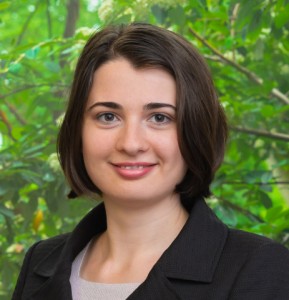
Tracking the use of personal data on the web: UW CSE Ph.D. alum Roxana Geambasu in NY Times

roxanaWe live in a data-driven world. Many of the Web services, mobile apps, and third parties we interact with daily are collecting immense amounts of information about us – every location, click, search, email, document, and site that we visit. And they are using all of this information for various purposes. Some uses of these uses might be beneficial for us (e.g., recommendations for new videos or songs to see); other uses may not be as beneficial. The problem is that we have limited visibility into how our data is being used, and hence we are vulnerable to potential abuses.

For example, did you know that credit companies might be adjusting loan offers based on your Facebook data? Or that certain travel companies used to discriminate prices based on user profile and location? Or that some companies target ads on illness-related emails, and if you click on them, you can leak sensitive information to them?

Steve Lohr writes in the New York Times:

“The web today is a big black box,’ said Roxana Geambasu, an assistant professor of computer science at Columbia University [and a 2011 UW CSE Ph.D. alumna]. ‘What’s needed is transparency.’

“Ms. Geambasu; another assistant professor at Columbia, Augustin Chaintreau, and a team of graduate students, led by Mathias Lecuyer, have come up with a tool that addresses the data transparency challenge. It is called XRay, and they will present a paper and explain their early research results on Wednesday at the Usenix Security Symposium in San Diego …

“XRay is essentially a reverse-engineering machine that models the correlations made by web services. The group’s three initial efforts have tried to determine the kinds of ads shown to Gmail users based on the text in their email messages; the product recommendations Amazon shows users based on their wish lists and other data; and the video recommendations made by YouTube determined by the videos users have previously viewed.”

Read more here. See a video of Roxana discussing the system in a Columbia University press release here. Visit the project web page here. Read more →

UW CSE’s Jeffrey Heer, Matt Mohebbi in NY Times on “Data Wrangling”

logosSteve Lohr writes in the New York Times:

“Technology revolutions come in measured, sometimes foot-dragging steps. The lab science and marketing enthusiasm tend to underestimate the bottlenecks to progress that must be overcome with hard work and practical engineering.

“The field known as ‘big data’ offers a contemporary case study. The catchphrase stands for the modern abundance of digital data from many sources … Its promise is smarter, data-driven decision-making in every field. That is why data scientist is the economy’s hot new job …

“Yet far too much handcrafted work … is still required …

“Several start-ups are trying to break through these big data bottlenecks by developing software to automate the gathering, cleaning and organizing of disparate data …

“‘It’s an absolute myth that you can send an algorithm over raw data and have insights pop up,’ said Jeffrey Heer, a professor of computer science at the University of Washington and a co-founder of Trifacta, a start-up based in San Francisco …

“Data formats are one challenge, but so is the ambiguity of human language. Iodine, a new health start-up, gives consumers information on drug side effects and interactions. Its lists, graphics and text descriptions are the result of combining the data from clinical research, government reports and online surveys of people’s experience with specific drugs …

“Data experts try to automate as many steps in the process as possible. ‘But practically, because of the diversity of data, you spend a lot of your time being a data janitor, before you can get to the cool, sexy things that got you into the field in the first place,’ said Matt Mohebbi, a data scientist and co-founder of Iodine [and a 2004 UW CSE alum].”

Read more here.

Read more →

UW CSE Ph.D. alum Anne Condon honored by Anita Borg Institute

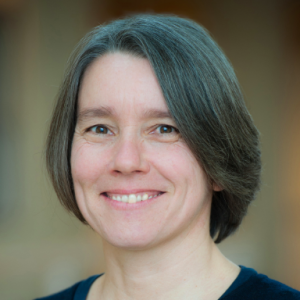
condon-2012UW CSE Ph.D. alum Anne Condon will receive the 2014 Technical Leadership ABIE Award from the Anita Borg Institute at October’s Grace Hopper Celebration of Women in Computing.s

The Technical Leadership ABIE Award recognizes women technologists who demonstrate leadership through their contributions to technology and achievements in increasing the impact of women on technology. Anne has made significant research contributions in computational complexity and bio-molecular computing, and has increased the numbers and success of women in computing research in the U.S. and Canada, both through flagship projects of CRA-W and through her own research supervision and mentoring.

Anne – a 1987 UW CSE Ph.D. alum – is Professor and Head of the Department of Computer Science at the University of British Columbia. She is an ACM Fellow, a Fellow of the Royal Society of Canada, and recipient of the 2012 University of Washington College of Engineering Diamond Award for Distinguished Achievement in Academia and the 2011 University of Washington Computer Science & Engineering Alumni Achievement Award.

Congratulations – once again! – Anne!  Read more here. Read more →

Center for Game Science + Boys & Girls Clubs summer day camps

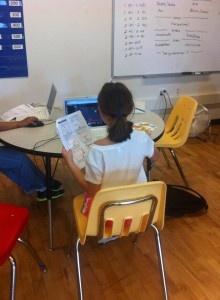
summercamp2This summer, UW CSE’s Center for Game Science worked with local Boys & Girls Clubs to provide fun summer play testing activities for several programs currently in development. While most of the day camp sessions have been held at the University of Washington, several sessions were held at local Clubs, allowing campers the opportunity to explore art activities related to Riddle Books and build games progressively over the week. CGS and the Clubs are already discussing plans for next summer. If you want to get in on the ground floor by keeping up to date on our Summer 2015 activities, drop CGS a line! Read more →

DawgBytes: UW CSE’s summer daycamps for middle schoolers and high schoolers

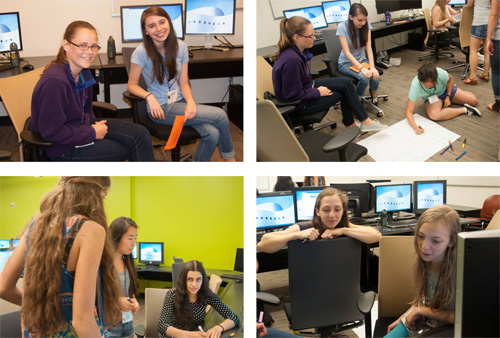
10577206_862429583785300_8334720932893377444_n copyCheck out the photos from our wonderful summer daycamps for middle schoolers and high schoolers on the DawgBytes Facebook page here.

  • Two introductory sessions using Processing for girls entering grades 7, 8, or 9
  • Two introductory sessions using Processing for girls entering grades 10, 11, or 12
  • A co-ed session in Physical Computing for students entering grades 10, 11, 12, or new college freshmen
  • A co-ed session in Game Programming for students entering grades 7, 8, or 9
  • Co-ed advanced offerings in Web Programming for students entering grades 7, 8, or 9, and for students entering grades 10, 11, or 12
  • Co-ed Scratch Adventures for students entering grades 3 and 4, and for students entering grades 5 and 6.

Here’s an excerpt from an email we received from the parent of one of this year’s attendees:

I just wanted to say thank you for holding such a great computer camp at UW last week. My son Xxxxxx enjoyed the camp very much … He loved it. He’s attended ID tech camp, coderdojo, and other small computer programming camps. So far this has been his favorite. 

I appreciate all you do for our local K-12 students. Enjoy the rest of your summer!

db-300x92Get on the mailing list for next summer’s camps here!

Learn more about DawgBytes, UW CSE’s diverse program of K-12 outreach activities, here. Read more →

« Newer PostsOlder Posts »