Changing the world: Faculty and students demonstrate CSE’s impact to the UW Foundation Board

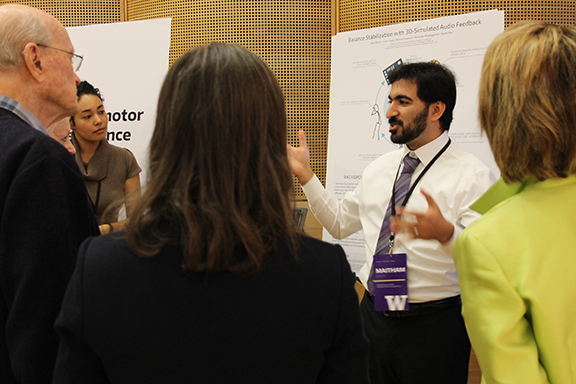
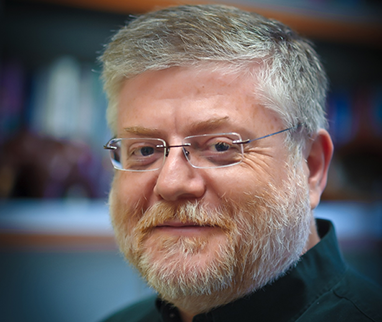
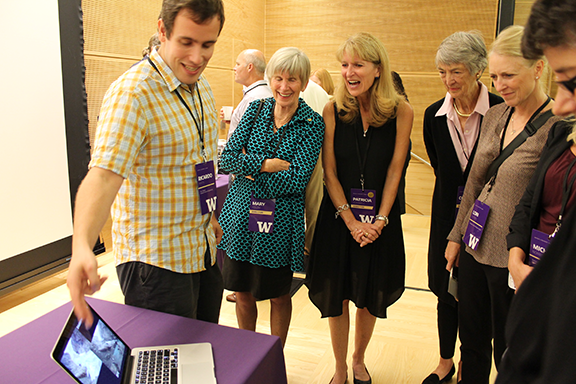
Ricardo Martin with UW Foundation board membersLast week, UW CSE faculty and students joined the University of Washington Foundation board at its fall meeting to offer hands-on demonstrations and chat with members about their latest research. The UW Foundation advances the mission of the university by raising private support for its many programs that serve students and society – including UW CSE.

CSE professor Ed Lazowska provided an overview of CSE’s impact across campus and in the community before inviting board members to learn more about the groundbreaking research and multi-disciplinary collaborations they enable through their support:

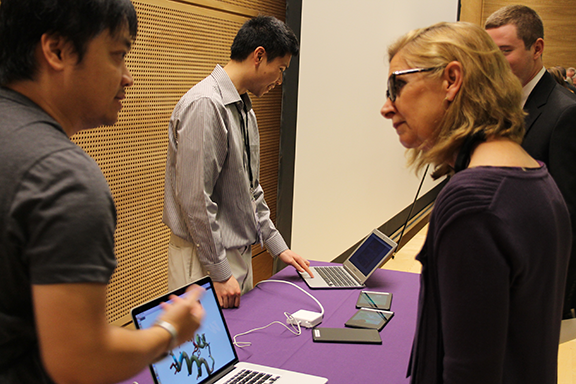
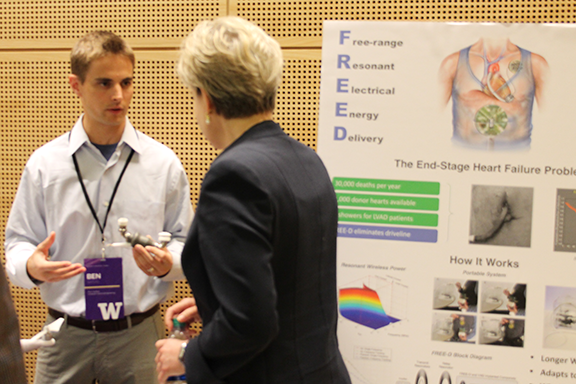
Wireless power: CSE and EE professor Josh Smith and EE Ph.D. student Ben Waters from the Sensor Systems Lab demonstrated a wireless power transfer system that will enable new capabilities in a range of industries, from consumer electronics to health care – including a battery-free, implanted heart pump.

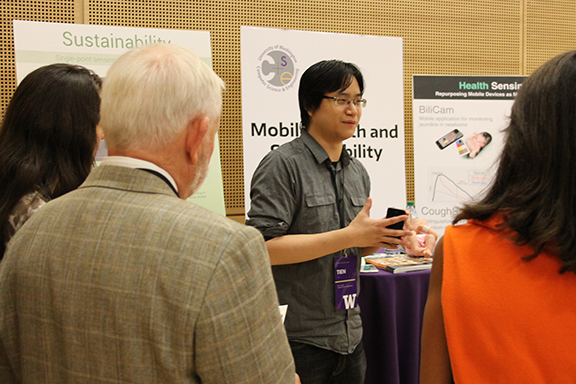
Mobile health and sustainability sensing: CSE and EE professor Shwetak Patel and Ph.D. students Tien Lee (EE) and Alex Mariakakis (CSE) shared a number of innovations developed in the Ubiquitous Computing Lab that combine sensing, machine learning and human-computer interaction to diagnose and monitor disease and measure home energy and water consumption at the appliance level.

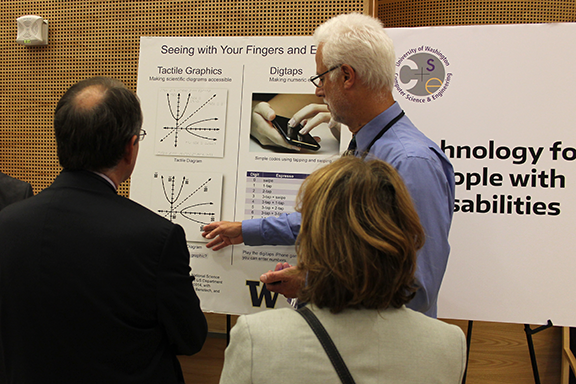
Technology for people with disabilities: CSE professor Richard Ladner and CSE Ph.D. student Catie Baker showed how they are expanding access to technology for all users with innovations such as DigiTaps and Tactile Graphics with a Voice, which enable blind and low-vision users to access digital information by “seeing” with their fingers and ears.

Sensorimotor assistance: A multi-disciplinary team that included CSE professor Raj Rao, who leads UW’s Center for Sensorimotor Neural Engineering, and BioE Ph.D. students Nile Wilson, Justin Vrana and Maitham Naeemi demonstrated Symbalance, an app that can detect the onset of a fall and help reorient the user by piping music through headphones – saving people suffering from vestibular and balance disorders from potentially debilitating injuries.

Technology for the developing world: Recent CSE Ph.D. alum Nicki Dell and current Ph.D. students Trevor Perrier and Waylon Brunette showed board members how the Open Data Kit and Mobile WaCH (Women and Child Health) are having a positive impact on the lives of people in developing countries across the globe.

Computational photography: CSE professor Steve Seitz and Ph.D. student Ricardo Martin demonstrated the latest advances from UW CSE’s Graphics and Imaging Laboratory (GRAIL), including the creation of time-lapse videos from millions of tourist photos posted online.

Games for learning and for discovery: CSE professor Zoran Popović and his team from the Center for Game Science, including producer Matthew Burns, game developer Roy Szeto and Ph.D. student Dun-Yu Hsiao, invited board members to try their hand at Foldit, the protein folding game that advances scientific discovery, and Treefrog Treasure, which teaches kids mathematical concepts as they explore different worlds as a frog.

A few photos of the demo session are below, and links to Ed Lazowska’s overview materials and various handouts are here. Our sincere thanks to UW Foundation board chair Jodi Green and all of the board members for their enthusiastic participation and support for UW CSE education and research!
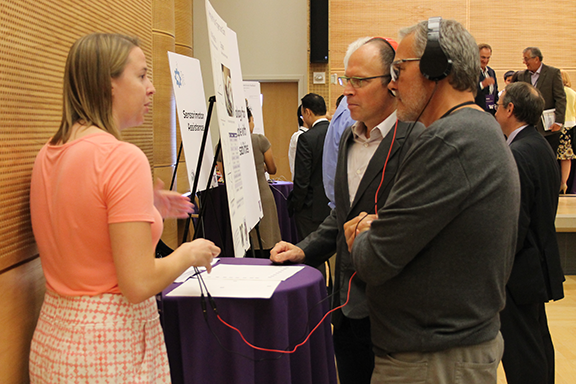
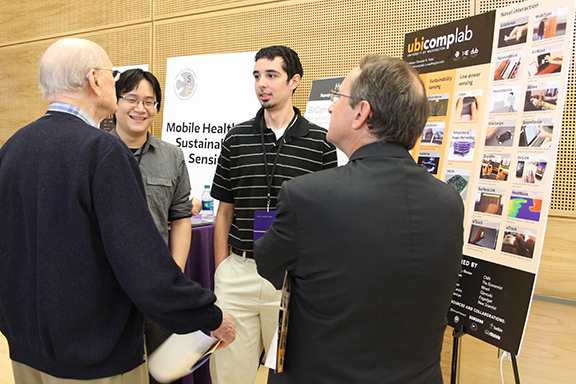
Catie Baker with UW Foundation board members  Tien Lee and Alex Mariakakis with UW Foundation board membersJosh Smith with UW Foundation board members  Dun-Yu Hsiao and Roy Szeto with UW Foundation board membersBen Waters with UW Foundation board member  Richard Ladner with UW Foundation board membersTien Lee with UW Foundation board members  Nile Wilson (left) and Maitham Naeemi with UW Foundation board members Read more →

Nicki Dell receives UW CSE’s 500th Ph.D.

NickiNicola (Nicki) Dell has earned the 500th Ph.D. awarded by UW Computer Science & Engineering – a milestone by any measure!

Nicki was advised on her thesis – “Mobile Camera-Based Systems for Low-Resource Settings” – by Gaetano Borriello and Linda Shapiro. In January, she will be starting her new position as an Assistant Professor at Cornell Tech in New York City.

Nicki was born in Zimbabwe and received a B.Sc. in Computer Science from the University of East Anglia (UK) in 2004 and an M.S. in Computer Science & Engineering from UW in 2011. Her research lies at the intersection of Human-Computer Interaction (HCI) and Information and Communication Technologies for Development (ICTD) with a focus on designing, building, and evaluating novel computing systems that improve the lives of underserved populations in low-income regions. Her research and outreach activities have been recognized through several awards and fellowships, including a Graduate Facebook Fellowship, a Google Anita Borg Scholarship, and a Palantir Scholarship for Women in Technology. She has completed internships at Microsoft Research in Redmond, USA and in Bangalore, India and has led the Change group at the University of Washington since 2011.

Learn more about Nicki and her research from her website here and a short video here. Check out the roster of UW CSE Ph.D. recipients here.

Who will receive UW CSE Ph.D. number 2**9? We’ll find out soon! Read more →

UW research on battery-free camera networks featured at UbiComp 2015

WISPCamUW faculty and student contributions to UbiComp 2015 are so extensive, we can barely keep up. The latest news to come out of the conference that puts UW innovation in the spotlight: technology from the Sensor Systems Laboratory led by UW CSE and EE professor Josh Smith that enables the creation of smart networks of self-localizing, battery-free cameras.

A team that includes Alanson Sample (a UW EE Ph.D. alum who also completed a postdoc in CSE before joining Disney Research), current CSE Ph.D. student Jim Younquist, and EE Ph.D. students Saman Naderiparizi and Eve Zhao devised a system in which battery-free RFID sensor tags enhanced with on-board cameras, known as WISPCams after the Wireless Identification and Sensing Platform on which they are built, are able to determine their location and orientation in relation to other cameras using LEDs.

From a Disney Research press release:

“Previous work at UW has produced battery-free RFID tags called WISPs with enhanced capabilities such as onboard computation, sensing, and image capture capabilities. WISPs operate at such low power that they can scavenge the energy needed for operation from radio waves. The new work shows that these WISPs with onboard cameras, or WISPCams, can use optical cues to figure out where they are located and the direction in which they are pointed. The ability of each node to determine its own location makes deployment of autonomous sensor nodes easier and the sensor data they produce more meaningful.

“‘Once the battery free cameras know their own positions it is possible to query the network of WISPCams for high level information such as all images looking west or sensor data from all nodes in a particular area,’ said Alanson P. Sample, a research scientist with Disney Research who previously was a post-doctoral researcher on the UW team that developed the WISP platform and the WISPCam.”

Having come up with a method to efficiently and precisely localize each camera optically – without the need for extra circuitry or components – the team envisions hundreds of WISPCams working together to measure their location with optical cues or localize and track objects of interest in 3D.

Read the full press release here, and the research paper here. Nice work, team! Read more →

Google honored as UW Presidential Laureate

Table1

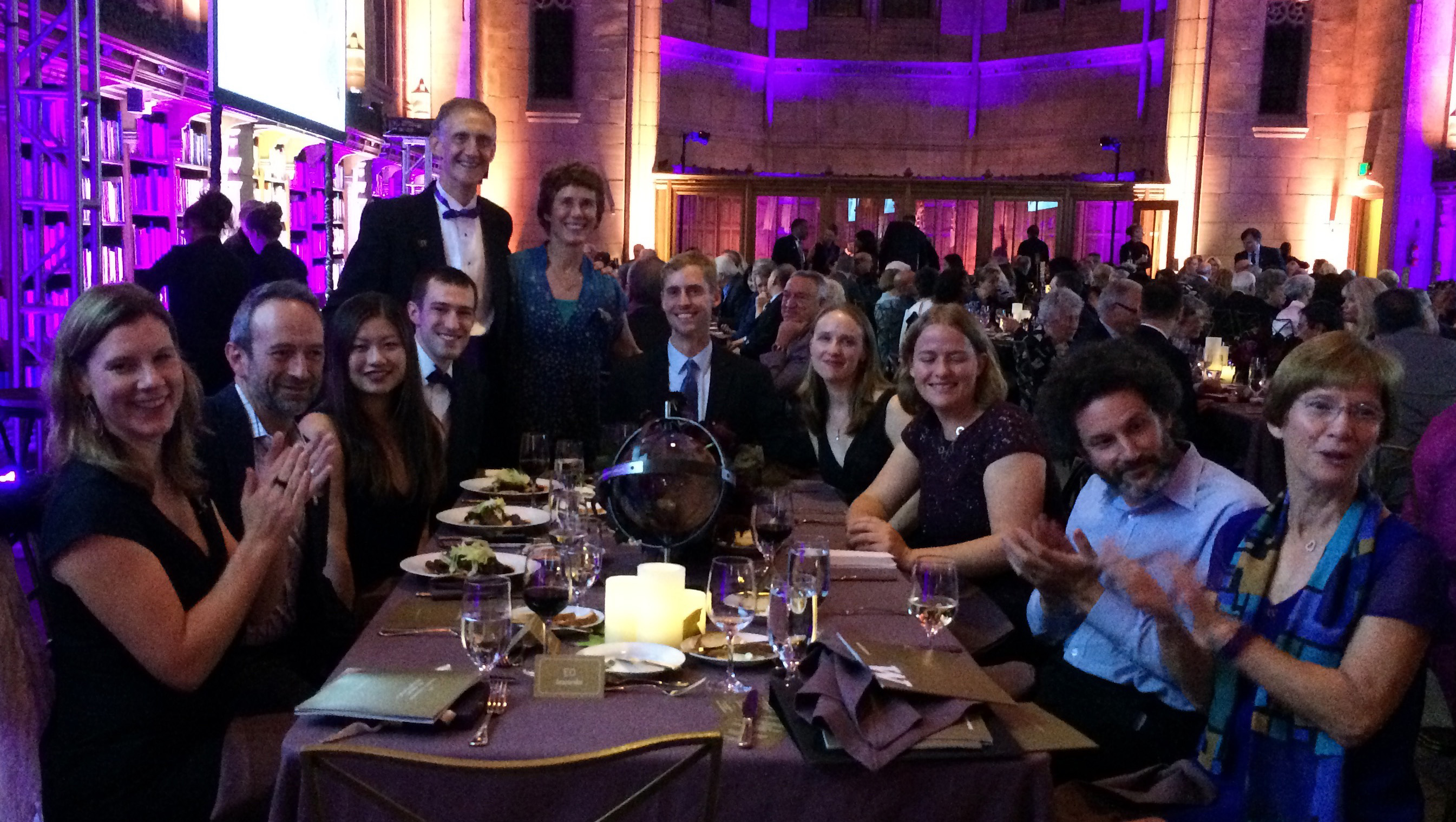
The Google/CSE table at the UW Annual Recognition Gala: Darcy Nothnagle, Stephen Court, Dana Prouty, Jeff Prouty, Ed Lazowska, Lee Smith, Charlie Reis, Kate Everitt, Nicki Dell, Steve Seitz, and Lyndsay Downs

Google was honored on Friday, at the University of Washington Annual Recognition Gala, as the latest UW Presidential Laureate – individuals and organizations who have donated more than $10 million to the University of Washington.

The vast majority of Google’s generosity has come to CSE, in the form of research gifts and matches of philanthropic gifts by employees. We’re extremely grateful to companies such as Google for their support of our work.

At the event, recent UW CSE Ph.D. alum Nicki Dell described one aspect of the impact of Google’s generosity: the creation of Open Data Kit by Gaetano Borriello’s research group, used throughout the world for data collection in low-resource environments.

Prouty

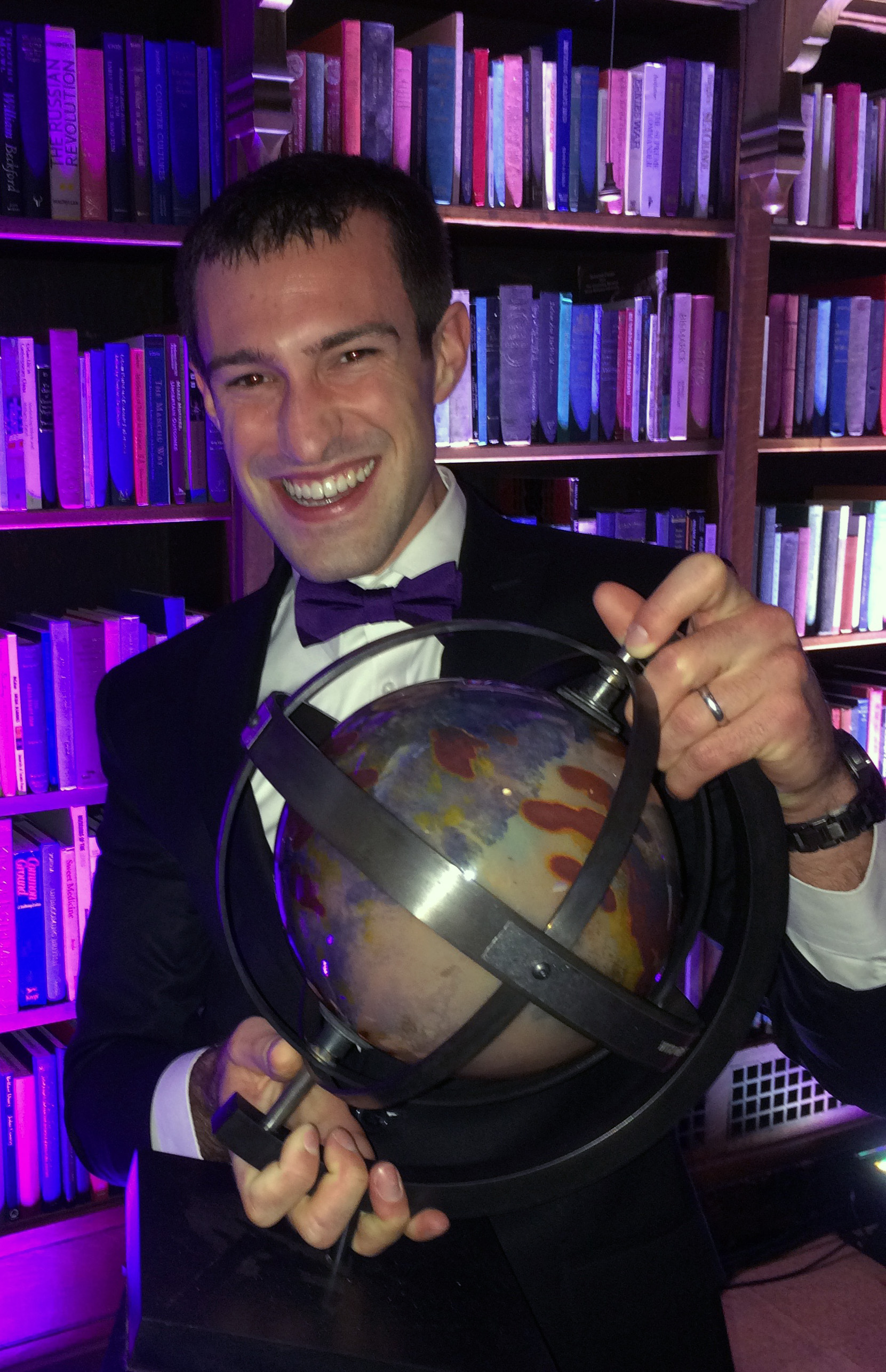
Jeff Prouty manages to heft Google’s UW Presidential Laureate Commemorative Globe

Read more →

UW CSE and Gaetano Borriello continue to rock UbiComp 2015!

Gaetano_FP-copyYesterday we were thrilled to announce that UW CSE Ph.D. student Haichen Shen and his team captured a Best Paper Award and the inaugural Gaetano Borriello Best Student Paper Award at  UbiComp 2015, the 2015 ACM International Joint Conference on Pervasive and Ubiquitous Computing, currently underway in Osaka Japan. (The Gaetano Borriello Best Student Paper Award was named this year for long-time UW CSE professor Gaetano Borriello, who passed away earlier this year, decades before his time.)

But wait – there’s more!

Today, the UbiComp 2015 10 Year Impact Award – recognizing the paper presented at UbiComp 10 years ago that has had the greatest impact – was awarded to the paper “Place Lab: Device Positioning Using Radio Beacons in the Wild” by a team including UW CSE professor Gaetano Borriello, UW CSE Ph.D. alum and Intel Principal Engineer Anthony LaMarca (then at Intel Research Seattle), UW CSE Ph.D. alum and Google Software Engineering Manager Jeff Hightower (then at Intel Research Seattle), and (then) UW CSE Bachelors students James Howard, Jeff Hughes, and Fred Potter.

Pop quiz: Who won the UbiComp 2014 10 Year Impact Award? Answer: UW CSE’s Gaetano Borriello and Jeff Hightower!

Extra credit: Who won the UbiComp 2013 10 Year Impact Award? Answer: UW CSE’s Don Patterson, Lin Liao, Dieter Fox, and Henry Kautz!

Oh! Did we forget to mention that today, the Pervasive 2015 10 Year Impact Award also went to a team from UW CSE and Intel Research Seattle? Pervasive – which merged with UbiComp two years ago – recognized the paper “Learning and Recognizing the Places We Go” by a familiar set of authors including UW CSE’s Jeff Hightower, Anthony LaMarca, Ian Smith, and Jeff Hughes.

Go team! Read more →

Innovation at UW

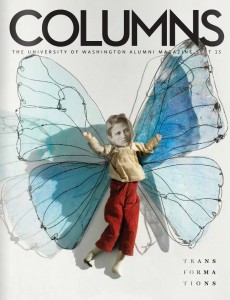
Untitled“Innovation across the UW occurs across disciplines” … but 3 of the 6 examples that the UW alumni magazine chose to highlight in its September issue are from CSE:

“Shyam Gollakota captures energy out of thin air …

“Now a phone can diagnose sleep apnea …

“Computer scientist Shwetak Patel leads the UW’s Ubiquitous Computing Lab on projects to harvest power from variations in temperature, use humans as antennae, and use cell phone cameras to judge jaundice in newborns …”

Ayup. Read more here. Read more →

Intercollegiate athletics in proper perspective

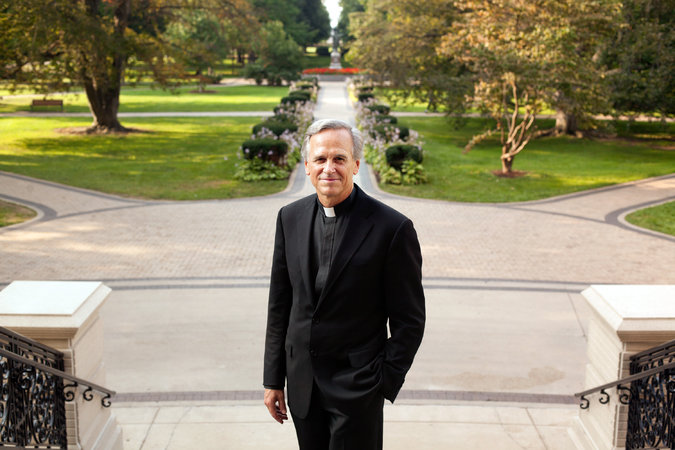
11NOTREDAMEweb1-master675This wonderful New York Times article has nothing to do with computer science, but it has everything to do with the business we’re in – higher education – and with the proper role of intercollegiate athletics.

“[Notre Dame’s] president, the Rev. John I. Jenkins, … adamantly opposes a model in which college sheds what is left of its amateur ways for a semiprofessional structure…. ‘Our relationship to these young people is to educate them, to help them grow,’ he says….

“And if that somehow comes to pass, he says, Notre Dame will leave the profitable industrial complex that is elite college football, boosters be damned, and explore the creation of a conference with like-minded universities.

“That’s right: Notre Dame would take its 23.9-karat-gold-flecked football helmets and play elsewhere.

“‘Perhaps institutions will make decisions about where they want to go – a semipro model or a different, more educational model – and I welcome that,’ Father Jenkins says.”

Read more, in the New York Times, here. Read more →

Wired magazine: UW CSE’s and UCSD’s original car hack “far ahead of its time”

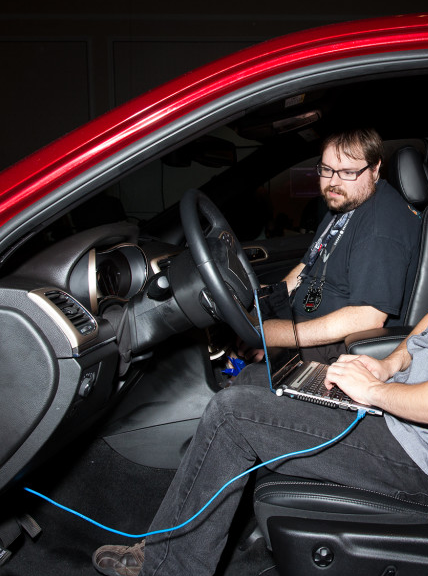
Karl Koscher hacking a car

UW CSE alum Karl Koscher is still hacking cars

Wired published a fascinating article today on the car industry’s slow response to security flaws revealed by the car hack led by UW CSE professor Yoshi Kohno and UCSD professor (and UW CSE Ph.D. alum) Stefan Savage five years ago. The article notes that it took the affected manufacturer, General Motors, five years to issue a fix to its millions of vehicles equipped with the OnStar system that the team demonstrated was vulnerable to attack.

From the article:

“When a pair of security researchers showed they could hack a Jeep over the Internet earlier this summer to hijack its brakes and transmission, the impact was swift and explosive….

“But when another group of researchers quietly pulled off that same automotive magic trick five years earlier, their work was answered with exactly none of those reactions….

“For nearly half a decade, millions of GM cars and trucks were vulnerable to that privately known attack, a remote exploit that targeted its OnStar dashboard computer and was capable of everything from tracking vehicles to engaging their brakes at high speed to disabling brakes altogether.

“ ‘We basically had complete control of the car except the steering,’ says [UW CSE Ph.D. alum and UCSD postdoc] Karl Koscher, one of the security researchers who helped to develop the attack. ‘Certainly it would have been better if it had been patched sooner.’ ”

The article explains how the research team chose to notify GM and federal regulators of the vulnerability, instead of publicizing it widely as was the case with more recent car hacking demonstrations. Although it took five years for GM to issue a fix, that was less an issue of negligence than of a lack of preparation industry-wide. As the article explains it:

“GM’s glacial response is partly a result of just how far ahead of its time the UCSD and UW researchers’ OnStar attack was. Their technique, described in a pair of papers in 2010 and 2011, represented a brilliant and unprecedented chain of hacker attacks integrated into a single exploit.”

Read the full article here, and view our car hacking demonstration that aired on 60 Minutes here. Read more →

Come play with UW CSE’s Taskar Center for Accessible Technology at the Seattle Design Festival!

Seattle Design Festival logoThis weekend, people of all ages and abilities are invited to discover the Universal Play Kiosk presented by UW CSE’s Taskar Center for Accessible Technology as part of the Seattle Design Festival. In keeping with the festival’s theme, “Design for Equity,” the Universal Play Kiosk provides a configurable space designed to facilitate equal participation of all.

The kiosk, which is a partnership between the Taskar Center, Gensler Design Firm and Hoffman Construction Co., creates an immersive, collaborative environment that truly integrates children and adults with special needs. The modular structure accommodates wheelchairs and other assistive devices, is adjustable on the fly to welcome individuals of varying abilities, and provides rich sensory stimulation through colors, shadows, textures and sounds.

Check out the installation in Pioneer Square’s Occidental Mall and Park between 10:00 am and 6:00 pm this Saturday, September 12th and Sunday, September 13th at the Seattle Design Festival Block Party, a two-day street fair celebrating Seattle’s diverse design community. More details are available here. Read more →

UW CSE’s Franzi Roesner addresses NAE Frontiers in Engineering Symposium

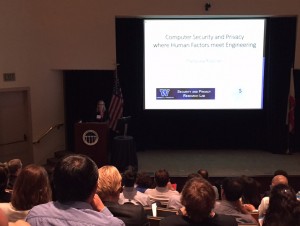
Franzi Roesner at the NAE Frontiers of Engineering Symposium

Franzi Roesner at the NAE Frontiers of Engineering Symposium

Every year, the National Academy of Engineering invites roughly 100 of the top engineers under the age of 45 from around the country to participate in its Frontiers of Engineering Symposium, a two-and-a-half day event focused on cutting-edge research in various fields of engineering. The 2015 symposium, which is taking place this week in Irvine CA, features a diverse range of topics, including the search for exoplanets, metamaterials, forecasting natural disasters, and cybersecurity and privacy.

It is an honor to be invited to the symposium, and an even higher honor to be invited to speak. This year, professor Franzi Roesner, co-director of UW CSE’s Security and Privacy Research Lab, delivered one of the opening talks of the program.

In her presentation, Computer Security and Privacy: Where Human Factors Meet Engineering, Franzi highlighted the challenge of designing technologies that match user expectations when it comes to security and privacy. She described a new model for granting permissions, “user-driven access control,” that removes the burden of making decisions from the user in favor of having the system automatically grant permissions based on how the user naturally interacts with existing applications.

Franzi is one of only 15 people who are giving talks at the symposium this week – yet more proof that UW CSE is home to some of the brightest rising stars in computer science and computer engineering! Read more →

« Newer PostsOlder Posts »