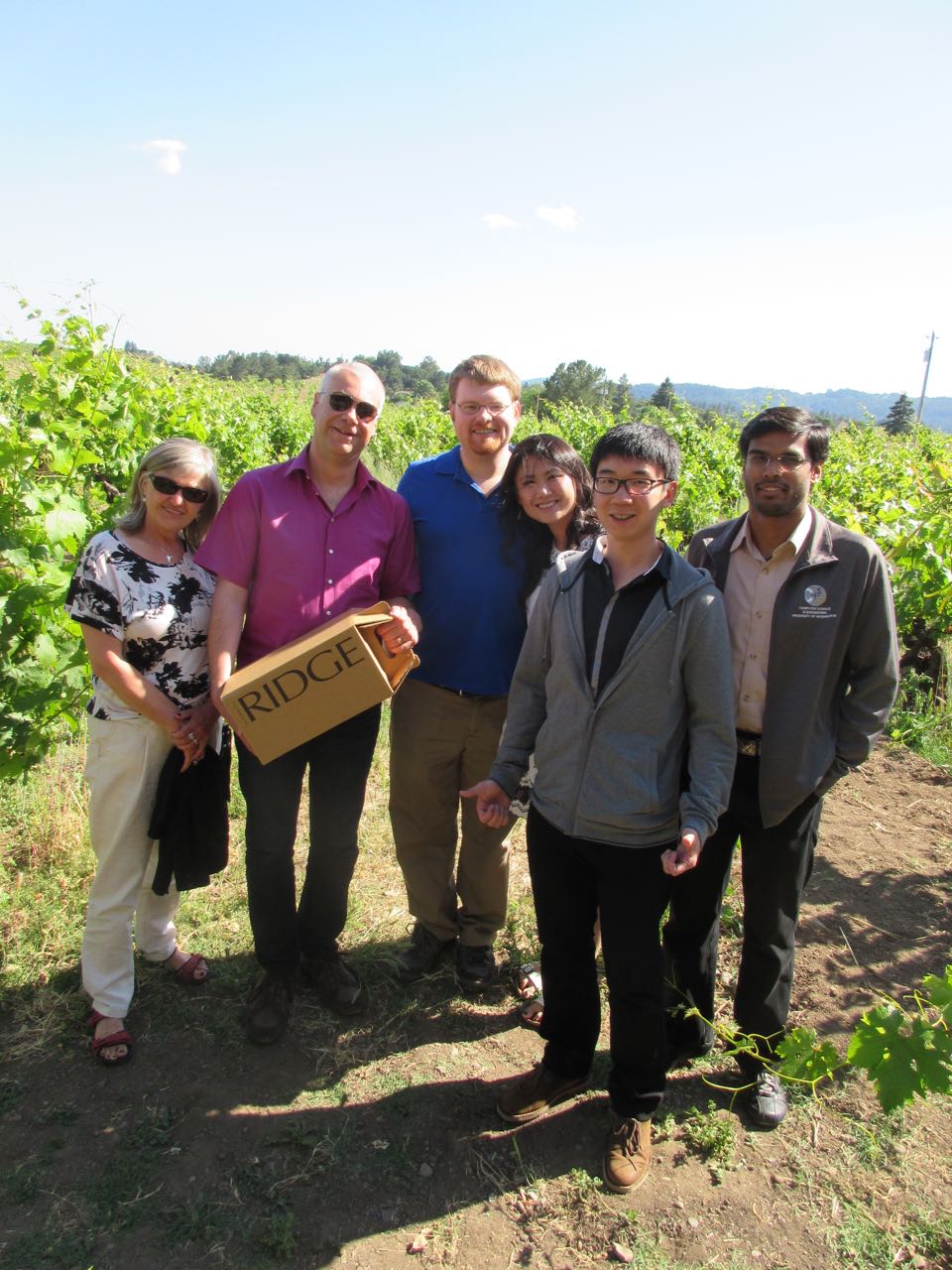
Right-to-left: Naveen Kr. Sharma, Jialin Li, Irene Zhang, Dan Ports, Mothy Roscoe (ETH), Mothy’s partner Elaine Vautier
UW CSE systems lab members (and friends) celebrate their award paper at NSDI with a visit to Ridge, “The Official Winery of UW CSE” – a tradition we inherited from Andrew Birrell and Mike Schroeder during their Xerox PARC CSL and DEC SRC days.
(Ridge was in fact established by engineers who worked at SRI for UW CSE’s founding chair, Jerre Noe. Jerre’s younger son Russ worked at Ridge in high school, which made it impossible for him to drink plonk with his friends in college …) Read more →
 UW CSE graduate student Pavel Panchekha, undergraduate student Alex Sanchez-Stern, graduate student James R. Wilcox, and professor Zachary Tatlock have received a “Best Paper” award at PLDI 2015, the 36th annual ACM SIGPLAN Conference on Programming Language Design and Implementation, for their paper “Automatically Improving Accuracy for Floating Point Expressions.”
The paper describes Herbie, a tool that automatically discovers and applies numerical analysis techniques to improve the accuracy of programs without requiring any specialized knowledge from the user.
Check out the Herbie project web page here.
Congratulations Pavel, Alex, James, and Zach! Read more →
 A team of faculty and students from UW CSE’s Computer Systems Lab today received the Best Paper Award at the 12th USENIX Symposium on Networked Systems Design and Implementation (NSDI ’15) for the paper “Designing Distributed Systems Using Approximate Synchrony in Data Center Networks.” The team was led by UW CSE professor Dan Ports, and included UW CSE graduate students Jialin Li, Vincent Liu, and Naveen Kr. Sharma, and UW CSE professor Arvind Krishnamurthy.
UW CSE has an amazing record of Best Paper Awards in NSDI – the premier venue for presenting distributed systems research. The list now includes:
- NSDI ’15: “Designing Distributed Systems Using Approximate Synchrony in Data Center Networks” by Dan R.K. Ports, Jialin Li, Vincent Liu, Naveen Kr. Sharma, and Arvind Krishnamurthy.
- NSDI ’13: “F10: A Fault-Tolerant Engineered Network” by Vincent Liu, Dan Halperin, Arvind Krishnamurthy, and Tom Anderson.
- NSDI ’10: “Reverse Traceroute” by Ethan Katz-Bassett, Harsha V. Madhyastha, Vijay Kumar Adhikari, Colin Scott, Justine Sherry, Peter van Wesep, Tom Anderson, and Arvind Krishnamurthy.
- NSDI ’08: “Consensus Routing: The Internet as a Distributed System” by John P. John, Ethan Katz-Bassett, Arvind Krishnamurthy, Tom Anderson, and Arun Venkataramani.
- NSDI ’07: “Do Incentives Build Robustness in BitTorrent?” by Michael Piatek, Tomas Isdal, Tom Anderson, Arvind Krishnamurthy, and Arun Venkataramani.
(And Arvind seems to have had his fingers in all five!)
Congratulations Dan, Jialin, Vincent, Naveen, and Arvind! (Check out the “Speculative Paxos” project web page here.) Read more →
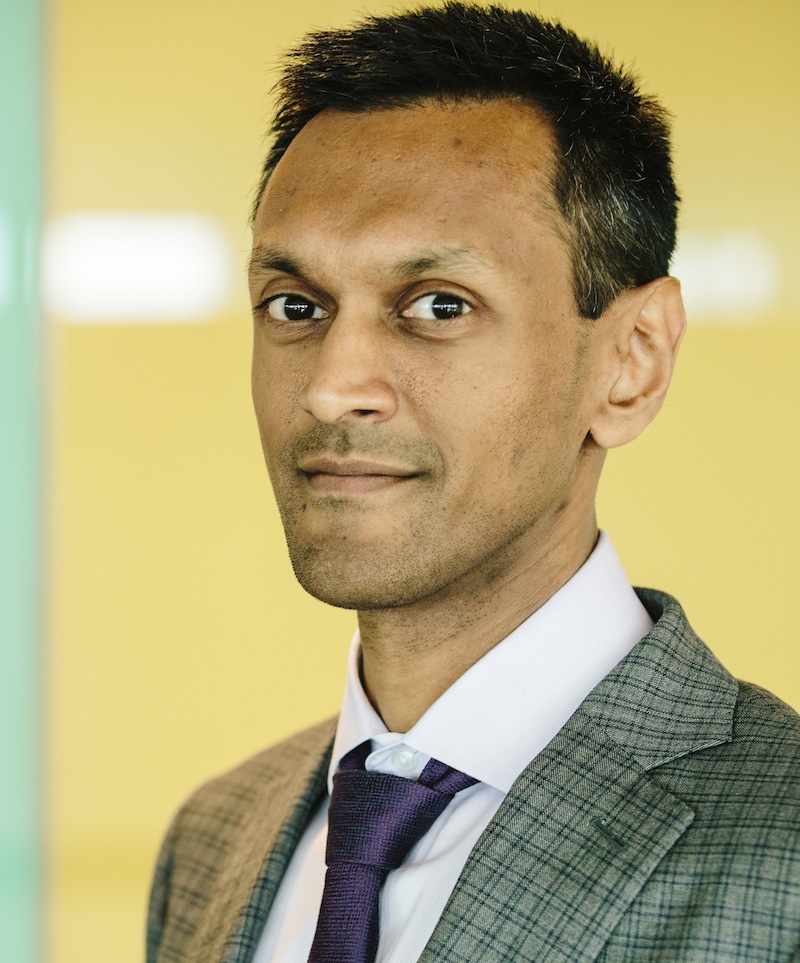 Sham Kakade, a world-class expert in statistical machine learning, will join the University of Washington this fall as the holder of a Washington Research Foundation Data Science Chair appointed jointly in Computer Science & Engineering and Statistics, expanding UW’s excellence in data science and strengthening the connection between these two highly ranked programs.
Sham is currently Principal Research Scientist at Microsoft Research, New England. His research has ranged from economics to neuroscience to applied and theoretical machine learning and their intersection. He has made significant contributions to semi-supervised learning, online learning, reinforcement learning, and learning of latent-variable and hidden Markov models.
Prior to Microsoft Research, Sham was Associate Professor in the Wharton Statistics Department at University of Pennsylvania and Assistant Professor at Toyota Technological Institute, Chicago. He received his Ph.D. at the University College London Gatsby Computational Neuroscience Unit and his B.S. in Physics at Caltech.
Sham joins UW’s outstanding machine learning faculty including Carlos Guestrin, Pedro Domingos, Emily Fox, Daniela Witten, Marina Meila, Jeff Bilmes, Mathias Drton, Maryam Fazel, Noah Simon, and Thomas Richardson. Read more →
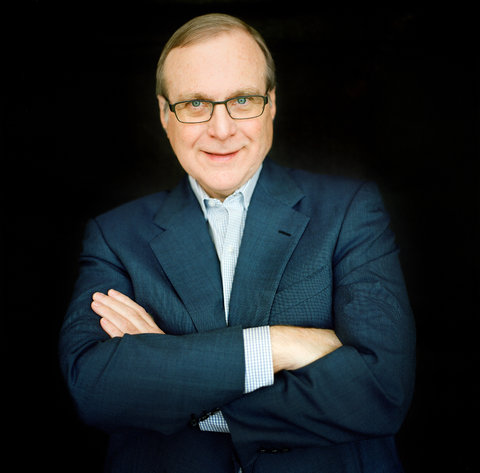 Nick Wingfield interviews Paul G. Allen in the New York Times:
“Looking at Microsoft’s sprawling product line and 118,000 or so employees, it’s easy to forget that the company started with one modest product made by two ambitious people.
“In early April, one of those two people, Paul Allen, offered a reminder of Microsoft’s humble origins when he posted a photograph on Twitter commemorating the company’s 40th anniversary. The picture showed the introductory lines of the printed code for Microsoft’s first software product, an interpreter for the Basic programming language that Mr. Allen created with Bill Gates in 1975 …
“Nearly two years ago, he founded a private research group in Seattle to pursue breakthroughs in artificial intelligence. [UW CSE professor] Oren Etzioni, the computer scientist and entrepreneur Mr. Allen recruited to run the group, said Mr. Allen was very engaged in the work of the 40-person group.
“‘At his core, he’s still very much an engineer,’ Dr. Etzioni said.”
Read more here.
Read more →
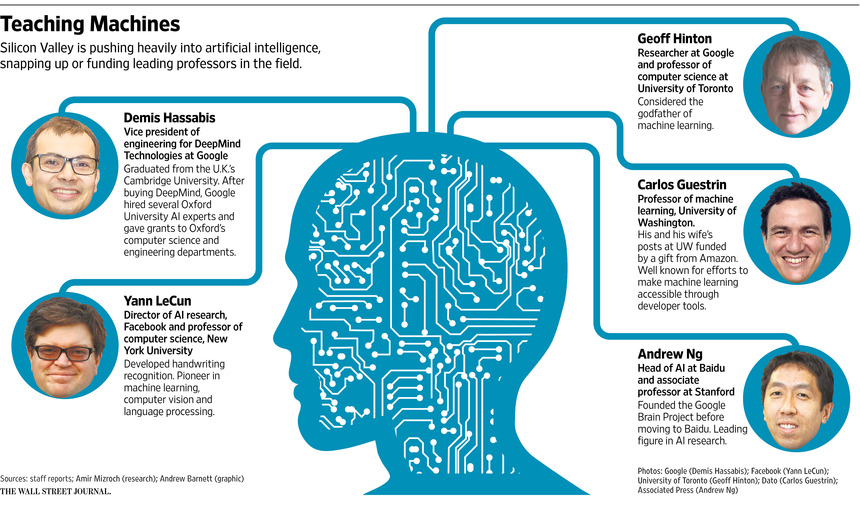 UW CSE is heavily featured in this Wall Street Journal article on AI:
“When the University of Washington’s computer-science department wanted to poach artificial-intelligence expert Carlos Guestrin from Carnegie Mellon, it turned to Amazon.com Inc.
“The Seattle-based tech giant ponied up $2 million to fund two professorships: one for Mr. Guestrin, and another for his wife, who also works in the field. To seal the deal, Amazon Chief Executive Jeff Bezos met the academic during a campus visit.
“‘[Mr. Bezos] is a very smart guy. He has a crazy laugh,’ said Mr. Guestrin, now UW’s Amazon Professor of Machine Learning. ‘We got quickly into technical things: What was I working on in large-scale machine learning? How could I impact Amazon? What could this mean for the business of data?’ …
“Tech companies also are pouring funds into universities with expertise in the once-obscure field. University of Washington, based in the same state as Microsoft Corp. and Amazon, has long been a center of excellence for computer science, including artificial intelligence. Microsoft, Intel Corp. and Google, as well as Amazon, all fund some of UW’s AI research …
“‘There’s a massive battle under way for talent,’ said Oren Etzioni, on leave from UW’s computer-science faculty and now heading up the Seattle-based Allen Institute for Artificial Intelligence, a nonprofit set up by Microsoft co-founder Paul Allen.”
Read more here. Read more →
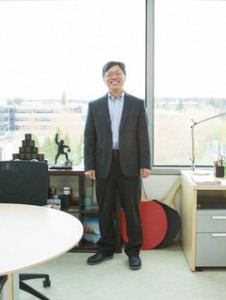
Harry Shum
Nick Wingfield in the New York Times:
“A big part of Microsoft’s fate rests with its research arm, the quasi-academic group responsible for conjuring breakthroughs that will keep Microsoft relevant for generations to come.
“On Monday, Harry Shum, the Microsoft executive vice president who oversees the research operation, was bursting with pride while demonstrating Skype Translator, a new product that incorporates years of work by researchers to convert voice conversations from one language to another in real time …
“Breaking down barriers at Microsoft is still a work in progress, but some executives said the tone had changed markedly. ‘Skype had every reason to push back,’ said Peter Lee, a corporate vice president at Microsoft Research. ‘But instead Gurdeep, especially, just embraced this.’
“‘There’s an eagerness in the business units to pick up ideas that are going to make a significant difference,’ said Ed Lazowska, a professor of computer science at the University of Washington, who is on the technical advisory board for Microsoft Research.”
Read more here. Read more →
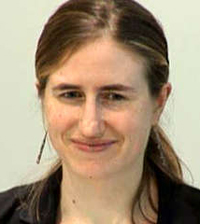
Emma Brunskill
UW CSE Bachelors alumna (and Carnegie Mellon faculty member) Emma Brunskill, and UW CSE adjunct professor (and Amazon Professor of Machine Learning in Statistics) Emily Fox, are two of the 36 recipients of 2015 Office of Naval Research Young Investigator Awards.
The ONR Young Investigator Program is designed to promote the professional development of early-career academic scientists, both as researchers and as educators. For awardees, the funding supports laboratory equipment, graduate student stipends and scholarships, and other expenses critical to ongoing and planned studies.This year’s candidates were selected from 383 research proposals based on merit and potential breakthrough advances for the Navy and Marine Corps. All are college and university faculty who have obtained tenure-track positions within the past five years.
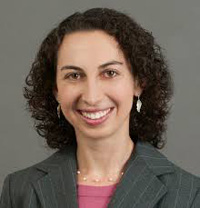
Emily Fox
Congratulations to Emma and Emily!!!!!
Read more →
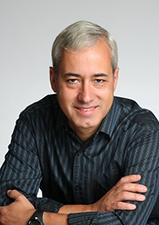
Pedro Domingos
The “Science” section of today’s edition of the UW campus newspaper, The Daily, considers the future of artificial intelligence, featuring UW CSE professors Pedro Domingos and Dan Weld.
Pedro and Dan suggest that people’s fear of machines taking over the world is greatly exaggerated based on the current state of AI research and the difference between human thought – using common sense and multipurpose intelligence – and the way machines’ “thinking” is confined by their programming and the goals that humans set for them.
That’s not to say that there aren’t valid concerns associated with AI, including robots supplanting people in certain jobs and the potential for computers to misinterpret the directions humans give them. And “strong” AI that would grant machines multipurpose intelligence – although a long way off – would require safeguards.
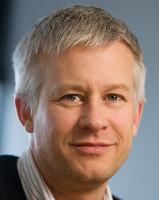
Dan Weld
But, as Pedro points out, the problem at this stage isn’t that machines are getting too smart and may take over the world, but that “they’re too stupid and they’ve already taken over the world.”
It is a fascinating discussion with two of the leading minds in AI research. Check out the full article here. Read more →
 Earlier this week, we posted about a team of UW students advised by UW CSE’s Alan Borning and Anat Caspi who made it into the final round of the city’s Hack the Commute competition. Last night, the team pitched their app, Access Map, to a panel of judges at City Hall – and they won!
Read all about it courtesy of this great article in GeekWire here and KUOW’s story here.
Congratulations to students Nick Bolten, Allie Deford, Reagan Middlebrook and Veronika Sipeeva and their advisors, Alan and Anat, on the big win! Read more →

