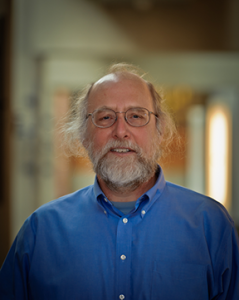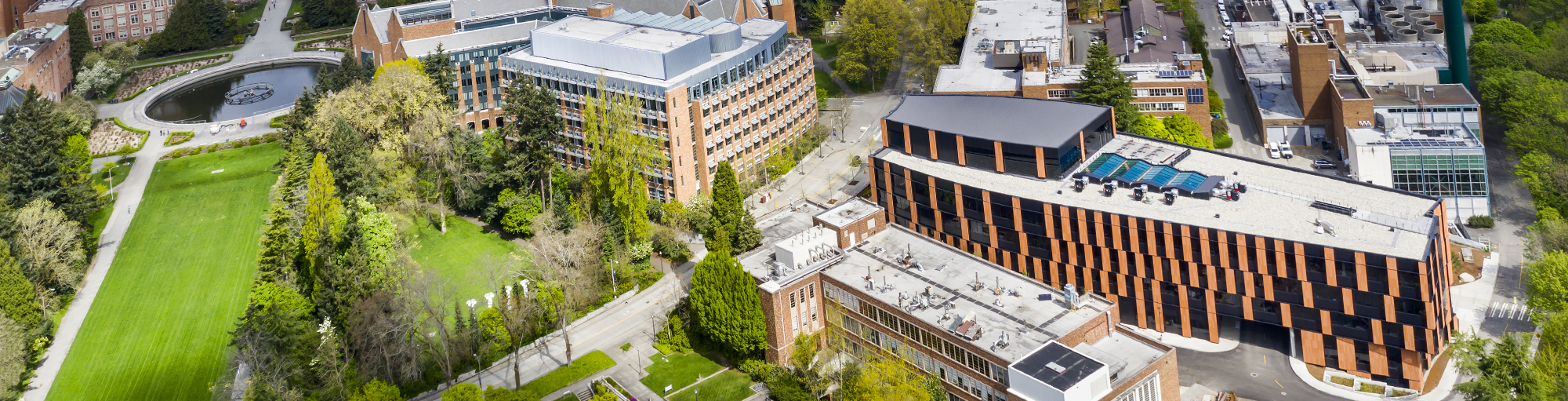
Tony Hey at U Bookstore, Town Hall Seattle

9780521766456Tony Hey – UW CSE Affiliate Professor, Senior Data Science Fellow in the UW eScience Institute, and retired Vice President of Microsoft Research Connections – will discuss his recent book, The Computing Universe: A Journey Through A Revolution, at two events this spring:

  • Tuesday, May 12, 7 p.m., at the University Bookstore, 4326 University Way NE. Information here.
  • Tuesday, June 23, 7:30 p.m., at Town Hall Seattle, 1119 Eighth Avenue, downstairs. Information here (registration required).

Tony’s book is a fascinating tour through the history of our field: short self-contained, illustrated chapters explaining the ideas behind hardware, software, algorithms, Moore’s Law, the birth of the personal computer, the Internet and the Web, the Turing Test, Jeopardy’s Watson, World of Warcraft, spyware, Google, Facebook, and quantum computing.

Read the book, and join Tony at one of these events! Read more →
Team Hackcessible, advised by UW CSE, heading to the finals of Seattle’s Hack the Commute competition

UW Hackcessible Team

Left to right: Anat Caspi with students Reagan Middlebrook, Veronika Sipeeva, Allie Deford and Nick Bolten

Hackcessible – a team of students advised by UW CSE professor Alan Borning and Anat Caspi, director of the Taskar Center for Accessible Technology – will be one of three groups competing at Seattle City Hall this Wednesday in the championship round of Hack the Commute.

The students, who hail from Electrical Engineering, Human Centered Design & Engineering, and UW Tacoma’s Computer Science & Systems program, developed an app called AccessMap that enables users to plan their route in Seattle based on their individual accessibility needs. AccessMap provides information about changes in elevation, the presence of curb ramps and other data designed to assist people with mobility concerns, such as those in wheelchairs, to navigate the city.

The team used a combination of publicly available and user-submitted data, designing the app to enable people to report obstacles and verify information that is contributed by others.

Alan Borning

Alan Borning

“I’m really impressed with the work this team put in,” said Caspi, noting that the students talked to a lot of people to identify what’s missing from the publicly available data that would be helpful if incorporated into the app. “In one instance, they found a gentleman who keeps information about the location of elevators in his head.”

“We see this as an opportunity to collaborate with the city to make its information more useful to everyone.”

Check out the live app here.

Learn more about Hack the Commute here.

Register for free to see Hackcessible in action at Wednesday’s championship event here. Read more →

Privacy-preserving Internet surfing with UW CSE’s uProxy browser extension

uProxy logoToday, UW CSE’s Networks & Mobile Systems Lab released an alpha version of uProxy, a new browser extension for Chrome and Firefox that leverages social networks and trust between friends to provide web surfers with safe and unfettered passage through the internet.

Users of uProxy are able to share a trusted Internet connection with friends or to route their own traffic through a friend’s computer, essentially creating a personalized VPN (virtual private network) that makes it more difficult for third parties to monitor or interfere with their online activity. The alpha version is compatible with Google Hangouts and Facebook, and developers hope to add more social networks in future.

uProxy – which was developed at UW CSE with contributions from Google, Brave New Software and the open source community, and seeded by Google Ideas – is the culmination of two years of development. Way to go, team!

Learn more and try uProxy for yourself here. (And once you’ve tried it, be sure to provide the developers with your feedback!) Read more →

Hadi Partovi on today’s Seattle tech ecosystem

3046028613_6efa31be58_oCode.org’s Hadi Partovi writes in TechCrunch on today’s Seattle tech ecosystem, and the dramatic changes in the past 5-10 years:

“The last 10 years have seen a sea-change in Seattle, caused by two forces.

“The first part of the change has been the rise of a new breed of large Seattle-based tech companies – companies that are still smaller than the two local titans, Microsoft and Amazon, yet large enough to fill out the middle tier of the tech ecosystem …

“The second force has been the increasing appearance of Silicon Valley engineering offices in the Seattle metro area. Google was one of the first major Silicon Valley companies to open an engineering office in Seattle … A decade after Google set up shop in this city, Seattle has seen an explosion of Silicon Valley companies setting up their second engineering office …

“Seattle stands out as the first stop for three reasons:

“(1) Seattle has one of the largest populations of software engineers, in part because of the original recruiting power of Microsoft during the 1980s and 1990s …

“(2) The University of Washington houses one of the top 10 computer science programs in the country, with a steady flow of graduates who want to remain in the region. A recent analysis of LinkedIn data by a Boston startup found that of UW graduates in the past two years who list their occupation as “software engineer,” 90% reside in Seattle! . The New York Times extensively profiled UW CSE’s impact on the local tech scene in 2012.

“(3) Seattle is in the same time zone as San Francisco.”

Read more here. Read more →

ApneaApp developed at UW CSE and UW Medicine provides a non-invasive alternative for diagnosing sleep disorder affecting millions of Americans

UW CSE professor Shyam Gollakota and PhD student Rajalakshmi Nandakumar have been working with Dr. Nathaniel Watson of the UW Medicine Sleep Center to develop and test a new smartphone app that enables wireless diagnosis of sleep apnea.

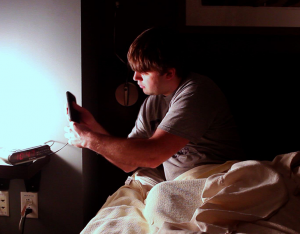
ApneaApp turns an Android smartphone into an inexpensive and non-invasive diagnostic tool for a potentially life-threatening condition that affects more than 25 million people in the United States alone. The app employs sonar – “similar to the way bats navigate,” lead author Rajalakshmi explains – to track changes in a person’s breathing patterns.

In a recent clinical study, the researchers demonstrated ApneaApp’s accuracy matches that of a traditional hospital polysomnography test 98 percent of the time. The app can filter out background noise, is capable of distinguishing between the chest movements of two individuals in the same bed, and works with any sleeping position from a distance of up to three feet – all without requiring the patient to be hooked up to special equipment or to spend the night in a sleep center.

As Shyam notes in UW’s media release announcing the team’s findings, “Right now phones have sensing capabilities that we don’t fully appreciate. If you can recalibrate the sensors that most phones already have, you can use them to achieve really amazing things.”

The results of the clinical study will be presented at the MobiSys 2015 conference next month and SLEEP 2015, a joint meeting of the American Academy of Sleep Medicine and the Sleep Research Society, in June.

kiroRead the UW media release and view a video demonstration of ApneaApp here.

Read the research paper here.

CSE graduate student Rajalakshmi Nandakumar explains ApneaApp on KIRO TV here. Read more →

Seattle Times: 50 years of Moore’s Law

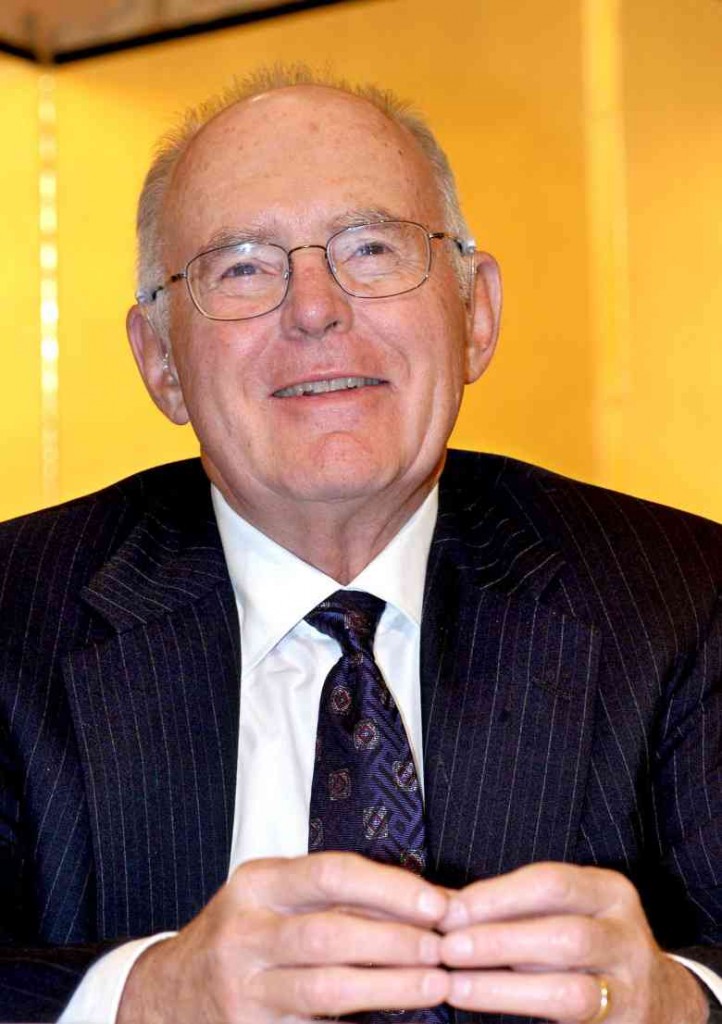
923f3430-e945-11e4-90c1-6d1fa27c8ec1-780x1106A nice article by Jon Talton in the Seattle Times, celebrating the 50th anniversary of Moore’s Law and its impact on Seattle – with extensive quotes by UW CSE’s Ed Lazowska:

“It’s Gordon Moore’s world. We just live in it.

“Moore, born in 1929, was one of the ‘Traitorous Eight’ who left Shockley Semiconductor to start Fairchild Semiconductor. In 1968, he co-founded Intel. And the rest is Silicon Valley history.

“He is also the originator of ‘Moore’s Law,’ which turned 50 this month …

“The dynamics turned metropolitan Seattle into a technopolis, beginning with [Bill] Gates and Paul Allen and PC software. Aldus developed desktop publishing. RealNetworks created streaming media. Modern cellular service came with McCaw. E-tailing and commercial cloud computing lifted Amazon.com. With more software developers than any other metro, ‘Seattle is the software capital of the nation and the world,’ [UW CSE professor Ed] Lazowska said. ‘All this is due to the progress driven by Moore’s law.'”

Read more here. Read more →

CSE students are top Code Hunters with Microsoft

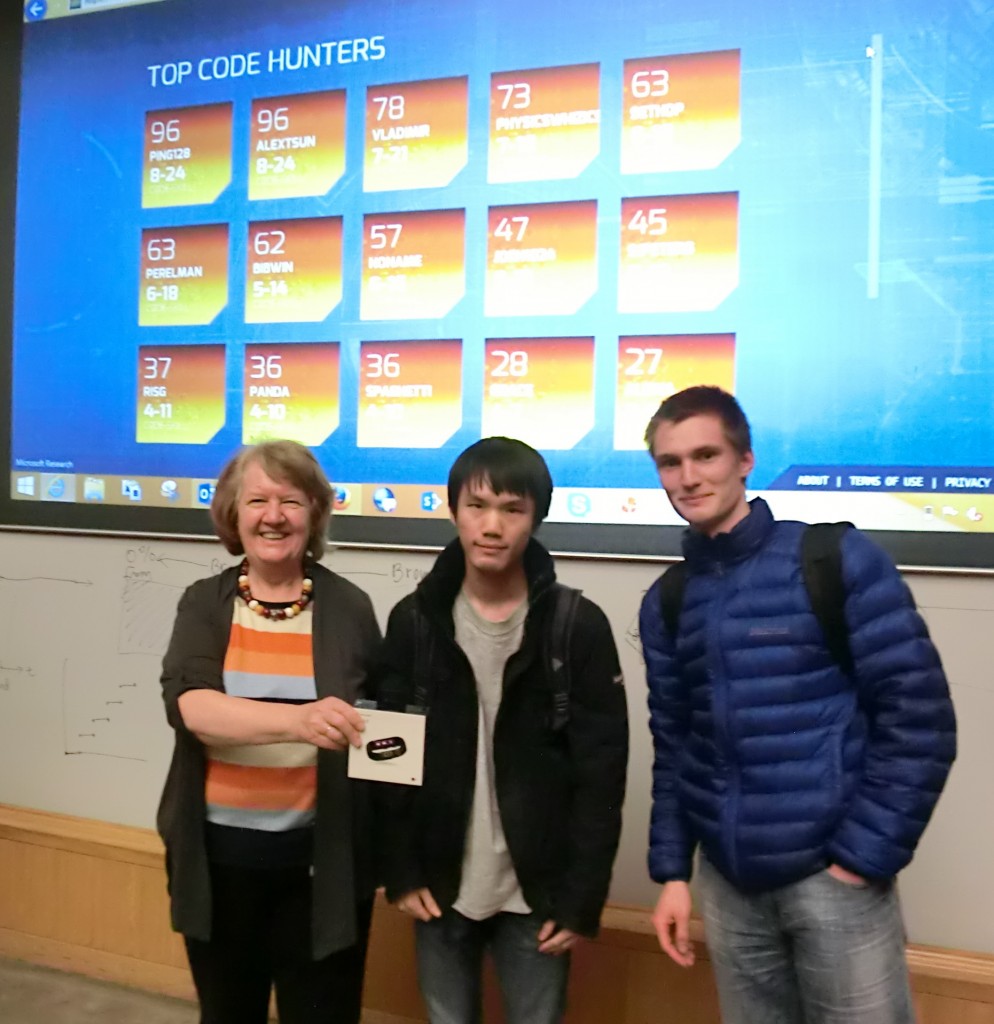
CodeHuntUW 07Microsoft Research brought its Code Hunt team to UW with an online programming contest for students. The winner was CSE senior Siwakorn “Ping” Srisakaoku, seen here receiving a Microsoft Band from Microsoft’s Judith Bishop with Runner-Up Vladimir Korukov, also a CSE student. Others in the top four were CSE student Alex Tsun and Mathematics major (and CSE teaching assistant) Caitlin Schaefer. Congratulations to all the participants, and thanks for an enjoyable evening. Everyone can continue to play the game and join the community!

Code Hunt is used by Microsoft to find top programmers for internships and hiring. It is played by over 150,000 students and developers worldwide. There is also a growing community of research around the data which is open sourced on GitHub. Code Hunt’s hint system was built by UW CSE graduate student Daniel Perelman while an intern at Microsoft Research. It takes advantage of the game’s foundation of symbolic execution and the over a million attempts from players in the cloud. Using data mining and program synthesis Daniel generates hints that are relevant to the student’s progress, even if the teacher had never thought of that solution. (Of course, hints are turned off during contests, like the one at UW!)

Read more here. Read more →

The view from the Allen Center deck …

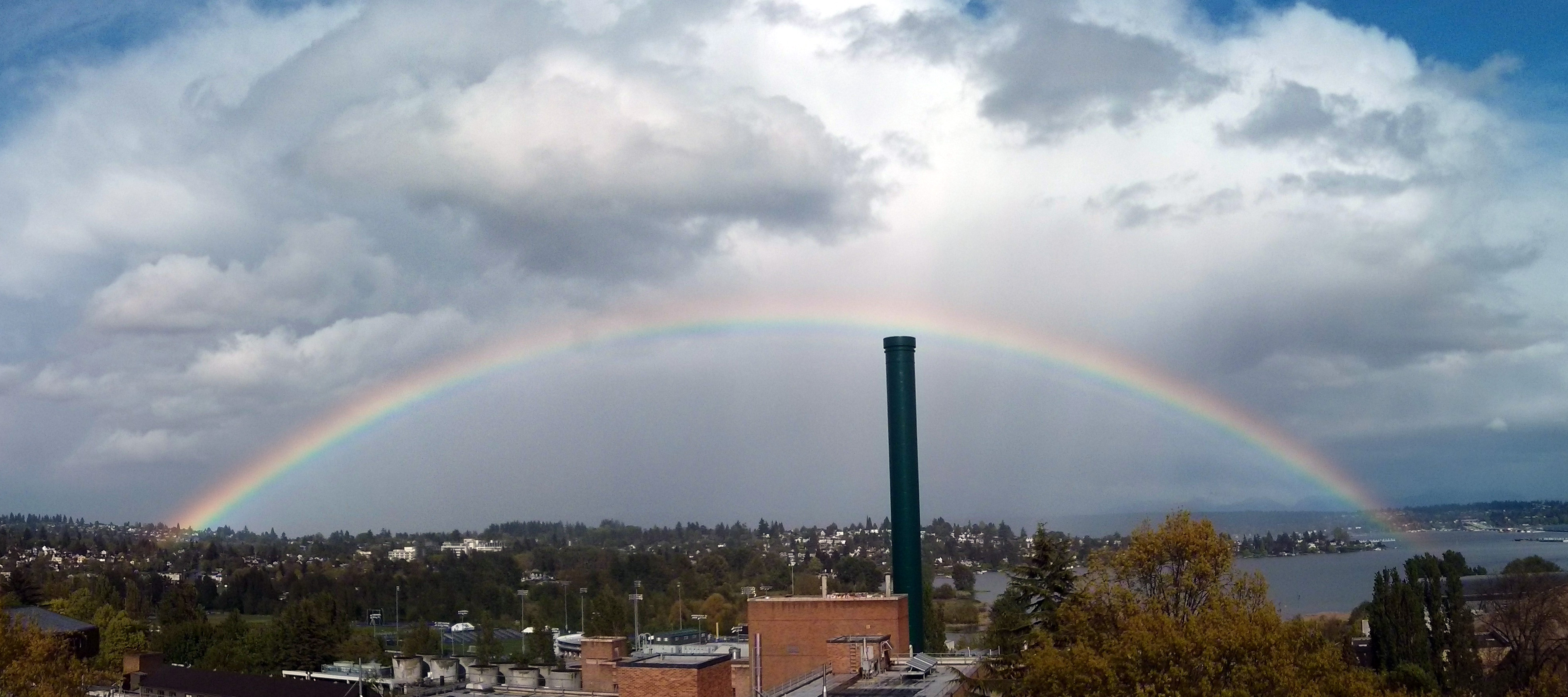
PANOA lovely rainbow this afternoon, looking northeast from the Alberg Terrace of the Paul G. Allen Center for Computer Science & Engineering. (Thanks to Jim Youngquist for the photo.) Read more →

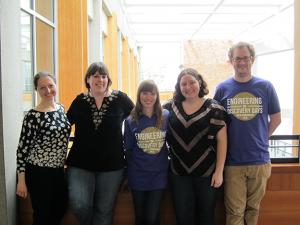
High-five a PR2 at Engineering Discovery Days!

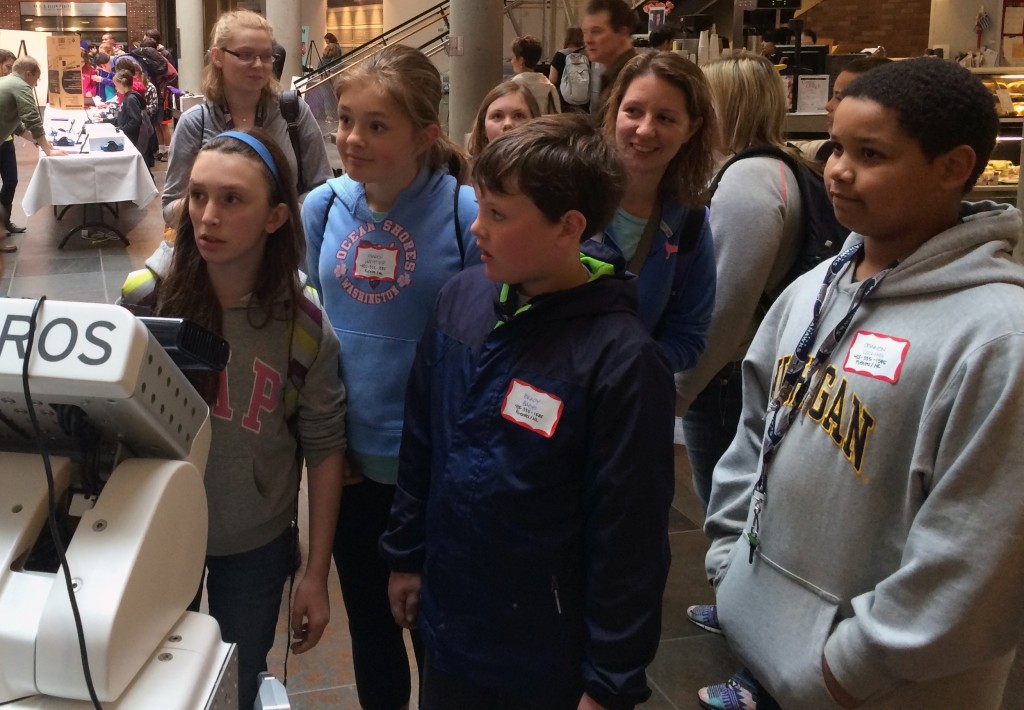
rosUW CSE and UW’s other Engineering programs open the doors to several thousand K-12 students each year on Engineering Discovery Days – today and tomorrow.

The PR2 is always a hit! But there’s lots more!

Learn more here. Read more →

Smithsonian: “Why Brain-to-Brain Communication Is No Longer Unthinkable”

may2015_l01_mindtomind_copy.jpg__800x600_q85_cropSmithsonian magazine features the work of UW CSE’s Rajesh Rao and the Center for Sensorimotor Neural Engineering:

“Telepathy, circa 23rd century: The Vulcan mind meld, accomplished by touching the temples with the fingertips, is an accepted technique for advancing the plot of a ‘Star Trek’ episode with a minimum of dialogue, by sharing sensory impressions, memories and thoughts between nonhuman characters.

“Telepathy, 2015: At the Center for Sensorimotor Neural Engineering of the University of Washington, a young woman dons an electroencephalogram cap, studded with electrodes that can read the minute fluctuations of voltage across her brain. She is playing a game, answering questions by turning her gaze to one of two strobe lights labeled ‘yes’ and ‘no.’ …

Read more here. Read more →

« Newer PostsOlder Posts »