Improving education with technology: Enlearn, founded by UW CSE’s Zoran Popovic, bringing adaptable curricula to market

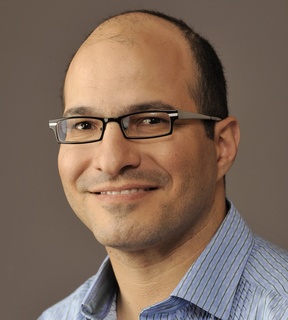
Zoran PopovicUW CSE’s Zoran Popovic, director of the Center for Game Science, founded the non-profit Enlearn to bring what he calls the “generative adaptation” approach to student learning. Now, through a new partnership with education publisher Voyager Sopris Learning, it is bringing its adatable curricula to market. The deal will make new tools in English language arts and reading comprehension, built on the Enlearn platform, to K-12 schools across the country.

Frank Catalano of GeekWire writes:

“Initially developed for tablets and now web-based so as to be device-agnostic, Enlearn’s platform – and promises – at first sound a lot like other edtech personalization plays …

“But the differences, according to founder and Chief Scientist Zoran Popovic, are that Enlearn also adapts to the classroom environment and the teacher, and isn’t just focused on mastering specific subject content, but also gauges students’ engagement and ‘persistence’ to aid in motivating them.”

Zoran will officially announce the partnership in a presentation at the SXSWedu conference in Austin next week. Read the excellent profile of Enlearn on GeekWire here, and learn more about the new publishing partnership, also courtesy of GeekWirehere.

Read our previous blog posts on Enlearn here and here. Read more →

Reps. Drew Hansen, Chad Magendanz address Governor’s STEM Education Innovation Alliance

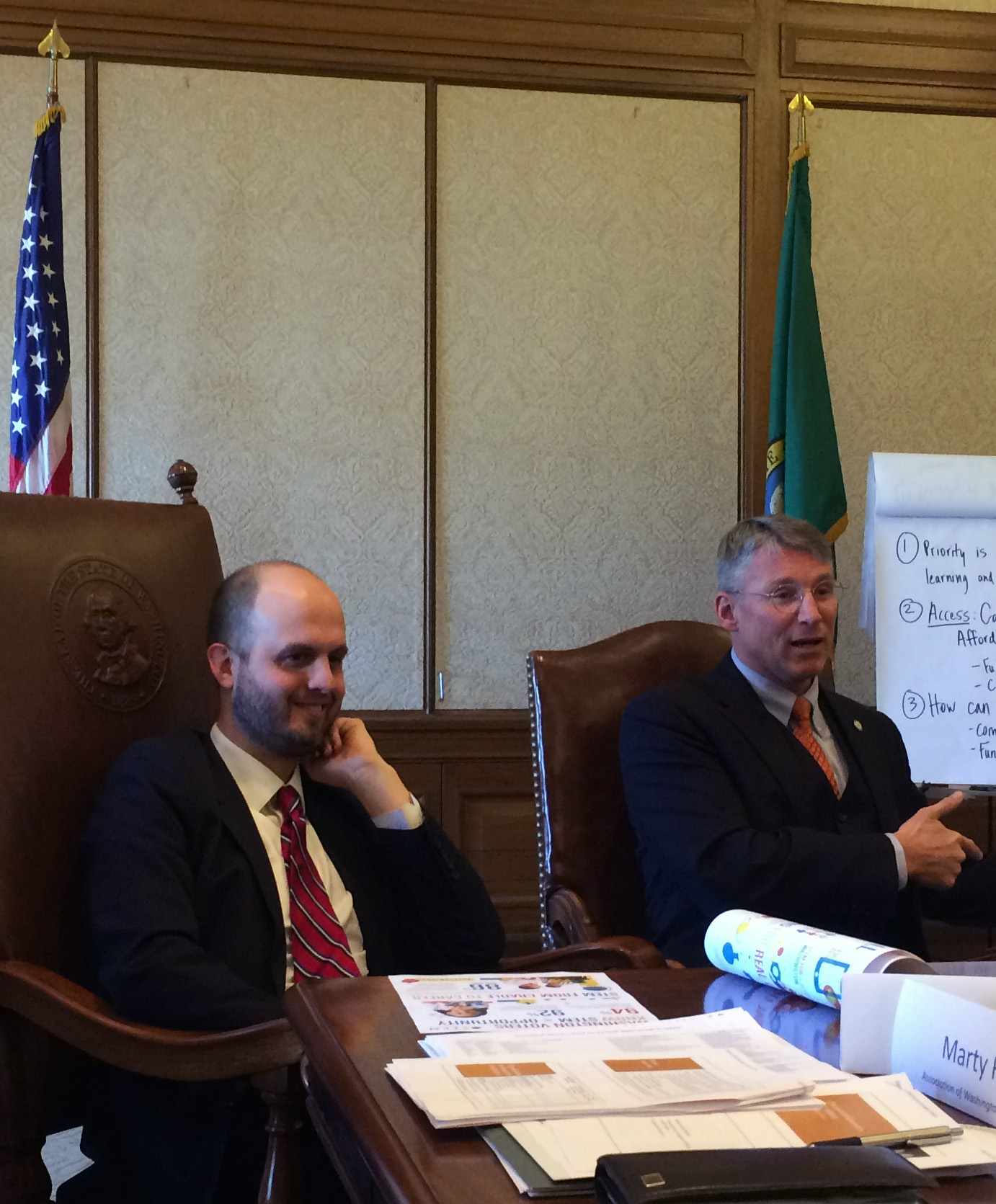
IMG_4862Today, State Representatives Drew Hansen (D – Bainbridge Island) and Chad Magendanz (R – Issaquah) addressed the Governor’s STEM Education Innovation Alliance, which includes UW CSE’s Ed Lazowska among it’s ~20 members.

Reps. Hansen and Magendanz have spent two years gaining a deep understanding of STEM in our state, and forging a bipartisan alliance to address key gaps. Among their findings:

  • Knowledge of Computer Science and “computational thinking” is a key capability for all citizens in this century. Access to Computer Science must be expanded in K-12; professional development for teachers is a key component of this.  HB/SB 1813, which they have co-sponsored, addresses this.
  • Focusing on higher ed, by far the largest workforce gap in our state is in computer science – the only other “field” with any significant gap between “jobs available” and “degrees granted” is all of Engineering lumped together (Electrical, Mechanical, Aerospace, Civil, Chemical, Materials, …), and the gap in Computer Science is 2.5X the gap in Engineering. Within Computer Science, UW CSE, Washington State University EECS, and Western Washington University CS are the only programs in the state that feed significant numbers of students to leadership companies. Reps. Hansen and Magendanz will be advocating a targeted investment to grow these programs.

Thank you, Reps. Hansen and Magendanz, for being smart, hard-working, focused, bipartisan, and data-driven! Read more →

HB 1813 – K-12 computer science – passes WA House 91-7

drew

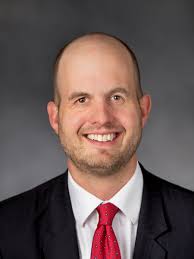
Rep. Drew Hansen

HB 1813, a bill to invest in K-12 computer science education, yesterday was passed by the Washington State House of Representatives by the overwhelming vote of 91-7. We don’t know who the 7 were, but it’s presumably the same folks who don’t like puppies.

The bipartisan measure was sponsored by Reps. Drew Hansen, D-Bainbridge Island, and Chad Magendanz, R-Issaquah.

“We want every student in the state to have the opportunity to learn computer science” said Hansen.

chad

Rep. Chad Magendanz

“Seventy percent of job growth is in computer science, yet only ten percent of our high schools offer computer science classes,” noted Magendanz. “This is the most significant thing we can do to increase the opportunity for our children, our next generation, our future workforce …”

Read more here and here. Read more →

“The best universities in the world are now judged by the quality of their computer science departments”

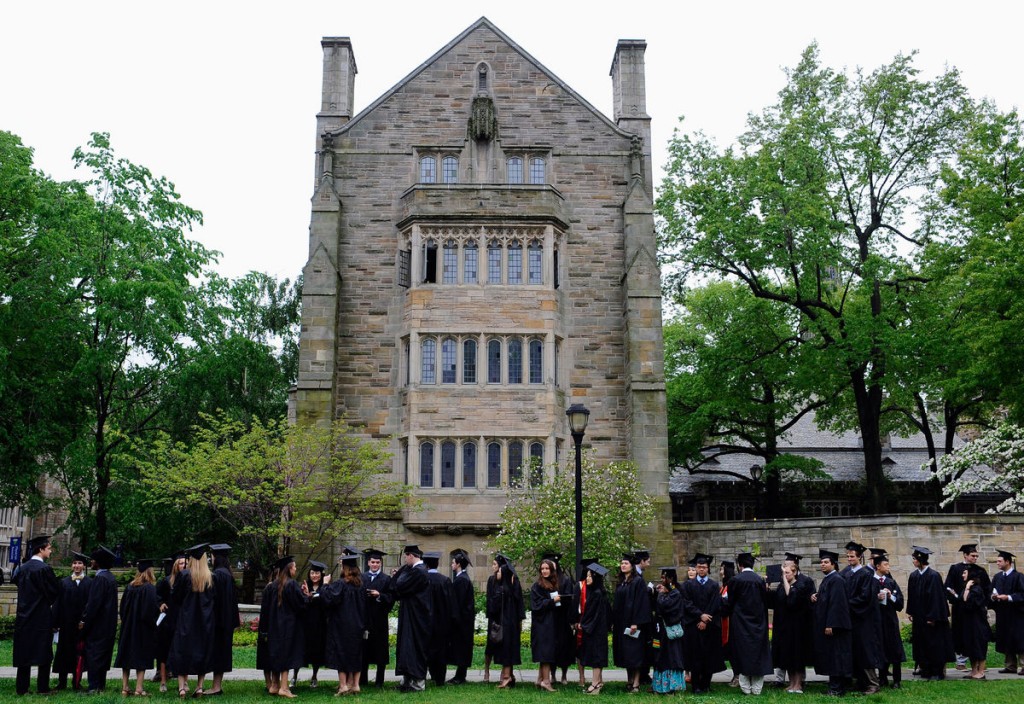
Or so says a petition being circulated at Yale, where students are pushing for increased investment in the field.

yaleBloomberg Business writes:

“Want a Job in Silicon Valley After Yale? Good Luck With That …

“Yale, one of the world’s top universities in most respects, has fallen behind in computer science. It doesn’t crack the highest tier of schools measured by the number of graduates in software companies or by salaries for majors in the discipline; it’s struggling to educate throngs of students with a faculty about the same size as three decades ago; top students in the field are opting to enroll elsewhere; the head of its computer science department is publicly complaining; and undergraduates are circulating a petition in protest …

“‘These are skills needed by anyone in the modern age,’ says Jeannette Wing, who oversees research labs worldwide for Microsoft. All students should learn programming, even those studying such fields as archeology and English, she says …”

“It’s a fine smaller program,” says Ed Lazowska, a computer science professor at the University of Washington, one of the top-ranked programs in the country.”

Read more here. Read more →

Big, and Getting Bigger: UW CSE and Washington’s Leadership in Big Data

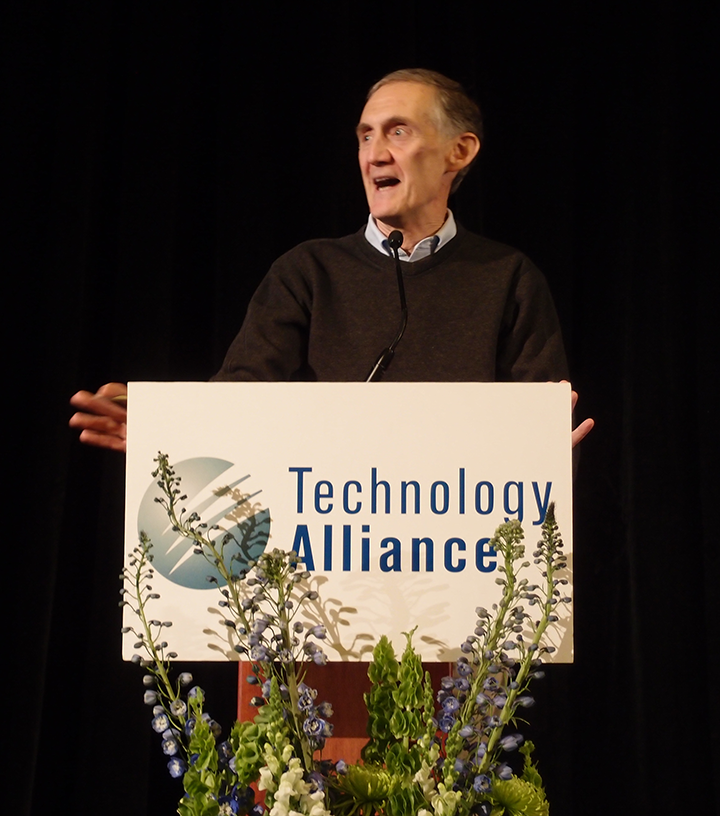
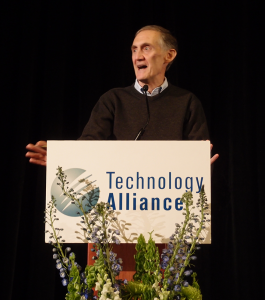
Ed Lazowska at the podium

UW CSE’s Ed Lazowska

On Tuesday, UW CSE, the non-profit Technology Alliance, and more than 150 business and research leaders participated in a day-long conference, “Insight to Impact: Transforming Washington’s Industries Through Big Data,” that examined the role of data science, sensing, machine learning, and data visualization in driving our economy. From optimizing airline routes and building efficiency, to personalizing health care and retail customer interactions, it is clear that our region has the infrastructure and expertise to take full advantage of rapidly expanding opportunities in big data.

The Ever-Expanding Sphere

UW CSE’s Ed Lazowska kicked off the program with an overview of the big data ecosystem, including how big data is enabling computer scientists to “put the smarts in everything” and empower people to put data to work for the civic good.

Characterizing computer science as an “ever-expanding sphere,” Ed pointed out the many ways the field is enabling the things that people care about. These include personalized recommendations, fraud detection, predictive pricing, real-time traffic guidance, and a host of other applications that are driven by big data infrastructure and services – many of them based here in Washington State.

The Democratization of Data
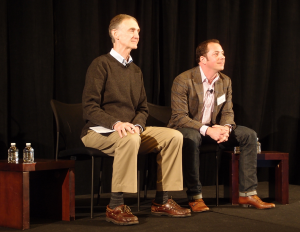
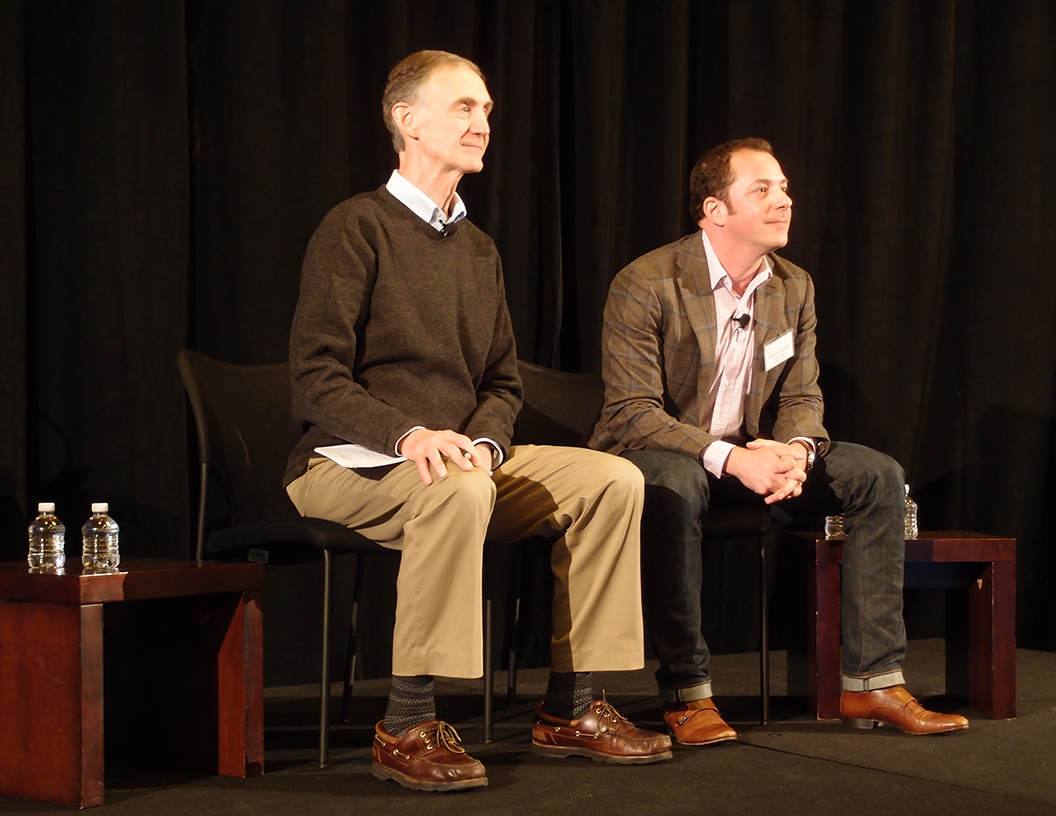
Ed Lazowska and Francois Ajenstat onstage

Ed Lazowska (left) and Tableau’s Francois Ajenstat

It is no surprise that Seattle is the epicenter of the big data revolution: it is home to Amazon Web Services and Microsoft Azure, two of the biggest cloud computing platforms in the world that enable big data, and UW CSE and the UW eScience Institute have built up critical expertise and launched new educational programs on the Seattle campus to stay at the forefront of the big data revolution.

Our region is also home to Tableau Software, the rapidly growing company that brought big data to the masses through user-friendly visualization tools. Tableau’s Vice President of Product Management, Francois Ajenstat, explained how Tableau’s tools empower people to work with their own data and share their findings with the world.

Big, and Getting Bigger
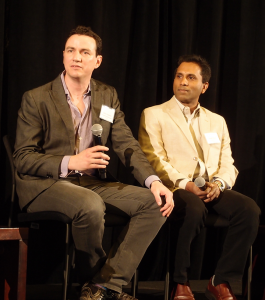
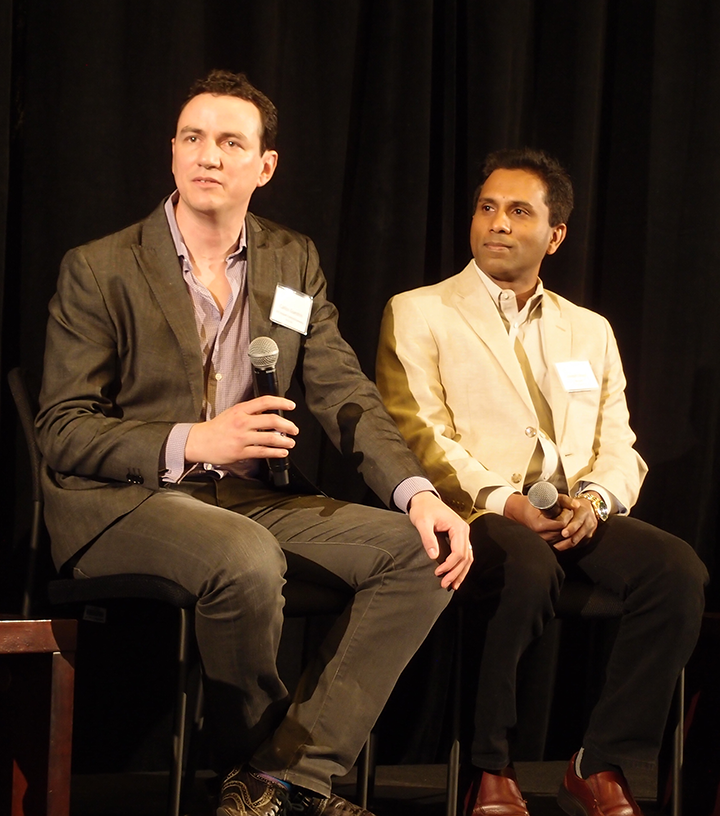
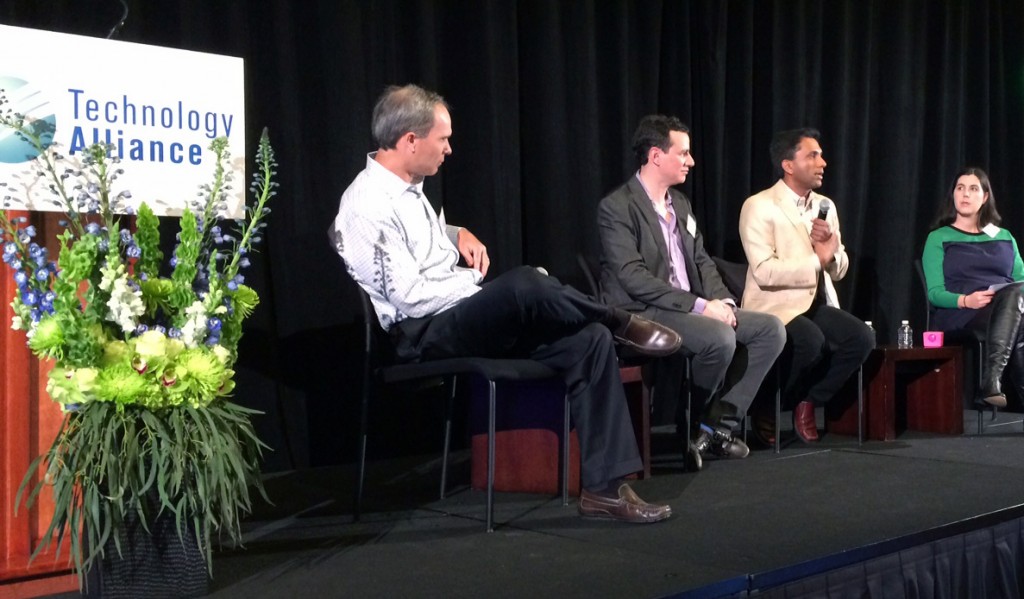
Carlos Guestrin and Joseph Sirosh onstage

UW CSE’s Carlos Guestrin (left) and Joseph Sirosh of Microsoft

Ewan Duncan from McKinsey & Company quantified Washington’s present leadership in big data and the future economic opportunity. He noted that Washington owns 40% of the cloud computing market and ranks second among its peer states, as defined by the Technology Alliance, in both venture investment in big data companies and the percentage of total state employment in big data fields.

On the flip side, Washington ranks low in production of graduates to fill these jobs – a situation we need to rectify in order to maintain our leadership position in the future.

According to McKinsey, the payoff could be huge: the firm estimates the global market for big data technologies to grow to between $24 billion and $45 billion by next year, and productivity gains and cost savings as a result of big data innovations in the U.S. alone to reach as high as $610 billion by 2020.

UW CSE’s Carlos Guestrin, who is also CEO of machine learning startup Dato, is particularly bullish on big data’s potential. In a panel discussion that followed the McKinsey presentation, he proclaimed 2015 as “the year intelligent applications transform how we interact with the world” and emphasized that we need two things to succeed in big data: talent (“We can’t mint these people fast enough!”) and tools.
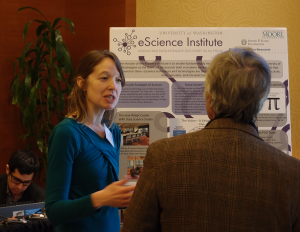
Sarah Stone presents a poster on UW's eScience Institute

Sarah Stone of UW’s eScience Institute

Carlos was joined onstage by Madrona Venture Group’s Matt McIlwain, Joseph Sirosh of Microsoft, and panel moderator Dina Bass of Bloomberg News. All of the panelists were enthusiastic about the opportunities for our region when it comes to big data.

Matt highlighted opportunities up and down the stack, from enabling infrastructure, to data intelligence, to the development of data-driven applications and services, and he suggested that Seattle was a particularly attractive place for startups working in the last category. Joseph followed this up by noting that Microsoft has the muscle to build platforms at scale, upon which others can build.

Carlos noted that the market for data intelligence and machine learning is nascent and evolving, but that startups operating in this space have an advantage in their ability to be agile. When asked why he thought Seattle is the place to be for big data, Carlos observed, “There is a tremendous amount of energy, a tremendous amount of vision, and a real sense of going places.”

Spotlight on UW Research
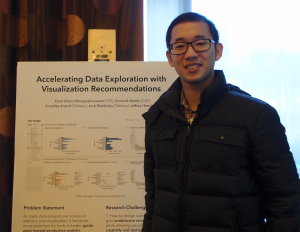
Kanit "Ham" Wongsuphasawat presents a poster on UW's Interactive Data Lab

Kanit “Ham” Wongsuphasawat, a PhD student in UW’s Interactive Data Lab

Several UW CSE researchers, joined by colleagues representing interdisciplinary efforts from across campus, were on hand for a poster and demo session. Members of the audience had a chance to interact with the individuals doing cutting-edge research in a variety of fields either driving or driven by big data.

Mayank Goel and Edward Wang of the UbiComp Lab and Kanit “Ham” Wongsuphasawat and Dominik Moritz of the Interactive Data Lab represented UW CSE. The university’s multi-disciplinary initiatives were also well-represented by Sarah Stone of the eScience Institute; Jess Hamilton of the College of Built Environments; Tyler McCormick of the Center for Statistics and the Social Sciences; and Jevin West of the iSchool.

The breadth of projects featured during the session served to illustrate the increasing importance of big data in advancing innovation across a variety of fields, including medical diagnostics, scientific discovery, global development, public utilities management, and urban planning.

Getting Vertical
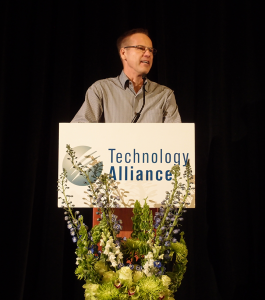
Jeremy Jaech at the podium

Jeremy Jaech of SNUPI Technologies

The remainder of the day was spent examining how specific industries are putting data to work to deliver better service, cut costs, and spawn the emergence of whole new industries, including deeper dives on big data in aerospace, retail, health care and building management.

Bryan Mistele of Inrix delivered a keynote on the growing use of data in the automobile industry and traffic management. Later, UW CSE alum Jeremy Jaech, CEO of SNUPI Technologies – a company spun out of UW CSE – took to the stage to explain how low-cost sensors are enabling the collection of new categories of data that inform the development of exciting new applications, such as systems for creating a “smart home.”

The afternoon culminated in a closing keynote by Matt Wood, general manager of data science at Amazon Web Services, which brought home the recurring theme of the day: our region’s indisputable leadership in big data.

UW CSE is proud to be a big part of that.

Read more about the McKinsey report on Washington’s leadership and opportunity in big data here.

Read an excellent summation of the session on big data in aerospace here.

Learn more about the event here. Read more →

Leaders write in support of K-12 Computer Science in WA

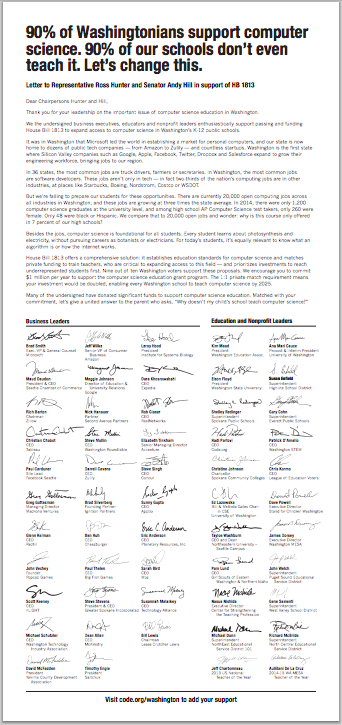
unnamedA group of top business, education, and non-profit leaders – including Ana Mari Cauce and Ed Lazowska from UW – have written in support of HB 1813, stating:

“House Bill 1813 offers a comprehensive solution: it establishes education standards for computer science and matches private funding to train teachers, who are critical to expanding access to this field – and prioritizes investments to reach underrepresented students first. Nine out of 10 Washington voters support these proposals. We encourage you to commit $1 million per year to support the computer science education grant program. The 1:1 private match requirement means your investment would be doubled, enabling every Washington school to teach computer science by 2025.”

Read more here.

And check out a related op-ed in today’s Seattle Times by Code.org’s Hadi Partovi:

“When I was 9, my father gave my brother and me a life-changing gift: a Commodore 64 computer. It didn’t have any games, so I would learn to make my own. A world of opportunity and creativity opened up to me when I began learning how to program that computer.

“By my teenage years, I landed jobs as a computer programmer when my friends were baby-sitting or waiting tables. I graduated with a job at Microsoft and went on to enjoy a successful career in technology. As an immigrant, I’m living the American dream.

hadi_partovi“Yet, 30 years after I came to the United States, I look around and wonder, why aren’t America’s schools offering the opportunity I had to every 21st-century child?”

Read more here.

And be sure to check out a related letter regarding partial funding for an expanded facility for UW Computer Science & Engineering, signed last week by 23 leaders – here. Read more →

UW CSE’s Ed Lazowska on current efforts in the WA legislature to increase computer science educational opportunities

Picture 110UW CSE’s Ed Lazowska writes in the WTIA blog:

“Our industry creates a wide variety of jobs, employing people with a wide variety of preparation.  But at its heart, our industry (and our state’s overall economic growth) is powered by the “essential ICT occupations” as defined  in WTIA’s recent ICT Economic & Fiscal Impact Study

“There are several moves afoot in the current legislative session that would make a real difference if enacted.

“One is H.B. 1813, introduced by Reps. Drew Hansen and Chad Magendanz, which includes a number of smart provisions related to computer science in K-12.

“A second is the Governor’s request, in his capital budget, for partial funding of a second building to accommodate growth for UW CSE …

“A third is work by Reps. Hansen and Magendanz that will hopefully lead to operating funds enabling expansion of the computer science programs at UW CSE, WSU EECS, and WWU Computer Science – the three programs that leading employers have told these legislators are their principal in-state suppliers of talent.”

Read more here. Read more →

“Insight to Impact: Transforming Washington’s Industries Through Big Data”

TAMatt McIlwain (Madrona Venture Group), Carlos Guestrin (UW CSE and Dato), Joseph Sirosh (Microsoft), and Dina Bass (Bloomberg News) engage the audience at “Insight to Impact: Transforming Washington’s Industries Through Big Data,” co-sponsored by the Technology Alliance and UW CSE.

More about the event here. Read more →

Welcome to Seattle, Uber engineering!

timOur alum Tim Prouty writes:

“It’s now official that I will be starting up Uber‘s Seattle engineering team! I’ll be working directly for Paul Mikesell [also a UW CSE alum], and we’re going to do an official launch in early April. I couldn’t be more excited! …

“At Uber one of my primary goals will be to grow the team very rapidly from 0 to 50+ people this year, so we’ll be working hard to make a splash in the Seattle technology community over the next few months …”

Welcome, Uber!  It’s great to have another top technology company in Seattle!

Many more details in a GeekWire post here. Read more →

Meet the next generation of UW CSE student

We better get a move on with the construction of our new building, if this photo is any indication of future demand! Kudos to mom, a former colleague in the UW College of Engineering, for steering him toward the right major. Maybe we should relax our early admission policy …

Cute baby wearing UW CSE t-shirt Read more →

« Newer PostsOlder Posts »