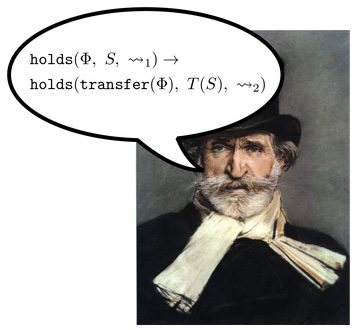
 Distributed systems are hard to get right in large part because they must tolerate faults gracefully: machines may crash and the network may drop, reorder, or duplicate packets. Verdi is a framework from the University of Washington to implement and formally verify distributed systems.
UW CSE’s Verdi team (students James Wilcox, Doug Woos, and Pavel Panchekha, and faculty members Zach Tatlock, Xi Wang, Mike Ernst, and Tom Anderson) has just completed the first full formal verification of the Raft consensus protocol – a landmark achievement. (In addition to garnering lots of attention, they garnered more than 120 stars on GitHub!)
Learn more about Verdi here. GitHub here. Raft here.
Read more →
 The University of Washington’s Graduate School has approved the creation of a Ph.D. option in “Advanced Data Science” – an initiative of UW’s $2.8 million National Science Foundation IGERT (Integrative Graduate Education and Research) award in data science, led by UW CSE’s Magda Balazinska.
The goal of the option is not to educate all students in the foundations of data science, but rather to provide advanced education to the students who will push the state-of-the-art in data science methods in their domain – to educate the next generation of thought leaders who will both build and apply new methods of data science.
An important characteristic of this advanced data science option is that, independent of their home department, students will complete the same set of core data science courses. This shared core curriculum will ensure that students are not only knowledgeable in data science but that they also had the opportunity to interact with each other and form interdisciplinary cohorts.To complete the option – which will be noted on their transcripts – students will take three out of the following four courses:
- Data Management: CSE 544
- Machine Learning, CSE 546 or STAT 535
- Data Visualization: CSE 512
- Statistics: STAT 509 or STAT 512-513
Additionally, to further expand students’ education and create a campus-wide community, students will register for at least 4 quarters in the weekly eScience Community Seminar.
Six academic programs are the “launch partners”: Astronomy, Chemical Engineering, Computer Science & Engineering, Genome Sciences, Oceanography, and Statistics.
Learn more about the Advanced Data Science option from the proposal here. Read more →
 Data Science Workshop 2015, sponsored by the National Science Foundation, will be held at the University of Washington on August 5-7. The workshop will bring together 100 graduate students from across the nation, representing diverse science and engineering domains, to interact with data scientists from industry and academia.
David Beck, the UW eScience Institute’s Director of Research for the Life Sciences, chairs the Organizing Committee. Program partners include the UW eScience Institute (CSE’s Ed Lazowska is the Director, and CSE’s Bill Howe is the Associate Director), the UW Data Science IGERT (interdisciplinary graduate education) program (CSE’s Magda Balazinska is the Director), and UW Computer Science & Engineering, Astronomy, Chemical Engineering, and Oceanography. The program includes a keynote by UW CSE’s Oren Etzioni, panel participation by UW CSE’s Magda Balazinska, and Joe Hellerstein, and mentor participation by UW CSE’s Alvin Cheung.
Check out the UW News press release here. Learn more here. Read more →
 The University of Washington has waived indirect cost on cloud services.
This decision removes one of several bizarre disincentives to the rational selection of research computing and storage options – disincentives that plague universities nationwide.
Federal guidelines waive indirect cost on purchased equipment – so purchasing a $100K cluster costs a grant budget $100K, despite the fact that this equipment must be housed, powered, cooled, backed up, replaced …
Meanwhile, indirect cost is charged on outsourced cloud services – so purchasing $100K of AWS or Azure services costs $157K (at UW’s rates – different institutions have different markups), despite the fact that the only actual overhead is paying an invoice.
UW IT and the UW Office of Research have now decided to unilaterally waive this nonsensical charge.
Progress! Hopefully others will follow!
Read more here.
Three footnotes:
- There is precedent for national action: several years ago it was ruled, nationally, that indirect cost should not be charged on outsourced gene sequencing services.
- There are additional bizarre disincentives to the rational selection of research computing and storage options. If you want to purchase a large cluster, your NSF program officer will send you to the Major Research Instrumentation program, which is not charged against any specific Program, Division or Directorate – so it’s “free” to his/her program … what could be finer? And once the cluster arrives at your university, Santa Claus pays for the power, Mrs. Santa Claus pays for the cooling, Rudolf shares his space, and the Elves do the backup … all of these, which have very real costs, appear free to the investigator at most universities.
- Finally, it goes without saying that cloud services are not the right choice for every application. What UW’s decision does is simply to take one step towards leveling the playing field, leading to rational choice.
Read more →
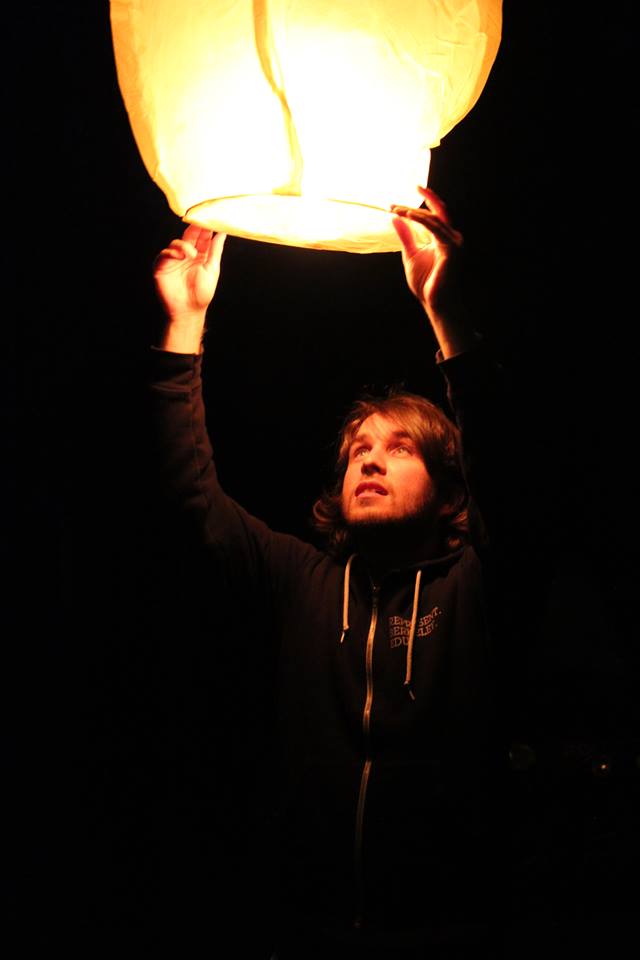 We are thrilled to announce that Kurtis Heimerl will be joining the UW CSE faculty in early winter 2016. Kurtis’ research interests span information and communication technologies and development (ICTD), human-computer interaction, and networks and systems. He was recognized with a 2014 MIT Technology Review TR35 Award for his work on Community Cellular, a low-cost, low-power system for providing small-scale, locally-owned cellular networks to rural communities that lack existing cellular coverage. After building the first network in a small village in Papua, Indonesia in 2013, Kurtis co-founded Endaga, a startup company that brings independent cellular technology to remote regions of the world.
Kurtis joins UW CSE following an M.S., Ph.D., and postdoc at U.C. Berkeley, followed by 18 months at Endaga. His UW CSE connections are extensive. To note a few:
- Kurtis received his Bachelors degree in Computer Engineering from UW CSE in 2007.
- His Berkeley graduate co-advisor was 2007 UW CSE Ph.D. alum (and UC Berkeley Associate Professor) Tapan Parikh.
- His fellow UW CSE Bachelors recipient and Tapan Parikh Ph.D. advisee Kuang Chen – founder of ICTD startup Captricity – was also a 2014 TR35 recipient. (Tapan himself received a TR35 award and was named the TR35 “Humanitarian of the Year” in 2007.)
We’re excited to have Kurtis back home at UW CSE!
(We had previously announced the recruiting this year of Ras Bodik, Zorah Fung, Sham Kakade, Sergey Levine, Dan Ports, and Katharina Reinecke.)
Read more →
 Our rule-of-thumb for evaluating the veracity of rankings:
- If we look good, it’s authoritative.
- If we look bad, the methodology was garbage.
Here’s Tech.Co‘s authoritative assessment of “the best public and private universities that produce the best-equipped graduates to make an impact in the world of technology.”
The methodology involved “a composite of the rankings from US News and World Report for Computer Science, LinkedIn university rankings for Software Developers and Software Developers at Startups, and finally the number of companies being run by their respective alumni according to AngelList.”
How can you possibly argue with that?
Check it out here. Read more →
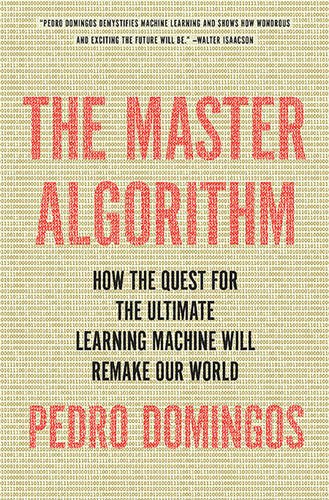
The latest book by UW CSE professor Pedro Domingos, The Master Algorithm: How the Quest for the Ultimate Learning Machine Will Remake Our World, is available for pre-order from Amazon. Amazon says:
Algorithms increasingly run our lives. They find books, movies, jobs, and dates for us, manage our investments, and discover new drugs. More and more, these algorithms work by learning from the trails of data we leave in our newly digital world. Like curious children, they observe us, imitate, and experiment. And in the world’s top research labs and universities, the race is on to invent the ultimate learning algorithm: one capable of discovering any knowledge from data, and doing anything we want, before we even ask.
Machine learning is the automation of discovery—the scientific method on steroids—that enables intelligent robots and computers to program themselves. No field of science today is more important yet more shrouded in mystery. Pedro Domingos, one of the field’s leading lights, lifts the veil for the first time to give us a peek inside the learning machines that power Google, Amazon, and your smartphone. He charts a course through machine learning’s five major schools of thought, showing how they turn ideas from neuroscience, evolution, psychology, physics, and statistics into algorithms ready to serve you. Step by step, he assembles a blueprint for the future universal learner—the Master Algorithm—and discusses what it means for you, and for the future of business, science, and society.
If data-ism is today’s rising philosophy, this book will be its bible. The quest for universal learning is one of the most significant, fascinating, and revolutionary intellectual developments of all time. A groundbreaking book, The Master Algorithm is the essential guide for anyone and everyone wanting to understand not just how the revolution will happen, but how to be at its forefront.
(As soon as there’s a Kindle edition, we’ll order it …) Read more →
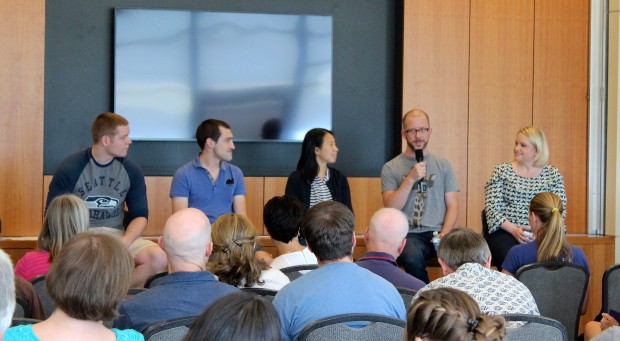
UW CSE alums Taylor Williams, Jeff Prouty, Dana Wen, Tam Armstrong, and Carolyn Hughes
Our friends at GeekWire report on the alumni panel of this week’s CS4HS workshop for middle school and high school teachers:
“Understanding how to work effectively on a team is critical for a successful career in computer science, you can be a great programmer no matter when you start learning – and, yes, the perks for employees at big tech companies are pretty sweet.
“Those were some of the takeaways from a panel that the University of Washington Computer Science & Engineering department hosted on Friday afternoon as part of an annual event called CS4HS to expose middle and high school teachers to computer science.
“Five UW alumni, who graduated from the department and now work at Seattle-area companies, shared thoughts on their work experience after graduating and what teachers can do to help encourage more students to study computer science.
“Here are highlights from the panel …”
Read more here! Learn all about CS4HS here. Learn about DawgBytes (“A Taste of CSE”), UW CSE’s extensive K-12 outreach program, here. Read more →
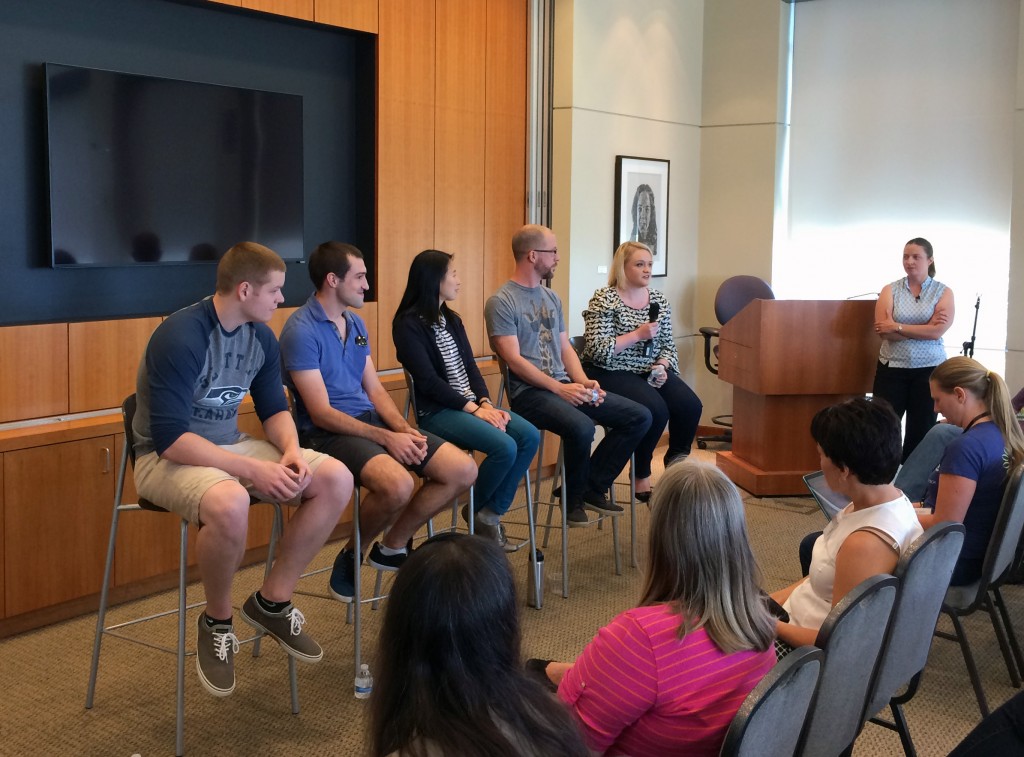 This is the 9th year of UW CSE’s CS4HS, a 3-day summer workshop on computer science for middle school and upper school math and science teachers from the Puget Sound region.
A highlight every year is a panel of alums who discuss what their work life is like, how their UW CSE education prepared them for their careers, and what K-12 experiences prepared them for UW CSE. This year’s panel included (L-R) Taylor Williams (Intentional Software), Jeff Prouty (Google), Dana Wen (Clean Power Research), Tam Armstrong (an unnamed startup after a number of years at Bungie), and Carolyn Hugues (EMC Isilon).
Learn all about CS4HS here. Learn about DawgBytes (“A Taste of CSE”), UW CSE’s extensive K-12 outreach program, here. Read more →
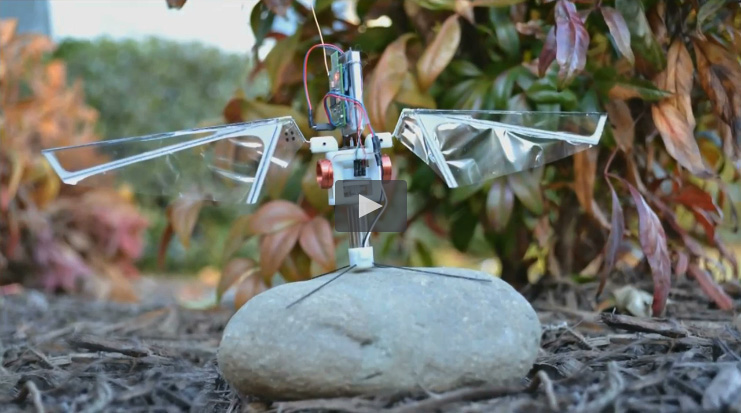 A terrific 8-minute piece on PBS NewsHour describing the research of UW CSE adjunct professor (and UW Biology professor) Tom Daniel:
“Aviation technology continues to evolve, and in recent years, there’s been a big push by both private companies and the military to make more sophisticated pilotless aircraft or drones.
“A new research project led by the University of Washington is part of that effort and it aims to uncover the aeronautical secrets of some of nature’s best designed flyers, insects.”
The interview reveals deep scientific secrets such as:
“Hari Sreenivasan (PBS): ‘So how does a bee with such a large body and such tiny wings actually fly?’
“Tom Daniel: ‘It beats its wings really fast.'”
Check it out here. Read more →