 A nice article by Jon Talton in the Seattle Times, celebrating the 50th anniversary of Moore’s Law and its impact on Seattle – with extensive quotes by UW CSE’s Ed Lazowska:
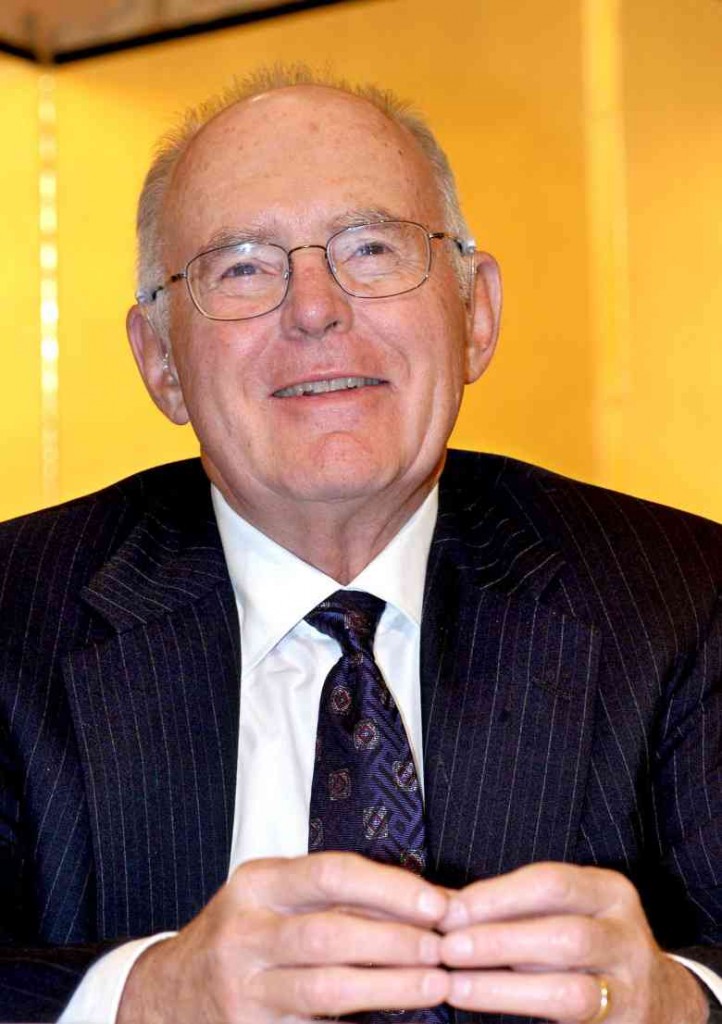
“It’s Gordon Moore’s world. We just live in it.
“Moore, born in 1929, was one of the ‘Traitorous Eight’ who left Shockley Semiconductor to start Fairchild Semiconductor. In 1968, he co-founded Intel. And the rest is Silicon Valley history.
“He is also the originator of ‘Moore’s Law,’ which turned 50 this month …
“The dynamics turned metropolitan Seattle into a technopolis, beginning with [Bill] Gates and Paul Allen and PC software. Aldus developed desktop publishing. RealNetworks created streaming media. Modern cellular service came with McCaw. E-tailing and commercial cloud computing lifted Amazon.com. With more software developers than any other metro, ‘Seattle is the software capital of the nation and the world,’ [UW CSE professor Ed] Lazowska said. ‘All this is due to the progress driven by Moore’s law.'”
Read more here. Read more →
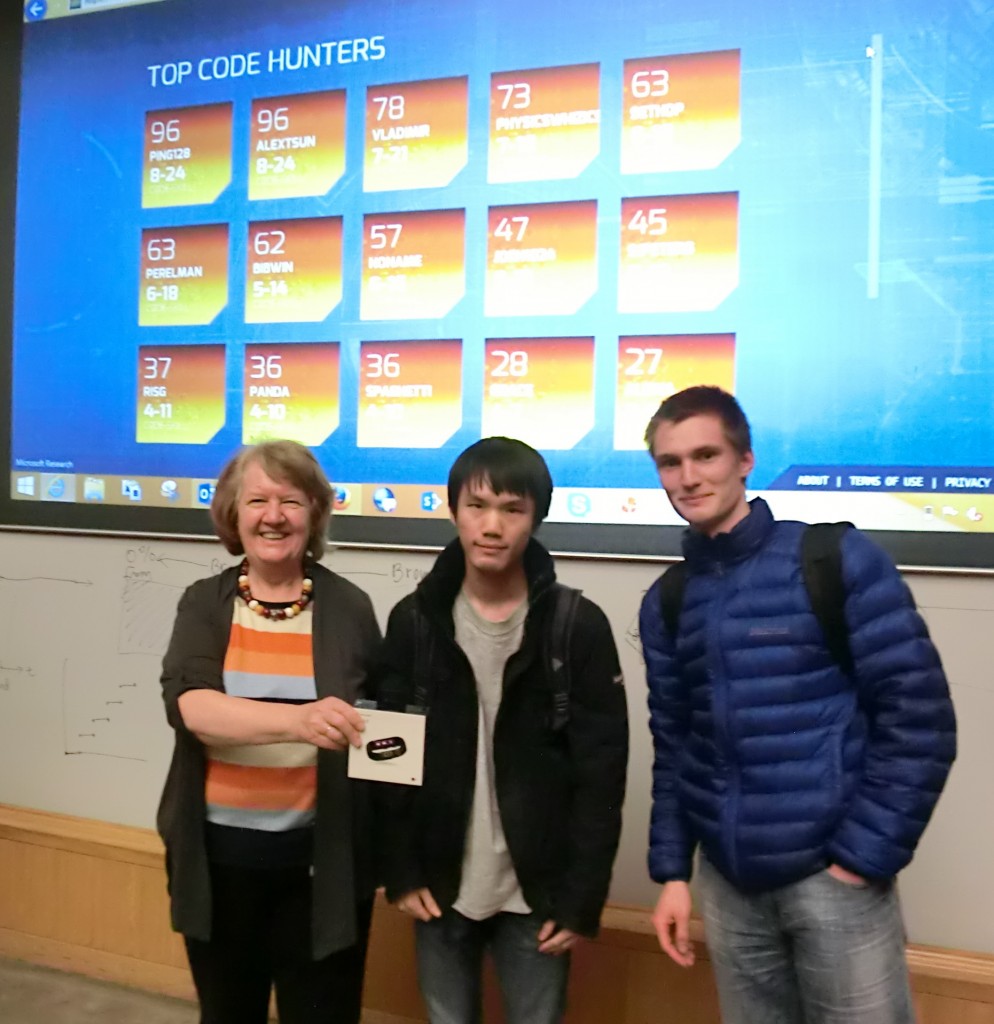 Microsoft Research brought its Code Hunt team to UW with an online programming contest for students. The winner was CSE senior Siwakorn “Ping” Srisakaoku, seen here receiving a Microsoft Band from Microsoft’s Judith Bishop with Runner-Up Vladimir Korukov, also a CSE student. Others in the top four were CSE student Alex Tsun and Mathematics major (and CSE teaching assistant) Caitlin Schaefer. Congratulations to all the participants, and thanks for an enjoyable evening. Everyone can continue to play the game and join the community!
Code Hunt is used by Microsoft to find top programmers for internships and hiring. It is played by over 150,000 students and developers worldwide. There is also a growing community of research around the data which is open sourced on GitHub. Code Hunt’s hint system was built by UW CSE graduate student Daniel Perelman while an intern at Microsoft Research. It takes advantage of the game’s foundation of symbolic execution and the over a million attempts from players in the cloud. Using data mining and program synthesis Daniel generates hints that are relevant to the student’s progress, even if the teacher had never thought of that solution. (Of course, hints are turned off during contests, like the one at UW!)
Read more here. Read more →
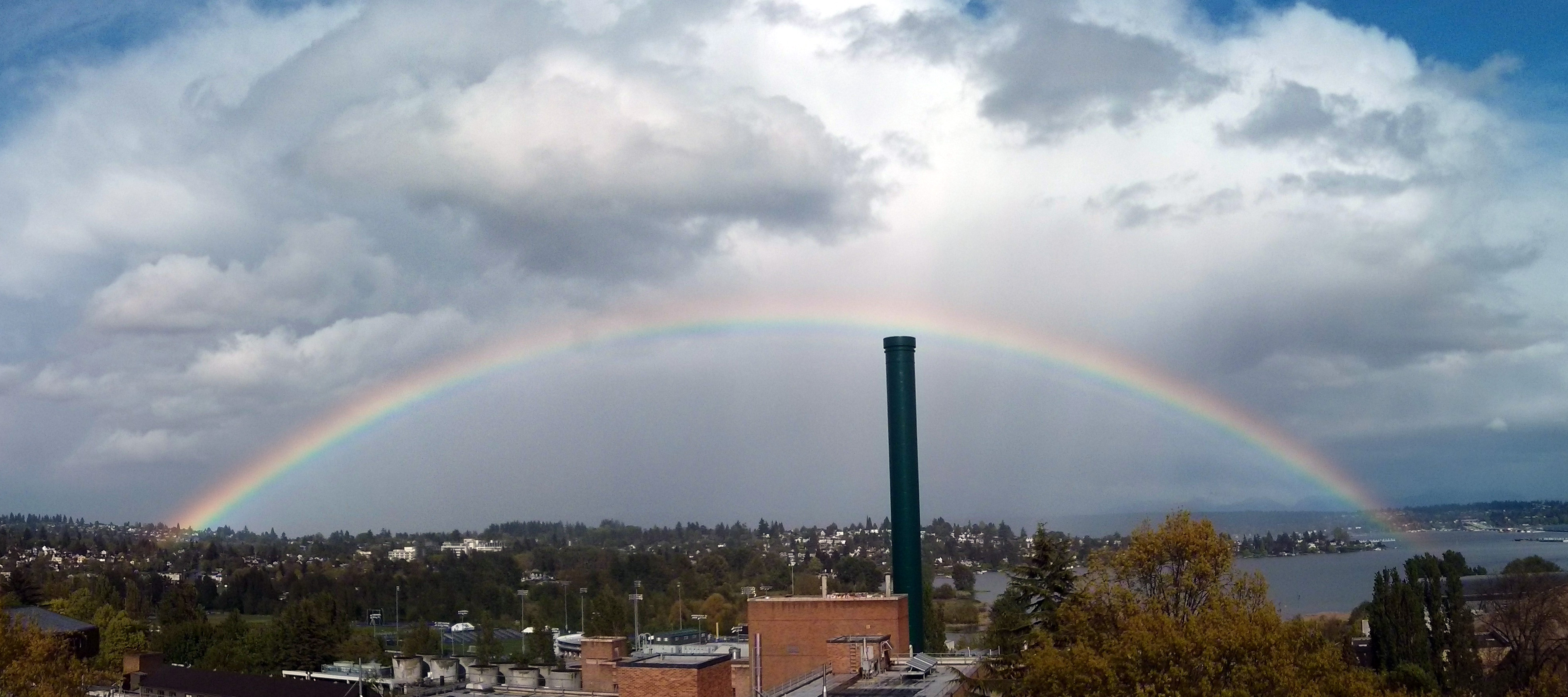 A lovely rainbow this afternoon, looking northeast from the Alberg Terrace of the Paul G. Allen Center for Computer Science & Engineering. (Thanks to Jim Youngquist for the photo.) Read more →
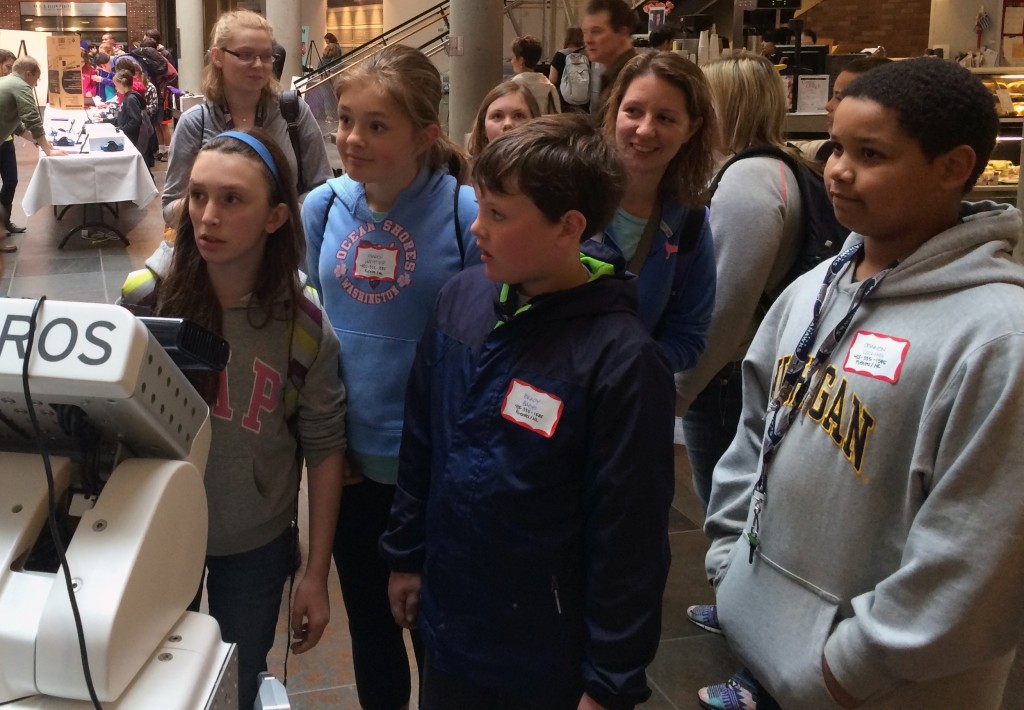 UW CSE and UW’s other Engineering programs open the doors to several thousand K-12 students each year on Engineering Discovery Days – today and tomorrow.
The PR2 is always a hit! But there’s lots more!
Learn more here. Read more →
 Smithsonian magazine features the work of UW CSE’s Rajesh Rao and the Center for Sensorimotor Neural Engineering:
“Telepathy, circa 23rd century: The Vulcan mind meld, accomplished by touching the temples with the fingertips, is an accepted technique for advancing the plot of a ‘Star Trek’ episode with a minimum of dialogue, by sharing sensory impressions, memories and thoughts between nonhuman characters.
“Telepathy, 2015: At the Center for Sensorimotor Neural Engineering of the University of Washington, a young woman dons an electroencephalogram cap, studded with electrodes that can read the minute fluctuations of voltage across her brain. She is playing a game, answering questions by turning her gaze to one of two strobe lights labeled ‘yes’ and ‘no.’ …
Read more here. Read more →
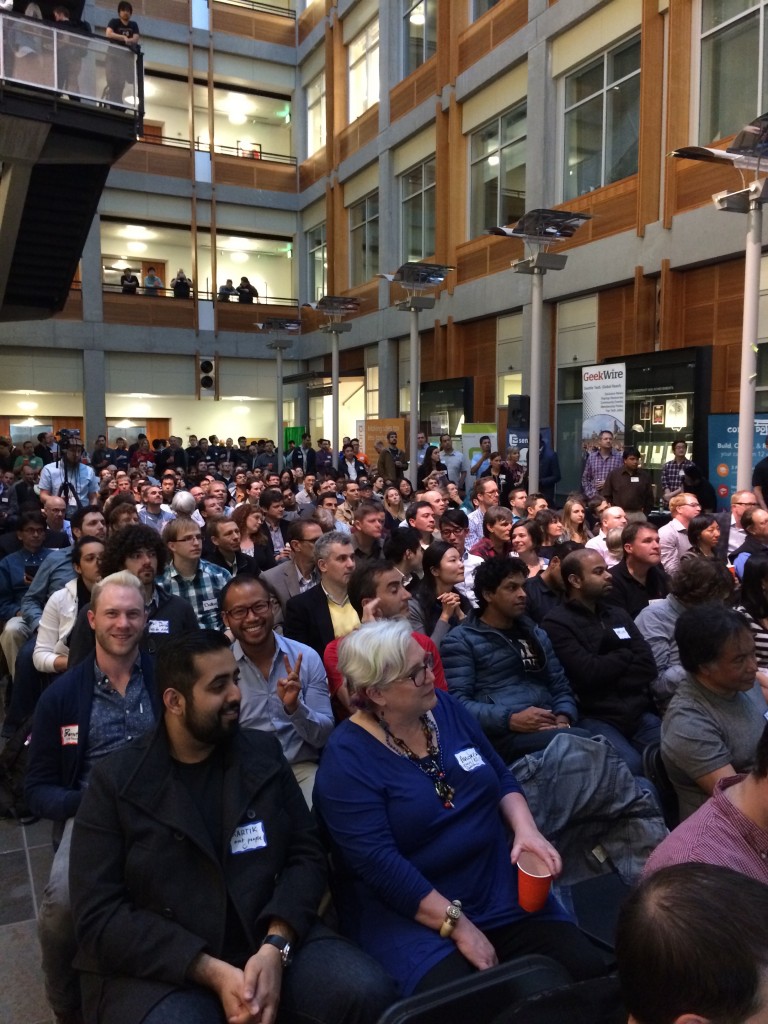 This is the third year that UW CSE has been privileged to host New Tech Seattle Meetup – the most vibrant and fastest growing tech meetup in the nation! Thanks to Red and Greene – Red Russak and Brett Greene for supporting UW CSE! Read more →
 It’s that time of year again – time for the GeekWire Awards!
Vote for Carlos Guestrin for CEO of the Year here.
And while you’re at it, vote for Paul Allen as Geek of the Year here. Read more →
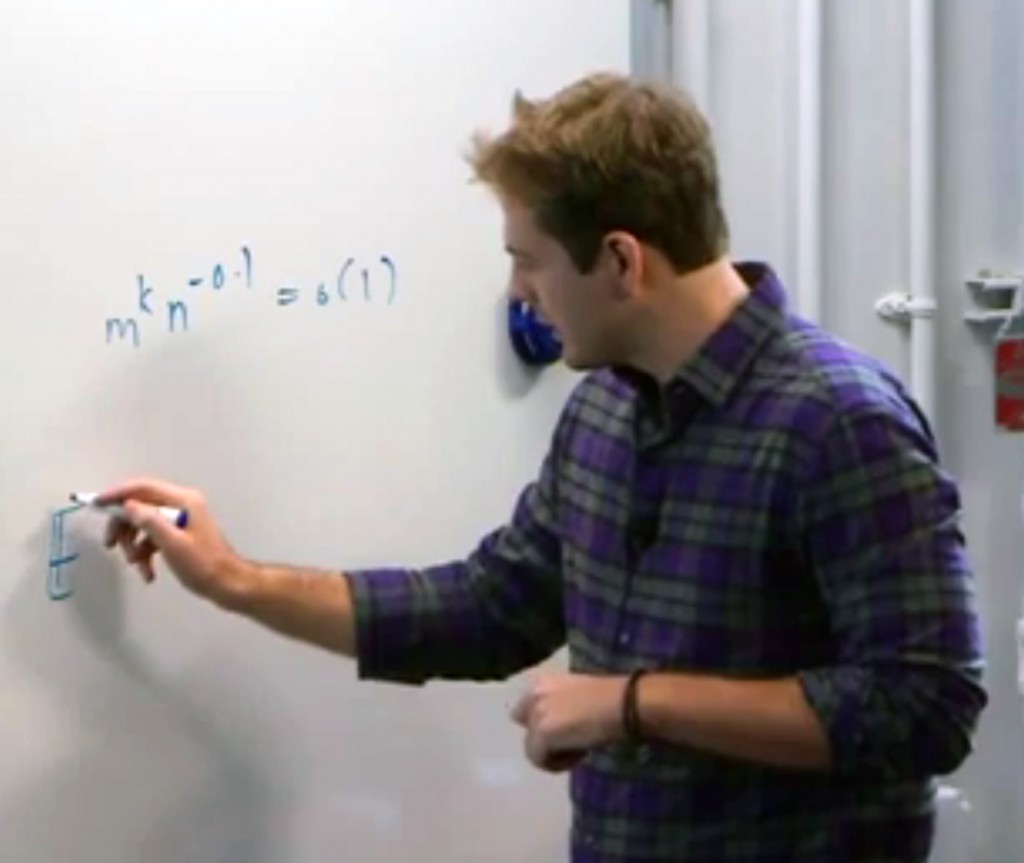 UW CSE professor James Lee has won a Best Paper Award at the 2015 ACM Symposium on Theory of Computing (STOC) for his recent breakthrough research with David Steurer of Cornell and UW CSE Ph.D. alum Prasad Raghavendra of Berkeley. Their paper shows that one of the most powerful techniques currently available for designing polynomial-time algorithms will not work for fundamental NP-complete problems such as the Traveling Salesman Problem, the Maximum Independent Set problem, and a number of other combinatorial problems.
In the award paper, James and his colleagues study the efficacy of convex programming relaxations, specifically those expressed as semidefinite programs (SDPs). SDPs can be seen as combining the rich expressiveness of linear programs with the global geometric power of spectral methods. For many problems, SDP-based algorithms are widely viewed as the strongest tool in the algorithm designer’s arsenal. This new result is a rare example where computer scientists can show formally that a powerful computational model cannot efficiently solve NP-complete problems. The paper draws on techniques and intuitions from many areas, including proof complexity, machine learning, and quantum information theory.
These results fit into a long line of James’ research exploring the rich interplay between computation and geometry, probability, and physics. Those connections are not limited to impossibility results. For instance, James’ work on spectral algorithms has the potential for impact in a variety of other areas including machine learning, data mining, scientific computing, and computer vision. See his web page for more details.
Congratulations James! Read more →
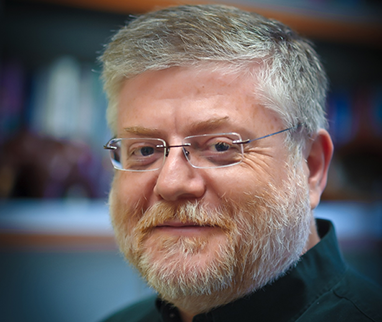 A lovely tribute to UW CSE professor Gaetano Borriello appears in the April-June 2015 issue of IEEE Pervasive Computing:
Gaetano Borriello was a mentor to many of us, spending much of his time helping others in our community. In doing so, he touched many lives, from his students and colleagues at UW to mothers and children in Tanzania. His legacy will live on through the efforts he began and through the impact and influence he has had in this community and around the world. He will be missed by all who had the privilege to work with him.
Thanks to Maria Ebling of IBM’s T.J. Watson Research Center for celebrating Gaetano’s remarkable contributions so beautifully in this article.
Read it here. Read more →
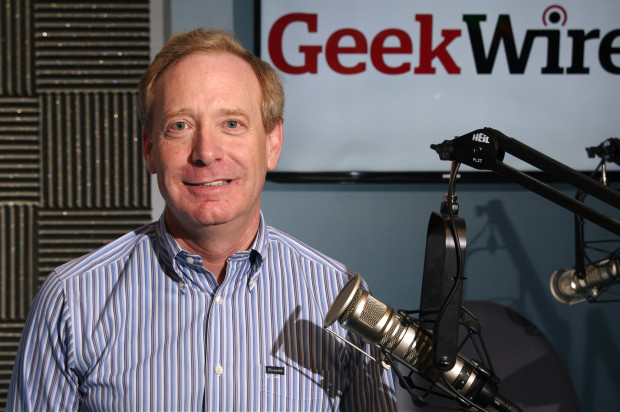 Brad Smith’s entire interview with GeekWire‘s Todd Bishop and John Cook is outstanding. But we particularly like this part:
“One of the things ppeole often don’t appreciate is that the Univeristy of Washington Computer Science & Engineering Department is one of the foremost computer science departments in the world. But it’s not big enough. It’s turning students away because it doesn’t have the room to offer them the ability to major in that discipline …
“We need the money to build a second building at the University of Washington, we need the appropriations so that then the enrollment is expanded – you need a building but you need enrollment capacity as well. And we want to see other new steps taken by the University of Washington as well – there are some exciting things that we think are on the drawing board for the future.”
Listen to the entire interview here. Or go directly to our favorite part here.
Thanks Brad! Read more →