GeekWire: “Analysis: The exploding demand for computer science education, and why America needs to keep up”

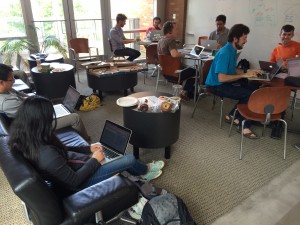
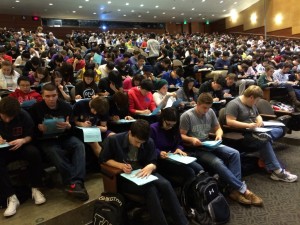
cse142-14wi-midterm-1024x768

There were more than 850 students in UW’s introductory programming class last quarter. Total enrollment in the past year was 2,700.

“Young adults today are realizing how computer science knowledge can help them succeed at not just being a software developer, but with nearly any job. Heck, even journalists like us are being encouraged to take a few Javascript and HTML courses.

“‘Kids are waking up,’ said Ed Lazowska, the Bill & Melinda Gates Chair in Computer Science & Engineering at the UW. ‘Every field is becoming an information field, and if you can program at a level beyond an intro course, it’s a huge value to you.'”

Read more here. Read more →

CSE’s Brad Fitzpatrick receives College of Engineering Diamond Award

IMG_2944

Brad Fitzpatrick and family

IMG_2948

Brad Fitzpatrick and Dean of Engineering Michael Bragg

At the 2014 UW College of Engineering Diamond Awards celebration on Thursday night, 2002 CSE Bachelors alum Brad Fitzpatrick received the Diamond Award for Early Career Achievement. Brad is a widely respected leader in the open-source community, improving software development culture and creating open source projects used by millions of web sites around the world. Early-on, he created Memcached to support the exploding user community of his social network startup LiveJournal – today used by most web-scale services including YouTube, Facebook, Twitter, Flickr, Wikipedia and Craigslist. For the past five years he has been at Google, working on the Go programming language and Camlistore.

Congratulations to Brad and the other Diamond Award recipients: Eric B. Denton, P.E., ’51 BS & MS Chemical Engineering, who brought computer automation to the timber industry; Simon Sze, ’60 MS Electrical Engineering, who invented FLASH memory and wrote Physics of Semiconductor Devices, one of the most cited works in contemporary engineering; Randy Kurosky, ’88 BS Ceramic Engineering, co-inventor of two ceramic oxide powder processes and engineer of over 3,000 different metallic oxide compositions; and Daniel J. Evans, ’48 BS, ’49 MS Civil Engineering, former Governor, U.S. Senator, university president, and civic leader.

Watch a video celebrating Brad’s accomplishments here. Read more →

UW CSE hosts 2014 Youth Apps Challenge Awards

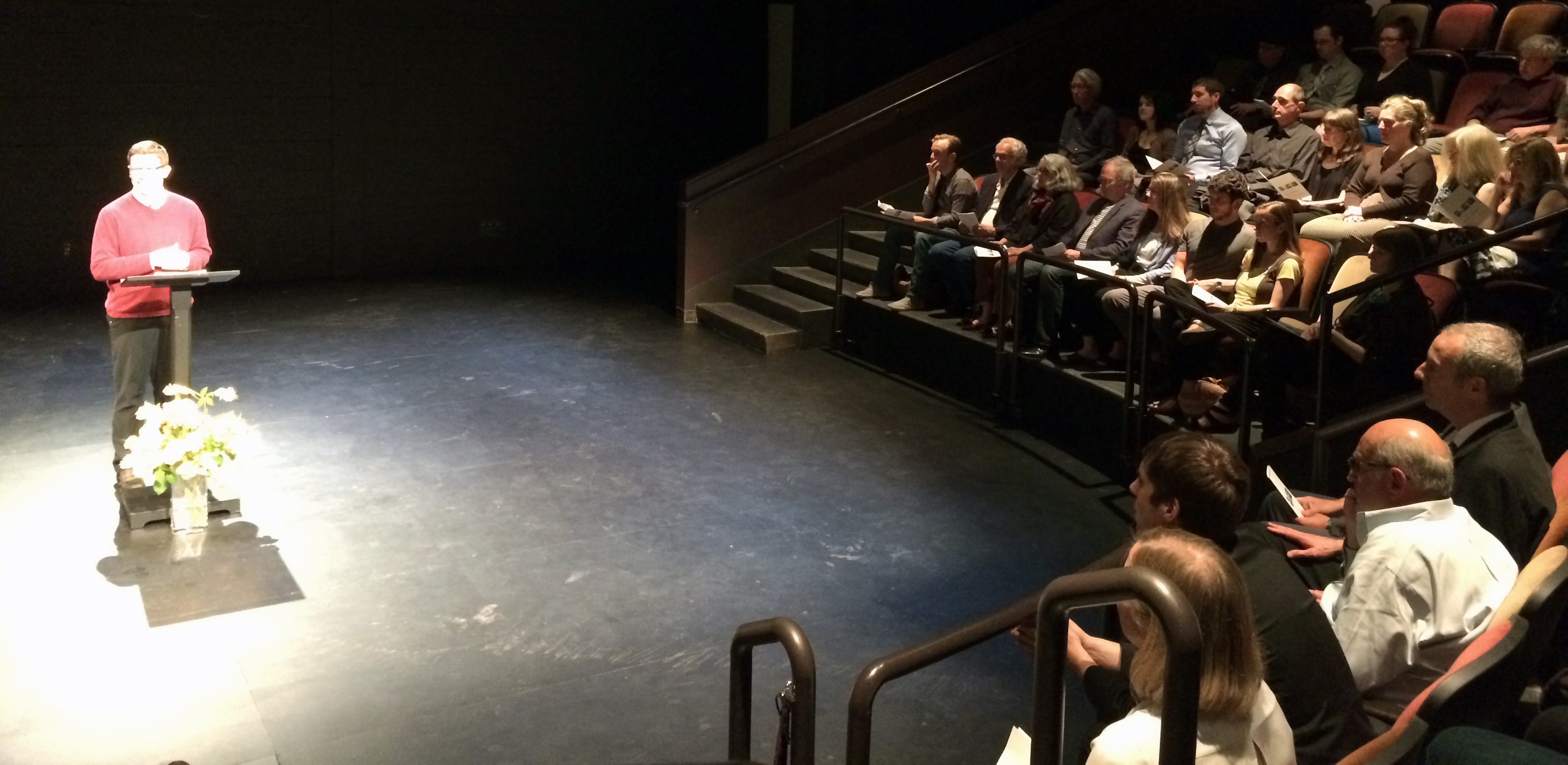
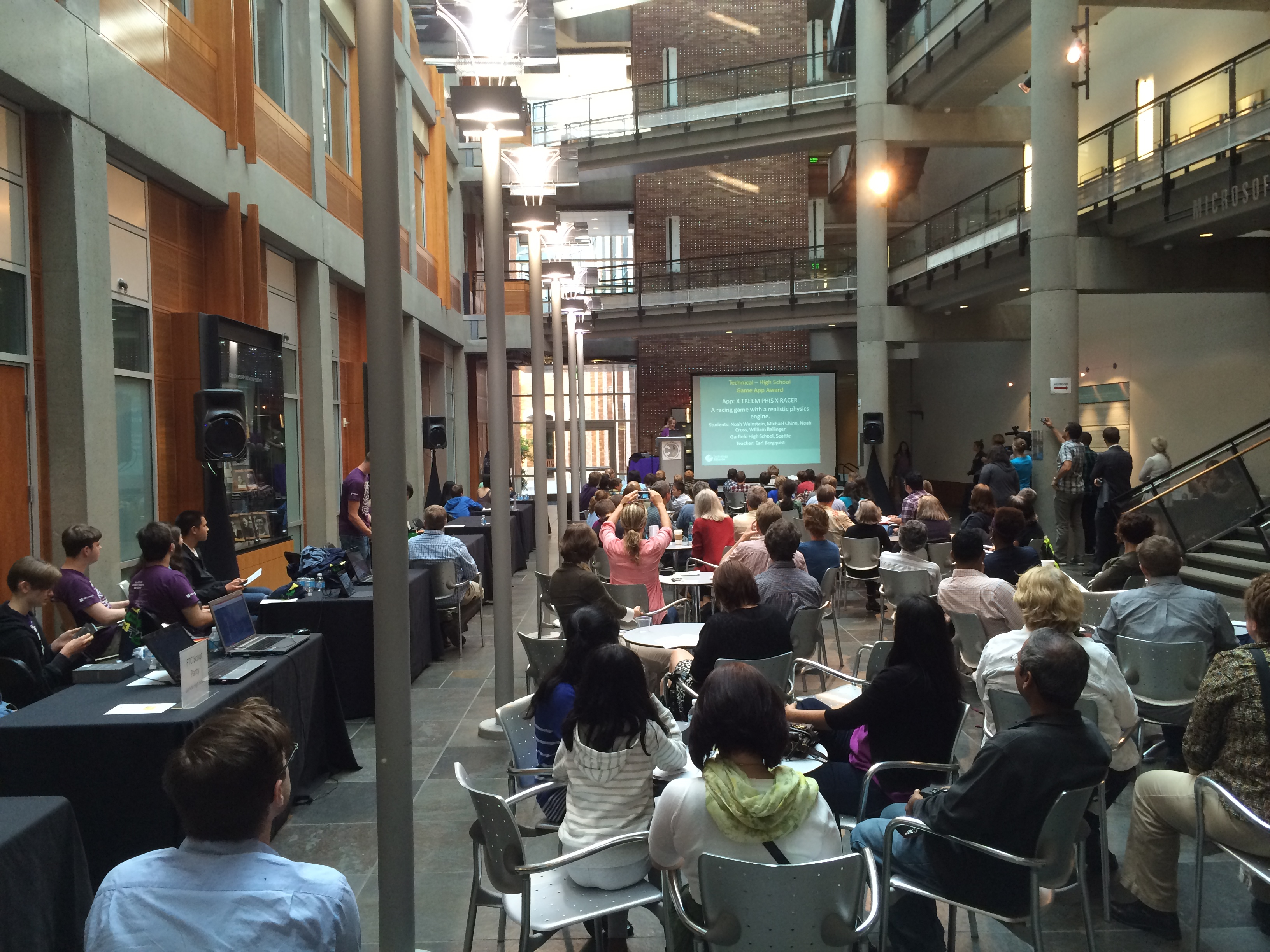
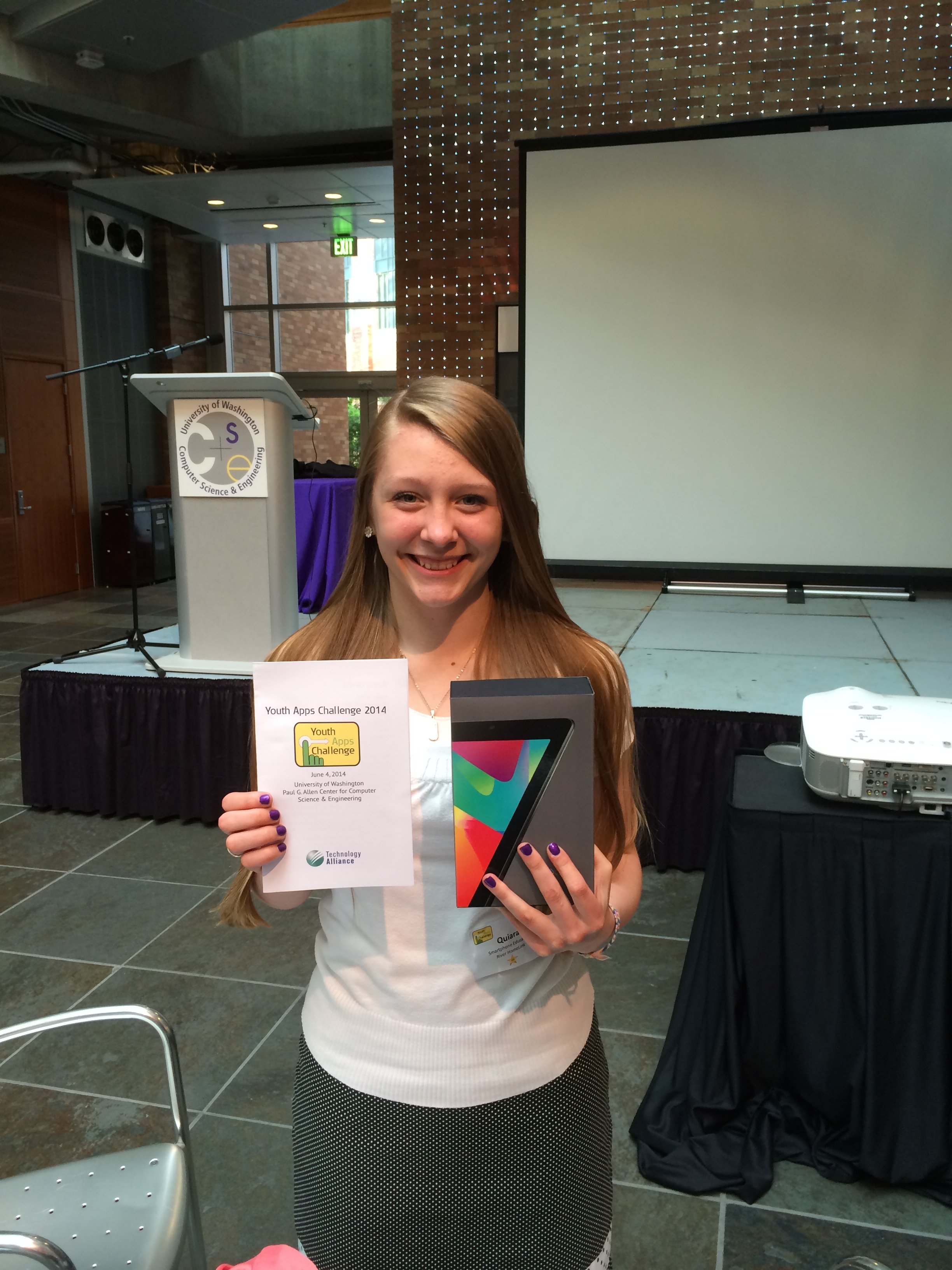
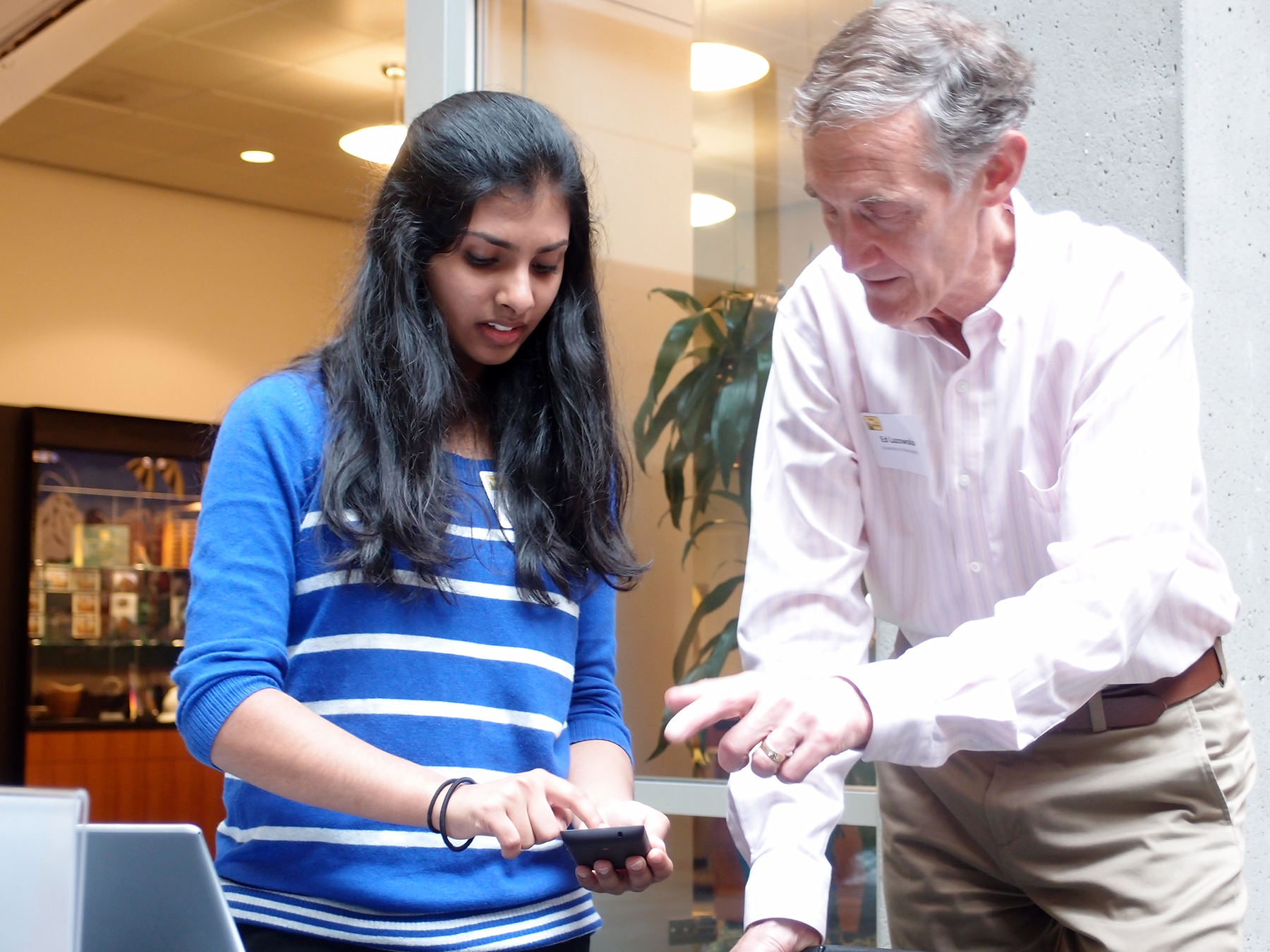
IMG_2942 IMG_2943OLYMPUS DIGITAL CAMERAOn Tuesday evening, UW CSE hosted the awards ceremony for Western Washington’s Youth Apps Challenge.

Sponsored by the Technology Alliance, the Youth Apps Challenge provided middle school and high school students the opportunity to design and build apps. Teams of up to five students were eligible to participate. Prizes for the winning students included Android tablets, t-shirts, and visits to local technology companies.

The apps were amazing! Learn more here. Read more →

Truly Inspirational: Empowering Blind Students in Science and Engineering

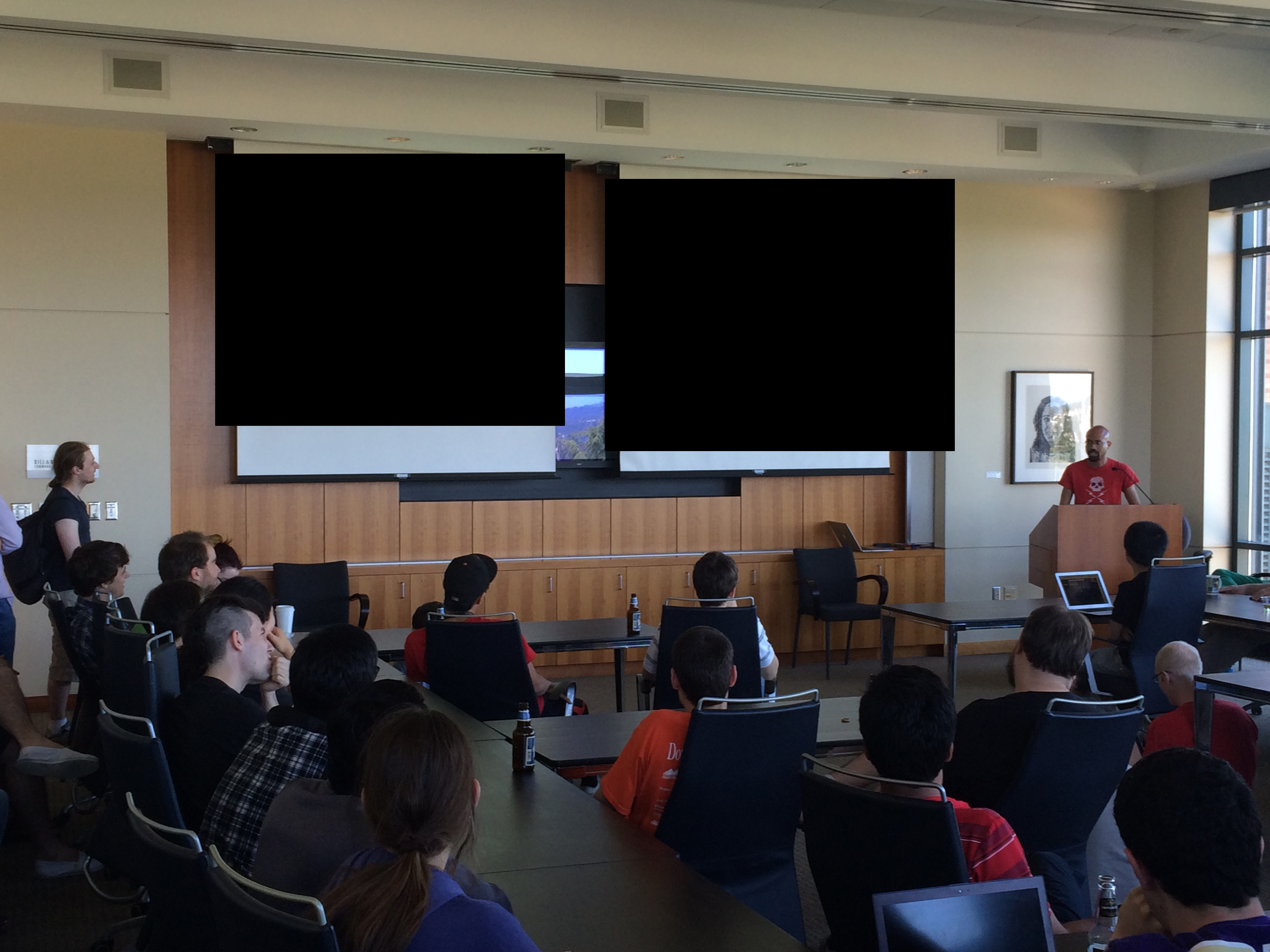
DSC_0175On Monday and Tuesday, UW CSE’s Richard Ladner hosted a workshop that brought together 19 blind or vision-impaired college students in science and engineering fields from across the nation, 13 blind or vision-impaired STEM professionals, and a number of regional civic, technology, and education leaders.  It was a truly inspirational two days.

The students themselves were hugely impressive – many of them are sure to become leaders in STEM fields.

The professionals were extraordinary. To mention just a few (read about them all here):1781866_10202086843948414_3833416878111528326_n

  • A blind Ph.D. atmospheric scientist working at NOAA.
  • A blind Ph.D. in linguistics working at Nuance.
  • A blind Ph.D. cancer biologist working at the Advanced Molecular Diagnostics Laboratory at the University Health Network in Toronto.
  • A blind history and computer science major who works at the Defense Information Systems Agency.

Civic, technology, and education leaders who participated included Zillow CTO Dave Beitel, Redfin CEO Glenn Kelman, University of Washington Provost Ana Mari Cauce, State Representative (and DSC_0183technology entrepreneur) Reuven Carlyle, UW Materials Science professor Kannan Krishnan, UW CSE professor Ed Lazowska, and founder and director of UW’s DO-IT Center and Access Technology Center Sheryl Burgstahler.

It’s impossible to describe the impact of this event on all of the attendees!

Learn more about Empowering Blind Students in Science and Engineering here. Read more →

Emina Torlak, Xi Wang join the UW CSE faculty

UW CSE is delighted to announce our third and fourth hires of the 2014 faculty recruiting season.

EminaTorlakEmina Torlak, a researcher in software engineering and programming languages, received her Bachelors (2003), Masters (2004), and Ph.D. (2009) degrees from MIT, and subsequently worked at IBM Research, LogicBlox, and as a research scientist at UC Berkeley. Her research focuses on automating and improving the programming process; in particular, she is an expert in using SAT-solvers and constraint languages for automatic reasoning about software. Emina has applied her expertise broadly, from test-generation for databases to memory-consistency models. Her recent work relates to integrating constraint solvers into programming languages to support automatic testing, verification, and synthesis – making programming a collaboration between humans and machines. She is the creator of the Kodkod constraint solver, which has been used by dozens of research projects.

Xi Wang, a researcher in computer systems whose work intersects operating systems, computer security, and programming languages, seeks to Xiimprove all levels of the trusted computing base; for example, his paper on the analysis and impact of security compromises resulting from compiler optimizations won a best paper award at the most recent ACM Symposium on Operating Systems Principles. His research has already had significant real-world impact: his static analysis tools are used by companies such as Dropbox, Cloudera, and Intel, his record/replay and debugging systems have been integrated into the production pipeline of Bing, and his work on undefined compiler behavior is being standardized by the C++ standards committee. Xi will receive his Ph.D. in Computer Science from MIT this summer. He received Bachelors and Masters degrees in Computer Science from Tsinghua University in 2005 and 2008, respectively.

Welcome, Emina and Xi!

Read about our first two hires of the 2014 faculty recruiting season, Yejin Choi and Franzi Roesner, here. Read more →

UW CSE’s Gaetano Borriello, students featured in Columns

researchThe June issue of Columns – the University of Washington Alumni Magazine – features work by CSE professor Gaetano Borriello and students including Rohit Chaudhri, Brian DeRenzi, and Saloni Parikh, in the article “Mobile Medicine”:

“For infants in sub-Saharan Africa who are born pre-term, with low birth weight or with HIV, access to human breast milk can mean the difference between life and death. Human milk banks have been established to solve this problem, but they tend to be expensive, requiring electricity, computer access and clean water. These are often scarce commodities in this part of the world.

“Faculty and students at the UW are rapidly innovating to solve problems like this. The prevailing attitude among these motivated faculty and students: a good idea is a good idea regardless of the source and collaboration – especially novel collaboration – produces better solutions than a scientist working in isolation.

“A collaboration between UW Computer Science & Engineering (CSE) and PATH, a Seattle-area non-governmental organization, has led to a simple, ingenious solution to the breastfeeding dilemma.”

The article closes with this inspiring message:

“Borriello, who has taught at the UW for 25 years, says that students are quite different now. Like Parikh, DeRenzi and Chaudhri, they want to use technology to work on things that really matter. ‘During the dotcom boom, people were in it for the money. They wanted the degree to get into that world and cash in,’ says Borriello. He says there undoubtedly will be more projects emerging from the UW that help research efforts and provide answers that contribute to improved global health.”

Read more in Columns here. Learn more about Open Data Kit, a tool that provides the data collection foundation for this work, here. Read a related recent article – about the collaboration between UW CSE and the global health care provider AMPATH – here.

Gaetano was also recognized in the June issue of Columns as the recipient of the 2014 Marsha L. Landolt Distinguished Graduate Mentor Award. UW CSE department chair Hank Levy is quoted:

“Gaetano once told me that he treats every student as a peer. He sees graduate students as our future colleagues, and therefore he treats them with the respect and collegiality that a colleague would deserve. This is true at every level – graduate student, undergraduate, or high-school student – all are potential future colleagues and deserve the same respect.”

Read about Gaetano and UW’s other 2014 faculty award winners here. Read more →

Global health care provider AMPATH reaches one millionth person powered by ODK

ampath-enumeratorIn 2009, global health care provider AMPATH began deploying community health workers in rural villages and communities in Western Kenya as part of a home-based HIV/AIDS counseling and testing program.

Armed with a bag of testing and counseling supplies and a smartphone with a GPS and AMPATH’s electronic medical record system, the community health workers travel by foot door-to-door assuring that every person over the age of 13 and every at-risk child was tested for HIV.

AMPATH’s smartphone-based data collection capabilities are based on Open Data Kit (ODK), a joint project of UW CSE and Google. “The ability to collect data in electronic form and integrate it with the rest of the system is the most important tool we have to successfully implement the pHCT program,” said Martin Were, Chief Medical Information Officer for the AMPATH Consortium. “Open Data Kit has been instrumental in this data collection.”

This week, the pHCT program reached its one millionth person, using ODK.

Read more here.  Learn about ODK here. Read more →

The value of diversity in the tech workforce

diversity2Stimulated by Google’s release of its workforce diversity statistics, USA Today describes the generally dismal under-representation of women and minorities in the tech workforce.

UW CSE’s Ed Lazowska is quoted on the importance:

“Doing so isn’t about window dressing. It actually makes it a better and more profitable company, says Ed Lazowska, a professor of Computer Science & Engineering at the University of Washington.

“‘Engineering (particularly of software) is a hugely creative endeavor. Greater diversity – more points of view – yields a better result,’ he said.”

Here is what Lazowska actually said to the reporter, in an email exchange:

“Google’s willingness to publish these less-than-rosy statistics reflects wonderfully well on the company and on its commitment to increasing the diversity of its workforce. A company that didn’t care deeply about the issue probably wouldn’t collect this data, and certainly wouldn’t put it on the web for all to see.

“Under-representation of women and minorities is a long-standing problem in the tech industry. All of us have been working extremely hard to turn this around, and progress is being made. It’s not only a matter of social equity, or of staffing. Engineering (particularly of software) is a hugely creative endeavor. Greater diversity – more points of view – yields a better result.

“Kudos to Google.”

Read USA Today‘s version here. Read more →

“Meet the algorithm that can learn ‘everything about anything'”

herolGigaom waxes ecstatic about research at Seattle’s Allen Institute for Artificial Intelligence (AI2), led by UW CSE’s Oren Etzioni:

“Researchers from Allen Institute for AI have built a computer system capable of teaching itself many facets of broad concepts by scouring and analyzing search engines using natural language processing and computer vision techniques.”

The system, LEVAN (Learn EVerything about ANything), is a collaboration between AI2 and UW CSE, involving (among others) AI2’s  Santosh Divvala (a UW CSE postdoc alumnus and CMU Ph.D. alumnus) and UW CSE professor Carlos Guestrin.

Read more here. Read more →

UW CSE workshop connects blind college students with professionals

UW CSE logoOn June 2-3, the Empowering Blind Students in Science and Engineering workshop will be held at the Talaris Conference Center. This one-of-a-kind workshop brings together 18 blind undergraduate students from around the country and professionals from a broad range of field – some blind, some not – for one-on-one mentoring and networking. The program will focus on learning from each other to maximize chances for a successful career and on raising awareness of the potential of blind professionals in the workplace.

The event is the brainchild of UW CSE Professor Richard Ladner, who has worked for years in accessibility research.

Learn more about the workshop here. UW Today post here. Read more →

« Newer PostsOlder Posts »