 The Dahl-Nygaard Prize is awarded annually to recognize research contributions to object-oriented programming. Each year two prizes are awarded: to a senior researcher with outstanding career contributions, and to a younger researcher who has demonstrated great potential. The senior prize is recognized as one of the most prestigious awards in the area of Software Engineering.
The recipient of the 2011 senior Dahl-Nygaard Prize is Craig Chambers, for work done as a UW CSE faculty member from 1991-2007. (At that time, Craig moved to Google Seattle; he is now an Adjunct Professor in CSE.)
Craig is CSE’s first recipient of the senior Dahl-Nygaard Prize. The 2007 junior prize was awarded to UW CSE Ph.D. alum Jonathan Aldrich, a faculty member at Carnegie Mellon University. The 2005 junior prize was awarded to UW CSE Ph.D. alum Gail Murphy, a faculty member at the University of British Columbia.
Congratulations Craig! Read the award announcement here. Read about previous prize recipients here. Read more →
 NSF Graduate Research Fellowships are the most prestigious awards available to students beginning their graduate studies in the sciences. Among the winners of 3-year 2011 NSF Graduate Research Fellowships, announced today, are current UW CSE graduate students Katelin Bailey, Waylon Brunette, Katie Kuksenok, Yun-En Liu, and David Rosenbaum; UW CSE undergraduate seniors Will Johnson and Joy Kim; and 2010 UW CSE undergraduate alumnae Justine Sherry (now a graduate student at UC Berkeley) and Heather Underwood (now a graduate student at the University of Colorado). Also HCDE/DUB students Alexis Hope and John Porter.
Honorable Mentions were awarded to UW CSE graduate students Brian Burg, Paul Kulchenko, Jinna Lei, and Nell O’Rourke.
Congratulations to all! Read more →
 Corensic, a software quality tool company founded by UW CSE faculty Mark Oskin and Luis Ceze, this week announced the availability of Jinx 1.2 R2, a software quality tool for Linux and Windows. Jinx exposes hard-to-find concurrency bugs in software, a task that ordinarily requires numerous manual steps and a great deal of luck.
Intel is blogging about Corensic and Jinx! As James Reinders states in his Intel blog, “I was a little ‘slow’ in figuring out what all the fuss was about when I first met them more than a year ago. They like to play up their product as ‘testing’ your code by making it ‘unlucky.’ Makes for cool marketing and a funny product name.
“A light bulb went off in my head when I realized they were doing what hardware folks call ‘shake rattle and roll tests’ where you literally take hardware (computer, car, refrigeration, you name it!) and shake it to see if anything comes loose or malfunctions. Brutal!”
Read the PRWeb article here; the Intel blog post here. Learn more about Corensic here. Read more →
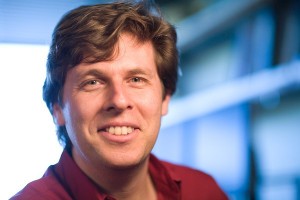
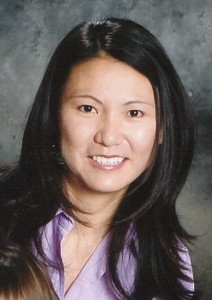 UW Interim President Phyllis Wise today announced 8 inaugural University of Washington Entrepreneurial Faculty Fellows. Included in this inaugural class are UW CSE’s Oren Etzioni and Yoky Matsuoka.
The Fellows are being honored as the University’s most entrepreneurial faculty researchers, having achieved success in translating their research into products and therapies or started groundbreaking programs for translation or collaboration with industry.
“‘The University of Washington is dedicated to maximizing our contribution to the Washington state economy, and the impact of our research. We’re immensely proud of the achievements of those chosen as UW Presidential EFFs,’ said interim UW President Dr. Phyllis Wise. ‘UW researchers will conduct more than a billion-and-a-half-dollars in federally funded research this year.’”
Congratulations to Oren and Yoky!
Read the UW press release here. GeekWire article here. Read more →
 CSE’s Mark Bun, a junior who entered the UW through the early entrance program, has been awarded a 2011 Goldwater Scholarship. Goldwater Scholarships are the premier award for undergraduates majoring in engineering and the sciences.
Mark is the sixth CSE undergraduate to be honored with a Goldwater Scholarship. See past award winners here.
Congratulations to Mark!
Read the UW announcement here. Read more →
 Xconomy writes:
“Another month gone by in Seattle, another Silicon Valley company has moved in to establish a beachhead for recruiting tech workers. … But all of those companies often wind up chasing the same pool of experienced workers – a pool that Washington state isn’t adding to fast enough by cranking out computer science graduates of its own.
“It’s a situation that can’t be sustained if the region is to maintain its prominence in the tech world. …
“Ed Lazowska, the University of Washington’s Bill & Melinda Gates Chair in Computer Science & Engineering, says the last sustainable increase in state spending for higher education enrollments was around 1999. …
“‘It kind of sucks that the children of Washington parents can’t get into the University of Washington and pursue a STEM degree because there’s not enough slots,’ says entrepreneur Jeremy Jaech, chairman of the Technology Alliance. ‘But it’s not likely to change any time soon.'”
Read the article here. Read more →
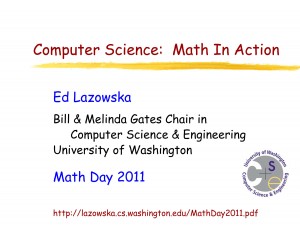 Check out Ed Lazowska’s talk to a University of Washington “Math Day” audience — high school students interested in the mathematical sciences. It’s a quick, fun overview of the field.
Slides are linked here. Read more →
 UW CSE’s Ed Lazowska is one of eight columnists featured in a New York Times “Room for Debate” essay series on education. Lazowska says:
“There are a few facts about education, employability and economic growth that we should keep in mind.
“A balanced education serves you best …
“The further out you are from college graduation, the less your success is attributable to the field in which you majored, and the more your success is attributable to a set of abilities imparted by any top-tier bachelor’s-level education …
“But let us not fool ourselves about what fields offer job opportunities, create jobs for others, and drive the economy …
“So what should today’s college students study in order to stay competitive? My take: A computer science degree is a great preparation for just about any field.”
Read Lazowska’s post, and others, here.
Update: Email received from a senior faculty member in Obstetrics and Gynecology at a top east coast university: “Indeed! I majored in computer science undergrad and then worked at Microsoft for four years (1998-2002) while living in Seattle. Then I moved into epidemiology: computer science is EXCELLENT preparation for (some aspects of) epidemiology. Both the specific skills and the way of thinking through problems that I learned in computer science are broadly applicable.”
Update: See UW CSE alum Sierra Michels Slettvet’s related blog post here. And an interesting comment in ITBusinessEdge here. Read more →
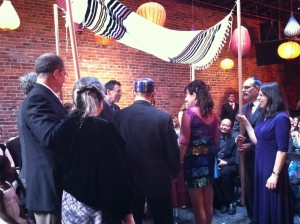
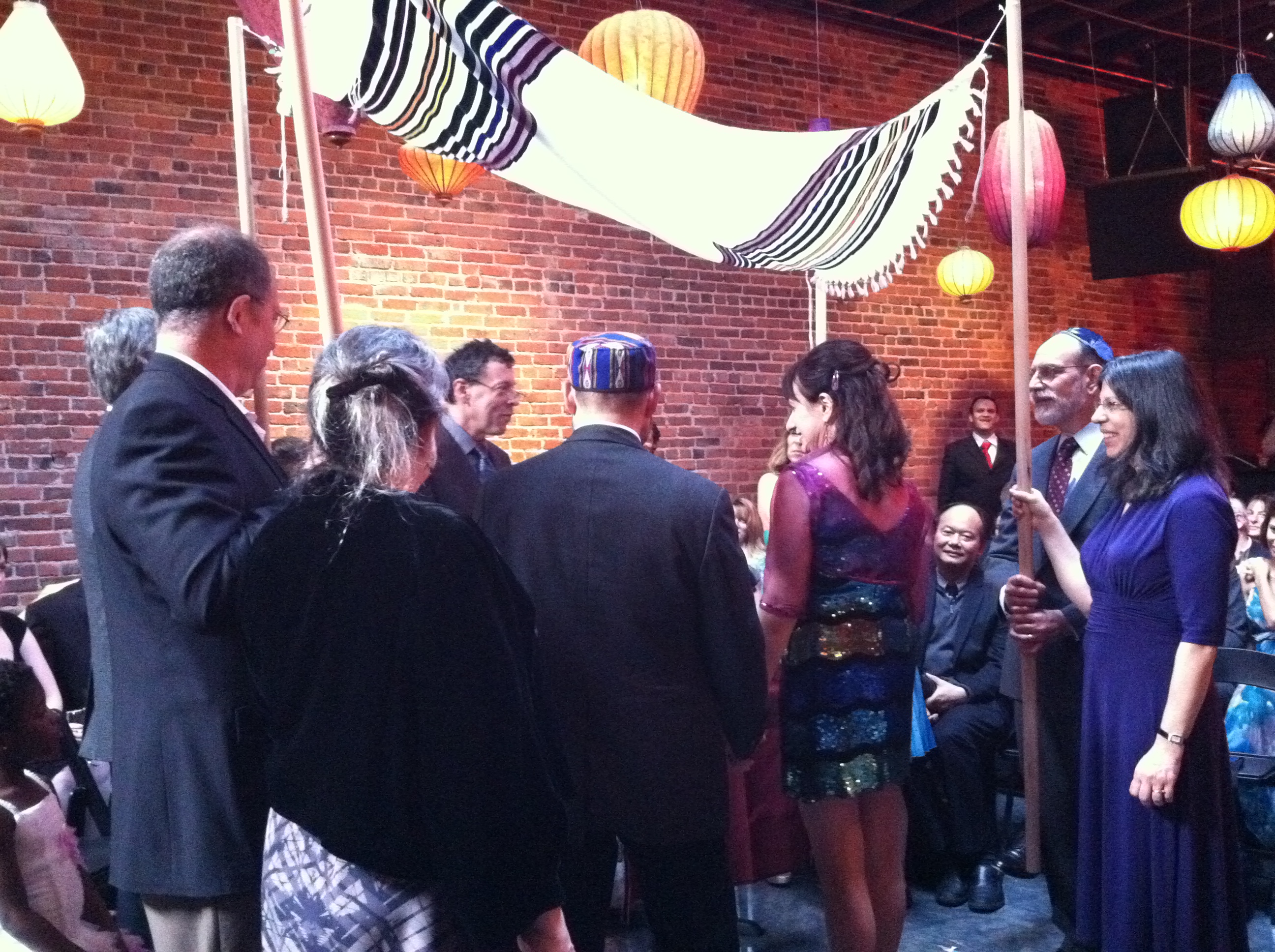
 UW CSE’s Anna Karlin and her Stanford grad school classmate Evan Cohn stalled 23 years before getting married. But it finally happened tonight! Read more →
UW CSE alum and winner of a 2006 UW College of Engineering Diamond Award and 2011 UW CSE Alumni Achievement Award Jere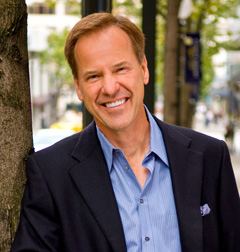 my Jaech has stepped down as CEO of Verdiem.
“… Considered one of the most accomplished entrepreneurs in the city, it will be interesting to see where he lands,” writes John Cook in GeekWire.
Why the change? “I wanted to get back to the early-stage stuff,” he tells GeekWire. Jaech has been spending time at UW CSE, working with Shwetak Patel and others.
Seattle Business called Jaech “a serial entrepreneur with a magic touch” in the list of the Top 25 Innovators & Entrepreneurs in 2009. (See #24.)
Jaech currently serves as chair of the Technology Alliance, a technology industry group based in Seattle, advocating that an innovation economy is essential to Washington’s ability to thrive in a competitive world.
Xconomy article here. GeekWire articles here and here. Read more →