A holiday thank you to UW Facilities Services

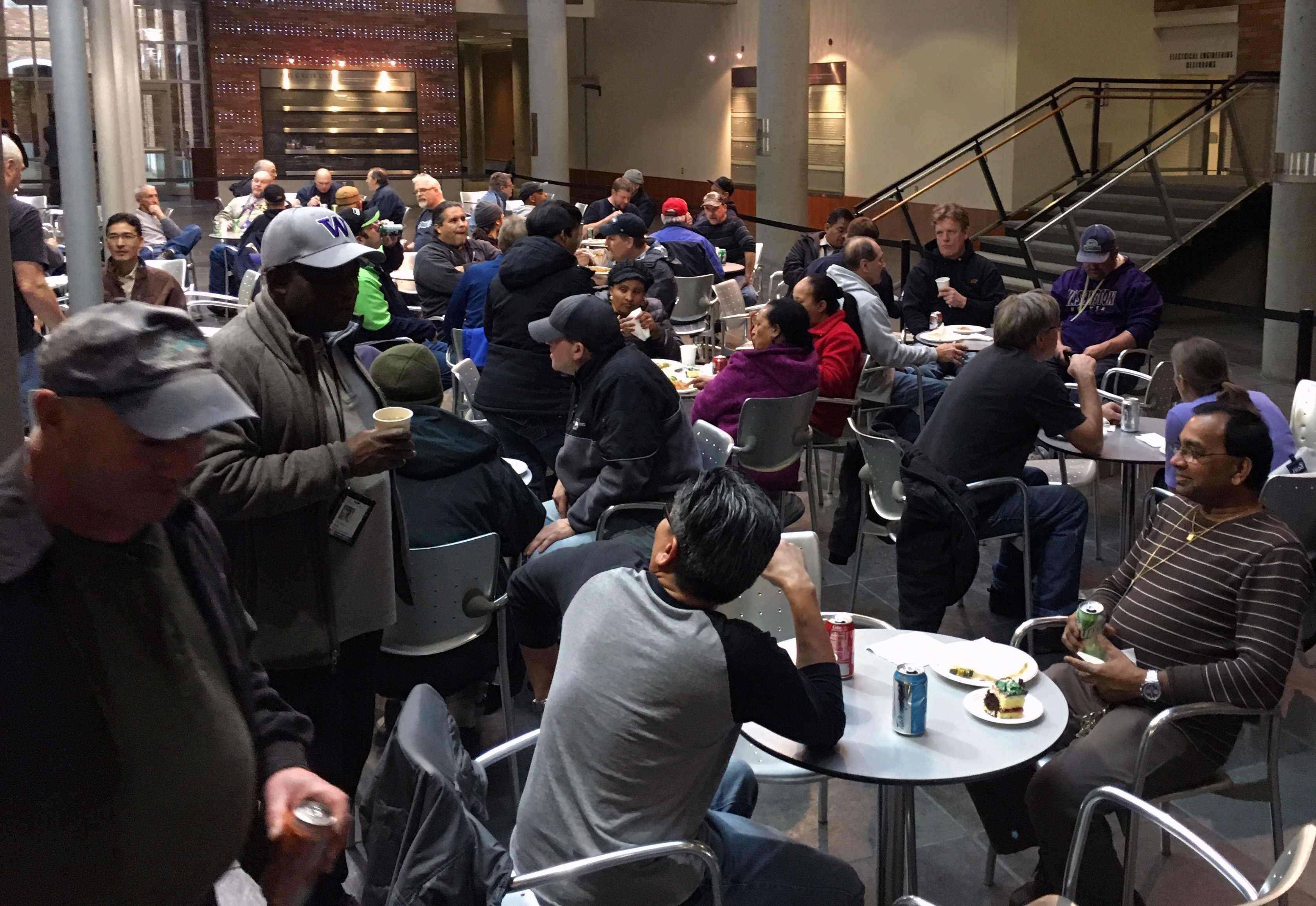
IMG_6071Monday marked UW CSE’s annual holiday luncheon for our friends from UW Facilities Services – the men and women who keep the Paul G. Allen Center for Computer Science & Engineering looking great and working great. 110 Facilities Services professionals joined us.

Thanks for all you do! IMG_6066

IMG_6065 Read more →

UW CSE’s Ed Lazowska in the Seattle Times: “Now is the wrong time and the UW is the wrong place for a unionized faculty”

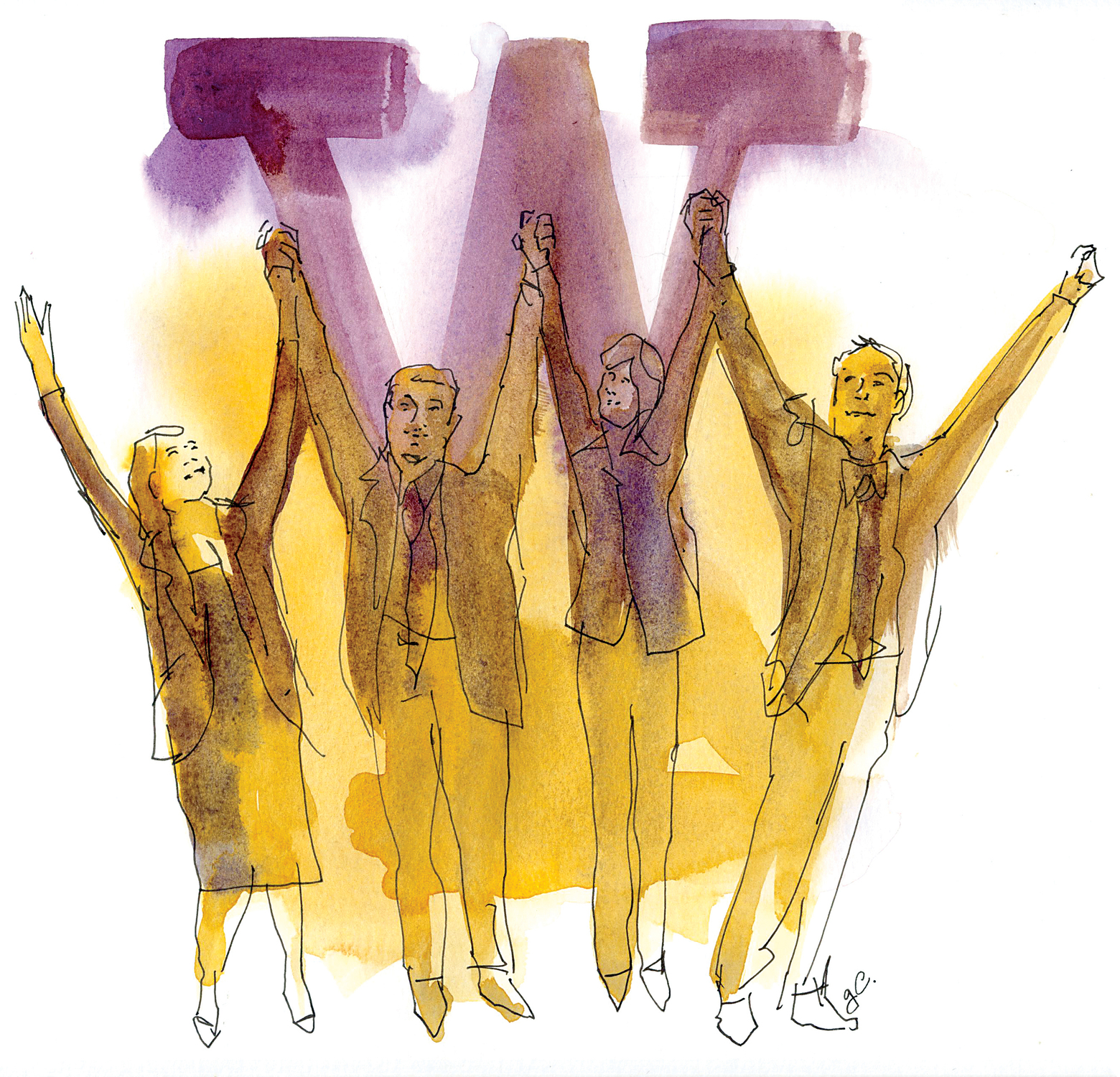
c35be5f4-a5c9-11e5-9c4b-70aea859ce73-1560x1500UW CSE’s Ed Lazowska and UW Chemistry’s Paul Hopkins in a Sunday Seattle Times op-ed regarding the effort by the Service Employees International Union to represent UW faculty:

“Unionization is like throwing sand in the gears of what is, by any measure, an institution that performs at an extraordinarily high level.”

Read the op-ed here. Visit the UW Excellence website here.

(This op-ed represents the personal opinion of Lazowska and Hopkins.) Read more →

UW CSE’s Luis Ceze speaks on “The Record” about groundbreaking DNA data storage research

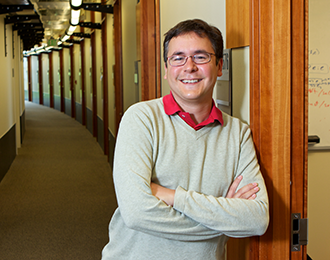
Luis CezeUW CSE professor Luis Ceze spoke to Bill Radke on NPR radio station KUOW yesterday about the DNA data storage project spearheaded by the UW’s Molecular Information Systems Lab and Microsoft Research.

Speaking on “The Record,” Ceze explained what makes DNA attractive to computer scientists as a storage vehicle, pointing out that “nature evolved it and tested it for us.” He also noted that, as DNA is unlikely to become obsolete any time soon (unlike those old floppy disks sitting in your desk drawer), it is the ideal storage technology for archiving all of human knowledge for posterity.

“As long as there is DNA-based life on earth, there will be DNA,” Ceze said.

When Radke asked what interested him personally in the project, Ceze cited the importance of preserving history – and learning from it.

“Think of it as a data trust fund…The same way that archaeology learns about the past today, we could enable future digital archaeologists.”

Listen to the full interview here, and read the New York Times article on the DNA data storage project here. It’s just one example of many wonderful partnerships between UW and Microsoft Research. Read more →

PLSE fashion statement …

PLSE

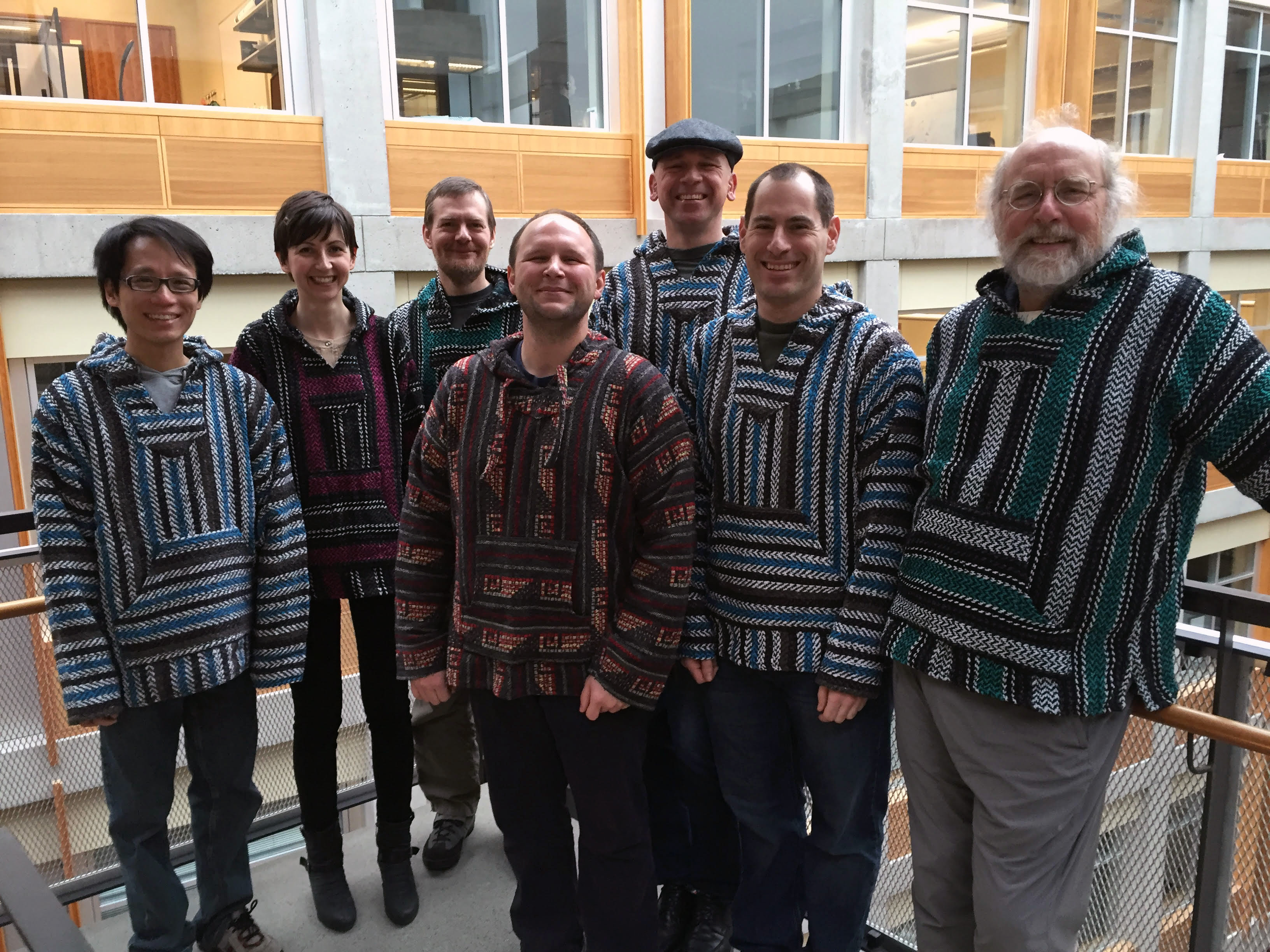
UW CSE PLSE faculty Alvin Cheung, Emina Torlak, Mike Ernst, Zach Tatlock, Ras Bodik, Dan Grossman, and Alan Borning

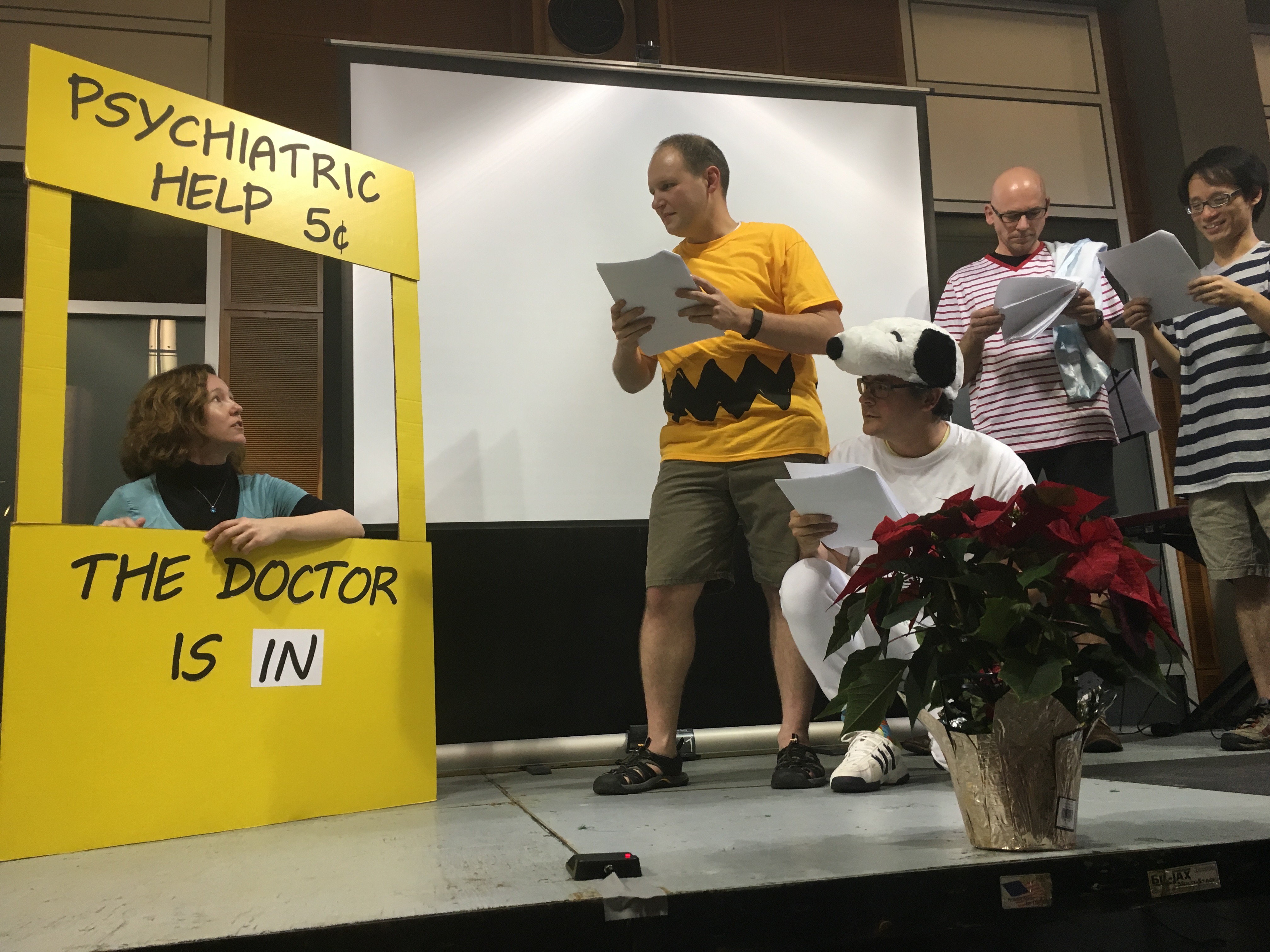
The UW CSE PLSE (Programming Languages and Software Engineering) faculty – following their domination of the faculty skit at the UW CSE holiday party (Ras Bodik as Linus, Alvin Cheung as Schroeder, Zach Tatlock as Charlie Brown, and Emina Torlak as Little Red-Haired Girl) – salute 2015 on its way out the door by making a fashion statement in their new Zach Tatlock lookalike outfits! Read more →

UW CSE leads the nation in CRA Outstanding Undergraduate Researcher Awards

Krittika D'Silva, Darby Losey, Daryl Zuniga Each year, the Computing Research Association recognizes stellar undergraduate students throughout North America in its Outstanding Undergraduate Researcher Awards program. This year, three UW CSE students – Krittika D’Silva, Darby Losey and Daryl Zuniga – were cited by CRA for excellence in research as part of its 2016 competition.

Krittika D’Silva, who was named a finalist by CRA, is completing a double major in computer engineering and bioengineering. She worked with the late professor Gaetano Borriello and Ph.D. alum Nicki Dell in UW CSE’s ICTD Lab, where she developed hands-free smartphone technology for use by health care providers in low-resource settings. D’Silva also worked on the CGNet Swara app for Android. The app, which leveraged a popular interactive voice forum in India to enable citizen journalism in remote areas, was featured in National Geographic. Currently, she works with Luis Ceze researching ways in which DNA molecules can be used for long-term data storage – read a recent New York Times article on this work here, and listen to a KUOW interview withi Ceze here.

Darby Losey and Daryl Zuniga each received honorable mentions. Losey is an honors candidate in computer science and neurobiology. He works with UW CSE professor Raj Rao on the development of non-invasive brain-computer interfaces. Zuniga, who is co-advised by Dan Grossman and Zach Tatlock in UW CSE’s Programming Languages & Software Engineering group, is working on verifying peephole optimizations for compilers.

In the past 10 years, the University of Washington has had 28 students recognized in the CRA Outstanding Undergraduate Researcher Awards competition – more than any other school. Princeton is nipping at our heels with 27, followed by Cornell (23), Harvey Mudd (22), UC Berkeley (19), the University of Virginia (19), Harvard (17), the University of Illinois (16), and Carnegie Mellon (15). Find more information on the CRA Outstanding Undergraduate Researcher Awards here.

Congratulations, Krittika, Darby and Daryl – you make UW CSE proud! Read more →

UW CSE helps launch new professional master’s degree program in data science

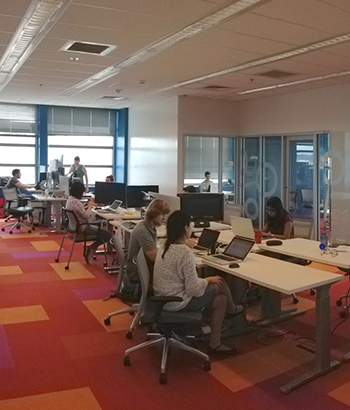
WRF Data Science Studio at UW

The WRF Data Science Studio on the UW Seattle campus

UW CSE has partnered with the iSchool and the departments of Applied Mathematics, Biostatistics, Human Centered Design & Engineering, and Statistics – under the auspices of the eScience Institute – on the creation of a master’s degree program in the growing field of data science. The new program, which will begin in fall 2016, was developed with input from industry leaders and will combine statistical modeling, machine learning, software engineering, data management and visualization, and user interface design.

From the UW news release:

“‘This new master’s program was designed not only by six leading UW departments, but also with direct input from top data science hiring managers in Seattle and nationwide,’ said Bill Howe, associate director and senior data science fellow at the UW eScience Institute and chair of the UW Data Science Master’s Development Committee. ‘The level of technical expertise from both industry and academia that went into designing this program makes it unique in the country….’

“‘UW has elite programs — among the best in the nation — in the core fields on which data science relies,’ said Ed Lazowska, Bill & Melinda Gates chair for the UW Department of Computer Science & Engineering and founding director and senior data science fellow at the UW eScience Institute. ‘This new professional master’s program builds on the UW’s leadership in data science research and education and solidifies the position of Seattle and the Pacific Northwest as a national hub for professional data scientists.'”

The Master of Science in Data Science is designed for working professionals, who will have the option to study full-or part-time. Classes will be held in the evenings on the UW Seattle campus.

Read the full media release here, and learn more about the program here. Read more →

UW CSE faculty star in typically brilliant holiday party skit …

IMG_6036

Magda “Lucy” Balazinska counsels Zack “Charlie Brown” Tatlock, as Luis “Snoopy” Ceze, Ras “Linus” Bodik, and Alvin “Schroeder” Cheung look on

IMG_6003

The VAX – all dressed up with no place to go

IMG_6029

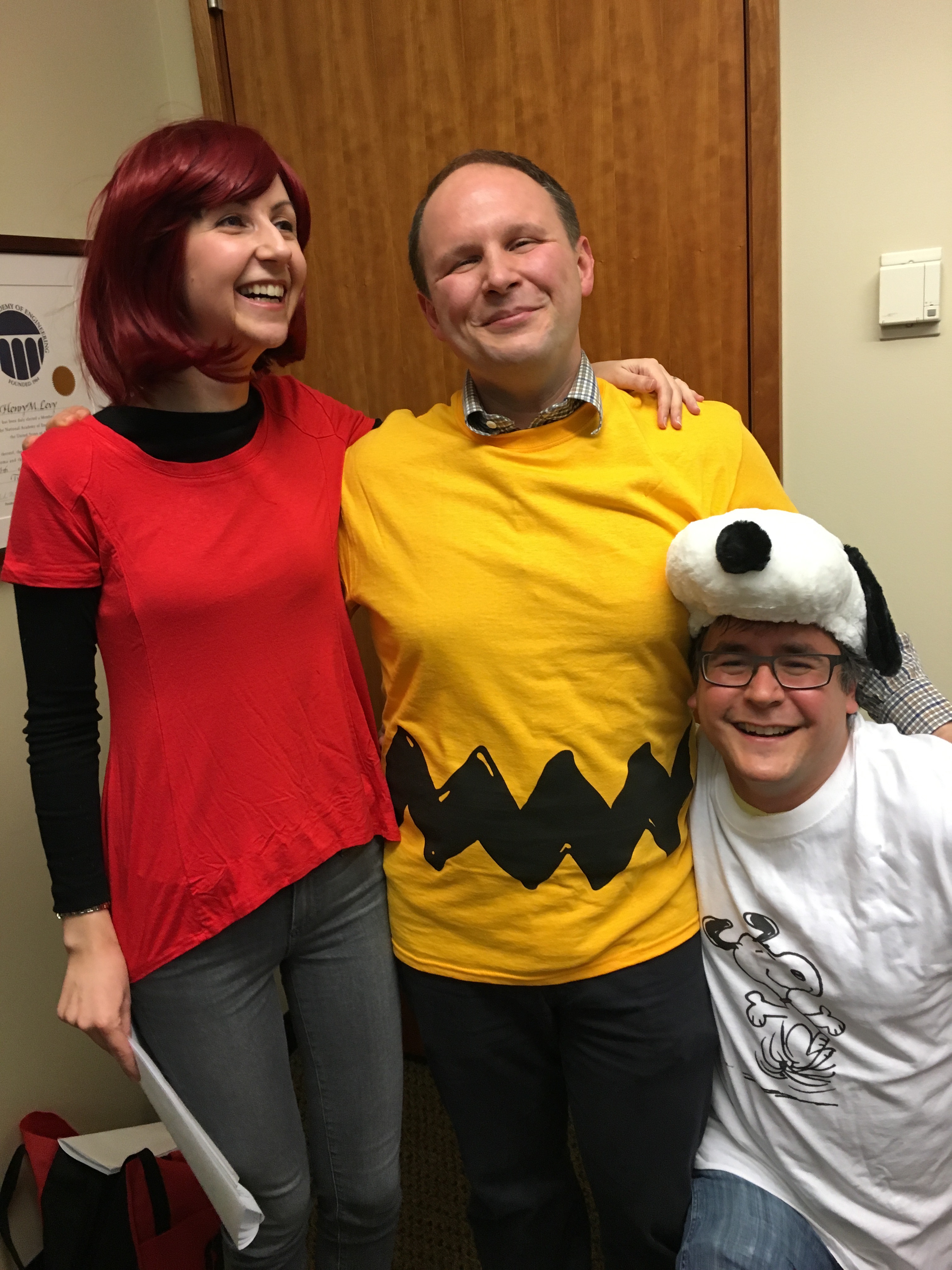
Emina “Little Red-Haired Girl” Torlak, Zach “Charlie Brown” Tatlock, and Luis “Snoopy” Ceze during 5 minute “Rehearsal” in Hank “Pig-Pen” Levy’s office

Video here!

(The faculty skits weren’t always “family entertainment” – see, for example, here, in Hank Levy’s basement in the early 1980s.) Read more →

UW CSE’s Franzi Roesner guides business and civic leaders along “the invisible trail” of online tracking

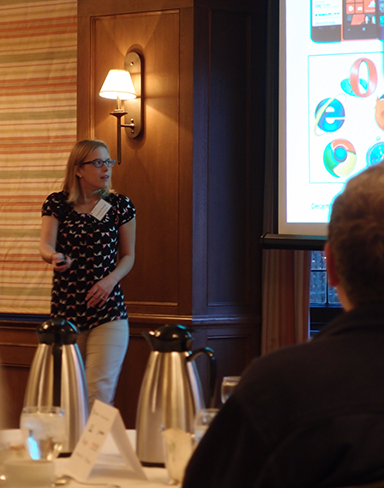
Franzi Roesner at the Discovery SeriesUW CSE professor Franzi Roesner, co-director of the Security and Privacy Research Lab, delivered a presentation today on the topic of online tracking and smartphone security to an audience of local business and civic leaders as part of the Technology Alliance’s Science & Technology Discovery Series in downtown Seattle.

Roesner’s work is based on the premise that security and privacy issues arise when there is a mismatch between user expectations as to how systems operate and actual systems behavior. Nowhere is this more evident than in the case of browser tracking – a legitimate function that can enhance web users’ convenience, but one that users do not fully understand and therefore are unable to control. Roesner talked about her quest to build better systems that improve privacy protections without overburdening users, giving the audience a crash course in how cookies work, the role of third-party websites, and the difference between anonymous trackers – for example, personalized advertising generators – and personal trackers tied to popular social media widgets.

Roesner and her fellow researchers built an automated detection tool, TrackingObserver, to measure tracker behavior and pervasiveness “in the wild.” The team’s work yielded some startling results: in visiting the top 500 websites, researchers encountered 524 unique trackers, and roughly half of the domains studied embed four or five different trackers. One website that the researchers visited contained 43 distinct trackers. They also found that the top three trackers – Doubleclick, Facebook and Google – were able to collect between 21 percent and 39 percent of users’ browser history. As a result of their research, Roesner and her colleagues developed a tool called ShareMeNot to empower users to counteract unwanted third-party tracking. The tool has since been integrated into the Electronic Frontier Foundation’s Privacy Badger offering.

Roesner also discussed her work in smartphone security, another area in which systems behave in ways that are not necessarily transparent or beneficial to users. As with browser tracking, there are legitimate reasons why smartphone applications would need access to users’ information – for example, location information when a user requests directions – or device features such as the camera. The problem, Roesner explained, is that users do not necessarily expect an app to have ongoing access to such information once a specific task is completed.

When Roesner began researching smartphone security, the state of the art consisted of prompts that asked the users to confirm permission for an app to access information or features, which can cause users to develop “prompt fatigue,” or install-time manifests – an all-or-nothing approach to permissions at the time of an app’s installation. Both, she noted, are overly permissive. To address these shortcomings, UW and Microsoft Research teamed up in an effort to advance user-driven access control – which, interestingly enough, more than half of users surveyed by the team thought was the norm already – by changing the underlying operating system instead of attempting to change user behavior.

Roesner concluded by highlighting emerging challenges associated with new augmented reality systems, the increasing popularity of wearable technology and the growing prevalence of sensors. The key will be to anticipate and address challenges before new systems become widely deployed, relying upon a combination of technology and good policy.

Keep up with UW’s work in this area by visiting the Security and Privacy Research Lab and the interdisciplinary Tech Policy Lab. Read more →

UW CSE alum Skarpi Hedinsson named CTO of Disney|ABC Television Group

1994 UW CSE bachelors alum Skarpi Hedinsson has been named Chief Technology Officer of Disney|ABC Television Group.

Skarpi’s career path took him from Geoworks to Starwave to ESPN to Disney.

Congratulations Skarpi!

Read more here. Read more →

Think bolder, aim higher: Microsoft Research leader Jeannette Wing at UW CSE

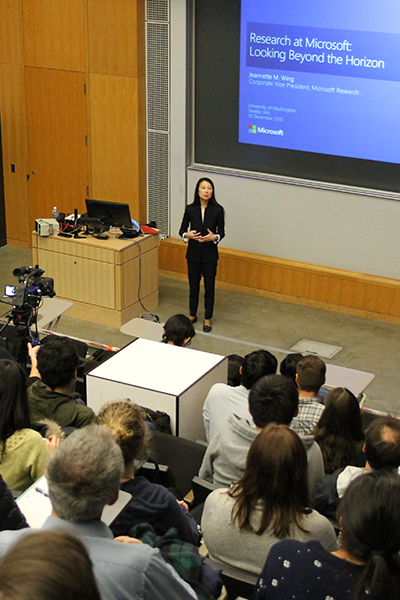
Jeannette Wing“Think bolder, aim higher.” That’s the message that Jeannette Wing delivered to the world-class scientists and technologists in Microsoft Research, and the message she delivered to a packed lecture hall during the latest installment of UW CSE’s Distinguished Lecturer Series.

With more than 1,000 researchers around the globe, Wing likes to describe Microsoft Research as “the largest computer science department in the universe.” During her presentation, Wing talked about MSR’s impact on science, on technology and on society, and described a handful of projects that are sure to affect all three in the coming years.

The first deals with integrative intelligence in the areas of vision and language. A team at MSR has developed a system for captioning images that goes beyond object segmentation and classification to reasoning and inference, and that exhibits evidence of “transfer learning” – that is, a model trained on one task shows itself to be good at another task. The second project is focused on developing safe cyber-physical systems (specifically drones). But the research team has more than the safety of drones in mind: its work could impact the safety of broad communities, using drones to fight the spread of infectious diseases. Finally, Wing talked about the large biological computation group at MSR. By applying computer science to biology, Wing noted, researchers are able to “discover new biology.” Researchers are taking this approach to better understand and program biological systems.

There is one more Distinguished Lecture left in 2015! Join us next Thursday, December 17th, when John Markoff of The New York Times joins us to talk about his new book, Machines of Loving Grace: The Quest for Common Ground Between Humans and Robots. More details here.

Thanks to Jeannette for her leadership in the field of computer science and for sharing MSR’s great work with our faculty and students! Read more →

« Newer PostsOlder Posts »