New wearable technology from UW tracks your carbon footprint, and so much more

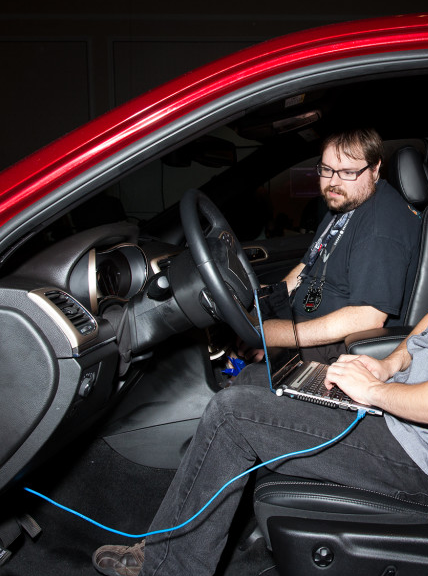
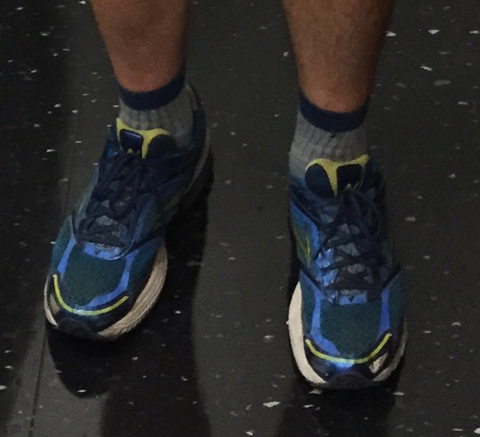
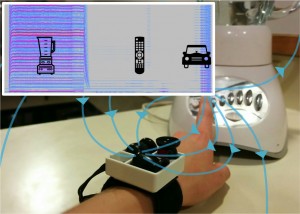
MagnifiSenseUW researchers have developed a prototype of a low-power, wearable system that can sense an individual’s interactions with different devices, from household appliances to motor vehicles. The new technology, MagnifiSense, analyzes near-field electromagnetic radiation from common components to measure usage in a variety of indoor and outdoor settings – and with a high degree of accuracy.

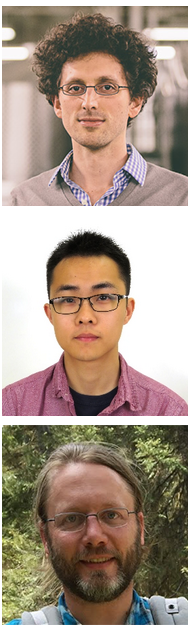
MagnifiSense was developed by a team of researchers at UW’s Ubiquitous Computing Lab, led by CSE and EE professor Shwetak Patel, that includes UW EE Ph.D. students Edward Wang and Tien-Jui Lee, CSE Ph.D. students Alex Mariakakis and Mayank Goel, and CSE Ph.D. alum Sidhant Gupta (now at Microsoft Research). The team submitted a paper outlining MagnifiSense’s effectiveness and potential applications as part of the UbiComp 2015 conference taking place in Osaka, Japan this week.

From the UW news release:

“In today’s smart home, technologies can track how much energy a particular appliance like a refrigerator or television or hair dryer is gobbling up. What they don’t typically show is which person in the house actually flicked the switch.

“A new wearable technology developed at the University of Washington called MagnifiSense can sense what devices and vehicles the user interacts with throughout the day, which can help track that individual’s carbon footprint, enable smart home applications or even assist with elder care….

“‘It’s another way to log what you’re interacting with so at the end of the day or month you can see how much energy you used,’ said Shwetak Patel, Washington Research Foundation Endowed Professor of Computer Science & Engineering and Electrical Engineering, who directs the UW Ubicomp Lab.

“‘Right now, we can know that lights are 20 percent of your energy use. With this, we divvy it up and say who consumed that energy,’ Patel said.”

The researchers plan to test MagnifiSense on more devices and to reduce their proof-of-concept so that the technology is small enough to be embedded in wrist-sized devices, such as a smartwatch.

Read the entire news release here. Read the research team’s paper here.

Magnificent work, team! Read more →

Remembering Donald Tsang

DonaldTsangDonald Tsang, a UW CSE graduate student from 1990-93, passed away unexpectedly at his home in Seattle on Wednesday September 2. He was 47.

Donald earned a Bachelor of Science in EECS from Berkeley in 1990. He spent three years in the UW CSE graduate program before he followed his passion for working in startups. He was one of the earliest developers at Amazon.com, creating the technology that secures customers’ credit cards. Donald also worked at a number of other Seattle-based startups, including Marchex, Ground Truth, Relevant Data, and OpenCar, returning to Amazon for a few years between start-ups. He most recently worked at the Seattle office of Disney, working on the Playmation game platform.

Donald is survived by his wife, Daisy (Chai), his two daughters Daniella and Constantina, and his mother-in-law, Xundu Wu, all at home in Seattle; his parents, Floris and Annel Tsang, his sister Dale Tsang and her children Abby and Jeremy Tsang Hall, all of Berkeley, California; many aunts, uncles, and cousins around the world; and countless friends. Donald was preceded in death by his father-in-law, Haili Chai.

A Celebration of Life in Donald’s honor will be held on Sunday, September 27, from 2 to 4 p.m. at the University of Washington Center for Urban Horticulture.

Read more here.

Update: A fund has been created in memory of Donald, for the support of Daisy, Dani, and Dina. Learn more here. Read more →

UW CSE captures Best Paper honors at EMNLP 2015

Yoav Artzi, Kenton Lee and Luke Zettlemoyer Yoav Artzi, Kenton Lee and Luke Zettlemoyer of UW CSE’s natural language processing group have captured a Best Paper Award at EMNLP 2015 – one of only two best papers selected from more than 600 submissions to the conference on empirical methods in natural language processing.

The paper, Broad-coverage CCG Semantic Parsing with AMR, describes an approach for learning parsers that build Abstract Meaning Representations (AMRs), a recently proposed, general formalism for representing core aspects of sentence meaning. The team’s work is a significant step over previous CCG grammar induction algorithms, as it learns to analyze a much wider range of sentence types and scales to much larger data sets. The paper will be presented at EMNLP 2015 in Lisbon, Portugal later this month.

This latest award continues UW CSE’s enviable winning streak at leading conferences, and is the second paper award for the NLP group in 2015 (just one shy of repeating the systems group’s hat trick). It is also a great start for Yoav’s new faculty career at Cornell!

Read the paper here.

Congratulations Yoav, Kenton and Luke! Read more →

Microsoft, Steve & Connie Ballmer provide $21M for Washington State Opportunity Scholarships

Majors-at-UWThe Washington State Opportunity Scholarship (WSOS) was established by the legislature in 2011 to help students from low- and middle-income families pursue degrees in STEM and health care fields in the face of rapidly rising tuition. Microsoft and Boeing donated $25 million each to get the program off the ground in 2011. Yesterday, Steve and Connie Ballmer made an $11 million gift, and Microsoft added $10 million more. All private donations are matched 1:1 with state funds.

Xconomy writes:

“Microsoft earlier this year kicked off a fundraising campaign for a new computer science building at UW with a $10 million donation. It also committed $40 million to the Global Innovation Exchange, a joint effort of the UW and Tsinghua University to create a graduate-level educational institution in Bellevue focused on technology, design, and entrepreneurship. [Microsoft Executive Vice President Brad] Smith has been instrumental in guiding Microsoft’s local contributions.

“[UW CSE’s Ed] Lazowska calls him ‘a saint.’ ‘As an individual, as a representative of Microsoft, and through the company, he has done many, many things in recent years that will make our region far stronger, now and for decades to come,’ he said.”

Xconomy also notes the shortage of capacity in computer science:

“‘The challenge is capacity, particularly in high quality programs at the bachelors level,’ said Susannah Malarkey, executive director of the Technology Alliance. ‘There is far more demand – from top students – than there is available space.

“Her organization’s latest benchmarking report (PDF), which tracks Washington’s performance against peers in areas including research capacity, investment, and education, found that in 2013, Washington ranked 39th out of the 50 states in science and engineering bachelor’s degree production per capita. (This, in part, may be why Seattle is experiencing so much angst about its current growth spurt and influx of new residents. Local technology giants and startup companies are recruiting people trained in computer science from around the world. What if more of them came from around the block?)

“At the University of Washington, home of the state’s premiere computer science program – indeed, one of the best in the country – demand for the computer science and engineering major from incoming freshmen this fall is second only to business administration, and not by much.”

Read more here.

Thank you, Steve and Connie Ballmer and Microsoft! Read more →

The University of Washington “Innovation Imperative”

iiYou’re smart enough to know that one aspect of this matters far more than any of the others: increased capacity for Computer Science & Engineering. But please humor our colleagues by reading the whole thing, here. Read more →

“UW students put data science skills to use for social good”

photo-1-750x473A terrific article on this summer’s Data Science for Social Good program spearheaded by the UW eScience Institute, which is led by CSE’s Ed Lazowska and Bill Howe.

“In June, the Institute launched the Data Science for Social Good program, an initiative that paired data scientists with students and local nonprofit and government partners. These interdisciplinary teams worked on projects to reduce family homelessness, improve paratransit bus service, foster community well-being, and map better sidewalk routes for people with mobility challenges …

“Ed Lazowska, the Bill & Melinda Gates Chair in Computer Science & Engineering, said the initiative demonstrates the utility of data science in tackling a host of societal challenges that students are eager to work on.

“‘I think people are energized by the ability to work on something that is both technically challenging and makes the world a better place,’ he said. ‘That’s what Data Science for Social Good is about.'”

Read more here. Read more →

2015 UW Engineering Lecture Series: All CSE, all the time!

CSE_Franziska_Roesner_350-300x300The 2015 UW Engineering Lecture Series – three evening public lectures sponsored by the UW Alumni Association – is all CSE this year!

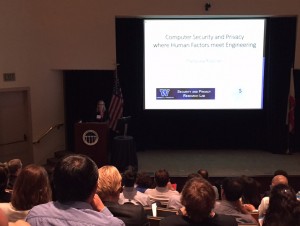
  • Wednesday October 7: Franzi Roesner, “The Invisible Trail: Pervasive Tracking in a Connected Age”
  • Wednesday October 21: Dieter Fox, “Our Robotic Future: Building Smart Robots that See in 3D”
  • Wednesday November 3: Yoshi Kohno (along with Batya Friedman from fox_3501-300x300the Information School and Ryan Calo from the School of Law), “Responsible Innovation: A Cross Disciplinary Lens on Privacy and Security Challenges”

All lectures are at 7:30 p.m. in Kane Hall 130.

Learn more here.


kohno-friedman-calo Read more →

Remembering Joe Traub, 1932-2015

30traub-obit-popupJoe Traub – Edwin Howard Armstrong Professor of Computer Science at Columbia University, as well as an External Professor at the Santa Fe Institute – passed away earlier this week.

Joe was a giant of the field, and an inspiration. After receiving his Ph.D. from Columbia in 1959, he was hired by Bell Laboratories. He continued at Bell Labs until 1970, when he began his professorial career at the University of Washington. Soon after, in 1971, he was offered the position of Head of the Computer Science Department at Carnegie Mellon University, a role in which he served until 1979. He left to help Columbia University build a Computer Science Department, and became its Founding Chair. In 1986, he was invited to start what is now the Computer Science and Telecommunications Board for the National Academies, serving as chair from 1986-92, then again from 2006-09.

Steve Lohr wrote a lovely tribute in today’s New York Times. Read more →

UW CSE student and football freestyler Cory Black in the Seattle Times

Cory Black with soccer ballFor anyone wondering if hard-working UW CSE students have lives outside of their academic studies: check out the great Seattle Times story on our very own Cory Black, computer science major and “freestyle magician.” Cory is competing in the Super Ball World Open Championships this week in Liberec, Czech Republic.

From the article:

“After years playing soccer, Cory Black realized he enjoyed doing tricks with the ball more than the game itself.

“Fortunately for Black, 19, a Bellevue resident and former Newport High School soccer player, he wasn’t alone. A few years back, he discovered the fledgling sport of freestyle football, where competitors perform individualized, trick-laden routines with a soccer ball that never touches their hands or the ground….

” ‘No matter how many tricks you learn to do with a ball, you can’t really use all of it in games,’ Black said of transitioning to this offshoot of the sport, which he stumbled onto while seeking out new soccer-ball tricks on YouTube. ‘So, it made sense, given that this was what I was really good at.’ ”

Read the entire article and watch a video of Cory performing here. Good luck, Cory! Read more →

Eli Shlizerman joins UW EE

2015-08-26_Shlizerman-Eli_caption_000UW Electrical Engineering has just announced the hiring of data analysis expert Eli Shlizerman, joint with UW Applied Mathematics.

Shlizerman’s research focuses on analyzing complex dynamic networks, such as the nervous system. Typically, such networks are extremely challenging to study because of their complex structure and intricate time-dependent dynamics. To overcome these challenges, Shlizerman developed analysis methods that fuse data analysis with dynamical system theory, which uses various equations to determine the behavior of complex systems.

Congratulations to Eli, to UW EE, and to their chair Radha Poovendran for moving forward rapidly in key interdisciplinary areas! And thanks to the Washington Research Foundation, whose support of the UW eScience Institute contributed to this recruitment.

Read the UW EE announcement here. Read more →

« Newer PostsOlder Posts »