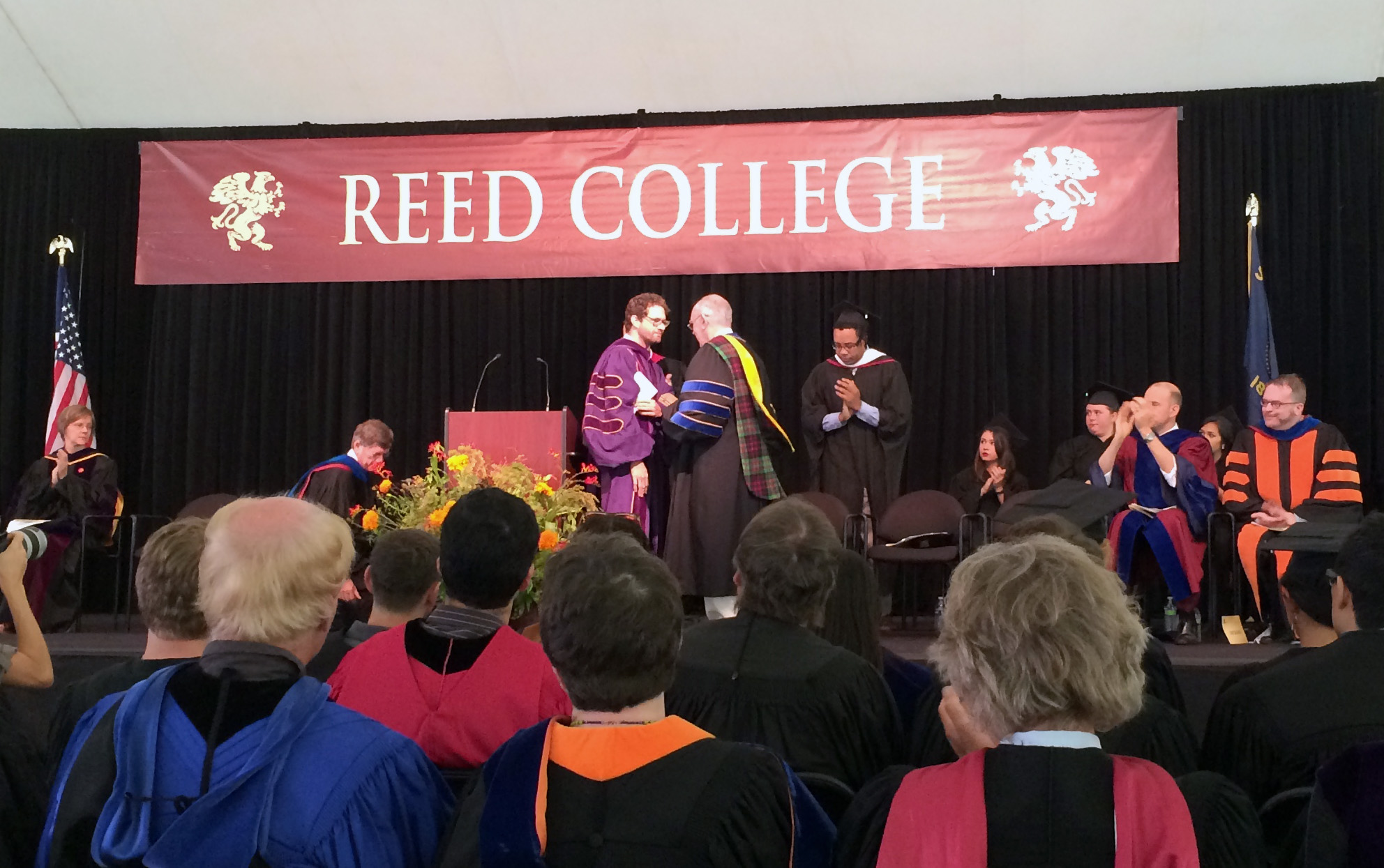
Ivan Sutherland receives Reed College Vollum Award for Distinguished Accomplishment in Science and Technology

IMG_3470

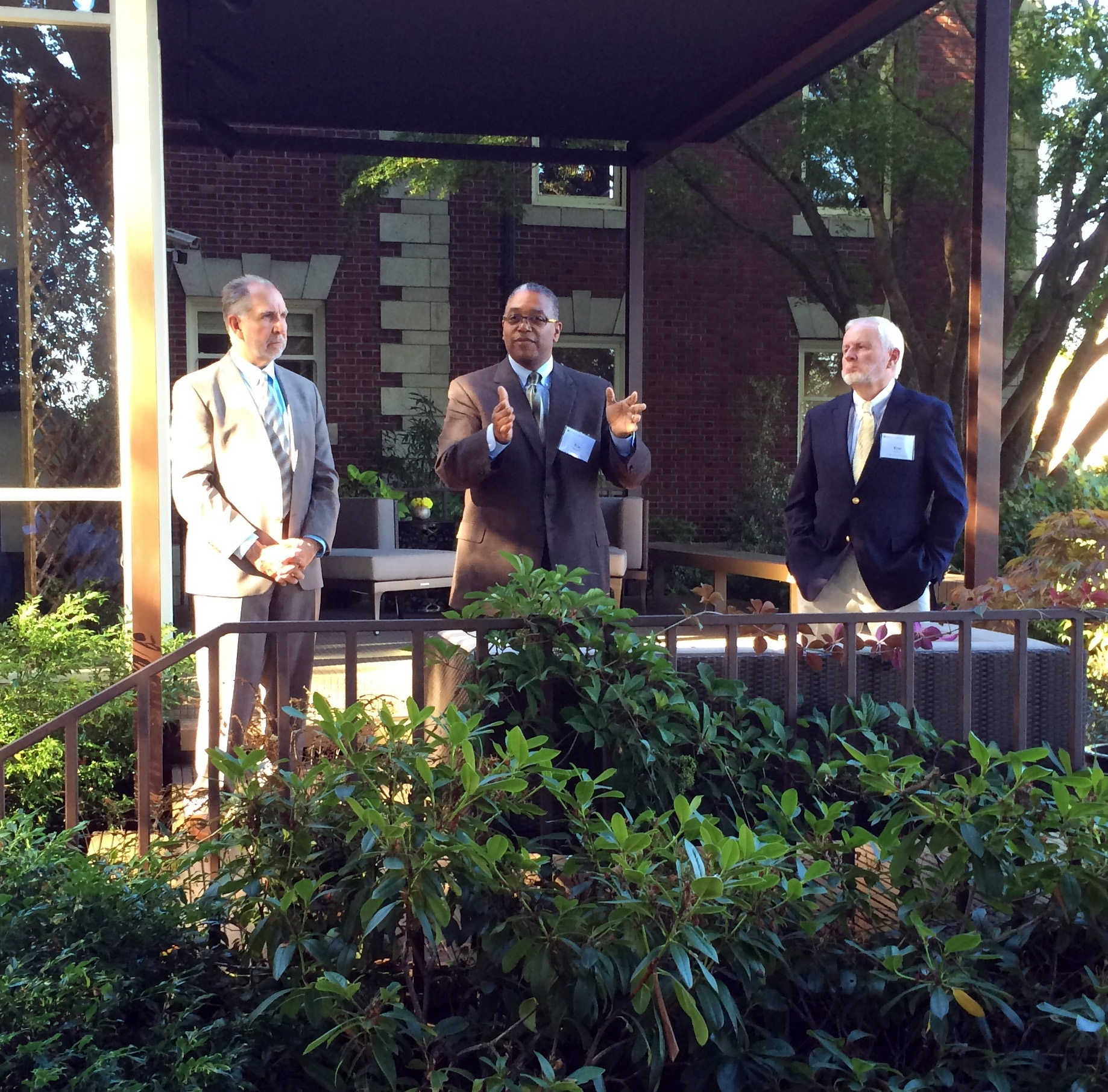
Jim Fix presents the Vollum Award to Ivan Sutherland

UW CSE Ph.D. alumnus and Reed College professor Jim Fix today presented computer graphics pioneer Ivan Sutherland with the Vollum Award for Distinguished Accomplishment in Science and Technology at Reed College’s 2014 opening convocation.

The Vollum Award was created by Reed College in 1975 as a tribute to the late C. Howard Vollum, a graduate of the Class of 1936 and the founder of Tektronix.  The award “is intended to recognize and celebrate the exceptional achievement of a member of the scientific and technical community of the Pacific Northwest.”

UW CSE’s Ed Lazowska received the Vollum Award in 2012.
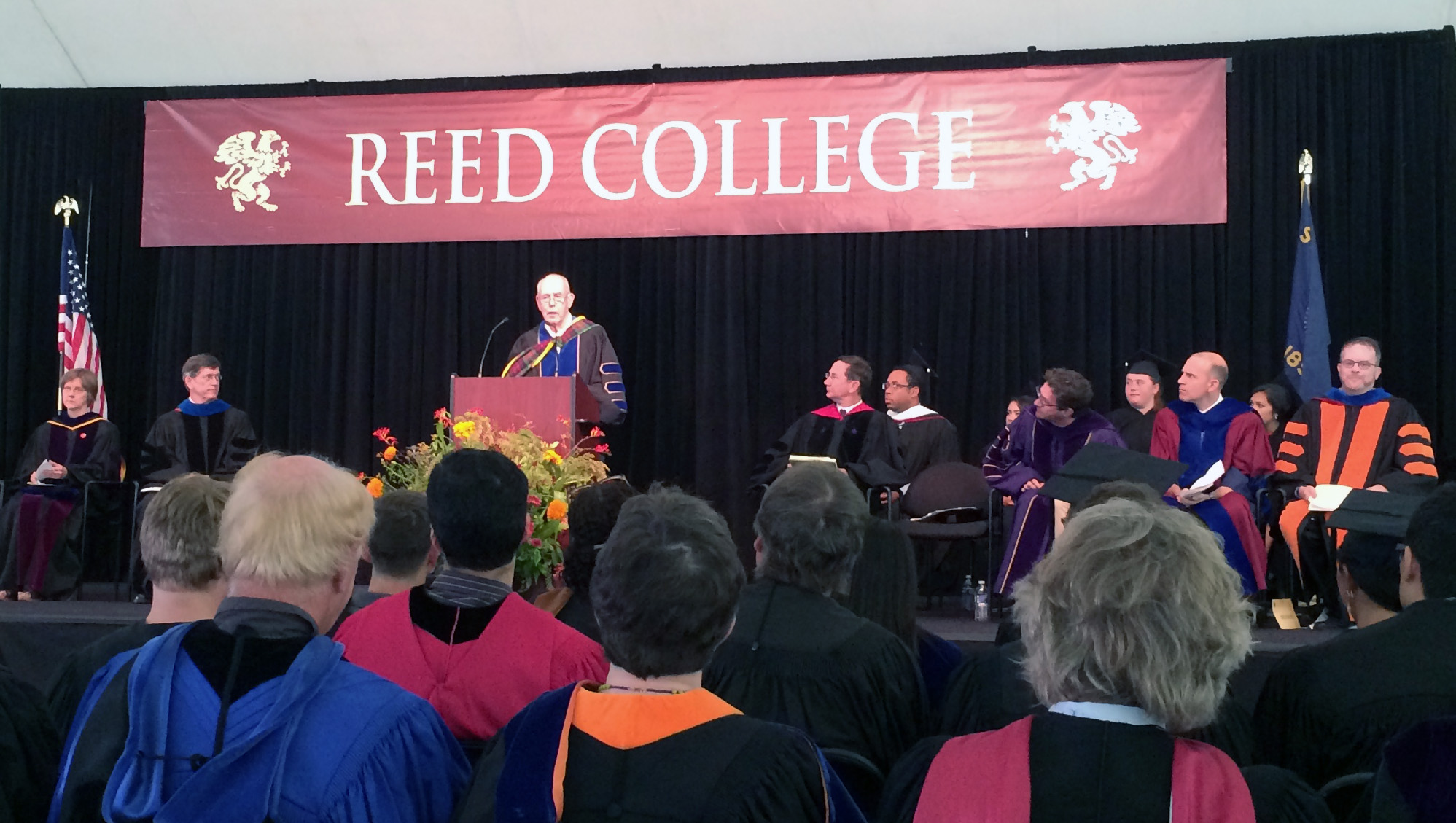
IMG_3476

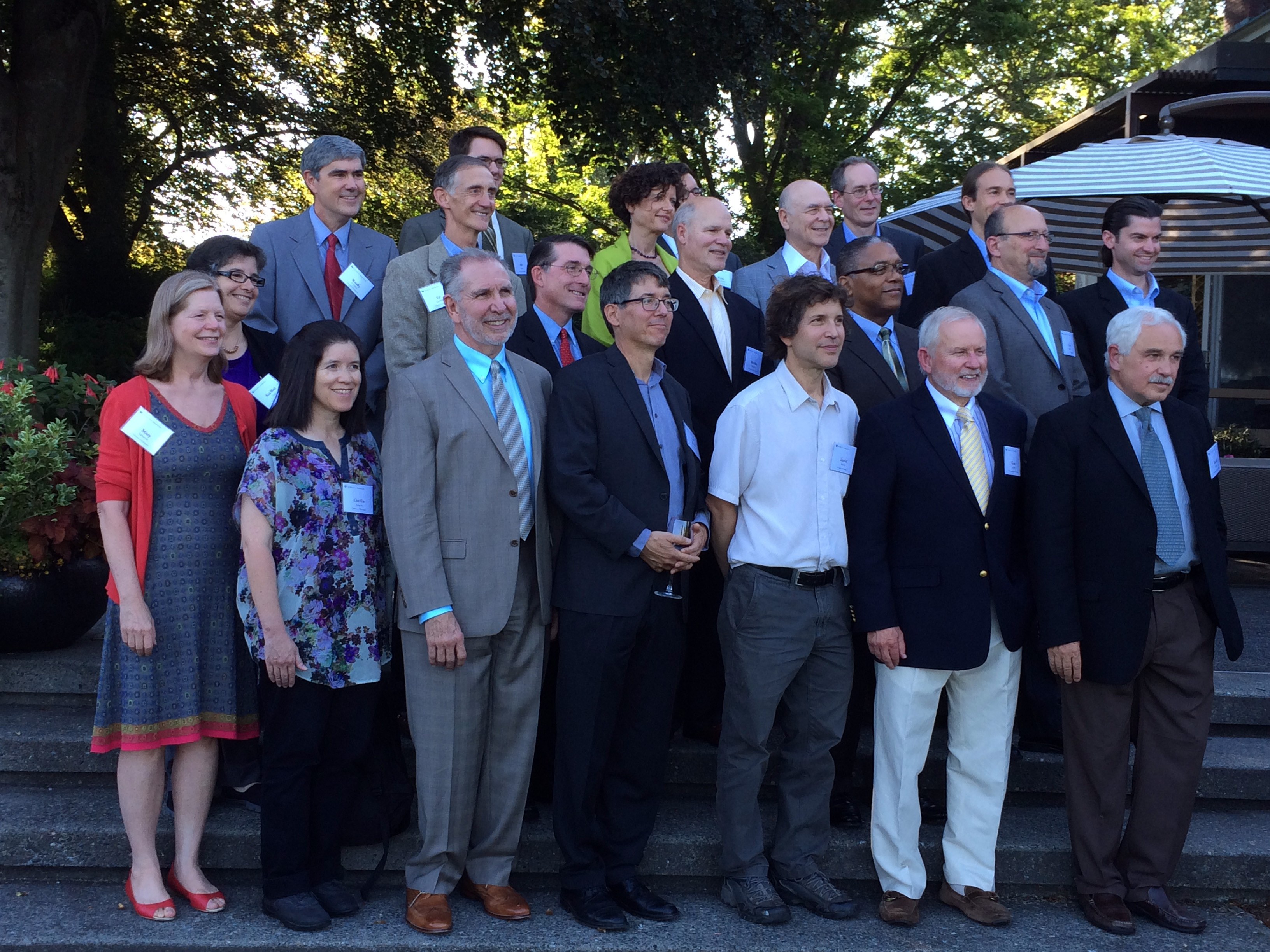
Ivan Sutherland addresses the Reed College Class of 2018
Previous University of Washington recipients include Lynn Riddiford, Stanley Fields, Lee Hood, Ed Krebs, Jerry Franklin, and Vic Klee. Previous computer science and electronics recipients include Linus Torvalds, James T. Russell, Adele Goldberg, Steve Jobs, Bill Gates, Paul Lutus, C. Norman  Winningstad, and John M. Fluke. Read more →

New earthquake early warning system funded at UW by Gordon and Betty Moore Foundation

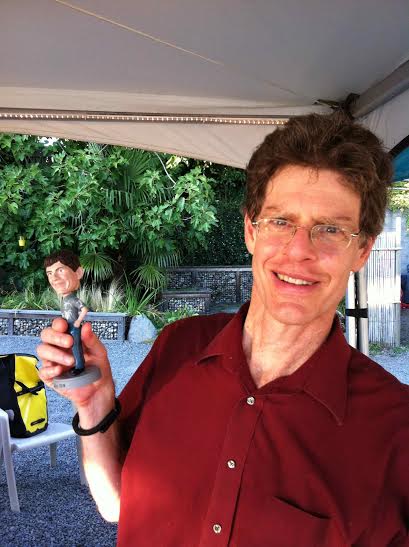
BobbleheadThe Napa earthquake of earlier this week has drawn renewed attention to a major award from the Gordon and Betty Moore Foundation to the University of Washington, UC Berkeley, Caltech, and the United States Geological Survey to create a west coast earthquake early warning system.

At last night’s kickoff meeting of the NSF M9 (Magnitude 9) Project, John Vidale – UW professor of Earth & Space Sciences, Washington State Seismologist, member of the eScience Institute team, and Moore Foundation PI – was presented with the first breakthrough of the earthquake early warning effort: a John Vidale bobblehead doll!

Shake, rattle, and roll … Read more →

31 million thanks to the Washington Research Foundation

WRF Ron

UW President Michael Young, WRF President and CEO Ron Howell, and WRF Board Chair Kent Carlson

UW formally thanked the Washington Research Foundation yesterday, at a reception at the President’s home, for their extraordinary and transformational $31 million commitment to four leading-edge research initiatives at the University of Washington.

Computer Science & Engineering is integrally involved in two::

  • A $9.3 million award to the University of Washington eScience Institute, committed to UW’s leadership in data science – both in advancing the methodologies, and in putting these advances to work in a broad range of fields. CSE’s Magda Balazinska, Carlos Guestrin, Jeff Heer, Bill Howe, and Ed Lazowska are among the PIs, as well as CSE adjunct faculty members Cecilia Aragon, Emily Fox, and Bill Noble.
WRF group

Leadership of WRF, UW, and the four WRF Innovation Initiatives

Other WRF awards went to the Institute for Protein Design, led by CSE adjunct professor David Baker, and the Clean Energy Institute, led by Chemical Engineering’s Dan Schwartz.

Thank you WRF! Read more →

UW MHCI+D program graduates first class!

MHCI+DThe University of Washington’s Master of Human-Computer Interaction + Design (MHCI+D) program is a truly interdisciplinary experience with world-class faculty and students from four departments in the cross-disciplinary group DUB (Design-Use-Build): Computer Science & Engineering, Design, Human Centered Design & Engineering, and the Information School.

On Friday the MHCI+D program graduated its first-ever class of 29 students. Of the graduates, about 12 were focused on Design, 10 on User Research, and 7 on Interface Technology – the three core areas of the program. The graduates were from 9 countries; 15 were female, and 14 male. About 17 had work experience prior to entering the program. All have bright futures, with a number of them already securing jobs at top companies. They completed the degree in an intensive 11 months.

Learn more about the MHCI+D program here. Learn more about UW’s DUB collaboration here. Photos of the MHCI+D graduation here. Read more →

Foldit helping in Ebola research

2024389157The Seattle Times writes:

“Months before the recent Ebola outbreak erupted in Western Africa, killing more than a thousand people, scientists at the University of Washington’s Institute for Protein Design were looking for a way to stop the deadly virus.

“For inspiration, they turned to an unlikely source: gamers.

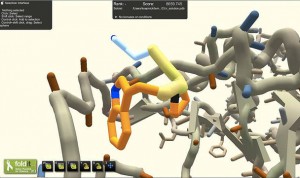
“Specifically, they asked thousands of computer-game enthusiasts worldwide to tackle an Ebola puzzle on the interactive game Foldit, a 6-year-old project that encourages people to solve puzzles for science.”

Foldit is a collaboration between UW CSE’s Center for Game Science and the Institute for Protein Design. One of many notable successes occurred several years ago, when Foldit gamers solved an AIDS-related protein structure problem that had baffled the scientific community for a decade.

The Seattle Times article is fascinating – read it here. Learn more about the Center for Game Science here. Read more →

Washington (DC) Monthly ranks UW #7 among National Universities, and #6 in “Best Bang for the Buck”

imagesWashington (DC) Monthly, a policy magazine for wonks and insiders, has ranked universities since 2005 on how much good they do for the country. It uses measures such as the social mobility that schools provide students, the research output of faculty and students, and the degree to which students engage in public service. The metrics are arbitrary, of course, but so are those of all other rankings.

This year’s Washington Monthly rankings are out.

The University of Washington is ranked 7th among National Universities, behind four UC campuses (San Diego, Riverside, Berkeley, and UCLA), Texas A&M, and Stanford.

In a separate ranking of “Best Bang for the Buck” UW is ranked 6th among National Universities, behind the University of Florida, Georgia Tech, UNC, San Diego State, and Texas A&M.

We’ll take it. And a discipline-specific reminder for Washington students:

There are various OK reasons to go out-of-state for college: get away from your boyfriend/girlfriend, get away from your parents, get away from the rain.

Getting a better Computer Science education is not one of them!

Learn more about Computer Science, and about UW CSE, here. Read more →

A fond sendoff for UW CSE’s Hélène Martin

HeleneHélène Martin graduated from UW in Computer Science and Linguistics in 2008. She worked for the Grameen Foundation for a year, then created and led the outstanding Computer Science program at Seattle’s Garfield High School for two years.  In 2011 she re-joined UW CSE as a Lecturer and as our K-12 Outreach Coordinator.

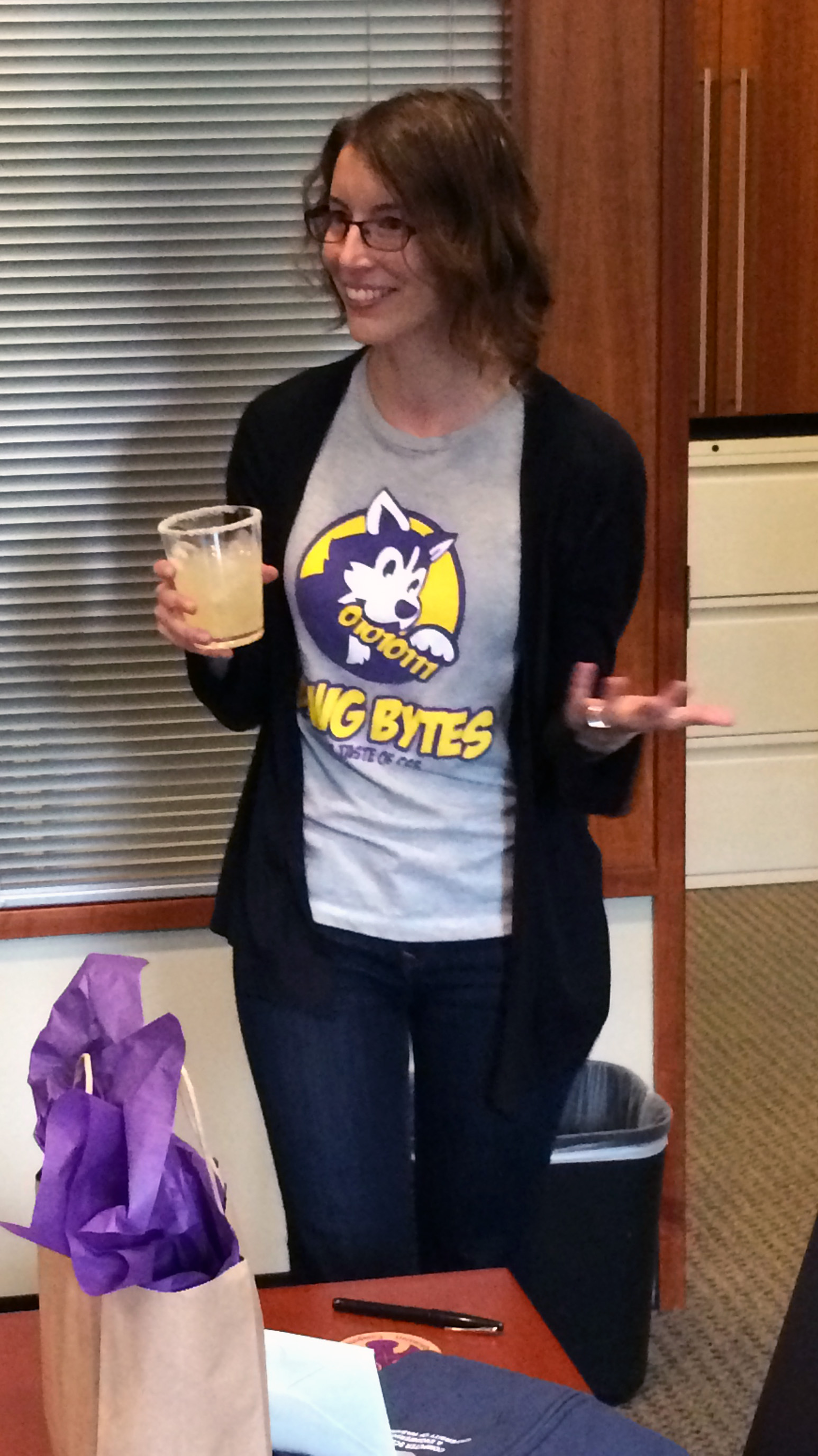
In addition to being an amazing teacher (and an all-around great person!) Hélène created our many-faceted DawgBytes (“A Taste of CSE”) K-12 outreach program which has impacted many, many hundreds of students in the past three years.

Today was the final day of this year’s 8 DawgBytes summer day camps for K-12 students, and the final day of Hélène’s formal duties in CSE.  In the fall, she and her husband, CSE Ph.D. alumnus Yaw Anokwa, will be headed for warmer climes.

We’ll miss you both! Read more →

UW CSE computer vision research on cover of CACM

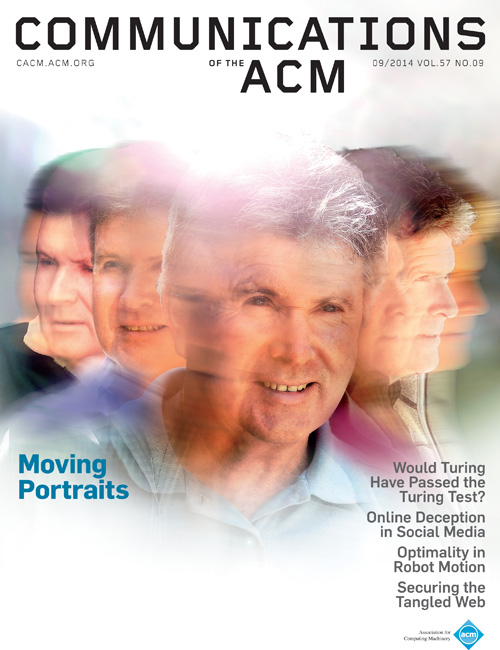
frontmatter-1-1The cover article in this month’s Communications of the ACM describes UW CSE’s “Moving Portraits” research by

“We present an approach for generating face animations from large image collections of the same person. Such collections, which we call photobios, are remarkable in that they summarize a person’s life in photos; the photos sample the appearance of a person over changes in age, pose, facial expression, hairstyle, and other variations … By optimizing the quantity and order in which photos are displayed and cross dissolving between them, we can render smooth transitions between face pose (e.g., from frowning to smiling), and create moving portraits from collections of still photos”

Read the article – which includes a terrific video – here.  (Direct link to the video here.)

  Read more →

“Test of Time” Award to UW CSE’s Neil Spring, Ratul Mahajan, and David Wetherall for “Rocketfuel”

acm_logo_fullsize“Test of Time” awards – which are given in a number of fields of computer science – are highly valued because they recognize the research that, with a decade of hindsight, has had the greatest impact.

The UW CSE research paper “Measuring ISP Topologies with Rocketfuel” by Neil Spring, Ratul Mahajan, and David Wetherall has just been named co-recipient of the 2014 ACM SIGCOMM Test of Time Award.  The paper was presented at the 2002 ACM SIGCOMM conference; Neil, now a faculty member at the University of Maryland, was a UW CSE Ph.D. student at the time; Ratul, now a Senior Researcher at Microsoft Research, was also a UW CSE Ph.D. student; David was a UW CSE faculty member.

According to the citation: “Rocketfuel contributed methods to make efficient measurements for ascertaining Internet router-level topologies,  useful for the modeling and simulation of routing, transport protocols, and graph evolution, to name a few areas. In addition, this effort produced a dataset used by a number of subsequent efforts. One recent (2011) text describes this dataset as: ‘the most trustable existing dataset for Internet service provider (ISP) networks.'”

Congratulations to Neil, Ratul, and David! Read more →

The Ice Bucket Challenge

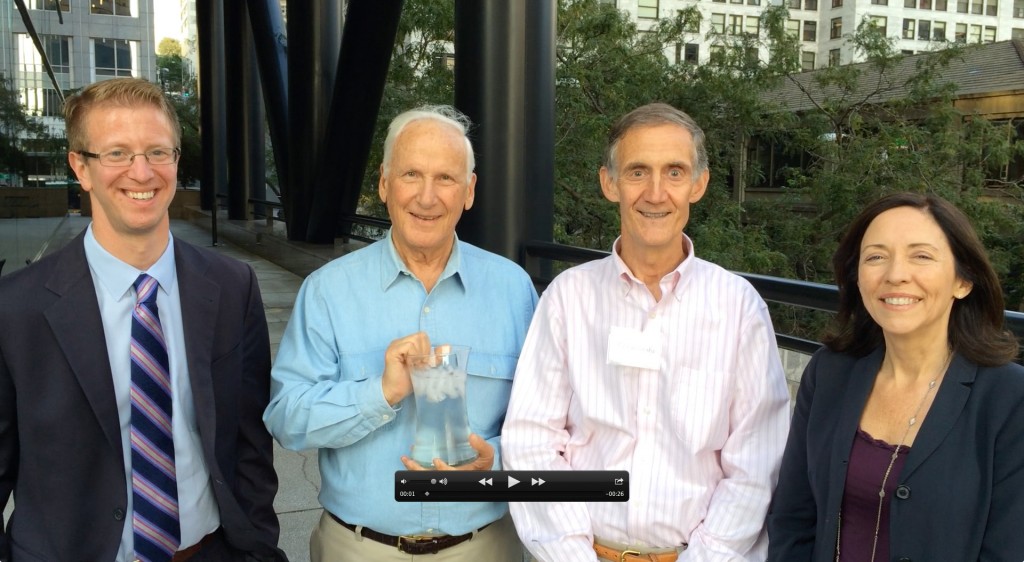
ice.bucket.stillEd Lazowska subjects himself to the ice bucket challenge at the hands of Madrona Venture Group’s Jerry Grinstein, and challenges his witnesses, Congressman Derek Kilmer and Senator Maria Cantwell. Read more →

« Newer PostsOlder Posts »