UW CSE featured in article on gender diversity efforts at the University of Maryland

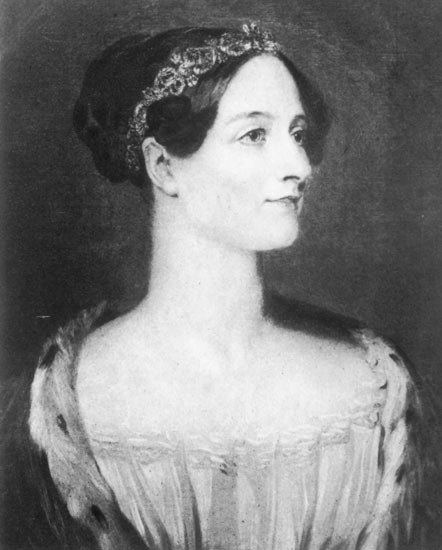
Ada Lovelace“Maryland is one of 15 universities participating in the Building Recruiting And Inclusion for Diversity (BRAID) initiative led by the Anita Borg Institute and Harvey Mudd College.

“Harvey Mudd College, Carnegie Mellon University and the University of Washington have already seen success at increasing female participation in their computer science departments …

“At UW, Ed Lazowska is now the Bill & Melinda Gates Chair in Computer Science & Engineering and once served as the computer science department chair. Lazowska agrees that connecting with women through introductory courses is essential to raising their computer science enrollment.

“‘We find that many women discover computer science late,’ he said. ‘If they don’t take our introductory course sequence until they’re juniors, it’s too late for them to switch into CS as a major – they’re almost done’ …

“‘A great deal of our effort goes into encouraging middle school and high school teachers and students, especially women, to pursue computer science,’ Lazowska said. ‘If we can change the perception of computer science in our region, we can shift the composition of our student body’ …

“Though UW had a banner year in 2014, hiring three new female faculty members for the computer science department, Lazowska said they have experienced similar difficulties recruiting female faculty.

“‘It’s hard. There’s a lot of competition for top women, and there are always a few faculty members who can invent reasons not to hire them. A key thing to remember is that ‘excellence’ has many dimensions,’ he said …

“‘These things pay off slowly, and they pay off at different time scales. You’ve got to be in it for the long haul,’ Lazowska said. ‘There’s no ‘silver bullet,’ no magic thing that will, in and of itself, throw things into balance.'”

Read more here.  Learn about UW CSE’s K-12 outreach programs hereMiddle school and high school students and families – attend our Open House on Saturday December 6! Read more →
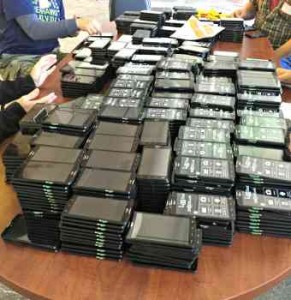
Paul G. Allen tackles Ebola with 10,000 ODK-equipped smartphones

phones-ebola-prep340x350Philanthropist Paul G. Allen announced today that he and the Paul G. Allen Family Foundation will ship more than 10,000 specially programmed smartphones to West Africa to enhance data collection and identify aid needs. Additionally, Mr. Allen is providing a grant to NetHope to further connectivity throughout Liberia, Guinea and Sierra Leone.  This initiative is part of Mr. Allen’s $100 million commitment to tackle the Ebola crisis.

The smartphones will enable government workers and humanitarian aid volunteers to gather reliable data about the effectiveness of relief efforts in affected areas.

The technology utilized by the phones is UW CSE’s Open Data Kit, an open-source toolkit for building data collection applications on smartphones and uploading the data to the cloud for analysis.  ODK is widely used throughout the world for data collection for global health and other applications.  The Vulcan team that designed and implemented the ODK-based solution interacted with UW CSE Ph.D. alums (and ODK development team members) Carl Hartung and Yaw Anokwa, whose startup Nafundi works in this space.

Read more about Mr. Allen’s initiative here.  Learn about ODK here.  Learn about Change, UW’s cross-campus collaboration on information technology for the developing world, here. Read more →

Crosscut on UW’s Shwetak Patel: “Seattle genius tackles energy, healthcare and the future of computing”

Shwetak PatelCrosscut writes

“For every variation in sound, pressure, temperature or electromagnetic wave, Shwetak Patel sees an opportunity. He is the master of white noise, the enemy of inefficiency. He made a name for himself with ElectriSense, a home energy monitor that reads noise to tell you how much electricity is used by each lightbulb and appliance in real time. But ElectriSense is only the beginning; there are no limits to what he and his lab might achieve.

“What drives Patel is not what can be achieved. It’s what should be achieved. And with a mind as sharp and creative as his, the ‘what ifs’ are endless: What if an app could distinguish between the sound of a regular cough and the cough of someone with Tuberculosis?

“What if you could use sonar to turn any surface (even mid-air) into a touchscreen for your device?

“What if doctors could replace a $10,000 machine with a prescription app (the first of its kind) to measure lung capacity and assess pulmonary issues at home?

“And what if a battery could charge itself by using slight variations in room temperature?

“These are just four of the more than 20 projects Patel’s lab, the University of Washington’s Ubiquitous Computation or UbiComp Lab, is currently working on.”

Great article! Read more here! Learn more about the Ubicomp Lab here. Read more →

Remembering Ben Taskar

Ben-Taskar

Ben Taskar, 1977-2013

Ben Taskar, Boeing Professor of Computer Science & Engineering at the University of Washington, passed away on the early morning of November 18 2013 of sudden and severe heart failure. Ben left behind his wife Anat Caspi, their two year old daughter Aviv Taskar, his mother, father, and sister, and an array of other family members, friends, and colleagues – all of whom miss him tremendously.

When a 30-something person dies unexpectedly, leaving behind a spouse and a young child, it scarcely matters that he or she was one of the generation’s leading computer scientists.  Ben was that, though – an outstanding computer scientist, one of the very best of his generation. He made many significant research contributions in areas spanning machine learning, natural language processing, and computer vision. Even in a short time at UW, Ben’s brilliance, and his positive and gentle nature, made him admired and adored by everyone who knew him.

We remember him always, and especially today. Read more →

Google funds Turing Award at $1 million

imageThe New York Times reports:

“The A.M. Turing Award is often called the Nobel Prize of computer science. Now, thanks to Google’s largess, it will be a Nobel-level prize financially: $1 million.

“The quadrupling of the prize money, announced on Thursday by the Association for Computing Machinery, the professional organization that administers the award, is intended to elevate the prominence and recognition of computer science. The move can be seen as another sign of the boom times in technology.

“Computing is increasingly an ingredient in every field, from biology to business. College students, encouraged by their parents, are rushing to take computer science courses. It’s not just a skill but a mind-set. Computational thinking is the future, where the excitement and money is. Quants rule …

“For Google, being the deep-pocketed benefactor of the Turing Award is both good branding and a public statement that it takes fundamental research seriously.

“‘Computing is our lifeblood,’ [Stuart Feldman, vice president for engineering at Google] said. The company, he added, hopes that increasing the prize money will give greater public prominence and recognition to the importance of computer science.”

Read more here. Read more →

“5 Lessons That Business Leaders Could Learn From Academics”

20141106230933-5-lessons-business-leaders-could-learn-academicsA nice piece in Entrepreneur by UW iSchool professor (and UW CSE adjunct professor) Jake Wobbrock:

“As noted in the New York Times, government-sponsored university research has played a major part in the breakthroughs underlying companies like Google, Intel, Qualcomm, Apple, Microsoft and more. In fact, a study of 30 well-known companies like these by the National Research Council found that $500B/year in their revenues were attributable to discoveries from university research.

“So how is it that academics are at the same time under worked, self-interested and unaccountable, and yet producing many of the fundamental breakthroughs that lead to world-changing impact?

“Having worked as a tenured university professor and a VC-backed startup founder and CEO, I have seen how both roles have much to learn from each other. Business leaders would do well to take a page from the playbook of academics if they want their firms to define the technology landscape for the next decade and beyond. Here is that page …”

Read more here. Read more →

Middle schoolers, high schoolers, and families: Attend UW’s Computing Open House, December 6

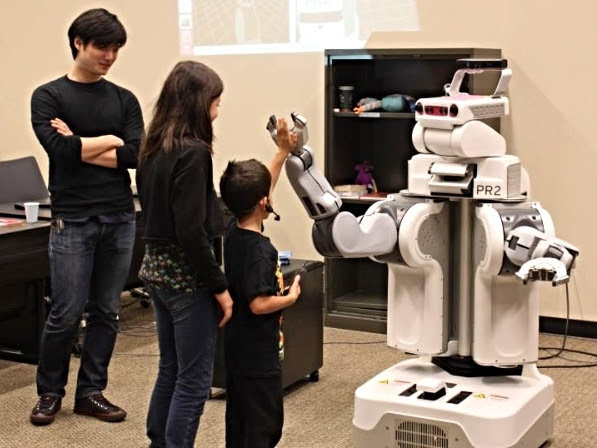
pr2WHAT: Participate in hands-on activities and visit research labs to find out what computing is all about! Students and faculty from UW’s computing majors will introduce you to the broad range of problems computing can address. Representatives from local technology companies will show cool demos and tell you why they love their jobs.

WHO: Middle and high school students and their families.

WHEN: 1pm – 5pm on Saturday, December 6th, 2014.

WHERE: UW’s Paul G. Allen Center for Computer Science & Engineering (free parking after noon on Saturdays!).

WHY: Celebrate Grace Hopper‘s birthday and the start of Computer Science Education Week.

RSVP so that we get enough giveaways!

See last year’s pictures and program.

dawgbytes_logoMore info here!  See you on December 6!

And learn more about DawgBytes (“A taste of CSE”), UW CSE’s extensive K-12 outreach program, here! Read more →

Congratulations to UW CSE’s Anna Karlin and Dan Weld

Dan Weld, Madrona Venture GroupAnna Karlin has been reappointed for another 5-year term as the Microsoft Professor of Computer Science & Engineering. An ACM Fellow, her research is primarily in algorithmic game theory, and she is co-author (with Yuval Peres of Microsoft Research) of a forthcoming book about game theory that includes modern applications in computer science related to the Internet and electronic commerce.

Dan Weld has been reappointed for another 5-year term as the Washington Research Foundation / Thomas J. Cable Professor of Computer Science & Engineering. An ACM Fellow and a AAAI Fellow, Dan is a leading researcher in artificial intelligence, as well as an active entrepreneur. His most recent research interest is citizen science, a form of crowdsourcing where human volunteers help solve scientific problems.

Congratulations to Anna and Dan – and thanks to Microsoft and the Washington Research Foundation! Read more →

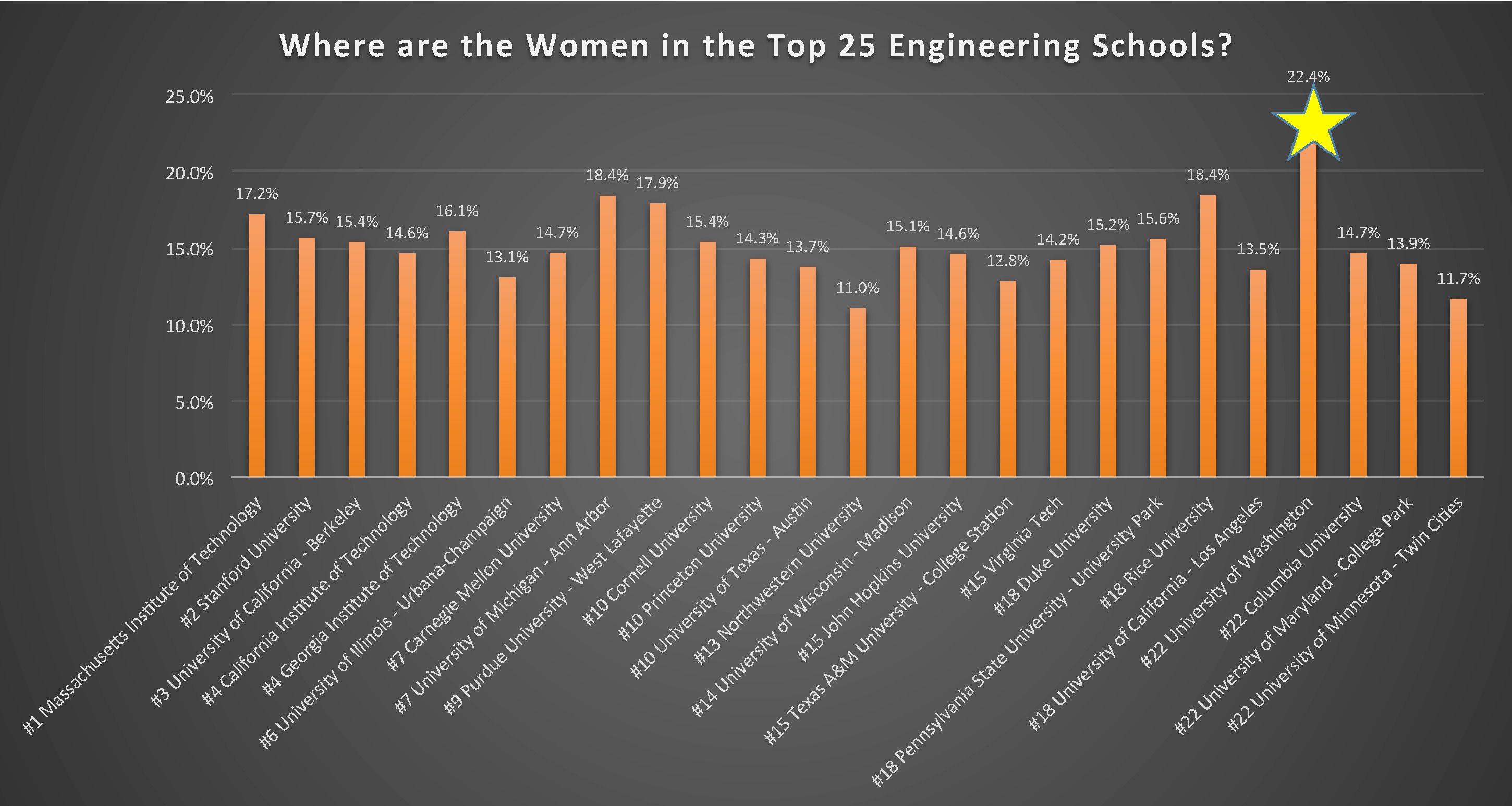
Women faculty at the top 25 engineering schools

Untitled-1We all need to do far better. But the efforts made by the University of Washington’s College of Engineering – spearheaded by ADVANCE PI Ana Mari Cauce, Director Eve Riskin, and Program/Research Manager Joyce Yen – are evident. Read more →

CSE’s Krittika D’Silva and her “CGNet Swara” app in National Geographic

KrittikaNational Geographic writes:

“An Android app designed to give voice to tribes at the heart of India’s Maoist insurgency was launched September 20 as part of a campaign by activists to end the conflict through the combination of oral tradition and new technology …

“The CGNet Swara app is the brainchild of [UW CSE undergraduate] Krittika D’Silva, a student at the University of Washington, in Seattle.”

Read more here. Learn about CGNet Swara here. Read Krittika’s original research paper on the app here. Read more →

« Newer PostsOlder Posts »