UW CSE’s Sam Elliott wins Lockheed Martin Software Engineering Project Award

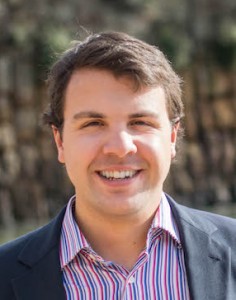
Sam ElliottUW CSE Ph.D. student Sam Elliott was recently recognized by ScotlandIS, the trade association representing Scotland’s digital technologies industry, with the Lockheed Martin Software Engineering Project Award. Sam accepted the award last week at an event in Edinburgh celebrating the 26th annual Young Software Engineer of the Year Awards, which recognize the best undergraduate software projects nominated by universities across Scotland.

Sam received the award for his bachelor’s dissertation project, A Concurrency System for Idris and Erlang, during his undergraduate studies in computer science at the University of St Andrews.

From the award announcement:

“[T]he project developed by Archibald ‘Sam’ Elliot takes an important step towards addressing the problem of writing large scale software. It combines Idris, a new programming language developed at the University of St Andrews, with Erlang, a programming language designed for building robust distributed systems, creating a system for running programs in a robust, industrial strength, concurrent environment.”

Sam has joined UW CSE’s Programming Languages & Software Engineering group, working with professors Zach Tatlock and Xi Wang.

Read the ScotlandIS announcement here, and a University of St Andrews blog post on Sam’s big win here. Read Sam’s dissertation here.

Congratulations, Sam! Read more →

6-course Machine Learning Specialization from Coursera, UW, Dato

courseraWe’re thrilled to announce a new 6-course Machine Learning Specialization available on Coursera, taught by faculty from UW CSE and UW Statistics, and offered in conjunction with UW CSE startup Dato.

CSElogo2text_500Course 1 – “Machine Learning Foundations: A Case Study Approach” – begins on September 22.

Course 2 – “Regression” – starts in November.

Course 3 – “Classification” – starts in December.

Course 4 – “Clustering & Retrieval” – starts in February.

Course 5 – “Recommender Systems & Dimensionality Reduction” – starts in March.

Course 6 – “Machine Learning Capstone: An Intelligent Application with Deep Learning” – starts in April.

deptofstatLearn more here.

And while you’re at it, don’t miss our 4-course Data Science at Scale Specialization available on Coursera – an effort led by Bill Howe from CSE and the UW eScience Institute:

eScience_Logo_RGB_PPCourse 1 – “Data Manipulation at Scale: Systems and Algorithms” – begins on September 28.

Course 2 – “Practical Predictive Analytics: Models and Methods” – starts in October.

Course 3 – “Communicating Results: Visualization, Ethics, Reproducibility” – starts in November.

Course 4 – “Data Science at Scale – Capstone Project” – starts in December.

Learn more here.

dato_logo_stacked_600pxWant to get your feet wet? Try our single course Introduction to Data Science – a one-course version of the Data Science at Scale Specialization.

Learn more here.

The University of Washington: A global leader in data science. Read more →

UW CSE 2015 new hires – 8 phenomenal additions!

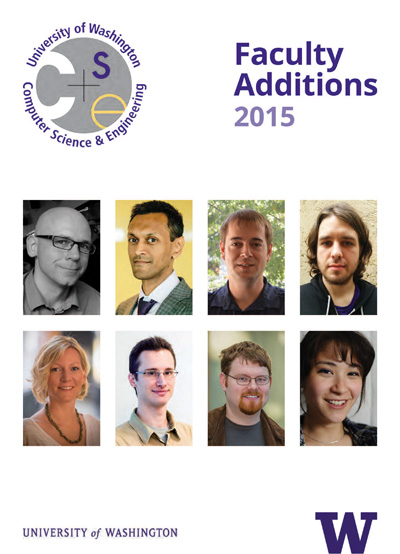
2015 new hiresUW CSE continues its phenomenal record in hiring!

The addition of Ras Bodik – formerly a full professor at UC Berkeley – builds on other recent hires to give UW what is arguably the top programming languages group in the world.

Sham Kakade – formerly at Microsoft Research New England – augments other faculty in machine learning in CSE and other departments to make UW a true powerhouse in this critically important field.

Kurtis Heimerl, a UW CSE bachelors alum and UC Berkeley Ph.D. alum, will join us after concluding activity at his startup, focused on technology for the developing world.

Sergey Levine sits at the interface between machine learning and robotics; he’s finishing a postdoc at Berkeley, following receipt of his Ph.D. from Stanford.

Dan Ports, a superb MIT computer systems Ph.D., joined our faculty following a postdoc at UW.

Katharina Reinecke joins us this fall from an assistant professorship at the University of Michigan. Her research concerns the culturally appropriate presentation of information – a novel and important twist on HCI.  She is an experimentalist who builds systems that allow approaches to be investigated “in the wild.”

Thomas Rothvoss, arguably one of the top two young theoretical computer scientists (the other one is already on our faculty), moved part of his appointment to CSE from the Mathematics departments.

Last but not least, Zorah Fung, a CSE bachelors alum, has joined our teaching-track faculty, splitting her time between CSE and Bay Area CSE alumni startup Sift Science.

Read more about all of these terrific folks here. Read more →

AI breakthrough by Allen Institute and UW: GeoS system matches student performance on 11th grade SAT geometry problems

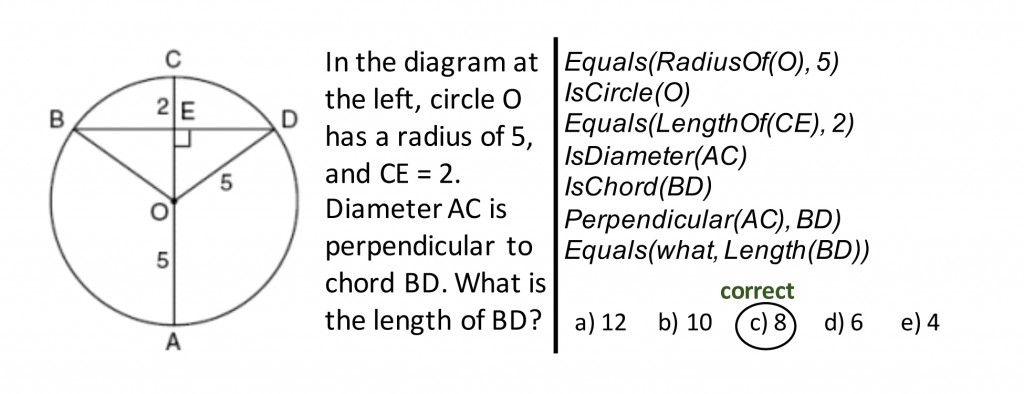
Geometry problem

Sample geometry problem

The Allen Institute for Artificial Intelligence (AI2) today announced a significant breakthrough in AI research in the form of GeoS, a new AI system that is capable of solving SAT geometry problems as well as the average American 11th grade student through a combination of visual processing and textual analysis.  The creation of GeoS was led by AI2, in collaboration with UW faculty and students with expertise in artificial intelligence, natural language processing and computer vision at the University of Washington. AI2 – established by investor, philanthropist, and technologist Paul G. Allen in 2004 to advance artificial intelligence research for the public good – is led by former UW CSE professor Oren Etzioni.
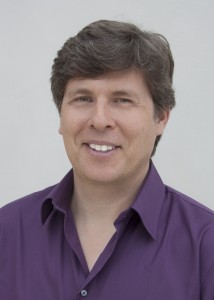
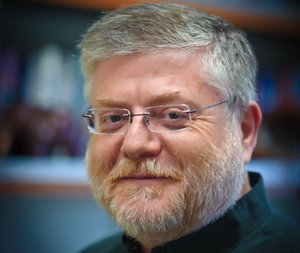
Oren Etzioni

Oren Etzioni

From the press release:

“[GeoS] uses a combination of computer vision to interpret diagrams, natural language processing to read and understand text and a geometric solver to achieve a 49 percent accuracy on official SAT test questions. If these results were extrapolated to the entire Math SAT test, the computer roughly achieved an SAT score of 500 (out of 800), the average test score for 2015….

“‘Unlike the Turing Test, standardized tests such as the SAT provide us today with a way to measure a machine’s ability to reason and to compare its abilities with that of a human,’ said Oren Etzioni, CEO of AI2. ‘Much of what we understand from text and graphics is not explicitly stated, and requires far more knowledge than we appreciate. Creating a system to be able to successfully take these tests is challenging, and we are proud to achieve these unprecedented results.'”
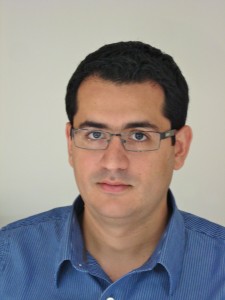
Ali Farhadi

Ali Farhadi

“Said Ali Farhadi, senior research manager for Vision at AI2 and UW assistant professor of computer science and engineering, ‘We are excited about GeoS’s performance on real-world tasks. Our biggest challenge was converting the question to a computer-understandable language. One needs to go beyond standard pattern-matching approaches for problems like solving geometry questions that require in-depth understanding of text, diagram and reasoning.'”

In addition to Etzioni and Farhadi, the research team included UW CSE Ph.D. student Minjoon Seo, who contributed to the project as part of an internship at AI2; UW EE professor (and UW CSE adjunct professor) Hanna Hajishirzi; and UW B.S. alum Clint Malcolm. The team presented its technical paper at the Conference on Empirical Methods in Natural Language Processing (EMNLP) in Lisbon, Portugal.

Read the press release here and the research paper here. Check out John Markoff’s New York Times article on how the GeoS breakthrough fits into the broader landscape of AI research, with additional quotes from Oren and Ali, here. The Washington Post also published a nice piece on its “Speaking of Science” blog here.

Congratulations to Paul, Oren, Ali, Hanna, Minjoon, and Clint on this phenomenal achievement! Read more →

Check out the latest from DawgBytes!

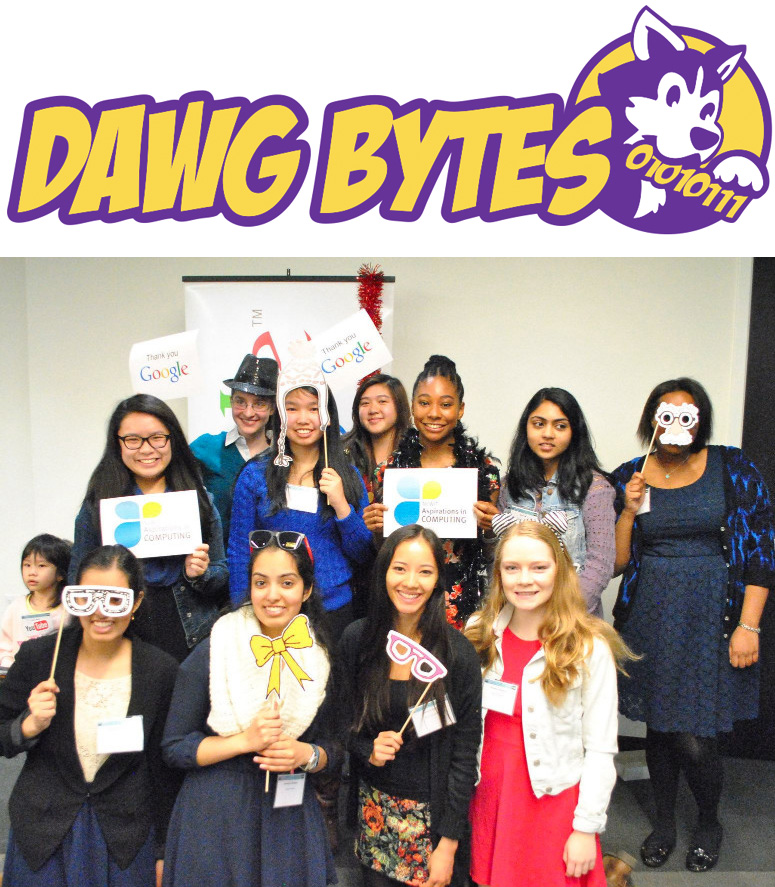
dbDawgBytes (“A Taste of CSE”), UW CSE’s vibrant K-12 outreach program, has just concluded a summer of daycamps for elementary, middle school, and high school students, and the 9th year of our CS4HS teacher workshop. The academic year will be just as exciting. Check it out here! Read more →

UW CSE to host Jeopardy! champion Ken Jennings vs. QANTA in trivia showdown

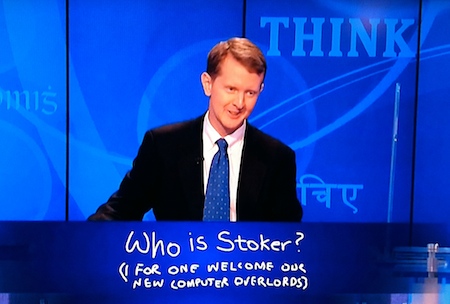
Ken JenningsIt’s man vs. machine when Ken Jennings, a former UW student and the most successful Jeopardy! player of all time, returns to campus to take on QANTA, a cutting-edge computer question-answering system, in a quiz bowl showdown. UW CSE is hosting the event at Kane Hall on the University of Washington’s Seattle campus on Friday, October 2.

This is not the first time Jennings has gone head-to-CPU with a computer: he came in second on Jeopardy! – which he previously won 74 times in a row – to I.B.M.’s Watson in 2011. But unlike Watson, which sees the entire trivia question at once, the QANTA system decides when it has enough information to answer a question, meaning it can take part in a tossup competition. Before the game gets underway, Professor Jordan Boyd-Graber of the University of Colorado at Boulder will share details on the machine learning research that led to QANTA and how students can get involved in the project.

The event starts at 4:00 pm and is open to the public. High school and university students are encouraged to attend. Please note: advance RSVP is required. More details on the event can be found here. Read more →

Join the quest for the “Master Algorithm” with UW CSE’s Pedro Domingos

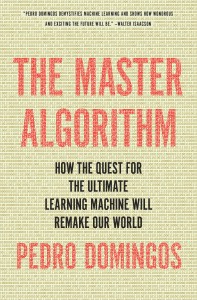
Master Algorithm coverUW CSE professor Pedro Domingos is generating considerable buzz with his new book, The Master Algorithm, “a popular science romp through one of today’s hottest scientific topics.” In the book, Pedro explores how machine learning is increasingly shaping the way we live and what he and his colleagues are doing to find the “Master Algorithm” – the ultimate learning algorithm that will be able to do what we want before we even have to ask.

UW Today has a terrific Q&A with Pedro about the book and his thoughts on a range of topics related to machine learning — from its potential role in finding a cure for cancer, to how President Obama’s campaign used it to win reelection, to teaching recommendation algorithms to work for YOU rather than for the companies trying to sell you things.

He also explains why we have nothing to fear from “The Terminator” films:

“Computers could be infinitely intelligent and not pose any danger to us, provided we set the goals and all they do is figure out how to achieve them — like curing cancer.

“On the other hand, computers can easily make serious mistakes by not understanding what we asked them to do or by not knowing enough about the real world, like the proverbial sorcerer’s apprentice. The cure for that is to make them more intelligent. People worry that computers will get too smart and take over the world, but the real problem is that they’re too stupid and they’ve already taken over the world.”

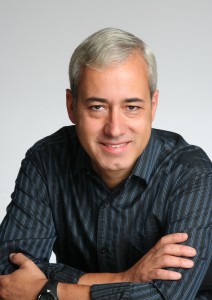
Pedro DomingosPedro concludes by explaining where we are in the quest to find this elusive algorithm capable of knowing all things from data, and what inspired him to write about it:

“It could happen tomorrow, or it could take many decades. One of my fondest hopes in writing the eponymous book is that it will inspire a bright kid somewhere to come up with the key idea that we’ve all been missing — and make the Master Algorithm a reality, with all the extraordinary benefits for humanity that will follow.”

Read the full Q&A here.

You can hear more of Pedro’s thoughts on this topic when he speaks at Seattle’s Town Hall next Tuesday, September 22 at 7:30 pm. Find more details on that event here.

Press: Read The Wall Street Journal article here and The Washington Post article here. Listen to Pedro being interviewed on NPR’s Marketplace here. Read more →

The University of Washington: One of the 5 most innovative universities in the world

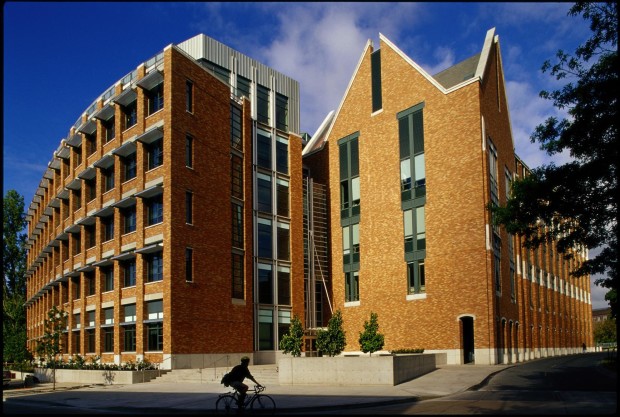
Paul G. Allen Center for Computer Science & EngineeringStanford…MIT…Harvard…University of Washington!

That’s right, UW is ranked #4 among the most innovative universities in the world according to Reuters, which examined hundreds of universities and ranked them based on the strength of their research and patent activity. In its assessment of UW’s performance, Reuters noted our competitiveness for federal research funding (UW consistently dominates among public institutions), the number of students pursuing STEM majors (roughly 37% of the entire student body), and our record-high commercialization activity.

From Reuters’ announcement:

“Since World War II, universities around the world have been relied on to convert public funding into knowledge and products that help drive the global economy. So how can potential partners, investors, faculty and students know if an institution is really transforming science and technology and impacting the global economy?

“The Reuters Top 100 World’s Most Innovative Universities gets to the essence of what it means to be truly innovative; the institutions recognized here most reliably produce original research, create useful technology, and have the greatest economic impact. They are the surest bets for anyone seeking to invest in and create real innovation.”

Reuters logoWe wouldn’t dream of arguing with that! Remember: “The rankings in which we do well are authoritative and worthy of your attention. The others are methodologically defective and should be buried.”

Read the full article and view the complete list of universities that made it into the top 100 here. Check out Reuters’ assessment of UW innovation here, and read today’s GeekWire article on UW’s triumph here. Read more →

UW’s wearable sensor technology featured in GeekWire

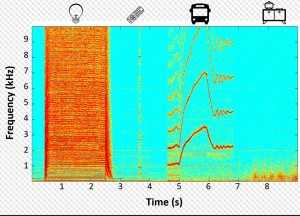
MagnifiSense signalsEarlier this month, we reported on MagnifiSense, a new low-power, wearable sensor system that tracks an individual’s usage of various devices that was developed by a team of UW CSE and EE researchers in the Ubiquitous Computing Lab led by professor Shwetak Patel.

Today, GeekWire published an excellent article showcasing MagnifiSense that quotes Shwetak and EE graduate student Edward Wang, who presented the team’s research at UbiComp 2015 in Osaka, Japan last week.

From the article:

“The coolest thing about a new electromagnetic-radiation sensing device from the University of Washington might be the elegant simplicity of its design.

“Or maybe it’s the fact that the wearable tech gadget could be put to important uses, such as measuring someone’s carbon footprint, helping prevent injuries for older people with dementia, and blocking inappropriate content from kids when they turn on a computer or TV.

“Or perhaps the best thing about the MagnifiSense sensor, which was built from off-the-shelf materials bought at RadioShack, is that its potential uses are still being discovered….

“The MagnifiSense project began as something seemingly less ambitious than a tool for a greener-living or making grandma and the kids safer.

“‘Our original problem we were trying to solve was figuring out what side of the car you were sitting on,’ Wang said.”

Read the full article here and the original UW press release here. Congratulations to Shwetak, Edward, and the entire team – EE graduate student Tien-Jui Lee, CSE graduate students Mayank Goel and Alex Mariakakis, and CSE Ph.D. alum Sidhant Gupta of Microsoft Research – on this well-deserved recognition. Read more →

IEEE and UW CSE organize symposium to honor the humanitarian contributions of Gaetano Borriello

Gaetano BorrielloUW CSE is co-presenting a very special event, the Gaetano Borriello Feet on the Ground Humanitarian Symposium, in memory of our friend and colleague who passed away earlier this year. The symposium, which will take place on Saturday, October 10 from 1:30 to 6:20 pm at the DoubleTree by Hilton Seattle Airport, is being organized as a special session of the Institute of Electrical and Electronics Engineers’ Global Humanitarian Technology Conference (GHTC15).

The event will feature talks by researchers and humanitarian leaders who are applying technology solutions to real-world problems. Gaetano was a fellow of the IEEE and a recognized leader in developing technologies that improve the quality of life for people around the globe. Among his many contributions was the Open Data Kit (ODK), a suite of open-source mobile data collection tools that are used to advance public health, human rights, political participation and environmental stewardship. One of the highlights of the symposium program will be a panel of UW CSE researchers, including Ph.D. student Waylon Brunette and alumni Nicki Dell and Carl Hartung, who worked with Gaetano on the development of ODK.

Other highlights include technical talks by individuals who are using ODK and other technologies to address humanitarian challenges and improve conditions in low-resource settings. Speakers include John Bennett, Associate Vice Chancellor for Innovation Initiatives at the University of Colorado Denver and past president of Engineers Without Borders; Kiersten Israel-Ballard, Technical Officer for Maternal and Child Health & Nutrition at Seattle-based global health organization PATH; Lilian Pintea, Vice President of Conservation Science for the Jane Goodall Institute; David Thau, Manager of Developer Relations at Google Earth; Heather Underwood, Assistant Professor at the University of Colorado Denver and Associate Director of Inworks; Lorenzo Violante Ruiz, Learning & Innovation Coordinator at the International Federation of Red Cross and Red Crescent Societies; and Roy Want, Research Scientist at Google.

U.S. Senator Maria Cantwell and Jim Jefferies, President of IEEE USA, will join the symposium to make a special announcement, and Eric Brewer, professor of computer science at University of California, Berkeley, will deliver a keynote address on computer science and global development. UW CSE professor Ed Lazowska will open proceedings with a tribute to Gaetano’s life and work. UW CSE professor Richard Anderson and Sheree Wen, chair of IEEE Seattle, are co-chairing the event.

Attendance at the symposium is free, but advance RSVP is required. Learn more about the Borriello Symposium here, and be sure to reserve your place at this celebration of Gaetano’s legacy. Read more →

« Newer PostsOlder Posts »