UW CSE Ph.D. alum Karl Koscher named runner-up for SIGSAC Doctoral Dissertation Award

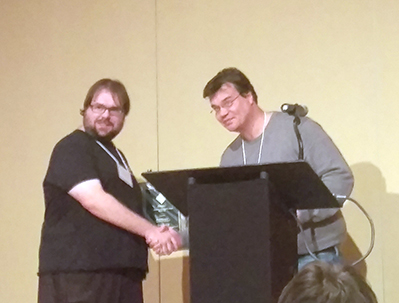
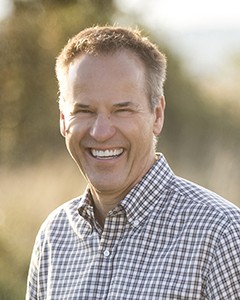
Karl Koscher at CCS 2015

Karl Koscher (left) accepts his award at CCS

UW CSE Ph.D. alum Karl Koscher has been named runner-up for the second annual SIGSAC Doctoral Dissertation Award for Outstanding Ph.D. Thesis in Computer and Information Security for his UW Ph.D. thesis, “Securing Embedded Systems: Analyses of Modern Automotive Systems and Enabling Near-Real Time Dynamic Analysis.” The award was announced at the Conference on Computer and Communications Security, the flagship annual conference of the ACM Special Interest Group on Security, Audit and Control (SIGSAC), held this week in Denver, Colorado.

Karl, who worked with UW CSE professor Yoshi Kohno in the Security and Privacy Research Lab, is now a postdoctoral researcher at UCSD. He was part of the team that hacked a car driven by correspondent Lesley Stahl for an episode of CBS News’ 60 Minutes, a dramatic illustration of his research assessing the security vulnerabilities of the connected systems found in today’s automobiles.

To learn more about Karl’s work, read his dissertation here, and see our previous blog posts on UW’s and UCSD’s car hacking research here, here and here.

Way to go, Karl! Read more →

UW and Microsoft Research develop camera that reveals what we can’t see

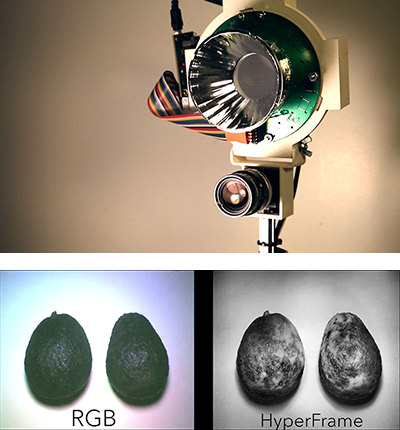
HyperCam imagesUW faculty and students worked with Microsoft Research on the development of a new, affordable hyperspectral camera called HyperCam that is capable of capturing details unseen by the naked eye – including those beneath the surface of an object. The system, which has many potential applications, was created by UW CSE+EE professor Shwetak Patel; UW CSE professor Gaetano Borriello; CSE graduate students Mayank GoelEric Whitmire and Alex Mariakakis; and Scott Saponas, Neel Joshi, Dan Morris, Brian Guenter and Marcel Gavriliu of Microsoft Research.

From the UW media release:

“Hyperspectral imaging is used today in everything from satellite imaging and energy monitoring to infrastructure and food safety inspections, but the technology’s high cost has limited its use to industrial or commercial purposes. The UW and Microsoft Research team wanted to see if they could make a relatively simple and affordable hyperspectral camera for consumer uses….

“HyperCam, which uses the visible and near-infrared parts of the electromagnetic spectrum, illuminates a scene with 17 different wavelengths and generates an image for each.

“One challenge in hyperspectral imaging is sorting through the sheer volume of frames produced. The UW software analyzes the images and finds ones that are most different from what the naked eye sees, essentially zeroing in on ones that the user is likely to find most revealing.”

While existing hyperspectral imaging systems can cost tens of thousands of dollars, HyperCam comes in at around $800 – and could cost as little as $50 to incorporate into a mobile phone camera. The team envisions several potential uses for HyperCam, including food quality monitoring, biometric security, gaming, and health sensing. In one demonstration, the researchers were able to predict the ripeness of fruit with 94 percent accuracy using hyperspectral images of the flesh beneath the skin. In another, HyperCam was shown to be able to differentiate between different users’ hands with 99 percent accuracy.

According to Patel, “‘It’s not there yet, but the way this hardware was built you can probably imagine putting it in a mobile phone…With this kind of camera, you could go to the grocery store and know what produce to pick by looking underneath the skin and seeing if there’s anything wrong inside. It’s like having a food safety app in your pocket.”

Read the full media release and watch a video demonstration here, and read the research paper here. Read about HyperCam in GeekWire here. Read more →

UW CSE’s Yoshi Kohno and students featured in NOVA episode on cybersecurity

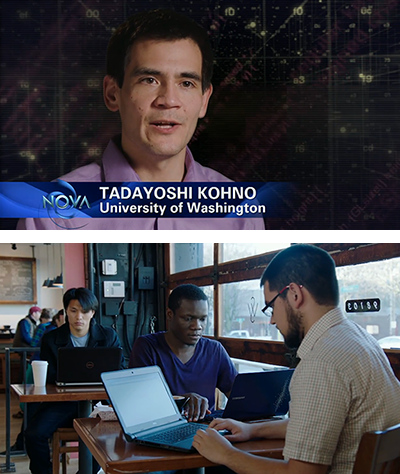
NOVA CyberWar ThreatUW CSE professor and cybersecurity expert Yoshi Kohno and two teams of graduate students from the Security and Privacy Research Lab were featured in this week’s episode of NOVA, “CyberWar Threat,” that aired on PBS.

The first part of the segment revisited the now-famous car hacking research done in conjunction with UCSD. Yoshi and his team – which included former CSE Ph.D. students Karl Koscher, now a postdoc at UCSD, and Franzi Roesner, now a professor at UW CSE – remotely take over the brakes of a car in a dramatic illustration of how vulnerable embedded systems in automobiles are to attack.

In the second segment, EE Ph.D. student Tope Oluwafemi and CSE bachelor’s student Tariq Yusuf (both now alumni) required nothing more than a laptop and their own wireless hotspot in order to hack into CSE Ph.D. student Alex Takakuwa’s laptop as he sat in a local coffee shop. By directing his laptop to an “evil twin” network rather than the coffee shop’s own WiFi, the hackers were able to discover his home security login, and subsequently figure out where he lives. NOVA follows Tope and Tariq as they later break into Alex’s house, demonstrating the potential vulnerability of home automation systems that enable remote control over the internet.

Watch the entire episode here (the segment featuring the UW team starts 29 minutes in). Read more →

UW spinout SNUPI and Sears make a deal for WallyHome technology

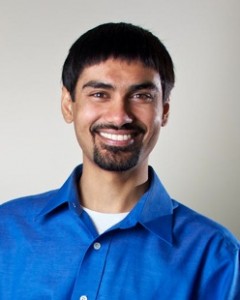
Shwetak Patel

Shwetak Patel

SNUPI Technologies, the startup resulting from the research of  UW CSE and EE professors Shwetak Patel and Matt Reynolds and graduate student Gabe Cohn, and led by serial entrepreneur (and UW CSE alum) Jeremy Jaech, has sold its WallyHome sensing technology to Sears. SNUPI, which stands for “Sensor Network Utilizing Powerline Infrastructure,” also plans to license related technology to the company and to consult on the development of future products. As part of the deal, Sears announced it is opening an engineering office in Seattle — on the UW campus.

From the GeekWire article:

“The deal gives Sears technology that can sense changes in moisture, temperature and humidity — alerting property owners to water leaks and other potential problems. The technology promises to bolster the company’s lineup of Connected Solutions smart home devices.

Reynolds_0618

Matt Reynolds

“As part of the acquisition, Sears will also assume a 10,000-square-foot lease on the University of Washington campus, where the retail and home services giant will operate a new tech development center….”

“Patel, who sold a previous startup to Belkin, said in a statement that the deal with Sears ‘further amplifies the University of Washington’s leadership in the research and commercialization of IoT solutions.’ ”

This is the second corporate engineering office located in Seattle as a result of Patel’s research: a year ago Belkin located the headquarters of its WeMo home automation division in Seattle after acquiring Patel’s earlier startup Zensi.

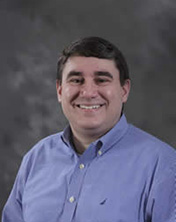
Jeremy Jaech

Jeremy Jaech

Read the full article here. Read more →

Artificial intelligence researchers invited to take the Allen AI Science Challenge

AI2 logoPaul G. Allen, founder of the Allen Institute for Artificial Intelligence (AI2), aims to spur the development of artificial intelligence that can understand and answer general questions about the world. Today, AI2 CEO (and UW CSE professor) Oren Etzioni announced the creation of the Allen AI Science Challenge – inviting academic and industry researchers to demonstrate that their AI system can outperform all others on an 8th grade multiple choice science test.

“IBM has announced that Watson is ‘going to college’ and ‘diagnosing patients’…But before college and medical school — let’s make sure Watson can ace the 8 th grade science test. We challenge Watson, and all other interested parties — take the Allen AI Science Challenge,” Etzioni said in the press release announcing the competition.

The institute has partnered with Kaggle, an online community of data scientists that holds competitions to encourage the solution of complex data science problems, to administer the challenge. In addition to gaining serious cred in the computing community, competitors have a shot at a top prize of $50,000 for the AI system that answers the most questions correctly, with second and third prizes of $20,000 and $10,000, respectively. AI2 will announce the winners next February at the AAAI 2016 conference in Phoenix, Arizona.

Learn more and enter the competition here. Read the GeekWire article about the announcement here. Check out the recent breakthrough in AI research by AI2 and UW – which tested an AI system’s ability to solve SAT math questions – here. Read more →

UW CSE Ph.D. alumna A.J. Brush of Microsoft Research to lead CRA-W virtual town hall

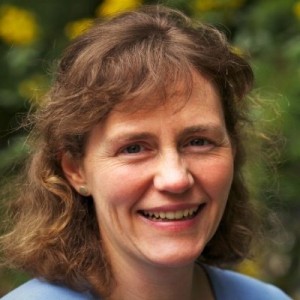
AJ BrushUW CSE alumna A.J. Brush (Ph.D., ’02) is kicking off the CRA-W’s new series of virtual undergraduate town halls on Thursday, October 8th at 2:00 pm with a talk on inventing technology for homes and families.

The CRA-W virtual town hall series offers undergraduate students an opportunity to interact with leading women in the field of computing and get answers to their questions on topics ranging from how to get involved in undergraduate research, to professional development, to how to prepare for graduate school.

A.J., who focuses on human-computer interaction and co-leads the Lab of Things project at Microsoft Research, is a terrific role model for young women contemplating a career in computing. She serves as co-chair of CRA-W, a committee of the national Computing Research Association that works to increase the number of women engaged in computing research. In 2010, A.J. was recognized with the Borg Early Career Award for her positive contributions to the advancement of women in computing.

In a happy coincidence, A.J.’s town hall will be followed later in the day by a reception for women of the UW CSE community – an annual tradition in advance of the Grace Hopper Celebration of Women in Computing. Learn more and register to participate in the virtual town hall here. Read more →

UW CSE’s Kurtis Heimerl and Endaga joining Facebook

Kurtis HeimerlUW CSE alum and soon-to-be faculty member Kurtis Heimerl (UW CSE B.S. ’07, UC Berkeley Ph.D. ’13) co-founded startup company Endaga to help under-served communities in remote areas of the world to build small-scale, independent cellular networks that they own and run themselves. The company – which was spun out of UC Berkeley, where Kurtis completed his Master’s, Ph.D. and postdoc working with another UW CSE alum, Tapan Parikh (Ph.D., ’07) – epitomizes the potential for technology to meaningfully improve quality of life around the globe.

Now, thanks to Facebook, Kurtis and the Endaga team are starting a new chapter as they work to improve connectivity for people everywhere.

While this means that we have to wait a little longer for his official homecoming, we are excited to see what comes out of this new partnership. We are also delighted to report that Kurtis intends to spend a couple of days a month at UW CSE engaging with our faculty and students between now and when he takes up his faculty position next September.

Read more about the new partnership on the Endaga blog here.

Congratulations to Kurtis and his colleagues – we will enjoy watching their progress and look forward to the day Kurtis brings his considerable talents full-time to UW CSE! Read more →

UW CSE news “back to school” edition

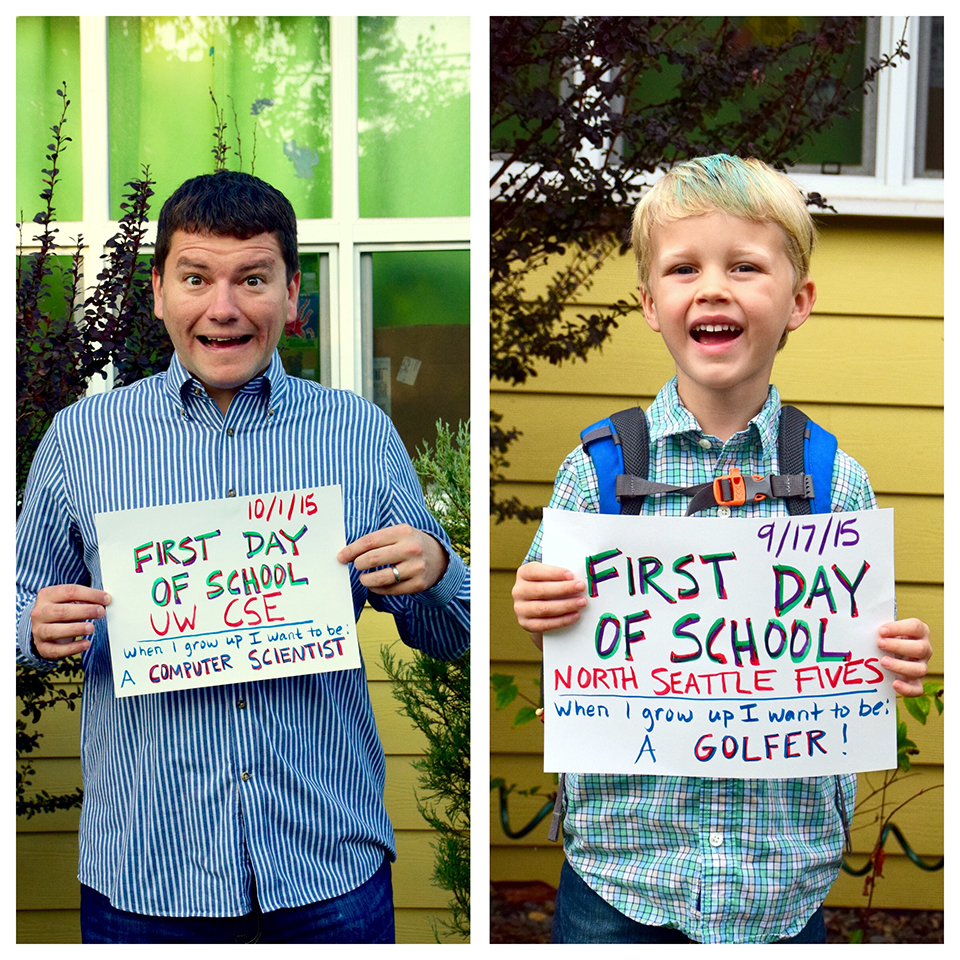
Classes started this week on the beautiful UW campus – and in K-12 schools across the region. To mark the occasion, UW CSE professor James Fogarty and his son posed for the traditional back-to-school photo.

James Fogarty and his son go back to school

As James said, “Excited for the first day of classes. Awesome staff, awesome students. Let’s make stuff!”

Welcome back, everyone – we hope you had a great first week! Read more →

Study rates UW CSE software engineering research most practically relevant of the past five years

Michael Ernst

Michael Ernst

A UW CSE research paper on proactive conflict detection, part of the speculative analysis project led by professors Michael Ernst and David Notkin, was rated the most practically relevant software engineering research of the last five years in a recent industrial relevance study.

The study, which was conducted by Microsoft Research and Singapore Management University, asked more than 500 software developers to rate the relevance of 571 research papers in order to determine how relevant software engineering research is to practitioners in the field. The greatest number of respondents rated the UW CSE project, which helps developers to collaborate more effectively and prevents potentially costly conflicts, as “essential” to software development practice.

When developers on a team work in parallel, they may make changes that are independently good but which, when combined, break the software. The UW CSE research team developed a tool, Crystal, that helps developers to identify, manage and prevent such conflicts by continuously merging people’s changes, before the software developers do so and without interfering with the developers. If the changes are in conflict, developers learn about them and can address them immediately, before wasting time on code that will later have to be reworked or discarded. If the changes are not in conflict, then developers can proceed with confidence, without having to worry about potentially negative consequences. In both cases, developers can spend less time coordinating with their teammates and more time getting their work done.

The project was conducted by Yuriy Brun (then a postdoc at UW CSE, now a professor at University of Massachusetts) and Reid Holmes (previously a postdoc at UW CSE, now a professor at University of British Columbia) alongside Michael Ernst and the late David Notkin of UW CSE’s Programming Languages & Software Engineering group.

To learn more about proactive conflict detection, watch this video and read the research paper here. Read the complete results of the industrial relevance study, which was published at the ESEC/FSE conference last month, here.

Michael Ernst’s name keeps cropping up in the search for excellence in software engineering: in 2013, Microsoft Academic Search ranked him 2nd among software engineering researchers worldwide, based on his work over the previous 10 years.

We have known for some time, of course, that our PLSE group is among the best. But it’s always nice to have external validation! Read more →

UW CSE’s Martin Tompa publishes the definitive guide to winning at Schnapsen

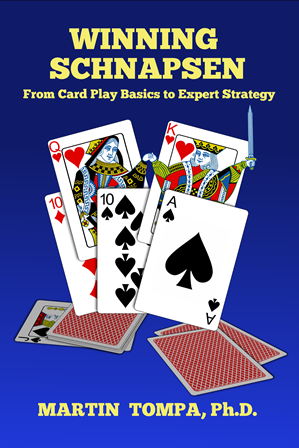
Winning Schnapsen book coverWhen it comes to Schnapsen – the national card game of Austria – UW CSE professor Martin Tompa’s got game. And now the rest of us can, too, with the help of his new book, Winning Schnapsen. Like the title suggests, it is the definitive guide to mastering the 300+ year-old game that enjoys a popular following in continental Europe.

Schnapsen is a two-person card game that has some similarities with another well-known game, Bridge. It is the perfect pastime for computer scientists, and Martin’s winning strategies employ a number of concepts that will sound familiar, such as expected value and other aspects of probability theory. In fact, Martin uses Schnapsen in his CSE 312 course on the foundations of computing – which inspired a group of students who took the course to establish a UW Schnapsen club.

Martin’s interest in Schnapsen was rekindled in 2012, when he worked with two former UW CSE Ph.D. students, Dick Garner and Jeff Scofield, to create an iPhone app against which users could play the game.

“The fact that their app beat me pretty consistently is what got me interested in figuring out how to play as well as it does,” Martin explained.

Now, thanks to Martin, everyone can win at Schnapsen. Learn more here. Read more →

« Newer PostsOlder Posts »