UW CSE’s Congle Zhang and NewsSpike-RE featured in UW Daily

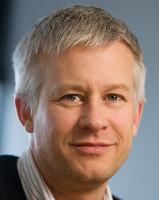
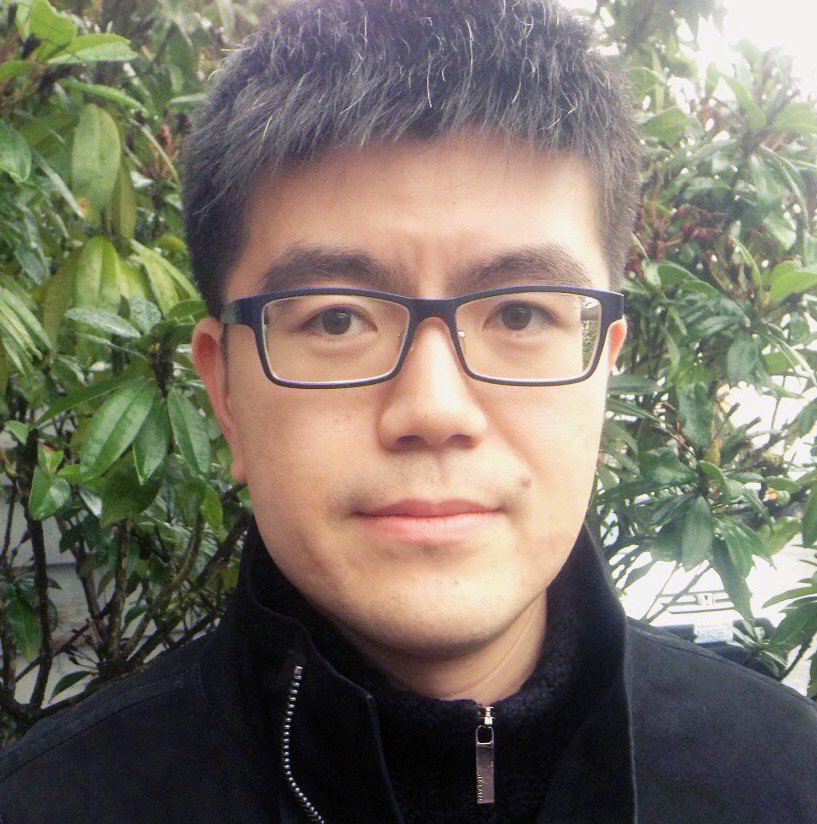
clzhang_sUW CSE Ph.D. student Congle Zhang recently talked with the campus newspaper about NewsSpike-RE, a new machine learning algorithm developed at UW CSE to train computers to more efficiently and accurately parse human language using events described in news stories.

NewsSpike-RE discovers and extracts event relations from a vast array of online articles, and then employs a probabilistic graphical model to cluster sentences that describe similar events from parallel news streams.

From the article:

“NewsSpike stands out among other natural-language algorithms because of its ability to identify semantically related words from news articles. So far, it has learned to recognize more than 200 relationships, with that number growing every day.

“‘The next thing to be done … is to keep improving the performance,’ Zhang said. ‘Secondly, it’s to find a good way to let people use [NewsSpike].'”

The article also quotes CSE professor Dan Weld and research scientist Stephen Soderland. Read it in full here.

Read the published paper on NewsSpike-RE here. Read more →
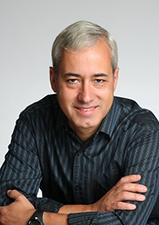
UW CSE’s Pedro Domingos and Dan Weld on the future of Artificial Intelligence

Pedro Domingos

Pedro Domingos

The “Science” section of today’s edition of the UW campus newspaper, The Daily, considers the future of artificial intelligence, featuring UW CSE professors Pedro Domingos and Dan Weld.

Pedro and Dan suggest that people’s fear of machines taking over the world is greatly exaggerated based on the current state of AI research and the difference between human thought – using common sense and multipurpose intelligence – and the way machines’ “thinking” is confined by their programming and the goals that humans set for them.

That’s not to say that there aren’t valid concerns associated with AI, including robots supplanting people in certain jobs and the potential for computers to misinterpret the directions humans give them. And “strong” AI that would grant machines multipurpose intelligence – although a long way off – would require safeguards.

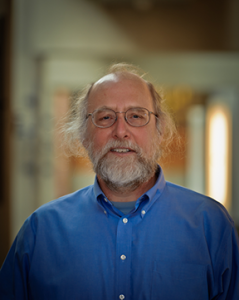
Dan Weld

Dan Weld

But, as Pedro points out, the problem at this stage isn’t that machines are getting too smart and may take over the world, but that “they’re too stupid and they’ve already taken over the world.”

It is a fascinating discussion with two of the leading minds in AI research. Check out the full article here. Read more →

UW team wins Seattle’s “Hack the Commute”

Hack the Commute logoEarlier this week, we posted about a team of UW students advised by UW CSE’s Alan Borning and Anat Caspi who made it into the final round of the city’s Hack the Commute competition. Last night, the team pitched their app, Access Map, to a panel of judges at City Hall – and they won!

Read all about it courtesy of this great article in GeekWire here and KUOW’s story here.

Congratulations to students Nick Bolten, Allie Deford, Reagan Middlebrook and Veronika Sipeeva and their advisors, Alan and Anat, on the big win! Read more →

Team Hackcessible, advised by UW CSE, heading to the finals of Seattle’s Hack the Commute competition

UW Hackcessible Team

Left to right: Anat Caspi with students Reagan Middlebrook, Veronika Sipeeva, Allie Deford and Nick Bolten

Hackcessible – a team of students advised by UW CSE professor Alan Borning and Anat Caspi, director of the Taskar Center for Accessible Technology – will be one of three groups competing at Seattle City Hall this Wednesday in the championship round of Hack the Commute.

The students, who hail from Electrical Engineering, Human Centered Design & Engineering, and UW Tacoma’s Computer Science & Systems program, developed an app called AccessMap that enables users to plan their route in Seattle based on their individual accessibility needs. AccessMap provides information about changes in elevation, the presence of curb ramps and other data designed to assist people with mobility concerns, such as those in wheelchairs, to navigate the city.

The team used a combination of publicly available and user-submitted data, designing the app to enable people to report obstacles and verify information that is contributed by others.

Alan Borning

Alan Borning

“I’m really impressed with the work this team put in,” said Caspi, noting that the students talked to a lot of people to identify what’s missing from the publicly available data that would be helpful if incorporated into the app. “In one instance, they found a gentleman who keeps information about the location of elevators in his head.”

“We see this as an opportunity to collaborate with the city to make its information more useful to everyone.”

Check out the live app here.

Learn more about Hack the Commute here.

Register for free to see Hackcessible in action at Wednesday’s championship event here. Read more →

Privacy-preserving Internet surfing with UW CSE’s uProxy browser extension

uProxy logoToday, UW CSE’s Networks & Mobile Systems Lab released an alpha version of uProxy, a new browser extension for Chrome and Firefox that leverages social networks and trust between friends to provide web surfers with safe and unfettered passage through the internet.

Users of uProxy are able to share a trusted Internet connection with friends or to route their own traffic through a friend’s computer, essentially creating a personalized VPN (virtual private network) that makes it more difficult for third parties to monitor or interfere with their online activity. The alpha version is compatible with Google Hangouts and Facebook, and developers hope to add more social networks in future.

uProxy – which was developed at UW CSE with contributions from Google, Brave New Software and the open source community, and seeded by Google Ideas – is the culmination of two years of development. Way to go, team!

Learn more and try uProxy for yourself here. (And once you’ve tried it, be sure to provide the developers with your feedback!) Read more →

ApneaApp developed at UW CSE and UW Medicine provides a non-invasive alternative for diagnosing sleep disorder affecting millions of Americans

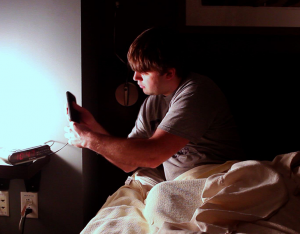
UW CSE professor Shyam Gollakota and PhD student Rajalakshmi Nandakumar have been working with Dr. Nathaniel Watson of the UW Medicine Sleep Center to develop and test a new smartphone app that enables wireless diagnosis of sleep apnea.

ApneaApp turns an Android smartphone into an inexpensive and non-invasive diagnostic tool for a potentially life-threatening condition that affects more than 25 million people in the United States alone. The app employs sonar – “similar to the way bats navigate,” lead author Rajalakshmi explains – to track changes in a person’s breathing patterns.

In a recent clinical study, the researchers demonstrated ApneaApp’s accuracy matches that of a traditional hospital polysomnography test 98 percent of the time. The app can filter out background noise, is capable of distinguishing between the chest movements of two individuals in the same bed, and works with any sleeping position from a distance of up to three feet – all without requiring the patient to be hooked up to special equipment or to spend the night in a sleep center.

As Shyam notes in UW’s media release announcing the team’s findings, “Right now phones have sensing capabilities that we don’t fully appreciate. If you can recalibrate the sensors that most phones already have, you can use them to achieve really amazing things.”

The results of the clinical study will be presented at the MobiSys 2015 conference next month and SLEEP 2015, a joint meeting of the American Academy of Sleep Medicine and the Sleep Research Society, in June.

kiroRead the UW media release and view a video demonstration of ApneaApp here.

Read the research paper here.

CSE graduate student Rajalakshmi Nandakumar explains ApneaApp on KIRO TV here. Read more →

Washington State Algebra Challenge deadline extended

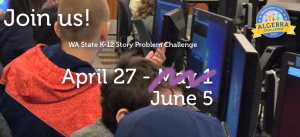
Students in computer labUW CSE’s Center for Game Science announced today that it is extending the dates of the 2015 Algebra Challenge in response to feedback from teachers. Under the new schedule, K-12 classrooms are invited to register online to participate in the challenge beginning April 27 and then to proceed at their own pace until June 5. Any classroom with access to a PC, Mac or Chromebook can participate in the challenge.

Read the Center for Game Science’s update here.

Learn more about the Algebra Challenge and sign up to participate here. Read more →

UW CSE opening its doors to students, parents and teachers during Engineering Discovery Days

Engr Discovery Days 2Each spring, UW CSE and other departments in the College of Engineering welcome K-12 students, parents and teachers to Engineering Discovery Days, an action-packed program featuring hands-on demonstrations that showcase the exciting world of engineering.

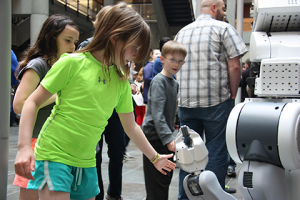
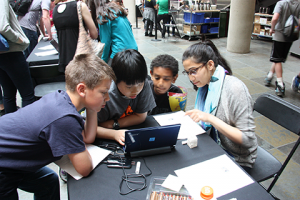
The 2015 Engineering Discovery Days are this Friday, April 24 and Saturday, April 25 on the Seattle campus. While Friday registration is full, we encourage people of all ages to join us on Saturday at the Paul G. Allen Center for Computer Science & Engineering for tours and exhibits on gaming, robotics, wireless power, ubiquitous computing and moreEngr Discovery Days 3.

Also on Saturday, high school students and their families are invited to attend information sessions on UW admissions, financial aid, and other topics of interest to prospective students.

Find a complete schedule and map of the 2015 festivities here. You can view photos of last year’s event here.

We hope to see you this weekend! Read more →

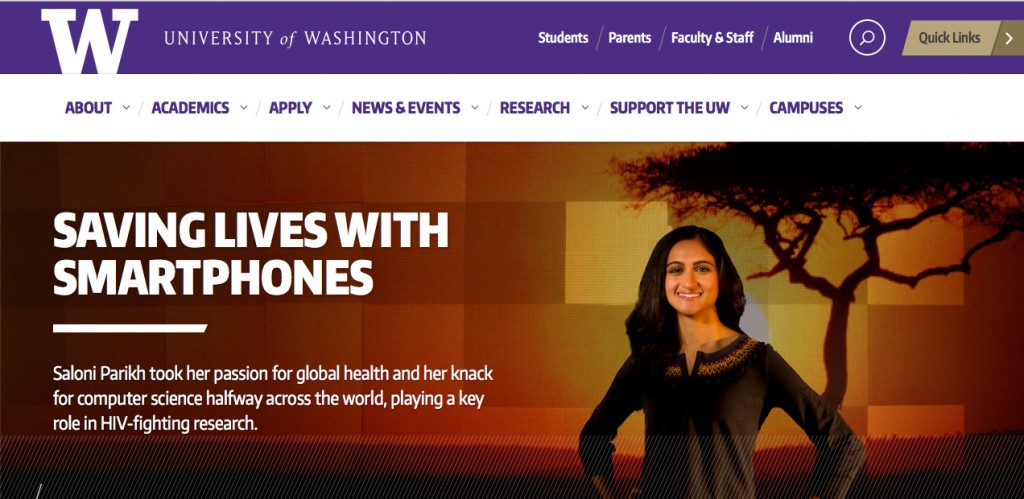
UW CSE’s Saloni Parikh: Saving lives with smartphones

SaloniUW encourages its faculty and students to “be a world of good.” Saloni Parikh – a double-major in CSE and Public Health – has heeded that call in her work on the HOPE (Home-based Partner Education and Testing) project, using UW CSE’s Open Data Kit to improve HIV screening and data collection in Africa.

UW published a nice feature story today on Saloni’s research, tracing her journey from the late professor Gaetano Borriello’s lab in Seattle to a poverty-stricken city in Kenya.

Saloni was instrumental in improving data collection by nurses and community health workers conducting HIV testing and counseling of pregnant women and their partners in Kisumu, Kenya’s third-largest city. Saloni programmed mobile devices to enable the collection of patient data and spent the summer of 2013 in the city of Kisumu training providers how to use them in the field. She remains involved with the HOPE project – as well as other global health projects at UW – to this day.

Read the full article here.

Check out the UW School of Public Health’s profile of Saloni here. Read more →

Governor Inslee reminds classrooms to sign up for the statewide Algebra Challenge

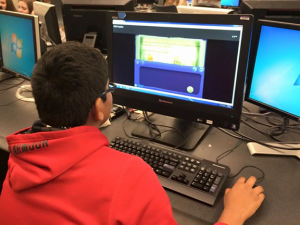
Student practicing Riddle Books on a computerThe Washington State Algebra Challenge, organized by UW CSE’s Center for Game Science, kicks off next Monday, and Governor Jay Inslee is helping us spread the word to classrooms around the state.

We are challenging Washington’s K-12 students to solve 250,000 story problems using Riddle Books, the fun (and free!) math game developed by the center. In a letter sent to educators, Governor Inslee notes that, in addition to the game, educators will have access to resources such as the Teacher Copilot, a portal that enables educators to view their students’ progress in real time and to adapt games for different students.

Read the Governor’s letter to educators here.

Visit the Washington State Algebra Challenge on Facebook here.

Sign up to participate in the challenge by April 26th here. Read more →

« Newer PostsOlder Posts »