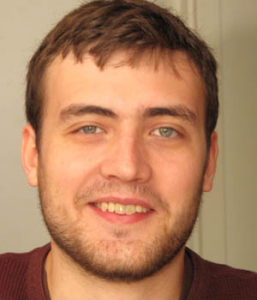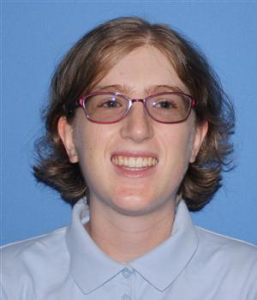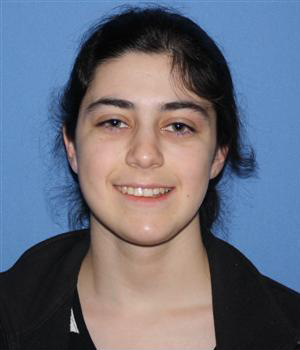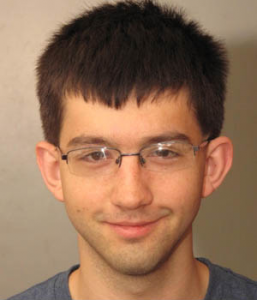
UW CSE’s Jeffrey Heer delivers opening keynote at OpenVis Conf

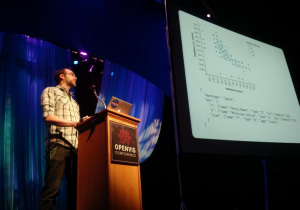
Jeff Heer_OpenVis 2015UW CSE professor Jeff Heer opened the third annual OpenVis Conf, a two-day gathering devoted to best practices and the latest technology tools for data visualization on the Open Web, earlier this month.

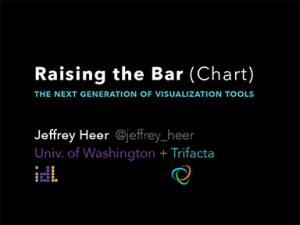
While many visualization tools require steep tradeoffs between ease of use and expressiveness, Jeff and his team in the Interactive Data Lab focus on creating tools that enable more efficient visualizations and richer data exploration by a broad base of users. Jeff’s presentation at OpenVis Conf, “Raising the Bar (Chart): The Next Generation of Visualization Tools,” highlighted several projects at UW CSE aimed at making data visualization more useful – and more user-friendly.Heer_Raising the Bar Chart_OpenVisConf 2015-1

Watch the video of Jeff’s keynote here.

View Jeff’s slides in PDF here. Read more →

Barriers and Negative Nudges: UW CSE research team led by James Fogarty co-authors new study of mobile food journaling

James Fogarty

James Fogarty

UW CSE professor James Fogarty, PhD students Felicia Cordeiro and Daniel Epstein, and Dub group researcher Elizabeth Bales co-authored a paper with researchers at the Georgia Institute of Technology examining mobile food journaling.

The paper, Barriers and Negative Nudges: Exploring Challenges in Food Journaling, identifies various pitfalls that prevent users from persisting with their food journals and considers how technology can more effectively help people meet their goals when it comes to developing healthy eating habits. The team’s findings, which were based on a survey of 141 current and past food journalers and an analysis of more than 5,500 posts in community forums, will be presented at the ACM’s CHI 2015 conference in Seoul, South Korea later this month.

CHI 2015 conference logoFrom the UW press release:

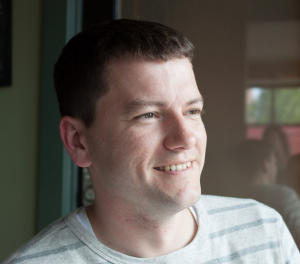
“Food journals are an important method for tracking food consumption and can support a variety of goals, including weight loss, healthier food choices, detecting deficiencies, identifying allergies and determining foods that trigger other symptoms,” said co-author James Fogarty, a UW associate professor of computer science and engineering.

“Instead of attempting to capture the elusive ‘everything,’ the results suggest creating a diversity of journal designs to support specific goals,” Fogarty said.

Based on their findings, the team at UW is exploring how photo-based journaling might reduce barriers to journaling by augmenting or eliminating altogether the need to focus on detailed nutritional input, while the Georgia Tech team is testing the use of a mobile device’s microphone to recognize eating sounds and nudge users to log their food.

Read the full press release here. Read more →

UW CSE’s Irene Zhang, Nell O’Rourke win Google Anita Borg Memorial Scholarships

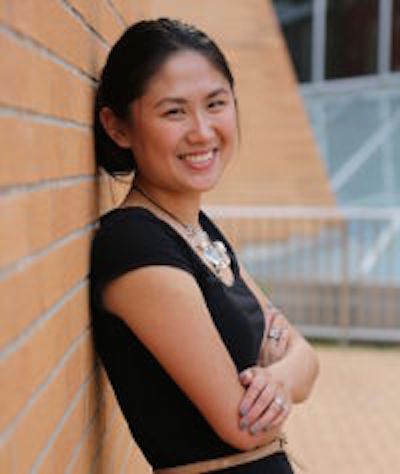
irene-newUW CSE Ph.D. students Irene Zhang and Nell O’Rourke have received 2015 Google Anita Borg Memorial Scholarships.

Irene works with professors Hank Levy and Arvind Krishnamurthy in the Computer Systems Lab.

Nell works with professor Zoran Popovic in the Center for Game Science.

The scholarship supports women in computing and encourages them to follow in Dr. Anita Borg’s footsteps by serving as leaders and role models in the field. In addition to collecting a financial award, Irene and her fellow scholars will have the opportunity to participate in a retreat at the Google headquarters in Mountain View, California in June.

nellLearn more about the scholarship and Dr. Borg’s extraordinary contributions to computer science here.

Past scholarship winners at UW CSE include Jenny Abrahamson and Nicki Dell in 2012, Janara Christensen and Katie Kuksenok in 2011, Lydia Chilton and Kristi Morton in 2010, Saleema Amershi in 2009, and Julie Letchner and Kate Everitt in 2008.

Congratulations, Irene and Nell! Read more →

UW CSE’s Carlo del Mundo and Vincent Lee win 2015 Qualcomm Innovation Fellowships

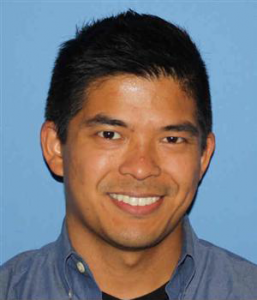
Carlo del Mundo

Carlo del Mundo

Each year, Qualcomm provides Innovation Fellowships to a select handful of students nationwide to enable them to pursue their innovative research ideas. This year, UW CSE students Carlo del Mundo and Vincent Lee were one of eight winning teams selected from a highly competitive field for their proposal titled “Systems and Architecture Support for Large-scale Video Search.”

Carlo and Vincent, who were recommended by professors Luis Ceze and Mark Oskin, were one of 35 teams selected as finalists from among 146 initial proposals. Along with their fellow finalists, they were invited to visit Qualcomm in March for a two-day event in which they presented their ideas to a panel of judges and interacted with company researchers.

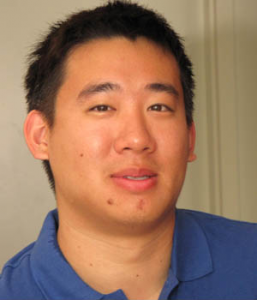
Vincent Lee

Vincent Lee

In its message to the winners, Qualcomm noted, “We recorded the highest number of proposals submitted this year with an acceptance rate lower than most prestigious conferences and journals. We think that this is a great testament to the quality and pedigree of the QInF program and of the continuing interest from faculty and students in the 7th year of the program!”

Each winner in this prestigious competition receives a $100,000 fellowship from the company along with mentorship from Qualcomm engineers. Read more about the 2015 QInF here.

UW CSE has made a strong showing in this competition in recent years: CSE’s Vincent Liu and EE’s Vamsi Talla won a 2014 QInF award, and CSE’s Adrian Sampson and Thierry Moreau won in 2013.

Congratulations, Carlo and Vincent! Read more →

UW CSE’s Matt Kay co-authors study on gender representation and stereotypes in online image search results

Female construction worker imagesToday, UW announced the results of a new study examining gender bias in online image search results associated with various occupations. The study, which will be presented at the Association for Computing Machinery’s CHI 2015 Conference later this month, raises interesting questions about how information systems influence behavior and whether search algorithms should be adjusted to counter occupational stereotypes when it comes to gender.

Co-authors Matt Kay (a UW CSE Ph.D. student), Cynthia Matuszek (a UW CSE Ph.D. alum and University of Maryland faculty member), and Sean Munson (a UW Human-Centered Design & Engineering faculty member) analyzed how well search results match reality when it comes to the gender ratio by comparing Google image search results to employment data for 45 occupations from the U.S. Bureau of Labor Statistics. The researchers also explored how the genders are qualitatively represented in search results, and how those results influence people’s perceptions of gender in different fields.

Read the UW press release here.

Read the paper here.

Read coverage of the study’s findings by The Atlantic, The Verge, PC World, GeekWire and Business Insider. Read more →

Registration is open for the 2015 Washington State Algebra Challenge!

Algebra Challenge logoBeginning today, K-12 classrooms across Washington State are invited to sign up for the 2015 Washington State Algebra Challenge. Participants will have access to Riddle Books, the new mathematics learning game from UW CSE’s Center for Game Science, as they attempt to solve 250,000 word problems during the school week of April 27-May 1.

Participation in the Algebra Challenge is free and only requires access to a PC, Mac or Chromebook. Encourage classrooms in your local school to sign up for the challenge here. Together, we can achieve it! Read more →

Nanocrafter from UW CSE’s Center for Game Science in Foundations of Digital Games Conference

Nanocrafter logoUW CSE’s Center for Game Science creates interactive games for scientific discovery and for learning.

Foldit – a revolutionary game for protein design and protein structure prediction – has received widespread acclaim. Gamers playing Foldit solved an AIDS-related protein structure problem that had baffled the scientific community for more than a decade!

The team’s next scientific discovery game – Nanocrafter – is on the same trajectory. Nanocrafter is a synthetic biology game in which players use pieces of DNA to build everything from computer circuits to nanoscale machines.

The first academic paper analyzing the design and outcomes of Nanocrafter has just been accepted by the Foundations of Digital Games Conference. The paper, “Nanocrafter: Design and Evaluation of a DNA Nanotechnology Game,” will be presented during the 2015 conference that will take place June 22-25 in Pacific Grove, California.

Nanocrafter aims to accelerate synthetic biology research by challenging players to construct and simulate nanoscale devices using DNA strand displacement. The game functions as a “citizen science platform,” tapping into players’ competitive natures to crowdsource scientific discovery – a strategy that has been shown to be effective by the center’s popular protein-folding game, Foldit.

The conference paper discusses Nanocrafter’s design in terms of visualizations, interactions, introductory levels and scoring, and evaluates preliminary results based on an analysis of players’ creations. The Foundations of Digital Games Conference focuses on the scientific underpinnings of digital game design and the technologies used to develop them. Learn more here.

Nanocrafter previously won the award for “Best Serious Game, Special Emphasis Category, Use of Social Media” at the Serious Games Showcase and Challenge in December.

Build your own nanoscale devices using Nanocrafter here. Read more →

UW CSE’s DawgBytes offers elementary school students “a taste of CSE” in Scratch Adventures summer camp

DawgBytes logoUW CSE is thrilled to announce that we will once again offer elementary school students the opportunity to learn about computer science in a fun and inclusive environment as part of our DawgBytes summer camp lineup.

Scratch Adventures is a day camp open to students entering grades 3, 4 or 5 who have no previous experience using the visual programming language Scratch. During the sessions, which will take place June 29-July 2 on the University of Washington’s Seattle campus, participants will learn how to design and program their own interactive stories, games and art projects while practicing critical thinking, problem solving and collaboration skills. Campers will share their creations with friends and family on the final day of camp.

The priority registration period for Scratch Adventures opens Thursday, April 9th. Learn more about this and our other DawgBytes summer camp offerings for middle and high school students here. And learn about our broad K-12 outreach program DawgBytes (“A Taste of CSE”) here. Read more →

UW CSE’s Richard Ladner in Interactions Magazine: Design for user empowerment

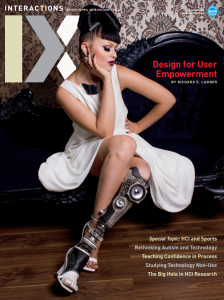
Interactions Magazine March/April CoverUW CSE professor Richard Ladner penned the cover article for the March/April 2015 issue of Interactions Magazine, the flagship publication of the ACM Special Interest Group on Computer Human Interaction (SIGCHI). In the article, “Design for User Empowerment,” he advocates that users of technology who have disabilities should be empowered to solve their own accessibility problems, drawing on nearly 10 years of experience at the helm of the National Science Foundation-supported AccessComputing alliance.

Richard explains how, with self-determination and technical expertise, people with disabilities can analyze, design, build and test technologies that suit their specific needs. He promotes the concept of universal design, in which interactive systems can be easily configured to be usable by people with varying abilities without having to rely on third-party assistive technologies.

“A person who is disabled and has the right technical expertise has the power to solve their own accessibility problems,” Richard writes. “The key to technical expertise is access to education, the cornerstone of innovation and progress.”

Read the full article here. Read more →

2015 NSF Graduate Research Fellowships: UW CSE rocks!

NSF Graduate Research Fellowship Program logoThe 2015 National Science Foundation Graduate Research Fellowships – the most prestigious graduate fellowships in science and engineering – were announced today. To our delight, UW has the second largest number of fellowship recipients in the “Computer and Information Science and Engineering” category of any institution in the country!

Yvonne Chen

Yvonne

NSF’s Graduate Research Fellowship Program recognizes and supports outstanding student researchers who have demonstrated their potential for significant achievements in science, technology, engineering and mathematics. Congratulations to the UW students who were recognized today:

Fellowship awards

Cynthia Bennett (HCDE): Human Computer Interaction

Carlo del Mundo

Carlo

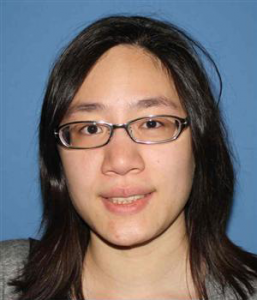
Yvonne Chen (CSE): Human Computer Interaction

Carlo del Mundo (CSE): Computer Architecture

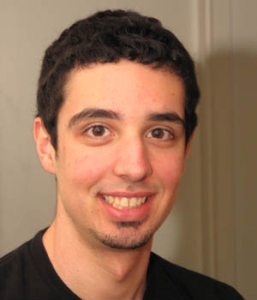
Alex Mariakakis (CSE): Human Computer Interaction

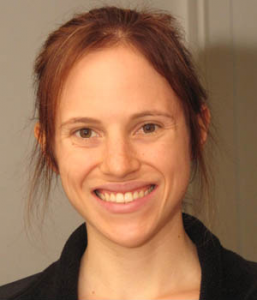
Laurel Orr (CSE): Databases

Pavel Panchekha (CSE): Formal Methods, Verification, and Programming Languages

Alex Mariakakis

Alex

Hannah Rashkin (CSE): Natural Language Processing

John Robinson (HCDE): Human Computer Interaction

Anna Kornfeld Simpson (CSE): Computer Security and Privacy

Doug Woos (CSE): Formal Methods, Verification, and Programming Languages

Honorable mentions

Laurel Orr

Laurel

Kira Goldner (CSE): Algorithms and Theoretical Foundations

Daniel Gordon (CSE): Robotics and Computer Vision

Jacob Schreiber (CSE): Machine Learning

Go Team!


Doug Woos

Doug

Anna K Simpson

Anna

Hannah Rashkin

Hannah

Pavel Panchekha

Pavel

Read more →
« Newer PostsOlder Posts »