 Business Week discusses data visualization, including UW CSE’s Zoetrope, created by graduate students Eytan Adar (now on the faculty at the University of Michigan) and Mira Dontcheva (now a researcher at Adobe) and faculty members James Fogarty and Dan Weld.
“Today algorithmically inspired artists are re-imagining the art-science continuum through work that frames the left-brain analysis of data in a right-brain creative story. Some use data visualization as a bridge between alienating information and its emotional impact … Others take a more technological angle and focus on cultural utility — the Zoetrope project offers a temporal and historical visualization of the ephemeral Web.” Read more →
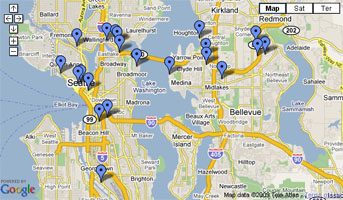 Our friends at TechFlash have just published a wonderful “Geek’s Guide to Seattle” – twenty “must see” tourist stops for techies. Among the hotspots:
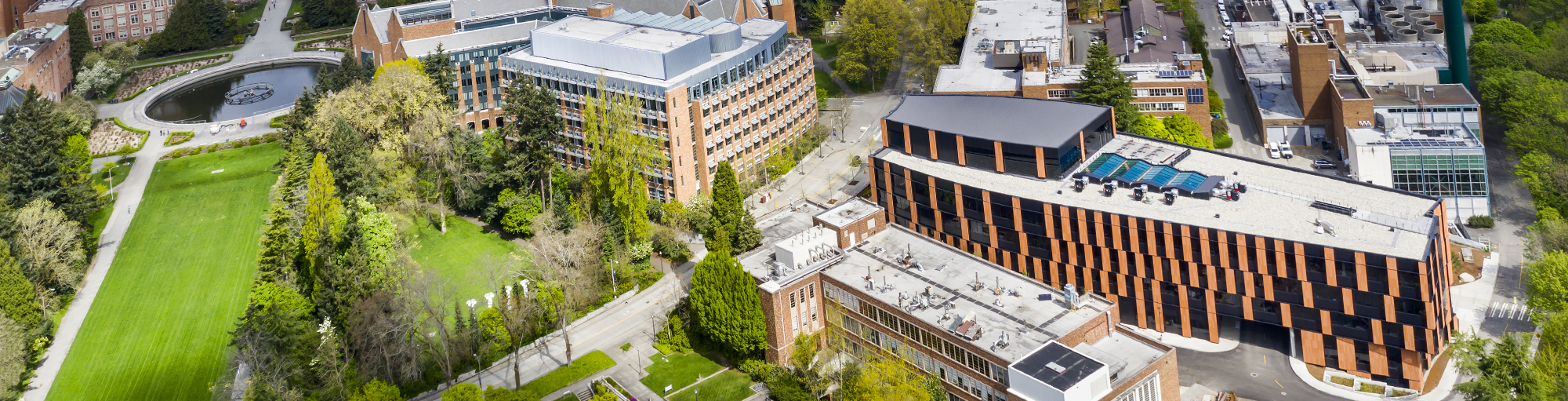
Paul G. Allen Center for Computer Science & Engineering, University of Washington – “This building, named after Microsoft’s co-founder, is the region’s nerve center for computer science education, sending graduates to Microsoft, Google, Amazon and many others.”
Wilcox Hall, University of Washington – “This was the UW computer center, known as Roberts Hall Annex, 40 years ago when two kids named Paul Allen and Bill Gates hung out here, honing their programming skills using punched cards on a CDC 6400 and a Burroughs 5500. Walking through the aging building’s halls today, it’s not hard to picture.”
Birthplace of LiveJournal, Mercer Hall East, University of Washington – “This dorm was at the forefront a social media revolution. Brad Fitzpatrick was a University of Washington Computer Science & Engineering student in 1999 when he developed the pioneering LiveJournal blog service, working primarily in this building.”
See the full Geek’s Guide to Seattle here! Jumbo-sized interactive map version here. Handy printable PDF here. TechFlash article describing the project here. Read more →
 “Imagine if every time you sent a letter, the postman made a copy … This isn’t 1950s Russia but the internet today. Every e-mail you send is stored on not only your computer but also the recipient’s machine; your internet service provider (ISP) will have one too, as will the many servers that have handled your message in its travels across cyberspace … It’s this Big Brother vision that has inspired researchers in Seattle to create the world’s first self-destructing e-mails.”
Read the full article here. Learn more about Vanish here. Read more →
 You can’t make up stuff like this! RFID chips from UW CSE startup Impinj (co-founded by CSE professor Chris Diorio and his now-living-in-Seattle mentor, legendary Caltech professor Carver Mead) are apparently integral to Coca Cola’s new “Freestyle” vending machine. Makes about as much sense as putting an Ethernet in a Xerox machine …
Read the TechFlash post here. Read more →

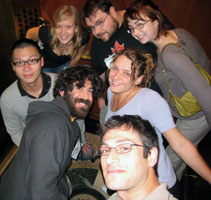 A team representing UW CSE placed second in the USENIX Security Grand Challenge, held during the USENIX Security Conference, August 12-14 in Montreal.
On the day of the competition, each team received a virtualized server, with a number of services. The services were implemented in different languages (e.g., C, Java, or Python) and were both web-based and stand-alone. However, each service had a number of hidden security flaws, which were implanted by the organizers. The task of the participants was to modify and improve their servers so that they become resilient to attacks. During the competition, an automated scoring system kept track of what services were functional. At the same time, an automated attack system performed disruptive attacks against the services. At the end of the competition, the team whose server was able to provide the highest service level won.
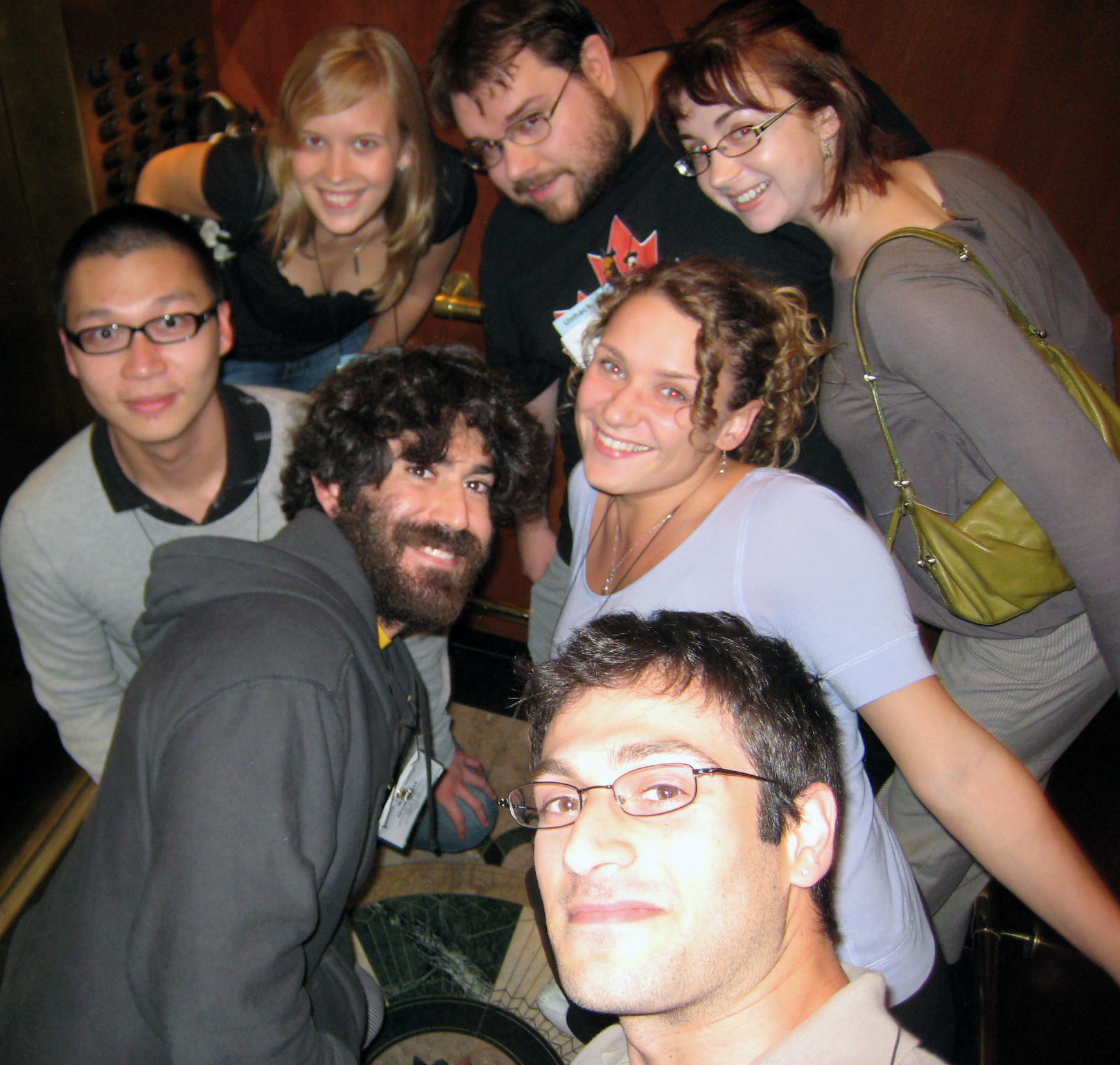
The UW CSE team consisted of Alexei Czeskis (PhD student), Iva Dermendjieva (undergraduate), Sam Guarnieri (PhD student), Karl Koscher (PhD student), Franzi Roesner (PhD student), and Hussein Yapit (undergraduate). Read more →
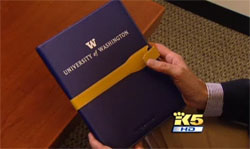 A KING-5 Television report on the UW CSE Kindle DX pilot project. UW – Computer Science & Engineering and the Foster School of Business – is one of seven universities participating in an educational pilot project to understand the strengths and limitations of electronic textbooks. See the TV news video here. Learn more about the UW CSE Kindle DX pilot project here. Read more →
 UW CSE graduate student Roxana Geambasu and undergraduate student Amit Levy have received the Outstanding Student Paper Award at the 18th USENIX Security Symposium for their paper “Vanish: Increasing Data Privacy with Self-Destructing Data.” Vanish has received widespread attention; see some links here and here. Learn more about Vanish here. The work was co-advised, and the paper co-authored, by UW CSE faculty members Yoshi Kohno and Hank Levy.
Read more →
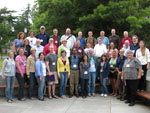
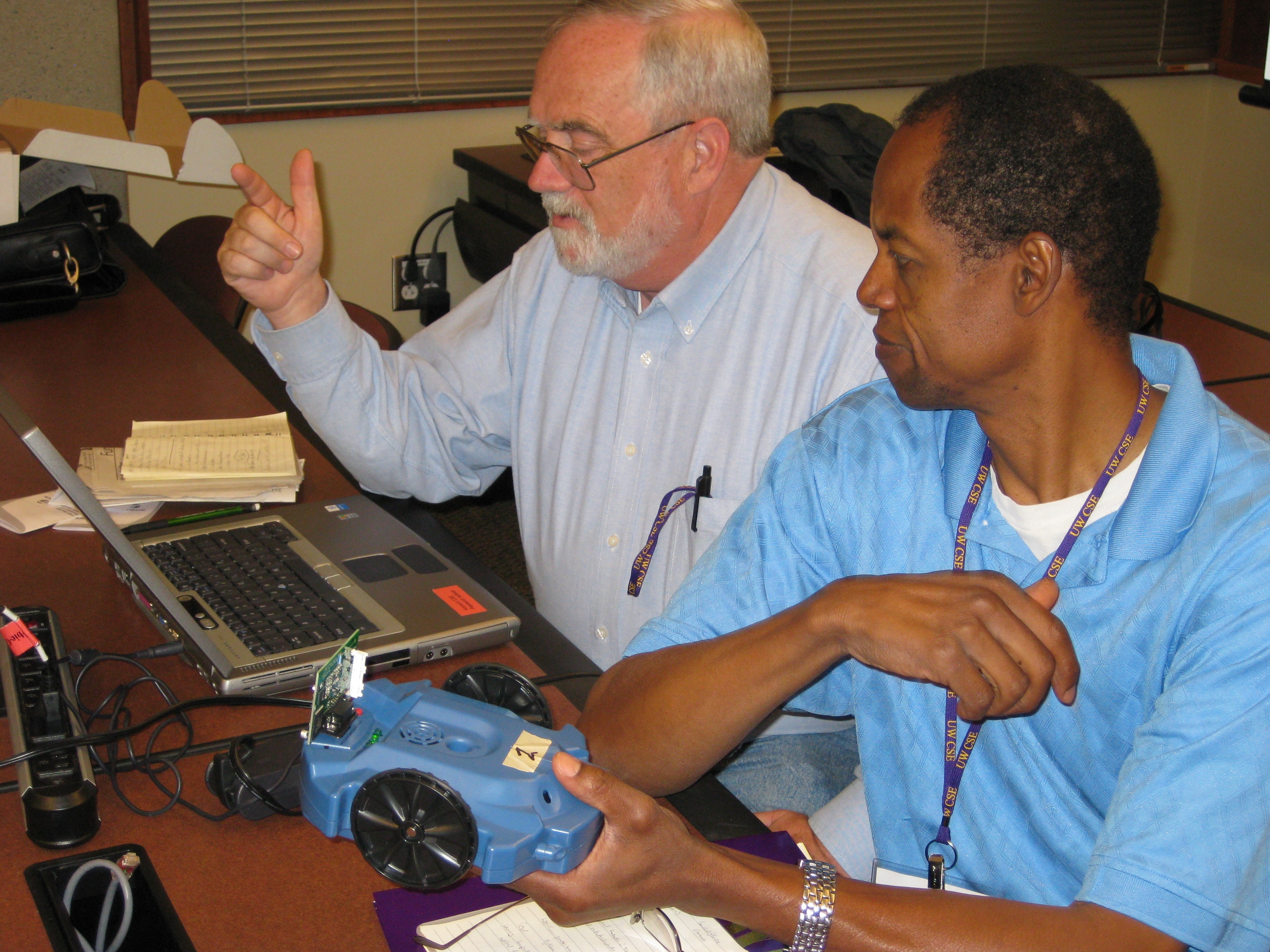
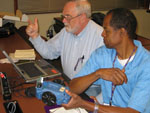 August 6-8 marked the third offering of CS4HS at the University of Washington, a computer science workshop for high school teachers of math and science.
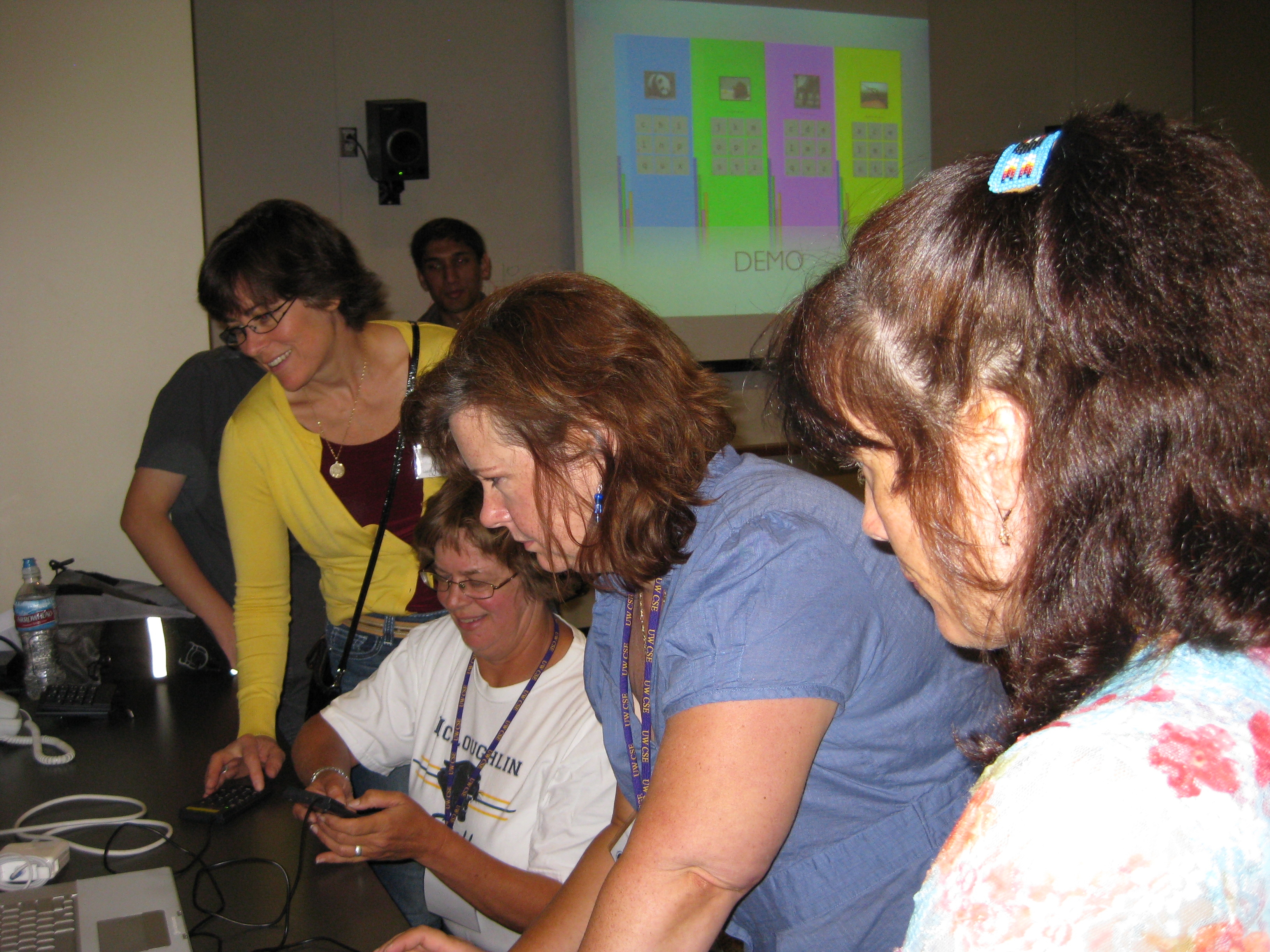
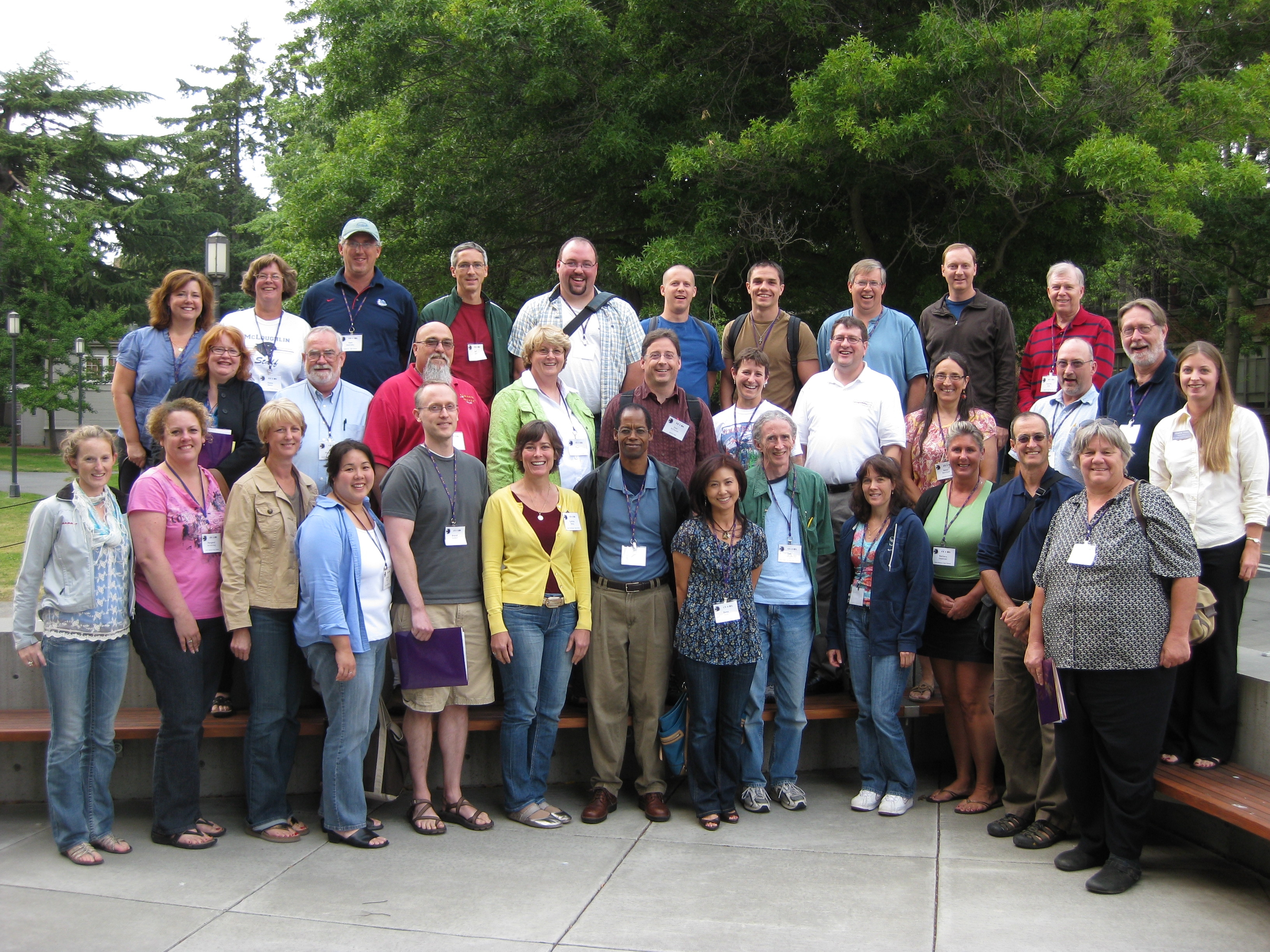
CS4HS is offered jointly by the University of Washington, Carnegie Mellon University, UCLA, the University of Texas at Austin, and Western Oregon University, and sponsored by Google. This year, at the UW offering, more than 30 teachers spent 3 days exploring topics such as synthetic biology, cryptography, computational thinking (using CS Unplugged), debunking stereotypes, careers in computing, visual programming using Squeak, robotics, recursion, and computing for individuals with disabilities.
 The UW CS4HS web page, including curricular materials, is here. Photos from this year’s workshop are here. Read more →
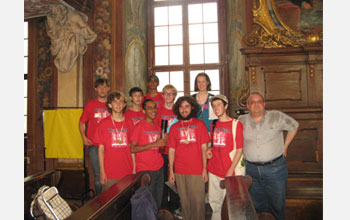 A news post by the National Science Foundation features the strong performance by U.S. high school students at the International Olympiad in Linguistics in Wroclaw Poland, including incoming UW CSE freshman Daryl Hansen. Daryl writes: “I heard about the North American Computational Linguistics Olympiad from one of my teachers, and went with one of my friends to go compete in it in March, since it sounded interesting. In the second round, I ended up 4th in the country, which put me in the top 8 that the organizers would then take to Poland for the ILO. We had a few months of weekly practice sessions over Skype, and then we got a free weeklong vacation in Europe that involved us taking some linguistics tests. So, yes, it was amazing to be there at all. I didn’t have much prior experience with linguistics or computational linguistics, but this and the NACLO made me a lot more interested in them both.”
Read the NSF post here. Read more →
 UW CSE’s “Vanish” project is featured by the National Science Foundation’s “The Discovery Files” podcast:
“I’m Bob Karson with ‘The Discovery Files’ – new advances in science and engineering from the National Science Foundation.
“Getting data onto the Internet is one thing; the real trick may be getting rid of the data. I mean when you write an extremely sensitive e-mail or chat message, you really have no idea where that information could turn up may be even years later.
“University of Washington researchers have developed a system for making things like web-based e-mails, Facebook posts and other sensitive data have a true expiration date. To make the data ‘disappear’ from the face of the earth – never to be retrieved by anyone …”
Listen to the full podcast here! Learn more about Vanish here. Read more →