Seattle #1 on Glassdoor’s list of best-paying cities for software engineers!

seattleskyline-630x420Seattle:

  • Median base salary: $113,242
  • 7.1 percent above national average cost of living
  • Real adjusted salary: $105,735
  • Job openings: 4,205

Followed by San Jose, San Francisco, Madison WI (only 105 job openings …), Raleigh, Austin, Boston, …

Read about it in GeekWire here. Read more →

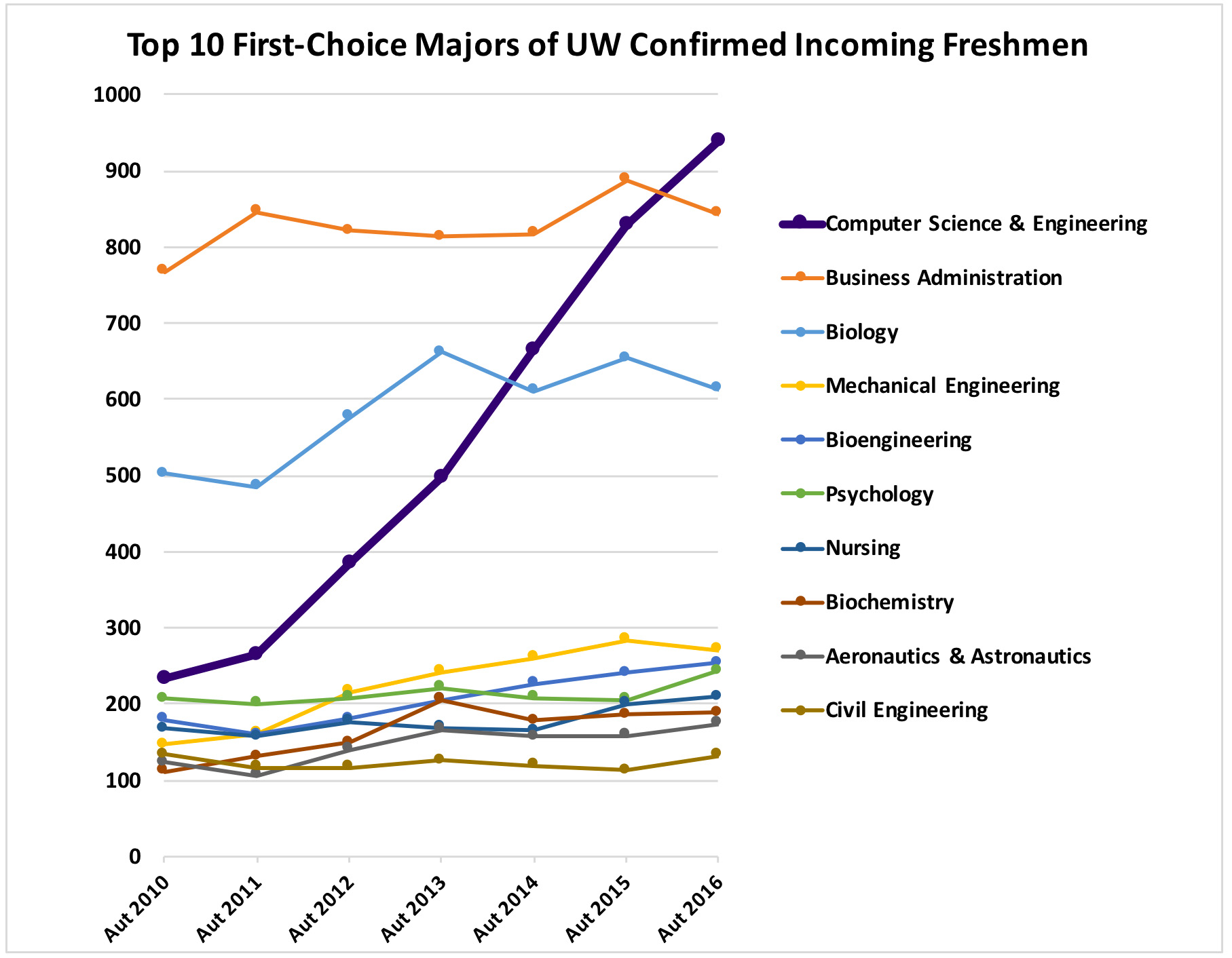
Top 10 First-Choice Majors of UW Confirmed Incoming Freshmen – 2016 Edition

Top 10 with borderThe results are in: CSE is now the first choice major of more of the University of Washington’s confirmed incoming freshmen than any other field.

We need to grow in order to be able to accommodate more of these students! And we’re trying!


Our friends at GeekWire picked this up:

“‘At UW and across the nation, student interest in computer science is booming,’ said Ed Lazowska, the Bill & Melinda Gates chair in the UW department of Computer Science & Engineering, in an email to GeekWire this morning. ‘It’s visible in 3 ways: enrollment in introductory courses, interest in upper-division courses by students majoring in other fields, and demand for the major.’ …

“‘Inevitably there are cycles in demand,’ he concluded. ‘But the long-term trend is clear — due to the long-term role of computer science in the world. And our region is at the center of much of this.'”

Much more detail in the GeekWire post here.

And check out the job demand data, here – “It’s all computer science!” Read more →

Sen. Maria Cantwell @ UW CSE

Ubicomp

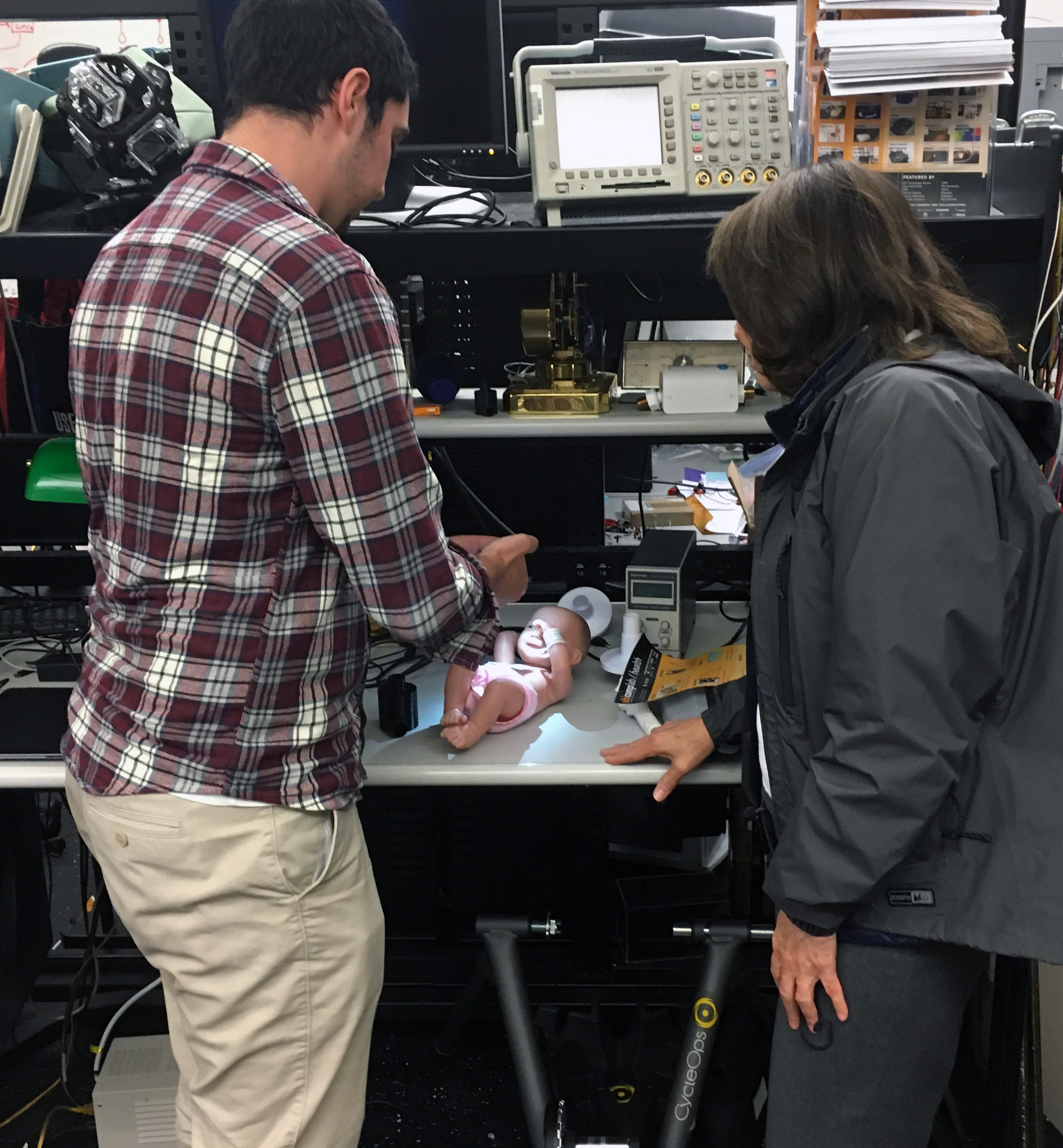
Alex Mariakakis demonstrates Bilicam to Sen. Cantwell. (No actual babies were harmed during this demonstration!)

U.S. Senator Maria Cantwell spent nearly two hours at UW CSE on Saturday afternoon, along with staffers Dayna Lurie and Nate Caminos. The agenda:

GRAIL

Steve Seitz demonstrates content created using Cardboard Camera, software developed by his team at Google.

Many thanks to Senator Cantwell for taking time from her busy schedule to learn more about what we do. Washington State is blessed with an extraordinary Congressional delegation. Read more →

What courses do high school students like “a lot”?

border

Original study by Change the Equation, the Amgen Foundation, and C+R Research

What courses do high school students like “a lot”?

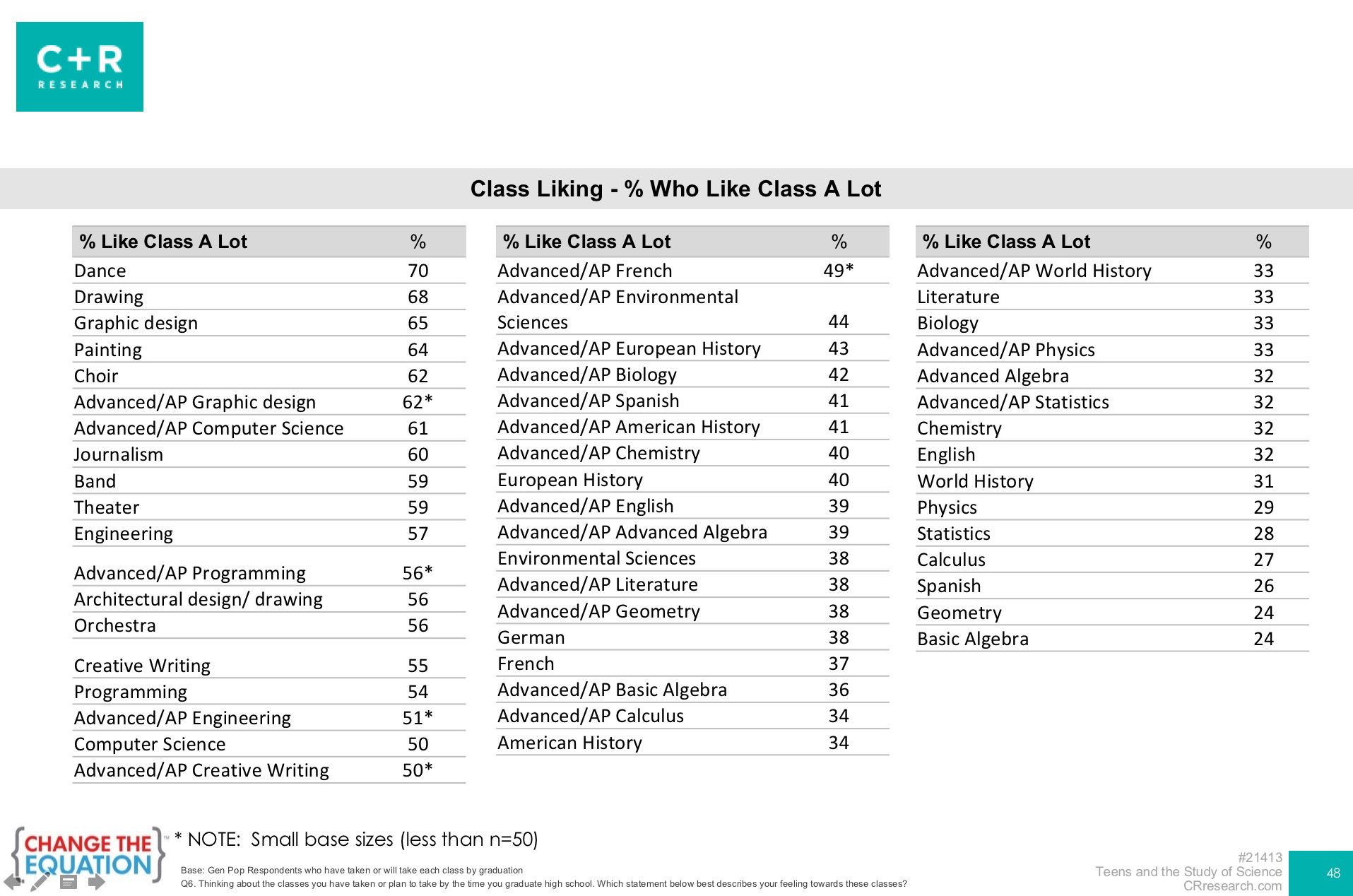
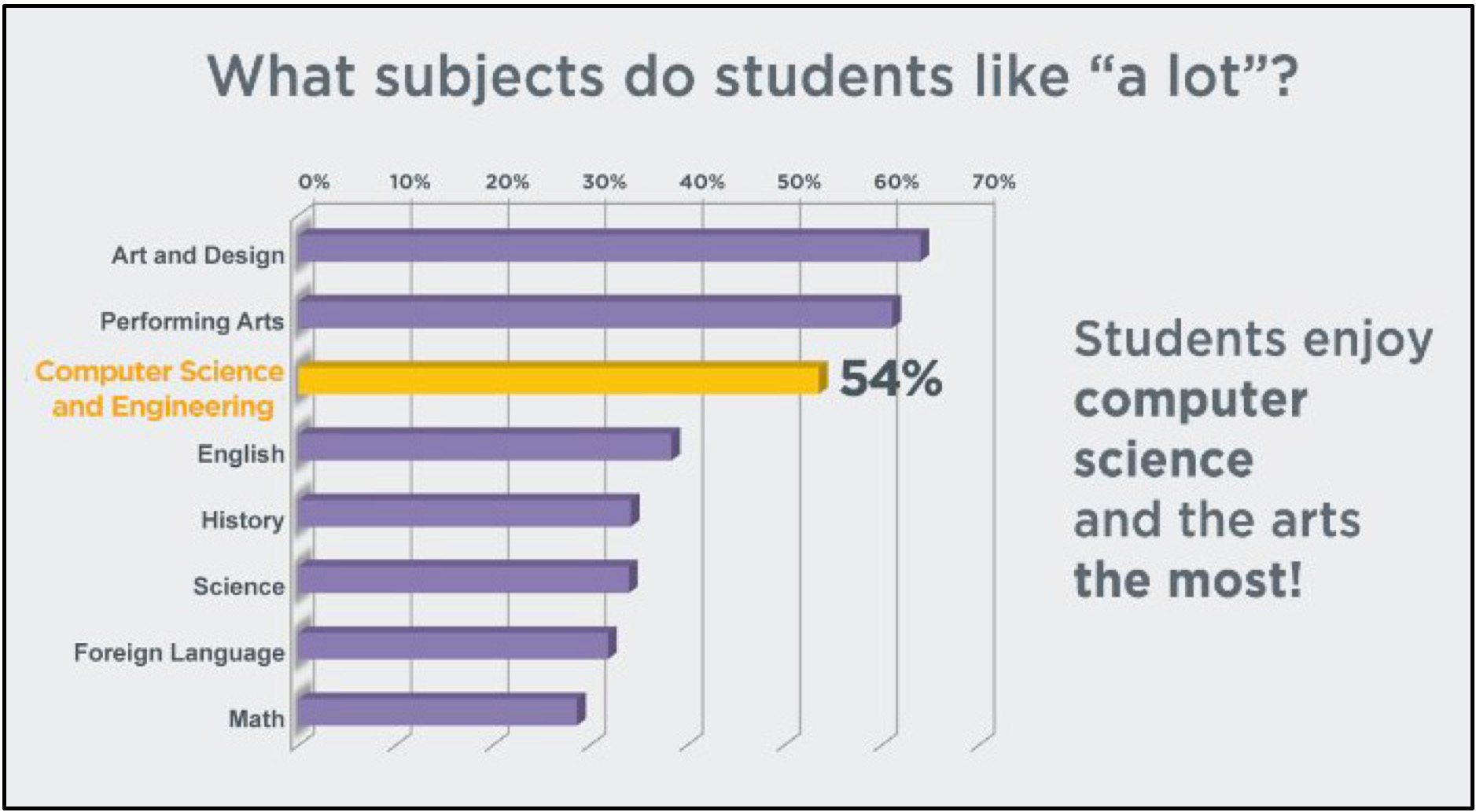
AP Computer Science blows away all other STEM fields! Among 52 fields, its popularity is exceeded only by Dance, Drawing, Graphic Design, Painting, and Choir.

The study, by Change the Equation, the Amgen Foundation, and C+R Research, was unearthed and analyzed by Code.org’s Hadi Partovi.

Hadi3

Hadi Partovi’s aggregated version

Hadi corrected the study for selection bias, and aggregated related fields – the results were just as dramatic!

Read Hadi’s blog post here. Read more →

Oren Etzioni in Wired: “Deep learning isn’t a dangerous magic genie. It’s just math”

GW20160134040-1024x768Oren Etzioni – CEO of Paul G. Allen’s Allen Institute for Artificial Intelligence and long-time UW CSE professor – writes in Wired:

“Deep learning is rapidly ‘eating’ artificial intelligence. But let’s not mistake this ascendant form of artificial intelligence for anything more than it really is. The famous author Arthur C. Clarke wrote, ‘Any sufficiently advanced technology is indistinguishable from magic.’ And deep learning is certainly an advanced technology – it can identify objects and faces in photos, recognize spoken words, translate from one language to another, and even beat the top humans at the ancient game of Go. But it’s far from magic. …

“Machine learning is far from being a ‘genie’ that is ready to spring from a bottle and run amok. Rather, it is a step in a decades-long (or, perhaps, centuries-long) research endeavor to understand intelligence and to construct human-level AI.”

Great essay! Read it here. Read more →

UW CSE awards a record 391 degrees

PhD2016

14 of UW CSE’s 23 2016 Ph.D. graduates

UW CSE awarded a record 391 degrees at our department graduation ceremony on Friday evening. (We are rapidly growing toward a total of 460 degrees per year, and hope to be funded to grow to 600 degrees per year – roughly double the number of just two years ago! An additional building is part of the plan.)

256 Bachelors degrees were awarded in Computer Science and Computer Engineering. Thirty percent of the Computer Science Bachelors recipients were women – not nearly at parity, but double the national average for our peers.

112 Masters degrees were awarded: 49 in our part-time evening/distance Professional Masters Program, and 63 to full-time students.

23 Ph.D.s were awarded.

At the ceremony:

  • Ruth Anderson – a 2006 UW CSE Ph.D. – received the ACM Student Chapter Undergraduate Teaching Award.
  • Bran Amour Hagger received CSE’s Undergraduate Service Award.
  • Darby Losey received CSE’s Undergraduate Honors Thesis Award.
  • Viktor Farkas and Krittika D’Silva received CSE’s Outstanding Computer Science Senior Award and Outstanding Computer Engineering Senior Award, respectively.
  • The Bob Bandes Memorial Excellence in Teaching Award recognized graduate student teaching assistants Adrian Sham and Nick Shahan, and undergraduate student teaching assistants Michael Lee and Melissa Galloway. Honorable mentions went to undergraduate student TAs Megan Hopp and Chloe Lathe.
  • Albert Greenberg (Ph.D. 1983) and Stefan Savage (Ph.D. 2002) received this year’s CSE Alumni Achievement Awards.

Congratulations one and all!

Check out the graduation program here. (Additional photos to come!) Read more →

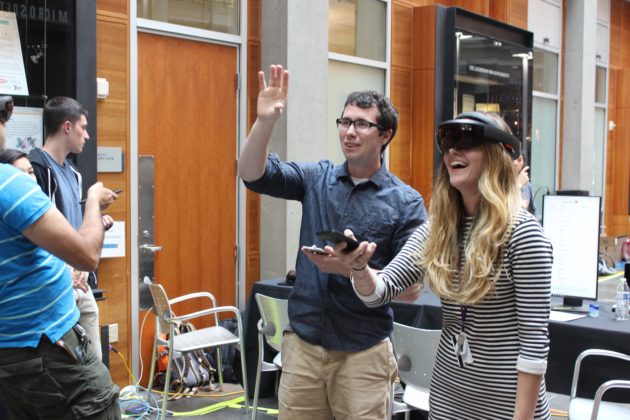
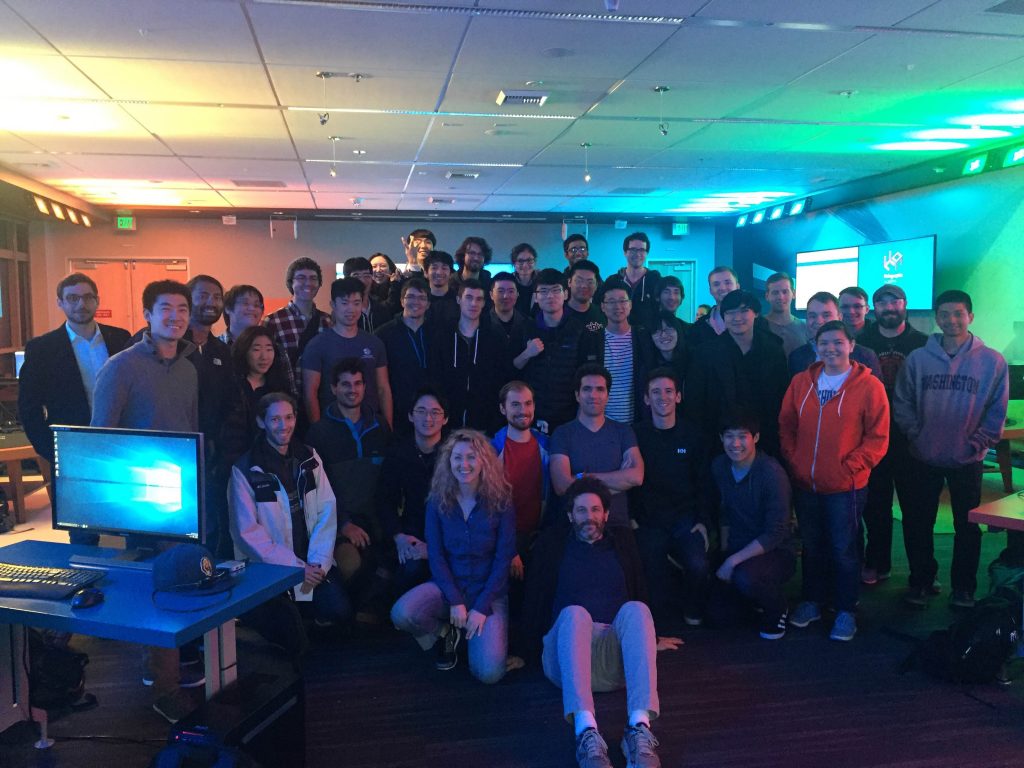
Demo day for UW CSE’s VR/AR capstone course!

hololensclass_0966-630x420A super GeekWire article:

“What happens when a group of talented computer science students at the University of Washington get to play with a HoloLens device for 10 weeks as part of a first-of-its-kind class?

“Well, a little bit of everything.

“The UW hosted a demo day on Thursday afternoon for its first-ever virtual and augmented reality capstone class that gave students from one of the nation’s top computer science departments a chance to develop apps for Microsoft’s HoloLens device.

IMG_20160609_155750“The energy inside the UW CSE building was buzzing as attendees tested out an array of fun and entertaining futuristic applications that ranged from making spring rolls to playing chess to learning piano to flying paper airplanes to destroying giant eyeballs.”

Read the GeekWire article here, and coverage by TechCrunch here. Find links to project websites through the course website here. Additional photos here.


Each year UW CSE offers a variety of “capstone courses” on various themes, in which teams of students conceive and carry out complex projects. These experiences are a key reason our students are in such high demand. The themes of some of this year’s capstones include robotics, games, accessibility, digital animation, computer animation, and augmented/virtual reality.

The AR/VR capstone was a first, nationally – an opportunity for students to work with the very latest technology, coached by some of the greatest minds in AR and VR from academia and industry. Microsoft, Google, Oculus, and Valve sponsored the course in tremendously important ways – for example, Microsoft provided 25 Hololens systems and extensive technical support.

vr_class Read more →

Albert Greenberg, Stefan Savage receive 2016 UW CSE Alumni Achievement Awards

At UW CSE’s graduation ceremony on Friday evening, 1983 Ph.D. alum Albert Greenberg and 2002 Ph.D. alum Stefan Savage will be recognized as the recipients of UW CSE’s 2016 Alumni Achievement Awards.

We inaugurated this award for two purposes: first, to recognize some of our most accomplished alumni; second, to make it clear to each year’s new graduates that they are joining a long line of men and women who have built upon their UW CSE education to change the world.

Albert Greenberg
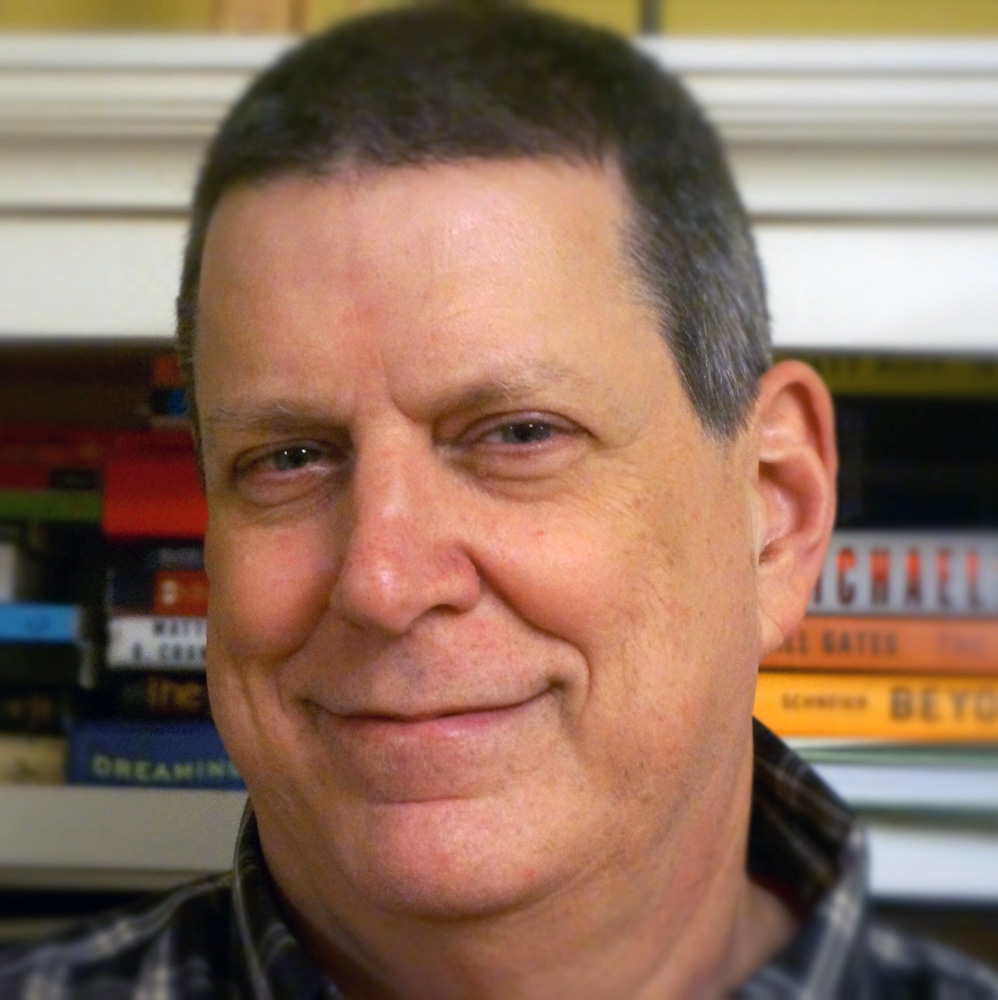
Albert Greenberg

Albert Greenberg, 1983 UW CSE Ph.D.

Albert Greenberg has worked on the front lines of grand scale networking and cloud computing for more than two decades, first at Bell Labs/AT&T and then at Microsoft.

Albert earned his Ph.D. at UW CSE in 1983 working on the development of efficient algorithms for multiple access channels alongside professors Richard Ladner and Martin Tompa. Before his arrival at UW CSE, he earned his Bachelor’s in Mathematics from Dartmouth College.

At Bell Labs/AT&T in New Jersey, Albert rose to division manager for network measurement engineering and research, and then to executive director and AT&T Fellow. He returned to Seattle in 2007, joining Microsoft as a Principal Researcher. For the past six years he has served as Distinguished Engineer and Director of Development for Microsoft’s Azure Networking, the company’s global cloud computing infrastructure platform that spans millions of servers around the globe and helps make Seattle the leader in cloud computing. Albert’s responsibilities encompass physical and virtual datacenter networking design and management, overseeing teams in Redmond, Mountain View, Hyderabad, Dublin, and Beijing.

The UW CSE Alumni Achievement Award is the latest in a string of honors for Albert. Earlier this year he was elected to the National Academy of Engineering – the profession’s highest honor. He is a Fellow of the Association for Computing Machinery and has received the SIGCOMM Award for his lifetime contribution to the field of communications networks, the IEEE Koji Kobayashi Computers and Communications Award, and multiple “Test of Time” awards for his research.

Stefan Savage
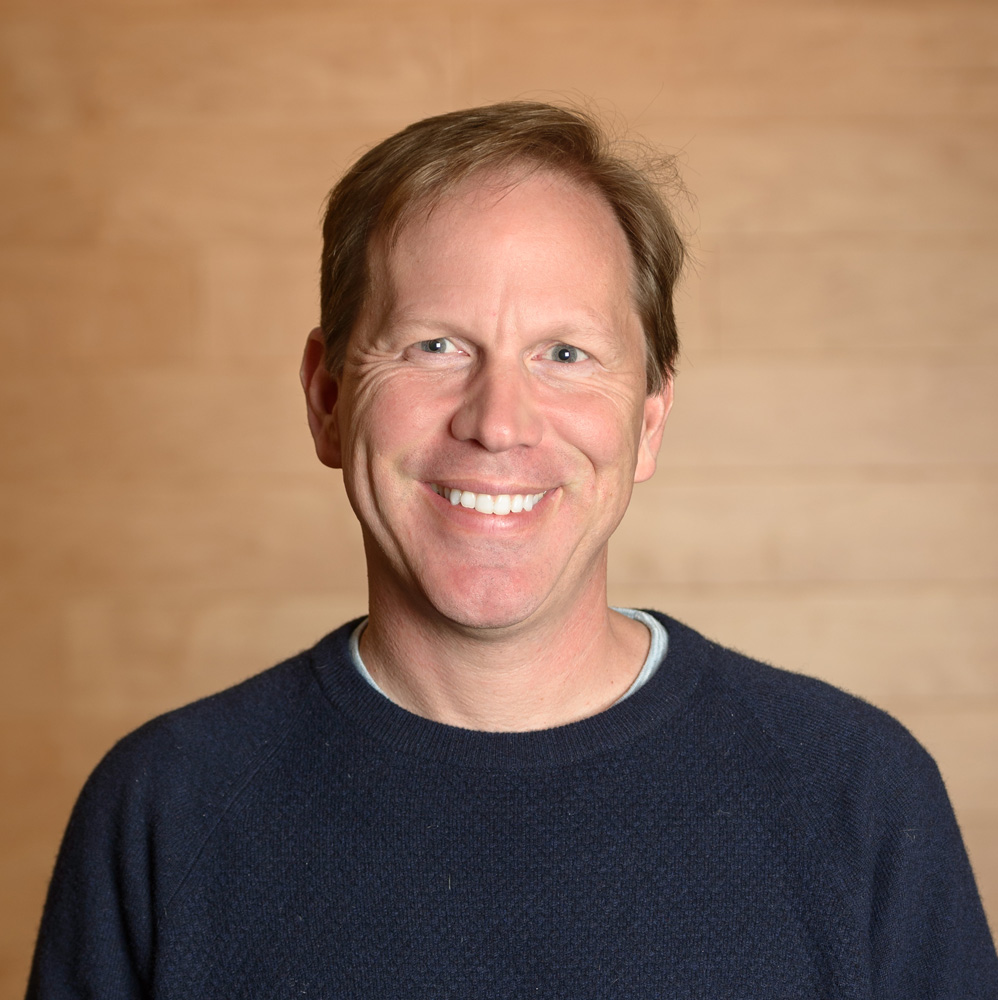
Stefan Savage

Stefan Savage, 2002 UW CSE Ph.D.

As a leader in the Systems & Networking and Computer & Network Security groups at the University of California San Diego, professor Stefan Savage has tackled everything from computer worms and online scams, to distributed attacks, insidious global consumer fraud networks, and automobile systems hacking. He is being honored twice this month for his outstanding research in network security and efforts to fight cyber crime: tonight he receives the UW CSE Alumni Achievement Award, and tomorrow, he collects the 2015 ACM-Infosys Foundation Award in the Computing Sciences.

Stefan earned his Ph.D. from UW CSE in 2002 working with professors Brian Bershad and Tom Anderson. His route to computer science academia was unorthodox. Having begun his studies as an undergraduate at Carnegie Mellon University in physics and cognitive science, he wound up earning a degree in applied history instead. He then spent two years working in a computer science lab at CMU before following Bershad to Seattle, earning admission to UW CSE’s doctoral program a year later.

Stefan received job offers from MIT, Stanford, UC Berkeley, CMU, Cornell, UCSD, and several others. He joined UCSD for the cultural fit and turned his attention to battling cyber drug crime and shutting down counterfeit software sales by tracking the flow of money. Stefan also co-founded the Center for Automotive Embedded Systems Security with UW CSE professor Yoshi Kohno to draw attention to the security vulnerabilities of modern automobile systems, and established the Center for Evidence Based Security Research in collaboration with the International Computer Science Institute at Berkeley. He won the SIGOPS Mark Weiser Award in 2013, earning plaudits for his “uncanny ability to ask exactly the right question, propose exactly the right solution, and see that solution through to impact.”


Read more about Albert and Stefan in MSB here. Read about previous recipients of the UW CSE Alumni Achievement Award here. Read more →

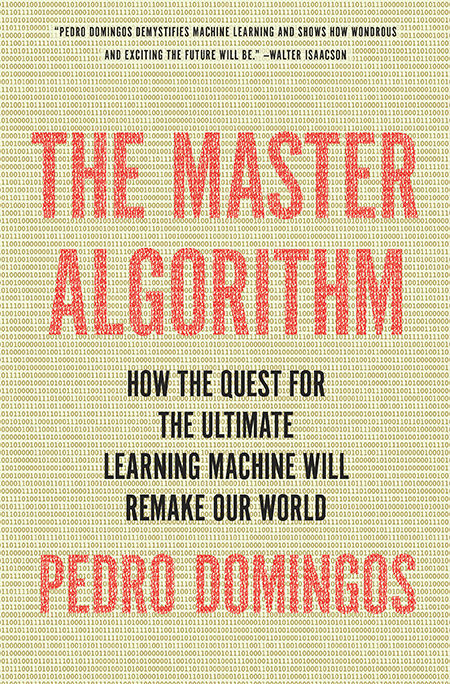
Bill Gates says “Read Pedro Domingos’s book!”

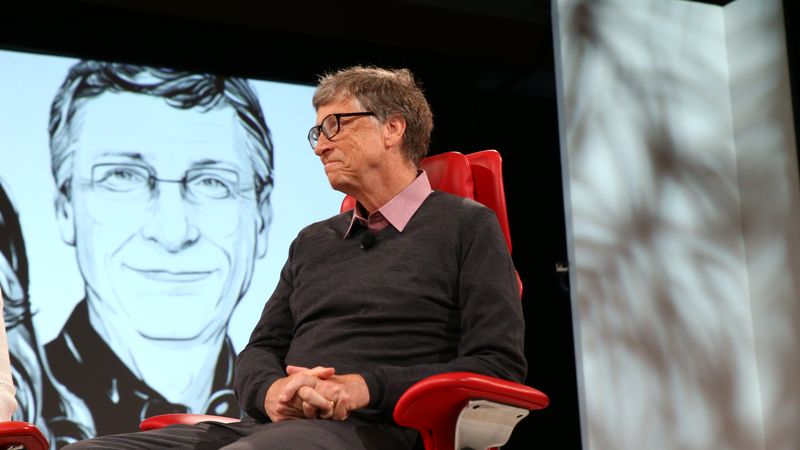
At this week’s Code conference, Bill Gates had a recommendation for the audience: Read “The Master Algorithm” by UW CSE’s Pedro Domingos.

Read about it in recode here and in Quartz here.

Learn about Pedro and “The Master Algorithm” here.

mstralg

REC_ASA_CODE2016-20160601-113604-1418.0.0


  Read more →

UW CSE hosts Youth Apps Challenge

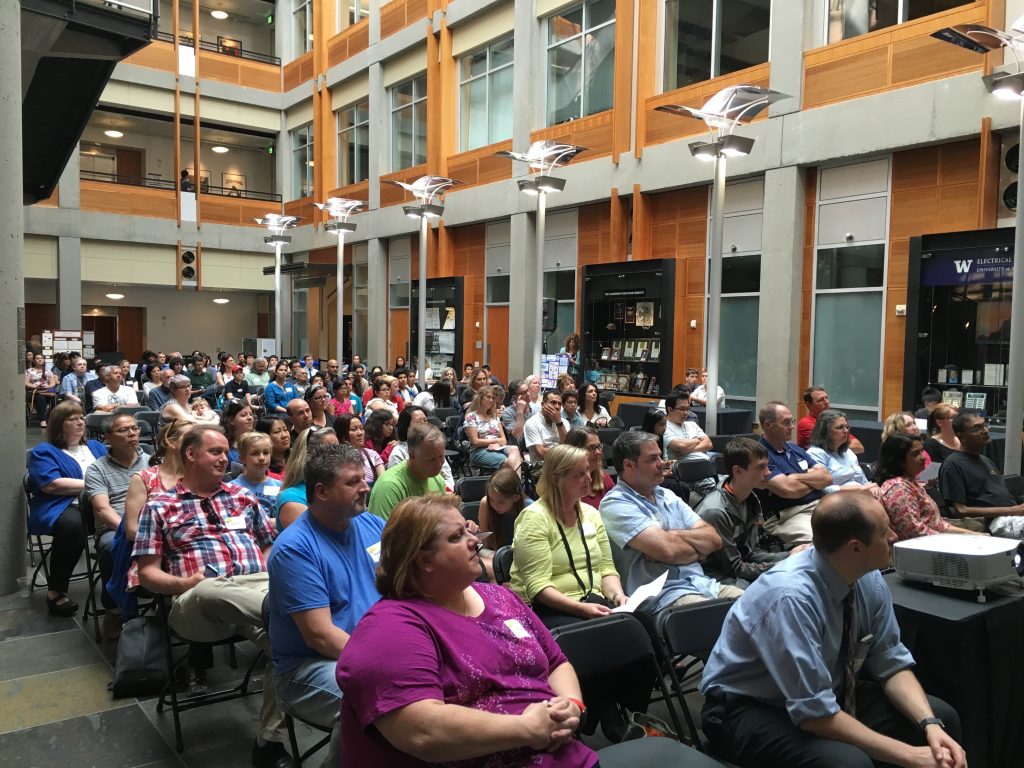
IMG_6876Again this year, UW CSE played host to the finalists in the Technology Alliance’s Youth Apps Challenge.

Youth Apps Challenge is a two-part program that introduces both teachers and students to the power and potential of programming. Youth Apps motivates teams of middle and high school students from across Washington to develop innovative computer applications that address everyday problems.

This year more than 50 teams of students (each with a faculty sponsor) submitted apps to the challenge. Fifteen finalists were selected to showcase their apps today in a live exhibition and pitch contest at the Allen Center.

Congratulations to all of the amazing participants in the 2016 Youth Apps Challenge – and to their amazing teachers and amazing parents! Read more →

« Newer PostsOlder Posts »