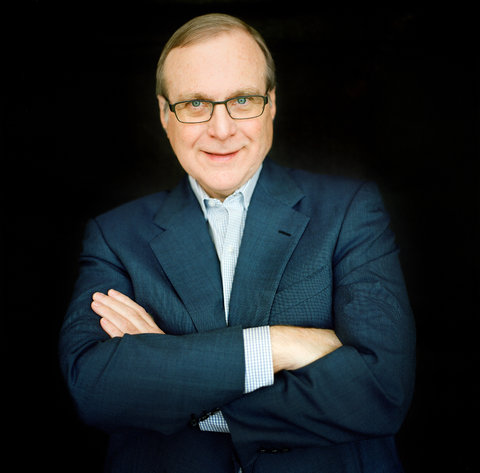
 Nick Wingfield interviews Paul G. Allen in the New York Times:
“Looking at Microsoft’s sprawling product line and 118,000 or so employees, it’s easy to forget that the company started with one modest product made by two ambitious people.
“In early April, one of those two people, Paul Allen, offered a reminder of Microsoft’s humble origins when he posted a photograph on Twitter commemorating the company’s 40th anniversary. The picture showed the introductory lines of the printed code for Microsoft’s first software product, an interpreter for the Basic programming language that Mr. Allen created with Bill Gates in 1975 …
“Nearly two years ago, he founded a private research group in Seattle to pursue breakthroughs in artificial intelligence. [UW CSE professor] Oren Etzioni, the computer scientist and entrepreneur Mr. Allen recruited to run the group, said Mr. Allen was very engaged in the work of the 40-person group.
“‘At his core, he’s still very much an engineer,’ Dr. Etzioni said.”
Read more here.
Read more →
 UW CSE is heavily featured in this Wall Street Journal article on AI:
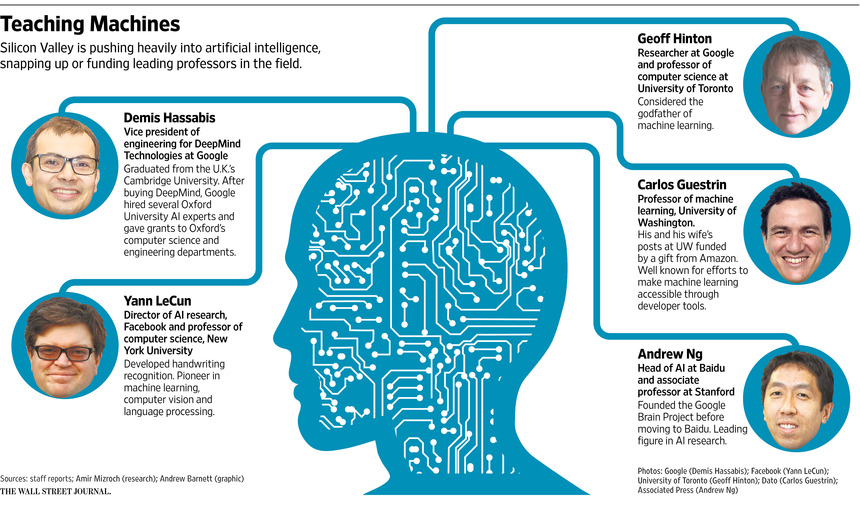
“When the University of Washington’s computer-science department wanted to poach artificial-intelligence expert Carlos Guestrin from Carnegie Mellon, it turned to Amazon.com Inc.
“The Seattle-based tech giant ponied up $2 million to fund two professorships: one for Mr. Guestrin, and another for his wife, who also works in the field. To seal the deal, Amazon Chief Executive Jeff Bezos met the academic during a campus visit.
“‘[Mr. Bezos] is a very smart guy. He has a crazy laugh,’ said Mr. Guestrin, now UW’s Amazon Professor of Machine Learning. ‘We got quickly into technical things: What was I working on in large-scale machine learning? How could I impact Amazon? What could this mean for the business of data?’ …
“Tech companies also are pouring funds into universities with expertise in the once-obscure field. University of Washington, based in the same state as Microsoft Corp. and Amazon, has long been a center of excellence for computer science, including artificial intelligence. Microsoft, Intel Corp. and Google, as well as Amazon, all fund some of UW’s AI research …
“‘There’s a massive battle under way for talent,’ said Oren Etzioni, on leave from UW’s computer-science faculty and now heading up the Seattle-based Allen Institute for Artificial Intelligence, a nonprofit set up by Microsoft co-founder Paul Allen.”
Read more here. Read more →
Harry Shum
Nick Wingfield in the New York Times:
“A big part of Microsoft’s fate rests with its research arm, the quasi-academic group responsible for conjuring breakthroughs that will keep Microsoft relevant for generations to come.
“On Monday, Harry Shum, the Microsoft executive vice president who oversees the research operation, was bursting with pride while demonstrating Skype Translator, a new product that incorporates years of work by researchers to convert voice conversations from one language to another in real time …
“Breaking down barriers at Microsoft is still a work in progress, but some executives said the tone had changed markedly. ‘Skype had every reason to push back,’ said Peter Lee, a corporate vice president at Microsoft Research. ‘But instead Gurdeep, especially, just embraced this.’
“‘There’s an eagerness in the business units to pick up ideas that are going to make a significant difference,’ said Ed Lazowska, a professor of computer science at the University of Washington, who is on the technical advisory board for Microsoft Research.”
Read more here. Read more →
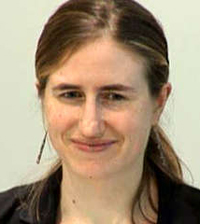
Emma Brunskill
UW CSE Bachelors alumna (and Carnegie Mellon faculty member) Emma Brunskill, and UW CSE adjunct professor (and Amazon Professor of Machine Learning in Statistics) Emily Fox, are two of the 36 recipients of 2015 Office of Naval Research Young Investigator Awards.
The ONR Young Investigator Program is designed to promote the professional development of early-career academic scientists, both as researchers and as educators. For awardees, the funding supports laboratory equipment, graduate student stipends and scholarships, and other expenses critical to ongoing and planned studies.This year’s candidates were selected from 383 research proposals based on merit and potential breakthrough advances for the Navy and Marine Corps. All are college and university faculty who have obtained tenure-track positions within the past five years.
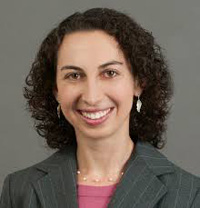
Emily Fox
Congratulations to Emma and Emily!!!!!
Read more →
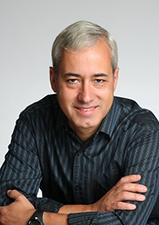
Pedro Domingos
The “Science” section of today’s edition of the UW campus newspaper, The Daily, considers the future of artificial intelligence, featuring UW CSE professors Pedro Domingos and Dan Weld.
Pedro and Dan suggest that people’s fear of machines taking over the world is greatly exaggerated based on the current state of AI research and the difference between human thought – using common sense and multipurpose intelligence – and the way machines’ “thinking” is confined by their programming and the goals that humans set for them.
That’s not to say that there aren’t valid concerns associated with AI, including robots supplanting people in certain jobs and the potential for computers to misinterpret the directions humans give them. And “strong” AI that would grant machines multipurpose intelligence – although a long way off – would require safeguards.
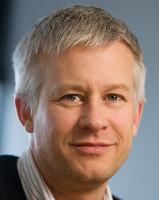
Dan Weld
But, as Pedro points out, the problem at this stage isn’t that machines are getting too smart and may take over the world, but that “they’re too stupid and they’ve already taken over the world.”
It is a fascinating discussion with two of the leading minds in AI research. Check out the full article here. Read more →
 Earlier this week, we posted about a team of UW students advised by UW CSE’s Alan Borning and Anat Caspi who made it into the final round of the city’s Hack the Commute competition. Last night, the team pitched their app, Access Map, to a panel of judges at City Hall – and they won!
Read all about it courtesy of this great article in GeekWire here and KUOW’s story here.
Congratulations to students Nick Bolten, Allie Deford, Reagan Middlebrook and Veronika Sipeeva and their advisors, Alan and Anat, on the big win! Read more →
 Tony Hey – UW CSE Affiliate Professor, Senior Data Science Fellow in the UW eScience Institute, and retired Vice President of Microsoft Research Connections – will discuss his recent book, The Computing Universe: A Journey Through A Revolution, at two events this spring:
- Tuesday, May 12, 7 p.m., at the University Bookstore, 4326 University Way NE. Information here.
- Tuesday, June 23, 7:30 p.m., at Town Hall Seattle, 1119 Eighth Avenue, downstairs. Information here (registration required).
Tony’s book is a fascinating tour through the history of our field: short self-contained, illustrated chapters explaining the ideas behind hardware, software, algorithms, Moore’s Law, the birth of the personal computer, the Internet and the Web, the Turing Test, Jeopardy’s Watson, World of Warcraft, spyware, Google, Facebook, and quantum computing.
Read the book, and join Tony at one of these events! Read more →
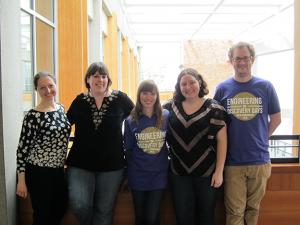
Left to right: Anat Caspi with students Reagan Middlebrook, Veronika Sipeeva, Allie Deford and Nick Bolten
Hackcessible – a team of students advised by UW CSE professor Alan Borning and Anat Caspi, director of the Taskar Center for Accessible Technology – will be one of three groups competing at Seattle City Hall this Wednesday in the championship round of Hack the Commute.
The students, who hail from Electrical Engineering, Human Centered Design & Engineering, and UW Tacoma’s Computer Science & Systems program, developed an app called AccessMap that enables users to plan their route in Seattle based on their individual accessibility needs. AccessMap provides information about changes in elevation, the presence of curb ramps and other data designed to assist people with mobility concerns, such as those in wheelchairs, to navigate the city.
The team used a combination of publicly available and user-submitted data, designing the app to enable people to report obstacles and verify information that is contributed by others.
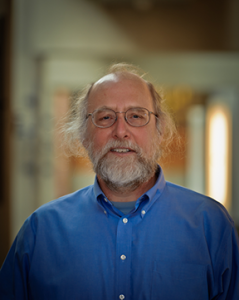
Alan Borning
“I’m really impressed with the work this team put in,” said Caspi, noting that the students talked to a lot of people to identify what’s missing from the publicly available data that would be helpful if incorporated into the app. “In one instance, they found a gentleman who keeps information about the location of elevators in his head.”
“We see this as an opportunity to collaborate with the city to make its information more useful to everyone.”
Check out the live app here.
Learn more about Hack the Commute here.
Register for free to see Hackcessible in action at Wednesday’s championship event here. Read more →
 Today, UW CSE’s Networks & Mobile Systems Lab released an alpha version of uProxy, a new browser extension for Chrome and Firefox that leverages social networks and trust between friends to provide web surfers with safe and unfettered passage through the internet.
Users of uProxy are able to share a trusted Internet connection with friends or to route their own traffic through a friend’s computer, essentially creating a personalized VPN (virtual private network) that makes it more difficult for third parties to monitor or interfere with their online activity. The alpha version is compatible with Google Hangouts and Facebook, and developers hope to add more social networks in future.
uProxy – which was developed at UW CSE with contributions from Google, Brave New Software and the open source community, and seeded by Google Ideas – is the culmination of two years of development. Way to go, team!
Learn more and try uProxy for yourself here. (And once you’ve tried it, be sure to provide the developers with your feedback!) Read more →
 Code.org’s Hadi Partovi writes in TechCrunch on today’s Seattle tech ecosystem, and the dramatic changes in the past 5-10 years:
“The last 10 years have seen a sea-change in Seattle, caused by two forces.
“The first part of the change has been the rise of a new breed of large Seattle-based tech companies – companies that are still smaller than the two local titans, Microsoft and Amazon, yet large enough to fill out the middle tier of the tech ecosystem …
“The second force has been the increasing appearance of Silicon Valley engineering offices in the Seattle metro area. Google was one of the first major Silicon Valley companies to open an engineering office in Seattle … A decade after Google set up shop in this city, Seattle has seen an explosion of Silicon Valley companies setting up their second engineering office …
“Seattle stands out as the first stop for three reasons:
“(1) Seattle has one of the largest populations of software engineers, in part because of the original recruiting power of Microsoft during the 1980s and 1990s …
“(2) The University of Washington houses one of the top 10 computer science programs in the country, with a steady flow of graduates who want to remain in the region. A recent analysis of LinkedIn data by a Boston startup found that of UW graduates in the past two years who list their occupation as “software engineer,” 90% reside in Seattle! . The New York Times extensively profiled UW CSE’s impact on the local tech scene in 2012.
“(3) Seattle is in the same time zone as San Francisco.”
Read more here. Read more →