Apple’s Tim Cook: “We pave the sunlit path toward justice together, brick by brick. This is my brick.”

28bits-cook-master675Read more in the New York Times here and here.

CSE’s  Ed Lazowska is quoted in the latter article:

“Edward Lazowska, a professor of computer science at the University of Washington, said most technology companies, like most universities, have policies that say they are open to women, gays, lesbians and members of minority groups.

“‘But down at the rank-and-file level is where these policies are put into practice, and that’s where many of us fall short,’ he said. ‘My view has always been that the majority of people have good intentions, but inadvertently create an unwelcoming environment for people who are not like them.'”

[Just for the record, here’s what I actually said:

“The final quote – ‘We pave the sunlit path toward justice together, brick by brick. This is my brick’ – brings tears to my eyes.

“I hope this is a watershed moment.

“Most tech companies, like most universities, are tolerant as a matter of policy – they are open to women, to LGBTs, to members of under-represented racial and ethnic groups.

“Down at the rank-and-file level, however, is where these policies are put into practice, and that’s where many of us fall short.

“My view has always been that the majority of people have good intentions, but inadvertently create an unwelcoming environment for people who are not like them.  There are (at least) two aspects to this.

“First, ‘the system’ in tech, as in academia, has been put into place by aggressive straight white males.  Inevitably this ‘system’ is biased towards rewarding the characteristics of those who put it into place.  (In principle, a ‘quantitative’ evaluation system should level the playing field, but the ‘weights’ applied to various factors are established by those who succeeded under the old rules – guys like me.)

“Second, there is a general lack of sensitization to the things that we all do, large and small, that create an unwelcoming environment. Here’s an example from this morning – a Facebook post from a Ph.D. alumna of ours (Stanford undergrad – a real hotshot) who works at a large tech company in Seattle:

Today I was invited to a leadership thingy at work. The email included ~5 people from each team in my org, their email addresses listed in order by their team. The list closed with 7 additional people whose names were placed at the end, instead of with the others from their team. These last 7 people were all women.

Can anyone think of a more generous explanation for this than affirmative action for women? And should being one of the 7 make me happy or sad?

“The person who added the 7 women to the list was undoubtedly trying to do the right thing, but the way it was handled (a) clumsily stigmatized these 7 women, and (b) speaks to a biased evaluation system that initially omitted them.

“Tim’s statement today is tremendously important, but it’s just a beginning. Top to bottom, Apple, and every tech company, and every academic computer science program, needs to send the message every day, in every way, that we are working to create a level playing field. It requires constant effort and attention at every level of the organization.

“I often quote Bill Wulf on the value of diversity in tech:

First, engineering is a very creative profession. That is not the way it is usually described, but down to my toes I believe that engineering is profoundly creative. Second, as in any creative profession, what comes out is a function of the life experiences of the people who do it. Finally, sans diversity, we limit the set of life experiences that are applied, and as a result, we pay an opportunity cost – a cost in products not built, in designs not considered, in constraints not understood, in processes not invented …

Every time we approach an engineering problem with a pale, male design team, we may not find the best solution. We may not understand the design options or know how to evaluate the constraints. We may not even understand the full dimension of the problem.

“In other words, diverse workforce = better result.  Duh.”] Read more →

“We’re Number Fourteen! …”

Untitled… which is pretty darned good. US News has released its first ranking of “Global Universities” and the University of Washington comes in at #14: just behind Princeton, just ahead of Yale, and tied with Michigan and Toronto.

US public institutions in the top 25 (of more than 700 universities that were ranked) include Berkeley (#3), UCLA (#8), Michigan (#14), UW (#14), UCSD (#18), and UCSF (#22).

Important disclaimer: We don’t put much stock in any rankings. We publicize the ones where we look good, we bury the others.

Rankings here. Seattle Times article here. Read more →

Crosscut on UW CSE’s LivingVotersGuide

UntitledCrosscut writes:

“As elections matter more, voters seem to become more frustrated and overwhelmed with the process …

“et our election decisions profoundly affect the quality of our communities and our personal lives …

LivingVotersGuide.org supports that path to engaged and informed voting. Developed by Seattle CityClub in partnership with University of Washington, this online tool helps Washingtonians consider their choices, get relevant background information and discuss candidates and ballot issues with each other.”

(In 2010 Seattle CityClub partnered with a team of Computer Science & Engineering and Political Science researchers at the University of Washington to develop an online tool to inform voting decisions, inspire public trust in one another, and reclaim citizens’ power and shared responsibility for making our democracy work. Alan Borning led the CSE team, working with Ph.D. student Travis Kriplean.)

Read more here. Read more →

UW CSE’s Carlos Guestrin: “Geek of the Week”

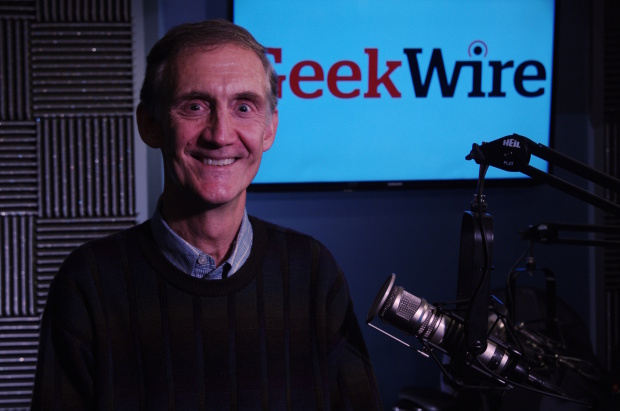
Carlos-GuestrinGeekWire‘s “Geek of the Week” this week? UW CSE professor Carlos Guestrin:

“Carlos Guestrin wants to bring big data and machine learning to the masses.

“Guestrin, the CEO and co-founder of GraphLab, is the Amazon Professor of Machine Learning in Computer Science & Engineering at the University of Washington. He’s a leader in the field of machine learning, who was named one of the 2008 “Brilliant 10″ by Popular Science magazine, received the 2009 IJCAI Computers and Thought Award for his contributions to Artificial Intelligence, and was awarded a Presidential Early Career Award for Scientists and Engineers.

“Meet our new ‘Geek of the Week,’ and continue reading for his answers to our questionnaire.”

Previous UW CSE “Geeks of the Week”: Julie Kientz, Melissa Winstanley, Oren Etzioni (also 2012’s “Geek of the Year”), Lauren Bricker, Yaw Anokwa, Wendy Chisholm, and Marty Stepp.

Read more here. Read more →

Welcome to Seattle, Alibaba!

alibabaTechFlash reports the location of Alibaba’s new Seattle office.

“This is the Chinese e-commerce giant’s second U.S. office after a space opened recently in Silicon Valley. Alibaba has been recruiting engineers in Seattle, but the location of the office was not revealed …

“Alibaba is subleasing 8,000 square feet on a short-term basis from Synapse Product Development … Alibaba is looking for a longer term office with as much as 60,000 square feet.”

Seattle … it’s where it’s happening!

Read more here. Read more →

Hadi Partovi @ UW CSE: “Computer Science: Changing the World vs. Making Money”

IMG_7405(1)A superb UW CSE Distinguished Lecture by Hadi Partovi of Code.org. Links to streaming and downloadable video of Hadi’s talk here.

Next up: Marti Hearst on Thursday – information here. Read more →

Seattle Times: “UW researchers pulling energy out of thin air”

gs

Shyam Gollakota and Joshua Smith

Brier Dudley writes in the Seattle Times:

“Cisco claims the next big thing in technology — the “Internet of Things” — is a $19 trillion opportunity for businesses and governments.

“The Internet of Things refers to billions of sensors, cameras and other data-gathering gadgets and related services emerging to monitor, analyze and manage the world …

“They’ll all need electricity and connectivity so you’d think half of the $19 trillion might end up spent on batteries, and the labor to replace them over and over again.

“Battery makers shouldn’t break out the bubbly just yet, though.

“A team of researchers at the University of Washington have timely new technology that could make the Internet of Things easier to set up and run.

“They figured out how to power and connect devices that run without batteries, plugs or cables. Instead, they’ll pull power out of thin air and piggyback on nearby Wi-Fi signals.

“Computer-science faculty members Joshua Smith and Shyam Gollakota have been wowing the academic community with demos of this technology – and steadily boosting its capabilities – for years.

“Now they’re starting a company to begin producing truly wireless, battery-free sensing devices that could go on sale within a few years.

“Called Jiva Wireless, the company was briefly mentioned during a research showcase last week at the UW’s Computer Science & Engineering department.”

Read more here. Check out the research here and here. Read more →

[UW CSE Ph.D. alum] “Anne Condon: Computer Scientist. Passionate academic. Triathlete.”

screen-shot-2014-10-27-at-6-46-03-amUW CSE Ph.D. alum Anne Condon, the head of the CS department at the University of British Columbia, talked to TechRepublic about her career in academia and the power of teaching computer programming:

“Anne Condon had to choose her college major while she was in high school. She’d never seen a computer, so she picked computer science. It sounded like a promising field.

“Luckily, she loved it the moment she began programming …

“It felt like a field in which women were very strong, she said. … Condon has devoted her life to developing better undergraduate computer science programs, particularly for young women.”

Anne received the 2014 Technical Leadership ABIE Award from the Anita Borg Institute, was elected a Fellow of the Royal Society of Canada in 2012, received the 2012 University of Washington College of Engineering Diamond Award for Distinguished Achievement in Academia in 2012, received the 2011 University of Washington Computer Science & Engineering Alumni Achievement Award, and received the A. Nico Habermann Award from the Computing Research Association in 2010. She was elected an ACM Fellow in 2010.

Read more here.

  Read more →

GeekWire: “To meet demand, University of Washington moves forward with plans to build new computer science building”

cse142-14wi-midterm-620x465GeekWire writes:

“Demand for computer science education at the University of Washington is reaching record levels, and now the school is taking action to accommodate it.

“The UW today submitted an official request to architects interested in designing a second computer science and engineering building that “will allow a dramatic expansion of our activities in education, research, and interaction with the campus, the region, and the nation,” according to the nationally-recognized CSE department.”

Read more here. And read our post here. Read more →

Computer Science & Engineering II

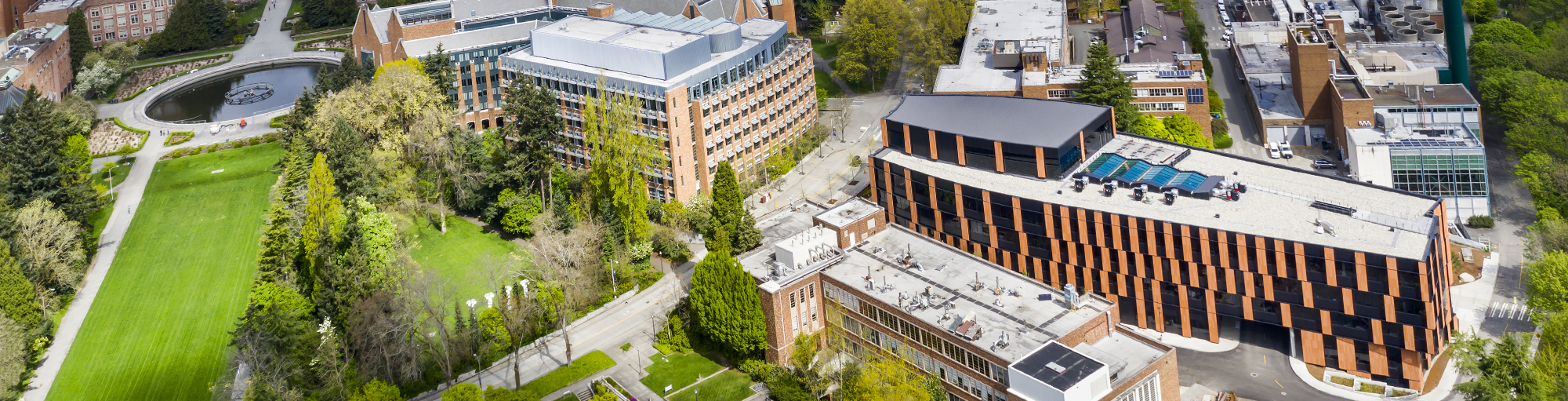
Allen CenterToday the University of Washington published a “Request for Qualifications for Architectural Services for Computer Science & Engineering II” – a second building for UW CSE that will enable a dramatic expansion of our activities in education, in research, and in interaction with the campus, the region, and the nation.

The University is requesting a state appropriation, and will seek significant private donations for the remaining funding of the project.

Eleven years ago – in October 2003 – UW dedicated the Paul G. Allen Center for Computer Science & Engineering, funded through a public/private partnership. Coupled with investments by the state since that time, the Allen Center has enabled remarkable strides by UW CSE.

The state has funded further growth for UW CSE, and additional investments seem likely. However, the Allen Center is filled to capacity. Additional facilities are necessary if additional growth – demanded by students, by industry, and by our economy – is to be accommodated.

Construction of CSE II will enable (assuming continued state funding for enrollment increases):

  • Doubling the number of CSE degrees granted annually, from roughly 300 to roughly 600. More in the long term.
  • Continued growth in introductory course enrollment; extrapolating recent trends and examining some of our national peers suggests that demand could grow by 50-100% in the next 5 years, easily to more than 6,000 students/year.
  • Dramatic expansion in the availability of current and newly-designed upper-division CSE courses for non-majors. These students will then be positioned for far greater success in whatever career they may choose (because every field is becoming an information field!), and additionally will be well qualified for employment at the many hundreds of companies in the region that are challenged in competing with the Amazons, Microsofts, Facebooks, Googles, and hot startups for top computer science majors.
  • Continued growth in research activities and funding, and in the technology transfer and startups that are a byproduct of CSE’s research activities. (CSE’s annual research funding increased from $7 million in the year prior to the dedication of the Allen Center, to $20 million as of the 10th anniversary. In recent years, UW CSE startup companies have raised more than $200 million in venture funding; they employ hundreds of people in the region.)

Expansion of UW Computer Science & Engineering an essential investment in the future of our region, and will provide a dramatic increase in the opportunity for kids who grow up here to be first-tier participants in our innovation economy.

Onward!

(Read a case statement here.) Read more →

« Newer PostsOlder Posts »