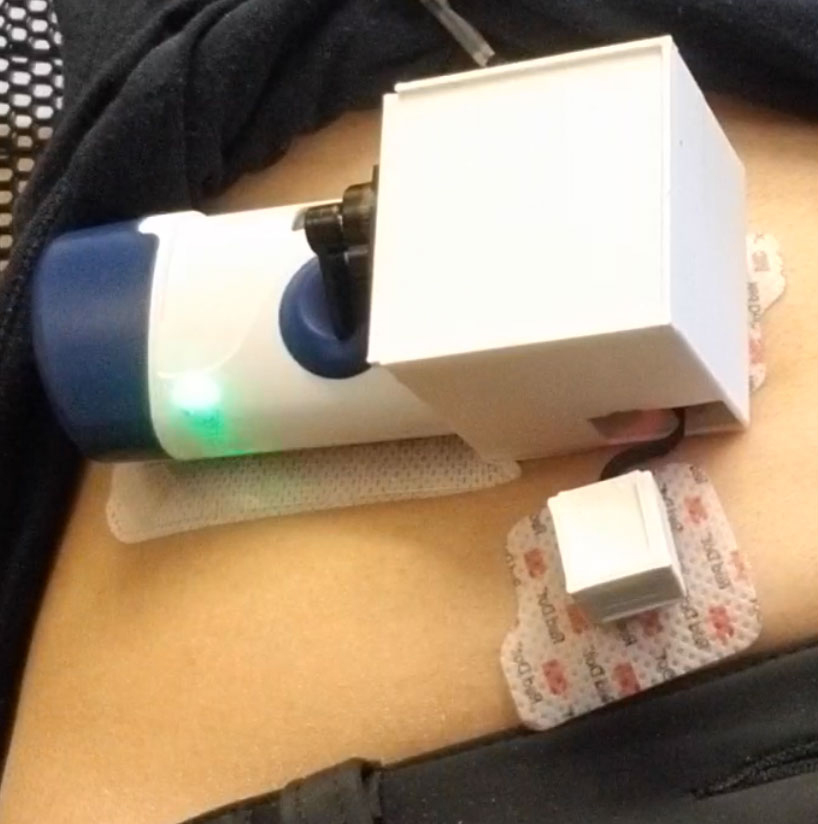
Researchers at the UW and West Pharmaceutical Services have prototyped a wearable device capable of detecting signs of an opioid overdose to automatically deliver a subcutaneous dose of naloxone.
While COVID-19 gets most of the headlines these days, another epidemic has been plaguing communities for years before the emergence of the novel coronavirus. The opioid epidemic, which the United States declared a public health emergency in 2017, has impacted millions of lives — many permanently. According to the latest figures from the U.S. Department of Health and Human Services, in one year alone, roughly 10 million people misused prescription opioids and 1.6 million were diagnosed with an opioid use disorder. More than 48,000 people died from an overdose of synthetic opioids other than methadone, with an estimated 14,500 additional deaths attributed to heroin overdose.
An injectable medication, naloxone, is known to rapidly reverse the effects of opioid toxicity if it is administered in time. For people who are alone when an overdose occurs, however, time is not on their side.
A team of University of Washington researchers led by Allen School professor Shyam Gollakota and Dr. Jacob Sunshine, a physician scientist in UW Medicine’s Department of Anesthesiology and Pain Medicine, set out to change that by devising a solution that integrates state-of-the-art computational capabilities with a commercially available, wearable injector platform for subcutaneous drug delivery manufactured by West Pharmaceutical Services. The resulting prototype, which the researchers describe in a paper published today in the journal Scientific Reports, is capable of automatically delivering a life-saving dose of naloxone to a person at the first sign of distress — without waiting for outside intervention.
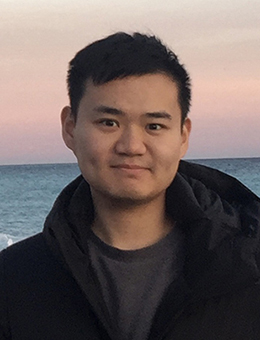
“The opioid epidemic has become worse during the pandemic and has continued to be a major public health crisis,” said Allen School Ph.D. student and lead author Justin Chan in a UW Medicine news release. “We have created algorithms that run on a wearable injector to detect when the wearer stops breathing and automatically inject naloxone.”
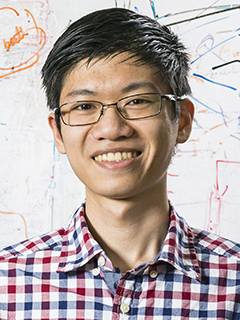
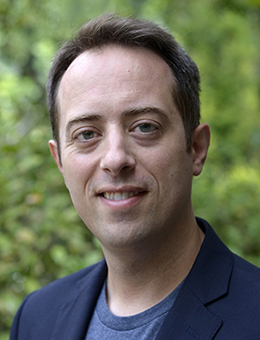
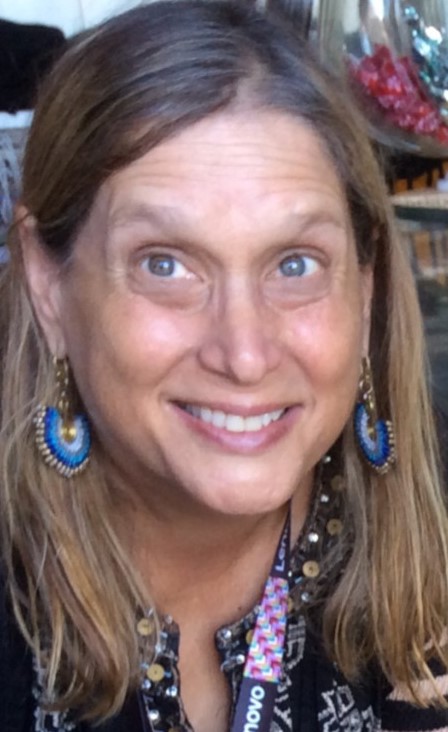
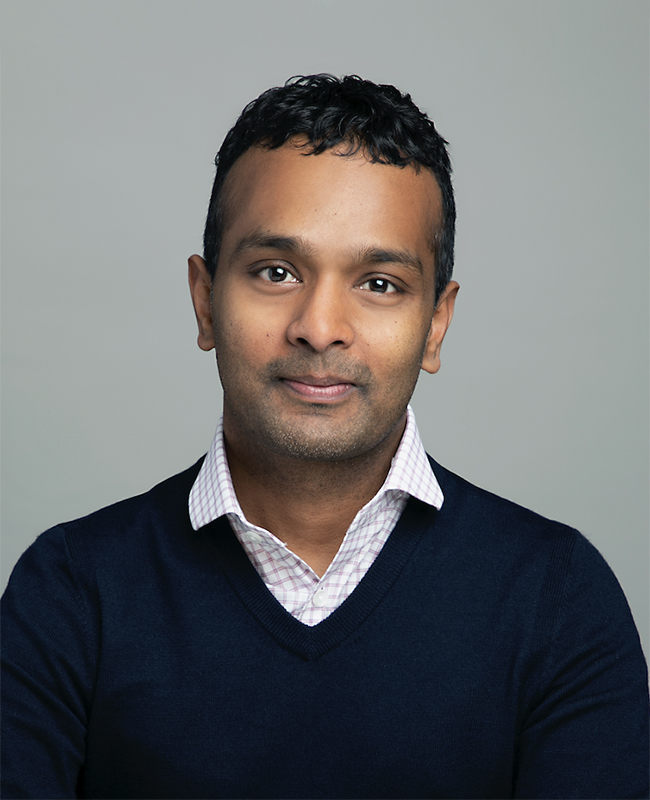
Justin Chan
The battery-powered device is designed to be worn on the stomach, similar to an insulin pump, and consists of three parts: the injector system; a sensor patch comprising a pair of on-body accelerometers to detect coarse motion — i.e., movement of body and limbs — and breathing motion, which is attached to a microcontroller running a motion detection algorithm to process the data; and an actuator in the form of a servo motor that automatically activates the injector if the algorithm detects an overdose event. The combination of onboard sensing and lower-power processing enables the device to measure the wearer’s motion as an indicator of their safety in real time — and, most crucially, deliver intervention once that motion has ceased. Built-in Bluetooth capability allows for the option of transmitting data to a companion app loaded onto a nearby smartphone.
“Further work is needed, but this closed-loop system could potentially be transformative if it allowed an unwitnessed overdose to be detected and immediately treated while help was on the way,” noted Sunshine, who is also an adjunct faculty member in the Allen School.
To validate their system, Sunshine, Gollakota, Chan and their co-authors — former UW Electrical & Computer Engineering Ph.D. student and current Allen School professor Vikram Iyer, Allen School alumnus Anran Wang (Ph.D., ‘21), UW Medicine’s Dr. Preetma Kooner, and Alexander Lyness of West Pharmaceutical Services — needed to confirm the accuracy of the sensor measurements and demonstrate that their processing algorithm could distinguish the prolonged apnea events that indicate an overdose to rapidly deliver the naloxone when needed. They accomplished this through carefully constructed studies conducted, with participants’ informed consent, in two different settings: the InSite supervised injection facility in Vancouver, B.C., and the UW Medical Center.
In the first study, at InSite in Vancouver, the team fitted participants with a respiration belt to establish a reference standard for respiratory activity, followed by placement of the sensor patch on the abdomen to collect data on their breathing before, during and after their opioid self-injection, which takes place under medical supervision. During the course of the study, two people experienced apneas post-injection, in the absence of an overdose, which the team’s algorithm correctly identified.
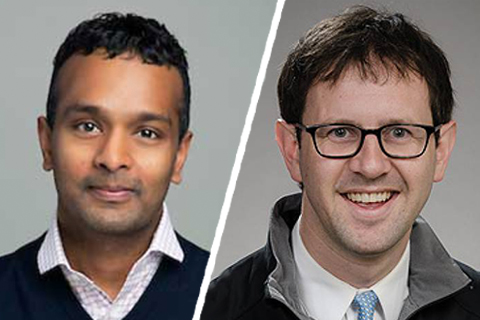
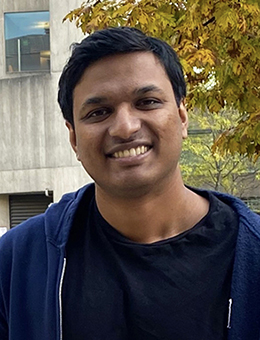
Shyam Gollakota (left) and Dr. Jacob Sunshine
The hospital study involved healthy volunteers who experienced simulated overdose conditions that would trigger the end-to-end system to administer naloxone. Fitted with the prototype injector system, participants were asked to perform a pair of breathing exercises to set a baseline for their respiration, followed by a self-induced simulated apnea event involving holding their breath for 20 seconds. At the 15-second mark, the algorithm successfully registered their simulated overdose condition, leading the actuator to activate delivery of the naloxone. Laboratory analysis of post-delivery blood draws proved that the device had, indeed, delivered naloxone to the individuals as the researchers intended.
This is not the first time Sunshine and Gollakota have teamed up to use technology in response to what some refer to as a silent epidemic. In 2019, the duo and then-Ph.D. student Rajalakshmi Nandakumar, now a faculty member at Cornell University, described a smartphone-based tool that enabled contact-free monitoring of a person’s breathing and movements to detect signs of opioid overdose. The app, which the team dubbed Second Chance, was designed to provide a way for people in danger of overdosing to connect to a friend or first responders. According to Gollakota, the team’s latest work builds on the lessons learned during the app development — while shaving precious minutes off of the potential response time in an emergency.
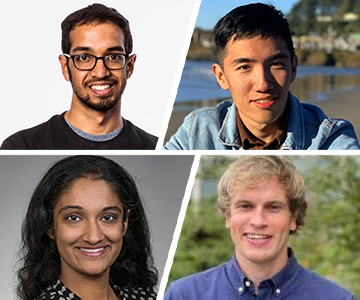
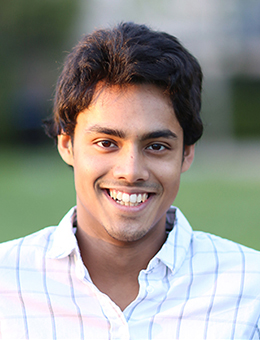
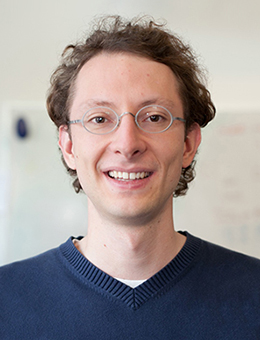
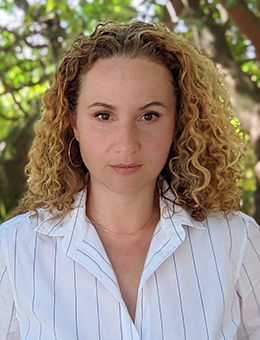
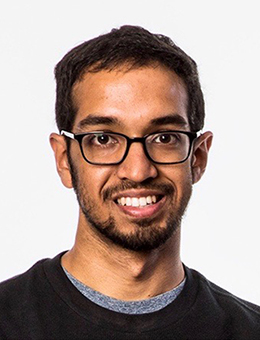
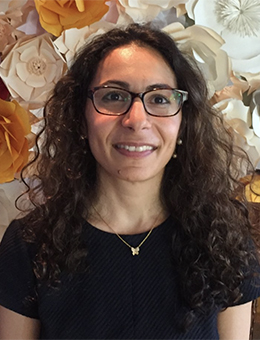
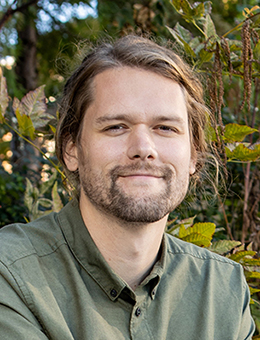
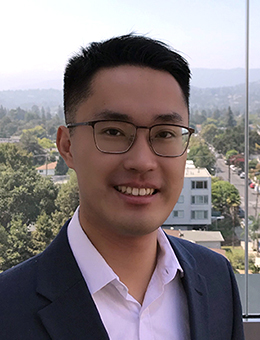
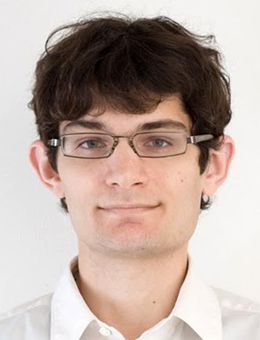
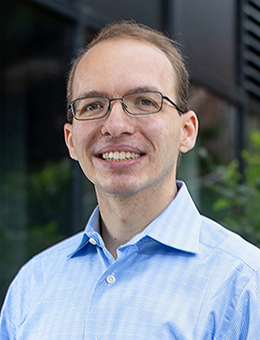
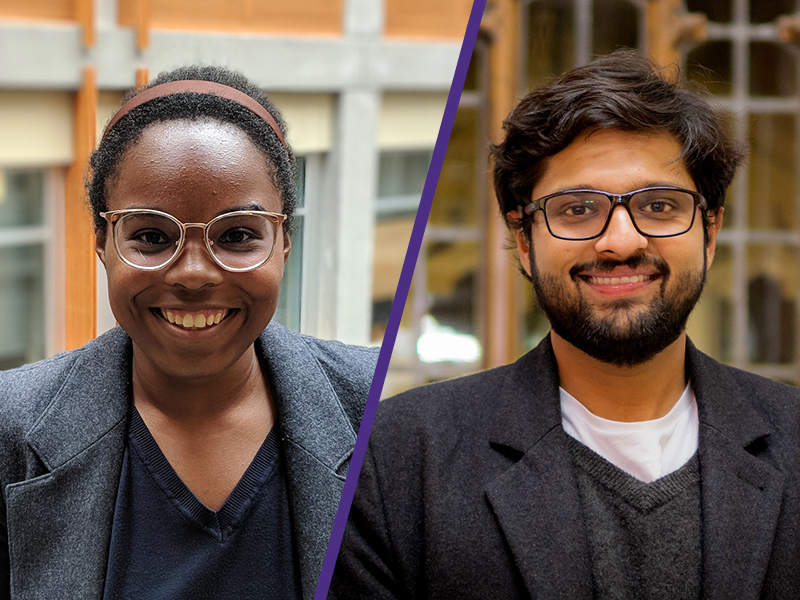
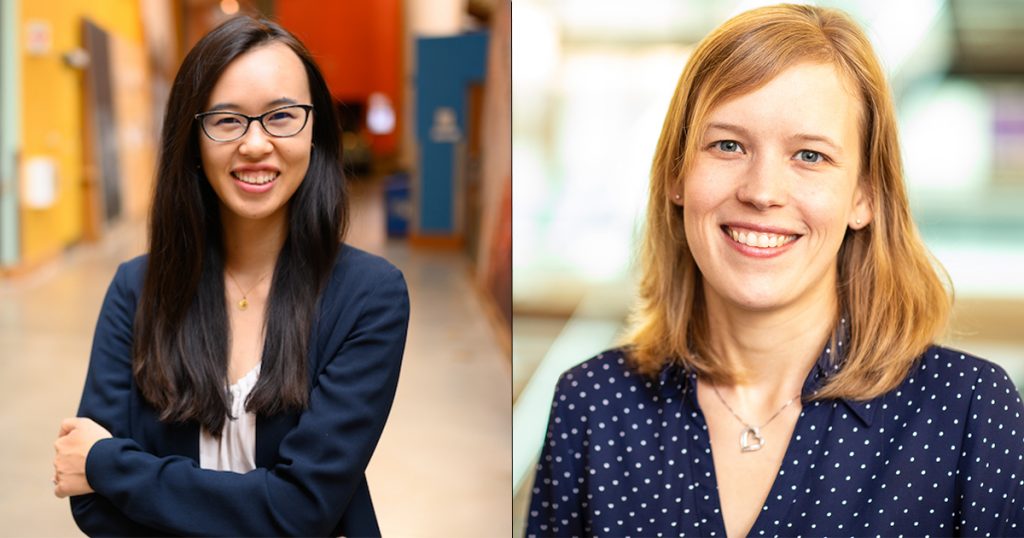
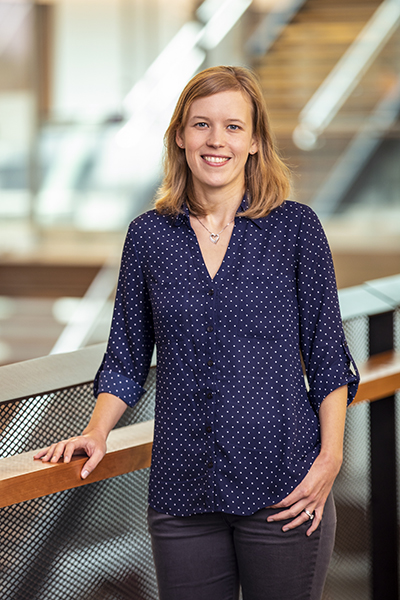
Clockwise from top left: Vikram Iyer, Anran Wang, Alexander Lyness and Dr. Preetma Kooner
“With our prior work, we showed how to detect the signs of an overdose. However the big challenge was getting naloxone to the person in a timely manner,” explained Gollakota, who holds the Torode Family Career Development Professorship in the Allen School. “This proof of concept goes a lot further and creates a closed-loop system that can not only automatically detect signs of overdoses but also inject naloxone to reverse the overdose events. This has the potential to be transformative for millions of people who have opioid overdose disorder.”
As a drug delivery device, the auto-injector system would require approval from the U.S. Food and Drug Administration. In consideration of the ongoing public health emergency, the FDA recently released technical guidance for demonstrating the reliability of such emergency-use injector devices. The team also expects additional user studies will be needed to ascertain that people will be able to place and detach such a device without assistance. Gollakota and his colleagues hope that their prototype represents one more step toward making such devices widely available — which could save tens of thousands of lives annually in the U.S. alone.
“We are hopeful it can have a real tangible impact on a real big source of suffering in this country,” Gollakota said.
While 18 months of pandemic-induced remote learning and research may have brought a feeling of stasis to many areas of our lives, there is one where the opposite is true: Allen School faculty hiring. Over the past two hiring cycles, the school managed to move forward via virtual campus tours and interviews conducted via Zoom, with the result that 15 new faculty members have joined or will soon be joining our community. As we return to campus and settle into familiar routines once again, we look forward to celebrating the contributions of these outstanding educators and innovators who will strengthen our leadership at the forefront of our field while building on our commitment to advancing computing for social good.
“Our new faculty members bring expertise in core and emerging areas and will help us to expand our leadership in computing innovation and in applying computing innovation to society’s most pressing challenges,” said Magdalena Balazinska, professor and director of the Allen School. “I am excited to work alongside them to build on our tradition of delivering breakthrough research while educating the next generation of leaders in our field, forging high-impact collaborations across campus and in the broader community, and creating an environment that is supportive and welcoming to all.”
Advancing secure and scalable systems
Leilani Battle: Human-centered data management, analysis, and visualization
Leilani Battle applies a human-centered perspective to the development of scalable analytics systems to solve a range of data-intensive problems. While her research is anchored in the field of databases, Battle employs techniques from human-computer interaction and visualization to integrate large-scale data processing with interactive visual analysis interfaces. Using this integrative approach, she designs and builds intelligent exploration systems that adapt to diverse users’ needs, goals and behaviors — making it easier for people to understand and leverage data to support more effective decision making. An example is ForeCache, a prediction system designed to allow researchers to more efficiently browse and retrieve data while reducing latency via prefetching. Battle also develops techniques for evaluating the performance of exploration systems in order to build more effective models of human analysis behavior.
Battle is no stranger to the UW; she earned her bachelor’s degree in computer engineering from the Allen School in 2011 and later returned to complete a postdoc with the UW Database Group and UW Interactive Data Lab. She rejoined the school — this time as a faculty member — this past summer after spending three years as an assistant professor at the University of Maryland, College Park. Battle earned her Ph.D. from MIT in 2017 and was named one of MIT Technology Review’s Innovators Under 35 last year.
David Kohlbrenner: Trustworthy hardware and software
David Kohlbrenner joined the Allen School faculty as a co-director of the Security and Privacy Research Lab in fall 2020 after completing a postdoc at the University of California, Berkeley and his Ph.D. from the University of California San Diego. Kohlbrenner’s research spans security, systems, and architecture, with a particular focus on the impact of hardware design and behavior on high-level software security.
Through a series of practical projects involving real-world test cases, Kohlbrenner explores how to build trustworthy systems that are resilient to abstraction failures. His contributions include Keystone, an open-source framework for building flexible trusted execution environments (TEEs) on unmodified RISC-V platforms, and Fuzzyfox, a web browser resistant to timing attacks. The time fuzzing techniques Kohlbrenner implemented as part of the latter project were subsequently incorporated into the Chrome, Edge and Firefox browsers. Kohlbrenner’s ongoing work aims to address open problems in the prevention of risks caused by novel microarchitectural designs, expanding the capabilities of the Keystone framework, and to support secure deployment of cloud FPGAs.
Simon Peter: Data center design for reliable and energy-efficient cloud computing
Simon Peter will join the Allen School faculty in January 2022 from the University of Texas at Austin, where he has spent the past six years on the faculty leading research in operating systems and networks. Peter focuses on the development and evaluation of new hardware and software that improves data center energy efficiency and availability while decreasing cost in the face of increased workloads. Much of Peter’s recent work has focused on redesigning the server network stack to dramatically lower latency and overhead while increasing throughput — ideas that have been deployed by Google on a large scale — as well as novel approaches for achieving significant performance improvements in file system and tiered memory management, low latency accelerators, and persistent memory databases.
Peter’s current work revolves around the development of techniques for building large-scale systems with lower operational latency — potentially 1000x lower. He is also exploring the design of power-resilient systems that can function reliably in an age of increasingly volatile energy supplies. Peter is already a familiar face at the Allen School, having completed a postdoc in the Computer Systems Lab after earning his Ph.D. from ETH Zurich. He is a past recipient of a Sloan Research Fellowship, an NSF CAREER Award, a SIGOPS Hall of Fame Award, and two USENIX Jay Lepreau Best Paper Awards.
Pushing the state of the art in artificial intelligence
Simon Shaolei Du: Theoretical foundations of machine learning
Simon Shaolei Du joined the Allen School in summer 2020 after completing a postdoc at the Institute for Advanced Study. Du’s research focuses on advancing the theoretical foundations of modern machine learning — with a particular emphasis on deep learning, representation learning and reinforcement learning — to produce efficient, principled and user-friendly methods for applying machine learning to real-world problems. To that end, he aims to leverage the principles that make deep learning such a powerful tool to build stronger models as well as take advantage of the structural conditions underpinning efficient sequential decision-making problems to design more efficient reinforcement learning algorithms.
Du’s contributions include the first global convergence proof of gradient descent for optimizing deep neural networks. He also demonstrated the statistical advantage of employing convolutional neural networks over fully-connected neural networks for learning image classification, earning an NVIDIA Pioneer Award for his efforts. He has published more than 50 papers at top conferences in the field, including the Conference on Neural Image Processing Systems (NeurIPS) and the International Conference on Machine Learning (ICML). Du holds a Ph.D. in machine learning from Carnegie Mellon University.
Abhishek Gupta: Robotics and machine learning
Abhishek Gupta will join the Allen School faculty in fall 2022 after completing a postdoc at MIT. He previously earned his Ph.D. from the University of California, Berkeley as a member of the Berkeley Artificial Intelligence Research (BAIR) Laboratory. Gupta’s research focuses on the development of deep reinforcement learning algorithms that will enable robotic systems to autonomously collect data and continuously learn new behaviors in real-world situations. His goal is to enable robots to function safely and effectively in human-centric, unstructured environments under a variety of conditions.
Already, Gupta has contributed to this emerging paradigm via a series of projects focused on robotic control via reinforcement learning. For example, he demonstrated algorithms for learning complex tasks via more “natural” forms of communication such as video demonstrations and human language. Gupta also designed systems that employ large-scale, uninterrupted data collection to learn dexterous manipulation tasks without intervention, while being capable of bootstrapping its own learning by leveraging only small amounts of prior data from human supervisors. In addition, he has explored techniques to enable the efficient transfer of learning across robots and tasks via exploratory and unsupervised RL algorithms, making fundamental contributions in algorithms and systems for robotic reinforcement learning. Looking ahead, Gupta aims to apply the data gathered from real-world deployment of such systems in truly human-centric environments to make robots more adaptive and capable of generalizing across a variety of tasks, objects and environments in practically relevant real world settings like homes, hospitals and workplaces.
Ranjay Krishna: Visual intelligence from human learning
Ranjay Krishna will join the Allen School faculty next September from Facebook AI Research, where he is spending a year as a research scientist after earning his Ph.D. from Stanford University. Krishna’s work at the intersection of computer vision and human computer interaction draws upon ideas from the cognitive and social sciences, such as human perception and learning, to enable machines to acquire new knowledge and skills via social interactions with people — and ultimately enable people to personalize artificial intelligence systems without the need for prior programming experience.
Krishna has applied this multidisciplinary approach to produce new representations and models that have pushed the state of the art in a variety of core computer vision tasks. For example, he introduced a new category of dense, detailed computational representations of visual information, known as scene graphs, that transformed the computer vision community’s approach to image captioning, objection localization, question answering and more. Krishna introduced the technique as part of his Visual Genome project that has since become the de facto dataset for pre-training object detectors for downstream tasks. He also collaborated on the development of an AI agent that learns new visual concepts from interactions with social media users while simultaneously learning how to improve the quality of those interactions through natural language questions and ongoing implicit feedback. Krishna intends to build on this work to establish human interaction as a core component of how we train computer vision models and deploy socially capable AI.
Ludwig Schmidt: Empirical and theoretical foundations of machine learning
Ludwig Schmidt joined the Allen School faculty this fall after completing a postdoc at University of California, Berkeley and spending a year as a visiting research scientist working with the robotics team at Toyota Research. He earned his Ph.D. from MIT, where he received the George M. Sprowls Award for best Ph.D. thesis in computer science for his work examining the application of approximate algorithms in statistical settings, including the reasons behind their sometimes unexpectedly strong performance in both theory and practice.
Schmidt’s current research advances the empirical and theoretical foundations of machine learning, with an emphasis on datasets, robust methods, and new evaluation paradigms for effectively benchmarking performance. For example, he and his collaborators assembled new test sets for the popular ImageNet benchmark to investigate how well current image classification models generalize to new data. The accuracy of even the best models fell by 11%–14%, which documented the extent to which distribution shift remains a major unresolved problem in machine learning that contributes to the brittleness of even state-of-the-art models. In another study, Schmidt and his colleagues effectively dispelled the prevailing wisdom around the problem of adaptive overfitting in classification competitions by demonstrating that repeated use of test sets does not lead to unreliable accuracy measurements. By combining theoretical insights with rigorous methodology, Schmidt’s goal is to ensure the machine learning systems that power emerging technologies are safe, secure, and dependable for real-world deployment.
Yulia Tsvetkov: Natural language processing for ethical, multilingual, and public-interest applications
Yulia Tsvetkov arrived at the Allen School this past summer from Carnegie Mellon University, where she earned her Ph.D. and spent four years as a faculty member of the Language Technologies Institute after completing a postdoc at Stanford. Tsvetkov engages in multidisciplinary research at the nexus of machine learning, computational linguistics and the social sciences to develop practical solutions to natural language processing problems that combine sophisticated learning and modeling methods with insights into human languages and the people who speak them.
Tsvetkov’s goal is to advance ethical natural language technologies that transcend individual language and cultural boundaries while also ensuring equitable access — and freedom from bias — for diverse populations of users. To that end, she and her collaborators have developed novel techniques for automatically detecting veiled discrimination and dehumanization in newspaper articles and in social media conversations, as well as tools for identifying subtle yet pernicious attempts at online media manipulation at scale while exploring how latent influences on the media affect public discourse across countries and governments. Her team is also pioneering language technologies for real-world high-stakes scenarios, including the use of socially responsible natural language analytics in child welfare decision-making. In addition, Tsvetkov and her colleagues have made fundamental contributions toward enabling more intelligent, user- and context-aware text generation with applications to machine translation, summarization, and dialog modeling. They introduced continuous-output generation, an approach to training natural language models that dramatically accelerates their training time, and constraint-based generation, an approach to incorporating fine-grained constraints at inference time from large pretrained language models to control for various attributes of generated text.
Innovating at the intersection of computing and biology
Vikram Iyer: Wireless systems, bio-inspired sensing, microrobotics, and computing for social good
Vikram Iyer connects multiple engineering domains and biology in order to build end-to-end wireless systems in a compact and lightweight form factor that push the boundaries of what technology can do and where it can do it. He has produced backscatter systems for ultra-low power and battery-free sensing and communication, 3D-printed smart objects, insect-scale robots, and cameras and sensors small enough to be carried by insects such as beetles, moths and bumblebees. His work has a range of potential applications, including environmental monitoring, sustainable computing, implantable medical devices, digital agriculture, and wildlife tracking and conservation. Last year, he worked with Washington state’s Department of Agriculture to wirelessly track the invasive Asian giant hornet — also known as the “murder hornet” — leading to the destruction of the first nest in the United States.
Iyer, who joined the faculty this fall after earning his Ph.D. from the UW Department of Electrical & Computer Engineering, was already a familiar face around the Allen School thanks to his collaboration with former advisor — now faculty colleague — Shyam Gollakota in the Networks & Mobile Systems Lab. He earned a 2020 Paul Baran Young Scholar Award from the Marconi Society, a 2018 Microsoft Ph.D. Fellowship, and Best Paper awards from Sensys 2018 and SIGCOMM 2016 for his work on 3D localization of sub-centimeter devices and backscatter technology enabling wireless connectivity for implantable devices, respectively.
Sara Mostafavi: Computational biology and machine learning to advance our understanding and treatment of disease
Sara Mostafavi joined the Allen School faculty in fall 2020 after spending five years as a faculty member at the University of British Columbia. Mostafavi, who holds a Ph.D. from the University of Toronto, focuses on the development of machine learning and statistical methods for understanding the complex biological processes that contribute to human disease. Her work is highly multidisciplinary, involving collaborators in immunology, neurosciences, genetics, psychiatry, and more.
Mostafavi is particularly interested in developing computational tools that enable researchers to distinguish meaningful relationships from spurious ones across high-dimensional genomic datasets. For example, her group developed models that account for hidden confounding factors in whole-genome gene expression studies in order to disentangle cause-and-effect relationships of upstream genetic and environmental variables that may contribute to neurodegenerative disease. Using this new framework, researchers identified a group of signaling genes linked to neurodegeneration that has yielded potential new drug targets for Alzheimer’s disease. Building on this and other past work, Mostafavi and her colleagues explore the application of deep learning and other approaches to unravel contributing factors in neurodegenerative and psychiatric diseases, the relationship between genetic variation and immune response, and the causes of rare genetic diseases in children.
Jeff Nivala: Molecular programming and synthetic biology
Jeff Nivala is a research professor in the Allen School’s Molecular Information Systems Lab (MISL), a partnership between the UW and Microsoft that advances technologies at the intersection of biology and information technology. Nivala’s research focuses on the development of scalable storage and communication systems that bridge the molecular and digital interface. Recent contributions include Porcupine, an extensible molecular tagging system that introduced the concept of “molbits,” or molecular bits, which comprise unique barcode sequences made up of strands of synthetic DNA that can be easily programmed and read using a portable nanopore device. Nivala also led the team behind NanoporeTERS, a new kind of engineered reporter protein for biotechnology applications that enables cells to “talk” to computers. The system represented the first demonstration of the utility of nanopore readers beyond the DNA and RNA sequencing for which they were originally designed.
Nivala joined the Allen School faculty this past spring after spending nearly four years as a research scientist and principal investigator in the MISL. His arrival was a homecoming of sorts, as he previously earned his bachelor’s in bioengineering from the UW before going on to earn his Ph.D. in biomolecular engineering at the University of California Santa Cruz and completing a postdoc at Harvard Medical School. He earned a place on Forbes’ 2017 list of “30 under 30” in science and holds a total of nine patents awarded or pending.
Chris Thachuk: Molecular programming to enable biocomputing and precise assembly at the nanoscale
Chris Thachuk combines principles from computer science, engineering and biology to build functional, programmable systems at the nanoscale using biomolecules such as DNA. His work spans the theoretical and experimental to forge new directions in molecular computation and synthetic biology. For example, in breakthrough work published earlier this year in the journal Science, Thachuk and his collaborators demonstrated a technique that, for the first time, enables the placement of DNA molecules not only in a precise location but also in a precise orientation by folding them into a small moon shape. Their approach overcame a core problem for the development of computer chips and miniature devices that integrate molecular biosensors with optical and electronic components. Previously, Thachuk developed a “molecular breadboard” for compiling next-generation molecular circuits that operate on a timescale of seconds and minutes, as opposed to hours or days. That project provides a springboard for the future development of biocomputing applications such as in situ molecular imaging and point-of-care diagnostics.
Thachuk joined the Allen School faculty after completing postdocs at Caltech and Oxford University, where he was also a James Martin Fellow at the Institute for the Future of Computing. He earned his Ph.D. from the University of British Columbia working with professor and Allen School alumna Anne Condon (Ph.D., ‘87).
Sheng Wang: Computational biology and medicine
Sheng Wang joined the Allen School this past January after completing a postdoc at Stanford University’s School of Medicine. Wang, who earned his Ph.D. from the University of Illinois at Urbana-Champaign, focuses on the development of high-performance, interpretable artificial intelligence that co-evolves and collaborates with humans, with a particular interest in machine learning and natural language processing techniques that will advance biomedical research and improve health care outcomes.
Wang’s research has expanded human knowledge and opened up new avenues of exploration in biomedicine while advancing AI modeling at a fundamental level. For example, he developed a novel class of open-world classification models capable of generalizing predictions to new tasks even in the absence of human annotations. His work, which represented the first general framework for enabling accurate predictions on new tasks in biomedicine using limited curation, was used by a team of biologists to classify millions of single cells into thousands of novel cell types — of which most did not have any annotated cells before. He also built a biomedical rationale system that uses a biomedical knowledge graph to generate natural-language explanations of an AI model’s predictions for tasks such as drug target identification and disease gene prediction. Going forward, Wang aims to build upon this work by developing new methods for optimizing human-AI collaboration to accelerate biomedical discovery.
Educating the next generation of leaders
Ryan Maas: Data management, data science, and CS education
Ryan Maas joined the faculty last year as a teaching professor after earning his Master’s degree in 2018 working with Allen School professor and director Magdalena Balazinska in the UW Database Group. He also spent time as a research scientist at the UW eScience Institute. Maas’ research focused on scaling linear algebra algorithms for deployment on distributed database systems to support machine learning applications. He was a contributor to Myria, an experimental big data management and analytics system offered as a cloud-based service by the Allen School and eScience Institute to support scientific research in various domains.
Maas previously served as a lecturer and teaching assistant for both introductory and advanced courses in data management and data science. He also contributed to the development and teaching of a new Introduction to Data Science course for non-majors in collaboration with colleagues at the Allen School, Information School and Department of Statistics. Prior to enrolling in the Allen School, Maas began his graduate studies in astrophysics at the University of California, Berkeley after earning B.S. degrees in physics and astronomy from the UW.
Robbie Weber: Theoretical computer science and CS education
Robbie Weber joined the faculty as a teaching professor in 2020 after earning his Ph.D. working with professors Anna Karlin and Shayan Oveis Gharan in the Allen School’s Theory of Computation group. Weber’s research focuses on algorithm design for graph and combinatorial problems, with a particular emphasis on the use of classical tools to study pairing problems such as stable matching, online matching and tournament design for real-world applications.
Weber teaches an array of “theoretical and theory-adjacent” courses — from foundational to advanced — for both majors and non-majors. His goal is to make theoretical computer science accessible, interesting, and relevant to students of any discipline. Prior to joining the faculty, Weber foreshadowed his future career path by serving as an instructor or teaching assistant for a variety of Allen School courses, including Data Structures and Parallelism, Algorithms and Computational Complexity, Machine Learning, Foundations of Computing, and more. In 2019, he earned the Bob Bandes Memorial Teaching Award in recognition of his contributions to student learning inside and outside of the classroom.
In honor of today’s National First-Generation College Celebration, the Allen School continues our annual tradition of spotlighting some of our own first-gen community members and what the opportunity to pursue a bachelor’s degree means to them. As the first in their families to navigate the complicated college application process and the array of internship, study abroad and extracurricular activities, these students are using perseverance, resilience and drive to figure it all out on their own or find the resources to help them. Here’s a glimpse of what they’ve experienced and learned along the way.
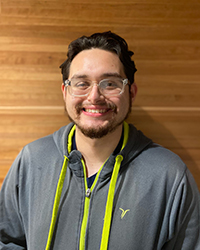
David Cueva Cortez, undergraduate student
David Cueva Cortez, of Toppenish, Washington, is a senior studying computer science and dance and serves as vice president of GEN1, a group for first-gen students in the Allen School. Both of his parents emigrated from Mexico, and he grew up in a family of seasonal and migrant agricultural workers who picked fruit in various orchards around eastern Washington, from the Tri-Cities to Wenatchee and everywhere in between. Despite his family traveling each week to a different town to work for another employer, his parents still found time to support his desire to continue his academic studies at the University of Washington.
Allen School: What made you decide to pursue a college degree, and how did you navigate the system?
David Cueva Cortez: My family has made many sacrifices so that I could take advantage of the opportunities not present in Mexico and create a better life for myself and generations to come. Their encouragement to complete my college degree, and my own desire not to work in the fields like them, pushed me to where I am today. For me, getting involved with different kinds of organizations helped me navigate the college system. Being involved in cultural organizations helped me celebrate and remember my roots and major-related organizations helped me meet new people and expand my network.
Allen School: Why did you pick UW, and what interested you in computer science?
DCC: First and foremost I wanted to get out of the Yakima Valley and get a feel for a new town and environment. The desire to be in a city and UW being one of the best engineering schools in a tech-driven city made it a no-brainer for me. I am interested in computer science because of the tools it provides you for problem solving and creating new things. I often draw parallels to construction where you are given all these tools to create something that is going to impact someone. In my case, though, I was really drawn to computers — seeing how code could create all these marvelous things made me more inclined to try it and eventually it just stuck with me.
Allen School: What does being a first-generation student mean to you?
DCC: It means being able to take my struggles and life experiences as a non-traditional student to use as fuel to make a change for not only myself but others. Knowing that I am a trailblazer in uncharted territory alongside my peers who share this first-gen experience is what allows us all to succeed despite the odds.
Allen School: What is your favorite part about being at the Allen School?
DCC: I would have to say all the people I have met. People at the university come from rich and diverse backgrounds, and I always enjoy talking with them and listening to their stories. I’ve made many friends here who I’ve known since freshman year and have created so many wonderful memories in and out of school with them.
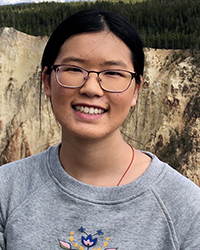
Wen Qiu, (B.S. ‘21) B.S./M.S. student
Wen Qiu, a student in the B.S./M.S., immigrated from China with her parents about six years ago. She discovered her passion for computer science after joining the robotics team in high school and taking a computer science course. Her parents were her strongest advocates and supported her choice to study computer science at the Allen School.
Allen School: Why did you pick UW and what interested you in computer science?
Wen Qiu: UW was one of my top options since it is in-state and has a prestigious computer science program. Getting a chance to take a computer science course in high school changed my life, and I was fortunate enough to have great teachers, mentors and professors who have helped me along the way. Before I entered college, I viewed computer science as a medium of creativity, but ever since I became a teaching assistant, I have been more intrigued by computer science education as a field. This is my seventh quarter as a TA and I hope that by improving my teaching skills, I can bring a positive impact on my students and show them computer science is a valid path to pursue. No matter what identity they are and how much prior experience they have coming into the class, they still belong and can thrive in this field.
Allen School: What made you decide to pursue a college degree, and how did you navigate through the college system?
WQ: Since both of my parents went to college in China, I had little insight into how colleges work in the US. The STARS program helped ease that transition and find a community within the huge UW campus. I also learned about more opportunities over time by building good relationships with my professors and chatting with my peers in the major.
Allen School: What does being a first-generation student mean to you?
WQ: For me, being a first-generation student means recognizing and being proud of the efforts I put into my coursework and personal growth. It also means being open to sharing the lessons I’ve learned with others and giving back to the community that supports and encourages me to become who I am today.
Allen School: What is your favorite part about being at the Allen School?
WQ: My favorite part about being at the Allen School is the CS education community. There are a lot of faculty members and TAs who genuinely care about teaching and making computer science more inclusive to everyone, and I am excited to be a part of that effort.
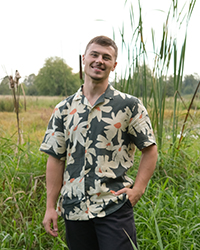
Tim Mandzyuk, (B.S. ‘21) B.S./M.S. student
Tim Mandzyuk is a student in the Allen School’s combined B.S./M.S. program. He is the second youngest of six children, and one of only two born in the U.S. His parents grew up without hot water or a flushable toilet in western Ukraine, then part of the Soviet Union. There, his grandparents spent years in prison for their religious beliefs. When the Soviet Union collapsed, his parents moved to the United States, where he was born soon after. Mandzyuk didn’t have much growing up, but his parents worked hard to provide for their children and pushed them to do the same. With their support, he started his pursuit of a college education his junior and senior years of high school, enrolling in the Running Start program at Everett Community College (EvCC). He graduated high school as valedictorian and went on to earn his Associate’s in general engineering at EvCC, graduating with a 4.0 GPA, before joining the Allen School’s computer engineering program. While he struggled during his first quarter at UW, navigating the challenging courses, living on his own for the first time and feeling like an imposter, he enrolled in the Allen School’s transfer student seminar, made friends and eventually realized he was where he belonged.
Allen School: What made you decide to pursue a college degree, and how did you navigate the system?
Tim Mandzyuk: Learning and connecting with others is fun for me. I grew up playing piano, I ran cross country and track in high school and college and tried to get myself out there in many other ways just to be involved. Naturally, college was the next step in the process. I never had this notion of what a “big name” school was and what it “meant” to get into certain universities. This is a cultural difference between Ukraine and the U.S. In Ukraine, there are no sports teams or prestigious universities, mainly because most people end up working on their farms or doing construction. Because of this, my parents didn’t care if I went to college or not, they just wanted me to be successful. I knew I wanted to go to college, and that meant I needed to figure out how to make that happen on my own. Scholarships, applications, emails, you name it, I was figuring it out. I have learned a lot through trial and error, but most of my knowledge comes from a supportive community. My advisors, teachers, family and friends were always there to support me and help me along the way. People would go out of their way to ensure I was able to figure out x, y and z. Truly, without the people in my life and their guidance, I would not be where I am today. I am so grateful for them all.
Allen School: Why did you pick UW, and what interested you in computer engineering?
TM: Growing up just north of Seattle, I always thought of UW as the ideal university. I knew that one day I wanted to go to UW, but figuring out what I wanted to study was a little harder. During my time at EvCC, I took a circuit class where we used arduinos to make a robot. I thought it was the coolest thing, and from that moment I had my mind set on computer engineering. This degree fit me perfectly because it had a nice balance between hardware and software, where I got the best of both worlds. Now here I am, studying at my dream school with a degree in computer engineering and now working on my CSE degree in the B.S./M.S. program.
Allen School: What does being a first-generation student mean to you?
TM: Being a first-generation college student means breaking boundaries. I am the first person in my family to ever attend graduate school. To me, continuing my education is more than learning, it’s about proving that people in my family can do it too. That we are not limited by what our family has done in the past, but that we too can pave new roads that lead to success.
Allen School: What is your favorite part about being at the Allen School?
TM: My favorite thing about the Allen School is the supportive community. When I first came to UW, I was shocked at how many resources there were for me to get help in so many ways, whether that be in classes, with future planning or anything related to my education and time here. I have also enjoyed the education here. It feels like I have learned more in the past two years in the Allen School than I have my entire life before that.
Shari Maginnis, PMP student
Shari Maginnis is a student in the Allen School’s Professional Master’s Program. After 30 years working as a software engineer she might not be a traditional college student, but the love of learning that her parents instilled in her brought her to the Allen School. While higher education was not a part of her parents’ family culture, they were self-motivated and voracious for knowledge. Her mother sewed clothes, curtains and furniture covers, while her father learned to fix “everything.” In the 1970s she helped him assemble their first PC, and in the 80s the two spent hours transcribing and then debugging programs from coding periodicals. When her family moved to Davis, California, home of University of California Davis, all of her high school classmates were college-bound. Maginnis loved school and ended up winning a musical talent scholarship to pay for her freshman year. When her father died suddenly of a heart attack, Maginnis changed gears by refocusing her studies on computer science and working as a coder to pay for her education.
Allen School: What made you decide to continue your pursuit of education?
Shari Maginnis: I worked in that same job for a small company for many years until we were purchased by a well funded dot-com startup. The company culture changed and my professional world expanded, raising the question, “What’s next for me?” If I could do anything in the world, what I wanted most was to go back to school. I began researching options for advanced education and found a perfect fit with the Allen School PMP program. A challenging, high-profile program, focused on working computer professionals and prominent in the local tech community? It’s like the program was created with me in mind — and after two years, I still feel this way.
Allen School: What does being a first-generation student mean to you?
SM: Looking back on my educational career, there is a real hurdle present for first-generation students. Success in higher education is a learned skill which I acquired through tedious trial and error but also absorbed from my community of friends. I owe so much to the powerful examples set by my friends who were making it work alongside me the whole way. Even now, I’m still figuring it out and I’m still learning from my friends.
Allen School Any advice for first-generation students?
SM: I’ve found that hard problems often have many possible solutions. Don’t stop finding solutions until you’ve found one that is a good fit for you. I learned to seek out the people that were making it look easy and make their strategies mine, too. Ask questions. Almost everyone wants you to be successful, so find ways to make it easy for them to help you. Accomplishments, even small ones, are addictive, and aligning your goals with your passions fills your accomplishments with joy as well as satisfaction.
Allen School: What is your favorite part about being at the Allen School?
SM: There is something about a community dedicated to the pursuit of knowledge — it fills me with joy and wonder just to be on the UW campus. I still text campus snapshots to my mom, and she tells me that my father would be proud. That means everything to me, even now.
EJ Pinera, staff
EJ Pinera, the Allen School’s student leadership development coordinator, was born and raised in south Seattle. His mother grew up in a lower income home in west Seattle, and his father immigrated to the U.S. from the Philippines at the age of 12. The two had Pinera when they were 19 years old and instilled in him the value of working hard and studying in order to gain access to higher education, because they could not afford it. Pinera said that because his parents and grandparents didn’t know how to navigate higher education, he researched a way to stand out in the college application process. Joining programs like UW’s Upward Bound and Summer Search and serving as the associated student body president and class valedictorian earned him a full scholarship to Seattle University, where he graduated cum laude with a bachelor’s in psychology. Pinera’s mother went back to school part-time when he started college, and the two earned their degrees in the same weekend.
Allen School: What does being a first-gen student mean to you?
EJ Pinera: While I am humbled to even say I have a college degree, the journey was really tough. I encountered a lot of peers who came from upper-mid socioeconomic backgrounds, and sometimes it felt tough sitting in the same environments. I found myself sitting in classes with folks who easily pulled out Macbook Pros for class, while I brought out an affordable baseline laptop. I overheard peers who would brag about the international trips their parents sent them on during breaks, while for me it was tough finding funds to set aside for simple things like books. Oftentimes folks think first-gen means you mainly don’t understand the college landscape, but it usually includes a lot of racial and classist undertones that folks from privileged backgrounds don’t have to deal with.
Allen School: Did being a first-gen student influence your career?
EP: Absolutely. Before I started on the Diversity & Access Team, I worked at Rainier Scholars, a nonprofit based in south Seattle. I was an academic counselor for students of color in high school and college, and I absolutely loved supporting young, brilliant and gifted first-gen students on their journey to college.
Allen School: What advice do you have for future first-gen students?
EP: The biggest thing that got me through college, and the thing supporting me beyond, is this: take advantage of resources, even when you feel like you don’t deserve to — imposter syndrome is a very real thing, and insecurity itself can hold you back from a lot. Next time you’re standing outside of career services or afraid to email the study abroad office because you feel worried that you’d be judged for being clueless or undeserving due to financial aid, remind yourself that you are worthy and you absolutely deserve every opportunity that comes your way.
Allen School: What does working at the Allen School mean to you?
EP: Working at the Allen School gives me a great opportunity to support the next generation of leaders who will influence the tech world, which is growing rapidly. I get to continue working in a student-support role now as the student leadership development coordinator, and I am enjoying every moment of supporting our student groups. With regard to first-gen especially, I am very passionate about supporting GEN1 and our students from minority backgrounds.
Kurtis Heimerl, professor
Allen School professor Kurtis Heimerl grew up with an enlisted Air Force staff sergeant father and a mother who worked retail as the family bounced around military bases. When Heimerl was eight, they settled in Alaska. He has two older sisters; the eldest, Michelle, was the driving force behind his college career. She was the first to go to college and made sure Heimerl did so as well. After attending school in Idaho, she settled into a job in Seattle and urged her brother to enroll in UW so that he would have familial support nearby. Since his high school didn’t have great college counselors and his parents didn’t have any college experience, Heimerl said Michelle’s guidance was critical for him to navigate the system — when he signed up too late for classes she told him about FIG, a special interest group for first-year students. Heimerl earned his bachelor’s in computer engineering from UW in 2007 and completed his Ph.D. at the University of California, Berkeley in 2013.
Allen School: Why did you decide to pursue your Ph.D. and then become an educator?
Kurtis Heimerl: I did a bunch of internships and just realized that working on the problems of big software companies wasn’t for me. I was on a team at Amazon doing really amazing service-oriented architecture stuff, developing a tier-0 service discovery solution. This was, in retrospect, some of the coolest stuff a systems person can work on in industry. It just didn’t grab me. My Ph.D. allowed me to pursue problems I thought were interesting, rather than those hoisted upon me by my manager.
Allen School: What does being a first-gen student mean to you?
KH: I think my experience has been that I don’t get a lot of what others implicitly understand. This isn’t necessarily entirely bad; I think there were a lot of situations where if I had more context I’d get that what I was trying to do was extremely unlikely, but it worked out anyhow. There are other elements as well that I still struggle with, though I’m not certain if they are cultural or related to being first-generation. For example, I had a tendency to believe that a lot of the world is outside of my reach as it’s only stuff I saw on TV or whatever. Realizing that these opportunities are for you, you’re there, and you’re there for a reason took me a long time to understand.
Allen School: What do you like most about working at the Allen School?
KH: Freedom, nice office, microwave is near me. More truthfully, the University of Washington, and specifically the Allen School, were so foundational in me finding my path that it’s simply a joy to be able to give back to these institutions. I often tell students that to be truly successful you have to “drink the Kool-Aid” wherever you are. It’s really hard to be at Google or Facebook or whatever and not truly believe in their mission. You go in, you write code, but there’s no passion, and that lack of passion makes it hard to climb up the ladder and succeed. My favorite thing about working at UW is that I deeply believe in the mission and purpose of this institution, and that lets me be successful.
Allen School: What advice do you have for future first-gen students?
KH: I think everyone’s journey is unique so it’s hard to generalize. I think the advice I needed and received during my time here is that all paths truly are available. It may not seem that way; it may seem like you’d be lucky to end up at company X for 30 years or that only a certain group of others with some skills you don’t have can do a thing, but it’s not true. You can go to grad school, start a company or become a director. Or, if you really want, work at company X for 30 years. You get to make that choice. I figured this out by watching people I considered my peers taking paths I hadn’t considered viable for someone like me. I think a smarter person could see that on their own.
We are grateful to all of our first-gen students, faculty and staff for the many ways they enrich our campus and school community!
Heer, who holds the Jerre D. Noe Endowed Professorship at the Allen School, co-authored the paper while a professor at Stanford University. The project was led by first author Mike Bostock, Heer’s former Ph.D. student, who spent the last 10 years continuing to develop D3, author hundreds of examples, and support the D3 user community. Co-author and graduate student Vadim Ogievetsky helped to develop and evaluate the system. The result was a novel approach to create web-based visualizations by flexibly binding data directly to document elements.
“I’m so excited to see D3 honored at IEEE VIS,” said Heer. “I don’t see this as just an award for 10-year-old work. I see it as a recognition of 10 years of incredible effort by Mike and others, alongside an outpouring of teaching and sharing by visualization creators and researchers. It has been a thrill to help web-based visualization come of age.”
D3, a de facto standard for interactive visualizations on the web, is an approach that helps turn data into powerful visualizations using HTML, SVG and CSS. In the paper, the team shows how representational transparency improves expressiveness and better integrates with developer tools. D3 also simplifies debugging and allows iterative development. Designers using the framework input data into their document to generate and modify visual content, providing a compelling way for web developers to enable interactive visualizations. As a free and open-source tool, D3 changed the field of data visualization research and practical uptake of interactive visualization on the web.
D3 sits atop years of visualization systems research, building on ideas from Bostock and Heer’s earlier Protovis toolkit, as well as Heer’s prior Prefuse and Flare frameworks. This line of work has continued at the Allen School, resulting in visualization languages such as Vega and Vega-Lite.
Since the paper’s initial publication, Heer joined the Allen School faculty and has been recognized with the Association for Computing Machinery’s ACM Grace Murray Hopper Award, the IEEE Visualization Technical Achievement Award, Best Paper Awards at the ACM Conference on Human Factors in Computing (CHI), EuroVis and IEEE InfoVis conferences, and another IEEE InfoVis 10-Year Test-of-Time Award. After Ogievetsky earned his Master’s from Stanford, he went on to co-found Imply, a multi-cloud data platform, while Bostock worked at the New York Times to create data-rich stories using D3 before going on to form Observable, a provider of web-based computational notebooks for data analysis, visualization and more.
Allen School professor Maya Cakmak, who directs the Human-Centered Robotics Lab, was recently named a 2021 Trailblazer by the University of Washington’s Disabilities, Internetworking, and Technology Center (DO-IT). The Trailblazer awards honor members of the DO-IT community who forge new pathways to increase the potential for people with disabilities to succeed in college, careers and life. Cakmak was honored for her continued work with DO-IT’s AccessEngineering, AccessComputing and Summer Study Program. The initiatives introduce students with disabilities to engineering and computer science and make these disciplines more accessible.
Cakmak’s research focuses on creating robots that can be programmed and controlled by a diverse group of users with unique needs and preferences to do useful tasks. By taking a human-centered approach to build robots that assist people in everyday tasks with state-of-the-art robotic functionalities accessible to users with no technical background, Cakmak’s goal is to make personal robotic assistants in the home a reality to improve the quality of people’s lives, including giving independence to people with motor limitations and enabling older adults to age in place.
“I was introduced to accessibility research by emeritus professor Richard Ladner when I first joined the faculty in 2013,” said Cakmak. “Richard made me realize the potential role that robots could play in addressing inequities that people with mobility and dexterity limitations face in accessing the physical world.”
In 2014, Cakmak was introduced to DO-IT director Sheryl Burghstahler and started working with her as a co-PIs on the AccessEngineering project. Ladner encouraged Cakmak to propose a DO-IT robot programming workshop. Both of those experiences taught her a lot about working with people with disabilities and shaped her research interests for years to come. Her continued commitment to DO-IT programs has given Cakmak the opportunity to serve a diverse student body while integrating relevant disability-related and universal design content into engineering courses. In the robot programming workshop, she taught high school students with disabilities to program different types of robots. For instance, in one workshop students with little robotic experience programmed interactive social robots to help people deal with stress and regulate emotions. In another, students collaborated to program a mobile manipulator robot to be a grocery store attendant.
“We generally think in terms of the 99 percent of humans, and human-centered design targets 100 percent of them,” said Dillen, a student in the workshop.
Cakmak also participated in the AccessComputing OurCS workshop series, which involved university women with disabilities in a two-day program where they created a robot that supports mental health. By brainstorming and bodystorming, the group explored user and robotic interaction to reach their goal. The students identified a need to journal to improve mental health and built journaling robots with friendly faces that were tuned into listening to a person and asking them questions based on the techniques and tools the students found to be the most important to relieve stress.
“I continue to work with DO-IT, as well as other great initiatives on campus like the Taskar Center and CREATE, because they are the subject domain experts and bring so much to the table. I continue to learn from them in every project,” said Cakmak. “Like our rockstar Allen School grad student and 2020 Trailblazer Award recipient Ather Sharifrecently wrote, we ought to include people with disabilities in every part of accessibility research.”
Mones, who joined the Allen School in 1999, has built a career working in and teaching computer graphics and animation production. Her research is in animation, visual storytelling, content development, fast prototyping, facial expression for stylized characters and the animation production pipeline design for games, film and immersive environments. As director of the Reality Studio, Mones teaches students about effective production pipelines and clear storytelling for and in VR, AR and MR. Students develop and create their own animation and immersive projects under her guidance.
“Since joining the Allen School, Barbara grew a single course in digital animation into a suite of courses extending from traditional to immersive — virtual reality — digital animation,” said Ed Lazowska, Professor and Bill & Melinda Gates Chair Emeritus in the Allen School. “Year after year, the animated shorts that her students create are invited to prestigious animation festivals in the U.S. and beyond. Year after year, her graduates take positions at leading animation houses. Year after year, we receive messages from former students describing how their careers were shaped by the experiences they had with Barbara at University of Washington.”
The curricula Mones has developed in computer animation has been widely recognized and influential — she has lectured at institutions globally on animation and curriculum development. She also coordinated an international student animation competition for the ACM SIGGRAPH for 17 years and served as Art Chair for the organization’s Education Committee.
“Barbara gave me my first opportunity to learn the skills for animation and visual effects. She introduced me to my grad program and set me on the path to working in the film industry,” said Elizabeth Muhm (B.S., Computer Science and Mathematics, ‘09), a former teaching assistant for Mones who is currently a software engineer at Google. “She both shared her passion for the craft and taught practical skills I use daily like how to manage up and how to think of all your work as a draft to iterate on.”
Students who study digital animation at the UW have the opportunity to put what they learned into practice in the Allen School’s Animation Capstone, in which they collaborate on the production of an animated short film following an industry-standard production pipeline that spans modeling, shading, lighting, animating, rendering and post-production. With her capstone students, Mones has produced and directed 20 animated shorts, many of which were screened at domestic and international film festivals. Along the way, she has developed a curriculum that now incorporates AR, VR and MR into storytelling, content development and filmmaking.
Furthermore, her graphics and animation have been shown in museums and institutions worldwide, including the Smithsonian Institution and the Villa Ciani Museum in Switzerland and the ACM SIGGRAPH Electronic Theater. She also has designed and implemented training programs in the areas of digital modeling, animation and 3D paint at Dreamworks/Pacific Data Images and Industrial Light & Magic.
Watch Mones talk about the award and speak more about her work here. All of her screenings and awards can be seen on the Animation Research Labs website.
Allen School Ph.D. students Saadia Gabriel and Dhruv (DJ) Jain each won a dissertation Fellowship from Google Research and the CMD-IT Diversifying LEAdership in the Professoriate (LEAP) Alliance. In an effort to make computer science research careers more accessible, Google Research partnered with the LEAP Alliance, which is operated by the national Center for Minorities and People with Disabilities in Information Technology to increase the diversity of Ph.D. graduates in computing. Together, the organizations provided a total of six dissertation awards this year to support doctoral students from historically underrepresented groups as they complete their Ph.D. requirements.
Gabriel, advised by Allen School professor Yejin Choi, researches natural language generation and social commonsense reasoning. Gabriel has previously worked on evaluating factuality in generation, as well as improving fairness and explainability in toxic language detection. In her most recent work, she investigates how people might react to Covid-19 and climate misinformation online. She aims to find how well machine learning models interpret and understand reactions and emotions of people in everyday situations and whether or not these models are capable of recognizing text that is factually consistent with prior context. She also seeks to determine if machine learning algorithms are designed with accessibility and interpretability in mind.
Gabriel will design algorithms for machine learning approaches to find implications captured by written language then develop frameworks that can understand headlines that are harmless versus headlines that have malicious intentions. Ultimately she plans to develop a system prototype and mobile application for artificial intelligence-augmented news reading, using resources she develops for generative neural models to be trained with misinformation detection formalisms.
Jain, who is co-advised by Allen School professor Jon Froehlich and Human Centered Design & Engineering professor and Allen School adjunct professor Leah Findlater, works in the Makeability Lab to advance sound accessibility by designing, building and deploying systems that leverage human computer interaction (HCI) and artificial intelligence (AI). His primary aim is to help people who are d/Deaf and hard of hearing (DHH) to receive important and customized sound feedback.
Jain created HomeSound, a smart home system that senses and alerts users to sound activity like a beeping microwave, blaring smoke alarm or barking dog. To increase the portability of HomeSound, Jain created SoundWatch, an app that provides always-available sound feedback on smartwatches. When the app picks up a nearby sound like a car honking, a bird chirping or someone hammering, it sends the user a notification along with information about the sound. The next phase of his research will be devoted to building on this work, which was well-received by users, to enable feedback to be customized to individual needs, such as the calls of each of their children or the beep of a new home appliance. For example, Jain is currently working on ProtoSound, a sound recognition system that can be personalized by end-users by inputting a few labelled examples of each sound.
Jain has earned two Best Paper Awards, four Best Paper Award Honorable Mentions and one Best Artifact Award at top conferences in the field of HCI. In addition to the Google Research/CMD-IT LEAP Alliance grant, he previously received a Microsoft Research Dissertation Grant to support his work.
The National Science Foundation (NSF) has selected Allen School professors Amy Zhang, who directs the Social Futures Lab, and Franziska Roesner, who co-directs the Security and Privacy Research Lab, to receive Convergence Accelerator funding for their work with collaborators at the University of Washington and the grassroots journalism organization Hacks/Hackers on tools to detect and help stop misinformation online. The NSF’s Convergence Accelerator program is unique in that its structure offers researchers the opportunity to accelerate their work over the course of a year to find tangible solutions. The curriculum is designed to strengthen each team’s convergence approach and further develop their solution to move on to a second phase with the potential for additional funding.
In their proposal, “Analysis and Response for Trust Tool (ARTT): Expert-Informed resources for Individuals and Online Communities to Address Vaccine Hesitancy and Misinformation,” Zhang, Roesner, Human Centered Design & Engineering professor and Allen School adjunct professor Kate Starbird, Information School professor and director of the Center for an Informed Public Jevin West, and internet and Hacks/Hackers researcher at large Connie Moon Sehat, who serves as principal investigator on the project, aim to develop a software tool — ARTT — that helps people identify and prevent misinformation. This currently happens on a smaller scale by individuals and community moderators with few resources or expert guidance on combating false information. The team, made up of experts in fields such as computer science, social science, media literacy, conflict resolution and psychology, will develop a software program that helps moderators analyze information online and present practical information that builds trust.
“In our previousresearch, we learned that rather than platform interventions like ‘fake news’ labels, people often learn that something they see or post on social media is false or untrustworthy from comment threads or other community members,” said Roesner, who serves as co-principal investigator on the ARTT project alongside Zhang. “With the ARTT research, we are hoping to support these kinds of interactions in productive and respectful ways.”
While ARTT will help prevent the spread of any misinformation, the team’s focus right now is on combating false information on vaccines — vaccine hesitancy has been identified by the World Health Organization as one of the top 10 threats to global health.
In addition to her participation in the ARTT enterprise, Zhang has another Convergence Accelerator project focused on creating a “golden set” of guidelines to help prevent the spread of false information. That proposal, “Misinformation Judgments with Public Legitimacy,” aims to use public juries to render judgments on socially contested issues. The jurors will continue to build these choices to create a “golden set” that social media platforms can use to evaluate information posted on social media. Besides Zhang, the project team includes the University of Michigan’s Paul Resnick, associate dean for research and faculty affairs and professor at the School of Information, and David Jurgens, professor at the Information School and in the Department of Electrical Engineering & Computer Science, and the Massachusetts Institute of Technology’s David Rand, professor of management science and brain and cognitive sciences and Adam Berinsky, professor of political science.
Online platforms have been increasingly called on to reduce the spread of false information. There is little agreement on what process should be used to do so, and many social media sites are not fully transparent about their policies and procedures when it comes to combating misinformation. Zhang’s group will develop a forecasting service to be used as external auditing for platforms to reduce false claims online. The “golden sets” created from the jury’s work will serve as training data to improve the forecasting service over time. Platforms that use this service will also be more transparent about their judgments regarding false information posted on their platform.
“The goal of this project is to determine a process for collecting judgments on content moderation cases related to misinformation that has broad public legitimacy,” Zhang said. “Once we’ve established such a process, we aim to implement it and gather judgments for a large set of cases. These judgments can be used to train automated approaches that can be used to audit the performance of platforms.”
Participation in the Convergence Accelerator program includes a $749,000 award for each team to develop their work. Learn more about the latest round awards here and read about all of the UW teams that earned a Convergence Accelerator award here.
As anyone who has visited a website knows, online ads are taking up an increasing amount of page real estate. Depending on the ad, the content might veer from mildly annoying to downright dangerous; sometimes, it can be difficult to distinguish between ads that are deceptive or manipulative by design and legitimate content on a site. Now, Allen School professor Franziska Roesner (Ph.D., ‘14), co-director of the University of Washington’s Security and Privacy Research Lab, wants to shed light on problematic content in the online advertising ecosystem to support public-interest transparency and research.
Consumer Reports selected Roesner as a 2021-2022 Digital Lab Fellow to advance her efforts to create a public-interest online ads archive to document and investigate problematic ads and their impacts on users. With this infrastructure in place, Roesner hopes to support her team and others in developing new user-facing tools to combat the spread of misleading and potentially harmful ad content online. She is one of three public interest technology researchers to be named in the latest cohort of Digital Lab Fellows focused on developing practical solutions for addressing emerging consumer harms in the digital realm.
This is not a new area of inquiry for Roesner, who has previously investigated online advertising from the perspective of user privacy such as the use of third-party trackers to collect information from users across multiple websites. Lately, she has expanded her focus to examining the actual content of those ads. Last year, amidst the lead-up to the U.S. presidential election and the pandemic’s growing human and economic toll — and against the backdrop of simmering arguments over the origins of SARS-CoV-2, lockdowns and mask mandates, and potential medical interventions — Roesner and a team of researchers unveiled the findings of a study examining the quality, or lack thereof, of ads that appear on news and media sites. They found that problematic online ads take many forms, and that they appeared equally on both trusted mainstream news sites and low quality sites devoted to peddling misinformation. In follow-up work, Roesner and her collaborators further studied people’s — not just researchers’ — perceptions of problematic ad content, and in forthcoming work, problematic political ads surrounding the 2020 U.S. elections.
“Right now, the web is the wild west of advertising. There is a lot of content that is misleading and potentially harmful, and it can be really difficult for users to tell the difference,” explained Roesner. “For example, ads may take the form of product ‘advertorials,’ in which their similarity to actual news articles lends them an appearance of legitimacy and objectivity. Or they might rely on manipulative or click-baity headlines that contain or imply disinformation. Sometimes, they are disguised as political opinion polls with provocative statements that, when you click on them, ask for your email address and sign you up for a mailing list that delivers you even more manipulative content.”
Roesner is keen to build on her previous work to improve our understanding of how these tactics enable problematic ads to proliferate — and the human toll that they generate in terms of the time and attention wasted and the emotional impact of consuming misinformation. Building out the team’s existing ad collection infrastructure, the ad archive will provide a structured, longitudinal, and (crucially) public look into the ads that people see on the web. These insights will support additional research from Roesner’s team as well as other researchers investigating how misinformation spreads online. Roesner and her collaborators ultimately aim to help “draw the line” between legitimate online advertising content and practices, and problematic content that is harmful to users, content creators, websites, and ad platforms.
But Roesner doesn’t think we should wait for the regulatory framework to catch up. One of her priorities is to protect users from problematic ads, such as by developing tools that automatically block certain ads or empower users to recognize and flag them. While acknowledging that online advertising is here to stay — it funds the economic model of the web, after all — Roesner believes that there is a better balance to be struck between revenue and the quality of content that people consume on a daily basis as they point and click.
“Even the most respected websites may be inadvertently hosting and assisting the spread of bogus content — which, as things stand, puts the onus on users to assess the veracity of what they are seeing,” said Roesner. “My hope is that this collaboration with Consumer Reports will support efforts to analyze ad content and its impact on users — and generate regulatory and technical solutions that will lead to more positive digital experiences for everyone.”
Consumer Reports created the Digital Lab Fellowship program with support from the Alfred P. Sloan Foundation and welcomed its first cohort last year.
“People should feel safe with the products and services that fill our lives and homes. That depends on dedicated public interest technologists keeping up with the pace of innovation to effectively monitor the digital marketplace,” Ben Moskowitz, director of the Digital Lab at Consumer Reports, said in a press release. “We are proud to support and work alongside these three Fellows, whose work will increase fairness and trust in the products and services we use everyday.”
Allen School professor Shyam Gollakota has received a 2021 Moore Inventor Fellowship in recognition of his work at the nexus of low-power wireless communication, biology and living organisms. Gollakota, who directs the Allen School’s Networks & Mobile Systems Lab, is the first University of Washington faculty member to receive this prestigious award that nurtures the next generation of scientist-inventors. The Gordon and Betty Moore Foundation established the fellowship program aimed at supporting “50 inventors to shape the next 50 years” in 2016 to mark the 50th anniversary of Moore’s Law positing the exponential growth in computer processing power.
Power figures prominently in Gollakota’s work — but in his case, the focus has been on finding ways to wirelessly fuel computation in order to cut the cord and lighten the load. Much like the results of the eponymous law articulated by Gordon Moore, Gollakota’s research has led to expanded computational capabilities accompanied by a shrinking form factor.
His first foray into wireless computing resulted in a breakthrough known as ambient backscatter. Together with his UW colleague Joshua Smith, who holds a joint appointment in the Allen School and the Department of Electrical & Computer Engineering, Gollakota developed a battery-free system that used television, WiFi and other wireless signals as both a power source and a mode of communication. In a series of subsequent projects, Gollakota and his collaborators expanded these capabilities to cover greater distances and bestow the capability to perform wireless computation on a greater variety of objects.
After looking skyward to enable devices to pull power out of thin air, Gollakota cast his eyes in the opposite direction as he contemplated how to make the most of these new capabilities.
“Outside there’s a whole world on every square foot, with living beings that you don’t even think about. We just walk over it,” Gollakota said in a UW News story. “But there’s so much happening — feats of engineering. There’s so much beauty in these tiny things.”
Gollakota and his colleagues drew inspiration from those “tiny things” to engineer a new line of research he has dubbed the Internet of Biological and Bio-Inspired Things. The concept began to take off with the development of a lightweight wireless sensor backpack small enough to be carried by bumblebees. The onboard sensors gather data about the surrounding environment as the bees go about their daily business; upon their return to the hive each evening, the data they logged is uploaded using backscatter while the tiny battery is wirelessly recharged for the next day’s flight. Gollakota and his collaborators followed up that buzz-worthy project with a wireless sensing package that could be safely air-dropped from great heights by live moths or drones into remote or impassable areas, followed by a miniature remote-control camera that can ride on the back of a beetle. Looking to the future, Gollakota is keen to explore ways to more deeply integrate biology and technology to achieve his vision.
Credit: Mark Stone/University of Washington
“Simply put, Shyam is amazing — he is easily the most creative person I have ever met,” his Allen School colleague Thomas Anderson observed earlier this year. “He repeatedly invents and builds prototypes that, before you see them demonstrated, you would have thought impossible.”
While Gollakota’s notion of an Internet of Biological and Bio-Inspired Things may at first seem to belong in the realm of science fiction, it has many practical applications, from wildlife conservation, to smart agriculture, to large-scale environmental monitoring. In parallel with this work, Gollakota has also collaborated with colleagues and clinicians on a series of mobile sensing projects to support contactless disease detection and health monitoring using smartphones and smart speakers.
Gollakota is one of five innovators to be named in the 2021 cohort of Moore Inventor Fellows. He and his fellow honorees were selected from nearly 200 nominations received by the Foundation and will each receive $825,000 to further their inventions. Gollakota, who holds the Torode Family Career Development Professorship in the Allen School, previously earned the Association for Computing Machinery’s ACM Grace Murray Hopper Award in recognition of his early-career technical contributions, MIT Technology Review’s TR35 Award recognizing the world’s top innovators under the age of 35, and a Sloan Research Fellowship — among many other honors since his arrival at the UW in 2012.