UW CSE’s Magda Balazinska and Luna Dong to be recognized at VLDB 2016

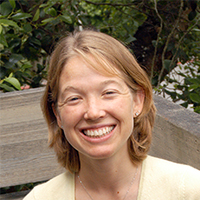
Luna Dong

Luna Dong

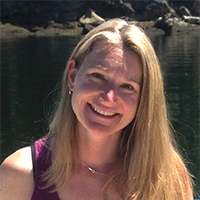
Magda Balazinska

Magda Balazinska

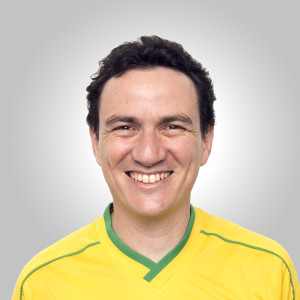
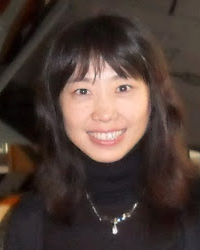
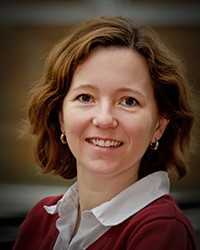
Professor Magda Balazinska  and Ph.D. alum Luna Dong of UW CSE’s Database group will be honored for their research contributions to the field of data management at the Very Large Data Bases (VLDB 2016) conference next month. Balazinska receives the inaugural VLDB Women in Database Research Award for her “inspirational research record on scalable distributed data systems.” Dong, who earned her Ph.D. in 2007 working with former UW CSE professor and Database group founder Alon Halevy, receives the VLDB Early Career Research Contribution Award for “advancing the state of the art of knowledge fusion.”

Balazinska holds the Jean-Loup Baer Career Development Professorship in UW CSE and is a Senior Data Science Fellow at the UW’s eScience Institute. Her research focuses on big data management and scientific data management in cloud computing environments. In addition to co-leading the Database group, she co-founded the UW’s AstroDB group—a collaboration between UW CSE, the eScience Institute, and the Astronomy department—to develop novel tools and techniques for processing, storing and querying the massive volumes of data being generated by telescopes and simulations. Her projects extend beyond astronomy and include, among others, collaborations with neuroscientists and biologists. Balazinska is one of the leaders of the Myria project, which develops and operates a fast, flexible cloud-based service for big data management and analytics. A demonstration version of the service is available through the project website. Prior to her work on Myria, she led the Nuage project, which enabled scientists to store and analyze large volumes of data using the Hadoop system. She also worked on the SciDB multidimensional parallel array engine.

Balazinska has earned numerous honors for her work, including an NSF CAREER Award, a Microsoft Research New Faculty Fellowship, a Google Research Award, an HP Labs Research Innovation Award, and multiple best paper awards. In addition to her research and teaching, Balazinska serves as director of the IGERT Ph.D. program in Big Data and Data Science and co-founded the Northwest Database Society (NWDB), which brings together researchers and practitioners in the database and data management fields from across the Pacific Northwest.

Dong’s research interests span knowledge management, data integration and quality, and applied machine learning. After graduating from UW CSE, she spent five years at AT&T Research, where she helped build the company’s Data Fusion research area and systems for gauging the trustworthiness of data sources and the best sources for data integration.

In 2013, Dong became a senior research scientist at Google, where she initiated the Knowledge Fusion research area and contributed to the company’s Knowledge Vault project, which automatically fuses the knowledge collected from billions of web pages into a probabilistic knowledge base. Dong also invented Knowledge-Based Trust, a system that gauges the trustworthiness of web sources and aids the verification of facts—referred to as the “Google Truth Machine” in a Washington Post article about the project. Recently, Dong joined Amazon as a principal scientist, initiating and leading the effort to build Amazon Product Graph.

VLDB is one of the two top database conferences in the world (the other one being SIGMOD). VLDB 2016 will be held September 5-9 in New Delhi, India.

Congratulations, Magda and Luna! Read more →

In His Own Words: Gary Kildall

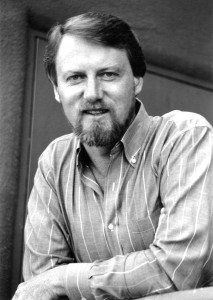
Kildall_1988_GK_ONeal-213x300UW CSE Ph.D. alumnus Gary Kildall was a pioneer of personal computer software. He wrote programming language tools including assemblers (Intel 4004), interpreters (BASIC), and compilers (PL/M). He created a widely-used disk operating system (CP/M). He and his wife, Dorothy McEwen, started a successful company called Digital Research to develop and market CP/M, which for years was the dominant operating system for personal microcomputers.

Gary died in 1994, at the young age of 52. In 1993, the year before his death, he wrote a draft of a memoir titled “Computer Connections: People, Places, and Events in the Evolution of the Personal Computer Industry.” Gary’s children, Scott and Kristin, have made the first portion of that memoir, along with their introduction to it and previously unpublished family photos, available via the Computer History Museum.

Scott and Kristin write: “Gary viewed computers as learning tools rather than profit engines. His career choices reflect a different definition of success, where innovation means sharing ideas, letting passion drive your work and making source code available for others to build upon. His work ethic during the 1970s resembles that of the open-source community today.”

Read the preamble and the remarkable manuscript here.

UW CSE is proud to count Gary as one of our most distinguished alumni: Ph.D. number 7 from our department, awarded in 1972, advised by Hellmut Golde. Read more →

UW CSE’s Tom Anderson, Albert Greenberg elected to the Washington State Academy of Sciences

GreenbergTom AndersonUW CSE professor and alum Tom Anderson (Ph.D., ’91) and alum Albert Greenberg (Ph.D., ’83) have been elected to the Washington State Academy of Sciences. Anderson and Greenberg, who were elected to the National Academy of Engineering earlier this year, are among two dozen new WSAS members selected based on “their outstanding record of scientific achievement and willingness to work on behalf of the academy in bringing the best available science to bear on issues within the state of Washington.”

The WSAS was created by the Washington State Legislature in 2005 to harness the expertise of leading scientists and engineers to provide authoritative and objective scientific and technical analysis to public policy-makers and to increase the role and visibility of science in the state, modeled after the National Academies’ National Research Council. Anderson and Greenberg join UW CSE professors Ed Lazowska and Hank Levy, adjunct professors David Baker, Tom Daniel and Joseph Felsenstein, and affiliate faculty members Phil Bernstein, Eric Horvitz, and Burton Smith of Microsoft Research, Lee Hood of the Institute for Systems Biology, Radia Perlman of EMC, and Rick Szeliski of Facebook as members. They will be formally inducted at the WSAS annual meeting in September.

Read our previous blog post on Anderson and Greenberg here.

Congratulations, again, to Tom and Albert on their tremendous achievements! Read more →

UW CSE spinoff Impinj off to a roaring start with IPO

Impinj logoImpinj, the Seattle-based RFID company founded by UW CSE professor Chris Diorio and his Caltech Ph.D. advisor Carver Mead, made its debut on Wall Street today to great fanfare. Impinj is the first Seattle technology company to go public in 2016.

From the GeekWire article:

Cn6dlBdXYAAFiHj

The Impinj team rang the closing bell at NASDAQ today to celebrate their IPO

“Wall Street likes what they see in Impinj, a 16-year-old Seattle-based maker of Radio Frequency Identification technology that today went public on Nasdaq at $14 per share. That was the upper end of the range for the company, which makes RFID chips that allow retailers to track inventory or manufacturers to track parts….

“Impinj, which is trading under the ticker PI, is doing well in its debut. The stock shot up more than 20 percent, and it is now trading around $17.17.” (Impinj closed the day at $17.97, up 28% from the $14.00 IPO price.)

Congratulations to Chris, Carver and the entire Impinj team! And also to the investors who have stood by the company – particularly our good friends at Madrona Venture Group, which has backed more than a dozen UW CSE startups.

Read all about it on GeekWire hereTechCrunch here, and Xconomy here. Read more →

UW CSE’s Dreambit imaging software lets people change their appearance virtually

Dreambit results for Ira Kemelmacher-Shlizerman

Ira Kemelmacher-Shlizerman explores different looks using Dreambit.

Have you ever wondered what you would look like with a different hairstyle or if you were born in a different historical period? Now you can find out thanks to new imaging software created by UW CSE professor Ira Kemelmacher-Shlizerman.

Dreambit enables an individual to upload his/her photo and generate personalized search results in which the person’s face is synthesized with images matching the search terms.

Dreambit identifies a set of images that satisfy the search parameters, such as “curly hair,” and employs algorithms to blend the input photo with search results that match the person’s pose, expression, and face shape. The software draws from previously published work in 3-D reconstruction, age progression, and other research that makes use of the vast array of photos available online.

The ability to explore different looks is not all fun and games—the software has a variety of practical applications, including law enforcement and the film industry.

From the UW News release:

“‘It’s hard to recognize someone by just looking at a face, because we as humans are so biased towards hairstyles and hair colors,’ said Kemelmacher-Shlizerman. ‘With missing children, people often dye their hair or change the style so age-progressing just their face isn’t enough. This is a first step in trying to imagine how a missing person’s appearance might change over time.’

“Another potential application is to envision how a certain actor or actress might appear in a role. For example, the system can marry internet photographs of the actress Cate Blanchett and Bob Dylan to predict how she would appear playing the Dylan role in the movie ‘I’m Not There.'”

Kemelmacher-Shlizerman will present Dreambit at the SIGGRAPH 2016 conference next week in Anaheim, California. General release to the public is planned for later this year.

Read the UW News release here, view a video demonstration here, and read the research paper here. Check out the Dreambit website here and coverage of the project by TechCrunchGeekWire, Digital TrendsEngadget, and the Daily Mail. Watch the KOMO 4 News segment here. Read more →

Microsoft Research recognizes 3 UW CSE faculty, 2 Ph.D. alums with Outstanding Collaborator Awards

Ed Lazowska at the Microsoft Research Faculty Summit

Ed Lazowska is recognized with the Outstanding Collaborator Award

Microsoft Research has recognized UW CSE professor Ed Lazowska, CSE and Electrical Engineering professors Shwetak Patel and Georg Seelig, and CSE Ph.D. alums Todd Millstein and Tao Xie, with Outstanding Collaborator Awards. The five are among 32 academics from around the world who are being honored for their contributions to the direction, visibility and value of Microsoft’s research and products.

Rick Rashid—the founder and former head of Microsoft Research, and now Chief Technology Officer for the company’s Applications and Services Group—announced the recipients at the 2016 Faculty Summit taking place in Redmond this week.

MSR recognized Lazowska as “one of the top leaders in the computer science research community.” The organization cited his 20 years of service on the Redmond lab’s Technical Advisory Board, during which he has provided guidance on the direction and impact of the organization’s research and on the development of collaborative initiatives. MSR also noted Lazowska’s long-standing work with government and academic organizations to advance the field of computing, including his leadership on the President’s Information Technology Advisory Committee, the NSF Computing and Information Science and Engineering Advisory Committee, the Computing Research Association, and the Computing Community Consortium.

Georg Seelig

Georg Seelig

Shwetak Patel

Shwetak Patel

Patel – “a prolific MSR collaborator” – was recognized for his work on novel interaction techniques and low-power sensing and his leadership on the Global Innovation Exchange (GIX), a partnership between the UW, China’s Tsinghua University, and Microsoft. In addition to his many research contributions, the organization called attention to Patel’s teaching and mentoring, noting that he has sent more than 10 students from his UbiComp Lab to MSR as interns—including four who have earned MSR Ph.D. Fellowships. A number of Patel’s students have taken full-time roles at Microsoft following graduation.

For the past five years, Seelig has collaborated with MSR Cambridge on programming information processing at the nanoscale using DNA. This work integrated software design tools from MSR with wet lab experiments designed and performed at the UW—leading to improvements in both and producing a DNA-based technology for implementing the computational core of complex molecular networks. Seelig is also a member of the UW’s Molecular Information Systems Lab, a recent collaboration with MSR Redmond aimed at developing the next generation of data storage that recently broke the record for the amount of digital data stored in strands of DNA.

taoxie-pic

Tao Xie

Todd Millstein

Todd Millstein

Millstein earned his Ph.D. from UW CSE in 2003 working with Craig Chambers as part of UW CSE’s Cecil group. Now a professor of computer science at UCLA, Millstein was recognized by MSR for a decade of “broad and deep collaborations” focused on network verification, memory models, and predicate abstractions. Millstein’s partnership with MSR began as an intern while he was a graduate student at UW CSE, and he has continued to work with various MSR researchers in networking and programming languages since joining the UCLA faculty more than a decade ago.

Xie, now an associate professor in computer science and Willett Faculty Scholar at the University of Illinois at Urbana-Champaign, first engaged with Microsoft Research 15 years ago while pursuing his Ph.D. at UW working with David Notkin. His citation notes: “As a visiting researcher in the Research in Software Engineering (RiSE) group, he personally contributed a core search algorithm for the automated test generation feature IntelliTest, which shipped as part of Visual Studio 2015 Enterprise Edition. Even more influential were his frequent visits to Microsoft Research in Redmond and China, which spawned dozens of collaborative projects.”

This is a tremendous honor for the chosen individuals as well as for UW CSE as a whole. Visit the MSR Outstanding Collaborator Awards website here, and learn more about the honorees here.

Congratulations to all for their outstanding work, and thanks to Microsoft Research for being a terrific friend and collaborator! Read more →

10th Anniversary of UW CSE’s CS4HS

WP_20160706_17_00_25_Pro

Tom Cortina (in UW purple) guides the teachers through a sorting network outside the Allen Center

This year marked the 10th anniversary of UW CSE’s CS4HS summer workshop for middle school and high school math and science teachers.

UW, CMU and UCLA pioneered the program in 2007 with support from Google. At UW, we focus on teachers of mathematics and the natural science from the Puget Sound region, hoping to give them the resources to incorporate modern, fun, and accessible computer science elements into their teaching. Of equal importance, we seek to establish a supportive community among these teachers, and between these teachers and UW CSE – a “safety net” that instills the confidence to take a risk with new approaches. Between 40 and 80 teachers participate annually – roughly 600 since the start of the program.

WP_20160707_13_21_00_Pro

Alex Mariakakis shows off research in the Ubiquitous Computing Laboratory

For 9 of the 10 years, Tom Cortina, Assistant Dean for Undergraduate Education at CMU’s School of Computer Science, has joined us, contributing enormously to the success of the UW program. Thank you Tom!

Learn more about UW CSE’s CS4HS here. Learn about DawgBytes, our broad-based K-12 outreach program, here. Check out a recent post on our DawgBytes summer day camps for middle school and high school students here. Read more →

UW CSE’s Fahad Pervaiz: Predicting disease outbreaks could save millions of lives

Fahad Pervaiz An international team of researchers that includes UW CSE Ph.D. student Fahad Pervaiz, who works with professor Richard Anderson in the Information & Communications Technology for Development (ICTD) Lab, has come up with a way to predict outbreaks of dengue fever by analyzing calling activity by members of the public to a telephone hotline. In a paper published today in the journal Science Advances, Pervaiz and collaborators at New York University, the Punjab Information Technology Board and the Information Technology University in Pakistan present a system capable of predicting disease outbreaks at the level of a city block.

From the UW News release:

“Collecting disease surveillance data traditionally requires a huge infrastructure to gather and analyze disease incidence data from all healthcare facilities in a country or region. The primary appeal for this new system is its capability to closely monitor disease activity by merely analyzing citizen calls on a public-health hotline….

“The team used more than 300,000 calls to the health hotline, set up in the aftermath of the 2011 outbreaks, to forecast the number of dengue cases across the city and at a block-by-block level over a period of two years. The researchers then matched their predictions with the actual number of cases reported in public hospitals. The results showed a high level of accuracy for the model’s predictions: the system not only flagged an outbreak, but also made an accurate forecast of both the number of patients and their locations two to three weeks ahead of time.”

In 2011, more than 21,000 people in Pakistan were infected with dengue fever, and 350 of them died. There is no cure for the virus, so vector control and containment are essential.

“Developing worlds face challenges in tackling major outbreaks due to limited resources,” Pervaiz explained. “Our technique will equip public officials with tools to inform them about where to apply these resources in advance and hopefully save millions of lives.”

Read the full UW News release here and the NYU announcement here. Check out the GeekWire article here. Read more →

UW and Microsoft researchers set new record in DNA data storage

Luis Ceze and Lee Organick in the lab

CSE professor Luis Ceze and research scientist Lee Organick in the Molecular Information Systems Lab (Credit: Tara Brown Photography)

Researchers in the Molecular Information Systems Lab housed at the University of Washington have achieved a new milestone in their quest to develop the next generation of data storage by encoding a world record-setting 200 megabytes of data in strands of DNA. A team that includes UW CSE professor Luis Ceze and Microsoft researcher (and UW CSE affiliate professor) Karin Strauss announced today that it has successfully stored and retrieved an impressive list of multimedia and literary works, including a high-definition music video by the band OK Go, the complete Universal Declaration of Human Rights in over 100 languages, the novel War and Peace, and more—all contained in a space smaller than the tip of a pencil.

The Microsoft Next blog has the full story. Here’s an excerpt:

“Demand for data storage is growing exponentially, and the capacity of existing storage media is not keeping pace.  That’s making it hard for organizations that need to store a lot of data – such as hospitals with vast databases of patient data or companies with lots of video footage – to keep up. And it means information is being lost, and the problem will only worsen without a new solution.

“DNA could be the answer.

“It has several advantages as a storage medium. It’s compact, durable – capable of lasting for a very long time if kept in good conditions (DNA from woolly mammoths was recovered several thousand years after they went extinct, for instance) – and will always be current, the researchers believe.

“‘As long as there is DNA-based life on the planet, we’ll be interested in reading it,’ said Karin Strauss, the principal Microsoft researcher on the project. ‘So it’s eternally relevant.'”

In a Q&A on UW Today, Ceze explained how the team combined concepts from molecular biology and computer science to achieve its latest milestone. He described how he and his colleagues use polymerase chain reactions—a technique commonly employed by microbiologists to amplify specific segments of DNA for research—to selectively access only the data they want to read. He also noted that, despite its reliability, “DNA writing and reading have errors, just like hard drives and electronic memories have errors, so we needed to develop error-correcting codes to reliably retrieve data.”

Read the Microsoft Next blog post here and the UW Today Q&A with Ceze here, and watch a pair of videos (short version here, extended version here) produced by Microsoft that feature MISL team members and Microsoft leaders talking about the opportunity presented by DNA data storage.

Check out the latest coverage of the team’s record-setting achievement in the Seattle Times, GeekWire, The Verge, Mashable, U.S. News & World ReportCIO Today, Business Insider, and MIT Technology Review.

Earlier this year, Ceze and Strauss co-authored a paper on their efforts to develop a DNA-based storage system with CSE Ph.D. student James Bornholt, Bioengineering Ph.D. student Randolph Lopez, Microsoft researcher and CSE affiliate professor Douglas Carmean, and CSE and Electrical Engineering professor Georg Seelig. For more on this groundbreaking project, read the April 2016 UW News release here. Read more →

Seattle #1 on Glassdoor’s list of best-paying cities for software engineers!

seattleskyline-630x420Seattle:

  • Median base salary: $113,242
  • 7.1 percent above national average cost of living
  • Real adjusted salary: $105,735
  • Job openings: 4,205

Followed by San Jose, San Francisco, Madison WI (only 105 job openings …), Raleigh, Austin, Boston, …

Read about it in GeekWire here. Read more →

« Newer PostsOlder Posts »