Use of soap now allowed in MIT dormitories

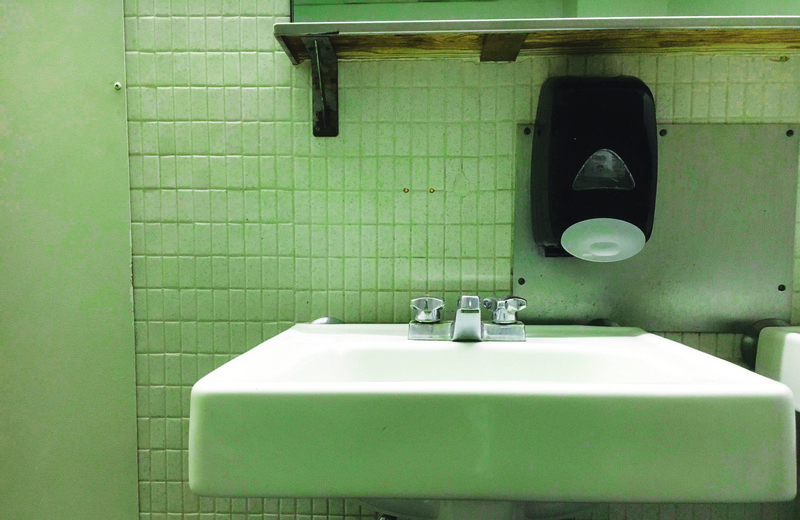
_01_soap_doneIn a desperate attempt to rehabilitate the image of MIT engineers, the Division of Student Life has agreed to provide soap in dormitories.

In recent years, renegade MIT students on the leading edge of 18th century personal hygiene had installed their own soap dispensers in residence halls, but the Division of Student Life had removed them.

Honestly – you can’t make up stuff like this. Read more here.

(Will the Stata Center be next?) Read more →

Why tech startup CEOs love Seattle

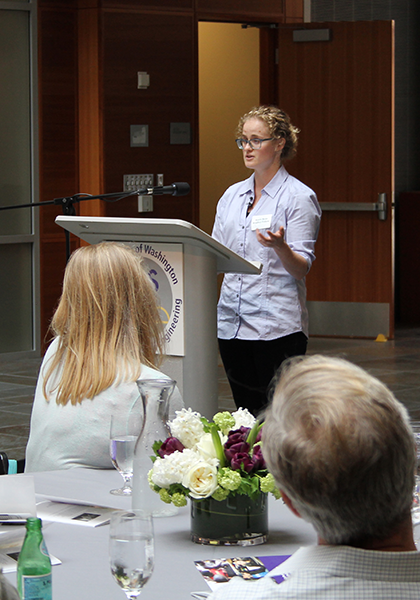
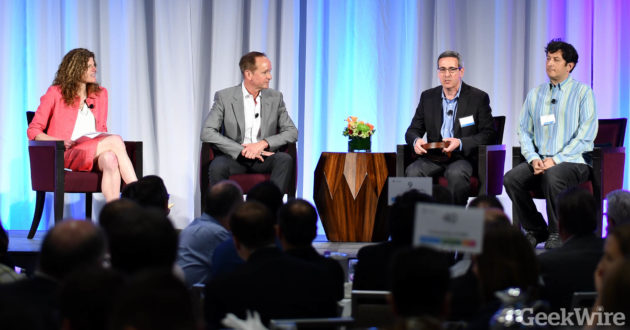
20160502_Tech_Alliance_26-630x330GeekWire reports on today’s State of Technology luncheon. More than 1,000 attendees heard from Microsoft CEO Satya Nadella, preceded by 3 tech startup CEOs: Clayton Lewis (Arivale), Forest Key (Pixvana), and Chris Diorio (Impinj). Our favorite excerpts from the GeekWire article:

“Cost of living . A competitive talent pool. The University of Washington …

“Lewis also credited the University of Washington as an important part of the technology ecosystem in Seattle. That was echoed by Diorio, who co-founded RFID-maker Impinj 16 years ago in Seattle. Diorio noted that he originally came to Seattle to work at the UW’s nationally-recognized computer science department.

“‘It was really the draw of the university and the entire ecosystem that a large prestigious university creates, and how it draws students and industries and people and faculty,’ he said. ‘The bandwidth of the community here as a consequence of that university is transformational.'”

Thanks, guys! Read more here. Read more →

Researchers in UW’s UbiComp Lab turn any phone into a health sensing tool

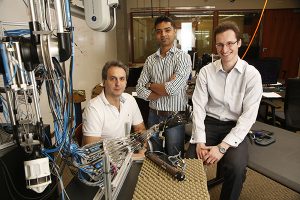
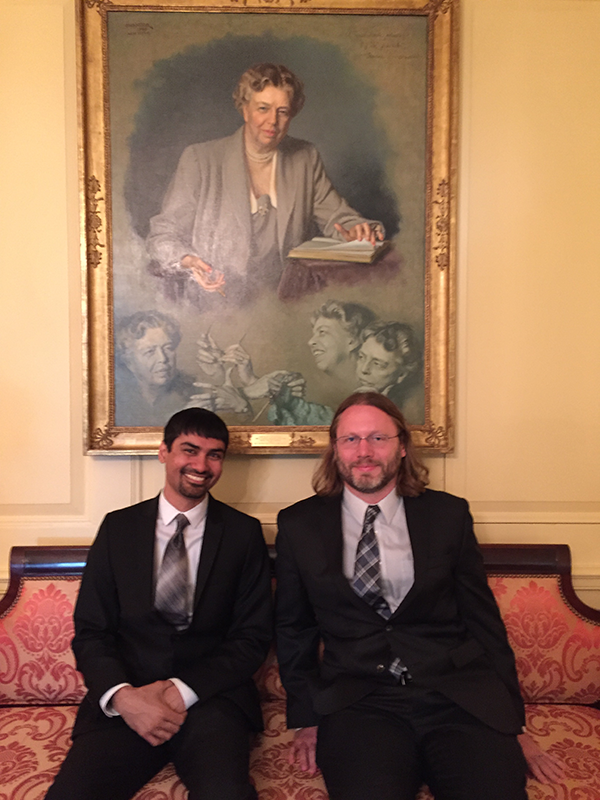
Shwetak Patel, Mayank Goel, Elliot Saba

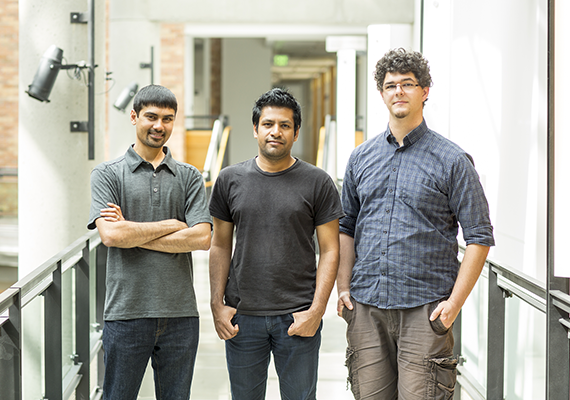
SpiroCall team members, from left: Shwetak Patel, Mayank Goel and Elliot Saba

Researchers in the UbiComp Lab led by UW CSE and EE professor Shwetak Patel have come up with a way to measure lung function using any phone, anywhere in the world. SpiroCall accurately measures lung function over a telephone call, enabling patients and doctors to monitor chronic lung diseases such as asthma and cystic fibrosis without requiring frequent visits to a clinic. The project extends the benefits of SpiroSmart, the smartphone app developed by the same team of researchers as an alternative to the traditional spirometry test, to people who only have access to older style mobile phones or landlines.

From the UW News release:

“‘We wanted to be able to measure lung function on any type of phone you might encounter around the world — smartphones, dumb phones, landlines, pay phones,’ said Shwetak Patel…’With SpiroCall, you can call a 1-800 number, blow into the phone and use the telephone network to test your lung function’….

“‘People have to manage chronic lung diseases for their entire lives,’ said lead author Mayank Goel, a UW CSE doctoral student. ‘So there’s a real need to have a device that allows patients to accurately monitor their condition at home without having to constantly visit a medical clinic, which in some places requires hours or days of travel.'”

Co-authors include UW EE Ph.D. students Elliot Saba and Josh Fromm, UW CSE Ph.D. student Eric Whitmire, former high school intern and California Institute of Technology freshman Maia Stiber, UW EE Ph.D. alum Eric Larson (now on the faculty of Southern Methodist University), and the late UW CSE professor Gaetano Borriello.

The researchers will present SpiroCall at the CHI 2016 conference that begins later this week in San Jose, California.

Read the full news release here, and check out the project web page here. Read the research paper here, and watch the YouTube video here.

Photo credit: Dennis Wise/University of Washington Read more →

UW CSE students in the Husky 100

Krittika D'Silva, Viktor Farkas, Karolina Pyszkiewicz, Sarah YuFour UW CSE students—Krittika D’Silva, Victor Farkas, Karolina Pyszkiewicz and Sarah Yu—have been selected as members of the inaugural class of the Husky 100. This new award recognizes 100 undergraduate and graduate students from across the three UW campuses who are making the most of their time as members of the UW community—and making a difference inside and outside of the classroom.

Krittika D’Silva is a senior majoring in computer engineering and bioengineering. She works with UW CSE professor Luis Ceze in the Molecular Information Systems Lab (MISL) on a groundbreaking project that uses DNA molecules for long-term data storage. Previously, D’Silva worked with the late UW CSE professor Gaetano Borriello and Ph.D. alum Nicki Dell on the development of smartphone apps to improve health care for low-income people in remote regions. She also spent more than two years as a research assistant in the Department of Bioengineering on improving the design of prosthetic devices to increase patient comfort. D’Silva plans to pursue a Ph.D. in computer science at Cambridge University as a Gates Cambridge Scholar.

Victor Farkas is a senior computer science major who arrived at the UW four years ago from Slovakia after accepting an athletic scholarship to join the UW men’s tennis team. In his freshman year, Farkas successfully managed his academic and athletic responsibilities and overcame the language barrier to earn the highest grade point average among UW student-athletes. He has exhibited leadership on and off the court as co-captain of the tennis team, a research assistant in the Robotics & State Estimation Lab, and a teaching assistant for CSE’s Computer Security course. Farkas has completed internships at Amazon, Google and International Software, and he plans to extend his time at the UW to complete CSE’s fifth-year master’s program.

Karolina Pyszkiewicz is a junior who earned direct admission into the computer science major from Seattle’s Holy Names high school. She is generous in volunteering her time to various CSE outreach activities and particularly effective at engaging young women in computer science, having served as a counselor for UW CSE’s DawgBytes summer day camps, an officer of the UW chapter of the Association for Computing Machinery (ACM), and a Google Student Ambassador. Pyszkiewicz completed an internship at Microsoft while still in high school, and has completed internships at Facebook and Google since her arrival at UW CSE. In addition to being a UW CSE endowed scholarship recipient, she was named a Washington State Opportunity Scholar and a NASA Space Grant Scholar.

Sarah Yu is a senior majoring in computer science, economics and international studies. She spent last spring as a Cybersecurity Research Fellow in Microsoft’s Trustworthy Computing Group in partnership with the UW’s Jackson School of International Studies. Previously, Yu worked with the Seattle Red Cross as a Jackson-Munro Public Service Fellow, an award that aims to develop undergraduate students’ potential as leaders while working on a public service project. She has completed internships at Amazon and Lagoon Conservation, and for the past six years she has served in various capacities as a volunteer with the American Red Cross.

We are very proud to have Krittika, Victor, Karolina and Sarah as members of the UW CSE family. Learn more about the Husky 100 program here, and read profiles of the 2016 class here.

Congratulations to all! Read more →

#CSforAll – Sign the Code.org petition!

unnamedPlease take a minute to sign Code.org’s #CSforAll petition – launched yesterday by America’s top leaders from business, politics, and education:

“As business leaders, elected officials, educators, and members of the public, we join forces to deliver a bipartisan message about opportunity and the American Dream. Technology is transforming society at an unprecedented rate. Whether it’s smartphones or social networks, self-driving cars or personalized medicine, nothing embodies the American Dream so much as the opportunity to change or even reinvent the world with technology. And participating in this world requires access to computer science in our schools. We ask you to provide funding for every student in every school to have an opportunity to learn computer science.”

Read more (and sign!) here! Read more →

UW CSE affiliate professor Eric Horvitz of Microsoft Research receives ACM-AAAI Allen Newell Award

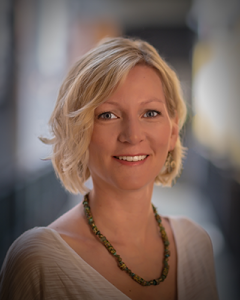
Eric HorvitzUW CSE affiliate professor Eric Horvitz, technical fellow and managing director of Microsoft Research in Redmond, has been recognized with the ACM-AAAI Allen Newell Award for his groundbreaking contributions in artificial intelligence and human-computer interaction.

The Newell Award recognizes career contributions that have breadth within computer science and/or that bridge computer science and other disciplines. Horvitz’s work does both, combining the theoretical with the practical and leveraging human and machine intelligence to deliver technologies that improve people’s lives. He has made countless, lasting contributions to Microsoft and to the field of computing through his work in the areas of time-critical decisions, information retrieval, health care, urban infrastructure, sustainability and development. His trailblazing research has produced computational models for assisting physicians in minimizing patient readmissions; predictive analytics for traffic flow and routing; and techniques for prioritizing and interpreting email.

Microsoft Corporate Vice President Jeannette Wing says of Horvitz, “He asks big questions: How do our minds work? What computational principles and architectures underlie thinking and intelligent behavior? How can computational models perform amidst real-world complexities such as sustainability and development? How can we deploy computation systems that deliver value to people and society?”

The Newell Award is a fitting acknowledgment of the scale and importance of Horvitz’s work. Read more about his many accomplishments on the Microsoft blog here and in the ACM press release here.

Congratulations, Eric! Read more →

UW CSE and Intel Labs win inaugural SIGMOBILE Test of Time Award

Gaetano Borriello, Anthony LaMarca, Jeff Hightower“Test of Time” awards recognize research papers that, with the benefit of a decade’s hindsight, are viewed as having had particularly great impact.

SIGMOBILE, the Association for Computing Machinery’s special interest group focused on mobile computing and communications, has just introduced a Test of Time award and has selected Place Lab: Device Positioning Using Radio Beacons in the Wild as one of the inaugural winners.

Place Lab was a collaboration between researchers at UW CSE, Intel Research Seattle, Intel Research Cambridge, UC San Diego and the UW iSchool. The project ushered in a new era of location-aware computing and laid the foundation for many of the mobile apps that people take for granted today, from checking the weather forecast, to choosing a restaurant, to navigating their commute. The work of the Place Lab team helped to revolutionize mobile computing—and many other industries along with it.

In its award citation, SIGMOBILE hailed Place Lab as “a seminal effort to achieve accurate localization of mobile devices using existing infrastructure. It showed through painstaking experiments that leveraging a combination of Wi-Fi and GSM beacons enabled positioning with 20-30 meter median accuracy and close to 100% coverage throughout a major metropolitan area. The work directly informed localization techniques that have come to be used in billions of mobile devices.”

The Place Lab team included the late UW CSE professor Gaetano Borriello; Ph.D. alum and affiliate faculty member Anthony LaMarca, then a member of Intel Labs and now Intel Principal Engineer at the Intel Science & Technology Center at the UW; Ph.D. alum Jeff Hightower, now an engineering manager at Google; and then-bachelor’s students James Howard, Jeff Hughes and Fred Potter.

This is the second such award for Place Lab—a paper describing other aspects of the work captured the 10-year Impact Award at UbiComp 2015. Read the original research paper here, and learn more about the SIGMOBILE Test of Time Award here.

Congratulations to the entire team! Read more →

UW CSE @ Engineering Discovery Days!

IMG_1003 IMG_1004 IMG_1026 IMG_1034 IMG_6738Thousands of K-12 students, teachers, and parents visit UW each year for Engineering Discovery Days. Today: elementary and middle schoolers. Tomorrow, high schoolers. Amazing energy! Read more →

Vote for UW CSE’s 3D Face Reconstruction in the GeekWire Awards!

Balloting is open for the 2016 GeekWire Awards in several categories. Check ’em all out here.

But be sure to vote for UW CSE’s 3D Face Reconstruction in the “Innovation of the Year” category, here.

Congratulations to Supasorn Suwajanakorn, Steve Seitz and Ira Kemelmacher for being nominated!

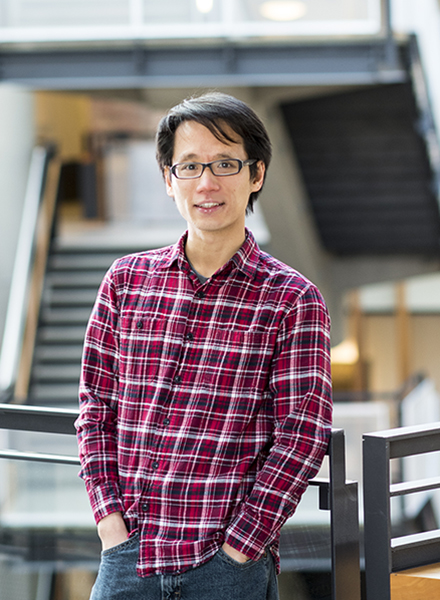
supseitzSmall_edited-1ira_edited-1


  Read more →

UW CSE’s Hanchuan Li and Alex Mariakakis win Qualcomm Innovation Fellowship

Hanchuan Li and Alex Mariakakis outside Qualcomm headquarters

UW CSE Ph.D. students Hanchuan Li and Alex Mariakakis are one of eight teams selected to receive a 2016 Qualcomm Innovation Fellowship. They won one of these coveted awards with their proposal for IDCam, a hybrid RFID-computer vision system that enables simultaneous localization and identification for individuals and objects that will increase our understanding of how people interact with the physical world.

IDCam observes how RFID tags instrumented on everyday objects are disturbed by their motion, and then correlates that information with visual motion information. The team envisions a variety of potential applications for the system. For example, retailers could use IDCam to observe the identity and location of merchandise with which their customers interact in their stores in order to gain a deeper understanding of people’s preferences and behaviors.

The Qualcomm Innovation Fellowship program recognizes and supports graduate students engaged in research that advances futuristic ideas and embodies the company’s values of innovation, execution and partnership. Each winning team receives a $100,000 fellowship and mentoring by Qualcomm engineers, and the competition is fierce: this year, 129 teams submitted proposals, of which 34 were selected as finalists and invited to present their ideas at Qualcomm’s headquarters in San Diego.

Li and Mariakakis were nominated by CSE and Electrical Engineering professor Shwetak Patel, who leads the UbiComp Lab, and former CSE postdoc Alanson Sample at Disney Research.

UW CSE students have done very well in this competition in recent years, including past winners Carlo del Mundo and Vincent Lee (2015), Vincent Liu (2014, with EE student Vamsi Talla), and Thierry Moreau and Adrian Sampson (2013).

Way to go, Alex and Hanchuan! Read more →

« Newer PostsOlder Posts »