UW CSE @ Apple

Apple

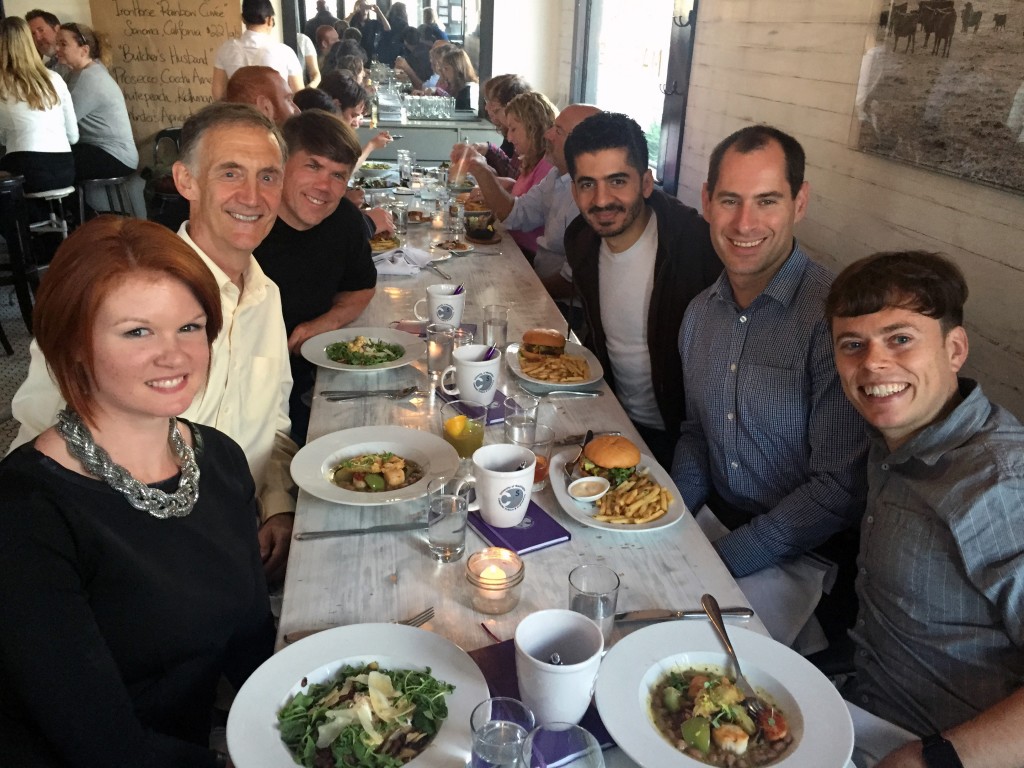
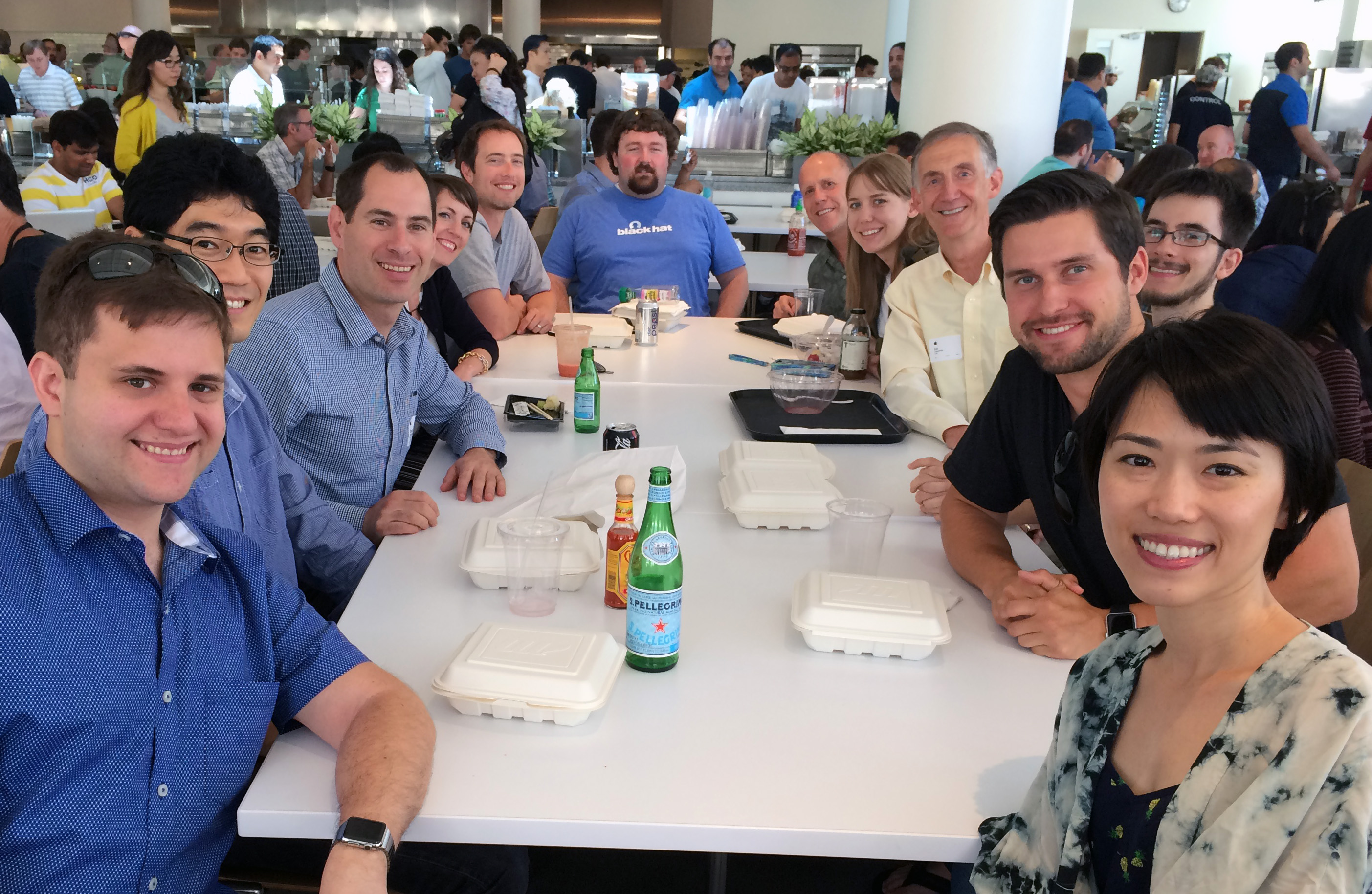
Clockwise from lower left: Owen Anderson, Susumu Harada, Dan Grossman, Lara Littlefield, Dave Richardson, Peter Stackle, Rob Bedichek, Caitlin Bonnar, Ed Lazowska, Josh Scotland, Erik Turnquist, and Jean Wu. Behind the camera: Erin Walker.

UW CSE professors Dan Grossman and Ed Lazowska plus UW CSE outreach staff Lara Littlefield and Erin Walker engaged in a lunchtime discussion on Friday with some of UW CSE’s alums at Apple: Owen Anderson, Rob Bedichek, Caitlin Bonnar (grad student and summer intern), Susumu Harada, Dave Richardson, Josh Scotland, Peter Stackle, Erik Turnquist, and Jean Wu.

Many thanks to Rob Bedichek for hosting! Read more →

UW’s Josh Smith and wireless robot recharging featured in The Economist

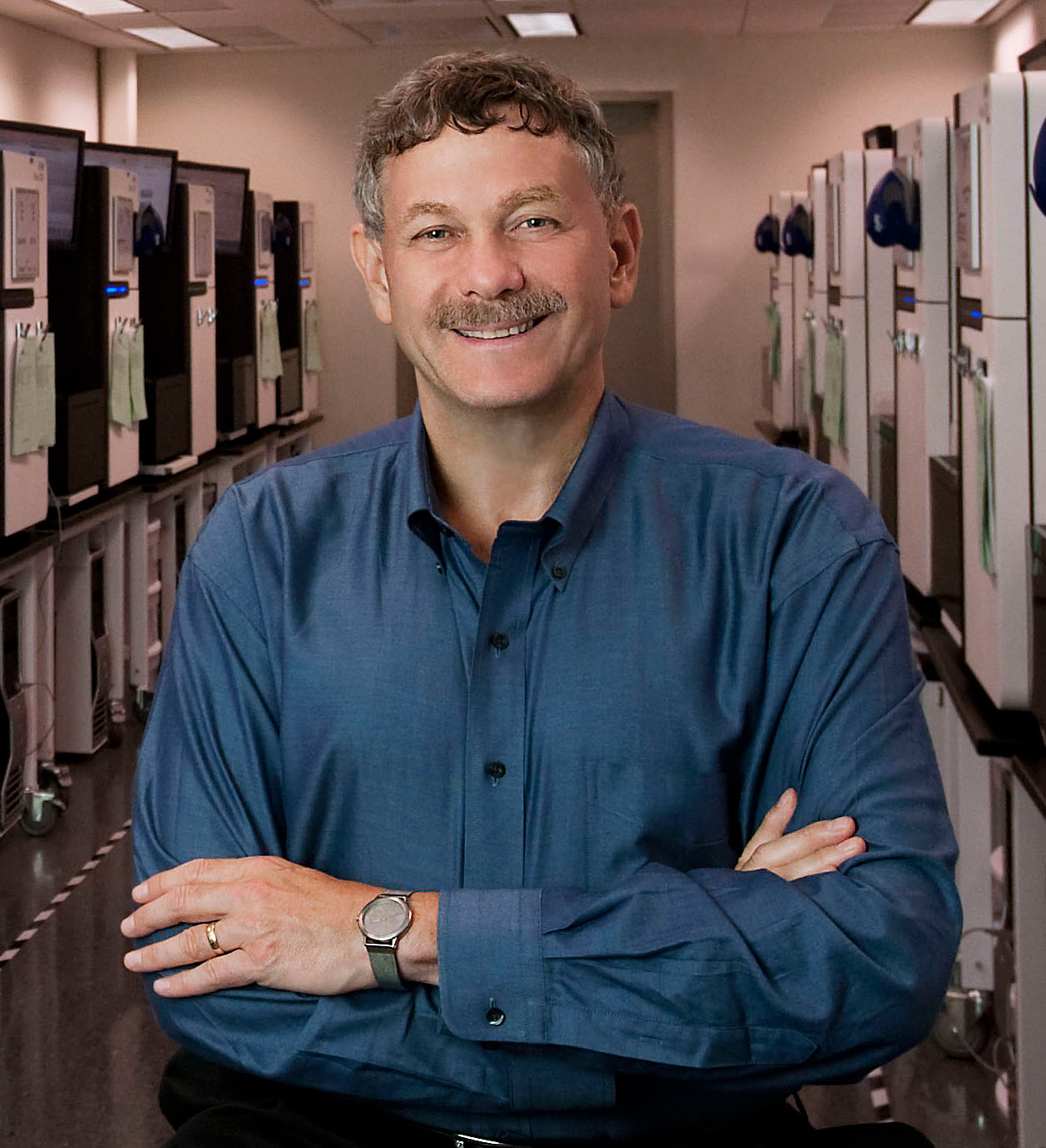
Josh SmithThe latest issue of The Economist asks, “Electronics has already cut the data cord. Can it now cut the power cord as well?” Based in part on the work of CSE and EE professor Joshua Smith, the answer may soon be “yes.” Josh, who heads the UW Sensor Systems Lab, has developed a system for dynamic wireless charging of robots – and started a company, Wibotic, to commercialize the new technology. From the article:

“Drones may one day transform the way parcels are delivered, crops monitored and suspects apprehended. Those who talk up these possibilities, though, often neglect to mention the drawbacks of such robot aircraft – one of which is that most cannot fly for more than a quarter of an hour before they need to find a human being to swap their batteries for them or plug them into an electrical socket.

“Joshua Smith, a computer scientist at the University of Washington, in Seattle, hopes to change that. In May he started a company called Wibotic that plans to recharge drones (and also earthbound robots) without them having to establish an awkward physical connection with a plug.”

The article goes on to explain how the system Josh developed, which employs circuits that are tuned to the same resonant frequency, is a more efficient and flexible alternative to traditional induction systems that rely on simple transmitting and receiving coils. While the basic idea behind resonant induction is not new, Josh’s approach – which works over greater distances and can be tuned to different conditions – represents a significant step forward for wireless power transmission.

Read the full article here. Read more →

UW CSE Bay Area alumni event – phenomenal!

Crowd from back

The alums listened to him anyway! In fact, they sang to him! (We’ll spare you the audio …)

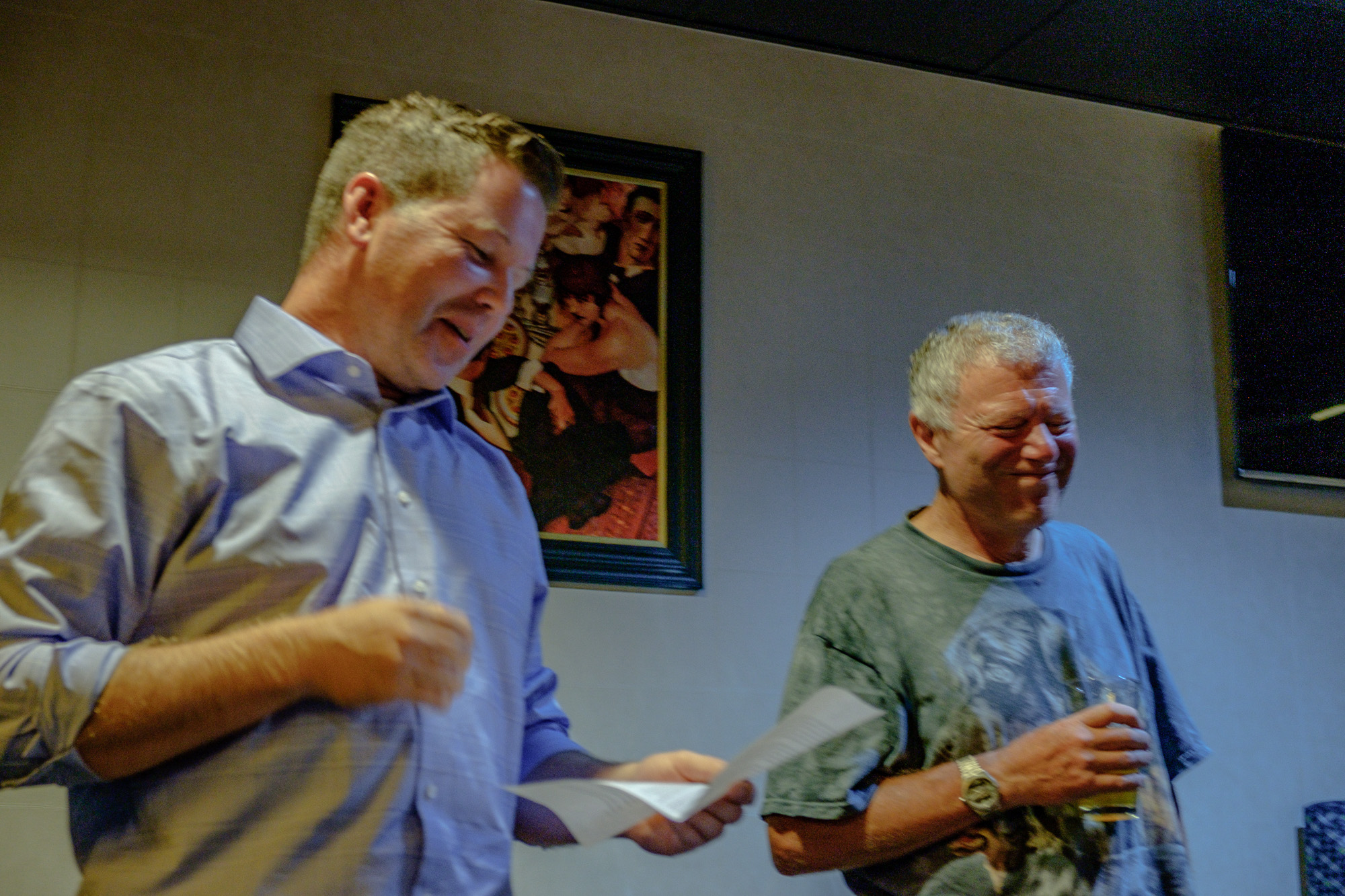
Hank bday

It was Hank’s birthday!

Nearly 200 UW CSE Bay Area alums turned out on the evening of Thursday June 25 for an event generously hosted by our friends at Twitter.

UW CSE faculty Hank Levy, Ed Lazowska, Luis Ceze, Dan Grossman, Jeff Heer, and Zach Tatlock attended (along with former faculty Bay Area residents Carl Ebeling, Alon Halevy, David Salesin, and Marty Stepp).

Are you a Bay Area alum who didn’t hear about this event? It’s because you don’t check our Bay Area Facebook page, and don’t have a Bay Area address or functional email address registered in the UW system. You can fix those things here.

Alex

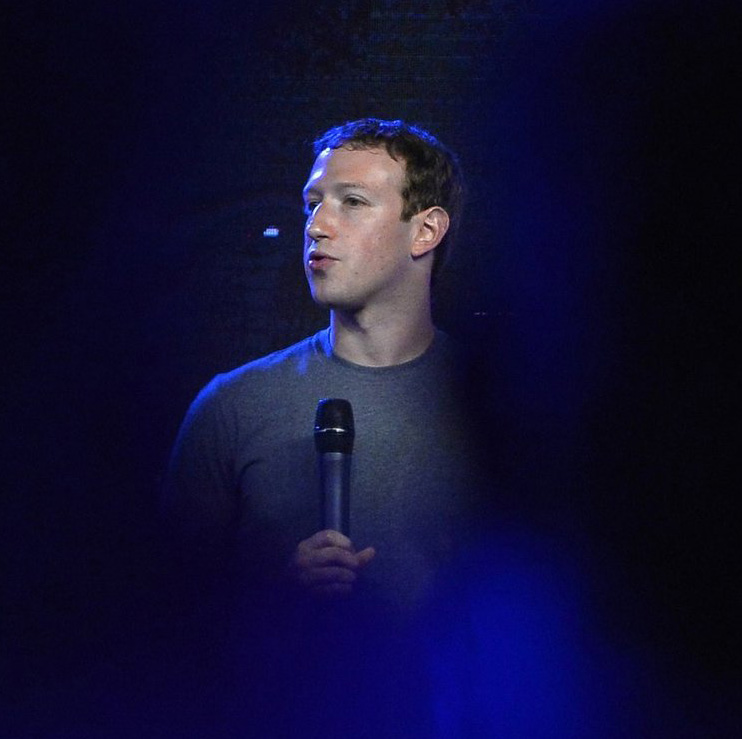
Alex Roetter, Sr. VP of Engineering, describes some of Twitter’s engineering challenges

Are you a Bay Area alum who heard about this event but didn’t attend? Shame on you!

Hank, Ed, and Dan also met 1:1 with a number of alums during a two-day swing through the Bay Area.

And Hank and Ed participated in a hugely informative vision session on Friday morning convened by Ph.D. alum Jeff Dean (Google) and including alums and friends Corey Anderson (Google), Greg Badros (Prepared Mind Innovations, formerly Facebook and Google), Forest Baskett (New Enterprise Associates), John Davis (Pure Storage, formerly Microsoft Research), Alan Eustace (Google, ret.), Brian Pinkerton (A9), Theron Tock (NetCitadel), Bud Tribble (Apple), and Amin Vahdat (Google).

UWCSE@Twitter

Thanks to Twitter for hosting our Bay Area alumni event this year!

It’s exhilarating to spend concentrated time with our friends and alums!! Read more →

Trends in the first-choice major of incoming UW freshmen

Engineering majors

CSE vs. other majors in the College of Engineering

We’ve just received data on the first-choice major of UW’s Class of 2019 – students who will enter in September 2015.

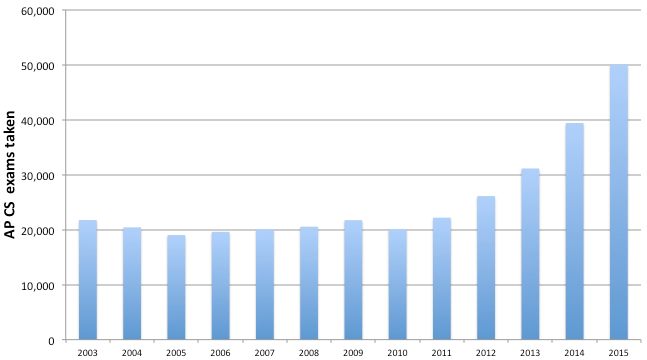
Interest in CSE among incoming freshmen totally blows away interest in every other major offered by programs in the College of Engineering – triple the second-place major!

Interest in CSE among incoming freshman also blows away every other science major offered by programs in the College of Arts & Sciences – in the physical sciences, life sciences, social sciences, and mathematical sciences. Plus Informatics.

Among all UW programs, only the Foster School of Business is the first choice among more incoming freshmen than CSE – and we’ll blow by them next year.

Importantly, our introductory courses – which enrolled 5,000 students this year – “convert” many students who did not enroll intending to become a CSE major. 58% of the women who become our majors did not have that intention when they first enrolled in CSE 142, our “CS1” course. So “incoming freshman intent” vastly under-states the demand for CSE.

Students are smart – they understand which field offers the greatest opportunity to change the world!

Other STEM

CSE vs. majors in the physical sciences, life sciences, social sciences, mathematical sciences, and business

Read more →

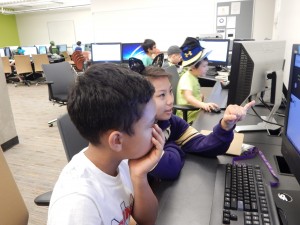
Summer camps combine athletics and computer science

ct-summer-camp-coding-met-jpg-20150619A Chicago Tribune article on a new trend: summer athletic camps for youngsters that include computer science as a break between dodgeball and archery:

“Professions from anthropology to zoology are increasingly becoming information fields, so the ability to program a computer for use within a discipline becomes an advantage, said Ed Lazowska, Bill & Melinda Gates chair in Computer Science & Engineering at the University of Washington.

“Lazowska also points to projections from the U.S. Bureau of Labor Statistics which say that 71 percent of all new jobs in STEM fields in the next decade will be in computer science.

“And even if students never go into the technology fields, those who learn to code also learn ‘computational thinking’ – the ability to analyze problems and debug, among other skills which are valuable in many settings, Lazowska said.

“‘It’s not that kids should be learning this because they want to be going to work at Google and Microsoft and Facebook,’ Lazowska said. ‘It’s rather because computational thinking is a critical reasoning capability, and programming is how we teach it and how you learn it.'”

Read more here (registration required). Read more →

Elson Floyd, March 1 1956 – June 20 2015

6-20-15Elson Floyd, indeed, “led Washington State University to unparalleled growth and success.”

As UW President Ana Mari Cauce said, “We are all Cougars today.”

Read more here. Read more →

KUOW: UW CSE recognized for recruiting women to Computer Science

convo081213uwA KUOW interview from last month has finally made it to the web. Ross Reynolds interviews Crystal Eney, UW CSE’s Director of Student Services, about how UW CSE achieved a rate of female enrollment that’s nearly double the national average, which earned recognition from the National Center for Women & Information Technology.

Great interview – listen here. Read more →

UW CSE and the Global Innovation Exchange

19college-web1-superJumboThursday marked the public debut of the Global Innovation Exchange, an exciting partnership between the University of Washington and Tsinghua University, established with $40 million in foundational support from Microsoft.

GIX will bring together students, faculty, professionals and entrepreneurs from around the world to collaborate on real-world technology and design projects. It will be based on a new campus located in Bellevue’s Spring District.

GIX is a long-term play. In the fullness of time there will be many programs. All will share a set of key characteristics that define GIX:

  • project-based education
  • global teams and perspective
  • close integration of technology, design, and entrepreneurship

The first program, designed by a team led by UW CSE and EE professor Shwetak Patel, will be a 15-month Masters program focused on the creation of digital devices that combine sensors, effectors, communication, advanced algorithms, and user interfaces to provide actionable information about the world. Think of Microsoft Band as an example of such a device, or your smart phone.

11403367_10204298095268315_1619086363973447045_nThe project-based nature is a particular distinction. Teams of students from different disciplines and cultures will collaborate on a project over the entire 15 months of the program. Coursework will tightly integrated with project work.

Importantly, GIX is, for now, focused on Masters programs. As it grows, it surely will have an impact on our region’s technology workforce: our leading-edge tech companies hire students at the Bachelors, Masters, and Ph.D. level, and GIX alumni will have unique and highly attractive characteristics. GIX does not, however, impact our region’s critical shortage of Bachelors capacity in Computer Science and other fields of Engineering. Nor is GIX a research institute, although UW’s research capabilities will be strengthened because faculty will be added who will have research programs on the Seattle campus.

GIX is an element of the University of Washington’s Innovation Imperative, which also involves major expansion of UW CSE (also generously supported by Microsoft), and strengthened ties all across UW to the region’s innovation ecosystem.

UW CSE is thrilled to be partnering with Tsinghua, Microsoft, and other UW units in this exciting experiment!

Further information:
Read more →

UW CSE’s “art for geeks” nurtures students’ creativity and technical excellence

CSE131 student photographyUW CSE faculty member (and unofficial department photographer) Bruce Hemingway has released his picks among the final projects submitted by students in his Spring 2015 CSE131 course, The Science and Art of Digital Photography.

Interestingly, the major with the greatest number of students enrolled in the course was math, followed by a mix of the sciences, various engineering fields and economics. As Bruce says, it’s “art for geeks!” In total, more than 180 students from 38 different majors or pre-majors explored the fundamentals of digital photography in his class, including computational imaging, photographic composition and design, and the future of internet-enabled photography.

Bruce’s teaching combines art and history with science and technology, with some truly stunning results. Check out his top picks from among the students’ final projects here. Read more →

UW’s eScience Institute launches Data Science for Social Good summer program

Data Science for the Social Good kickoff

The 16 Data Science for Social Good student researchers (selected from among 140 applicants) join eScience Institute staff to kick off the “Social” part at Agua Verde on afternoon one of the summer-long program.

UW’s eScience Institute, led by CSE faculty members Bill Howe and Ed Lazowska, kicked off its new summer program, Data Science for Social Good, this week. Focusing on the theme of urban science, the program enables teams of students, faculty and community stakeholders to tap into eScience members’ expertise and powerful data analysis and visualization tools to address issues affecting urban environments, including public health and safety, sustainability, transportation, education and social justice.

Two participating projects have connections to UW CSE’s Taskar Center for Accessible Technology: Open Sidewalk Graph for Accessible Trip Planning, or Access Map, an award-winning online tool developed by UW students under the guidance of CSE’s Alan Borning and Anat Caspi that enables people with limited mobility to plan an accessible route through the city; and ParaTransit To Go, a project led by Caspi to improve the quality of King County Metro Paratransit services for passengers with disabilities in King County while making those services more cost-effective to operate.

dssgIn addition to the accessibility projects, the DSSG accepted two other proposals aimed at improving urban communities: Assessing Community Well-Being Through Open Data and Social Media, a project by Third Place Technologies which leverages social media and open data sources to identify emerging issues in neighborhoods, with a focus on underserved communities; and Predictors of Permanent Housing for Homeless Families in King, Snohomish & Pierce County, a project of the Bill & Melinda Gates Foundation which aims to identify the factors that contribute to homelessness and the barriers to families finding permanent housing in order to better prioritize resources and reduce local families’ need for temporary shelter.

Read more about Data Science for Social Good here, and find more information about the participating projects here.

Read past blog coverage of the participating Taskar Center projects here. Read more →

« Newer PostsOlder Posts »