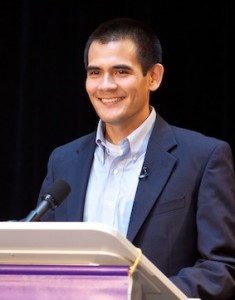
UW CSE’s resident car-hacking expert, Yoshi Kohno, in the Washington Post

Yoshi KohnoUW CSE professor Yoshi Kohno was quoted in this week’s big, scary story in The Washington Post on hacking and the Internet of Things, inspired by his past research on the vulnerability of motor vehicle systems.

Last fall, Yoshi and a team of students were featured in this segment that aired on 60 Minutes in which they remotely took control of a car driven around a UW parking lot (a deserted UW parking lot!) by correspondent Lesley Stahl. Recently, another team of researchers demonstrated the ability to hack into another make and model on a public highway – once again bringing the topic of motor vehicle security in an increasingly connected world to the fore.

Noting that the cars on the market today are “computers on wheels,” the article, “Hacks on the Highway,” explains what makes them so vulnerable:

“Once inside, most computer systems on modern vehicles are somehow connected, if only indirectly. Researchers who have hacked their way into computers that control dashboard displays, lighting systems or air bags have found their way to ones running transmission systems, engine cylinders and, in the most advanced cars, steering controls. Nearly all of these systems speak a common digital language, a computer protocol created in the 1980s when only motorists and their mechanics had access to critical vehicle controls….

“Scientists from the University of Washington and the University of California at San Diego reported in 2010 that, with physical access to a car, they could control almost any computerized system within it. When some critics questioned the realism of that scenario — if you were in the car, you could simply turn off the engine or hit the brakes yourself, they said — the researchers found a way to do many of the same things remotely….

“’We can do this from a thousand miles away,’ said Tadayoshi Kohno, one of the University of Washington researchers who worked on the project, published in 2011.”

The article provides an in-depth look at the factors that make automobiles vulnerable and how regulators are trying to address the threat. It is definitely worth a read if you drive a car (particularly if you drive a Jeep). Check out the full article here, our past blog post on the 60 Minutes demonstration here, and the 2011 article by The New York Times on the UW and UCSD research here. Read more →
UW’s SideSwipe featured in IEEE Signal Processing Magazine

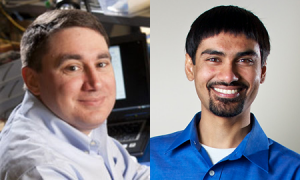
Matt Reynolds and Shwetak Patel

Matt Reynolds and Shwetak Patel

Research led by UW CSE and EE professors Matt Reynolds and Shwetak Patel that will enable “command by gesture” for smartphones is the topic of a special report on human-machine interfaces in the July issue of IEEE Signal Processing Magazine. The technology, known as SideSwipe, relies on a phone’s own wireless transmissions, using small antennae to read changes in the signal caused by different hand motions.

From the article:

“Smartphones have become increasingly affordable and more widely used over the past several years. Yet smartphones and their applications are difficult to control in situations where the user lacks direct access to the touchscreen, such as while driving a car, cooking a meal, or exercising. While voice recognition technology promises a partial solution to the problem, such systems are far from foolproof and particularly unreliable in noisy environments.

“In an effort aimed at creating an alternate ‘hands off’ control technology, University of Washington researchers have created a new type of low-power wireless sensing technology that promises to allow users to ‘train’ their smartphones to recognize and respond to specific hand gestures….”

Read the full article here, and check out past CSE blog coverage of SideSwipe here and here. Read more →

UW CSE’s Franzi Roesner co-authors study of computer security practices and pitfalls for journalists

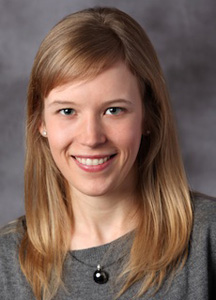
Franzi RoesnerUW CSE professor Franzi Roesner, graduate students Polina Charters and Tobin Holliday of UW’s DUB Group, and Susan McGregor of the Columbia Journalism School have released the results of a new study examining journalists’ computer security practices in an age of widespread data collection and surveillance.

The researchers analyzed the security habits of 15 working journalists, including how they communicate with sources and what tools and strategies they use to protect sensitive information that they receive in the course of their work. They found that the method of communication is often driven by the source rather than the journalist, and that journalists often use personal mobile devices and cloud-based systems to transmit or store information — practices which could compromise security despite the journalists’ best intentions.

From the UW news release:

“‘The way people try to bridge gaps can introduce security issues,’ said UW senior author Franziska Roesner … ‘If you use your iPhone to translate speech to text, for example, it sends that information to Apple. So if you record a sensitive conversation, you have to trust that Apple isn’t colluding with an adversary or that Apple’s security is good enough that your information is never going to be compromised …’

“’The flip side is that it’s not just a matter of giving journalists information about the right tools to use — it’s that the tools are often not usable,’ Roesner said. ‘They often fail because they’re not designed for journalists.’”

The team hopes its findings will help members of the computer security community to better understand the needs of journalists. These insights will help them to develop security solutions that protect journalist-source communications without hindering the journalistic process.

Read the full new release here and the team’s detailed findings, which will be presented at the 24th USENIX Security Symposium next month, here. Read more →

Tech.Co: Which universities produce the best tech talent?

CSElogo2text_1000Our rule-of-thumb for evaluating the veracity of rankings:

  • If we look good, it’s authoritative.
  • If we look bad, the methodology was garbage.

Here’s Tech.Co‘s authoritative assessment of “the best public and private universities that produce the best-equipped graduates to make an impact in the world of technology.”

The methodology involved “a composite of the rankings from US News and World Report for Computer Science, LinkedIn university rankings for Software Developers and Software Developers at Startups, and finally the number of companies being run by their respective alumni according to AngelList.”

How can you possibly argue with that?

Check it out here. Read more →

The Master Algorithm

61JXsPsh95L

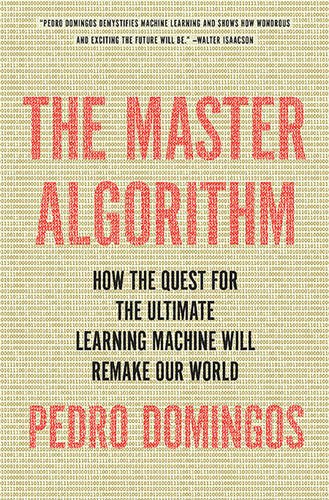
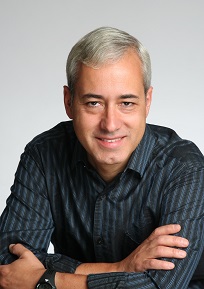
The latest book by UW CSE professor Pedro DomingosThe Master Algorithm: How the Quest for the Ultimate Learning Machine Will Remake Our World, is available for pre-order from Amazon. Amazon says:

Algorithms increasingly run our lives. They find books, movies, jobs, and dates for us, manage our investments, and discover new drugs. More and more, these algorithms work by learning from the trails of data we leave in our newly digital world. Like curious children, they observe us, imitate, and experiment. And in the world’s top research labs and universities, the race is on to invent the ultimate learning algorithm: one capable of discovering any knowledge from data, and doing anything we want, before we even ask.

Machine learning is the automation of discovery—the scientific method on steroids—that enables intelligent robots and computers to program themselves. No field of science today is more important yet more shrouded in mystery. Pedro Domingos, one of the field’s leading lights, lifts the veil for the first time to give us a peek inside the learning machines that power Google, Amazon, and your smartphone. He charts a course through machine learning’s five major schools of thought, showing how they turn ideas from neuroscience, evolution, psychology, physics, and statistics into algorithms ready to serve you. Step by step, he assembles a blueprint for the future universal learner—the Master Algorithm—and discusses what it means for you, and for the future of business, science, and society.

pedro

If data-ism is today’s rising philosophy, this book will be its bible. The quest for universal learning is one of the most significant, fascinating, and revolutionary intellectual developments of all time. A groundbreaking book, The Master Algorithm is the essential guide for anyone and everyone wanting to understand not just how the revolution will happen, but how to be at its forefront.

(As soon as there’s a Kindle edition, we’ll order it …) Read more →

“The doctor is in (your phone)” – UW’s ApneaApp featured in Scientific American

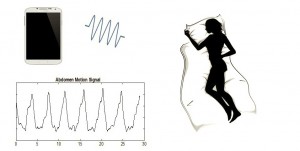
ApneaApp sonar graphicThe August issue of Scientific American profiles several new smartphone apps that help diagnose and manage disease. Among those featured in the article is ApneaApp, which was developed by UW CSE professor Shyam Gollakota, UW CSE Ph.D. student Rajalakshmi Nandakumar and Dr. Nathaniel Watson of the UW Medicine Sleep Center to enable wireless diagnosis of sleep apnea.

The article noted, “An initial laboratory trial has shown ApneaApp to be just as effective as hooking up patients to tracking instruments in a sleep clinic.” The next step will be to test the app in patients’ homes.

Read the full article in Scientific American here. Read UW’s news release and view a video demonstration of ApneaApp here and read past CSE blog coverage of the app here. Read more →

GeekWire: “Secrets of computer science: Tips for aspiring programmers, and advice for their teachers”

IMG_0170-620x341

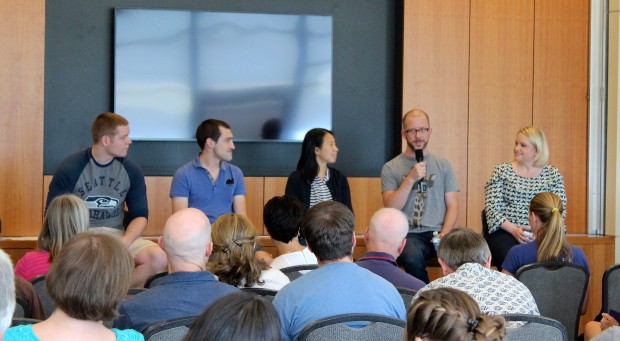
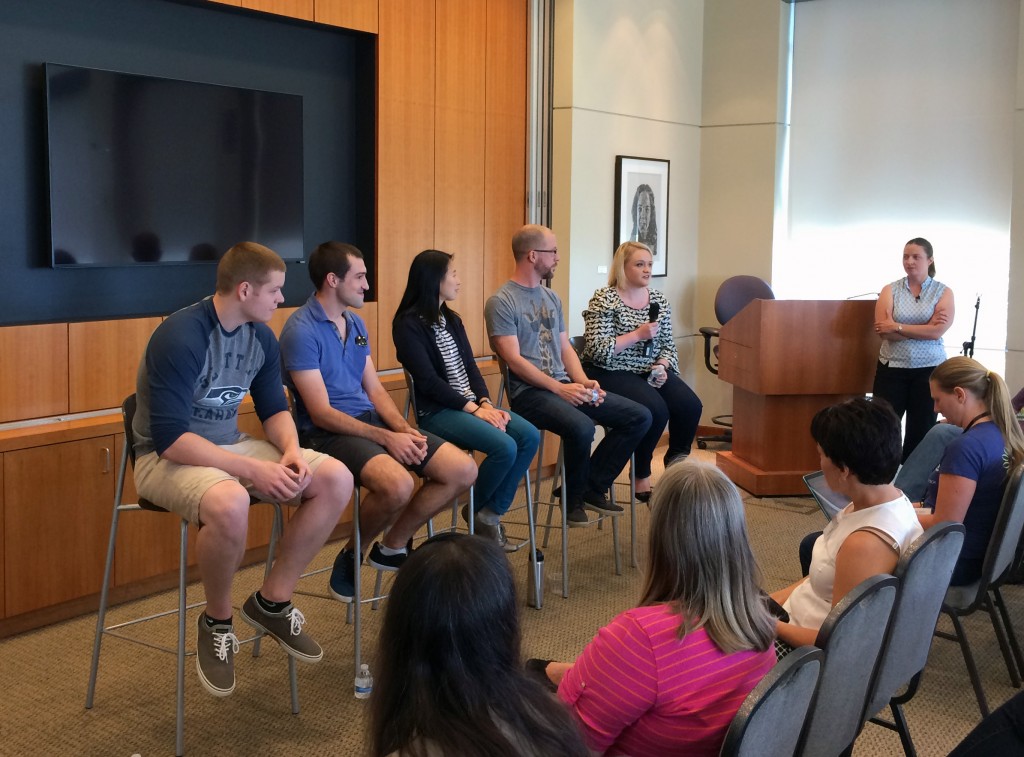
UW CSE alums Taylor Williams, Jeff Prouty, Dana Wen, Tam Armstrong, and Carolyn Hughes

Our friends at GeekWire report on the alumni panel of this week’s CS4HS workshop for middle school and high school teachers:

“Understanding how to work effectively on a team is critical for a successful career in computer science, you can be a great programmer no matter when you start learning – and, yes, the perks for employees at big tech companies are pretty sweet.

“Those were some of the takeaways from a panel that the University of Washington Computer Science & Engineering department hosted on Friday afternoon as part of an annual event called CS4HS to expose middle and high school teachers to computer science.

“Five UW alumni, who graduated from the department and now work at Seattle-area companies, shared thoughts on their work experience after graduating and what teachers can do to help encourage more students to study computer science.

“Here are highlights from the panel …”

Read more here! Learn all about CS4HS here. Learn about DawgBytes (“A Taste of CSE”), UW CSE’s extensive K-12 outreach program, here. Read more →

UW CSE and HCDE researchers discover many mobile health apps let down low-vision users

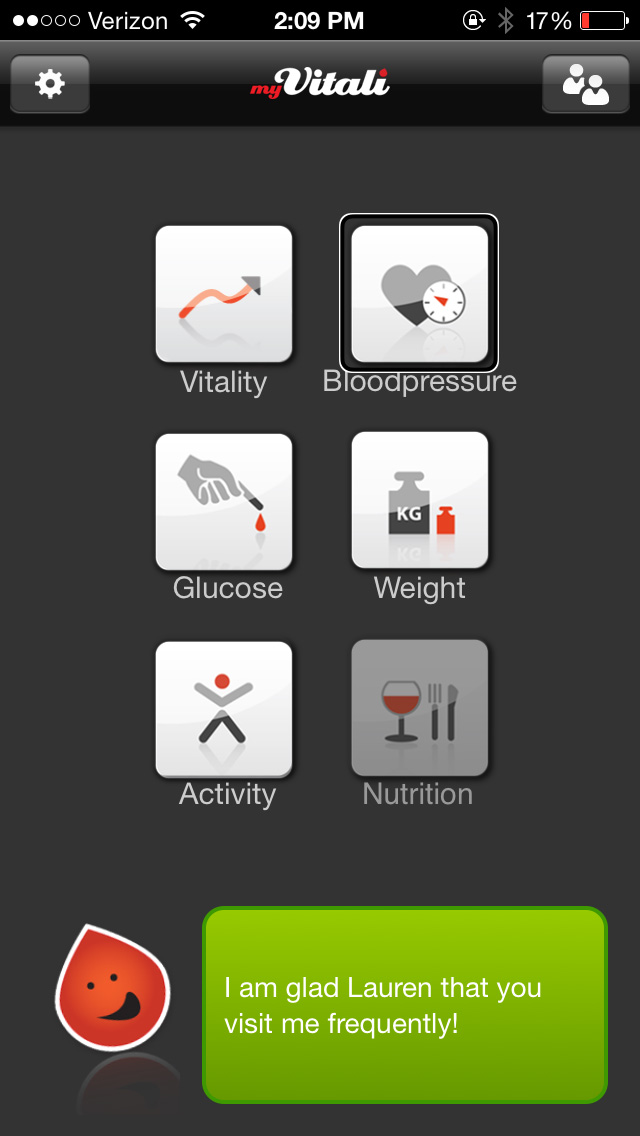
Screen shot of mHealth appA team of researchers that includes UW CSE professor Richard Ladner, CSE Ph.D. student Lauren Milne and HCDE Ph.D. student Cynthia Bennett, conducted a review last year of nine mobile health apps developed for the iPhone to monitor blood pressure and blood glucose levels. Using a set of seven criteria, they gauged how accessible each app was to blind and low-vision users, who are more likely to suffer from health problems such as obesity or diabetes and for whom such apps could be important tools for managing their health. What the team discovered was that none of the apps met all of the criteria for being accessible to these users – but with a little more work, they could.

From the news release:

“‘We wanted to see if these health applications would be out-of-the-box accessible, and most really weren’t,’ said lead author Lauren Milne….’They made a lot of amateur mistakes that people make when they build apps.’

“The researchers also concluded it would take little effort for developers to make mainstream health sensors fully accessible to blind smartphone users – largely by following accessibility guidelines already established by Apple and the federal government….

“‘If people just used the basic widgets and things that Apple provides, they’d have better results,’ said Ladner. ‘But the number of app developers has increased, and most of them are thinking about trying to make things pretty. They’re not thinking about all the users.'”

The team’s findings were published in the 2015 issue Journal on Technology & Persons with Disabilities.

Read the entire UW news release here and the research paper here. Kudos to Richard and the team for calling attention to this important issue and working to extend the benefits of technology to everyone. Read more →

Alumni panel at CS4HS

alumsThis is the 9th year of UW CSE’s CS4HS, a 3-day summer workshop on computer science for middle school and upper school math and science teachers from the Puget Sound region.

A highlight every year is a panel of alums who discuss what their work life is like, how their UW CSE education prepared them for their careers, and what K-12 experiences prepared them for UW CSE. This year’s panel included (L-R) Taylor Williams (Intentional Software), Jeff Prouty (Google), Dana Wen (Clean Power Research), Tam Armstrong (an unnamed startup after a number of years at Bungie), and Carolyn Hugues (EMC Isilon).

Learn all about CS4HS here. Learn about DawgBytes (“A Taste of CSE”), UW CSE’s extensive K-12 outreach program, here. Read more →

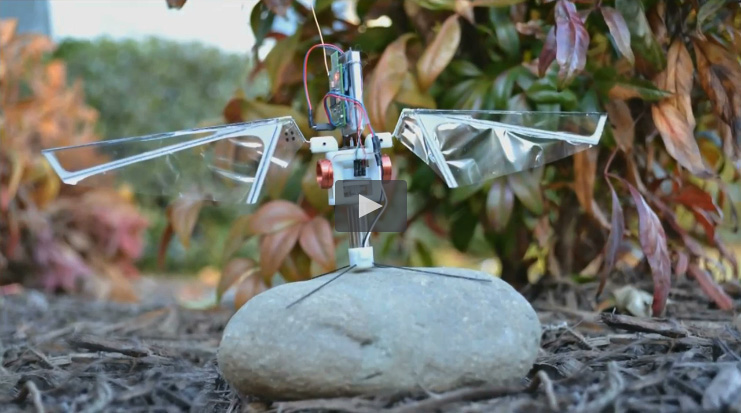
UW’s Tom Daniel on PBS NewsHour: “How studying insects may lead to smarter drones”

UntitledA terrific 8-minute piece on PBS NewsHour describing the research of UW CSE adjunct professor (and UW Biology professor) Tom Daniel:

“Aviation technology continues to evolve, and in recent years, there’s been a big push by both private companies and the military to make more sophisticated pilotless aircraft or drones.

“A new research project led by the University of Washington is part of that effort and it aims to uncover the aeronautical secrets of some of nature’s best designed flyers, insects.”

The interview reveals deep scientific secrets such as:

“Hari Sreenivasan (PBS): ‘So how does a bee with such a large body and such tiny wings actually fly?’

“Tom Daniel: ‘It beats its wings really fast.'”

Check it out here. Read more →

« Newer PostsOlder Posts »