Don’t miss the New Tech Seattle meetup at UW CSE!

New Tech NorthwestNew Tech Seattle logo and UW CSE are co-hosting the fourth annual New Tech Seattle UW meetup on Tuesday, April 12th. The event, which features good food, great company and great content from local innovators, will take place from 5:00 to 7:15 pm in the Paul G. Allen Center for Computer Science & Engineering.

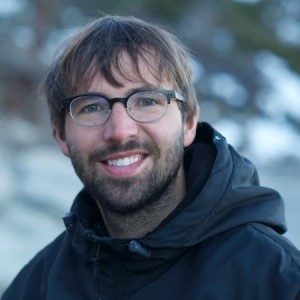
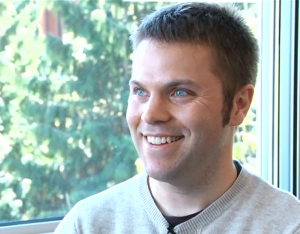
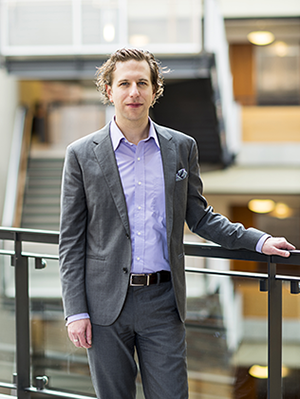
UW CSE and EE professor Shwetak Patel will kick off the program, which will also feature presentations by five companies developing solutions in big data, machine learning and health care. Three of the companies will be represented by founders who are also UW CSE alumni: DataBlade by Jeremy Brudvik (B.S., ’08) and Allen Chen (B.S., ’07), Igneous by Jeff Hughes (B.S., ’06), and KRNL Labs by Adam Kirk (B.S., ’01).

Learn more and register on the New Tech Seattle website here.

We hope you can join us! Read more →

UW CSE alum Stefan Savage honored with ACM-Infosys Foundation Award

Stefan SavageUW CSE Ph.D. alum Stefan Savage, currently a professor at UCSD, was named the recipient of the 2015 ACM-Infosys Foundation Award in the Computing Sciences today. He earned the award, which recognizes individuals whose early contributions in their careers have had a fundamental impact on the field of computing, for his “innovative research in network security, privacy, and reliability that has taught us to view attacks and attackers as elements of an integrated technological, societal, and economic system.”

Savage, who completed his Ph.D. at UW CSE working with professors Tom Anderson and Brian Bershad, has applied his holistic view of security research to great effect. Working with collaborators at UCSD and UC Berkeley, he tackled the problem of unsolicited email by constructing a complete model of the spam supply chain to target and remove the financial incentive for perpetrators. He also worked with a team from UCSD and UW CSE to assess the security vulnerabilities of modern automobile systems—that project, which was co-directed by Savage and UW CSE professor Yoshi Kohno, inspired extensive follow-on research and prompted regulators and manufacturers to make cybersecurity a priority.

From the ACM media release:

“Savage’s impact on the field of network security stems from the systematic approach he takes to assessing problems and combating adversaries ranging from malicious software and computer worms to distributed attacks….

“‘Keeping networks secure is an ongoing battle,’ explained ACM President Alexander L. Wolf. ‘Coming up with a technical advancement to block an adversary is important. But, very often, the adversaries soon find new ways in. Stefan Savage has shifted thinking and prompted us to ask ourselves how we might impede the fundamental support structure of an attacker. His frameworks will continue to significantly influence network security initiatives in the coming years.’

“‘Dr. Savage has dedicated his career to analyzing, protecting, and strengthening the systems and networks that make our digital age possible…’ said Vishal Sikka, Chief Executive Officer & Managing Director of Infosys. ‘Dr. Savage is a true innovator, pursuing his curiosity and passion toward new frontiers in cybersecurity, and exemplifying the kind of work that the ACM-Infosys Foundation Award is proud to support.'”

The ACM will present Savage with the award at its annual banquet in San Francisco in June.

Read more about Stefan and his achievements on the ACM website here and in a related Reuters article here.

Congratulations, Stefan! Read more →

UW CSE students shine in 2016 NSF Graduate Research Fellowship competition

NSF Graduate Research Fellowship Program logoThe National Science Foundation announced the recipients of its 2016 Graduate Research Fellowships today and UW boasts the second highest number of fellowship recipients in the nation in the “Computer and Information Science and Engineering” category. A total of eight UW students earned Fellowships in the computing field—including seven from UW CSE—and eight more earned Honorable Mentions.

NSF’s Graduate Research Fellowship Program supports outstanding student researchers pursuing Master’s and doctoral degrees in science, technology, engineering and mathematics who demonstrate the potential to have a significant impact in their fields. Nearly 17,000 students applied for a total of 2,000 fellowships awarded nationwide. Congratulations to the UW students who were recognized by the NSF today for their excellence in computing research:

UW CSE NSF Graduate Research Fellowship winners

Elizabeth Clark: Natural Language Processing

Maxwell Forbes: Natural Language Processing

Lucy Lin: Natural Language Processing

Talia Ringer: Formal Methods, Verification, and Programming Languages

Jessica Schroeder: Human Computer Interaction

Lucy Simko: Computer Security and Privacy

Amanda Swearngin: Human Computer Interaction

UW CSE Honorable Mentions

Kira Goldner: Algorithms and Theoretical Foundations

Daniel Gordon: Robotics and Computer Vision

Ellis Michael: Computer Systems and Embedded Systems

George Mulcaire: Natural Language Processing

Annie Ross: Human Computer Interaction

Zuoming Shi: Human Computer Interaction

In addition to the CSE students named above, UW HCDE student Dawn Sakaguchi-Tang was awarded a 2016 fellowship in Human Computer Interaction, and UW EE student Bora Banjanin and HCDE student Erin Hoffman received honorable mentions in Robotics and Computer Vision and Human Computer Interaction, respectively.

Read the NSF press release here and view the full list of winners here.

Way to go, team! (Last year, UW CSE students earned 8 NSF Graduate Research Fellowships and 3 Honorable Mentions – it’s been a great few years for UW CSE student recognition in the NSF GRFP competition.) Read more →

Crosscut highlights UW CSE’s role in “bringing women back to computer science”

Sonja Khan and Irene ZhangWomen historically have played a significant role in computer science. While the field has gone backward in recent decades when it comes to gender diversity, UW CSE has made a concerted effort to buck that trend and attracted national attention as a result.

Seattle online journal Crosscut recently caught up with UW CSE B.S./M.S. student Sonja Khan and Ph.D. student Irene Zhang to find out what makes this program so special. Their experiences reinforce the notion that, when it comes to increasing diversity in computing, a welcoming and supportive culture is key.

From the article:

“Women’s role in the computer revolution is often glazed over. There’s Ada Lovelace, the mathematician sometimes called the ‘world’s first computer programmer’, who sketched out the possibilities of computers way back in the 1800s. In 1945, one of the world’s first electronic general-purpose computers was built, with six female mathematicians creating its programs. By the early ‘80s, personal digital computers were taking off, and computer science was a major in universities. The number of women earning bachelor’s degrees in computing hovered around 40 percent.

“But around 1985, the number plummeted. Today, only about 18 percent of computer science bachelor’s degrees are earned by women. Women once held a prominent role in shaping the field’s future. In large part, that’s no longer the case….

“What can reverse the trend, and bring more women into the field again? It’s a question that companies and universities across the U.S. are asking. And the University of Washington’s Department of Computer Science and Engineering (UW CSE) may have found a method that works.”

The article charts Khan’s path from undecided freshman to computer science major, inspired by her positive experience in UW CSE’s introductory programming course. Zhang emphasizes the collegial atmosphere and opportunities for younger students to interact with female researchers as vital factors in explaining UW CSE’s success. Professor Ed Lazowska also explains why the entire field should follow UW CSE’s example in promoting diversity to produce the best products and services for users.

Read the full article here.

Photo credit: Dennis Wise Read more →

Where the jobs are – 2016 edition

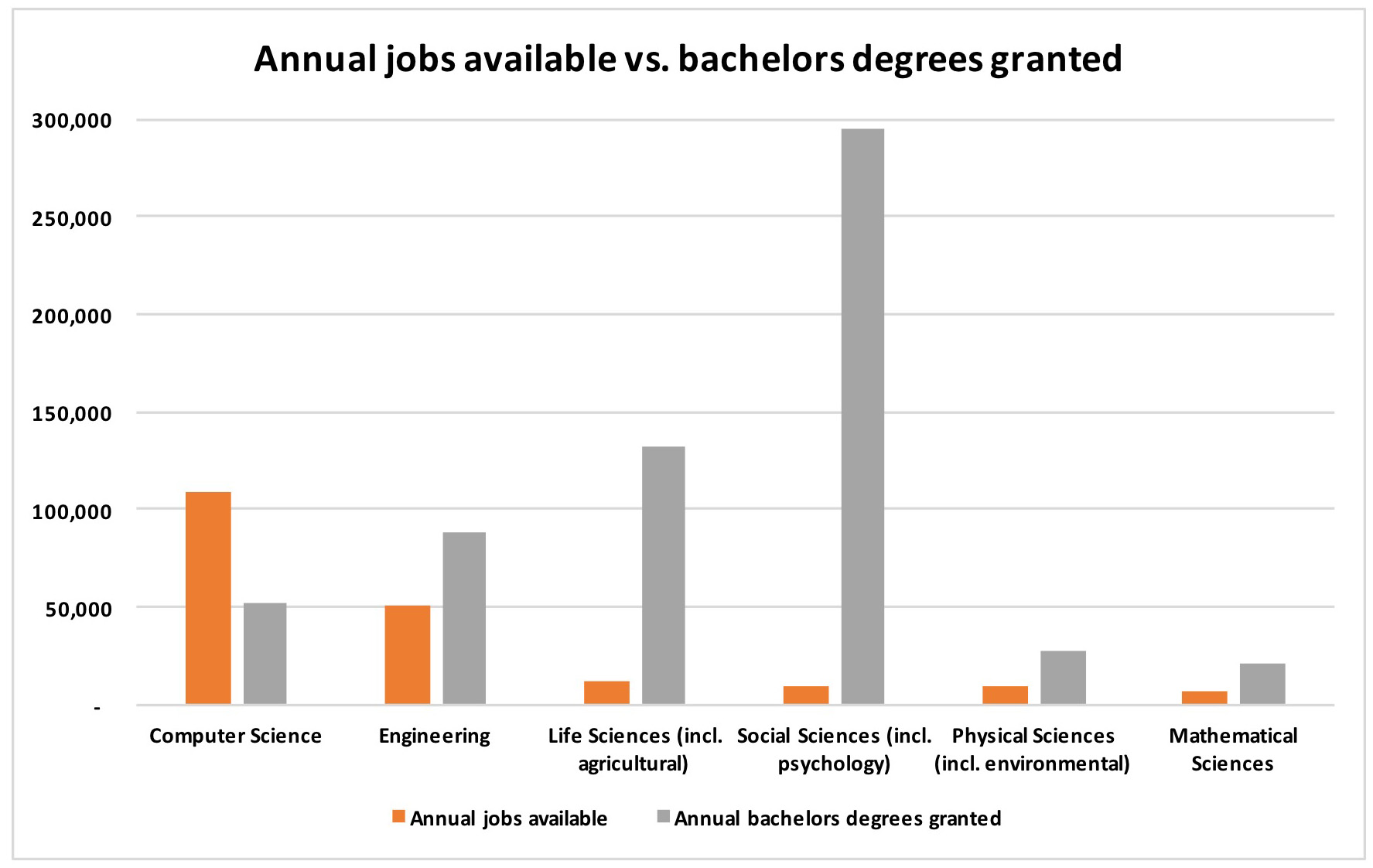
jobs chartThe 2016 NSF Science & Engineering Indicators have recently been released, including data on the numbers of degrees granted in various fields of science and engineering.

Similarly, the 2016 US Bureau of Labor Statistics job projections have recently been released, covering the decade 2014-2024.

The Tale of the Tape: A chart of “annualized jobs available” (from BLS) vs. “annual degrees granted” (from NSF) for various fields.

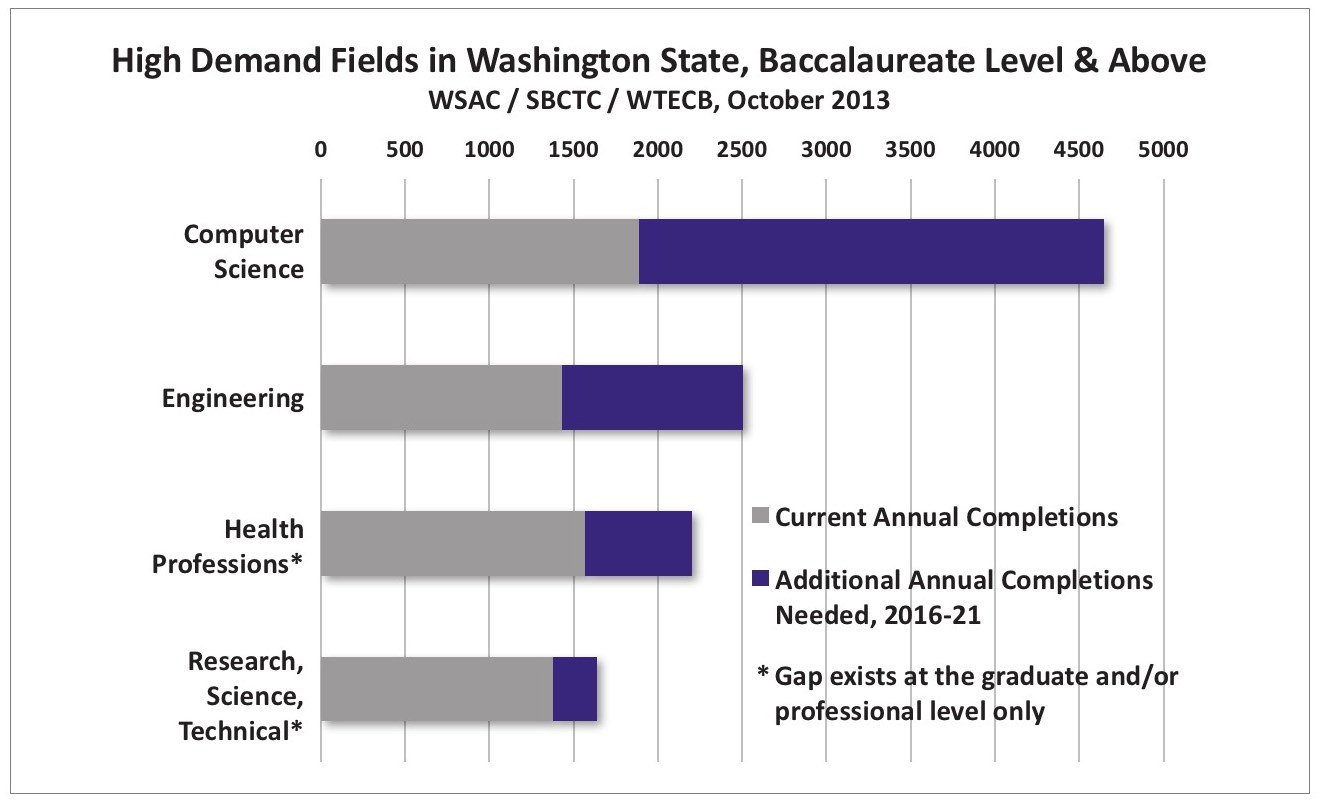
Workforce Demand Chart_2013borderThe story in Washington State is the same. Three state educational agencies looked across all fields (not just STEM fields) for those with any appreciable gap between “degrees granted” and “jobs available.” They found only four at the bachelors or graduate level. Computer science was #1, with a gap 2.5X as great as the second-place field – which was all fields of engineering added together (electrical, mechanical, civil, aeronautical, materials, etc.). (Of course, not all of those computer science jobs are in Washington’s vibrant software industry. For example, Washington’s aerospace industry employs roughly 3X as many computer scientists as aeronautical engineers!)

Wowsers! Read more →

Mesosphere raises $73.5 million Series C

O4fX0WytFgMoaT6qIVasMg-Mesosphere_Logo_-_Horizontal_Lockup__RGB__Jumbo_Mesosphere, a “data center operating system” company derived from a course project by UW CSE bachelors alum Ben Hindman when he was a Ph.D. student at UC Berkeley, has raised $73.5 million in Series C funding.

3805afbBen will receive the University of Washington College of Engineering Diamond Award for Early Career Achievement in May.

Check it out in TechCrunch here. Read more →

Google plans dramatic expansion in Seattle

Credit-Graphite-Design-Group-630x315Google announced today a plan to lease more than 600,000 square feet of space in South Lake Union, dramatically expanding their presence in Seattle. (The Kirkland WA site – across Lake Washington from Seattle – was expanded last year. Expansion space for the current Seattle engineering office in the Fremont neighborhood at the north end of Lake Union was constrained.)

In addition to home-grown companies of all sizes – from Amazon and Microsoft to startups – Seattle is home to more than 70 engineering centers of companies headquartered elsewhere.

Excellent GeekWire coverage here. Read more →

20 years in tech: GeekWire talks to UW CSE alumnae about their experiences in a male-dominated field

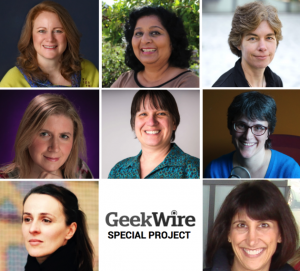
UW CSE alumnae in GeekWire“There’s no one way to be a woman in technology.”

That’s one of the takeaways from a terrific article published today by GeekWire that explores the experiences of eight UW CSE alumnae since they earned their degrees 20 years ago—and how the industry has progressed over the past two decades when it comes to welcoming and advancing women. Reporter Lisa Stiffler talked with the women about their trials and triumphs as they carved out careers in a male-dominated industry.

Featured UW CSE alumnae were Gail Alverson (Ph.D., ’90), Denise Draper (Ph.D., ’95), Gail Murphy (Ph.D., ’96), Bojana Ostojic (B.S., ’95), Cathy Palmer (Ph.D., ’94), Amy Raby (B.S., ’95), Radhika Thekkath (Ph.D., ’95) and Elizabeth Walkup (Ph.D., ’95).

From the article:

“Challenges for women and minorities in tech have persisted in recent years, despite widespread efforts to increase diversity and inclusion. The spotlight on the problem has intensified in recent weeks, with tech groups holding a series of events on the topic during Women’s History Month, and shareholders pressuring tech giants to close the gender gap in employee compensation.

“To better understand these issues, GeekWire interviewed eight University of Washington alumnae who earned computer science or engineering degrees in the mid-1990s. By looking back 20 years, our goal was to see the tech world through their eyes—understanding the progress they’ve made individually, and the impediments still in the way as the industry evolves and wrestles with its diversity crisis.

“As a group, they are remarkable. Of the eight women who participated in this project, seven are still in technology. Six have children. Five worked at Microsoft at some point in their careers, and three are current employees of the Redmond, Wash.-based tech giant. Two have their own tech businesses.

“All of them still love technology and believe in its power to solve problems and create world-changing products.”

The article is accompanied by profiles of each of the women that chart their individual career trajectories and offer insights into how the industry has evolved when it comes to providing greater opportunities for underrepresented groups.

Both are must-reads! Find the full article here, and the alumnae profiles here. Read more →

UW CSE alum Evan Welbourne’s mobile data crowdsourcing project featured in The New York Times

Evan WelbourneThe New York Times published an excellent article this week about CrowdSignals, a new initiative spearheaded by UW CSE alum Evan Welbourne (Ph.D., ’10) that seeks to build the largest set of rich, longitudinal mobile and sensor data through crowdsourcing. The community data set, which will include user interactions, geo-location and sensor data from a demographically diverse pool of users, would be available to academic and corporate researchers across a variety of disciplines to advance research, teaching and product development.

From the article:

“Words and pictures, culled from across the web, have been the digital grist for remarkable gains in computing tasks like image recognition and speech translation. But another huge data resource — sensor data from smartphones — lags behind as a fuel source for major research advances.

“CrowdSignals, a new initiative to collect, label and pay for mobile sensor data, seeks to overcome that shortfall. The organization’s approach relies less on innovation in technology than on economics and creating a marketplace for sensor data….

“‘We haven’t even begun to tap the potential of smartphone data,’ said Evan Welbourne, a computer scientist who heads the CrowdSignals project.

“The promising future of mobile data, experts agree, is that it can point the way to new insights in health care, transportation, urban planning and the social sciences.”

CrowdSignals launched an IndieGogo campaign to fund its data collection efforts, exchanging access to the data and a hand in shaping future phases of the project for a modest financial contribution. The funding will be used to pay individuals who contribute their bulk data and labeling to the project.

Read the full article here. To learn more about the initiative, visit the CrowdSignals website here. Read more →

UW CSE’s Noah Smith receives UW Innovation Award to map the “perspectives landscape”

Noah SmithUW CSE professor Noah Smith, an expert in natural language processing, has received a 2016 Innovation Award from the University of Washington’s Office of Research to create a large-scale visualization of people’s perspectives on current events and issues based on digital text.

By developing tools to map the “perspectives landscape” from the vast amounts of text data available online, Smith will be able to reveal differences in framing that can affect public attitudes. His research will advance the state of the art in natural language processing while enabling researchers, policy makers and citizens to gain a better understanding of the public discourse. Although Smith’s analysis will initially focus on perspectives related to the American news media, his approach could be expanded to the international news media, social networks and other domains.

Smith’s project is one of five proposals that were chosen for funding in this latest round of the UW Innovation Awards program, which was created in 2014 to support faculty engaged in potentially transformational research in areas for which other funding sources may be limited. Last year, a multi-disciplinary team that included UW CSE and EE professor Shwetak Patel, CSE professor James Fogarty, and CSE adjunct faculty members Julie Kientz and Sean Munson received a UW Innovation Award to support the development of mobile tools for improving people’s health.

Congratulations, Noah!

Smith is recruiting a postdoc to work with him on this project. Interested individuals can view the application materials here. Read more →

« Newer PostsOlder Posts »