UW CSE @ SOSP

image1(1)

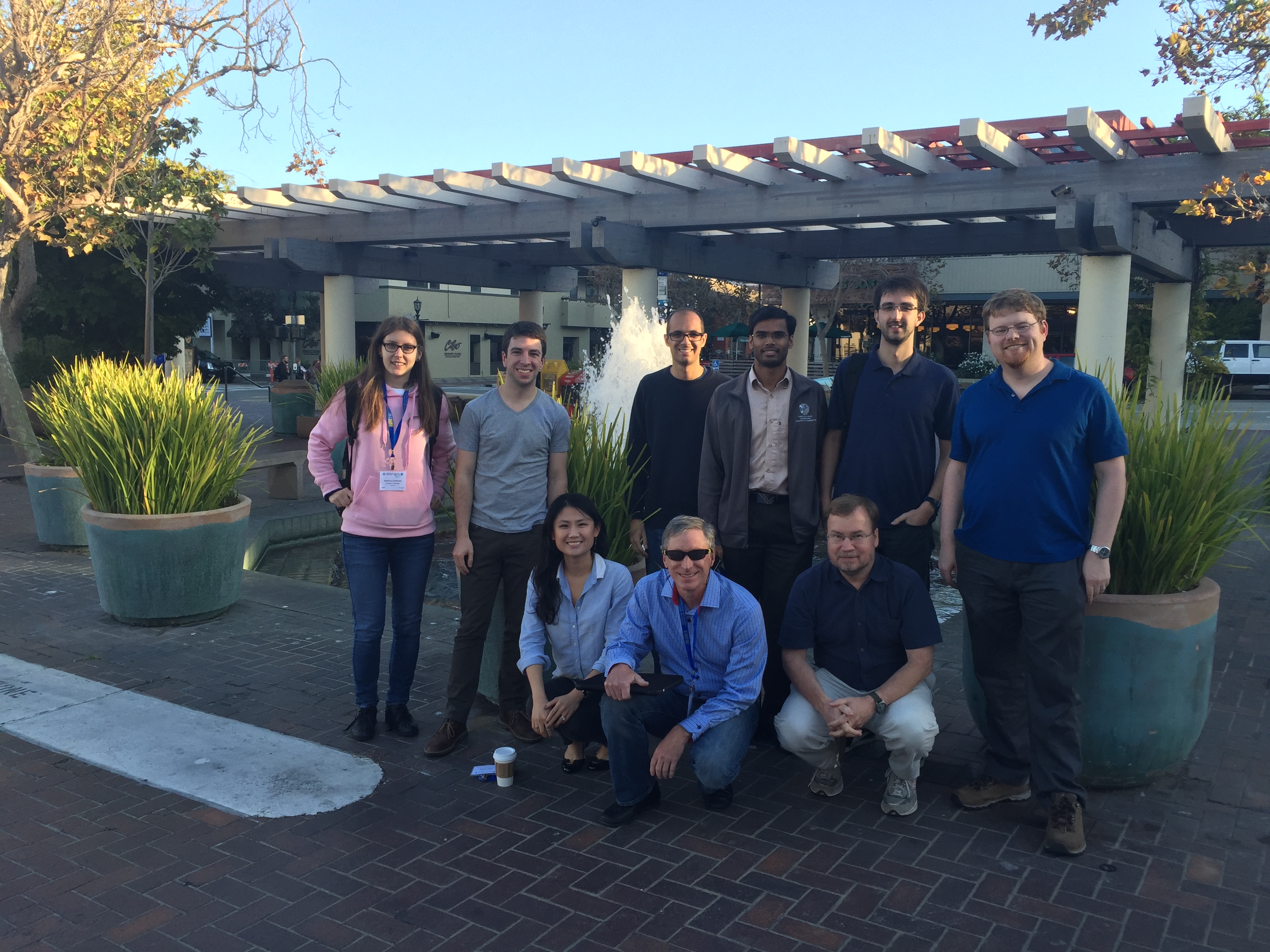
The 2015 UW CSE SOSP contingent: Adriana Szekeres, Ellis Michael, Niel Lebeck, Naveen Kr. Sharma, Pedro Fonseca, Dan R. K. Ports / Irene Zhang, Hank Levy, Tom Anderson

As always, UW CSE was well represented at the biennial ACM Symposium on Operating Systems Principles. This was the 25th SOSP – the 50th anniversary of this premier operating systems conference.

Learn about UW CSE’s research in systems and networking here. Read more →

Friends of UW CSE take to the high seas!

IMG_5693Well, it was actually more of a drifting match, but a good time was had by all!

Spencer Rascoff, Michael and Cari Schutzler, Rob Short, Brad Smith, and John and Patti Torode join Tom Alberg, Ed Lazowska, Hank Levy, and Judy Mahoney aboard Tom’s 77′ sloop Cascadia for a lovely evening on Puget Sound!


IMG_5708 Read more →

Washington Post: “Paul Allen’s $500 million quest to dissect the mind and code a new one from scratch”

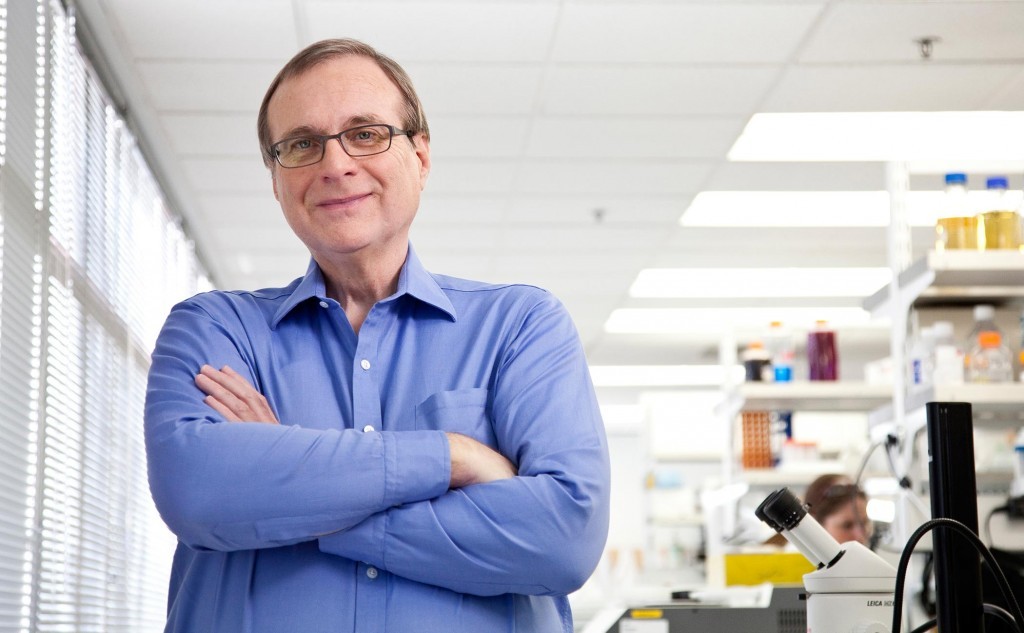
billionaires-brain09-1024x633A phenomenal Washington Post article on Paul Allen’s attempt to understand the human mind, working from two directions: the Allen Institute for Brain Science, and the Allen Institute for Artificial Intelligence (led by UW CSE’s Oren Etzioni).

“Paul Allen has been waiting for the emergence of intelligent machines for a very long time. As a young boy, Allen spent much of his time in the library reading science-fiction novels in which robots manage our homes, perform surgery and fly around saving lives like superheroes. In his imagination, these beings would live among us, serving as our advisers, companions and friends.

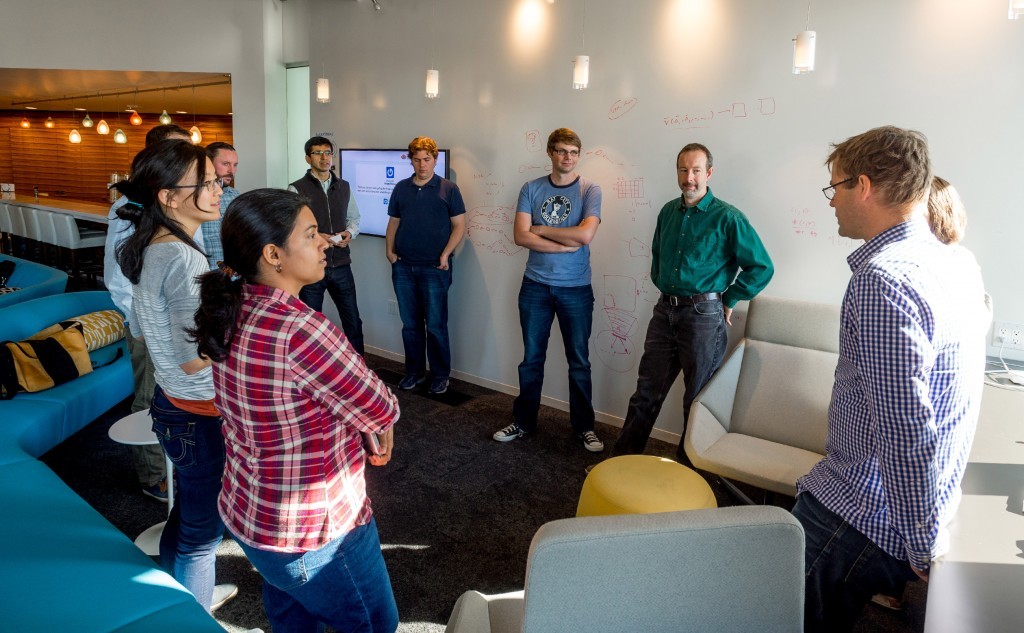
billionaires-brain11-1024x633“Now 62 and worth an estimated $17.7 billion, the Microsoft co-founder is using his wealth to back two separate philanthropic research efforts at the intersection of neuroscience and artificial intelligence that he hopes will hasten that future.

“The first project is to build an artificial brain from scratch that can pass a high school science test. It sounds simple enough, but trying to teach a machine not only to respond but also to reason is one of the hardest software-engineering endeavors attempted — far more complex than building his former company’s breakthrough Windows operating system, said to have 50 million lines of code.

“The second project aims to understand intelligence by coming at it from the opposite direction — by starting with nature and deconstructing and analyzing the pieces. It’s an attempt to reverse-engineer the human brain by slicing it up — literally — modeling it and running simulations.”

Tons of insights in this article! Read it here. Read more →

UW CSE Ph.D. alum Chris Re wins MacArthur “Genius” Award

headshot_chris2009 UW CSE Ph.D. alum Chris Ré is one of 24 recipients of 2015 MacArthur Fellowships – colloquially referred to as “genius awards.”

Chris – a student of Dan Suciu – is a star in data management/analysis, currently on the computer science faculty at Stanford. Quoting from the MacArthur Foundation:

“Christopher Ré is a computer scientist democratizing big data analytics through theoretical advances in statistics and logic and groundbreaking data-processing applications for solving practical problems. Ré has leveraged his training in databases and deep knowledge of machine learning to create an inference engine, DeepDive, that can analyze data of a kind and at a scale that is beyond the current capabilities of traditional databases.”

Read more at the MacArthur Foundation website here. UW News post here.

Congratulations Chris!!!!! Read more →

Donald Tsang, again remembered

Donald.Tsang.service

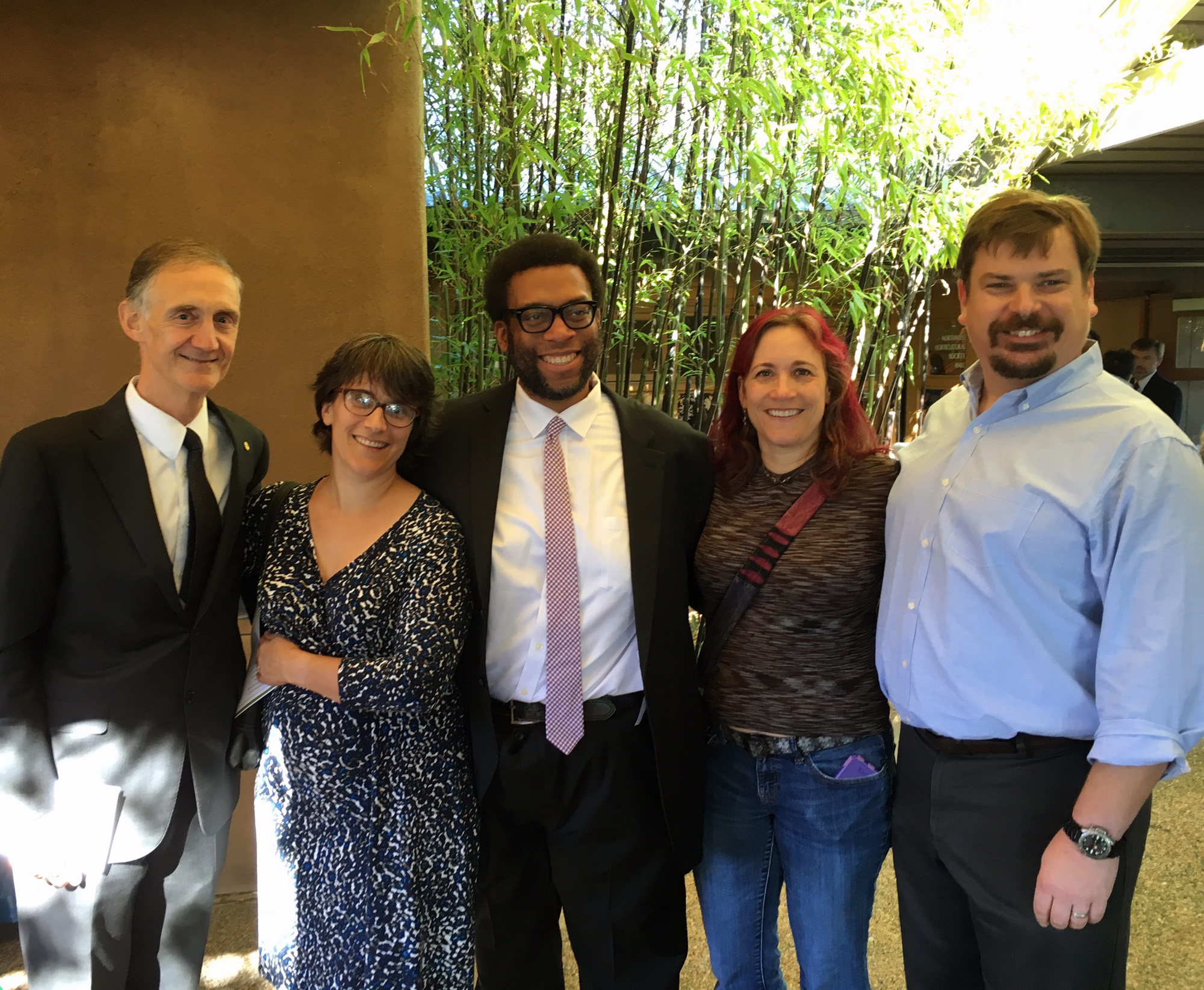
A small portion of the UW CSE family in attendance at Donald Tsang’s memorial service: Ed Lazowska (faculty), Elizabeth Walkup (Ph.D. 1995), Sean Sandys (Ph.D. 2002), Lauren Bricker (Ph.D. 1998), Erik Selberg (Ph.D. 1999)

The many intersecting circles of Donald Tsang’s life celebrated that life today at UW’s Center for Urban Horticulture – including a large number of Donald’s UW CSE graduate student classmates from the early 1990s.

Donald – one of the earliest developers at Amazon.com after his time at UW – passed away unexpectedly on September 2 at age 47, leaving behind his wife Daisy, his two daughters Daniella and Constantina, a large extended family, and an enormous network of friends.

Learn more here. Read more →

Seattle Times: “Supporters of interim president Ana Mari Cauce say look no further for UW’s next leader”

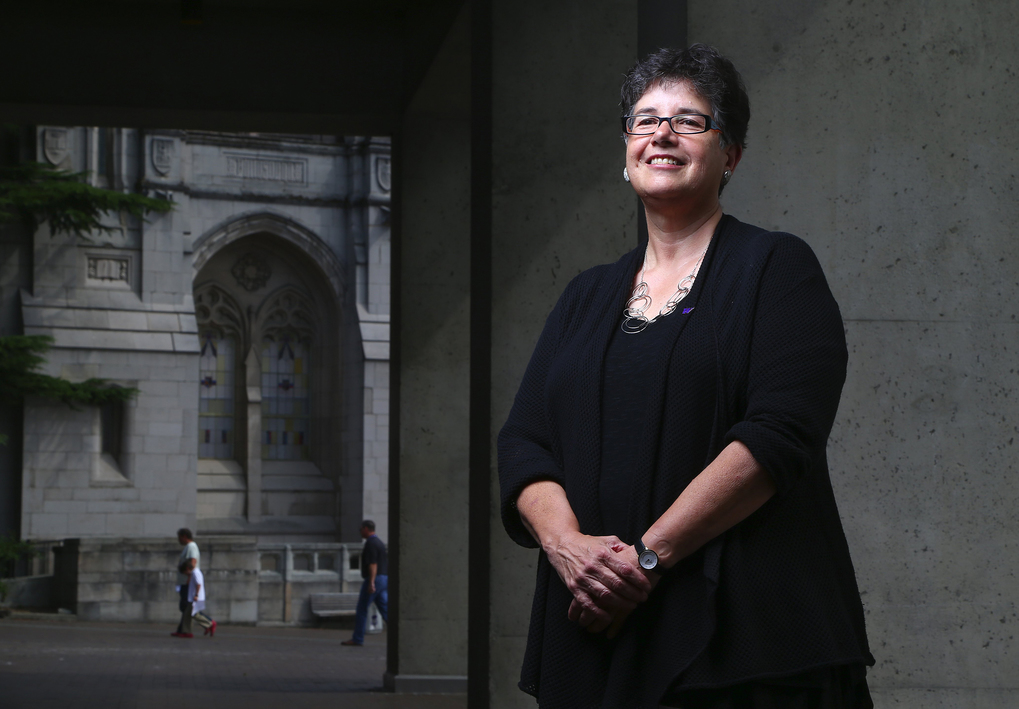
Ana Mari Cauce, interim president, University of Washington.  UNIVERSITY OF WASHINGTON INTERIM PRESIDENT - ANA MARI CAUCE - 148948 - 081115

“Can this most casual of women be a strong president of a major university? Lazowska, the computer-science professor, thinks she can.

“The day after she was named interim president, Cauce gave a town hall address to the faculty, one that had been scheduled months in advance. She was still speaking as the provost, but she was soon to wear the mantle of president.

“Here’s what Lazowska heard that day in February:

“‘Every bit of it was a president speaking. She flipped a switch. She was still genuine, she still spoke from experience, she still related to us, but, without being the least bit stuffy, she was 100 percent presidential.'”

Read more here. Read more →

UW CSE Ph.D. alum Gail Murphy elected Fellow of the Royal Society of Canada

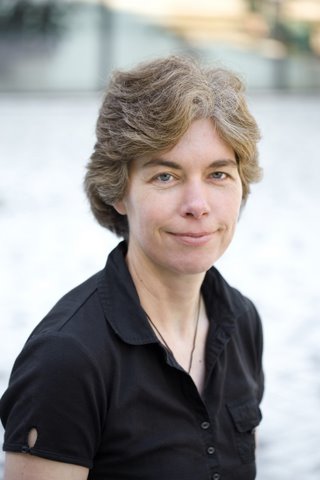
GCM21996 UW CSE Ph.D. alum Gail Murphy – Professor of  Computer Science and Associate Dean for Research & Graduate Studies in the Faculty of Science at the University of British Columbia, and co-founder and Chief Scientist at Tasktop Technologies Incorporated, has been elected a Fellow of the Royal Society of Canada in the Class of 2015.

Gail’s research interests are in software engineering with a particular interest in improving the productivity of knowledge workers, including software developers. Her UW CSE Ph.D. advisor was the late David Notkin. She has received wide-ranging recognition, including the 2014 UW CSE Alumni Achievement Award (along with her fellow 1996 UW CSE Ph.D. alum Jeff Dean), the 2011 ACM SIGSOFT Retrospective Impact Paper Award, and the 2008 UW College of Engineering Diamond Award for Early Career Achievement.

As a Fellow of the Royal Society of Canada, Gail joins fellow UW CSE Ph.D. alum and fellow UBC Computer Science faculty member Anne Condon.

Quoting from the Royal Society announcement: “Gail Murphy, une chercheuse en génie logiciel, a contribué à accroître la connaissance des aspects pratiques du développement du logiciel et a développé des approches novatrices pour améliorer l’efficacité du travail des ingénieurs logiciels. Ses travaux sur les systèmes de recommandation pour le génie logiciel ont un impact significatif à la fois sur la recherche et sur la pratique.”

Whatever … Congratulations Gail! Read more →

“Great with math; spelling, not so much”

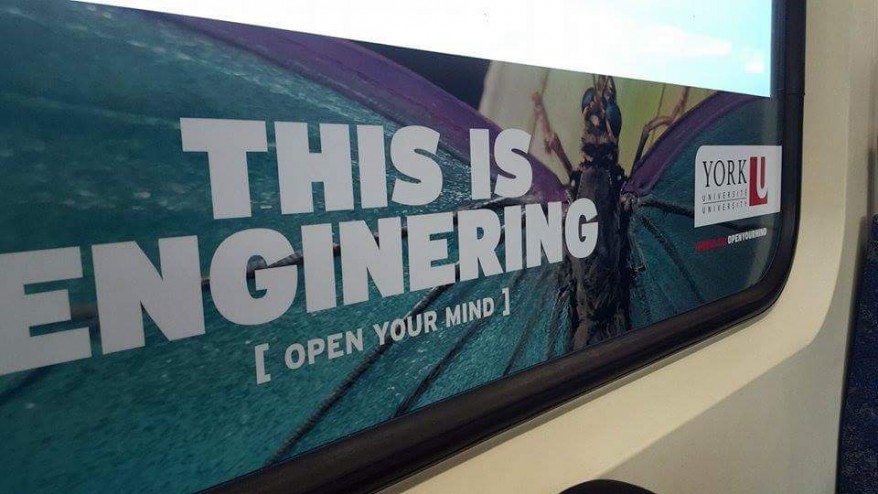
wbJY0nT-e1443117354695-878x494York University (near Toronto) plasters commuter trains with advertisements stating “THIS IS ENGINERING.”

Unfortunately, yes, it is … Read more →

NY Times: “Complex Car Software Becomes the Weak Spot Under the Hood”

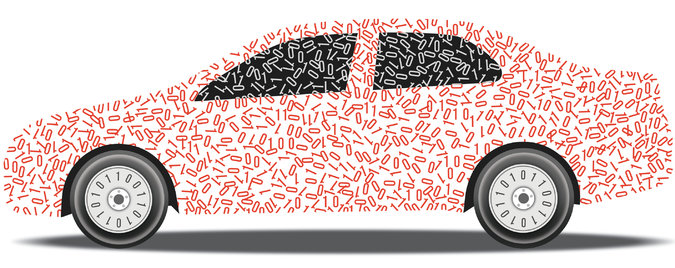
27-CAR-master675Nick Wingfield writes in the New York Times:

“Shwetak N. Patel looked over the 2013 Mercedes C300 and saw not a sporty all-wheel-drive sedan, but a bundle of technology.

“There were the obvious features, like a roadside assistance service that communicates to a satellite. But Dr. Patel, a computer science professor at the University of Washington in Seattle, flipped up the hood to show the real brains of the operation: the engine control unit, a computer attached to the side of the motor that governs performance, fuel efficiency and emissions.

“To most car owners, this is an impregnable black box. But to Dr. Patel, it is the entry point for the modern car tinkerer — the gateway to the code.

“‘If you look at all the code in this car,’ Dr. Patel said, ‘it’s easily as much as a smartphone if not more.’

“New high-end cars are among the most sophisticated machines on the planet, containing 100 million or more lines of code. Compare that with about 60 million lines of code in all of Facebook or 50 million in the Large Hadron Collider.”

Read more here.

Research conducted 5+ years ago by a team lead by UW CSE’s Yoshi Kohno and UCSD’s Stefan Savage (a UW CSE Ph.D. alumnus) is widely credited with launching the field of automotive security; read more here. Read more →

6-course Machine Learning Specialization from Coursera, UW, Dato

courseraWe’re thrilled to announce a new 6-course Machine Learning Specialization available on Coursera, taught by faculty from UW CSE and UW Statistics, and offered in conjunction with UW CSE startup Dato.
CSElogo2text_500Course 1 – “Machine Learning Foundations: A Case Study Approach” – begins on September 22.

Course 2 – “Regression” – starts in November.

Course 3 – “Classification” – starts in December.

Course 4 – “Clustering & Retrieval” – starts in February.

Course 5 – “Recommender Systems & Dimensionality Reduction” – starts in March.

Course 6 – “Machine Learning Capstone: An Intelligent Application with Deep Learning” – starts in April.

deptofstatLearn more here.

And while you’re at it, don’t miss our 4-course Data Science at Scale Specialization available on Coursera – an effort led by Bill Howe from CSE and the UW eScience Institute:
eScience_Logo_RGB_PPCourse 1 – “Data Manipulation at Scale: Systems and Algorithms” – begins on September 28.

Course 2 – “Practical Predictive Analytics: Models and Methods” – starts in October.

Course 3 – “Communicating Results: Visualization, Ethics, Reproducibility” – starts in November.

Course 4 – “Data Science at Scale – Capstone Project” – starts in December.

Learn more here.

dato_logo_stacked_600pxWant to get your feet wet? Try our single course Introduction to Data Science – a one-course version of the Data Science at Scale Specialization.

Learn more here.

The University of Washington: A global leader in data science. Read more →

« Newer PostsOlder Posts »