UW CSE’s Congle Zhang and NewsSpike-RE featured in UW Daily

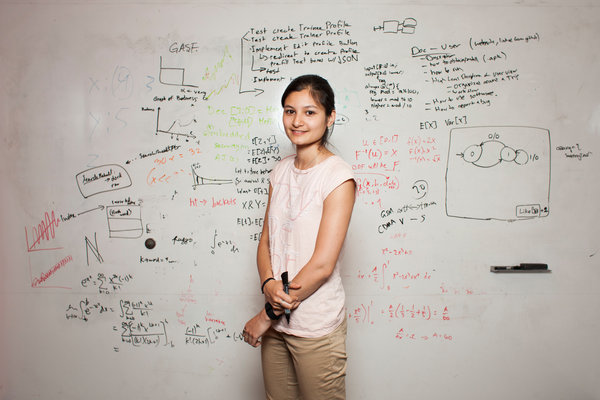
clzhang_sUW CSE Ph.D. student Congle Zhang recently talked with the campus newspaper about NewsSpike-RE, a new machine learning algorithm developed at UW CSE to train computers to more efficiently and accurately parse human language using events described in news stories.

NewsSpike-RE discovers and extracts event relations from a vast array of online articles, and then employs a probabilistic graphical model to cluster sentences that describe similar events from parallel news streams.

From the article:

“NewsSpike stands out among other natural-language algorithms because of its ability to identify semantically related words from news articles. So far, it has learned to recognize more than 200 relationships, with that number growing every day.

“‘The next thing to be done … is to keep improving the performance,’ Zhang said. ‘Secondly, it’s to find a good way to let people use [NewsSpike].'”

The article also quotes CSE professor Dan Weld and research scientist Stephen Soderland. Read it in full here.

Read the published paper on NewsSpike-RE here. Read more →

UW CSE Professional Masters Program reunion

pmpUW CSE’s Professional Masters Program – a part-time evening/distance program designed for fully-employed professionals who wish to continue on their career paths while acquiring critical skills to move them into positions and projects of greater responsibility and impact – has awarded 699 degrees in the 19 years since it was introduced.

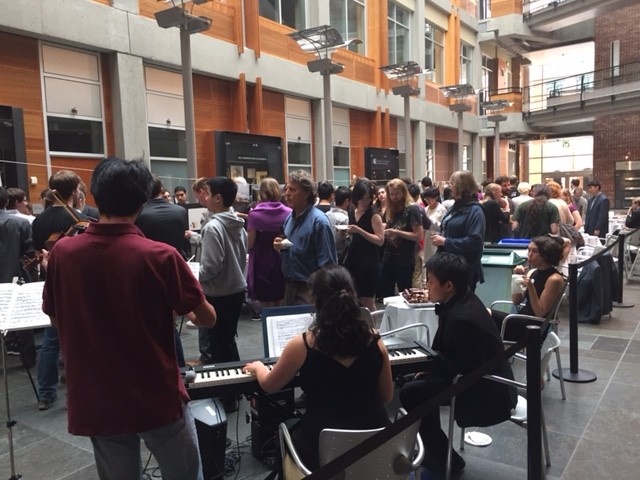
Yesterday evening, nearly 100 of these alums (including Steve Thomas, PMP graduate #1, in 1997) joined UW CSE faculty and staff at a reunion hosted at the Microsoft Visitor Center. CSE professor Yoshi Kohno provided a bit of technical content, discussing his work on computer security and privacy.

Learn more about our Professional Masters Program here. Read more →

CSE’s Daniel Jones in PNAS

jonesUW CSE computational biology Ph.D. student Daniel Jones is second author on a paper that has just appeared in the Proceedings of the National Academy of Sciences. The paper, “Let-7 family of microRNA is required for maturation and adult-like metabolism in stem cell-derived cardiomyocytes,” (abstract here), blends wet-lab biology, biochemistry, bioengineering, genomics and computer science.

Stem cell research shows enormous promise for both basic science and, ultimately, for therapy, e.g., potentially repairing tissue damage after a heart attack. Human trials of such therapies are on the horizon, but much remains unknown, and understanding these biological systems increasingly relies on “Big Data” biotechnologies including “RNAseq” – sequencing of millions of RNA molecules. RNAseq provides an unprecedented microscope into the inner workings of cells, but the massive scale, complexity, and pervasive technical biases intrinsic to these data sets demand careful algorithmic and statistical analyses to separate biological truth from technical artifact. Daniel has been driven to develop general methodologies and software for just such analyses.

Embryonic heart muscle cells implanted in a damaged adult heart may not be able to “pull their weight,” and waiting years for them to mature naturally is not an option. Hence, both monitoring and controlling the developmental trajectories of stem cells are key goals of stem cell research – what drives them to become, say, heart muscles, what markers unambiguously flag arrival to that state, and how can we both influence and measure their “maturity.”

The PNAS paper identifies a critical molecular driver of maturation of cardiomyocytes (heart muscle cells), an important step towards answering these basic questions, and of potential therapeutic significance. Daniel’s analysis of RNAseq data generated by his collaborators added strong support for the biologists’ insightful hypothesis. As expected, he also identified hundreds of genes whose activity levels change systematically during cardiomyocyte maturation. Intriguingly, he also identified ~80 more subtle, previously unrecognized, molecular markers of maturation, specifically “alternatively spliced” genes, where, like calling a common subroutine with different parameters to achieve a related but different result, the cardiomyocytes make related but distinctly different proteins as they mature. This robust signal of maturation was unexpected, and its significance is still not fully understood, but the ability of sophisticated computational tools such as Daniel’s Isolator program to discern such patterns from large, complex, noisy data sets such as these is at the leading edge of modern biology.

(Thanks to UW CSE professor Larry Ruzzo, one of Daniel’s co-authors, for the above translation!) Read more →

New York Times: UW CSE alum Nick Szabo = Satoshi Nakamoto?

opengraphA lengthy and fascinating article in today’s New York Times fingers 1989 UW CSE alum Nick Szabo as Satoshi Nakamoto, the elusive creator of Bitcoin:

“Mr. Szabo denied that he was Satoshi … But he acknowledged that his history left little question that he was among a small group of people who, over decades, working sometimes cooperatively and sometimes in competition, laid the foundation for Bitcoin and created many parts that later went into the virtual currency. Mr. Szabo’s most notable contribution was a Bitcoin predecessor known as bit gold that achieved many of the same goals using similar tools of advanced math and cryptography.”

Intriguing. Read more here. Read more →

CSE’s Yaw Anokwa, Christophe Bisciglia honored at UW College of Engineering Diamond Awards gala

DiamondAwards2015-291

2015 Diamond Award honorees Alan Miller (’77 Ph.D. Materials Science & Engineering), Milt Zeutschel (’60 B.S. Electrical Engineering), Christophe Bisciglia (’03 B.S. CSE) and Yaw Anokwa (’12 Ph.D. CSE)

2012 UW CSE Ph.D. alum Yaw Anokwa and 2003 UW CSE Bachelors alum Christophe Bisciglia were two of the four alums honored at the 2015 UW College of Engineering Diamond Awards gala on Friday night.

Yaw received the Diamond Award for Distinguished Service. Christophe received the Diamond Award for Early Career Achievement.

Read more about the accomplishments of Yaw and Christophe here. Learn about the other 2015 Diamond Award honorees here. Read more →

A place to remember Gaetano

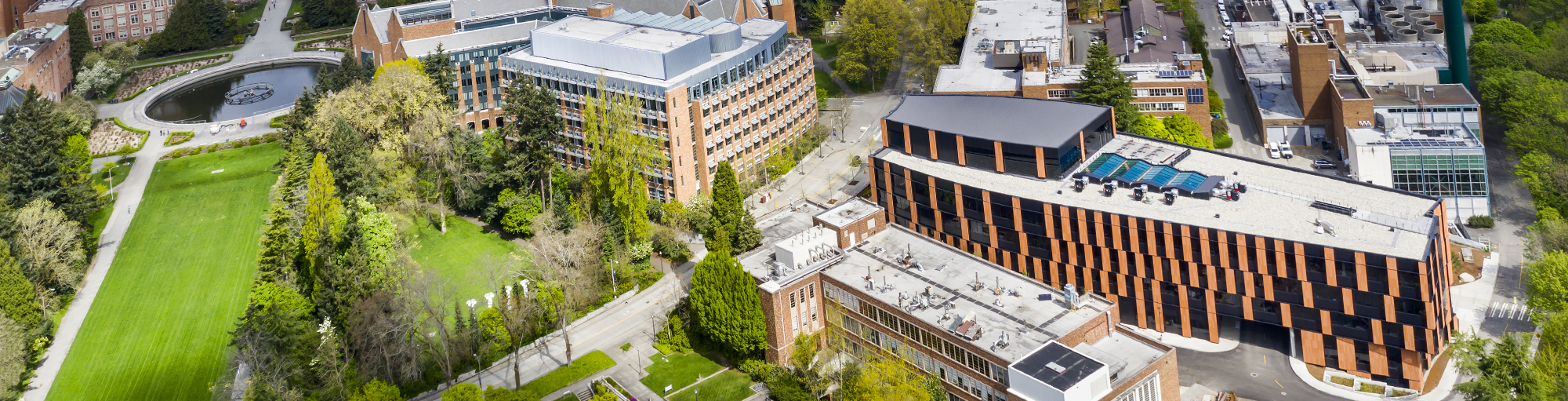
Gaetano_FP-copy11Today the UW CSE community gathered to dedicate a bench in Sylvan Grove – adjacent to the Paul G. Allen Center for Computer Science & Engineering – to our beloved colleague Gaetano Borriello.

The plaques read:

In memory of Gaetano Borriello, Professor of Computer Science & Engineering, 1988-2015.

Dedicated educator, valued mentor, scientist, and colleague. The innovative work of Gaetano and his students changed lives around the world.

Read some of the many tributes to Gaetano and his work:bench


family-bench Read more →

GeekWire: “Paul Allen’s Artificial Intelligence Institute launches startup incubator with top minds in AI”

ai-instituteGeekWire reports on a new startup incubator launched by Paul G. Allen’s Allen Institute for Artificial Intelligence (AI2), where UW CSE professor Oren Etzioni is the CEO:

“‘We are quickly building an element of the Seattle tech ecosystem, and we’ve identified cutting-edge folks who are startup minded,’ said Oren Etzioni, the former University of Washington computer science professor who now leads the Allen Institute for Artificial Intelligence. ‘Once we identify super-talented folks … we give them a lot of freedom to pursue their instincts and initiatives.’ …

“‘Our incubator focuses on the very best technical talent in AI whose work dovetails with the research at AI2,’ said Etzioni, adding that there’s ‘excellent potential for synergy with the technologies’ being developed at AI2.”

Read more here. Read more →

UW CSE Ph.D. alum Ed Felten joins White House as Deputy U.S. Chief Technology Officer

ewf_headshotThe White House today announced that Ed Felten – UW CSE Ph.D. alum and Princeton faculty member – will join the White House Office of Science and Technology Policy as Deputy U.S. Chief Technology Officer.

Ed received his Ph.D. from UW CSE in 1993, working with Ed Lazowska and John Zahorjan. He joined the Princeton faculty at that time, where he is currently the Robert E. Kahn Professor of Computer Science and of Public Affairs, and Director of Princeton’s Center for Information Technology Policy.

Ed is a national and international leader in computer security and privacy. On a previous leave of absence from Princeton, he served as the first Chief Technologist of the Federal Trade Commission for eighteen months spanning 2011-12.

Ed is a Member of the National Academy of Engineering and a Fellow of the American Academy of Arts & Sciences. He received the UW CSE Alumni Achievement Award in 2013, and the UW College of Engineering Diamond Award for Early Career Achievement in 2007.

Read the White House announcement here. Ed’s Princeton web page here. Read more →

UW CSE GHC

IMG_7221The 2014 Grace Hopper Celebration of Women in Computing was held Wednesday through Friday October 8­‐10. Two sessions during GHC created a great deal of controversy: a Male Allies Plenary Panel on Wednesday evening featuring Alan Eustace (Google), Blake Irving (GoDaddy), Mike Schroepfer (Facebook), and Tayloe Stansbury (Intuit), and an interview of Microsoft
CEO Satya Nadella by Harvey Mudd College President (and Microsoft Board of Directors
member) Maria Klawe on Thursday morning.

On the evening of Monday October 13, UW CSE faculty and students (including a number of GHC attendees) met for 2+ hours, using the GHC controversies as a departure point for discussing how to make CSE a more welcoming and supportive environment for members of all under-­represented groups.

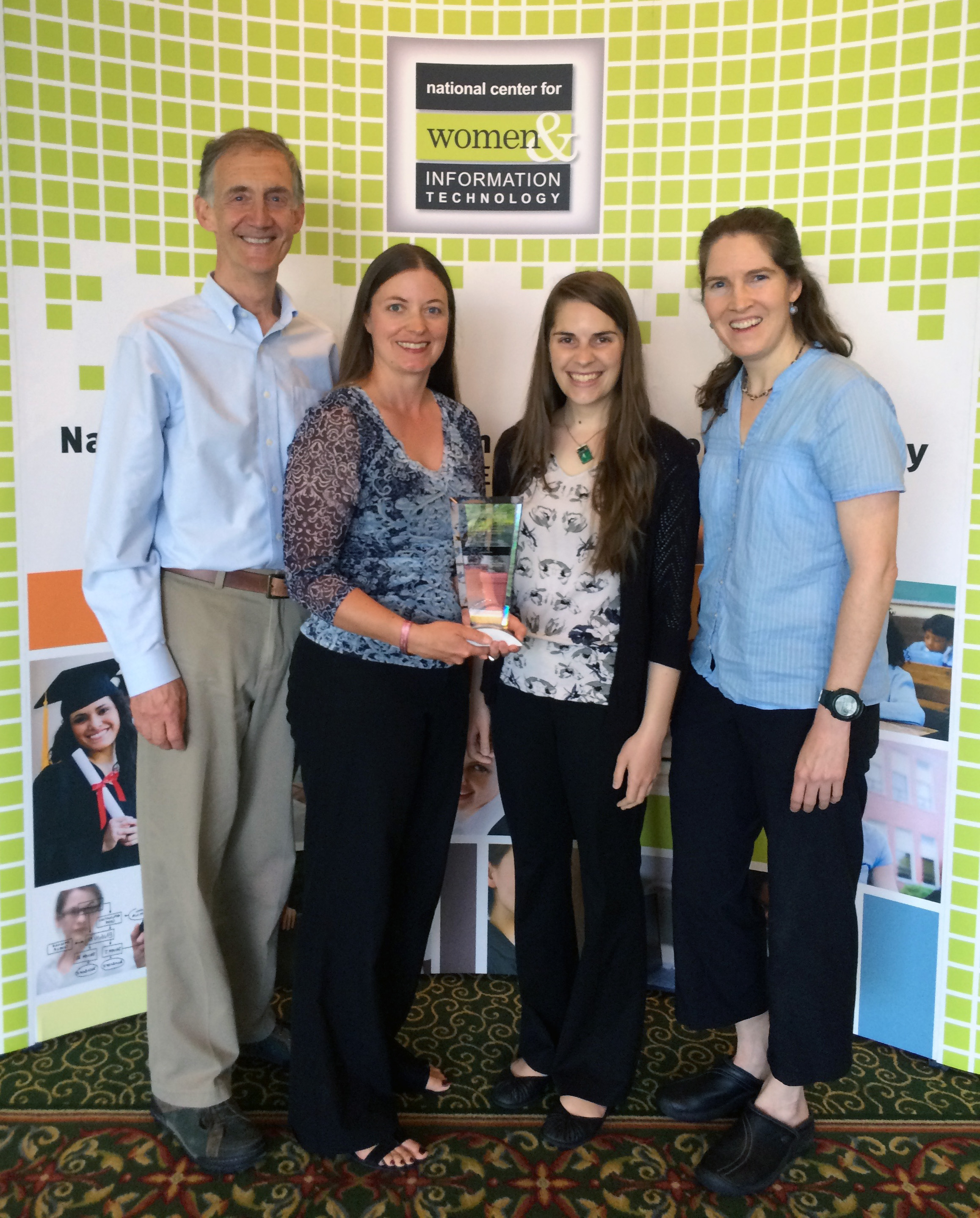
IMG_7212One recommendation was to convene a local version of the Hopper Conference – highlighting the achievements of our own female computer scientists and computer engineers. Hence, the First Annual UW CSE Women’s Day, held today in the Paul G. Allen Center for Computer Science & Engineering.

Agenda here. Read more →

The Stranger on tech vulnerabilities

1431121959-shutterstock_249191566The Stranger, Seattle’s authoritative source for tech news and views, reports on an experiment in which our EE colleagues deploy a surgical robot rife with software vulnerabilities, then demonstrate that it can be hacked.

The work of CSE professor Yoshi Kohno and his colleagues also is cited:

“This isn’t the first time the University of Washington has conducted such an experiment. The computer science department – particularly the work of Tadayoshi Kohno – has unearthed flaws in embedded medical devices, electronic voting machines, and smart cars. (Check out his PBS profile here.) The school has ‘a long history of showing that interesting, cutting-edge hardware is vulnerable in some sense,’ Ryan Calo, a co-author on one of the robotics papers, said.”

Read more here. Read more →

« Newer PostsOlder Posts »