 Shwetak Patel, a faculty member in CSE and EE, will receive a 2011 University of Washington College of Engineering “Community of Innovators” Award.
Each year, these awards recognize UW College of Engineering faculty, students, and staff who have gone “above and beyond.” Shwetak shares the Junior Faculty Innovator Award with EE’s Brian Otis.
See all the award winners here. Learn about Shwetak’s work here.
(CSE staff members Tracy Erbeck and Melody Kadenko were nominated in the professional staff category; one cannot expect perfection from the selection committee.) Read more →
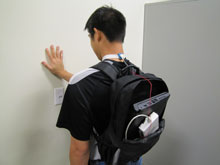 Technology Review highlights work by UW CSE’s Shwetak Patel and Microsoft Research’s Desney Tan.
“Our lives are awash with ambient electromagnetic radiation, from the fields generated by power lines to the signals used to send data between Wi-Fi transmitters. Researchers at Microsoft and the University of Washington have found a way to harness this radiation for a computer interface that turns any wall in a building into a touch-sensitive surface.”
Read the article here. NewScientist here. Gizmodo here. engadget here. The Reg Hardware here. Discovery News here. Read more →
 Duh.
Duh.
Xconomy reports on a conversation with UW Dean of Engineering (and bioengineer) Matt O’Donnell.
“Read all about it” – here. Read more →
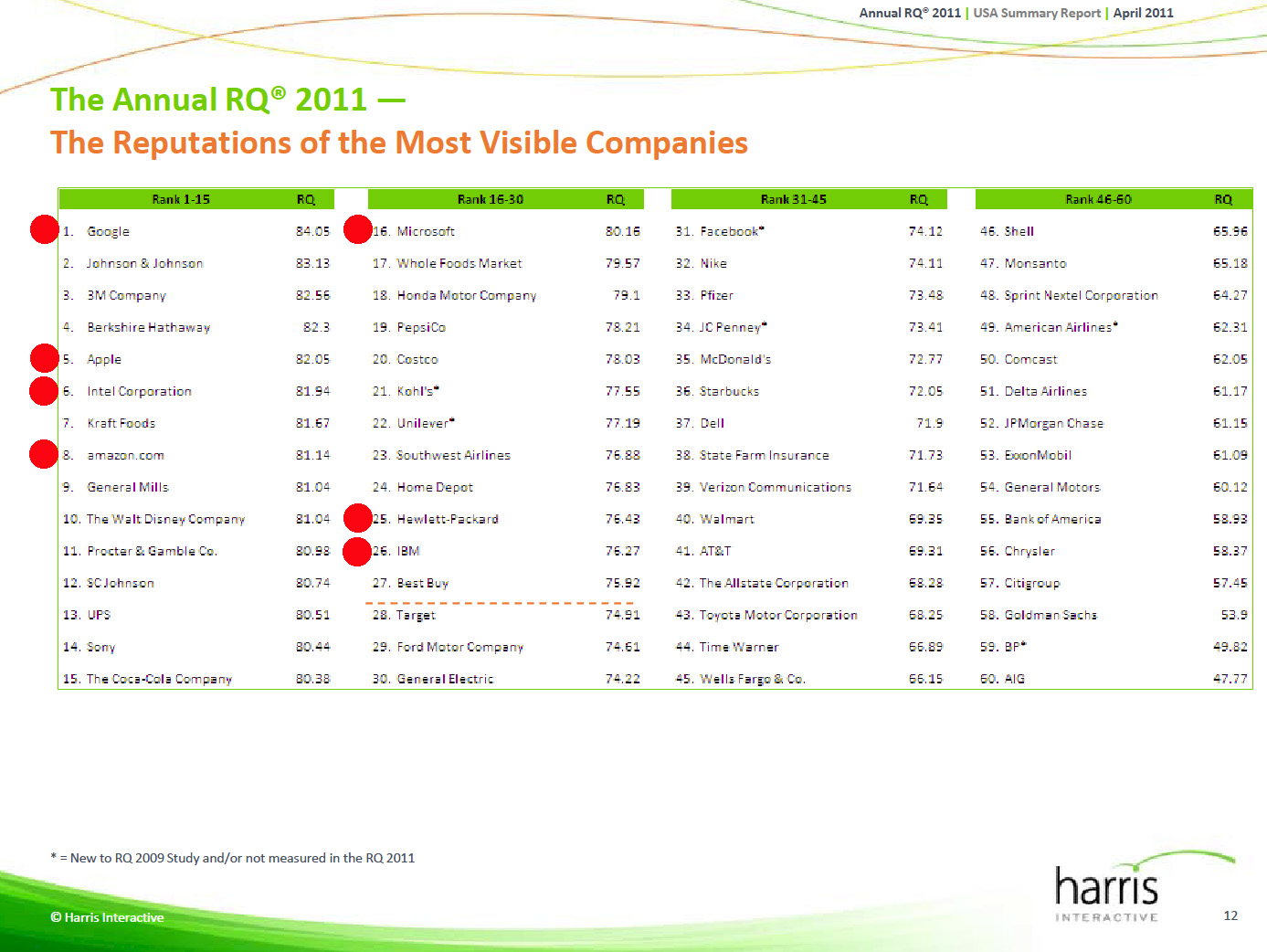
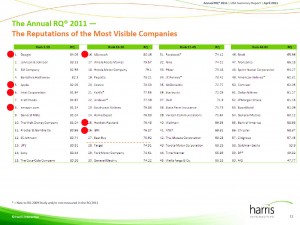 For the 12th consecutive year, Harris Interactive has measured the reputations of the most visible companies in the United States. The technology industry continues to hold a large lead in terms of overall reputation – 75% positive vs. #2 Retail at 57% positive. Many of the companies ranked “Excellent” or “Very Good” are technology companies.
The Harris Interactive “12th Annual RQ Study” can be downloaded after registering, here. Read more →

Katie Kuksenok

Janara Christensen
The Google Anita Borg Memorial Scholarship was launched in 2004 when a group of Googlers decided to establish a program that would honor the work of their friend and colleague Dr. Anita Borg.
UW CSE graduate students Janara Christensen and Katie Kuksenok have been named 2011 recipients.
UW CSE students recognized in previous years’ competitions include Kristi Morton, Lydia Chilton, Kyle Rector, Juliet Bernstein, Sanjana Prasain, Saleema Amershi, Julia Schwarz, Julie Letchner, Kate Everitt, Martha Mercaldi, Bao Nguyen, Michele Banko, Annie Liu, Shiri Azenkot, Jenny Yuen, and Jessica Miller.
Congratulations to Janara and Katie!
(See the Google announcement here and here.) Read more →
 Computerworld highlights research by UW CSE Ph.D. student Chloe Kiddon and postdoc Yuriy Brun.
“As it turns out, identifying humour through software is hard … as the meaning of a sentence will often vary based on the context in which it is presented, and this is something that is difficult to implement in software. When you add humour and puns — when words can have multiple meanings — this can get substantially harder.
“Two researchers at the University of Washington, however, were willing to give it their best shot. In a recently released paper entitled “That’s What She Said: Double Entendre Identification”, Kiddon and Brun describe what they’ve found and introduce their new approach to the problem: ‘Double Entendre via Noun Transfer’ or DEviaNT for short.”
Read the article here. Read the research paper here.
Geekosystem article here. New York magazine here. New Scientist here. ExtremeTech here. Escapist Magazine here. Daily Mail here. Forbes here. Seattle PI here. Seattlest here. Read more →
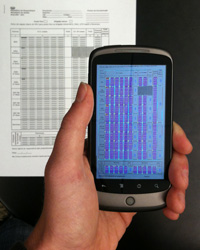 The Bill & Melinda Gates Foundation’s Grand Challenges Explorations program fosters creative projects that show great promise to improve the health of people in the developing world.
In the latest round of funding, Allen Wilcox of VillageReach, working with UW CSE’s Nicki Dell, Gaetano Borriello, and Linda Shapiro, received a $100,000 grant for their “Digitizing Paper-Based Data Via Mobile Image Technologies” project.
The team will refine and field test a mobile scanning application to transform paper data into a scalable digital system. Their solution could lower time and cost for data capture, improve data quality from the point of care, and provide access to the same information for all levels in the healthcare delivery system.
This is the second Gates Foundation grant that UW Change members have been involved in. The first was the Mobile Midwives Ultrasound project.
Congratulations to the VilllageReach and UW CSE team!
Puget Sound Business Journal here. VillageReach/UW CSE joint press release here. Read more →
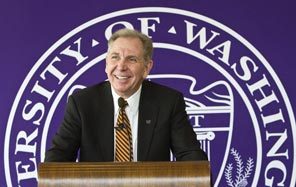 UW CSE is honored that the University of Washington introduced its President-designate, Michael Young, at a press event this morning in the Bill & Melinda Gates Commons of the Paul G. Allen Center for Computer Science & Engineering.
UW CSE’s Ed Lazowska is quoted in this KOMO-TV story: “This is like any organization. The leadership comes from the top. The tone comes from the top. So having someone with tremendous academic achievement, which he has; tremendous leadership experience; entrepreneurial experience as well; it’s a huge win.”
Impressively, Young – currently the President of the University of Utah – was able to recite a detailed list of Utah’s legendary contributions to computer graphics – the people, the companies, the technologies. He also claimed to have seen Chris Johnson on two separate occasions when Chris wasn’t wearing shorts – a claim that we find suspicious.
From the Seattle Times: “His staff at the University of Utah gave him a set of UW cufflinks, and the UW gave him a goody bag with Husky paraphernalia, including a yo-yo that lights up, from the Department of Computer Science & Engineering, where the news conference was held.” Read more →
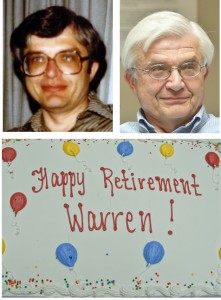 After more than 30 years as a UW CSE graduate student and staff member (mostly as a staff member – he’s not one of those!), Warren Jessop has retired!
In announcing Warren’s retirement, Erik Lundberg, CSE’s Laboratory Director, said: “Not many of you were around when Warren joined the department as a graduate student in the early 1980s. Starting in 1982, he worked for the VLSI Consortium for a number of years, and later joined the CSE Lab staff to provide broader departmental support for Sun workstations. In 1999, he took over the management of the Lab’s Support Group, which at the time he termed “grabbing the Third Rail of the Lab.” Indeed. But Warren has created a high-functioning operation, which keeps the trains running on time and the services humming. We are sad to see him leave.”
See some wonderful Bruce Hemingway photos here. Read more →