Siddhartha Srinivasa and Tao Xie named Fellows of the IEEE

IEEE logo and taglineAllen School professor Siddhartha “Sidd” Srinivasa, an expert in robotic manipulation and human-robot interaction, and alumnus Tao Xie, a faculty member at University of Illinois at Urbana-Champaign who specializes in software testing and analytics, have been named Fellows of the Institute of Electrical and Electronics Engineers (IEEE), the world’s largest technical professional organization focused on advancing technology in service to humanity. Srinivasa was selected for his “contributions to robotic manipulation and human-robot interaction,” and Xie was recognized based on “contributions to software testing and analytics.”

The IEEE Board of Directors confers the grade of Fellow upon individuals who have amassed an outstanding record of technical accomplishments that have advanced engineering, science, and technology while delivering significant value to society. Fellowship is the highest grade of membership in the organization, and it is regarded both as a prestigious honor and a noteworthy career achievement within the technical community.

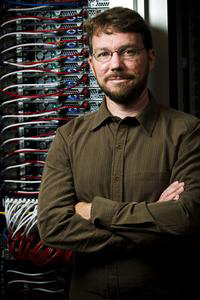
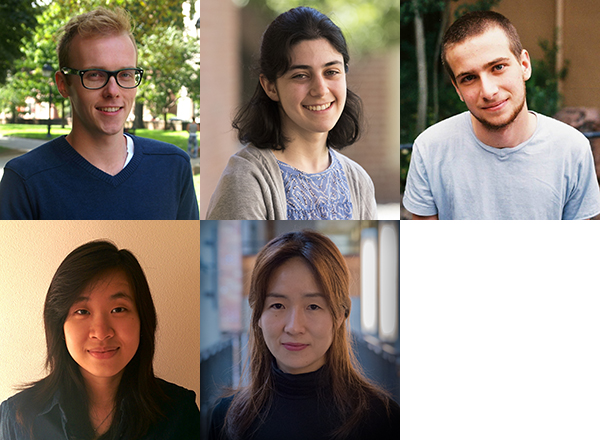
Sidd Srinivasa

“I am grateful for the honor,” said Srinivasa about his elevation to Fellow. “It truly belongs to the fantastic students, staff, and colleagues that I have had the pleasure of working with every day, and to my family for supporting and inspiring me.”

Srinivasa joined the Allen School faculty this past fall as the Boeing Endowed Professor from the faculty of Carnegie Mellon University, where he was a member of the Robotics Institute and founding director of the Personal Robotics Lab. He has made pioneering contributions to two fundamental areas of robotics, robotic manipulation and human-robot interaction (HRI), with the aim of enabling robots to perform complex tasks with and around people. A full-stack roboticist, Srinivasa has built several end-to-end systems — including HERB, ADA, HRP3, CHIMP, Andy, and more — that integrate perception, planning, and control in the real world.

Srinivasa’s groundbreaking work in manipulation has enabled robots to push, pull, and sweep objects under conditions of clutter and uncertainty through non-prehensile, physics-based interactions. He is also credited with having created the field of algorithmic HRI through his efforts to build the formal mathematical foundations of human-robot interaction.

While these innovations could transform human-robot cooperation on the factory floor, Srinivasa is most inspired by their potential closer to home.

“I care deeply about building robots that can actually help people in need of care, performing the delicate, dexterous, and mundane activities of daily living with the same fluency and seamlessness as we humans perform so effortlessly each day,” he explained. “I want to get robots out of the factories and into people’s homes!”

To that end, Srinivasa and his team built HERB, the Home Exploring Robot Butler, to serve as a realistic testbed for new algorithms enabling human-robot collaboration. In addition to his role in the lab, HERB has become an ambassador of sorts for Srinivasa and his team — and for the field of robotics, generally. As Allen School director Hank Levy recently observed, “Sidd’s robots are more famous than he is.” That’s just fine, as far as Srinivasa is concerned.

“I still cannot believe that I get paid to build robots — something I would do for free any day!” he declared.
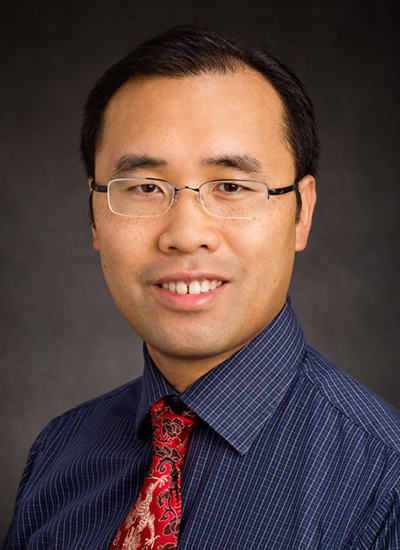
Tao XieSrinivasa is joined among the class of new IEEE Fellows by Allen School alumnus Tao Xie, who earned his Ph.D. from the Allen School in 2005 working with professor David Notkin. Xie is currently a professor and Willet Faculty Scholar in the Department of Computer Science at University of Illinois at Urbana-Champaign, where he heads the Automated Software Engineering Lab. His research interests span software testing and analytics, program analysis, software security, and educational software engineering.

Xie earned the Distinguished Paper Award from ACM SIGSOFT and Best Paper Award from the IEEE/ACM International Conference on Automated Software Engineering in 2009 for “Inferring Resource Specifications from Natural Language API Documentation.” In that paper, Xie and his co-authors presented Doc2Spec, a novel approach for inferring resource specifications from application programming interface (API) documentation to detect software bugs.

As a visiting researcher at Microsoft Research — a frequent collaborator throughout his early career — Xie contributed a core search algorithm for the IntelliTest automated test generation feature that shipped as part of Visual Studio 2015 Enterprise Edition. Xie has also engaged in multiple joint projects with MSR’s Software Analytics group in China, which has produced more than 60 high-profile publications in automated test generation, software analytics, and computer science education.

“I would like to express my great appreciation to the late David Notkin and to UW CSE for their support during my Ph.D. there from 2000 to 2005, and in my faculty career afterward,” said Xie.

Srinivasa and Xie are not the only members of the 2018 class of IEEE Fellows with a UW connection: Thomas Furness, a professor in the Department of Industrial & Systems Engineering, is also recognized for his “leadership in virtual and augmented reality.”

The IEEE has more than 420,000 members in 160 countries. Each year, nominations are accepted for the Fellow Program to recognize members with extraordinary records of accomplishment in the organization’s fields of interest, which include aerospace systems, biomedical engineering, computing, consumer electronics, energy, telecommunications, and more. A maximum of one-tenth of one percent of the total voting membership can be elevated to Fellow status in a given year. This new round of designations takes effect on January 1, 2018.

Srinivasa’s election as an IEEE Fellow brings the total number of Allen School faculty members who have earned this distinction to 15.

Congratulations to Sidd, Tao, and Thomas!

  Read more →

Allen School and Madrona Venture Group celebrate student innovation at annual research day

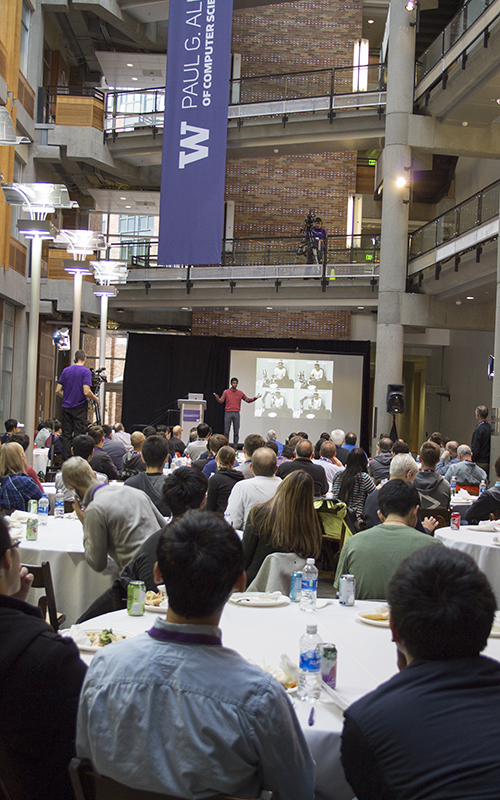
Sidd Srinivasa addresses the crowd

Allen School professor Sidd Srinivasa talks about his quest for a unified mathematical model for human-robot interaction

Each year, the Allen School welcomes industry partners, alumni and friends to our Affiliates Research Day to learn about the latest work by our faculty and students and to explore the future of computing-related research. Yesterday, more than 200 people participated in our 2017 Research Day, which featured technical talks on core and emerging areas of the field, a luncheon keynote by professor Sidd Srinivasa on human-robot interaction, and our evening open house and poster session.

During the open house, participants were invited to embark on self-guided tours of the Paul G. Allen Center, where more than 50 research teams presented posters and demos of their latest work. The evening afforded student researchers an opportunity to explain their projects to local industry leaders and technologists and, for some, to earn bragging rights (and some terrific prizes) as part of the Madrona Prize and People’s Choice Award competitions.

Madrona Venture Group sponsors the Madrona Prize — now in its 12th year — to recognize student researchers whose work represents exciting new directions and potential for commercialization.

“The newly named Paul G. Allen School has a long history of research that improves lives and delivers business and research growth to the region,” said Madrona Managing Director Tim Porter.

The winners were announced at the conclusion of the open house, along with the winners of the People’s Choice Award for visitors’ favorite posters of the evening. Read on for a complete run-down of the people and projects who were recognized as part of this year’s event.

2017 Madrona Prize

Winner

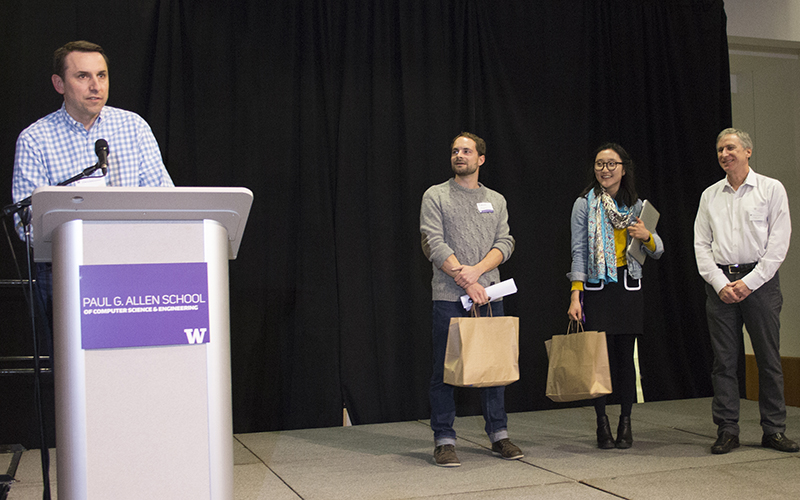
Tim Porter, Manuel Nordhoff, Eunice Jun, and Hank Levy onstage

Madrona’s Tim Porter (left) congratulates Madrona Prize winners Manuel Nordhoff and Eunice Jun as Allen School Director Hank Levy looks on

The Madrona team selected two related projects in human computer interaction research developed under the guidance of Allen School professor Katharina Reinecke as joint grand-prize winners in this year’s competition:

LabintheWild: Large-scale Online Experimentation with Diverse Uncompensated Samples (postdoc Nigini Abilio Oliveira; Ph.D. student Eunice Jun; professor Katharina Reinecke) and Augury: Predicting visual appeal of website design (visiting scientist Manuel Nordhoff and professor Katharina Reinecke).

Runners up

A Unified Approach to Interpreting Model Predictions (Ph.D. student Scott Lundberg and professor Su-In Lee)

Real-time VR Video Processing with the Hardware-friendly Bilateral Solver (Ph.D. student Amrita Mazumdar; postdoc Armin Alaghi; professors Luis Ceze and Mark Oskin)

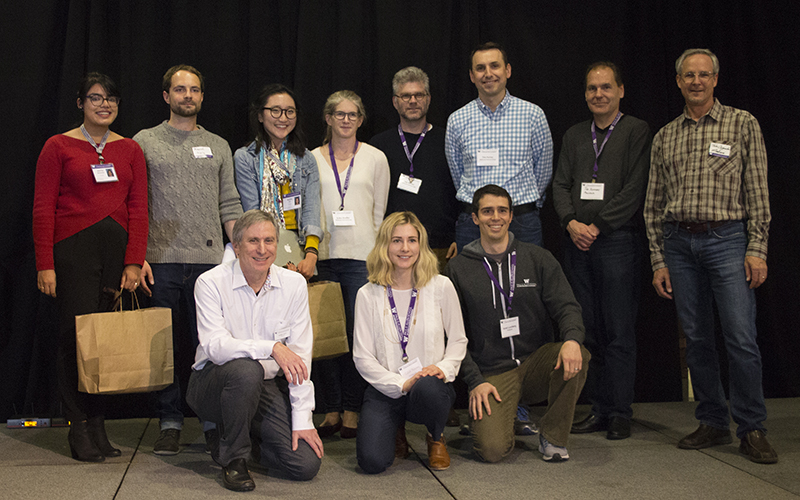
Group photo of prize winners and representatives of Madrona Venture Group

Madrona Prize winners and runners up with the Madrona Venture Group team

TVM: End-to-end IR Stack for Deep Learning Systems (Ph.D. students Tianqi Chen, Thierry Moreau, and Haichen Shen; Fudan University undergraduate and AWS intern Ziheng Jiang; professors Luis Ceze, Carlos Guestrin, and Arvind Krishnamurthy)

2017 People’s Choice Award

Winner

Learning Stylized Character Expressions from Humans (Ph.D. students Deepali Aneja, Bindita Chaudhuri; Zillow research scientist Alex Coburn; artist Gary Faigin; professors Linda Shapiro and Barbara Mones)

Runners up

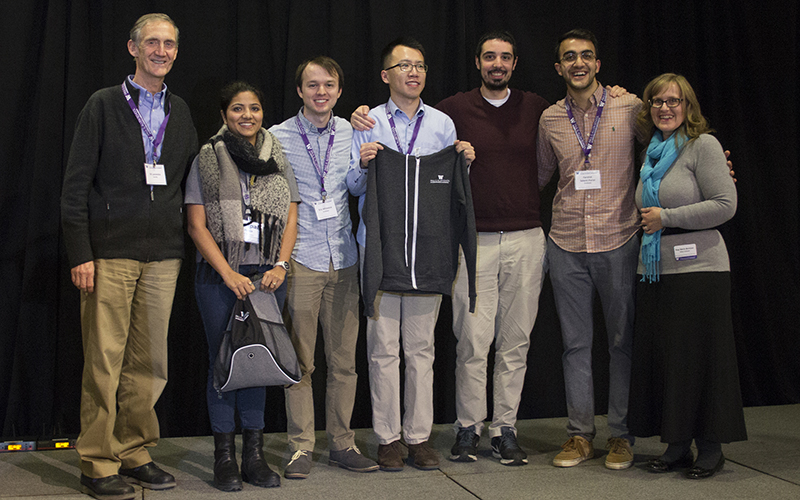
People's Choice award winners onstage

Winners of the People’s Choice Award onstage with Allen School professor Ed Lazowska (left) and External Relations Director Kay Beck-Benton (right)

IDCam: Precise Item Identification for AR-Enhanced Object Interactions (Ph.D. students Hanchuan Li, Eric Whitmire, and Alex Mariakakis; Qualcomm engineer Victor Chan; former postdoc and Disney Research scientist Alanson Sample; professor Shwetak Patel)

RoyalFlush: Non-invasive toilet water overflow detector (Electrical Engineering Ph.D. students Farshid Salemi Parizi and Josh Fromm; professor Shwetak Patel)

View the complete list of featured posters and demos here, and Madrona’s blog post here. Also check out GeekWire’s coverage of Srinivasa’s talk here, and the open house here.

Many thanks to our friends at Madrona to all of the members of our extended Allen School community who joined us in supporting student innovation!

  Read more →

Hooray for Hollywood? New tool reveals gender bias in movie scripts

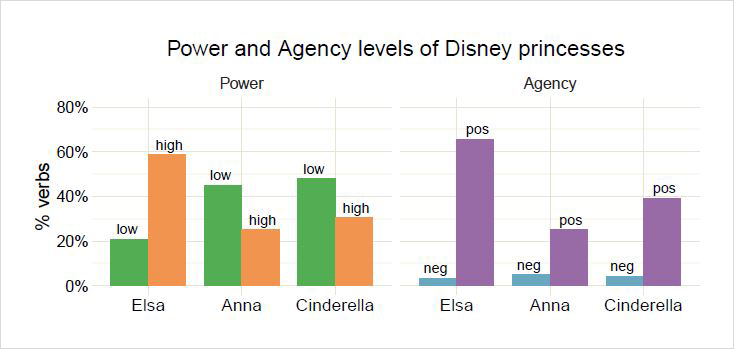
Graph showing analysis of power and agency of characters in the Disney movie "Frozen"

If, as Oscar Wilde once said, “Life imitates art far more than art imitates life,” then the art of film has a lot to answer for when it comes to the perpetuation of gender stereotypes. Thanks to researchers in the Allen School’s Natural Language Processing research group, we now have a way to measure the sometimes subtle biases in how men and women are portrayed on the big screen — and increase our understanding of how language shapes our perception of gender roles.

A team that includes Ph.D. students Ari HoltzmanHannah Rashkin and Maarten Sap, bachelor’s alumna Marcella Cindy Prasetio, and professor Yejin Choi analyzed nearly 800 movie scripts across multiple genres and found that male characters tend to be vested with higher levels of authority and control over their own destinies than their female counterparts. The researchers applied connotation frames — a method for understanding the connotations associated with different verbs — to assess characters’ level of power and agency through their actions and speech. Even after controlling for the disparity in the number of roles, quantity of dialogue, and screen time assigned to male versus female characters, the team found that males consistently scored higher across all genres.

“What we found was that men systematically have more power and agency in the film script universe,” Holtzman said in a UW News release.

In addition to analyzing scripts, the team applied its framework to the plot summaries of several popular Disney princess movies. What they found was that, when it came to power and agency, several of Disney’s most beloved characters are not exactly living a fairy tale. This includes Anna, one of the main protagonists in the popular 2013 film, “Frozen.” While her sister, Elsa, was portrayed as being in command of her own destiny, Anna possessed much less control and often had to rely on the assistance of a man — showing that when it comes to gender stereotypes, not much has changed in the Disney universe in over half a century.

“Anna is actually portrayed with the same low levels of power and agency as Cinderella, which is a movie that came out more than 60 years ago,” said Sap, lead author of the paper that describes the team’s results. “That’s a pretty sad finding.”

Maarten Sap, Hannah Rashkin, Ari Holtzman, Marcella Cindy Prasetio, Yejin Choi

The research team (clockwise from top left): Maarten Sap, Hannah Rashkin, Ari Holtzman, Yejin Choi, and Marcella Cindy Prasetio

The project built upon previous work by Choi, Rashkin, and former Allen School postdoc Sameer Singh that defined connotation frames for analyzing how a writer’s choice of verb implies certain attitudes and relationships between subjects — revealing how seemingly objective statements by an author can influence readers’ judgment about people and events. Originally conceived as a potential tool for analyzing subtle biases in online media, the framework was extended to reveal how the verbs used by and in relation to movie characters suggest power and influence along gender lines.

The researchers’ approach goes beyond a well-known method for measuring gender bias in known as the Bechdel Test. That test has gained traction over the last decade as a proxy for identifying films that offer a more robust portrayal of women that is about more than their relationships with men. Whereas the Bechdel Test stipulates that a movie must have at least two characters who are women and who speak to each other about topics other than a man, the Allen School’s framework provides a more nuanced analysis of the differences in how men and women are portrayed on the big screen.

Interestingly, the team discovered the discrepancy is not necessarily down to male writers perpetuating a deeply ingrained gender imbalance — it carries over into films scripted by female writers and overseen by female casting directors, too.

“Even when women play a significant role in shaping a film, implicit gender biases are still there in the script,” Rashkin noted.

While the team focused on characters playing on the big screen, the same method could help people recognize the subtle biases conveyed in books, plays, and more.

“We believe it will help to have this diagnostic tool that can tell writers how much power they are implicitly giving to women versus men,” Choi said, noting that these subtle biases are “deeply integrated in our language.” Eventually, the team hopes to broaden its tool to offer potential solutions, such as suggestions for ways to rephrase passages of text.

Choi and her colleagues created an online database that enables researchers and members of the public to explore their findings for hundreds of popular films. Try out the interactive tool here, and read the UW News release here. Listen to Rashkin and Sap explain their work on an episode of KUOW’s The Record here.

The team presented its findings in September at the Conference on Empirical Methods in Natural Language Processing (EMNLP 2017) held in Copenhagen, Denmark.

  Read more →

Where the STEM Jobs Are (and Where They Aren’t)

The New York Times writes:

“What recent studies have made increasingly apparent is that the greatest number of high-paying STEM jobs are in the ‘T’ (specifically, computing). …

“‘There is a huge divide between the computing technology roles and the traditional sciences,’ said Andrew Chamberlain, Glassdoor’s chief economist.

“At LinkedIn, researchers identified the skills most in demand. The top 10 last year were all computer skills, including expertise in cloud computing, data mining and statistical analysis, and writing smartphone applications.”

The Allen School’s Ed Lazowska and Berkeley’s David Culler are among those quoted.

Read more here. Read more →

Fashion-forward: Allen School researchers invent smart fabric that stores data without electronics

Demonstration of smart fabric sleeve unlocking a doorResearchers in the Allen School’s Networks & Mobile Systems Lab have introduced a new kind of smart fabric imbued with computing and interaction capabilities — without the need for onboard electronics. Their work could redefine what we mean by “wearable” and usher in a fashionable new direction for computing.

Smart garments currently on the market typically pair conductive thread with electronic components, batteries, and sensors — elements that cannot be submerged under water or subjected to extreme temperatures. Allen School Ph.D. student Justin Chan and professor Shyam Gollakota discovered that, by harnessing the magnetic properties of the same, off-the-shelf thread, they could dispense with electronics altogether and overcome one of the principal barriers to widespread adoption of wearable technology.

“This is a completely electronic-free design, which means you can iron the smart fabric or put it in the washer and dryer,” said Gollakota in a UW News release.

To produce their smart textiles, the researchers used a conventional sewing machine to embroider the conductive thread onto fabric. They then manipulated the fabric, using a magnet to align the poles in a positive or negative direction to correspond with ones and zeros. The data encoded in the fabric can be read by a magnetometer — an inexpensive device that is built into most smartphones.

Chan and Gollakota envision several potential form factors and uses for the technology, including accessories such as neckties, wristbands, and belts that can do double-duty as data storage and authentication tools.

“You can think of the fabric as a hard disk — you’re doing this data storage on the clothes you’re wearing,” Gollakota explained.

Shyam Gollakota and Justin Chan

Shyam Gollakota (left) and Justin Chan

To illustrate how their smart fabric could offer an alternative to expensive RFID-based authentication systems, they sewed a magnetic patch containing an identifying image onto the sleeve of a shirt, which is then passed in front of a prototype magnetic fabric reader containing an array of magnetometers and a microprocessor. The reader determines whether the signals emitted from the sleeve match a predetermined pattern; if they do, the door is unlocked.

The team’s approach can also be used to enable gesture recognition and interaction. To demonstrate, the researchers sewed magnetized thread into the fingertips of a glove and built a gesture classifier into a smartphone. They then tested six commonly used gestures, each of which emits its own unique combination of magnetic signals, and found that the phone could interpret the signals corresponding to each gesture in real time with 90% accuracy.

“With this system, we can easily interact with smart devices without having to constantly take it out of our pockets,” said Chan, lead author of the research paper describing the team’s work.

While the magnetic signal will degrade over time — think magnetized hotel keycards that are frequently encoded and wiped as guests come and go — like those same keycards, the fabric can be re-magnetized and re-programmed over and over. Another thing the fabric and key cards have in common is their susceptibility to demagnetization in the presence of a strong external magnetic field. This is because fabric constructed with commercially available thread has a weak magnetic field, making it best suited for temporary data storage. The researchers believe that custom fabrics incorporating a stronger magnetic field could offer greater resilience for longer-term applications.

Chan and Gollakota presented their work at the Association for Computing Machinery’s User Interface Software and Technology Symposium (UIST 2017) in Quebec City, Canada last week.

Read the UW News release here, visit the project page here, and check out coverage by MIT Technology ReviewGeekWireInternational Business TimesEngadget, New Atlas, Quartz, The Next WebKOMO News and KING 5 News.

Read more →

The Paul G. Allen School hosts Nancy Pelosi and Suzan DelBene

Photo: Devin Coldewey / TechCrunch

Today the Paul G. Allen School was honored to host a roundtable on “Women in 21st Century Jobs” with House Democratic Leader Nancy Pelosi and Congresswoman Suzan DelBene from Washington’s 1st Congressional District.

Undergraduate students, graduate students, faculty, and staff explored a wide variety of issues with Pelosi and DelBene including:

  • the barriers that women face in the tech industry
  • policies to encourage more women in STEM
  • public-private partnerships to help close the skills gap
  • sexual harassment in society at large
  • programs that can increase the success of economically disadvantaged and underrepresented minority students in STEM
  • communicating the value of fundamental research
  • approaches to mitigating the spread of misinformation/disinformation online
  • the importance of immigration reform

Our deep thanks to Leader Pelosi and Representative DelBene for spending the morning with us in a truly engaging conversation!

(See coverage in TechCrunch, GeekWire, KING TVKOMO TV, KIRO TV). Read more →

Anat Caspi earns Innovation Award from Northwest Access Fund

Anat CaspiAnat Caspi, director of the Allen School’s Taskar Center for Accessible Technology, is being honored with the 2017 Innovation Award from Northwest Access Fund, a non-profit organization devoted to improving access and opportunity for people with disabilities throughout the Pacific Northwest. The Innovation Award recognizes a business, organization, or individual who has developed one or more products that improve quality of life for people with disabilities.

“Northwest Access Fund was honored to have Anat Caspi present on the work of the Taskar Center at our January 2017 Board of Directors meeting,” said Emerson Sekins, executive director of Northwest Access Fund. “One highlight of her presentation was on AccessMap Seattle, which will be a powerful tool for our clients with mobility barriers — especially those who use manual wheelchairs.”

AccessMap, which grew out of a student-driven project that won the City of Seattle’s 2015 Hack the Commute competition, is a route-finding app that makes navigating Seattle streets safer and easier for everyone with the assistance of customizable route maps that take into account the local terrain, the presence or absence of curb ramps, and other potential obstacles.

“The Taskar Center is making it possible for people with disabilities to save time and energy, and in doing so allowing for greater participation in all our communities,” Sekins said.

Allen School professor emeritus Richard Ladner, a renowned accessibility researcher who has watched the Taskar Center grow under Caspi’s leadership, nominated her for the award based on her contributions to AccessMap and other innovative projects geared to improving the lives of people with disabilities.

“The mission of the center is to create new technologies and translate that technology to actual practice,” Ladner explained. In addition to AccessMap, Ladner lauded Caspi’s work on the Universal Play Kiosk. The kiosk, which was featured at the 2015 Seattle Design Festival focused on the theme “Design for Equity,” is a modular, configurable activity space that engages children of all abilities, including those living with mobility impairments, in sensory-rich games and activities.

“Anat works closely with children and their parents with disabilities,” Ladner noted. “She is an incredible advocate for including these children in the mainstream by building on the children’s strengths using technology. She is very deserving of the Northwest Access Fund Innovation Award.”

Caspi and her fellow honorees will be formally recognized at Northwest Access Fund’s annual awards dinner and benefit on November 2 in Seattle. The event celebrates organizations and individuals who endeavor to include, serve, and help people with disabilities in Washington and Oregon while building support for Northwest Access Fund’s programs that enable people to achieve greater independence with the help of assistive technologies.

Congratulations, Anat!

  Read more →

Where the jobs are: 2016-2026 edition

The U.S. Bureau of Labor Statistics has just released its employment projections for the decade 2016-2026. It’s a highly detailed forecast: more than 1,000 specific job categories are included.

Computing occupations once again dominate STEM, accounting for 66% of all job growth, and 60% of all job openings (whether due to growth or to replacement).

BLS projects a growth of 546,000 computing jobs over the decade, and 3,475,000 job openings.

Whoaboy! Read more →

Luke Zettlemoyer, Allen Institute for AI in NY Times

Luke Zettlemoyer, a professor at the University of Washington … turned down a lucrative offer from Google, instead taking a post at the nonprofit Allen Institute for Artificial Intelligence so he could continue teaching.”

Luke and Ali Farhadi are heavily engaged in AI2, which is led by long-time Allen School professor Oren Etzioni. It offers the best of both worlds.

NY Times article here. Read more →

Professor Jennifer Mankoff recognized with GVU Impact Award

Jennifer MankoffProfessor Jennifer Mankoff, a member of the Allen School’s human computer interaction research group, has been honored with a GVU Impact Award from the GVU Center at her alma mater, Georgia Tech. To mark its 25th anniversary, the center recognized Mankoff and 13 other current or former members who have had a significant impact on the world and contributed substantially to GVU’s reputation, influence, and community in pursuit of its mission to improve the human condition through technology.

Mankoff earned an Impact Award for her contributions to accessibility, health, and sustainability through research that combines empirical methods and deep technical innovation. She is widely known for her people-centric approach to technology, such as her novel use of 3D printing to create personalized assistive technologies for people with disabilities — work which, like all accessibility research, will ultimately benefit everyone. Mankoff also has explored the use of natural materials in computing, including embedding textiles in 3D printing and creating knitted objects programmatically, and developed tools and techniques to assist people in managing chronic illness.

“Each of the individuals featured…embodies the interdisciplinary mindset and commitment to real-world impact that is a hallmark of GVU’s identity,” Keith Edwards, director of the GVU Center, said in an announcement. “Through their leadership, service, and research excellence, they have changed the way we use computing technology, advanced the frontiers of knowledge, and strengthened the GVU community at Georgia Tech.”

Mankoff earned her Ph.D. in 2001 working with Gregory Abowd and fellow honoree Scott Hudson. She joined the Allen School faculty as the Richard E. Ladner Professor this fall after spending 13 years on the faculty of Carnegie Mellon University, where she was a professor in the HCI Institute. Before her arrival at CMU, Mankoff was a faculty member at the University of California, Berkeley.

The GVU Center formally recognized Mankoff and her fellow Impact Award winners at its 25th anniversary celebration earlier today.

Congratulations, Jen!

  Read more →

« Newer PostsOlder Posts »