UW CSE’s Mitchell Hashimoto, Armon Dadgar recognized in Forbes’ “30 Under 30”

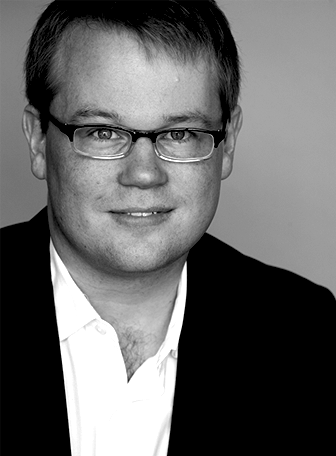
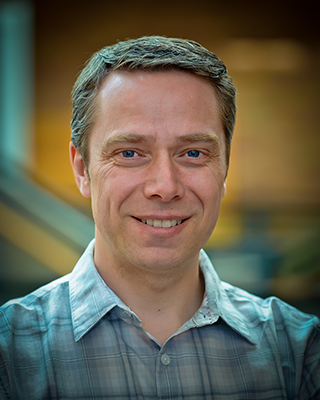
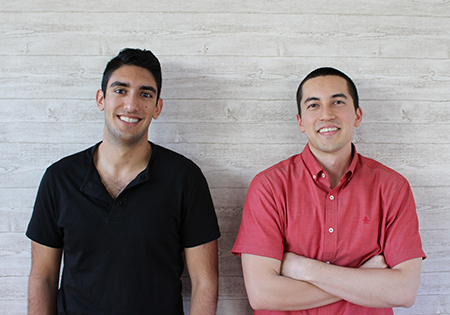
Armon Dadgar and Mitchell Hashimoto

Armon Dadgar (left) and Mitchell Hashimoto

UW CSE alums Mitchell Hashimoto and Armon Dadgar feature prominently in the 2017 edition of Forbes magazine’s 30 Under 30—which recognizes change-makers and innovators spanning 20 different industries. The pair are recognized for their contributions to enterprise tech through their company, San Francisco-based HashiCorp.

Hashimoto and Dadgar earned their bachelor’s degrees in computer science from UW CSE in 2011. They co-founded HashiCorp a year after graduation with the aim of revolutionizing data center management, including application development, delivery, and maintenance.

Five years on, the company employs 60 people, has raised nearly $35 million in venture funding, and counts heavy-hitters such as Cisco, Disney, Mozilla, PayPal, and Elon Musk’s OpenAI among its customers.

As Hashimoto, who serves as the company’s co-CTO with Dadgar, told Forbes, “Every company is realizing the traditional way of doing IT isn’t going to scale. Tractor companies or insurance companies want to focus on their business, not on building the delivery mechanism for their software.”

In their quest to build robust tools for managing IT infrastructure, the founders kept their end users in mind.

“I think what makes us unique is the human aspect of our software — our users generally describe our software as enjoyable to use, and that’s not something you usually hear with IT software,” Hashimoto said. “A lot of IT software is made for computers, and we like to think that our software’s made for people.”

Check out the full article and a video featuring Hashimoto here, and the complete class of 30 Under 30 honorees here.

Congratulations, Mitchell and Armon! Read more →

UW CSE’s Shyam Gollakota named a Forbes “30 Under 30” All-Star

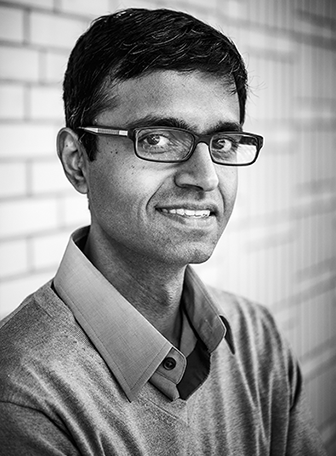
Shyam Gollakota, LeBron James, and Taylor SwiftWhat do UW CSE professor Shyam Gollakota, basketball player LeBron James, and singer Taylor Swift have in common?

They all were named among Forbes magazine’s “30 Under 30” All-Star Alumni — a who’s-who of luminaries in technology, sport, the arts, and more who are “leading the millennial revolution of game changers.”

Gollakota was previously recognized by Forbes on its list of “30 Under 30” in energy for his work on ambient backscatter, which turns existing wireless signals into a source of power and means of communication for battery-free devices.

Check out Gollakota’s Forbes profile here, and see the full list of all-stars here.

Great start to the new year, Shyam! Read more →

WSU socks proclaim “Go Dawgs”

28220934-ce12-11e6-8285-f3aa133c22e5-300x295The Seattle Times reports:

“Washington State University Cougar fans are going to want to spend a bit of time staring at their feet this morning.

“Bartell Drugs issued a recall this week for an $18 Christmas pair of Strideline WSU College ‘Cougar Socks.’ The red-and-white socks have a not-so-Cougarish slogan printed on the inside cuff. It reads, ‘Go Dawgs’ …

“Using the rival University of Washington’s ‘Go Dawgs’ slogan for WSU socks was a quality-control error, co-founder Jake Director said …

“‘It’s pretty unfortunate,’ he said, though he admitted he can see why some might find it funny.”

Almost as funny as back in August 2014 when WSU’s “Academic Planner” featured a photo of UW on the cover! As we said back then, “We can’t make up stuff that’s this great!”

Read the Seattle Times article here. Read more →

UW CSE Ph.D. student Irene Zhang is GeekWire’s “Geek of the Week”

cse32016_1192-630x945Irene Zhang is UW CSE’s Geek of the Year, but we’ll settle for GeekWire’s Geek of the Week:

“I’m really a Midwestern girl at heart.” (Give me a break!)

“I do research in distributed programming platforms for mobile/cloud applications. Application programmers today are writing code that runs on mobile device and cloud servers, so they are really tackling a lot of hard distributed systems problems. Companies like Facebook, Twitter and Google have figured out how to build these kinds of applications, but those lessons have not really made it into general-purpose systems that help the average application programmer. So, my research is on how to eliminate the need for programmers to tackle these tough distributed systems problems. I want to make it possible to build the next generation Facebook-scale application in a few hours, not a few years.” (We can get behind that!)

“I’m also inspired by Barbara Liskov, my undergraduate advisor at MIT. She was the first woman to get a Ph.D. in computer science and now has a Turing award, but she has some amazing stories from being a woman so early in the field.” (A giant of the field!)

“We’re just scratching the surface of what computer science can accomplish, so it’s a pretty great time to be a geek!” (Amen!)

Previous UW CSE “Geeks of the Week”: Karan Goel, Carlos Guestrin, Julie Kientz, Melissa Winstanley, Oren Etzioni (also 2012’s “Geek of the Year”), Lauren Bricker, Yaw Anokwa, Wendy Chisholm, and Marty Stepp. We got geek!

Read more here. Read more →

For UW CSE’s Johan Michalove, “teaching to the test” means inspiring a love of learning

Johan MichaloveTo mark the end of finals week, the next installment of our Undergrad Spotlight features a member of the UW CSE community who devotes his spare time to helping other students to succeed. Meet Johan Michalove, a senior from Bellevue, Washington who has spent the past three years tutoring students and currently serves as chair of the UW ACM, the campus chapter of the Association for Computing Machinery.

Michalove is double-majoring in Computer Science and Philosophy. As ACM chair, he strives to make the CSE community vibrant and inclusive by coordinating a variety of events and programming. As a high school tutor, he inspires students to do more than succeed on a test — he helps them to develop a lifelong love of learning.

CSE: Why did you choose to study computer science?

JM: I first got excited about computer science through taking the intro series during my freshman year. I chose CSE because the concepts fascinated me, and also for how quickly you can go from an idea to a real, tangible object that people can play with or benefit from.

CSE: What is your favorite thing about being a UW CSE student?

JM: Our undergraduate community, definitely. The variety of my classmates’ interests continues to surprise me. I’m always hearing about new obscure subjects, side projects, and interesting experiences.

CSE: Who or what in UW CSE has inspired you the most?

JM: I’ve enjoyed mentorship from faculty who are advancing CS and laying the groundwork of CS education. It’s inspiring and humbling to witness the formative years of a relatively young subject. Adam Blank‘s approach to designing and structuring meaningful, yet highly scalable learning experiences has given me many new insights how technology can improve education.

CSE: What made you decide to tutor high school students?

JM: At the outset, I was just excited to teach and have a platform to gain mentorship and experience in the craft of teaching. As a college freshman I didn’t know what I constantly see today: many intelligent students near the end of high school lacking a strong foundation in basic reading, writing or math skills. Within the public school system, it’s particularly easy for students to slip through the cracks, only to arrive to college and realize they’ve never learned how to study or take on truly difficult academic endeavors. I also didn’t realize the number of high school students who have acute learning disabilities and test anxiety. I’ve had students break into nervous sweats when a math test is placed before them. I’ve stayed on to explore how I can help these students and hone my abilities as a teacher and mentor.

CSE: How are you helping your students to overcome those challenges?

JM: My primary role is preparing students for the standardized tests they take to enter college. Many of our students have learning disabilities and special accommodations, so we work to understand where they’re falling behind and exactly how they can improve their performance. Although the teaching is ostensibly about tests, my goal is to help students find an engaged, positive attitude towards learning even when the subject-matter seems dry — we are talking about standardized tests! — so they can take that with them to whatever pursuits they follow. This often involves helping them overcome a particular fears or anxieties and providing mentorship, supplemented by content knowledge.

In the most severe cases, I’ve taught high school juniors multiplication and division. More frequently they come in without understanding basic geometry and algebra. Many of my math students are baffled by the reading passages. Teaching effectively from the 1st to the 99th percentile is difficult. Three years later, I’m still finding new ways to sharpen my approach.

CSE: What kind of impact are you making in this role?

JM: My work directly helps students whose needs were not fulfilled by the regular educational system. Although the number of students I teach is a blip compared to UW classes or the scale reached by MOOCs, the goal is for students who’re seldom at ease in the classroom to have genuine, positive learning experiences. I would like to think that through the tests, we’re teaching students how to learn (and often for the first time). It’s exciting to be involved in the formative stages of these individuals, and it’s not uncommon for students to come back and say that preparing for the tests was the first time they ever enjoyed learning.

CSE: What is your favorite memory/project so far?

JM: Those lightbulb moments when you know something just “clicked” perfectly for a student. Their eyes light up and they let out an excited “Ohhhhhhhhhh.” You know it’s a concept they’re never going to forget.

CSE: How does this position relate to your long term goals?

JM: Shhh, they’re still under wraps. Though you can probably guess they involve education and computer science.


Thank you, Johan, for your leadership and service! And happy end of finals to all of our undergrads — see you next quarter! Read more →

Crosscut: Why tech companies aren’t hiring more local grads

tech-worker-550x440“So what distinguishes the UW from other Washington schools? Aside from its obvious geographical advantage of being smack dab in the center of a global tech hub, the University has made use of several strategies to routinely get its grads into top-notch jobs. ‘The University has been tuning its computer science curriculum to the needs of software development companies for decades now,’ says [Washington Technology Industry Association (WTIA) CEO Michael] Schutzler.

“The challenging curriculum and internship program also play a big role. ‘Most students do summer internships at leading-edge companies – and they can do this without relocating,’ Ed Lazowska, the Bill & Melinda Gates Chair of UW’s Computer Science & Engineering Department, wrote in an email. ‘This, plus the capstone design courses at the end of their senior year, makes them industry-ready.’

“The UW also makes use of what’s called the Industry Affiliates Program, that gives students a sneak peek at the industry while allowing companies to start recruiting top talent early. More than 100 companies, including the likes of Google and Facebook, are part of the program, which offers resume workshops and practice interviews to help prepare students for future careers.”

Read more here. Read more →

UW CSE undergraduates recognized as outstanding researchers by the Computing Research Association

Christopher Mackie, Nathaniel Yazdani, Sarah YuCarrying on UW CSE’s tradition of excellence in undergraduate research, three students — Christopher Mackie, Nathaniel Yazdani, and Sarah Yu — have been recognized by the Computing Research Association as part of its 2017 Outstanding Undergraduate Researcher Awards. Since the year 2000, 55 UW CSE undergraduates have earned accolades from CRA for excellence in research — more than any other institution in North America.

Mackie and Yazdani are members of CSE’s Programming Languages & Software Engineering (PLSE) group. Mackie, who is studying Computer Science and Physics, has been working with professor Michael Ernst on the Signedness Checker, a new verification tool for preventing signedness errors in numerical computations in Java that is part of UW CSE’s Checker Framework. He recently earned third place in the student research competition at FSE 2016.

Yazdani is collaborating with professor Ras Bodik on the development of a synthesis engine to enable the high-performance layout of large-scale data visualizations. He is working toward degrees in Computer Science and Mathematics, after which he plans to pursue a Ph.D. and an academic research career. Yazdani was profiled as an undergraduate research leader by the UW’s Undergraduate Research Program.

Yu, who is studying Computer Science, International Studies, and Economics, is a research assistant in the Information & Communication Technology for Development (ICTD) Lab led by professor Richard Anderson. She has been working alongside Ph.D. students Sam Castle and Fahad Pervaiz in the lab’s Digital Financial Services Research Group to address security and usability challenges for digital banking in the developing world, including a study of mobile money markets in Ghana. Last spring, Yu was named a member of the inaugural class of the Husky 100.

All three students earned Honorable Mentions in the competition, which is designed to highlight exceptional potential among the rising generation of computer scientists. UW CSE students’ success over the years in the CRA awards is evidence of our commitment to providing our undergrads with a first-rate educational experience, including opportunities to participate in hands-on research alongside our faculty, Ph.D. students, and postdocs.

Congratulations to Chris, Nate and Sarah — we’re proud of you! (And great job supporting undergraduate research, PLSE and ICTD teams!) Read more →

Lots of silliness at the annual UW CSE holiday party

The annual UW CSE holiday party is always a fun event for students, staff, and faculty. And then there’s the faculty skit … “rehearsal” shots below …

skit_edited-1 Read more →

How Seattle became “Cloud City”

20161208cloud02_tzr-1020x642A nice series of articles in the Seattle Times explains cloud computing and describes Seattle’s leading role.

“‘In general, there is someone who can deliver you electricity more reliably and less expensively than you can generate it yourself,’ said Ed Lazowska, a University of Washington computer scientist. ‘What’s happening now is most of us are increasingly relying on utilities, be it Amazon, or Microsoft or Google, to give us the computing we need.’

“In other words, the power of the technology at your fingertips no longer depends on how powerful of a PC you bought for your den or the number of servers blinking in the backroom where you work.

“All you need is a credit card, which can give you access to the power and technology that enables everything from your corporate email account to a supercomputer.”

First article here. Second article here. More to come! Read more →

UW CSE’s Melissa Galloway blazes her own trail, honoring the spirit of Grace Hopper

Melissa Galloway holding her teaching assistant awardThis fall, we launched a new feature, the CSE Undergrad Spotlight, to shine a light on the diverse ways in which our students are contributing to our campus and our community. For our second installment, CSE talked to Melissa Galloway, a senior from Vancouver, Washington who is pursuing a double degree in Computer Science and Human Centered Design & Engineering. Galloway has been involved in undergraduate research, working with professor Zach Tatlock in CSE’s Programming Languages & Software Engineering (PLSE) group, and was selected as a 2016-2017 Washington Research Foundation Fellow.

Galloway also dedicates her time to mentoring students as a Teaching Assistant for CSE’s popular introductory programming courses — a commitment which last spring earned her the Bob Bandes Memorial Award for Excellence in Teaching in recognition of her outstanding performance as a TA. This quarter, Galloway serves as the head TA for CSE 143 and as a TA for CSE’s Women in Computing Seminar. CSE caught up with Galloway just in time to mark the occasion of Grace Hopper’s birthday — a fitting tribute to someone who blazed a trail for women in computing, by one who is setting an example for a new generation.

CSE: How did you discover your passion for CSE?

MG: Similar to a surprising number of students in the department, I discovered computer science after arriving at UW. Entering college, I planned to pursue medical school, drawn to working in a fast-paced and challenging environment that presented new problems to solve every day. My particular interests were in diagnostics and genetic research. After taking my first CSE course, I realized that my interests in biology and medical school were much more strongly aligned with what an education in computer science could offer. As I have progressed through my CSE studies, I have found many connections to my earlier interests in biology, including the study of data structures and algorithms, compilers, parallel computing, and program optimization. I look forward to pursuing future research in computer science where I can combine CS with genomics and proteomics research, and potentially even integrate my interests in educational technology on a tool like FoldIt, which was developed here at UW.

CSE: What is your favorite thing about being a CSE student?

MG: It’s difficult to pick a “favorite,” but perhaps top of the list would be the variety of opportunities I have access to as a CSE student. Prior to joining the major, I participated in the CSE 14X program as a Teaching Assistant for CSE 143. Since becoming part of this community, I have discovered an unexpected passion for teaching and mentorship. I have found a number of opportunities to TA for different CSE courses and recently contribute more through head TA roles. This experience has introduced me to a community of similar-minded individuals who thrive on solving challenging problems and who also share a passion for introducing students to the field of computer science.

I have additionally found research in the department a unique experience that helps reinforce my understanding of what I learn in classes through real-world applications. It also allows me to expand my knowledge base in new topics in the field. I have had the chance to work on research in different sub-fields, including programming languages and computer science education, and I have found research to be a very fulfilling way to learn while contributing to real-world applications. The experience has led me to my present goal of continuing my CS education through a Masters and/or Ph.D. program, and to ultimately find a combined role in teaching and research at a similarly research-focused university.

CS: What made you decide to become a TA, and how has that helped you shape your long-term goals?

MG: I decided to pursue this opportunity because my transition from pre-med to computer science was inspired by the instructors and TA’s I had in CSE 14X and 154, and I wanted to similarly inspire others to study computer science or related fields. As a TA, I have the opportunity to help students discover how exciting and fulfilling CS can be as a course of study — and help them to realize the potential CS has in real-world applications. I strive to provide students the tools and knowledge to succeed in their coursework as well as start their own programming projects on the side to reinforce their understanding of the material in a way that is most interesting to them. I also hope to serve as a role model for fellow TA’s and students who are thinking of pursuing teaching roles in CSE.

Teaching gives me the opportunity to foster interest in the field among students regardless of their background or experience level. I find the “puzzle” of helping students understand material in different ways very rewarding. Since starting as a CSE 143 TA, I have continued TA-ing each quarter in different courses. This experience has influenced my current goal of pursuing computer science education. I have thoroughly enjoyed the many responsibilities I have had as a TA, including teaching a section, writing exam and section material, developing resources, providing individualized feedback on assignments, and inspiring other students to pursue CSE or related fields. Each quarter I teach I have found ways to contribute more to the course, and in my role as a head TA these past two quarters I have enjoyed learning more about the course curriculum and organization. Following my undergraduate education I plan to pursue a lecturer or professor role, which would enable me to have an even greater impact.

CSE: You attended the Grace Hopper Conference for women in computing as part of a delegation from CSE. What was that experience like?

MG: The Grace Hopper conference was an amazing opportunity — it showed me just how many women are involved in the tech field. While I had heard from past attendees that it would be an eye-opening experience to see so many female engineers at once, I was not prepared for the impact that it actually would have. At the conference, I discovered many opportunities for women to get more involved in diversity efforts as well as find roles at different tech companies. As a student pursuing research and academia, I found it very rewarding to see representation in these areas among the popular tech companies.

I have realized that there are relatively few women pursuing teaching or research in CS, and meeting female leaders in these roles helped reinforce my goals of pursuing graduate school. Reflecting back on the experience, I believe that the Grace Hopper Conference will be one of the most valuable experiences I will have as a CSE student. I highly recommend other female CSE students to apply for the conference next year!


Thanks to Melissa for being a great ambassador for CSE — and happy birthday, Grace Hopper! Read more →

« Newer PostsOlder Posts »