UW’s Passive Wi-Fi named one of the 10 breakthrough technologies of 2016

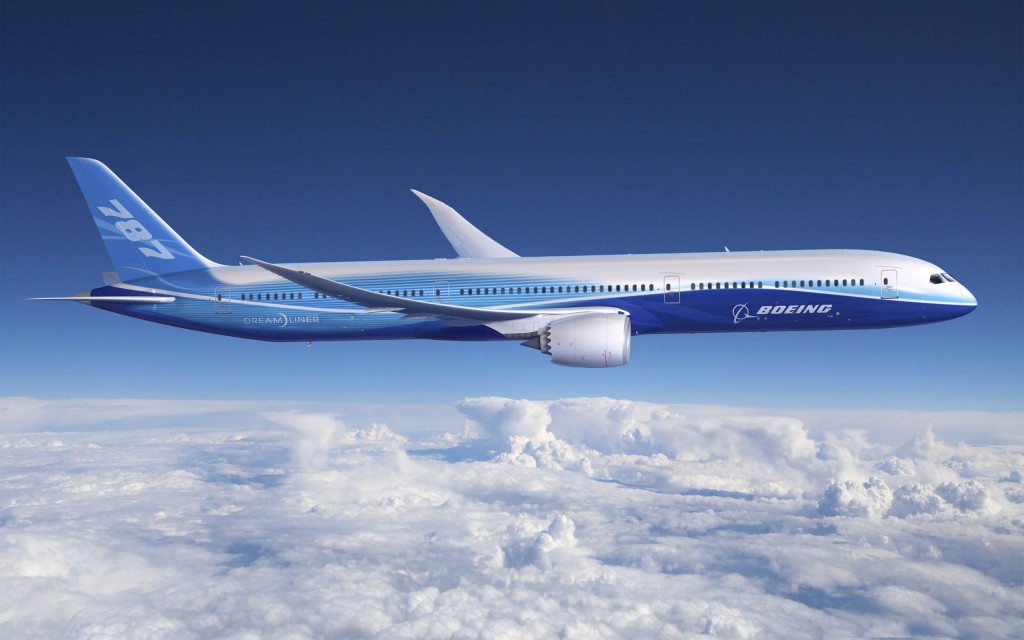
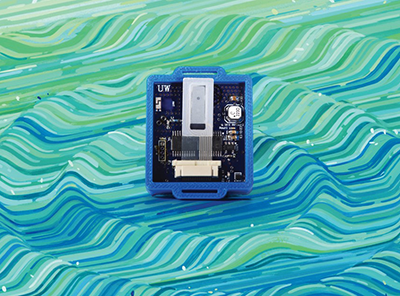
Passive Wi-FiPassive Wi-Fi, a new low-power Wi-Fi communications system developed by researchers at UW CSE and EE, has been named one of MIT Technology Review’s 10 Breakthrough Technologies of 2016. The system, which can generate Wi-Fi transmissions using 10,000 times less power than conventional methods, was developed in UW CSE professor Shyam Gollakota’s Networks & Mobile Systems Lab by a team that includes EE graduate students Bryce Kellogg and Vamsi Talla and joint UW CSE and EE professor Joshua Smith.

From the article:

“Even the smallest Internet-connected devices typically need a battery or power cord. Not for much longer. Technology that lets gadgets work and communicate using only energy harvested from nearby TV, radio, cell-phone, or Wi-Fi signals is headed toward commercialization. The University of Washington researchers who developed the technique have demonstrated Internet-connected temperature and motion sensors, and even a camera, powered that way….

“One version of the University of Washington technology, dubbed passive Wi-Fi, is being commercialized through a spin-off company, Jeeva Wireless. It lets battery-free gadgets connect with conventional devices such as computers and smartphones by backscattering Wi-Fi signals. In tests, prototype passive Wi-Fi devices have beamed data as far as 100 feet and made connections through walls.”

A UW News release explains how the team decoupled the digital and analog operations involved in transmitting the signals, assigning the power-intensive analog functions to a single device plugged into a wall. Passive sensors can then produce Wi-Fi packets using very little energy by reflecting and absorbing the signal using a digital switch—enabling communication with any Wi-Fi-enabled device straight out of the box.

“‘We wanted to see if we could achieve Wi-Fi transmissions using almost no power at all,’ said co-author Shyam Gollakota…’That’s basically what Passive Wi-Fi delivers. We can get Wi-Fi for 10,000 times less power than the best thing that’s out there….’

“Aside from saving battery life on today’s devices, wireless communication that uses almost no power will help enable an ‘Internet of Things’ reality where household devices and wearable sensors can communicate using Wi-Fi without worrying about power.”

The team will present its research paper on Passive Wi-Fi at the NSDI 2016 conference next month.

Read the MIT Technology Review article here. Read the UW news release here, and watch our video demonstrating Passive Wi-Fi here. Also check out some of the great coverage of this story by the Seattle Times, Wired, Ars TechnicaPC World, GizmodoGeekWire and local ABC affiliate KOMO 4 News.

Image: MIT Technology Review Read more →

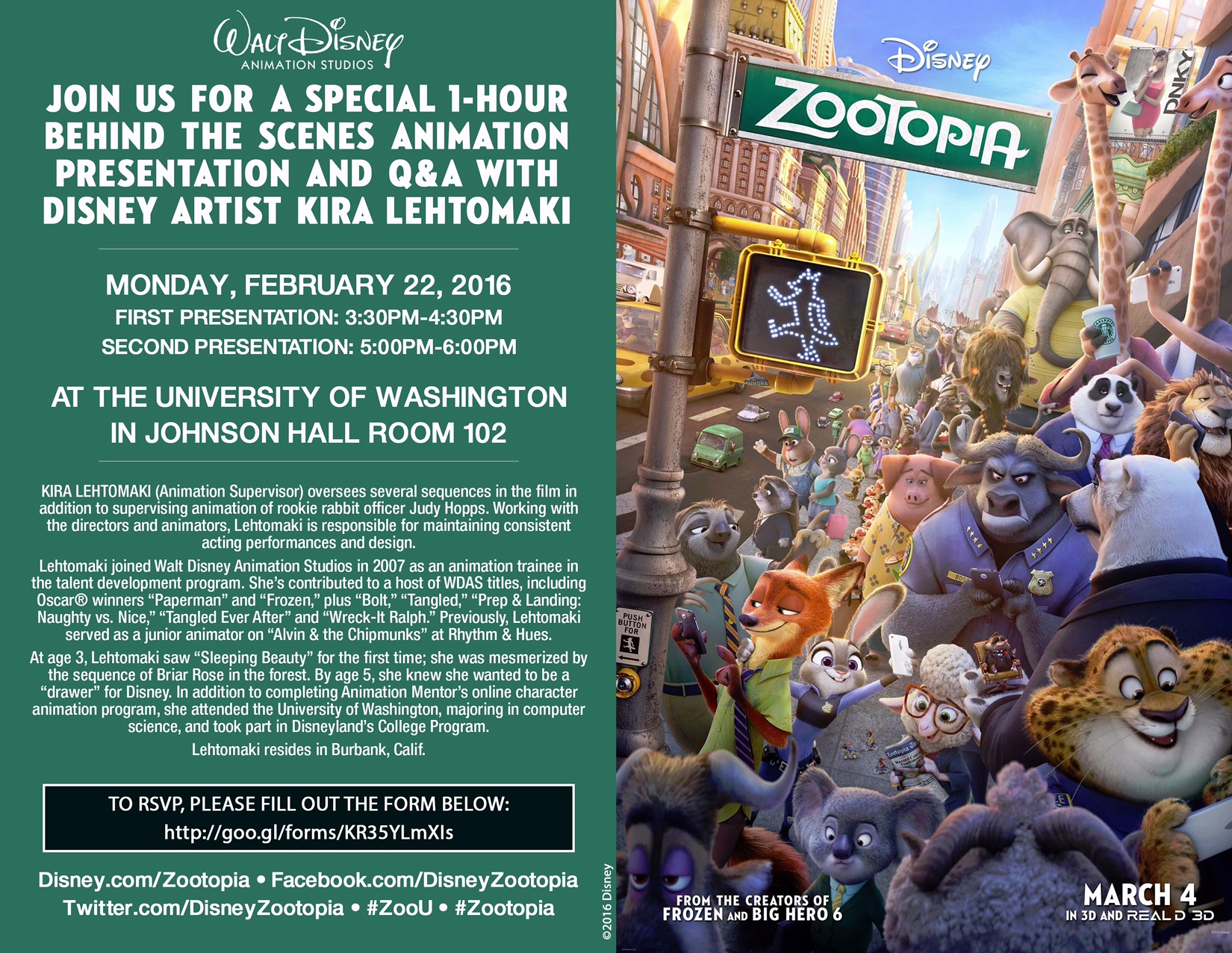
Zootopia @ UW CSE

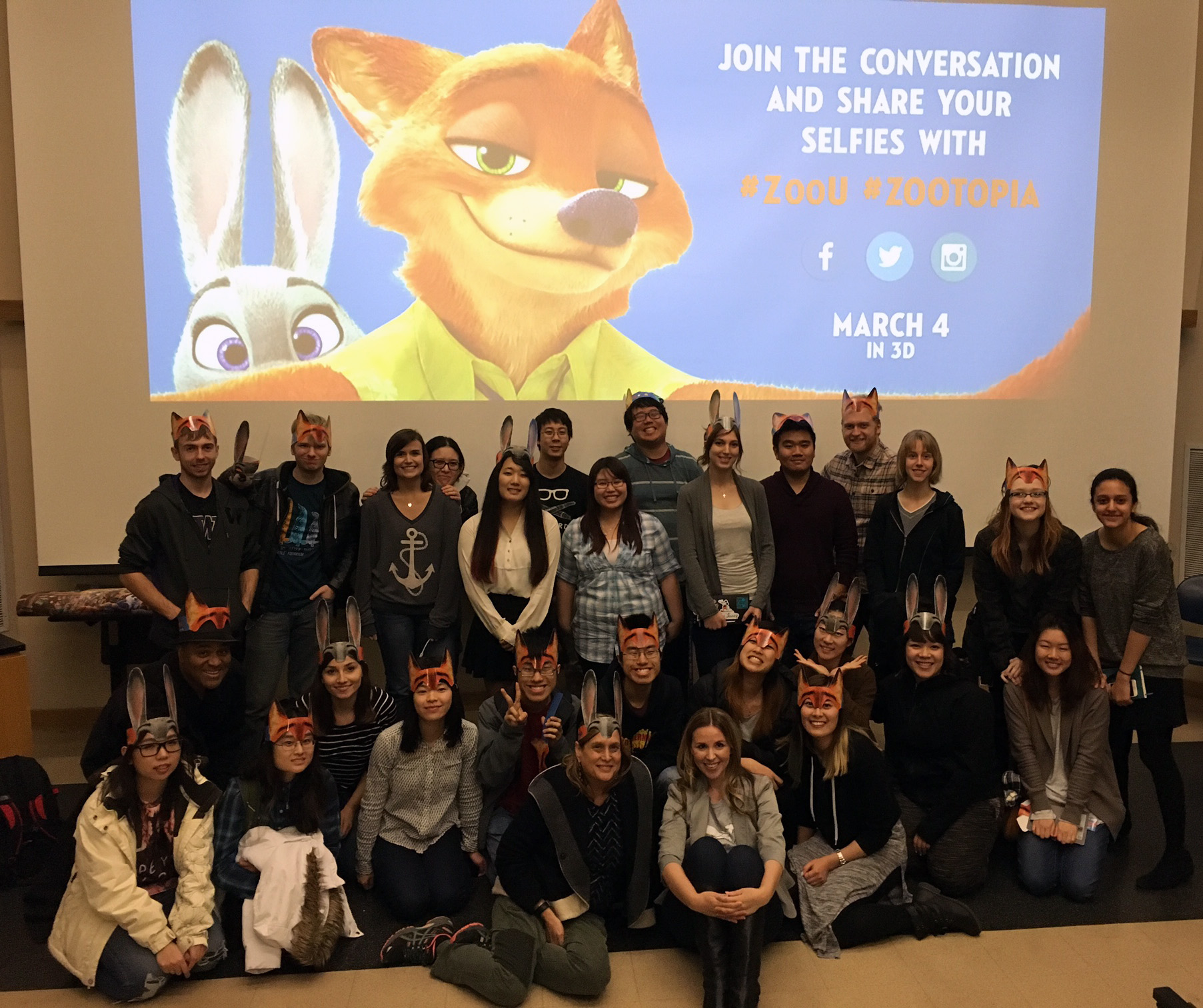
PosterUW’s Animation Research Labs, led by CSE’s Barbara Mones, brings students from CSE, Art, Music, and other programs together each year for an intensive set of capstone courses in digital animation, culminating in the production of an animated short shown at our graduation ceremony (and often at major festivals).

On Monday, UW CSE / ARL alum Kira Lehtomaki, who joined Walt Disney Animation Studios in 2007, enthralled current students with a special behind-the-scenes Q&A.

See a subsequent interview with Kira here.

Kira Read more →

UW CSE’s Emina Torlak, Mike Cafarella, Roxana Geambasu win Sloan Research Fellowships

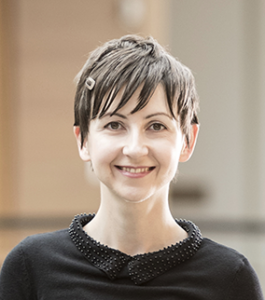
Emina Torlak

Emina Torlak

UW CSE professor Emina Torlak and Ph.D. alums Mike Cafarella and Roxana Geambasu were recognized by the Alfred P. Sloan Foundation today with Sloan Research Fellowships. Recipients of these prestigious awards are nominated by their peers and selected by the foundation based on their early-career research accomplishments and for showing outstanding promise of making fundamental contributions to their fields.

From the Sloan Foundation news release:

“‘Getting early-career support can be a make-or-break moment for a young scholar,’ said Paul L. Joskow, President of the Alfred P. Sloan Foundation. ‘In an increasingly competitive academic environment, it can be difficult to stand out, even when your work is first rate. The Sloan Research Fellowships have become an unmistakable marker of quality among researchers. Fellows represent the best-of-the-best among young scientists.'”

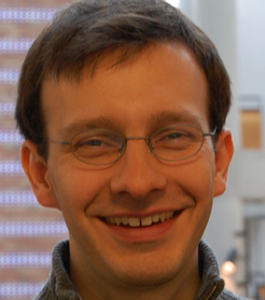
Mike Cafarella

Mike Cafarella

Torlak is a member of our Programming Languages & Software Engineering (PLSE) group and develops tools and programming models for computer-aided design, verification and synthesis of software. She was recently named the winner of the 2016 junior AITO Dahl-Nygaard Prize, an award that recognizes an early-career researcher who demonstrates exceptional potential in the area of programming and simulation. Torlak becomes one of 20 current UW CSE faculty members who have held one of these prestigious fellowships.

Cafarella is on the faculty of University of Michigan. His research focuses on databases, information extraction, data mining and data integration. He completed his UW CSE Ph.D. in 2009 working with professors Dan Suciu and Oren Etzioni.

Geambasu is a professor at Columbia University. Her research spans distributed systems, operating systems, databases, security and privacy. She completed her UW CSE Ph.D. in 2011 working with professors Hank Levy and Yoshi Kohno.

Roxana Geambasu

Roxana Geambasu

The Sloan Foundation awards a total of 126 fellowships each year to early-career researchers across the United States and Canada, based on nominations from their fellow scientists, spread across eight fields: chemistry, computer science, economics, mathematics, computational and evolutionary molecular biology, neuroscience, ocean sciences and physics. 16 were awarded this year in computer science.

Read the complete list of 2016 fellowship recipients here, the Sloan Foundation press release here and the UW News release here.

Congratulations, Emina, Mike and Roxana! Read more →

UW CSE’s Emina Torlak wins 2016 AITO Dahl-Nygaard Prize

Emina TorlakUW CSE professor Emina Torlak has been named the recipient of the 2016 Dahl-Nygaard Junior Prize from the Association Internationale pour les Technologies Objets (AITO), an organization devoted to advancing research in object-oriented technology. Torlak—a member of UW CSE’s Programming Languages & Software Engineering group (PLSE), which is widely recognized as one of the best in the business—will be honored at the European Conference on Object-Oriented Programming (ECOOP) in Rome this summer.

The Dahl-Nygaard Junior Prize recognizes an early career researcher who demonstrates exceptional potential in the areas of programming and simulation. The prize is named for Ole-Johan Dahl and Kristen Nygaard, whose pioneering work in object-oriented programming transformed software design and development. Torlak is being recognized for her work on automated tools for analyzing and synthesizing software artifacts. Examples include Rosette, a new solver-aided programming language that enables programmers to create their own domain-specific tools for verification, synthesis, and debugging, and Kodkod, an efficient constraint solver for relational logic used in a variety of applications, including code checking and test-case generation.

Read AITO’s citation honoring Torlak here.

The broader UW CSE family is no stranger to the Dahl-Nygaard Prize. Former faculty member Craig Chambers won the senior prize in 2011, and two of our Ph.D. alumni received the junior prize: Jonathan Aldrich in 2007, and Gail Murphy in 2005.

Way to go, Emina! Read more →

UW CSE researchers create “the most amazing” robot hand IEEE Spectrum has ever seen

Robotic handIEEE Spectrum highlights the work of UW CSE Ph.D. alum (and current Yale postdoc) Zhe Xu and CSE and Applied Mathematics professor Emo Todorov, who developed a robotic hand that achieves true human-like dexterity and could serve as a model for the development of neuroprosthetics and limb regeneration research.

From the article:

“Because of the inherent complexity of a real human hand, biomimetic anthropomorphic hands inevitably involve lots of compromises to get them to work properly while maintaining a human-ish form factor. Zhe Xu and Emanuel Todorov from the University of Washington, in Seattle, have gone crazy and built the most detailed and kinematically accurate biomimetic anthropomorphic robotic hand that we’ve ever seen, with the ultimate goal of replacing human hands completely….”

“Besides being an extraordinarily beautiful piece of craftsmanship, the UW hand is able to very closely mimic a wide variety of grasps when controlled with a waldo remote manipulator. Users can also perform complicated in-hand manipulation without force feedback, which the researchers attribute to the kinematics of their hand so closely matching that of a real human hand.”

The article describes how Xu and Todorov were able to mimic the structure of a human hand using a combination of 3-D printing (bones), polyethylene strings (ligaments and tendons), and laser-cut rubber sheets (soft tissue).

This is a really cool piece of technology from UW CSE’s Movement Control Laboratory. Read the full article and view a video demonstration at IEEE Spectrum here, and read the research paper here. Check out the Gizmodo article here. Read more →

White House recognizes Shwetak Patel, Luke Zettlemoyer with PECASE awards

Shwetak Patel and Luke Zettlemoyer

Shwetak Patel (left) and Luke Zettlemoyer

The White House Office of Science and Technology Policy announced today that UW CSE and EE professor Shwetak Patel and UW CSE professor Luke Zettlemoyer have been selected to receive a Presidential Early Career Award for Scientists and Engineers (PECASE). The award, which is the highest honor the U.S. government bestows upon scientists and engineers in the early stage of their careers, is designed to support promising young researchers who show exceptional potential to advance the frontiers of scientific knowledge in the 21st century and demonstrate a commitment to community service.

Patel and Zettlemoyer are among 106 scientists and engineers selected from across the country to receive this honor. From the White House press release:

“‘These early-career scientists are leading the way in our efforts to confront and understand challenges from climate change to our health and wellness,’ President Obama said. ‘We congratulate these accomplished individuals and encourage them to continue to serve as an example of the incredible promise and ingenuity of the American people….’

“This year’s recipients are employed or funded by the following departments and agencies: Department of Agriculture, Department of Commerce, Department of Defense, Department of Education, Department of Energy, Department of Health and Human Services, Department of the Interior, Department of Veterans Affairs, Environmental Protection Agency, National Aeronautics and Space Administration, National Science Foundation, and the Intelligence Community. These departments and agencies join together annually to nominate the most meritorious scientists and engineers whose early accomplishments show the greatest promise for assuring America’s preeminence in science and engineering and contributing to the awarding agencies’ missions.”

Patel, who directs the UW’s UbiComp Lab and is a recognized expert in sensor systems research, was nominated for a PECASE by the National Science Foundation “for inventing low-cost, easy-to-deploy sensor systems that leverage existing infrastructures to enable users to track household energy consumption and make the buildings we live in more responsive to our needs.”

Zettlemoyer, a member of UW CSE’s world-class Natural Language Processing group, was nominated by the Department of Defense “for his outstanding research accomplishments in computational semantics, in particular for innovative new machine learning approaches for problems in natural language understanding.”

Patel and Zettlemoyer will be formally recognized at a White House ceremony in the spring. They join some pretty select company, including previous PECASE recipients Tom Anderson and Carlos Guestrin on the UW CSE faculty.

Read the White House press release here. Read the UW News press release here.

Congratulations, Shwetak and Luke! Read more →

Must-See TV: UW’s Shwetak Patel in “The Human Face of Big Data”

The Human Face of Big DataUW CSE and EE professor Shwetak Patel of the UbiComp Lab is featured in a new documentary, “The Human Face of Big Data,” that will air on PBS next week. The award-winning film examines how our growing capacity to collect and analyze data enables us to understand our world and ourselves in new ways—and at what cost.

From the documentary’s website:

“‘The Human Face of Big Data’ captures…an extraordinary revolution sweeping, almost invisibly, through business, academia, government, healthcare, and everyday life. It’s already enabling us to provide a healthier life for our children. To provide our seniors with independence while keeping them safe. To help us conserve precious resources like water and energy. To alert us to tiny changes in our health, weeks or years before we develop a life-threatening illness. To peer into our own individual genetic makeup. To create new forms of life.  And soon, as many predict, to re-engineer our own species. And we’ve barely scratched the surface…”

The filmmakers point out that more data has been generated since 2003 than in all of previously recorded history.

“It’s the data that creates understanding and knowledge,” Patel says in the PBS trailer. The film features two of his lab’s projects, ElectriSense and HydroSense, which are capable of collecting data at the individual appliance level for energy usage and water consumption, respectively.

Local station KCTS 9 and the Seattle International Film Festival have teamed up to offer a free special screening and discussion session with filmmaker Sandy Smolan tomorrow, February 17th, and the documentary premieres on PBS nationwide next Wednesday, February 24th. It will be available to stream online as of the following day, and will be broadcast internationally in 25 countries later this year.

Now that is what we call “must-see TV!” Read more →

UW CSE teleporter-in-chief Steve Seitz on the future of virtual reality

Steve SeitzOur very own Steve Seitz, who splits his time between UW CSE’s GRAIL group and Google, features prominently in a recent article by Xconomy’s Ben Romano that explores the technology behind Google Cardboard and Google Jump. Referring to Seitz as Google’s “teleportation lead” (which has to be one of the coolest tech job titles we have come across thus far), the article looks at what’s next in the quest to bring virtual reality to the masses and our region’s emergence as a center of VR innovation.

From the article:

“Regardless of the viewing device, virtual reality needs content. And much of Google’s work to enable creation of virtual reality content—from high-end video capture rigs for professionals to a more accessible way of taking virtual reality panorama photographs with your smartphone—has been carried out by a Google team in Seattle, led by Seitz…

“‘One of the applications that I am most excited about in VR is teleportation,’ said Seitz…’So basically, trying to take you somewhere that you’re not. Really that’s the goal of VR.’

“But before you can teleport with virtual reality to Iceland or the surface of Mars, someone or some thing has to go there first with a camera to capture the sights and sounds.”

That is where Seitz and his team, in collaboration with camera maker GoPro, come in—along with some heavy-duty computing power furnished by Google.

The article offers a comprehensive look at the company’s evolving ecosystem of VR technologies, including the challenges Seitz and his colleagues have to overcome in order to deliver a truly immersive experience, and looks at what may be on the horizon now that VR is no longer just in the realm of science fiction. Check out the complete article here, and read our past coverage of Seitz’s work on Google VR here and here. Read more →

UW CSE’s Yejin Choi named one of IEEE’s “10 to Watch” in AI

Yejin ChoiUW CSE professor Yejin Choi, an expert in natural language processing, was selected as one of 10 young scientists to watch in the field of artificial intelligence in the latest issue of IEEE Intelligent Systems. The list, which is published biennially, celebrates rising stars in the field and is based on nominations by senior AI researchers in academia and industry.

Choi’s research combines natural language processing, machine learning and computer vision in seeking to connect language with visual intelligence and with social and emotional intelligence. By enabling computers to detect nonliteral or implied meaning, she aims to develop their capacity to “read between the lines”—an essential component of successful social interactions between people.

From the article:

“Natural language is at the heart of our everyday lives. We use it to communicate complex ideas, ranging from summaries of what we’ve seen or experienced to subtle cues about our beliefs, goals, and opinions. Importantly, meaning is conveyed not just by what’s literally said but also by what’s left to the listener to infer. This ability to reason beyond what is said explicitly is crucial for efficient human-computer communications.”

Read the full article here. Way to go, Yejin!

UW CSE has assembled a superb group of faculty in NLP: in addition to Yejin, core faculty include Noah Smith and Luke Zettlemoyer, with contributions from Pedro Domingos, Oren Etzioni, and Dan Weld. Learn more about our NLP research here. Read more →

CSE’s Tom Anderson, Albert Greenberg elected to National Academy of Engineering

Election to the National Academy of Engineering is one of the highest professional honors accorded an engineer. Today the NAE announced its Class of 2016. Two UW CSE Ph.D. alums, Tom Anderson and Albert Greenberg, are among the eight new members elected in Computer Science & Engineering.

Tom-Anderson-portrait-240x300Tom is “one of our own” in two ways: he received his Ph.D. from UW CSE in 1991 (working with Ed Lazowska and Hank Levy), and after joining the faculty at UC Berkeley and being promoted to tenure there, he returned to join the UW CSE faculty, where he is the Warren Francis and Wilma Kolm Bradley Chair in Computer Science & Engineering. Tom – who has made fundamental contributions to the design, analysis, and instrumentation of computer systems, computer networks, and distributed systems – has previously been honored with the IEEE Koji Kobayashi Computers & Communication Award, the ACM SIGOPS Mark Weiser Award, the USENIX Lifetime Achievement Award, more than 20 Best Paper and Test-of-Time awards, and election as an ACM Fellow. He was elected to NAE “for contributions to the design of resilient and efficient distributed computer systems.”

greenbergAlbert received his Ph.D. from UW CSE in 1983 (working with Richard Ladner and Martin Tompa). He spent 13 years at AT&T Research in network research. In 2007 he returned to Seattle to join Microsoft Research, and 3 years later he moved from research to the engineering organization as Distinguished Engineer and Director of Development for Microsoft Azure Networking. Albert has been honored with the SIGCOMM award for lifetime contributions to the field of communication networks, and, like Tom, the IEEE Koji Kobayashi Computers & Communication Award, multiple Test-of-Time awards, and election as an ACM Fellow. He was elected to NAE “for contributions to the theory and practice of operating large carrier and data center networks.”

Tom joins UW CSE faculty members Susan Eggers, Ed Lazowska, and Hank Levy as Members of the National Academy of Engineering.

Tom and Albert join UW CSE graduate program alums Jeff Dean (Google Senior Fellow), Ed Felten (Professor of Computer Science and of Public Affairs at Princeton), and Hank Levy as NAE Members.

Congratulations to Tom and Albert!

NAE announcement here. UW News article here. Read more →

« Newer PostsOlder Posts »