
The Wall Street Journal “hearts” UW CSE alum Brandon Ballinger’s new app

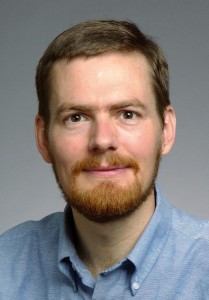
Brandon BallingerThe Wall Street Journal has a great article on UW CSE bachelor’s alum Brandon Ballinger (’06) and his new heart rate tracking app, Cardiogram. Brandon, who is currently working as a data scientist at the University of California, San Francisco, built the app to assist researchers with gathering data for UCSF’s Health eHeart study. But first, he decided to test the app on two things that are near and dear to many people’s hearts: Mexican food and Game of Thrones.

From the article:

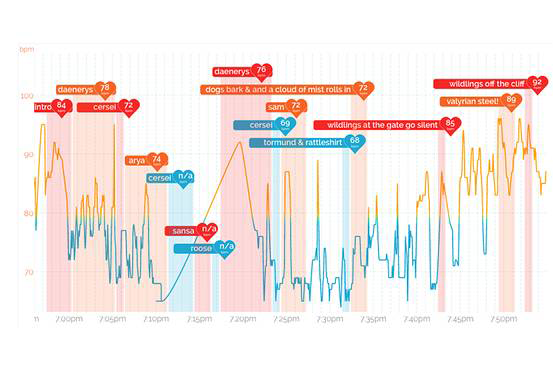
“Anyone who follows Game of Thrones knows that few things can set your heart racing quite like Valyrian Steel. Now there’s data to prove it.

“….Mr. Ballinger built an Apple Watch app, called Cardiogram, that can track a user’s heart rate through the day. With the app, Mr. Ballinger has learned that his own heart jumps to more than 120 beats per minute when he eats a burrito.Chart showing change in heart rate during Game of Thrones episode
“In the long term, he’d like people to use Cardiogram to give medical researchers new insights into how the heart works.

“Short term, he’s been playing around with Cardiogram to learn how his heart rate changes throughout the day. A few months ago, he invited 10 of Cardiogram’s early users to watch Game of Thrones. ‘It’s almost like a Nielsen ratings on a second-by-second basis,’ Ballinger said.”

Read the complete article (spoiler alert!) here. Read our previous coverage of Brandon’s exploits since graduating from CSE – like helping to solve the headache that was the original Healthcare.gov – here. You can download the Cardiogram app for Apple Watch or Android Wear here. Read more →
UW CSE’s Pedro Domingos and Abe Friesen capture top prize at IJCAI with “magical” new algorithm

Pedro Domingos

Pedro Domingos

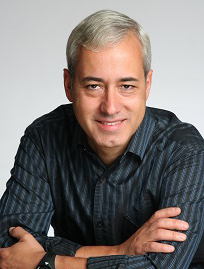
UW CSE professor Pedro Domingos and Ph.D. student Abe Friesen brought home the Distinguished Paper Award from the 2015 International Joint Conference on Artificial Intelligence (IJCAI) last month in Buenos Aires.

Pedro and Abe developed a new algorithm, Recursive Decomposition into locally Independent Subspaces (RDIS), capable of solving a broad class of nonconvex optimization problems. The duo demonstrated that RDIS significantly outperforms standard optimization techniques when applied to complex problems such as protein folding and mapping three-dimensional space from two-dimensional images. By applying problem-decomposition techniques to continuous optimization problems, RDIS has the potential to advance several areas of AI research, including computer vision, machine learning and robotics.

From the UW news release:

“‘In some ways optimization is the most important problem you’ve never heard of because it turns up in all areas of science, engineering and business. But a lot of optimization problems are extremely difficult to solve because they have a huge number of variables that interact in intricate ways,’ said senior author Pedro Domingos….

Abe Friesen

Abe Friesen

“The UW optimization algorithm, known by its acronym RDIS, progressively breaks an enormously complicated problem down into smaller, more manageable chunks — a simple idea commonly used when a problem consists of yes-or-no choices, but which had not previously been applied to numeric variables. RDIS can identify variables that, once set to specific values, break a larger problem into independent subproblems.  Often, the problems are only nearly independent, but RDIS limits the error caused by treating them as fully independent.

“‘This approach is something that is very different than what people were doing before and it also does something magical, which is solve some problems exponentially faster. And anytime you can do that, that’s when you get a big win,’ said Domingos.”

Read the news release here. Read the award-winning paper, “Recursive Decomposition for Nonconvex Optimization,” here.

Congratulations to Abe and Pedro on the big win! (Pedro has been on a roll lately – this latest achievement was preceded by winning the KDD 2015 Test of Time Award, publishing a new book, The Master Algorithm, and winning the KDD 2014 Innovation Award.) Read more →

“UW Tech Grads Among the Most Talented in the Nation”

UntitledWe admit it … this is pretty close to us talking about ourselves … but not quite.

UW !MPACT, “Informed Advocates of the University of Washington,” blogs:

“Recent UW alums don’t have to get too far off-campus to find a use for their newly-minted technology degrees. Washington’s booming tech industry is responsible for employing 238,900 people, and bringing in over $37 billion in revenue, according to a recent Washington Technology Industry Association study.

“Not only are our grads located in the heart of the state’s tech hotbed, they also turn out to be among the best-equipped to make an impact in the tech world, according to a new tech.co ranking. The UW ranked #2 on a list of the public universities that produce the best startup talent.”

The post contains additional information on the need to increase CSE’s enrollment, and provide expanded facilities.

Thanks, UW !mpact. Read more here.

  Read more →

UW CSE’s Verdi team completes first full formal verification of Raft consensus protocol

VerdiDistributed systems are hard to get right in large part because they must tolerate faults gracefully: machines may crash and the network may drop, reorder, or duplicate packets. Verdi is a framework from the University of Washington to implement and formally verify distributed systems.

UW CSE’s Verdi team (students James Wilcox, Doug Woos, and Pavel Panchekha, and faculty members Zach Tatlock, Xi Wang, Mike Ernst, and Tom Anderson) has just completed the first full formal verification of the Raft consensus protocol – a landmark achievement. (In addition to garnering lots of attention, they garnered more than 120 stars on GitHub!)

Learn more about Verdi here. GitHub here. Raft here.

Read more →

UW’s “Advanced Data Science” Ph.D. option launches!

PrintThe University of Washington’s Graduate School has approved the creation of a Ph.D. option in “Advanced Data Science” – an initiative of UW’s $2.8 million National Science Foundation IGERT (Integrative Graduate Education and Research) award in data science, led by UW CSE’s Magda Balazinska.

The goal of the option is not to educate all students in the foundations of data science, but rather to provide advanced education to the students who will push the state-of-the-art in data science methods in their domain – to educate the next generation of thought leaders who will both build and apply new methods of data science.

An important characteristic of this advanced data science option is that, independent of their home department, students will complete the same set of core data science courses. This shared core curriculum will ensure that students are not only knowledgeable in data science but that they also had the opportunity to interact with each other and form interdisciplinary cohorts.To complete the option – which will be noted on their transcripts – students will take three out of the following four courses:

  • Data Management: CSE 544
  • Machine Learning, CSE 546 or STAT 535
  • Data Visualization: CSE 512
  • Statistics: STAT 509 or STAT 512-513

Additionally, to further expand students’ education and create a campus-wide community, students will register for at least 4 quarters in the weekly eScience Community Seminar.

Six academic programs are the “launch partners”: Astronomy, Chemical Engineering, Computer Science & Engineering, Genome Sciences, Oceanography, and Statistics.

Learn more about the Advanced Data Science option from the proposal here. Read more →

UW hosts NSF-sponsored Data Science Workshop 2015

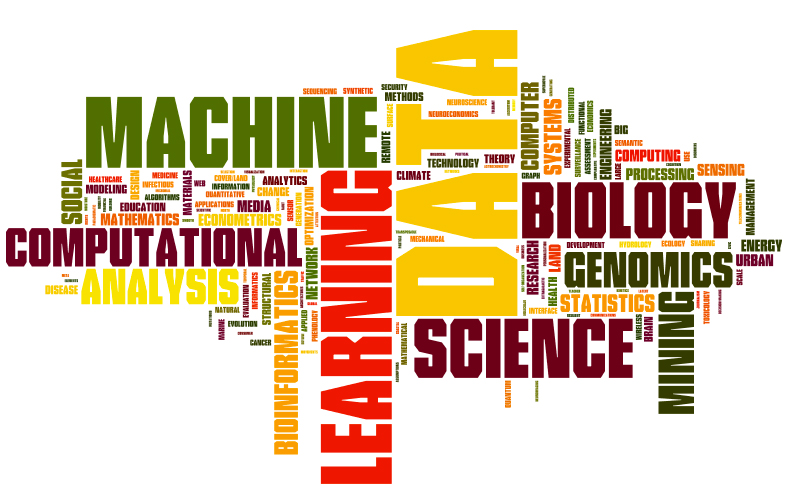
data-science-word-cloud-copy Data Science Workshop 2015, sponsored by the National Science Foundation, will be held at the University of Washington on August 5-7. The workshop will bring together 100 graduate students from across the nation, representing diverse science and engineering domains, to interact with data scientists from industry and academia.

David Beck, the UW eScience Institute’s Director of Research for the Life Sciences, chairs the Organizing Committee. Program partners include the UW eScience Institute (CSE’s Ed Lazowska is the Director, and CSE’s Bill Howe is the Associate Director), the UW Data Science IGERT (interdisciplinary graduate education) program (CSE’s Magda Balazinska is the Director), and UW Computer Science & Engineering, Astronomy, Chemical Engineering, and Oceanography. The program includes a keynote by UW CSE’s Oren Etzioni, panel participation by UW CSE’s Magda Balazinska, and Joe Hellerstein, and mentor participation by UW CSE’s Alvin Cheung.

Check out the UW News press release here. Learn more here. Read more →

UW waives indirect cost on cloud services

logosThe University of Washington has waived indirect cost on cloud services.

This decision removes one of several bizarre disincentives to the rational selection of research computing and storage options – disincentives that plague universities nationwide.

Federal guidelines waive indirect cost on purchased equipment – so purchasing a $100K cluster costs a grant budget $100K, despite the fact that this equipment must be housed, powered, cooled, backed up, replaced …

Meanwhile, indirect cost is charged on outsourced cloud services – so purchasing $100K of AWS or Azure services costs $157K (at UW’s rates – different institutions have different markups), despite the fact that the only actual overhead is paying an invoice.

UW IT and the UW Office of Research have now decided to unilaterally waive this nonsensical charge.

Progress! Hopefully others will follow!

Read more here.

Three footnotes:

  1. There is precedent for national action: several years ago it was ruled, nationally, that indirect cost should not be charged on outsourced gene sequencing services.
  2. There are additional bizarre disincentives to the rational selection of research computing and storage options. If you want to purchase a large cluster, your NSF program officer will send you to the Major Research Instrumentation program, which is not charged against any specific Program, Division or Directorate – so it’s “free” to his/her program … what could be finer? And once the cluster arrives at your university, Santa Claus pays for the power, Mrs. Santa Claus pays for the cooling, Rudolf shares his space, and the Elves do the backup … all of these, which have very real costs, appear free to the investigator at most universities.
  3. Finally, it goes without saying that cloud services are not the right choice for every application. What UW’s decision does is simply to take one step towards leveling the playing field, leading to rational choice.
Read more →

Kurtis Heimerl to join UW CSE faculty

lanternWe are thrilled to announce that Kurtis Heimerl will be joining the UW CSE faculty in early winter 2016. Kurtis’ research interests span information and communication technologies and development (ICTD), human-computer interaction, and networks and systems. He was recognized with a 2014 MIT Technology Review TR35 Award for his work on Community Cellular, a low-cost, low-power system for providing small-scale, locally-owned cellular networks to rural communities that lack existing cellular coverage. After building the first network in a small village in Papua, Indonesia in 2013, Kurtis co-founded Endaga, a startup company that brings independent cellular technology to remote regions of the world.

Kurtis joins UW CSE following an M.S., Ph.D., and postdoc at U.C. Berkeley, followed by 18 months at Endaga. His UW CSE connections are extensive. To note a few:

  • Kurtis received his Bachelors degree in Computer Engineering from UW CSE in 2007.
  • His Berkeley graduate co-advisor was 2007 UW CSE Ph.D. alum (and UC Berkeley Associate Professor) Tapan Parikh.
  • His fellow UW CSE Bachelors recipient and Tapan Parikh Ph.D. advisee Kuang Chen – founder of ICTD startup Captricity – was also a  2014 TR35 recipient. (Tapan himself received a TR35 award and was named the TR35 “Humanitarian of the Year” in 2007.)

We’re excited to have Kurtis back home at UW CSE!

(We had previously announced the recruiting this year of Ras Bodik, Zorah Fung, Sham Kakade, Sergey Levine, Dan Ports, and Katharina Reinecke.)

Read more →

UW CSE’s Mike Ernst talks to BBC News about the gamification of cyber-security

Mike ErnstNormally, we don’t play around when it comes to cyber-security. But according to UW CSE professor Mike Ernst, playing around may be just what we need in order to better defend against hackers and cyber-criminals. BBC News reported this week on the Verigames project – part of DARPA’s Crowd Sourced Formal Verification (CSFV) program – which harnesses the power of citizen science to make software less vulnerable. Mike talked to the BBC about engaging players of casual games, including those developed at UW CSE’s Center for Game Science, to make formal software verification more efficient – and help make the world a safer place.

From the article:

“[A]s software is critical in the running of almost everything these days, from national energy networks to police drones, air traffic control systems to emergency services, formal verification is an essential process….

“The problem is that formal verification – providing mathematical proof that a piece of software is error-free – is a complex business.

“‘Formal verification is wildly expensive and very difficult,’ says Michael Ernst, a computer science professor at the University of Washington who is involved with the DARPA project.

Center for Game Science logo“‘That’s because you usually need a highly skilled, highly paid software engineer to carry out the process.’”

Verigames is helping to speed up that process by enlisting a “volunteer army” of players who solve puzzle-based games that aid in the formal verification of an underlying piece of software. Other efforts to promote citizen science through gaming, led by the Center for Game Science, have been useful in advancing synthetic biology research and helping scientists to better understand diseases such as the Ebola virus and AIDS.

Read the BBC News article here. Learn more about Verigames here, and try your hand at Paradox, one of the games developed by UW CSE’s Center for Game Science, here. Read more →

UW CSE’s Chris Diorio named Innovator of the Year at 2015 ACE Awards

ACE Chris Diorio RFID tagsUW CSE faculty member Chris Diorio, who co-founded the RFID company Impinj based on technology developed here at UW CSE and at his Ph.D. alma mater, Caltech, was named Innovator of the Year at the ACE (Annual Creativity in Electronics) Awards by the EDN Network and EE Times.

Chris was honored for “his pioneering work in advancing next-generation UHF RFID technology,” and for being a “tireless promoter of RFID’s potential since entering the industry in 2002.” In addition to his role as CEO of Impinj, Chris serves as chairman of the RAIN RFID Alliance, which promotes universal adoption of the UHF RFID technology.

Read more in this nice article about Chris’s work (and car racing!), courtesy of EDN.

Congratulations, Chris! Read more →

« Newer PostsOlder Posts »