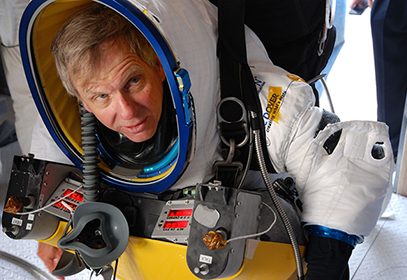
Don’t miss space jumper Alan Eustace at UW CSE’s Distinguished Lecturer series!

Alan EustaceJoin UW CSE on Tuesday, December 8th for a presentation by former Google engineering executive Alan Eustace on stratospheric exploration – “the ultimate science project.” Eustace will share what it took to achieve the highest free-fall skydive, plummeting at faster than the speed of sound.

Before Eustace and the Paragon StratEx team could break three world records, they had to figure out how to successfully launch him into the atmosphere and return him safely to earth without power. On Tuesday, Eustace will describe how the team overcame these challenges and what they learned from his historic jump.

UW CSE’s Distinguished Lecturer Series is open to the public. The program begins at 3:30 pm, followed by a networking reception at 4:30 pm. More details are available here.

Also coming up in the series:
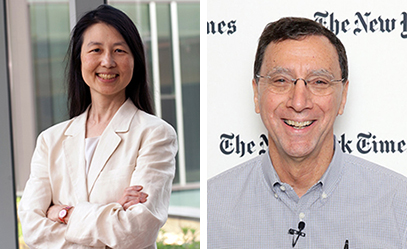
Jeannette Wing, John MarkoffOn Thursday, December 10th, Jeannette Wing, corporate vice president at Microsoft Research, will talk about the unique mission and culture of MSR and how that translates into high-impact research that benefits society. Learn more here.

The following week, on December 17th, we will be joined by New York Times science reporter John Markoff, who will talk about his new book, Machines of Loving Grace: The Quest for Common Ground Between Humans and Robots. More details here. Read more →
UW CSE and Microsoft Research efforts to use DNA for data storage featured in The New York Times

04DNA-web-master675

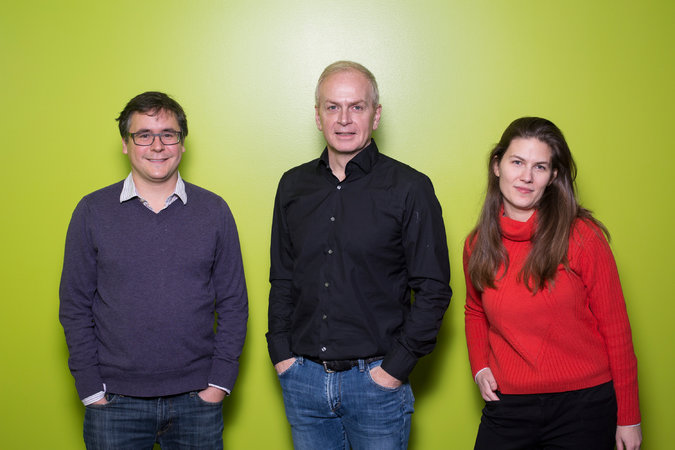
From left: Luis Ceze, Doug Carmean and Karin Strauss (David Ryder/The New York Times)

UW CSE professor Luis Ceze and affiliate faculty members Doug Carmean and Karin Strauss of Microsoft Research are featured in a New York Times article by John Markoff today showcasing their efforts to build a new kind of data storage system inspired by the natural world.

By using DNA molecules, Ceze and his colleagues in the Molecular Information Systems Lab are working to enable archival storage of all of the world’s digital information in roughly the same amount of physical space required to store a case of wine. What’s more, the new system could potentially store data for a millennium or even longer, compared to mere decades with existing magnetic or electronic storage systems.

From the article:

“In nature, DNA molecules carry the genetic instructions that govern the development and function of living organisms. The cost of sequencing or ‘reading’ the genetic code is falling faster than the cost of computer memory, and technologists are beginning to make progress in their ability to more rapidly synthesize strands composed of arbitrary sequences of the small organic molecules known as oligonucleotides, the basic DNA building blocks.

“Computer scientists say they believe that as costs of sequencing and creating synthetic DNA continue to fall, it will soon be possible to create a new class of hybrid storage systems….

“Early signs of a possible convergence of computing and biology can be found in a visit to a cramped laboratory in the basement of the Paul G. Allen Center for Computer Science & Engineering on the University of Washington campus.

“It is crammed with equipment more readily found in a biology laboratory — a desktop DNA sequencing system and a separate machine that is used to amplify fragments of DNA by making billions of precise copies.

“Together, the two machines form a prototype of a data-archiving approach that could spread more widely as soon as five years from now.”

As Ceze notes in the article, “Information technology has helped biotech in the past. Now biotech has to pay back.”

Indeed. Read the full article here.

Collaborators on the project include CSE graduate student James Bornholt, bioengineering graduate student Randolph Lopez, and CSE and EE professor Georg Seelig. The team will present aspects of its research at ASPLOS 2016.

Way cool! Read more →

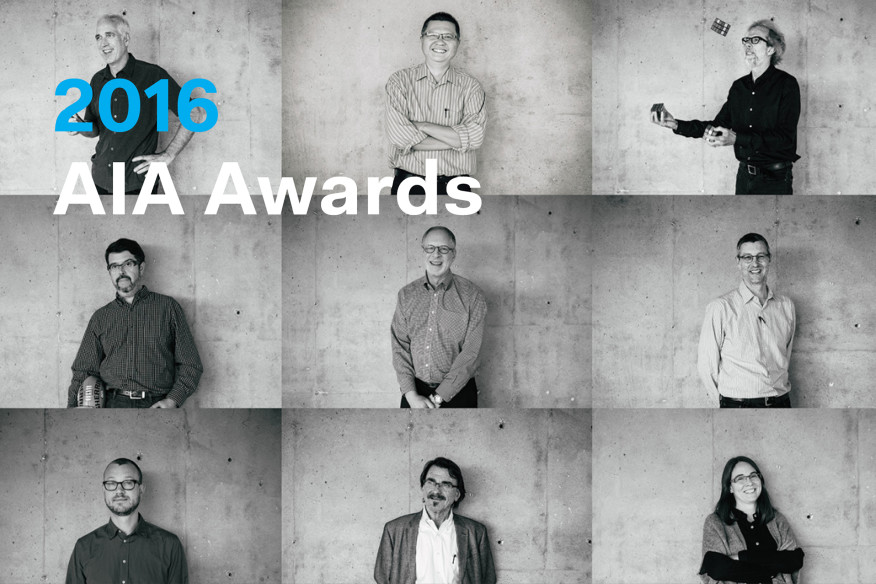
LMN Architects – designers of UW CSE’s Allen Center – wins 2016 AIA Architecture Firm Award

cdnassets.hw.netSeattle’s LMN Architects – the designers of UW CSE’s Paul G. Allen Center for Computer Science & Engineering, and of our second building (now halfway through design), as well as of UW’s PACCAR Hall, Seattle’s Benaroya Hall and McCaw Hall, and major projects across the nation – has been selected by the American Institute of Architects to receive its 2016 Architecture Firm Award.

AIA writes: “The 120-person firm blends ​ the multidisciplinary backgrounds of its principals into an approach that serves people first, building communities around its civic projects … ‘LMN provides an altogether different vision of a fully sustainable and civic-minded future that embraces urban life,’ Stephen Kieran, FAIA, of 2008 AIA Architecture Firm Award recipient KieranTimberlake, wrote in a recommendation letter supporting LMN Architects’ nomination for the award.”

Congratulations LMN! Read more here. Read more →

Picture this: Google team led by UW CSE’s Steve Seitz creates app that enables anyone to create 360-degree 3-D VR photos

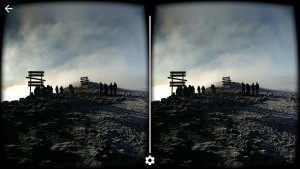
Cardboard Camera imageUW CSE Professor Steve Seitz’s team of virtual reality researchers at Google released a new app today called Cardboard Camera, the next step in the company’s effort to bring virtual reality to the masses. The app, which is free, allows anyone with an Android smartphone to create 360-degree three-dimensional photos that can be viewed using the Google Cardboard virtual reality viewer.

From the Wired article:

“Anyone who’s taken a panoramic shot using their smartphone already knows how to use this app: You hold your phone in a vertical position, tap the camera button, and move in a circle. The only difference is that, unlike regular panoramic pictures, you make a full 360-degree turn. A snippet of sound also gets recorded as you’re capturing the photo.

“The result is pretty striking: a three-dimensional panorama where near things look near, far things look far, and you can look in front of you, to your sides, or crane your neck all the way behind you to see the entire captured scene….”

The app uses computational photography and computer vision to calculate 3-D, negating the need for a special camera.

Read the full article here, and additional coverage by TechCrunch here and Engadget here. Check out our previous blog post about Seitz’s team’s work on Google’s Jump here. Read more →

UW’s star shines brightly in the new Seattle Tech Universe Map

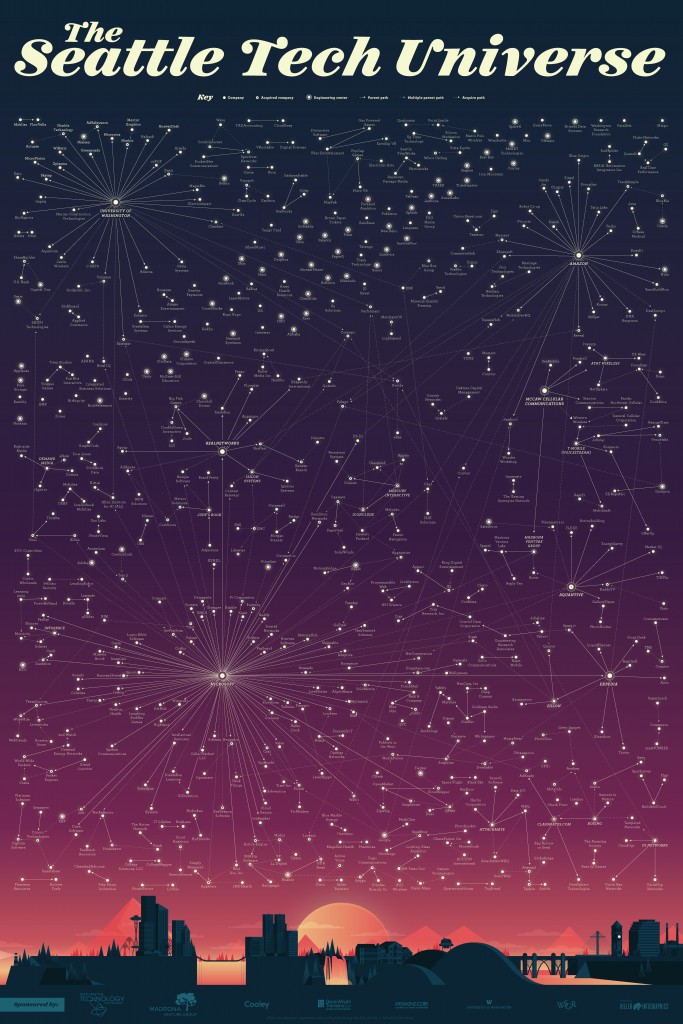
Seattle Tech Universe MapYou don’t need a telescope to see the entrepreneurial impact of the University of Washington thanks to the new Seattle Tech Universe Map. The map, which was developed by our friends at the Washington Technology Industry Association and Madrona Venture Group, illustrates the evolution of our local tech ecosystem and the extent to which companies and organizations large and small have contributed to its growth.

UW shines brightly as an engine of innovation and local company creation in large part due to the entrepreneurial faculty and students of UW CSE. Our stellar contributions include machine learning startup Dato; adaptive education provider Enlearn; and Impinj, a leader in RFID technology – to name only a few. Also lighting up our economy: the entrepreneurial spirit of employees from companies such as Microsoft and Amazon – including countless alumni of UW CSE! All told, more than 600 information technology companies, and the connections between them, are represented on the map.

View the Seattle Tech Universe Map on the WTIA website here. Learn more about the project from the WTIA blog post here and the Madrona Venture Group post here. Also, check out some nice coverage of the map’s release by the Seattle Times, Re/code, GeekWire and Xconomy. Read more →

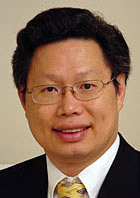
UW CSE Ph.D. alum Wen-Hann Wang named first-ever Intel Senior Fellow Emeritus

Wen-Hann Wang is named Intel Senior Fellow EmeritusUW CSE Ph.D. alum Wen-Hann Wang completed his 24-year tenure at Intel today. To mark the occasion, Intel named him its first-ever Senior Fellow Emeritus – a tremendous honor that recognizes Wen-Hann’s many outstanding contributions during nearly a quarter of a century with the company.

Wen-Hann earned his Ph.D. from UW CSE in 1989 working with professor Jean-Loup Baer. He joined Intel in 1991 as an Intel® Pentium® Pro platform architect, working on the highly successful P6 product family. His platform architecture and analysis work was instrumental in the creation of the Intel® Xeon® processor product line.

Wen-Hann went on to serve in a variety of roles, including platform infrastructure research manager in the company’s then-new Microprocessor Research Lab and director of the Emerging Platforms Lab. He spent nine years in various management roles as part of Intel’s Software and Services Group (SSG), for which he was instrumental in establishing a presence in the People’s Republic of China. Later, he oversaw Intel Labs’ circuits and systems research, and in 2013, he was appointed Corporate Vice President and Managing Director of Intel Labs – positions he held until his retirement today.

Wen-Hann is a fellow of the IEEE, holds 15 patents and has received numerous technical awards, including the inaugural ACM/IEEE ISCA Influential Paper Award in 2003 and an ACM SIGMETRICS best paper award in 1990. UW CSE recognized him with our Alumni Achievement Award in 2012.

Read our profile of Wen-Hann from the autumn 2011 issue of our newsletter, Most Significant Bitshere and a 2012 article about his Alumni Achievement Award here.

Congratulations to Wen-Hann, from all of your friends at UW CSE! Read more →

It’s G-Give week at Google!

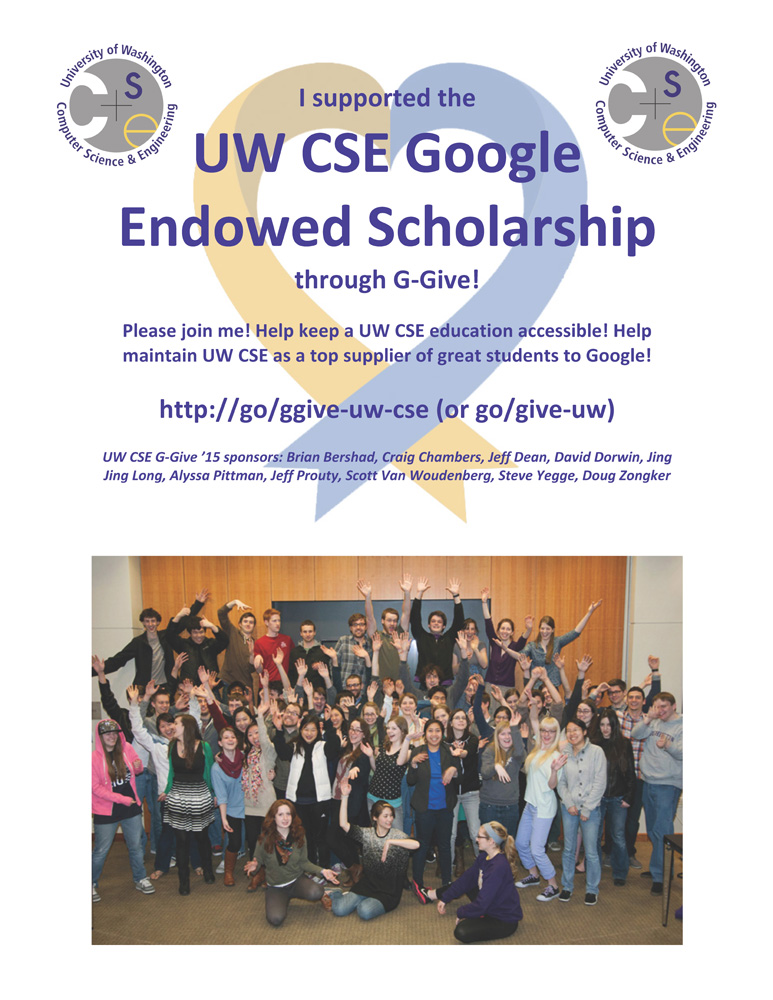
UW CSE G-Give 2015In 2011, two UW CSE alums at Google, Jessan Hutchison-Quillan ’07 and Krista Davis ’05, created G-Give, a concept and a software platform through which Googlers’ gifts to select non-profits are matched twice: once by the company, and once by Googlers who serve as sponsors for the non-profits.

G-Give 2015 takes place this week – November 30 through December 4. We’re honored that UW CSE’s Google Endowed Scholarship will be included for the 5th consecutive year. Thanks to the generosity of friends and alumni at Google, our many G-Give sponsors over the years, and Google’s generous employee gift matching program, our Google Endowed Scholarship now is valued at more than $1 million – UW CSE’s largest undergraduate scholarship fund by far.

It’s the role of America’s great public universities to provide socioeconomic upward mobility, through superb education, to smart, motivated students from their regions. To continue to fulfill this role – to remain accessible in the face of decreasing state support – UW must increasingly rely on scholarship endowments. UW CSE’s students are blessed by the loyalty and generosity of our many alumni and friends at Google and elsewhere.

Googlers: Download UW CSE’s G-Give 2015 poster here. Read more →

UW CSE Ph.D. alums Scott Hauck, Calton Pu are 2016 IEEE Fellows

scott2UW CSE Ph.D. alums Scott Hauck and Calton Pu have been named to the 2016 class of Fellows of the Institute of Electrical and Electronics Engineers.

Scott – the Gaetano Borriello Professor for Educational Excellence in the University of Washington’s Department of Electrical Engineering, an Adjunct Professor in CSE, and a 1995 UW CSE Ph.D. alum – was recognized “for contributions to Field-Programmable Gate Array based systems.”

Calton – the John P. Imlay, Jr., Chair in Software in the Georgia Institute of Technology’s College of Computing, and a 1986 UW CSE Ph.D. alum – was recognized “for calton-photocontributions to system software specialization, information security, and services computing.”

Congratulations to Scott and Calton! Read more →

UW CSE’s Shyam Gollakota wins 2015 World Technology Award in Communications Technology

wtn-winner-badge-2015

This year’s World Technology Summit & Awards Ceremony took place on November 19th-20th in New York City. Bringing together the most innovative people and organizations in science and technology from around the world, the Summit explored what is imminent, possible, and important in and around emerging technologies.

The culmination of the Summit was the 2015 World Technology Awards Gala. In the Communications Technology category, 39 nominees were culled to 6 finalists. And the winner, announced at the Gala, was UW CSE professor Shyam Gollakota.

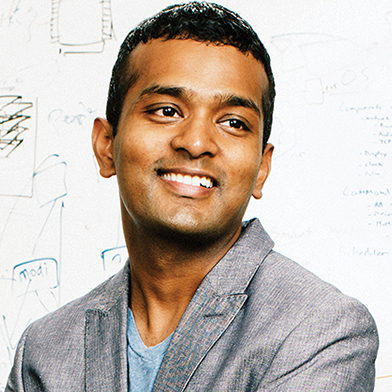
This is the latest in a long string of honors for Shyam; others include an NSF CAREER Award, an Alfred P. Sloan Research Fellowship, selection as one of Forbes “30 under 30,” selection as one of MIT Technology Review’s “TR35” (35 top innovators under the age of 35), and the 2012 ACM Doctoral Dissertation Award.tr35.inv_.gollakotax392

Learn about Shyam’s amazing – and amazingly diverse – research here.

Congratulations Shyam! Read more →

UW/Seattle “Smart Cities” partnership highlighted in video

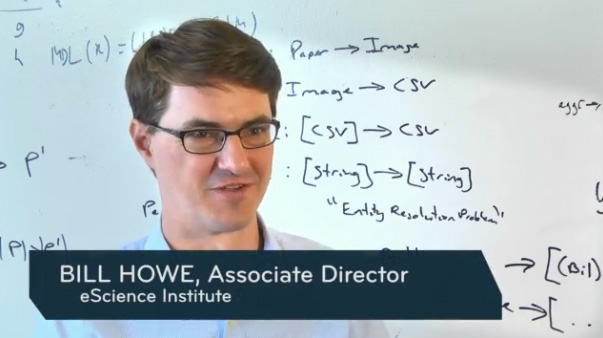
Untitled 2A new City of Seattle video highlights a “Smart Cities” urban data science partnership between the city and the University of Washington. UW CSE’s Anat Caspi, Bill Howe, and Ed Lazowska are featured in the video, as well as a host of researchers from the UW eScience Institute, which is spearheading the initiative on the UW end.

Watch the video here. Read more →

« Newer PostsOlder Posts »