
UW CSE’s Pedro Domingos in the WSJ: “Time to start getting acquainted with our digital alter egos”

Hand with binary code

The Wall Street Journal/Getty Images

UW CSE professor Pedro Domingos recently penned a column for The Wall Street Journal envisioning a not-too-distant future in which machine learning will enable us to build and control a digital model of ourselves, transforming how we approach everything from shopping, to job-hunting, to finding a mate.

From the column:

“Entrusting your money to a bank once seemed strange and risky. Similarly, entrusting all of your data to a company and letting its algorithms build a detailed model of you from it might seem to be an odd or even dangerous idea, but we’ll all soon take it for granted.

“A decade from now, your personal model will be more indispensable than your smartphone, and the company that provides it may well be the world’s first trillion-dollar business. So it is time to start getting acquainted with our digital alter egos—and what they’ll mean for our lives.”

Domingos points out that today’s digital models, such as those Google builds from our web searches or that Amazon bases on what we buy, fall short for two reasons: they are driven by the companies’ own profit motive, and they are built using incomplete data. He suggests a new approach, one in which we intentionally construct a complete digital model of ourselves and deploy it online for our own benefit.

“Today’s models don’t yet interact with us: You can’t tell them they’re wrong or ask them questions. Machine-learning algorithms are black boxes that only computer scientists can open up. But that will change as more of us realize how important machine learning is and demand a say in how it occurs,” Domingos writes.

Read the full column here. Check out our past coverage of Domingos and his new book, The Master Algorithm, here and here. Read more →

“Where Does Technological Innovation Come From?”

BN-LE718_myhrvo_FR_20151110170602Many thanks to Nathan Myhrvold for providing a deeply substantive rebuttal to a nonsensical Wall Street Journal piece by Matt Ridley. Nathan writes, in email:

Matt Ridley wrote a recent piece in the WSJ (to promote a new book) arguing that basic science has nothing to do with technology and that the government should stop funding it. It’s natural for writers to want to come out with a contrarian piece that reverses all conventional wisdom, but it tends to work out better if the evidence one quotes is factually true. Alas Ridley’s evidence isn’t – his examples are all, so far as I can tell, either completely wrong or at best, selectively quoted. I also think his logic is wrong and to be honest, I don’t think much of the ideology that drives his argument either. …

A lot of wrong things aren’t worth correcting (there are so many!), but this one is. The idea that we should cut science funding will be too tempting for politicians to let stand. While the current system could certainly be improved, Ridley’s piece, and the ideology behind it, isn’t constructive. It will only play into the hands of people who are anti-science or anti-technology.

Read Nathan’s superb rebuttal here. Read more →

“Dear GeekWire: A coding bootcamp is not a replacement for a computer science degree”

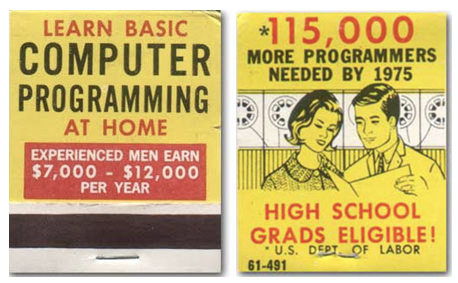
matchbook both sidesUW CSE’s Ed Lazowska responds to an article in GeekWire by Jeff Meyerson of Software Engineering Daily, titled “Coding bootcamps question the need for computer science degrees.”

“One of the many great things about the tech industry is that it creates all kinds of jobs for all kinds of people with all kinds of preparation.

“But students, their parents, and adults seeking to re-direct their careers shouldn’t kid themselves about what sort of preparation is most likely to lead to a career as a software engineer at a leading-edge tech company – whether the smallest startup, or one of the giants like Amazon, Google, or Microsoft. …

“Marijuana is making a comeback in Washington, and with it, books of matches. Keep an eye out for the 21st century version of the advertisement to the right – with women included, and an additional zero on the salary.”

Read Ed’s complete post here. Read more →

Loki Lego Launcher girls visit UW CSE

20151105_13375320151105_133859In September, our friends at GeekWire reported an amazing feat by Seattle Country Day School students Kimberly and Rebecca Yeung (ages 8 and 10, respectively): launching a weather balloon filled with helium and equipped with a flight computer, two GoPro cameras, and a picture of their cat next to a Lego R2-D2 (the “Loki Lego Launcher”) to a height of 78,000 feet, and recovering it next to a cow pie in Stratford, WA. Read the terrific GeekWire article here.

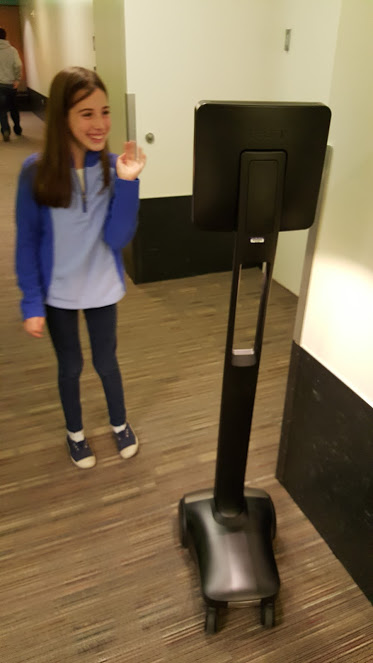
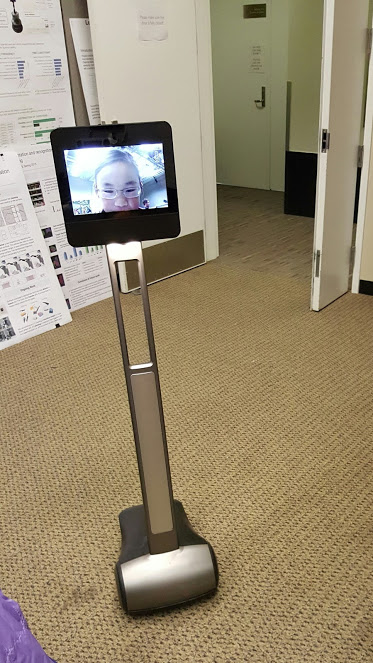
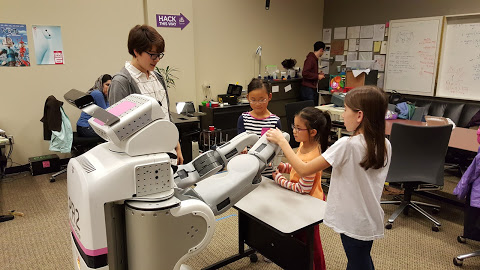
Today, Kimberly and Rebecca, along with their friend Ava Barnhart (age 10), participated in a less thrilling but hopefully equally educational expedition: to UW CSE. And there were no cow pies at the landing site!

Kids like Kimberly, Rebecca and Ava are our future!20151105_14402220151105_142634 Read more →

UW CSE’s Nell O’Rourke to address Rising Stars workshop at MIT

Nell O'RourkeUW CSE Ph.D. candidate Nell O’Rourke will be a featured speaker at the annual Rising Stars career-building workshop for women in computer science and electrical engineering. More than 60 promising graduate students and postdocs from around the world will gather at MIT next week for a series of research talks, career advice and networking aimed at supporting young female scholars interested in pursuing careers in academia.

Nell, who works with professor Zoran Popović in UW CSE’s Center for Game Science, is one of only a dozen computer science participants selected to address the group. Her talk, “Educational Systems for Maximizing Learning Online and in the Classroom,” describes the design and evaluation of novel systems to support motivation, personalization and formative assessment in educational environments.

From the abstract:

“My findings provide new insights into how students learn and how computing systems can support the learning process. The ultimate goal of my research is to build personalized data-driven systems that transform how we teach, assess, communicate, and collaborate in learning environments.”

Learn more about the Rising Stars program, which MIT launched in 2012, here.

Read our previous coverage of Nell, who is also a 2015 Google Anita Borg Memorial Scholar, here.

Congratulations, Nell, and thanks for representing UW CSE! (And, good luck on the job market this year!) Read more →

Amazon Catalyst: Inspiring grassroots innovation at UW

catalystToday our friend and neighbor Amazon announced Amazon Catalyst, a grant program to inspire grassroots innovation at the University of Washington.

The program is open to all members of the UW community – all people, all fields.

It’s a partnership with huge potential!  Thank you Amazon!

Learn more here.

GeekWire here. Seattle Times here. Read more →

UW CSE’s Yoshi Kohno, Franzi Roesner and Tamara Denning co-author policy primer on augmented reality

Augmented realityUW CSE professors Yoshi Kohno and Franzi Roesner and Ph.D. alum Tamara Denning (now on the faculty at the University of Utah) are among the lead authors of a new white paper that examines policy issues associated with emerging augmented reality technologies. The paper is the first of its kind published by the UW’s Tech Policy Lab, which brings together faculty and students from UW CSE, the School of Law, the iSchool and other units on campus to explore the potential implications of emerging technologies in a way that is useful for policy makers.

From the UW media release:

“Though still in its relative infancy, augmented reality promises systems that can aid people with mobility or other limitations, providing real-time information about their immediate environment as well as hands-free obstacle avoidance, language translation, instruction and much more. From enhanced eyewear like Google Glass to Microsoft’s wearable HoloLens system, tech, gaming and advertisement industries are already investing in and deploying augmented reality devices and systems.

“But augmented reality will also bring challenges for law, public policy and privacy, especially pertaining to how information is collected and displayed. Issues regarding surveillance and privacy, free speech, safety, intellectual property and distraction — as well as potential discrimination — are bound to follow.”

The report was co-authored by School of Law professor Ryan Calo, iSchool professor Batya Friedman, Tech Policy Lab associate director Emily McReynolds, iSchool alum Bryce Newell, iSchool student Lassana Magassa and School of Law alum Jesse Woo.

Read the full release here, and read the white paper, “Augmented Reality: A Technology and Policy Primer,” here.

Kohno will be joined by his Tech Policy Lab co-directors, Calo and Friedman, for a panel discussion tonight on “responsible innovation” and the impact of new technologies on security and privacy. Learn more about the event, which is the final installment of the UW Alumni Association’s 2015 Engineering Lecture Series, here. Read more →

Seattle Times on UW faculty unionization effort

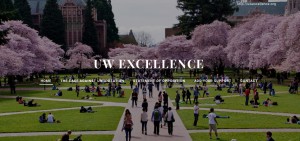
UW ExcellenceThe Seattle Times reports opinions pro and con on the effort by the Service Employees International Union (SEIU) to unionize UW’s faculty. The article quotes CSE’s Ed Lazowska, and references a website created by Lazowska and Chemistry professor Paul Hopkins. Read the article here.

CampusReform.org focuses on the con, again quoting Lazowska. Read the article here.

A complex issue. While individual UW CSE faculty members have opinions and voice them, UW CSE itself is careful to express no opinion. Read more →

UW CSE alum Brandon Lucia recognized for “Valor” at OOPSLA 2015

Brandon LuciaUW CSE alum Brandon Lucia (Ph.D., ’13), now on the faculty at Carnegie Mellon, collected a Distinguished Paper Award and a Distinguished Artifact Award at OOPSLA 2015 last week for the paper, “Valor: Efficient, Software-Only Region Conflict Exceptions.”

Valor is a novel, software-only region conflict detection analysis that achieves high performance by eliminating the costly analysis on each read operation required by previous approaches. Existing techniques either modify hardware or slow programs dramatically, precluding always-on use. As the first region conflict detector to provide strong semantic guarantees for racy program executions with less than 2X slowdown, Valor represents the state of the art in always-on support for strong behavioral guarantees for data races. With Valor, Brandon and his fellow researchers address a fundamental barrier to providing well-defined programming language specifications and to writing correct shared-memory, multithreaded programs.

Read the winning paper, which was co-authored by Swarnendu Biswas, Minjia Zhang and Michael Bond of Ohio State University, here.

Congratulations to Brandon and his colleagues on the double win! Read more →

The New York Times on Paul Allen’s philanthropy

08MOGUL-master675“‘It always comes back to what you are passionate about,’ said Mr. Allen, 62. Through philanthropy, he said, ‘you are transmitting your hopes, and keeping them going in the future.'”

Oren Etzioni – UW CSE professor and CEO of the Allen Institute for Artificial Intelligence – is quoted.

Terrific article – read it here. Read more →

« Newer PostsOlder Posts »