UW CSE’s 2016 Shops Appreciation Luncheon

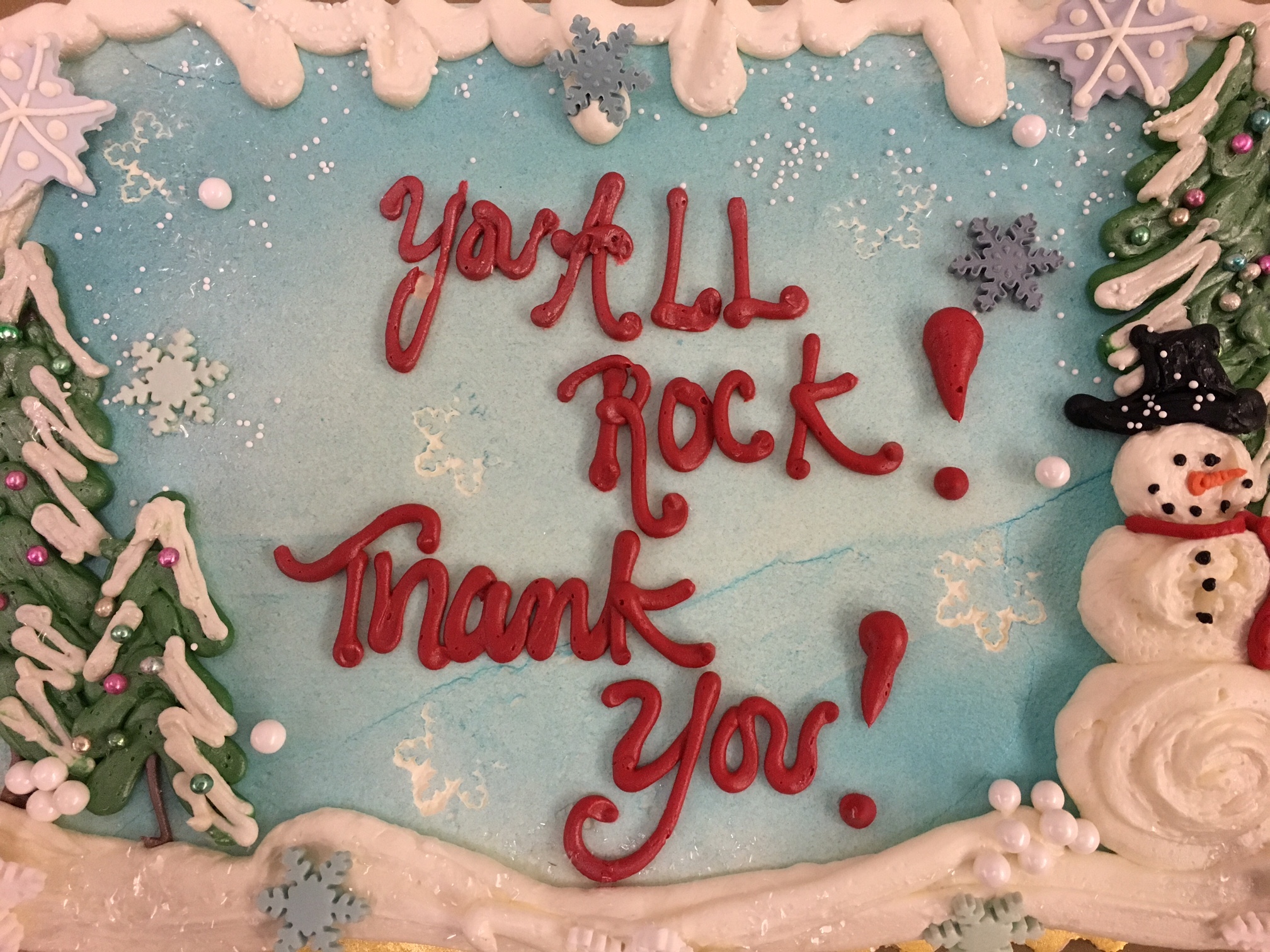
img_7606It’s the men and women of UW Facilities Services who keep the Paul G. Allen Center for Computer Science & Engineering looking great and working great. This year 150 of them turned out for our annual holiday “Shops Appreciation Luncheon” – 130 from the day crew at noon, and 20 from the night crew at 5:30.

Many thanks to all the great folks at UW Facilities Services who make it possible for those of us in CSE to focus on computer science! Read more →

UW CSE student researchers shine at FSE 2016

PLSE logoUW CSE undergraduate and graduate students captured four of the six awards given out during the ACM Student Research Competition at the ACM SIGSOFT International Symposium on the Foundations of Software Engineering (FSE 2016) in Seattle last month. The students, all of whom who work with CSE professor Michael Ernst in our Programming Languages & Software Engineering (PLSE) group, captured first and third place in both the graduate and undergraduate student research categories.

Top honors in the undergraduate competition went to first-year CSE Ph.D. student Martin Kellogg for “Combining Bug Detection and Test Case Generation.” The paper, which is based on work Kellogg began while he was an undergraduate at University of Virginia, presents N-prog, a new tool for detecting software bugs. Automated bug-finding tools or test generators can waste developers’ time by producing false positives or using incorrect oracles. N-prog minimized this problem by combining the two approaches to find interesting, untested behavior while reducing wasted effort.

CSE undergraduate Christopher Mackie earned third place for “Preventing Signedness Errors in Numerical Computations in Java.” The paper presents a new verification tool, the Signedness Checker, which is built on a type system that segregates signed from unsigned integers. The system enables developers to detect errors regarding unsigned integers at compile time, thus avoiding such errors at run time.

In the graduate competition, CSE Ph.D. student Calvin Loncaric captured first place with “Cozy: Synthesizing Collection Data Structures.” Cozy is a novel tool for implementing new data structures using counter-example guided inductive synthesis as an alternative to the tedious and error-prone process of handwritten implementation. Loncaric and his colleagues evaluated Cozy’s synthesized implementations across four real-world programs to show that its performance can match that of handwritten implementations while avoiding human error.

Last but not least, CSE Ph.D. student Spencer Pearson placed third in the graduate competition for “Evaluation of Fault Localization Techniques.” The paper presents the results of a study evaluating the effectiveness of artificial faults for identifying the best real-world fault localization tools. Pearson demonstrated that a commonly-held assumption — that the best tools for localizing artificial faults will be best for localizing real-world faults — is false, thus turning the prevailing wisdom on its head. Based on these results, he and his colleagues developed a set of new fault localization techniques, several of which are shown to outperform existing techniques.

Read more about the winning projects in Ernst’s blog post here. Congratulations to all! Read more →

UW CSE joins the White House, Code.org in celebrating CS Education Week and promoting #CSforAll

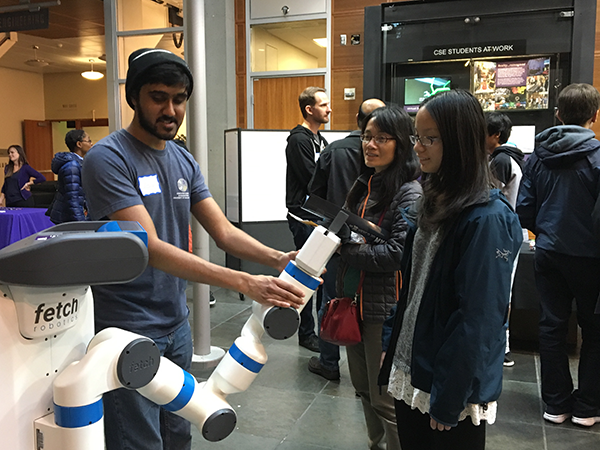
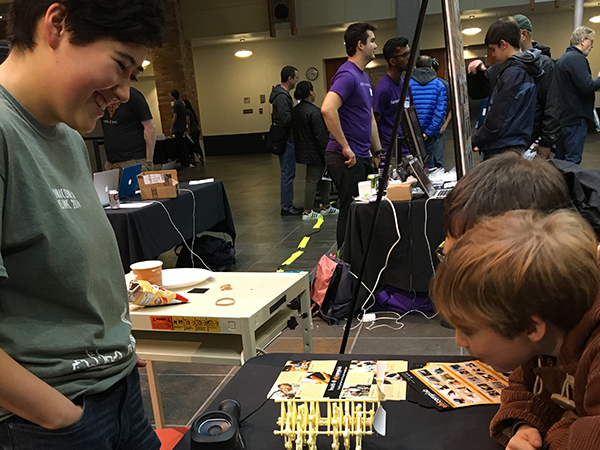
Students and robot at the 2016 Computing Open HouseIt’s the most wonderful time of the year: Computer Science Education Week, when we bring the joy of computing to people of all ages through community outreach, events and hands-on activities. Last year, we featured an Hour of Code with UW President Ana Mari Cauce; this year, we are joining the White House and organizations across the country in pursuing a variety of strategies to make computer science education available to all.

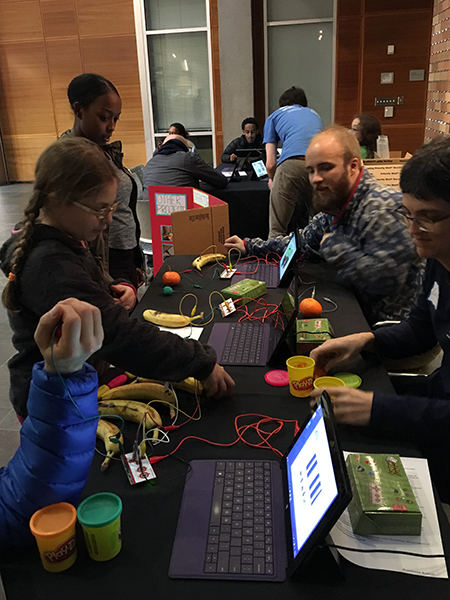
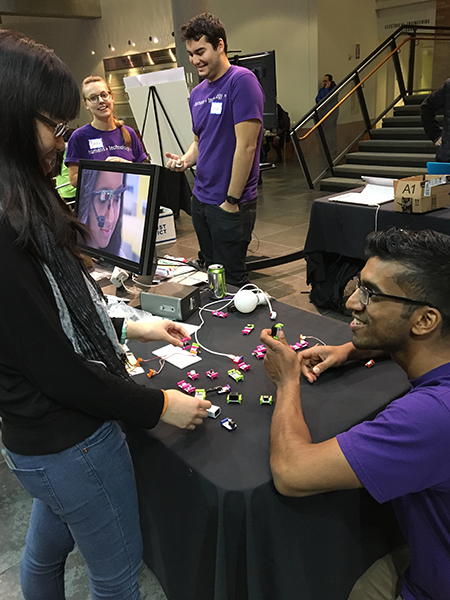
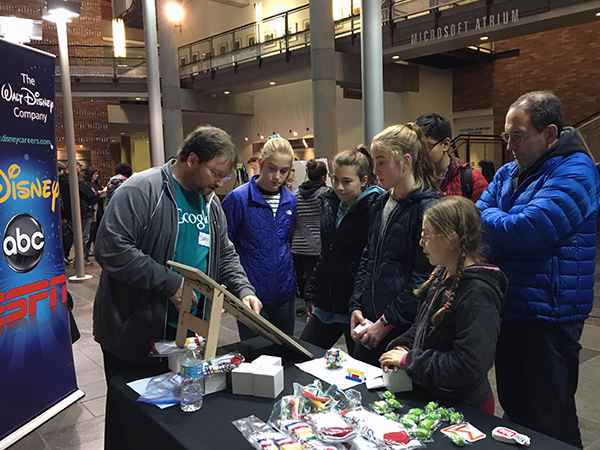
We kicked off the festivities with our annual Computing Open House on Saturday. More than 400 middle and high school students, parents and teachers descended upon the Paul G. Allen Center to explore computer science and computer engineering through interactive demos and lab tours arranged through our K-12 outreach program, DawgBytes. Participants also had the opportunity to learn about computing careers by talking with industry representatives about what they do and why they love doing it.

We are following that up today with several sessions of the Hour of Code organized by Code.org. First, the students in Principal Lecturer Stuart Reges’ introductory CS courses — and there are more than 1,000 students enrolled this quarter — invited friends and family who have never tried programming before to join them in Kane Hall to do the Hour of Code. Later, CSE student ambassadors will join representatives of Google at the Girls in Science Hour of Code event hosted by the UW’s Burke Museum to talk with the students about what it’s like to study and work in computer science.

These activities are part of a wider effort by UW CSE to amplify our outreach — particularly to diverse communities — to encourage participation in computer science and increase access for underrepresented students. For example, the aforementioned CSE Ambassadors program is an expansion of our old tour guide program. The new ambassadors, all current CSE majors, will play a more active role in our outreach efforts by designing and leading workshops and other activities on the UW campus and in K-12 classrooms around the state to encourage students of all backgrounds to pursue computer science.

We are also partnering with the Washington State Academic RedShirt (STARS) program through the UW College of Engineering to prepare more high-achieving students from low-income backgrounds to succeed in CSE. As part of that effort, we are developing a series of courses to complement our introductory programming classes, which will help STARS students hit the ground running as they begin to explore CSE. We are also working with the Washington State Opportunity Scholarship program to encourage more students of low- and middle-income backgrounds to apply to CSE through application workshops and other strategies.

Calling 2016 “a year of action in support of computer science,” the White House is highlighting our efforts — and many other initiatives around the nation — as part of its CS Education Week celebration.

Learn more about the great work being done to expand CS for all in the White House fact sheet here. Learn about the UW’s Girls in Science event here, and try the Hour of Code for yourself here. Check out photos from our Computing Open House below and on the DawgBytes Facebook page here.

Happy Computer Science Education Week to all!

Students try an interactive demo at the 2016 Computing Open HouseStudents try an interactive demo at the 2016 Computing Open House


A student tries an interactive demo at the 2016 Computing Open House

Industry representatives talked to students about computer science careers at the 2016 Computing Open House


  Read more →

Microsoft JobsBlog features CSE undergrad TA alum Kasey Champion

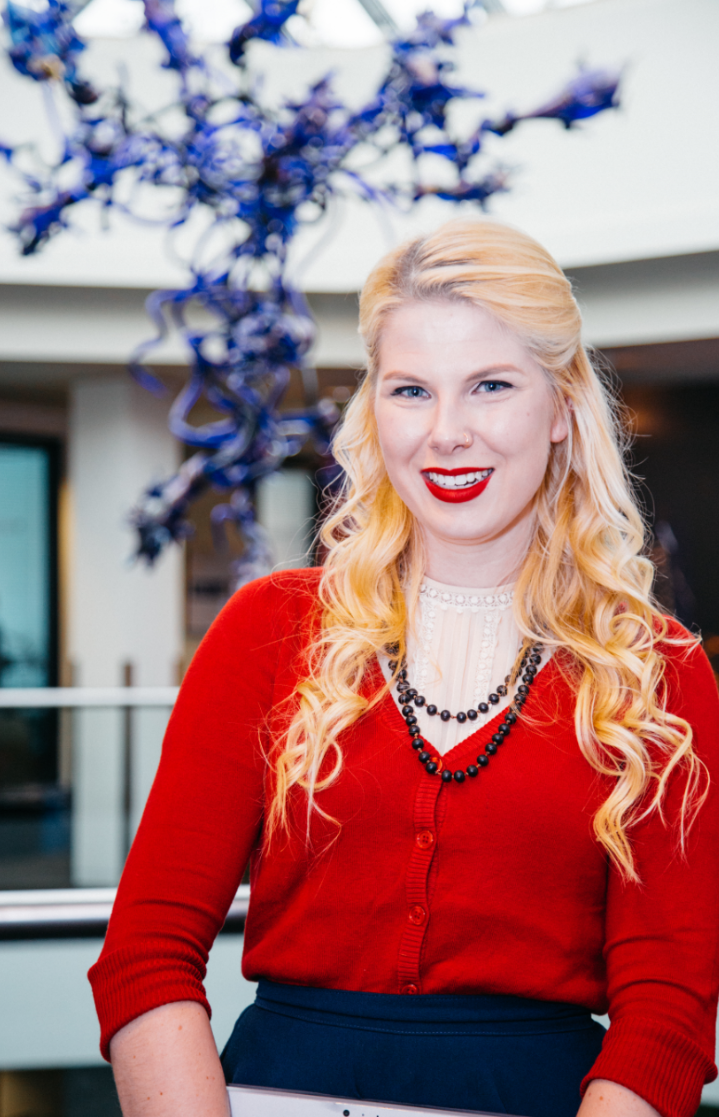
kasey-2“In his 25 years at Microsoft, Bjorn Rettig has never felt compelled to offer someone a job during an informational interview. But that all changed after he met Kasey Champion …

“For Champion, who just celebrated her fourth anniversary with the company, joining Rettig’s team has been the fulfillment of everything she’s worked toward at Microsoft. She’s able to combine her passion for teaching and her enthusiasm for computer science. In fact, Champion’s talk at this year’s Grace Hopper conference was entitled ‘Technology and Education: Combining Your Two Passions into One Career.'”

(Kasey was recently back at UW CSE participating in a reunion of undergraduate teaching assistants.)

Read more here. Read more →

UW researchers hit the right note with new machine learning tool for music

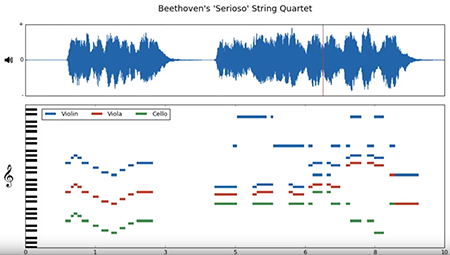
MusicNet demoA team of UW CSE and UW Statistics researchers have released MusicNet, a collection of 330 classical music recordings accompanied by more than one million annotated labels indicating the precise timing, instrument and position of every note. As the first large-scale public dataset of its kind, MusicNet could be music to the ears of machine learning researchers and composers alike.

From the UW News release:

“The composer Johann Sebastian Bach left behind an incomplete fugue upon his death, either as an unfinished work or perhaps as a puzzle for future composers to solve.

“A classical music dataset released Wednesday by University of Washington researchers — which enables machine learning algorithms to learn the features of classical music from scratch — raises the likelihood that a computer could expertly finish the job.

“MusicNet is…designed to allow machine learning researchers and algorithms to tackle a wide range of open challenges — from note prediction to automated music transcription to offering listening recommendations based on the structure of a song a person likes, instead of relying on generic tags or what other customers have purchased.”

The researchers who orchestrated this novel tool — CSE Ph.D. student Jonathan Thickstun, CSE and Statistics professor Sham Kakade, and Statistics professor Zaid Harchaoui — hope that MusicNet will do for music-related machine learning what ImageNet did for computer vision.

“An enormous amount of the excitement around artificial intelligence in the last five years has been driven by supervised learning with really big datasets, but it hasn’t been obvious how to label music,” Thickstun said.

To create MusicNet, the researchers had to be able to track what instruments were playing what notes down to the millisecond. They employed a technique called dynamic time warping, which enabled them to synch real performances to synthesized files containing musical notations and digital scoring of the same pieces of music. They then mapped the digital scoring onto the original performances — turning 34 hours of chamber music into a tool for supervising and evaluating machine learning methods.

“At a high level, we’re interested in what makes music appealing to the ears, how we can better understand composition, or the essence of what makes Bach sound like Bach,” said Kakade. “No one’s really been able to extract the properties of music in this way…We hope MusicNet can spur creativity and practical advances in the fields of machine learning and music composition in many ways.”

Read the full news release here, and visit the MusicNet project page to learn more.

Read more →

UW CSE undergraduate TA’s reunite and celebrate!

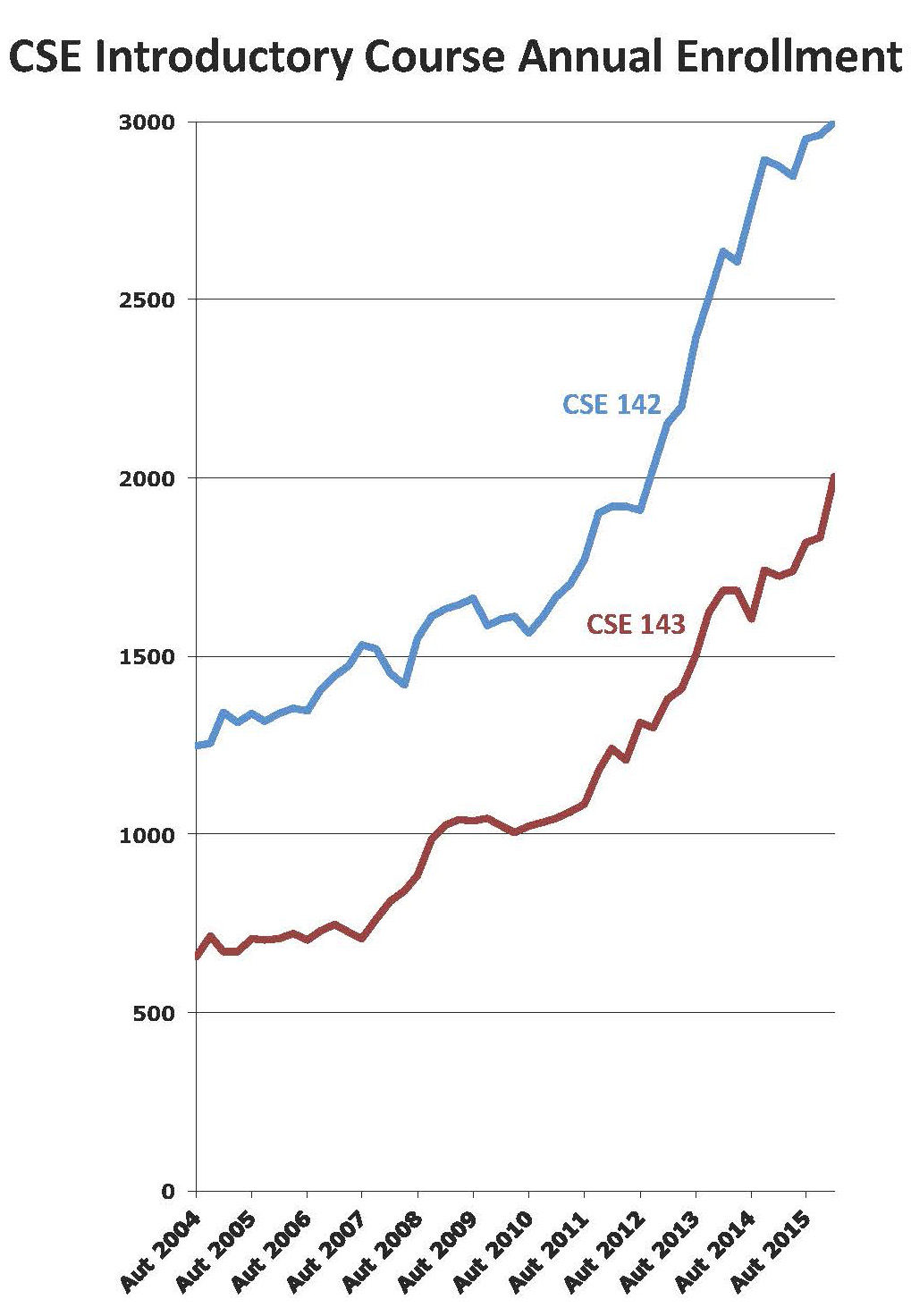
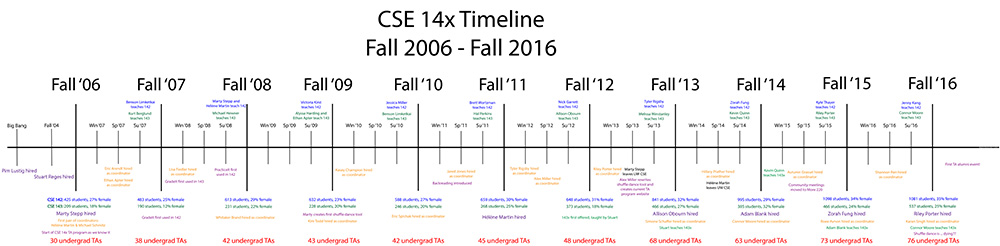
14x_enrollmentUW CSE’s introductory courses have seen extraordinary growth in size and in quality – growth that’s powered by an amazing corps of undergraduate teaching assistants.

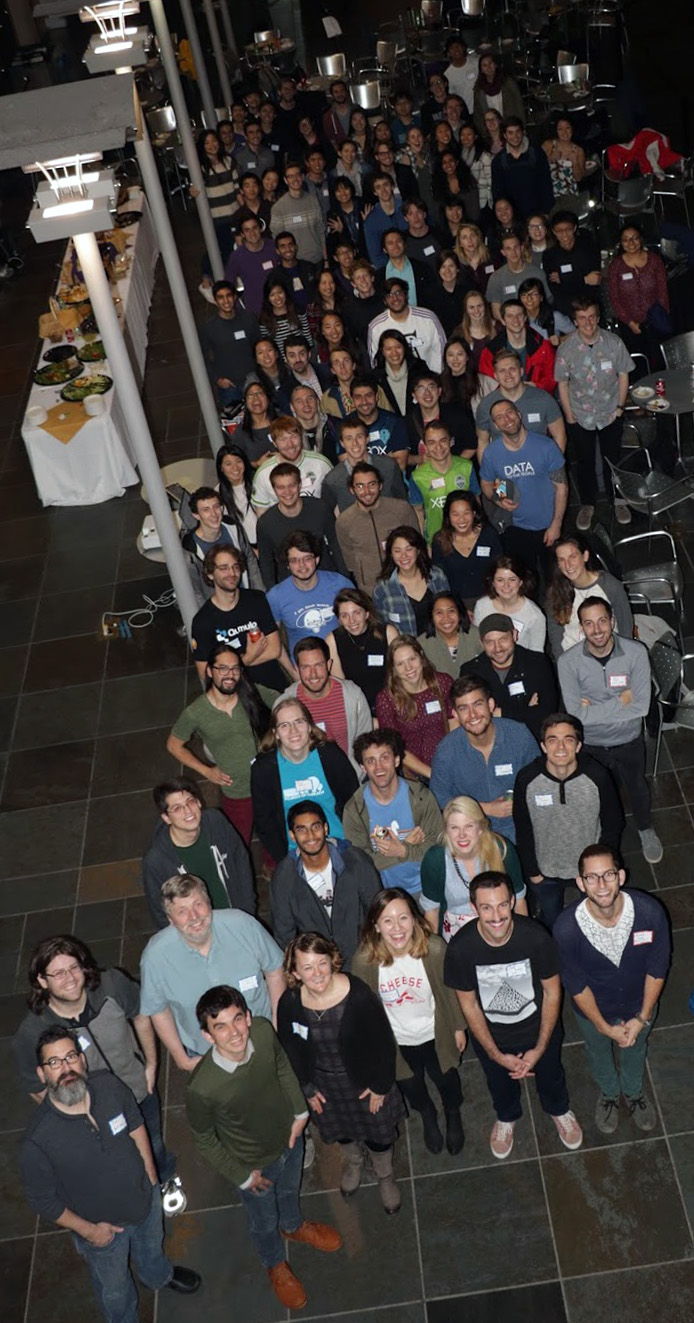
More than 150 current and former CSE142 and CSE143 undergraduate TAs participated in a reunion event in the Paul G. Allen Center on November 22nd. A timeline created for the event highlighted how much the program has changed in the last ten years.

In the fall of 2006, CSE142 had 425 students and CSE143 had 209 students, supported by 30 undergraduate TAs. For the current fall quarter, CSE142 has 1,081 students and CSE143 has 537 students supported by 76 undergraduate TAs. The growth in enrollment by women has been even more impressive: in fall 2006, 27% of the students in CSE142 and 18% in CSE143 were women, versus 35% in CSE142 and 25% in CSE143 today.

Speakers at the reunion event included Stuart Reges, who created the undergraduate TA program at UW, Victoria Kirst, who was a TA and student instructor at UW and is now teaching at Stanford, and current 14X TA coordinators Shannon Ren and Karanbir Singh, who put in incredible effort to create a fun activity for members of the community – both past and present – to come together. Former 14X TA coordinators Alex Miller, Hillary Prather, Kasey Champion, Michael Schmitz, Riley Porter, Tyler Rigsby, and Whitaker Brand also joined the event.

utasReges highlighted how special the UW undergrad TA program is because most universities do not offer such a rich opportunity for undergraduates to become partners in the teaching of introductory computer science. Singh reminded attendees of how attractive the undergraduate TA program has become with over 200 applicants for fewer than 30 new spots in the most recent round of hiring.

Reges also pointed out the impressive list of former undergraduate 14X TAs who have gone on to be hired as college faculty including:

  • Kurtis Heimerl – assistant professor in UW CSE
  • Peter Michael Osera – assistant professor at Grinnell College
  • Helene Martin – former lecturer in UW CSE
  • Victoria Kirst – lecturer at Stanford
  • Allison Obourn – former lecturer in UW CSE, now at the University of Arizona
  • Whitaker Brand – teacher of multiple UW CSE courses
  • Zorah Fung – lecturer in UW CSE
  • Riley Porter- lecturer in UW CSE
  • Ryan Parsons – faculty at Whatcom Community College

One of the main reasons the program has produced so many college level instructors is that UW encourages undergraduates who have been TAs to complete the fifth year Masters program and teach one of the courses in the summer. Few major computer science programs have pathways like this that encourage students to prepare for and consider a career in teaching.

Former UW CSE lecturer Marty Stepp was unable to attend the program, but several speakers mentioned his many contributions. Stepp came out of a similar undergraduate TA program at the University of Arizona and helped Reges create the program at UW. He also put in substantial effort to shape the 14X courses, creating tools known as GradeIt and PracticeIt. Stepp now teaches at Stanford University.

The timeline for the program appropriately lists course administrator Pim Lustig as appearing at the beginning of time as he has been a crucial source of support before anyone else on the list even came to UW.

Timeline

  Read more →

UW CSE alum Peter Brook and Snap Spectacles

snapglassesta

Not UW CSE alum Peter Brook …

Peter Brook spent his undergraduate days in Joshua Smith’s Sensor Systems Laboratory and at Facebook. In 2013 he took his newly-minted Computer Engineering bachelors degree to Vergence Labs, where he was lead software engineer on Epiphany Eyewear – fashion-conscious eyewear that captures video snippets with the touch of a button. Vergence was acquired by Snapchat, where Peter has led the software side of Snap Spectacles from early prototypes through mass production.

Snap Spectacles have now hit the big time – sold through popup vending machines in Southern California, and soon near you! Read a Wired article here.

Congratulations Peter! Read more →

UW startup WiBotic among GeekWire’s 2016 “Seattle 10” hot startups

WiBotic CEO Ben Waters

“From the brick walkways of Pioneer Square to the funky facades of Fremont, there’s a lot of startup action in Seattle.

“So trying to identify the 10 hottest entrepreneurial ventures in the region is no easy task. But that’s what we’ve set out to do with this year’s class of The Seattle 10, which we’re hosting again in partnership with the Museum of History & Industry

“We’re putting our entrepreneurs to work, asking each of The Seattle 10 winners to reproduce their business ideas on giant six-foot by six-foot cocktail napkins that will be unveiled for the first time at the GeekWire Gala on Dec. 7th at MOHAI.”

In 2013, CSE startup SNUPI was among The Seattle 10. In 2014, CSE startup GraphLab was among The Seattle 10. This year, it’s CSE+EE startup WiBotic, out of the Sensor Systems Laboratory of UW CSE+EE professor Joshua Smith. WiBotic provides reliable wireless power to charge aerial, mobile and aquatic robot systems.

Read about all of The Seattle 10 in GeekWire here. Read more →

Cybercrime-fighters of Batman’s Kitchen cook up a 3rd place finish at CSAW ’16

CSAW '16 Capture the Flag badgeLast week, a team of UW undergraduates known as Batman’s Kitchen became cybersecurity superheroes when they earned third place at the U.S. finals of Capture the Flag at Cyber Security Awareness Week (CSAW ’16). The CSAW CTF competition, which was hosted by New York University’s Tanton School of Engineering, featured 15 teams battling it out in response to a series of computer security challenges inspired by real-world scenarios that tested their cybercrime-fighting mettle. The New York competition was one of three held simultaneously around the world in what is billed as the largest student-run cybersecurity contest.

The competition, which spanned 36 hours, began Thursday night and ran uninterrupted until late afternoon on Saturday. The grueling schedule meant team members had to take turns sleeping in shifts.

Was it worth it? UW CSE student Alex Kirchhoff, who traveled to Brooklyn to compete as a member of Batman’s Kitchen, says yes.

“CSAW gives us the opportunity to practice computer security skills, meet students from other universities with similar interests, and connect with companies in the field,” he said.

That sentiment was echoed by Kirchhoff’s team mates, including fellow CSE major Bo Wang, Physics major Stanley Hsieh, and Atmospheric Sciences major Dan Arens.

“Competing with the best undergraduate teams around the U.S. and Canada is really fun and rewarding,” said Hsieh. Arens was similarly enthusiastic, complimenting the “great teams, challenges, and sponsors” involved in the competition.

After an action-packed weekend of battling cyber-villains, the students are back in classes this week. Three members of the team that went to New York barely have time to reflect on their success before gearing up for their next competition in just a few short days — this time, traveling to Japan.

“I was surprised by how well we did,” said Wang. “Now, I’m hoping for the best for Trend Micro finals this week.”

Wang, Kirchhoff and Hsieh will be joined by pre-engineering student Grayson Sinclair at the Trend Micro CTF competition in Tokyo. The talented members of Batman’s Kitchen are making a habit out of not only representing the UW, but the entire country in these elite cybersecurity competitions.

“This year, Batman’s Kitchen is going global,” said Melody Kadenko, CSE research program director and adviser to Batman’s Kitchen. “We were the only team from a U.S. university to compete at the VolgaCTF finals in Russia earlier this fall, and we will be the only U.S.-based team competing in Japan.”

Batman’s Kitchen is growing in size as well as international visibility. Around 700 current and former students, drawn from the three UW campuses, are involved in meetings and activities. Kadenko selects members to represent Batman’s Kitchen in various competitions from a pool of core CTF enthusiasts who have developed skills in cryptography, forensics, web security and reverse engineering. Going into CSAW, the team ranked 34th out of nearly 11,000 CTF teams worldwide.

Read more about the results of the CSAW CTF here.

Way to go, team — and good luck in Japan! Read more →

UW CSE earns yet another Best Paper Award at OSDI

osdi-16-logoUW CSE continued our winning ways this week with a Best Paper Award at the 12th USENIX Symposium on Operating Systems Design and Implementation (OSDI ’16). The winning paper, Push-Button Verification of File Systems via Crash Refinement, was co-authored by a team of researchers from UW CSE’s Computer Systems Lab and Programming Languages & Software Engineering (PLSE) group that includes Ph.D. students Helgi Sigurbjarnarson and James Bornholt, and professors Emina Torlak and Xi Wang.

The paper presents Yggdrasil, an efficient and practical new toolkit that will enable programmers to build reliable storage applications using push-button verification. The toolkit requires no manual annotations or proofs about the implementation code. To define file system correctness, Yggdrasil uses crash refinement, which is amenable to fully automated reasoning with satisfiability modulo theories (SMT) solvers. Yggdrasil offers several techniques to scale up automated verification, including a stack of abstractions and separation of data representations, so that developers can implement file systems in a modular way for verification. Yggdrasil also generates a concrete test case (a counterexample) in instances where it finds a bug in the file system implementation or its consistency invariants.

The team’s Best Paper Award is one of three given out at this year’s conference, which is taking place this week in Savannah, Georgia. It is not the only one with a UW CSE connection: former postdoc Simon Peter, now on the faculty of the University of Texas at Austin, co-authored one of the other winning papers, Ryoan: A Distributed Sandbox for Untrusted Computation on Secret Data.

With this latest win, UW CSE has completed the trifecta of top systems and networking conferences this year, having also earned Best Paper accolades at NSDI and SIGCOMM.

Go team! Read more →

« Newer PostsOlder Posts »